
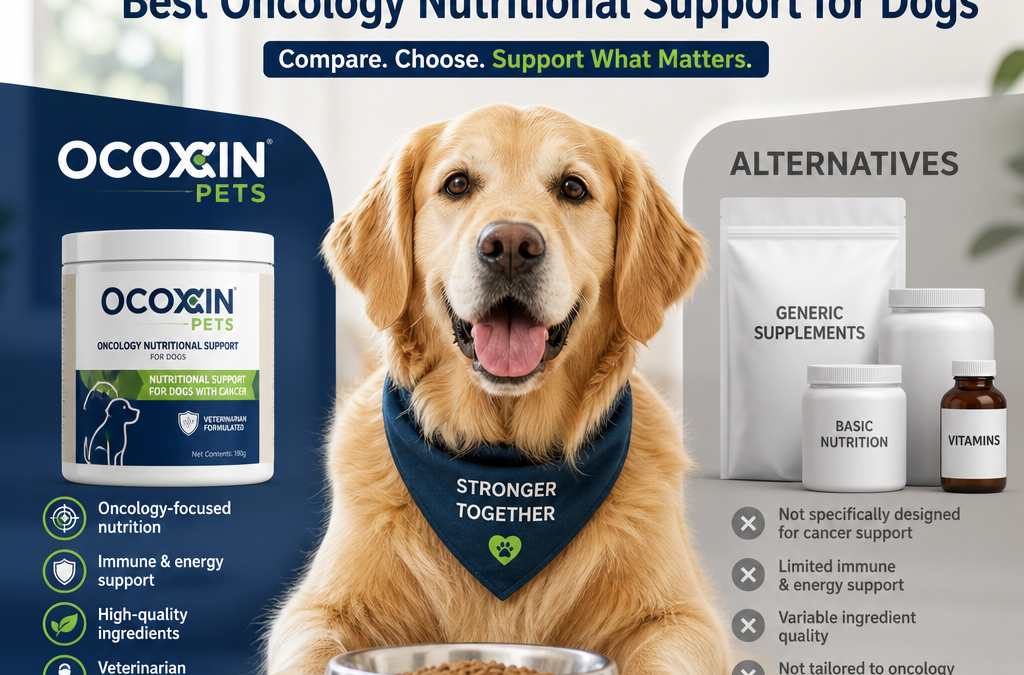
Ocoxin Pets vs alternativer er en vigtig sammenligning for hundeejere, der søger ernæringsmæssig støtte under kræftbehandling. En diagnose af kræft kan efterlade familier med vanskelige beslutninger om behandling, appetit, vægttab og livskvalitet. Selvom ernæring ikke kan erstatte kirurgi, kemoterapi, strålebehandling eller veterinær overvågning, kan en omhyggeligt udvalgt ernæringsplan hjælpe med at støtte styrke, genopretning og daglig velvære.
Den bedste tilgang afhænger af hundens tumor type, behandlingsplan, appetit, kropsforhold, organfunktion og andre medicinske tilstande. Produkter, der markedsføres til onkologisk støtte, kan variere betydeligt i ingredienser, beviser, formulering og egnethed. At forstå disse forskelle hjælper ejere med at have mere produktive samtaler med deres dyrlæge og vælge støtte, der passer til den enkelte hund snarere end etiketten.
For ejere, der sammenligner Ocoxin Pets vs alternativer, er målet ikke at finde et mirakelprodukt. Det er at identificere en praktisk mulighed, der støtter ernæring, er godt tolereret, og fungerer sammen med resten af kræftbehandlingsplanen. I mange tilfælde kan det rigtige svar være et kosttilskud, en terapeutisk diæt, en ændring i fodring eller en kombination af flere små støtteforanstaltninger.
Indholdsfortegnelse
Hvad er onkologisk ernæringsstøtte?
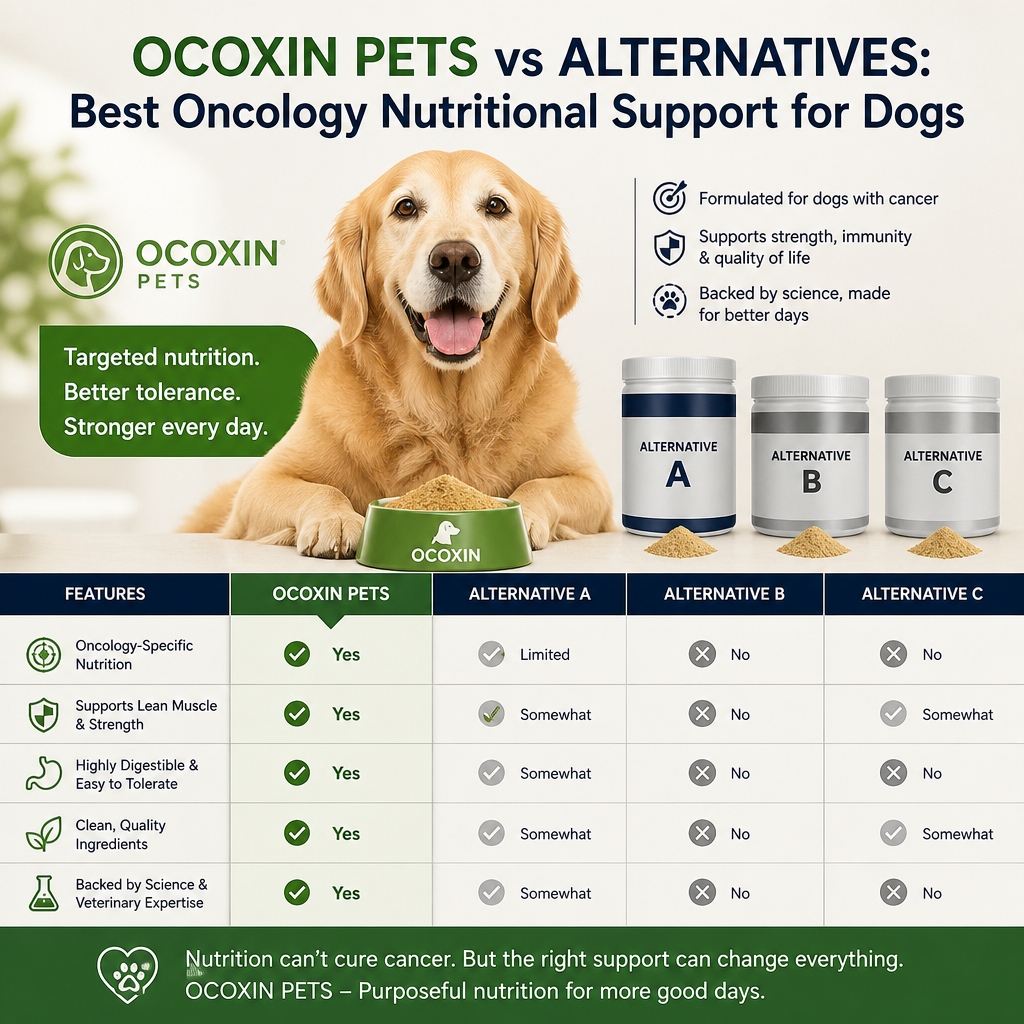
Onkologisk ernæringsstøtte refererer til diætstrategier og kosttilskud, der bruges til at hjælpe hunde med at opretholde kropsvægt, muskelmasse, energi og generel sundhed under kræftbehandling. Hunde med kræft kan opleve nedsat appetit, kvalme, ændringer i stofskiftet, vanskeligheder med at tygge eller synke, eller øgede ernæringsbehov under genopretning. I disse situationer kan en støttende ernæringsplan gøre den daglige pleje mere håndterbar.
En støttende diæt kan fokusere på:
- At give tilstrækkelige kalorier i en velsmagende form
- At opretholde slank muskel i stedet for blot at øge kropsvægten
- At levere letfordøjeligt protein
- At støtte normal immunfunktion
- At håndtere behandlingsrelaterede fordøjelsessymptomer
- At erstatte næringsstoffer, der er tabt gennem dårlig indtagelse eller sygdom
- At bevare livskvalitet
Ernæring bør altid være individualiseret. En hund med nyresygdom kan have brug for en anden diæt end en hund med lymfom, mens en hund, der modtager kemoterapi, kan have andre behov end en, der genopretter sig efter kirurgi. Kosttilskud kan også interagere med medicin eller påvirke blodkoagulation, levermetabolisme eller nyrefunktion, så hele behandlingsplanen betyder lige så meget som produktet selv.
Veterinærteams starter ofte med at stille et par enkle spørgsmål: Spiser hunden nok? Mister hunden muskel? Begrænser kvalme måltiderne? Har hunden brug for kalorieholdig støtte, eller er det primære problem et specifikt næringsstofgap? Når disse detaljer er klare, bliver onkologisk ernæringsstøtte mere målrettet og mere nyttig.
Ocoxin Pets: Hvad tilbyder det?
Ocoxin Pets er et veterinært ernæringstilskud designet til at give støttende næringsstoffer til hunde og katte, især dem der har alvorlige sygdomme. Dets formulering er almindeligt forbundet med ingredienser såsom vitaminer, mineraler, antioxidanter, aminosyrer og andre forbindelser, der har til formål at støtte appetit, vitalitet og generel ernæringsstatus.
Nogle ejere og dyrlæger betragter det som en del af en bredere plejeplan for hunde, der gennemgår kræftbehandling. Potentielle grunde til dets brug kan inkludere dårlig appetit, vægttab, reduceret energi eller ønsket om at give yderligere ernæringsstøtte i en krævende behandlingsperiode. Når det bruges omhyggeligt, bliver Ocoxin Pets vs alternativer mindre om mærkelojalitet og mere om pasform, tolerance og mål.
Dog bør Ocoxin Pets ikke betragtes som en kræftbehandling. Det fjerner ikke tumorer, erstatter ordineret medicin eller garanterer en reaktion på kemoterapi eller strålebehandling. Dets værdi bør bedst overvejes i konteksten af hundens komplette ernærings- og medicinske plan, herunder smertestyring, appetitstyring og regelmæssig overvågning.
Før det bruges, bør ejere gennemgå ingredienslisten med en dyrlæge. Dette er især vigtigt, hvis hunden har diabetes, leversygdom, nyresygdom, pancreatitis, fødevareallergier eller modtager flere medikamenter. For en bredere oversigt over hunde kræft ernæring, se denne nyttige guide til hundetumorer og kæledyrs onkologi.
Det kan også hjælpe at sammenligne tilskuddet med hundens nuværende kost. Hvis en hund allerede spiser en beriget terapeutisk mad, kan nogle ingredienser i et tilføjet produkt være overflødige. I andre tilfælde kan tilskuddet give et nyttigt boost, når appetitten er lav eller måltiderne er ufuldstændige.
Ocoxin Pets vs alternativer: Nøgle sammenligningsfaktorer
Når man vurderer Ocoxin Pets vs alternativer, er produktnavnet mindre vigtigt end det specifikke ernæringsbehov, der adresseres. En nyttig sammenligning inkluderer følgende faktorer.
Ingredienskvalitet og formål
Nogle produkter giver bredspektrede vitaminer og mineraler, mens andre fokuserer på omega-3 fedtsyrer, aminosyrer, probiotika, kalorieindhold eller antioxidanter. Ejere bør spørge, om hver ingrediens har et klart formål, og om den samlede formel supplerer hundens eksisterende kost.
Flere ingredienser betyder ikke automatisk bedre støtte. Visse næringsstoffer kan være overdrevne, når de kombineres med beriget kommerciel mad eller andre kosttilskud. I praksis kan en enklere formel nogle gange være lettere at bruge konsekvent og sikkert.
Velsmagende
Et teoretisk fremragende tilskud har begrænset værdi, hvis en hund nægter at spise det. Smag og tekstur betyder meget, især under kemoterapi eller perioder med kvalme. Flydende, pulver, pasta og tyggetabletter kan passe til forskellige hunde.
Ocoxin Pets vs alternativer er en vigtig sammenligning for hundeejere, der søger nu….
Den bedste tilgang afhænger af hundens tumor type, behandlingsplan, appetit, krop…
For ejere, der sammenligner Ocoxin Pets vs alternativer, er målet ikke at finde en mira….
Protein er særligt vigtigt for at opretholde muskelmasse, men den ideelle mængde afhænger af hundens diagnose og organhelse. Hunde med visse nyre- eller levertilstande kan have brug for mere omhyggelig proteinvalg. Derfor bør Ocoxin Pets vs alternativer altid vurderes i konteksten af det samlede medicinske billede, ikke kun tumordiagnosen.
Beviser og gennemsigtighed
Se efter producenter, der klart identificerer ingredienser, portionsstørrelser, kvalitetskontroller og tilsigtet brug. Veterinærvejledning er at foretrække frem for kun at stole på testimonials eller påstande om, at et produkt kan “helbrede” kræft.
Beviserne for mange kosttilskud til kæledyr er begrænsede eller tilstandsspecifikke. Et ansvarligt produkt bør præsenteres som støttebehandling, ikke som en erstatning for evidensbaseret onkologisk behandling. Når det er muligt, bør ejere vælge støtteprodukter med gennemsigtig mærkning og realistiske påstande.
Kompatibilitet med behandling
Nogle kræftpatienter er i kemoterapi, smertelindring, anti-kvalme medicin, antibiotika eller steroider. Et støtteprodukt, der virker harmløst på papiret, kan stadig være en dårlig pasform, hvis det skaber maveproblemer eller duplikerer et næringsstof, der allerede overvåges. Det sikreste valg er det, der forbliver kompatibelt med den samlede behandlingsplan.
Omkostninger og konsistens
Selv et godt produkt er kun nyttigt, hvis det kan bruges konsekvent. Ejere bør tænke på omkostninger, tilgængelighed og hvor nemt det er at give produktet hver dag. En støtteoption, der er overkommelig og nem at administrere, kan være mere praktisk end et mere kompliceret produkt med en stærkere markedsføringshistorie.
7 praktiske måder at sammenligne støtteprodukter med din dyrlæge
Når man diskuterer Ocoxin Pets vs alternativer, hjælper det at fokusere på syv praktiske spørgsmål frem for kun markedsføringspåstande.
- Adresserer produktet appetittab, vægtvedligeholdelse, fordøjelse eller genopretning?
- Er ingredienserne klart angivet og doseret på en gennemsigtig måde?
- Vil det passe sammen med den nuværende kost uden at duplikere næringsstoffer?
- Er formatet nemt for hunden at spise konsekvent?
- Kan det interagere med nuværende medicin eller behandlingsprotokoller?
- Er der et realistisk mål for kortvarig brug og opfølgning?
- Vil produktet stadig give mening, hvis behandlingsplanen ændres?
Disse spørgsmål gør det lettere at sammenligne muligheder retfærdigt. De hjælper også med at forhindre den almindelige fejl at vælge et kosttilskud, der lyder imponerende, men ikke passer til hundens faktiske behov. I onkologisk pleje er det mest nyttige valg normalt det, der løser et reelt problem enkelt og sikkert.
Det kan også hjælpe at sætte et kort evalueringsvindue. For eksempel kan en dyrlæge foreslå at tjekke appetit, afføringskvalitet, energi og kropsvægt over en til to uger. Hvis produktet ikke gør nogen synlig forskel eller forårsager bivirkninger, kan det være tid til at revurdere i stedet for at fortsætte af vane.
Hundetumorstøtte muligheder ud over kosttilskud
Hundetumorstøtte muligheder kan inkludere ernæringsmæssige, medicinske, miljømæssige og følelsesmæssige strategier. En komplet plan kan involvere flere af de følgende tilgange.
Kompletterende terapeutiske diæter
Veterinære terapeutiske diæter kan være nyttige, når en hund har dårlig appetit, fordøjelsessygdom, nyresvigt eller vanskeligheder med at opretholde vægten. Nogle formler er meget letfordøjelige og kalorieholdige, hvilket gør det lettere at give tilstrækkelig ernæring i mindre portioner.
Den korrekte diæt afhænger af hundens tilstand. En diæt med højt fedtindhold, for eksempel, kan være usikker for en hund, der er tilbøjelig til pancreatitis, selvom den giver nyttige kalorier for en anden patient. På samme måde kan den bedste onkologiske ernæringsstøtte for én hund være en receptpligtig diæt, mens en anden hund klarer sig bedre med moderate ændringer i måltiderne og et supplement.
Omega-3 fedtsyrer
Fiskolieprodukter, der indeholder EPA og DHA, inkluderes nogle gange i veterinære ernæringsplaner. Disse fedtsyrer kan støtte normal inflammatorisk regulering og hjælpe med at opretholde hud, pels og generel sundhed. Doseringsmængden er vigtig, og høje mængder kan forårsage fordøjelsesproblemer eller påvirke blødningsrisikoen.
Kun veterinærgodkendte produkter bør anvendes, fordi olier af dårlig kvalitet kan være oxiderede eller kontaminerede. American College of Veterinary Internal Medicine giver nyttig baggrund om veterinær ernæring og supplement sikkerhed på ACVIM.
Probiotika og fordøjelsessupport
Hunde, der modtager antibiotika, kemoterapi eller større operationer, kan udvikle fordøjelsesforstyrrelser. Et veterinært probiotikum eller produkt til fordøjelsessupport kan overvejes i udvalgte tilfælde. Dog har ikke hver hund brug for probiotika, og immuncompromitterede patienter kræver særlig omhyggelig produktvalg.
Hvis fordøjelsesproblemer er det primære problem, kan de bedste hundetumorstøtte muligheder fokusere mindre på vitaminer og mere på afføringskvalitet, kontrol af kvalme og blid fodring. Det er en af grundene til, at Ocoxin Pets vs alternativer bør overvejes sammen med hundens nuværende symptomer.
Appetit og kvalmestyring
Receptpligtige lægemidler kan være mere effektive end kosttilskud til kvalme, smerte eller appetittab. At behandle disse problemer direkte kan give en hund mulighed for at spise og opretholde styrke. Ejere bør hurtigt rapportere gentagen opkastning, diarré, nægtelse af at spise eller hurtigt vægttab.
I nogle tilfælde har forbedring af hundens komfort en større ernæringsmæssig indvirkning end at tilføje et andet produkt. En hund, der føler sig mindre kvalm, kan begynde at spise nok på egen hånd, hvilket gør støtteplanen lettere og mere effektiv.
Fodringsændringer
Små, hyppige måltider kan være lettere at tolerere end store måltider. At varme maden let kan forbedre aromaen, mens håndfodring eller brug af et stille fodringsområde kan reducere stress. Pludselige diætoplysninger bør generelt undgås, medmindre det er angivet af en veterinær professionel.
Enkle ændringer kan betyde meget. Selv det bedste supplement kan ikke overvinde en fodringsrutine, der er for stressende, for stor eller for inkonsekvent for en syg hund.
Hydrering og komfortpleje
Hydrering understøtter fordøjelse, cirkulation og generel komfort. Nogle hunde har brug for opmuntring til at drikke, mens andre kan have gavn af veterinærstyret væsketerapi. Blødt sengetøj, nem adgang til vand og reduceret husstandsstress kan også gøre det mere sandsynligt at spise.
7 praktiske måder at sammenligne støtteprodukter med din dyrlæge
Når man diskuterer Ocoxin Pets vs alternativer, hjælper det at fokusere på syv praktiske spørgsmål frem for kun markedsføringspåstande.
- Adresserer produktet appetittab, vægtvedligeholdelse, fordøjelse eller genopretning?
- Er ingredienserne klart angivet og doseret på en gennemsigtig måde?
- Vil det passe sammen med den nuværende kost uden at duplikere næringsstoffer?
- Er formatet nemt for hunden at spise konsekvent?
- Kan det interagere med nuværende medicin eller behandlingsprotokoller?
- Er der et realistisk mål for kortvarig brug og opfølgning?
- Vil produktet stadig give mening, hvis behandlingsplanen ændres?
Disse spørgsmål gør det lettere at sammenligne muligheder retfærdigt. De hjælper også med at forhindre den almindelige fejl at vælge et kosttilskud, der lyder imponerende, men ikke passer til hundens faktiske behov. I onkologisk pleje er det mest nyttige valg normalt det, der løser et reelt problem enkelt og sikkert.
Det kan også hjælpe at sætte et kort evalueringsvindue. For eksempel kan en dyrlæge foreslå at tjekke appetit, afføringskvalitet, energi og kropsvægt over en til to uger. Hvis produktet ikke gør nogen synlig forskel eller forårsager bivirkninger, kan det være tid til at revurdere i stedet for at fortsætte af vane.
Hvordan vælger man den rigtige onkologiske ernæringsstøtte
Det første skridt er at identificere det primære problem. Taber hunden sig, nægter den mad, taber den muskelmasse, oplever den diarré, eller kæmper den med bivirkninger fra behandlingen? Forskellige problemer kræver forskellige løsninger.
En dyrlæge kan vurdere kropsvægt, muskeltilstand, hydrering, blodprøver, tumorstatus, medicinbrug og dagligt kalorieindtag. Hold en simpel optegnelse over måltider, godbidder, opkast, afføringskvalitet og vægtændringer. Disse oplysninger kan afsløre, om et kosttilskud hjælper, eller om det underliggende problem kræver medicinsk opmærksomhed.
Det er også vigtigt at undgå at kombinere flere produkter uden professionel rådgivning. Flere kosttilskud kan duplikere vitaminer, mineraler, antioxidanter eller urtesammensætninger. Nogle forbindelser kan interferere med kemoterapi eller andre medikamenter, mens andre kan lægge yderligere stress på leveren eller nyrerne.
Mange ejere begynder med ét produkt og vurderer derefter igen efter en kort prøveperiode. Den tilgang kan være nyttig, men kun hvis hunden overvåges nøje, og behandlingsteamet er enige om målene. I nogle tilfælde kommer det bedste resultat fra at ændre fodringsplanen eller tage fat på kvalme i stedet for at tilføje et andet kosttilskud.
Når Ocoxin Pets vs alternativer sammenlignes omhyggeligt, bliver det rigtige valg ofte klarere. Den mest passende mulighed er normalt den, der løser hundens nuværende problem, passer ind i husstandens rutine og kan bruges sikkert over tid.
Et andet nyttigt spørgsmål er, om støtten er beregnet til kortvarig krisepleje eller langvarig vedligeholdelse. En hund, der er ved at komme sig efter en procedure, kan have brug for midlertidig kaloriestøtte, mens en hund i løbende kræftbehandling kan have brug for en mere bæredygtig plan, der kan gentages dag efter dag.
Støtte til livskvalitet under kræftbehandling
Ernæring er kun én del af medfølende onkologisk pleje. Hunde kan have gavn af effektiv smertelindring, komfortable senge, blid motion, regelmæssig hydrering og forudsigelige rutiner. Emotionel støtte betyder også noget; rolig selskab og behagelige lavstress aktiviteter kan hjælpe med at bevare hundens følelse af sikkerhed.
Regelmæssige dyrlægeanmeldelser er essentielle, fordi ernæringsbehov kan ændre sig i løbet af behandlingen. En hund, der oprindeligt har gavn af et appetitstøttende kosttilskud, kan senere have brug for en terapeutisk diæt, medicinjustering eller mere intensiv ernæringsintervention.
Ejere bør også holde øje med ændringer, der antyder, at planen skal opdateres: et pludseligt fald i appetit, gentaget opkast, øget tørst, svaghed eller åbenlys muskeltab. Disse ændringer er ikke kun ernæringsproblemer; de kan signalere, at kræften eller behandlingsplanen selv kræver hurtig gennemgang.
I sidste ende er Ocoxin Pets vs alternativer ikke en simpel konkurrence mellem mærker. Det mest passende valg er den mulighed, der sikkert imødekommer den enkelte hunds ernæringsbehov, passer ind i den medicinske behandlingsplan, tolereres godt og har realistiske mål. Med dyrlægevejledning kan onkologisk ernæringsstøtte blive en praktisk del af at opretholde styrke, komfort og livskvalitet, mens den primære kræft behandles.
For mange familier, det mest beroligende svar er et afbalanceret: brug evidensbaseret veterinærpleje, vælg et støtteprodukt kun når det tjener et klart formål, og fortsæt med at overvåge hvordan hunden har det dag for dag. Den tilgang gør Ocoxin Pets vs alternativer lettere at evaluere og mere sandsynligt at føre til et valg der virkelig hjælper.