
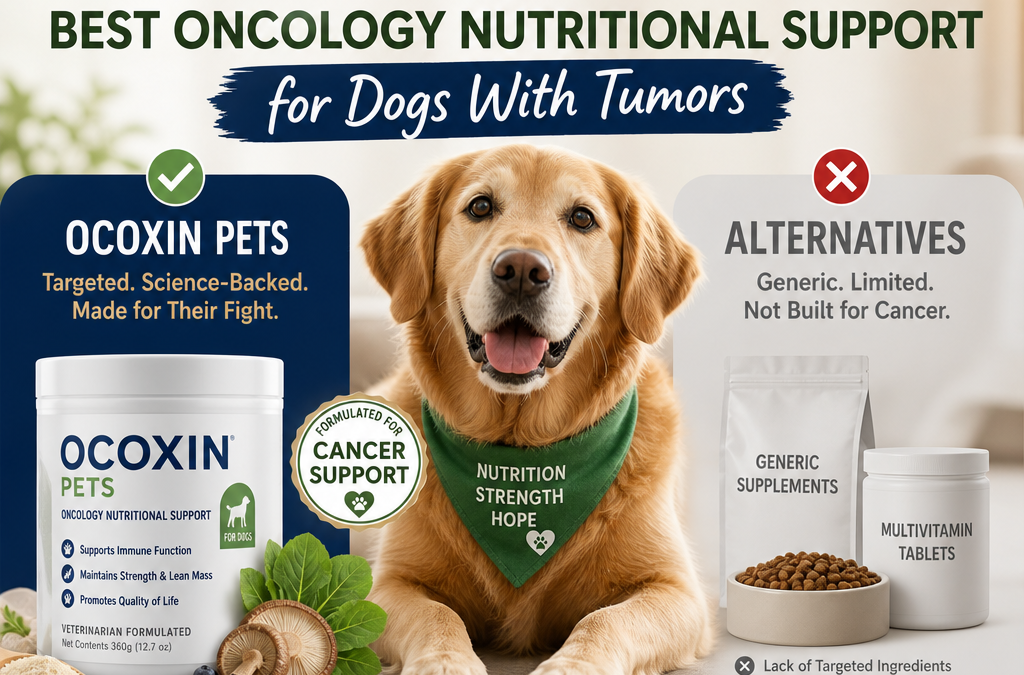
Ocoxin Pets vs alternativer er en vigtig sammenligning for ejere, der søger støtte til pleje for en hund diagnosticeret med kræft. Ernæringsprodukter kan hjælpe med at opretholde appetit, kropsforhold, hydrering og livskvalitet under behandling, men de bør supplere—ikke erstatte—veterinær onkologisk pleje. Det bedste valg afhænger af hundens tumor type, behandlingsplan, blodprøver, fordøjelsestolerance og overordnede plejemål.
Indholdsfortegnelse
Hvorfor onkologisk ernæringsstøtte betyder noget for hunde
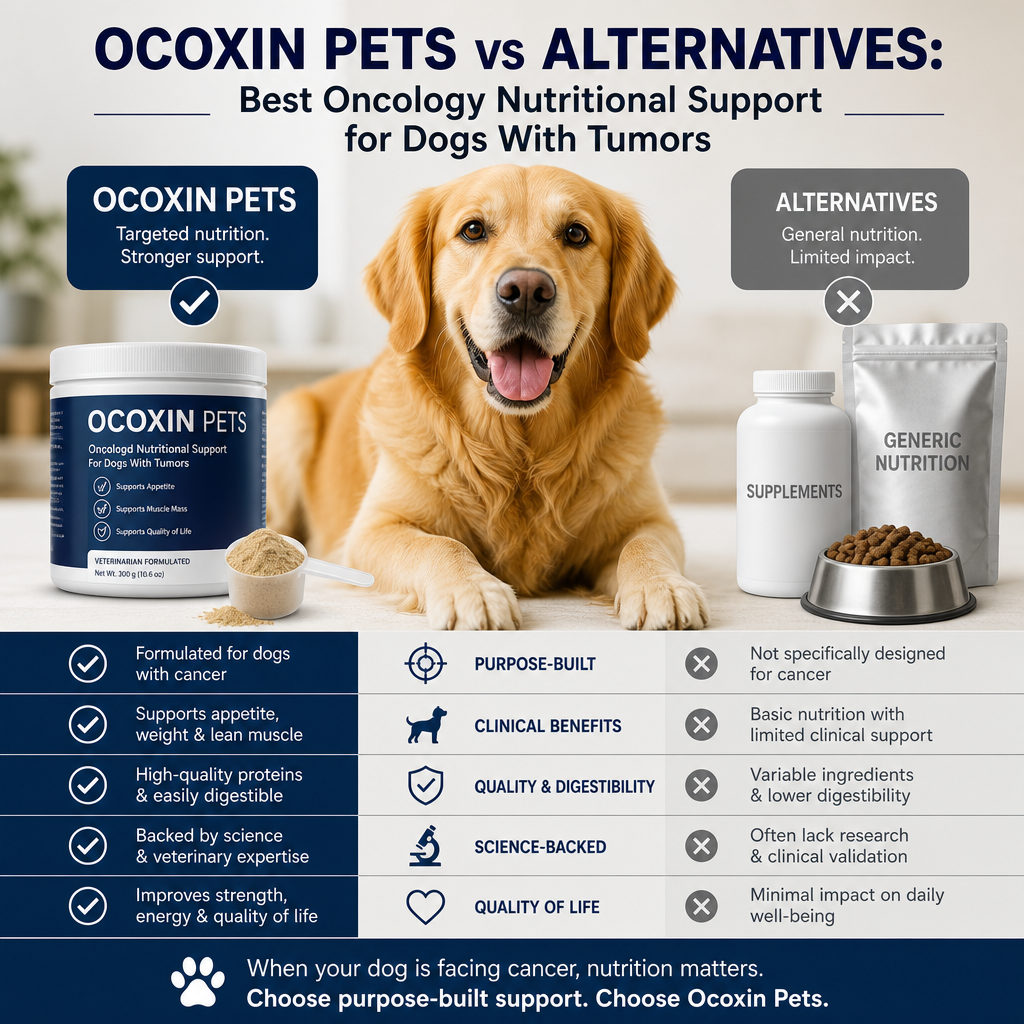
Kræft kan påvirke en hunds ernæringsstatus på flere måder. Tumorer kan øge energibehovet, forårsage inflammation, reducere appetit eller forstyrre fordøjelsen og næringsoptagelsen. Kirurgi, kemoterapi, strålebehandling og medicin kan også forårsage kvalme, træthed, ubehag i munden eller ændringer i smag og lugt.
At opretholde tilstrækkelig ernæring er værdifuldt, fordi en velernæret hund muligvis bedre kan bevare muskelmasse, komme sig efter procedurer, tolerere behandling og forblive aktiv. Ernæring kan ikke helbrede kræft, men det kan støtte styrke og komfort, mens det veterinære team adresserer sygdommen selv.
En nyttig ernæringsplan fokuserer generelt på:
- At give nok kalorier og letfordøjeligt protein
- At bevare magert muskelmasse i stedet for blot at øge kropsvægten
- At støtte hydrering og normal tarmfunktion
- At håndtere kvalme, diarré, forstoppelse eller appetit tab
- Undgå unødvendige diætbegrænsninger
- At overvåge vægt og kropsforhold regelmæssigt
Ingen enkelt supplement er passende for hver hund. Ernæringsstøtte bør være individualiseret, især når en hund har nyresygdom, leversygdom, pancreatitis, diabetes eller en historie med urinære krystaller.
Mange ejere begynder med at sammenligne Ocoxin Pets vs alternativer, fordi de ønsker en praktisk, hundevenlig måde at støtte spisning, energi og restitution uden at tilføje unødvendig kompleksitet. Det er et fornuftigt udgangspunkt, men det endelige valg bør altid afhænge af patienten snarere end etiketten.
For en bredere oversigt over støttende pleje, se denne guide til de bedste kosttilskud til hunde med kræft.
Hvad er Ocoxin Pets?
Ocoxin Pets er et veterinært ernæringssupplement formuleret til at give støttende næringsstoffer til hunde og katte. Dets ingredienser kan inkludere forbindelser som antioxidanter, vitaminer, mineraler, aminosyrer og planteafledte stoffer, afhængigt af den specifikke formulering og markedet. Det er generelt positioneret som et supplement til konventionel veterinærpleje for dyr, der står over for alvorlig sygdom.
Ejere kan overveje det, fordi det er designet specifikt til kæledyr og ofte er lettere at administrere end at kombinere flere menneskelige kosttilskud. Dog kan produktformuleringer variere fra land til land, og bevis for individuelle ingredienser kan ikke direkte bevise, at det komplette produkt forbedrer overlevelse eller behandler en bestemt tumor.
Før brug af Ocoxin Pets bør ejere gennemgå ingredienslisten med en dyrlæge. Dette er særligt vigtigt, hvis hunden modtager kemoterapi, kortikosteroider, ikke-steroide antiinflammatoriske lægemidler, antikoagulantia eller andre medikamenter. Nogle antioxidanter og urtesubstanser kan teoretisk påvirke lægemetabolisme eller behandlingsrespons, selv når de virker harmløse.
I mange virkelige tilfælde kommer værdien af Ocoxin Pets vs alternativer ned til bekvemmelighed, smagelighed og om produktet passer ind i resten af plejeplanen. Et supplement, der ser fremragende ud på papir, kan stadig være et dårligt valg, hvis hunden nægter det, eller hvis ingrediensprofilen er for bred for en patient, der allerede er på flere medikamenter.
Ocoxin Pets vs Alternativer: nøgle sammenligningspunkter
Når man vurderer Ocoxin Pets vs alternativer, er den mest nyttige tilgang at sammenligne praktiske mål frem for produktpopularitet. Overvej om supplementet giver meningsfuld ernæringsværdi, om hunden vil tolerere det, og om dyrlægeteamet er komfortabelt med at inkludere det i behandlingsplanen.
Kompletterende terapeutiske diæter
Veterinære terapeutiske diæter kan være det stærkeste alternativ, når en hund har dårlig appetit, vægttab, fordøjelsesproblemer eller en samtidig medicinsk tilstand. Disse diæter er formuleret til at levere kontrollerede niveauer af kalorier, protein, fedt, fiber, vitaminer og mineraler.
Nogle kræftstøttediæter er energitætte og designet til at hjælpe med at opretholde kropsforholdet. Andre er skræddersyet til nyresygdom, gastrointestinal følsomhed eller madallergier. I modsætning til mange kosttilskud kan komplette diæter fungere som den primære kilde til ernæring, når de gives i henhold til dyrlægens anvisninger.
Deres største begrænsning er accept. En hund, der gennemgår behandling, kan afvise en ny mad, især hvis kvalme har skabt en negativ association. Gradvise overgange og dyrlægegodkendte appetitstrategier kan forbedre succes.
Når ejere sammenligner Ocoxin Pets vs alternativer, giver terapeutiske diæter ofte mening først, hvis hunden allerede taber sig eller nægter måltider. De er også nyttige, når det kliniske mål er at stabilisere det samlede ernæringsbillede i stedet for at tilføje flere separate produkter.
Højkaloriske ernæringsgeler og genopretningsfødevarer
Højkaloriske geler, flydende diæter og genopretningsfødevarer kan være nyttige til kortvarig støtte efter operation eller i perioder med nedsat appetit. De er ofte lette at administrere og kan give koncentreret energi i små mængder.
Disse produkter er ikke altid ernæringsmæssigt komplette, så de er muligvis ikke egnede som en eneste diæt i længere perioder. De kan også være høje i fedt, hvilket kan være problematisk for hunde med pancreatitis eller visse gastrointestinal lidelser. Deres rolle er normalt at supplere måltider under professionel vejledning.
For hunde, der har brug for korte perioder med kaloriestøtte, bør Ocoxin Pets vs alternativer vurderes ud fra, hvor godt hver mulighed passer til genopretningsfasen. En hund, der lige har fået operation, kan have brug for et andet produkt end en, der er stabil, men let undervægtig under kemoterapi.
Ejere bør også tænke på brugervenlighed. Nogle genopretningsfødevarer fungerer godt som en sprøjte-fodret blanding, mens andre er bedre at tilbyde i små skefulde eller blandet med varmt vand. Et produkt, der er teknisk passende, men umuligt at fodre, vil sandsynligvis ikke hjælpe i længden.
Omega-3 fedtsyrer
Fisk olie, der indeholder EPA og DHA, betragtes ofte blandt hunde tumor støtte muligheder. Disse fedtsyrer kan hjælpe med at støtte normal inflammatorisk regulering samt hud-, pels- og led sundhed. Nogle dyrlægeernæringsfysiologer inkluderer dem i kræftplejeplaner, selvom fordelene varierer afhængigt af kræfttypen, dosis og den samlede kost.
Kvalitet betyder noget. Produkter bør testes for renhed og oxidation, og dosering bør baseres på hundens kropsvægt og medicinske tilstand. Overdrevne mængder kan forårsage gastrointestinal ubehag eller påvirke blodpladefunktionen. Torskeleverolie bør ikke automatisk erstattes med fiskeolie, fordi det kan give overdreven vitamin A eller vitamin D.
I mange tilfælde er Ocoxin Pets vs alternativer ikke en enten-eller beslutning; omega-3'er kan passe sammen med andre støttende produkter, når dyrlægen godkender kombinationen. Faktisk bruger nogle ejere et målrettet fedt supplement sammen med et mere generelt ernæringsprodukt, men den kombination skal stadig gennemgås professionelt for at undgå over-supplementering.
Individuelle vitaminer, antioxidanter og urtemidler
Enkelt-ingredienser kosttilskud kan virke attraktive, fordi de giver ejere mulighed for at målrette en specifik bekymring. Dog kan isolerede produkter skabe risici, hvis de kombineres uden tilsyn. Høje doser af vitaminer A, D, E eller K kan være skadelige, mens urtemidler kan interagere med medicin.
Antioxidanter fortjener særlig forsigtighed under kemoterapi eller strålebehandling. Selvom oxidativ stress kan bidrage til cellulær skade, er nogle kræftbehandlinger bevidst afhængige af oxidative mekanismer. Effekten af supplementering afhænger af behandlingen, timing, dosis og den enkelte patient. Veterinære onkologer bør involveres, før antioxidanter tilføjes.
Det er derfor, Ocoxin Pets vs alternativer bør gennemgås med behandlingsprotokollen i tankerne, ikke kun ingrediensmærket. Et supplement, der synes skånsomt, kan stadig konflikte med timing, dosering eller det terapeutiske mål for kræftplanen.
Det er også værd at huske, at “mere” ikke er det samme som “bedre.” En lang ingrediensliste kan se imponerende ud, men et fokuseret produkt, der løser ét problem godt, kan være mere nyttigt end en bred formel med uklare fordele.
Hjemmelavede diæter
En omhyggeligt formuleret hjemmelavet kost kan være passende for udvalgte hunde, især dem med madpræferencer eller flere diætbegrænsninger. Dog vil det at fodre med kød, ris, grøntsager eller æg sandsynligvis ikke give komplet og afbalanceret ernæring over tid.
Hjemmelavede kræftdiæter bør designes af en bestyrelsescertificeret dyrlægeernæringsfaglig. Opskrifter kan kræve præcise justeringer for calcium, essentielle fedtsyrer, sporstoffer, kalorier og protein. Ubalanceret fodring kan forværre svaghed og vægttab, selv når ingredienserne ser sunde ud.
Når folk sammenligner Ocoxin Pets vs alternativer, er hjemmelavet mad ofte attraktivt, men det bør styres af en professionel snarere end improviseret. En struktureret opskrift kan være fremragende, mens en uplanlagt blanding af køkkenmad kan skabe ernæringsmæssige huller, der underminerer helbredelsen.
Ejere vælger nogle gange hjemmelavede diæter, fordi de ønsker at opmuntre til spisning i en svær periode. Det kan fungere, men kun hvis opskriften stadig understøtter hundens faktiske ernæringsbehov og undgår risikable ingredienskombinationer.
Hvordan man vælger blandt hundetumorstøtte muligheder
Det første skridt er at identificere det primære ernæringsproblem. En hund, der taber muskelmasse, har brug for en anden strategi end en hund med stabil vægt, men behandlingsrelateret kvalme. Ligeledes kan en hund med lymfom have forskellige behov end en, der kommer sig efter oral kræftkirurgi eller håndterer en knogletumor.
Hold øje med hundens vægt mindst ugentligt, når det er muligt. Noter appetit, vandindtag, opkast, afføringskvalitet, aktivitet og tegn på smerte. En faldende kropstilstand, gentaget opkast, vedvarende diarré, vanskeligheder med at synke eller nægtelse af at spise kræver hurtig dyrlægeopmærksomhed snarere end blot at tilføje et andet supplement.
Ejere bør også spørge, om produktet er komplet og afbalanceret, hvor mange kalorier det giver, om det indeholder urter eller koncentrerede vitaminer, og om det er blevet testet for forurening. “Naturlig” betyder ikke nødvendigvis sikker, og flere ingredienser betyder ikke nødvendigvis større fordel.
Hvis din dyrlæge overvåger sygdommens spredning, kan denne ressource på metastase hos hunde hjælpe med at sætte ernæringsstøtte i kontekst.
I praktiske termer bør Ocoxin Pets vs alternativer sorteres efter problem, ikke efter markedsføringskategori. For eksempel kan en hund med dårlig appetit have brug for velsmagende kaloriestøtte først, mens en hund med blød afføring kan have brug for en mere fordøjelig diæt og færre ekstra tilsætningsstoffer. Den bedste plan er ofte en simpel, der faktisk kan følges hver dag.
Overvej hundens alder, race, tumorplacering og behandlingsfase. En ung hund i et aggressivt behandlingsprotokol kan tolerere en anden støttestrategi end en ældre hund med flere kroniske tilstande. Selv inden for den samme kræfttype kan to patienter have meget forskellige ernæringsprioriteter.
Nogle ejere finder det også nyttigt at sammenligne Ocoxin Pets vs alternativer i faser. Start med det mest umiddelbare problem, og vurder derefter igen efter et par dage eller uger. Den tilgang reducerer risikoen for at stable for mange produkter på én gang og gør det lettere at identificere, hvad der virkelig hjælper.
Når appetitten er det primære problem, kan smag være vigtigere end en lang ingrediensliste. Når hunden taber muskelmasse, bliver kalorieindhold og protein kvalitet vigtigere. Når tarmen er følsom, kan fordøjelighed og enkle formler være at foretrække. At matche støtteplanen til det primære problem giver ofte bedre resultater end at vælge den mest populære mulighed.
Praktiske spørgsmål at stille, før man starter et kosttilskud
Før du vælger mellem Ocoxin Pets vs alternativer, skal du stille disse spørgsmål:
- Hvad er hundens nuværende diagnose og behandlingsmål?
- Er det hovedproblemet appetittab, vægttab, kvalme eller dårlig restitution?
- Passer produktet til hundens medicinliste og laboratorieresultater?
- Vil hunden faktisk spise eller acceptere produktet konsekvent?
- Tilføjer kosttilskuddet nyttige kalorier eller næringsstoffer, eller kun markedsføringspåstande?
- Er der sikrere eller bedre studerede muligheder for denne specifikke sag?
Disse spørgsmål afslører ofte, om produktet vil være nyttigt eller blot endnu et element at håndtere under en allerede stressende behandlingsplan.
Det kan også hjælpe at spørge, hvor hurtigt et produkt bør forventes at virke. Nogle støtteelementer er beregnet til kortvarig restitution efter en procedure, mens andre er beregnet til længerevarende ernæringsmæssig vedligeholdelse. Hvis målet er uklart, kan produktet blive vurderet uretfærdigt eller holdt i brug for længe.
Et andet nyttigt spørgsmål er, om hunden kan tage produktet på en måde, der er realistisk for husstanden. Hvis en formel kræver flere daglige doser, men familien ikke kan give dem pålideligt, kan en enklere mulighed være bedre.
Ejere bør også føre en kort log over fodermængder, afføringskvalitet og daglig energi. Den optegnelse gør det lettere at se, om Ocoxin Pets vs alternativer faktisk forbedrer komforten, eller om planen skal justeres. Små ændringer er lettere at opdage, når de er skrevet ned.
Hvordan behandlingstype ændrer beslutningen
Den bedste støtte-strategi kan variere med den type kræftbehandling, der anvendes. Hunde, der modtager kemoterapi, kan have brug for hjælp til kvalme, appetit og tarmtolerance. Hunde, der gennemgår kirurgi, kan have brug for restitutionskalorier, smertestyring og lette måltider. Hunde, der modtager strålebehandling, kan have gavn af blødere fødevarer, hvis munden eller halsen er irriteret.
Hos en patient med knogletumorer kan opretholdelse af muskelmasse og mobilitet være en prioritet. Hos en hund med orale tumorer betyder tekstur og smag mere. For gastrointestinal kræft bliver fordøjelighed og afføringskvalitet især vigtige. Disse forskelle forklarer, hvorfor Ocoxin Pets vs alternativer aldrig bør besluttes baseret på en generel anbefaling alene.
Hvis en hund modtager et flertrins behandlingsprotokol, bør støtteplanen matche pleje-fasen. Appetitsupport kan være vigtigst under kemoterapi, mens kalorie-dense restitutionsfodring kan være vigtigst efter kirurgi. Et produkt, der passer til én fase, passer måske ikke til en anden.
Hvis din dyrlæge overvåger sygdommens spredning, kan denne ressource på kræft hos hunde fra Cornell University er en nyttig uddannelsesmæssig reference om hundekræftbehandling.
Der er også praktiske forskelle i, hvor længe støtte kan være nødvendig. Nogle hunde har kun brug for ernæringsmæssig hjælp i en kort behandlingsperiode, mens andre har gavn af en længere vedligeholdelsesplan. Det betyder, at Ocoxin Pets vs alternativer kan ændre sig over tid, efterhånden som den medicinske situation ændrer sig.
For eksempel, en hund der er stabil efter operation kan til sidst have brug for mindre intensiv støtte, mens en hund hvis kræft skrider frem kan have brug for en mere kalorieholdig og lettere at fodre tilgang. At genvurdere planen regelmæssigt hjælper med at sikre, at støtten forbliver relevant.
Rollen af veterinær overvågning
Onkologi ernæringsstøtte fungerer bedst som en del af en koordineret plejeplan. Dyrlægen kan anbefale anti-kvalme medicin, smertestyring, appetitstimulerende midler, tandpleje, fodertubestøtte eller en terapeutisk diæt ud over ethvert supplement.
En veterinær onkolog kan også evaluere potentielle interaktioner med kemoterapi, strålebehandling, operation og målrettede medikamenter. Kosttilskud bør normalt introduceres ét ad gangen, så bivirkninger kan identificeres. Hvis hunden udvikler opkastning, diarré, sløvhed, kløe eller en pludselig ændring i appetit, skal det nye produkt stoppes, og det veterinære team kontaktes.
Ejere bør også huske, at støttende pleje ikke er statisk. Et produkt valgt tidligt i behandlingen kan have brug for at blive ændret, hvis vægten falder, kvalmen forværres, eller laboratorieværdierne ændrer sig. Det er en anden grund til, at Ocoxin Pets vs alternativer bør genovervejes regelmæssigt i stedet for at blive valgt én gang og glemt.
I sidste ende kan Ocoxin Pets vs alternativer favorisere Ocoxin Pets for nogle hunde, mens en komplet terapeutisk diæt, omega-3 produkt, genopretningsformel eller professionelt formuleret hjemmelavet plan kan være mere passende for andre. Den bedste mulighed er den, der adresserer hundens faktiske ernæringsbehov, passer sikkert med behandlingen og hjælper med at bevare komfort og livskvalitet.
I sidste ende er det mest effektive valg normalt det, hunden vil tolerere konsekvent, og det veterinære team kan støtte med selvtillid. For nogle husstande vil Ocoxin Pets vs alternativer pege mod et kommercielt forberedt supplement; for andre vil det pege mod en fuld diætforskel, målrettede kalorier eller en enklere ernæringsplan med færre ingredienser.
For yderligere kontekst om støttende kræfternæring kan du også gennemgå American Veterinary Medical Association’s kræftbehandlingsvejledning for kæledyr.