
Kosttilskud efter hundetumørsoperation kan spille en støttende rolle i heling, opretholdelse af styrke og hjælpe en hund med at vende tilbage til normal aktivitet—men de bør aldrig erstatte veterinærbehandling eller introduceres uden professionel vejledning. Heling efter tumorfjernelse varierer betydeligt afhængigt af tumortypen, operationsstedet, sygdomsstadiet og om kemoterapi, strålebehandling eller yderligere medicin er nødvendig. Den sikreste tilgang kombinerer omhyggelig overvågning, passende ernæring, smertelindring, hvile og kosttilskud udvalgt til den enkelte hund.
Fordi hver heling er forskellig, hjælper det at tænke i praktiske faser. I den første fase er fokus på smertelindring, sårpleje, hydrering og stabil spisning. I den anden fase er målet at genopbygge styrke, støtte fordøjelsen og forhindre tilbageslag. På længere sigt kan planen skifte mod at opretholde vægt, beskytte mobilitet og forberede sig på opfølgende behandling, hvis onkologteamet anbefaler det. Kosttilskud efter hundetumørsoperation er mest nyttige, når de passer ind i det større helingsbillede snarere end at blive brugt som en selvstændig løsning.
- Forståelse af hundekræftoperationens heling
- Hvor kosttilskud efter hundetumørsoperation kan hjælpe
- Støtte til hunden efter tumoroperation derhjemme
- Fodring, hydrering og appetitstøtte
- Hvordan man vælger sikre produkter
- Sikkerhedsforanstaltninger før man giver kosttilskud
- Hvornår man skal kontakte dyrlægen
- Planlægning af næste plejestadium
Forståelse af hundekræftoperationens heling
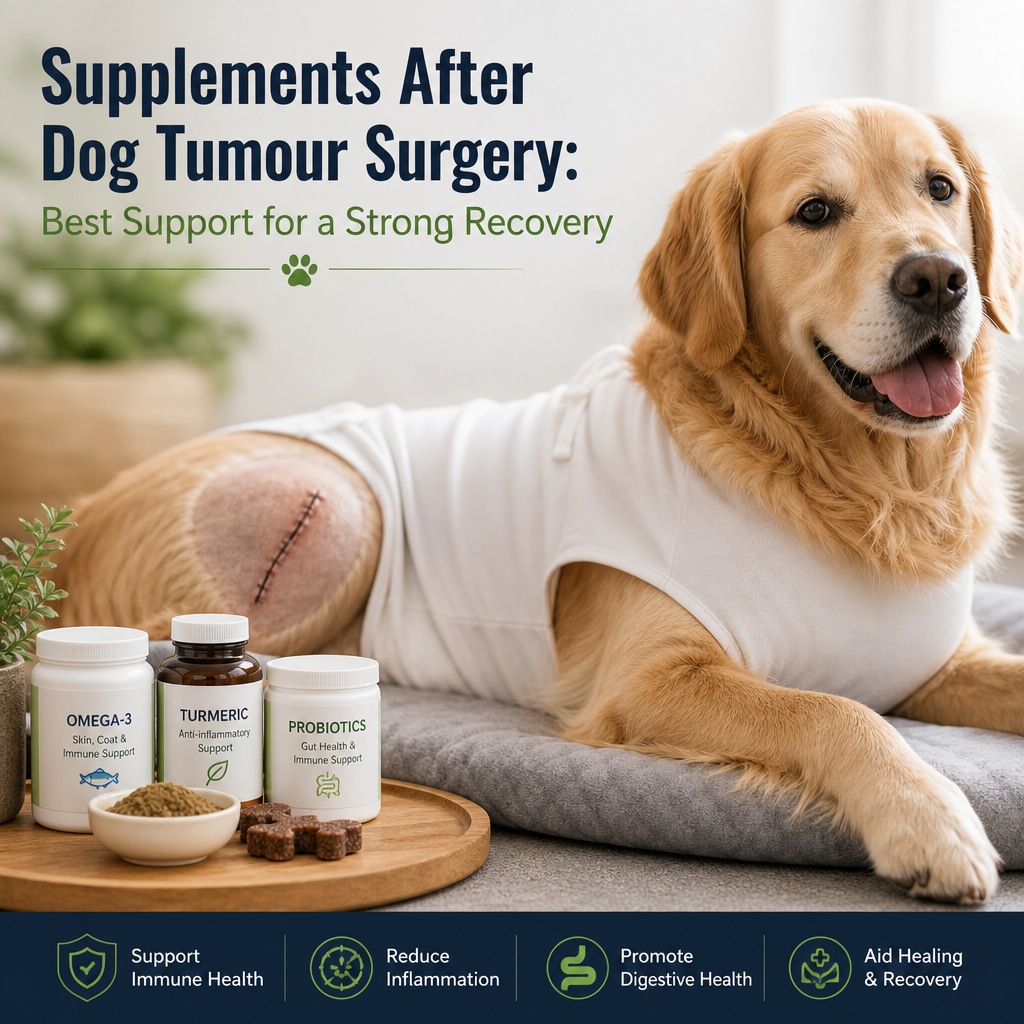
Heling efter hundekræftoperation begynder så snart operationen er afsluttet. I de første dage er de vigtigste prioriteter at beskytte såret, kontrollere smerte, forhindre infektion og sikre, at hunden spiser og drikker tilstrækkeligt. Nogle hunde kommer sig hurtigt, mens andre kan have brug for flere uger, før de genvinder deres sædvanlige energi.
Din dyrlæge kan ordinere smertelindring, antibiotika, antiinflammatorisk medicin eller andre behandlinger. Disse medicin skal gives nøjagtigt som anvist. Det er særligt vigtigt ikke at tilføje menneskelige smertestillende midler, urteprodukter eller håndkøbsmedicin uden godkendelse, da nogle kan forårsage forgiftning, blødning, nyreskader eller farlige interaktioner.
En opfølgningsaftale er ofte nødvendig for at vurdere sårheling og diskutere patologiske resultater. Laboratorierapporten kan påvirke fremtidig behandling og bestemme, om støttende pleje primært skal fokusere på heling, immunhelse, fordøjelseskomfort eller langsigtet kræftbehandling.
I mange tilfælde er de første 10 til 14 dage den mest delikate del af helingen. En hund kan virke lysere den ene dag og mere træt den næste, især efter en større procedure. Den variation er normal, men forværret smerte, hævelse eller appetittab bør altid rapporteres. I denne fase bør kosttilskud efter hundetumørsoperation kun vælges, hvis de passer til hundens nuværende tilstand og medicinplan.
Det er også værd at huske, at bedring ikke kun er fysisk. En hund kan føle sig urolig efter operationen, især hvis husstandens rutine ændrer sig, eller hvis hunden skal bære en e-krave. At holde miljøet roligt, forudsigeligt og stille kan reducere stress og gøre fodring og medicinering lettere. Små komforter betyder noget: en blød seng, nem adgang til vand og blid beroligelse kan alle støtte helingsprocessen.
Hvor kosttilskud efter hundetumørsoperation kan hjælpe
Kosttilskud er ikke en kur mod kræft, og der findes ikke et universelt produkt, der passer til hver genoprettende hund. Dog kan udvalgte kosttilskud støtte specifikke behov, når de bruges sammen med en afbalanceret kost og veterinærpleje.
De bedste produkter er dem, der udfylder et reelt hul, såsom nedsat appetit, fordøjelsesproblemer, mobilitetsstivhed eller et behov for yderligere ernæringsmæssig støtte. Hvis du sammenligner muligheder, kan en praktisk guide som Bedste kosttilskud til hunde med kræft: 7 essentielle støtte tips fra UK hjælpe dig med at forstå, hvordan valg af støttepleje normalt vurderes.
Når man tænker på kosttilskud efter hundetumoroperation, hjælper det at adskille “hjælpsomme” fra “nødvendige.” Hjælpsomme produkter kan forbedre komfort, appetit eller næringsindtag. Nødvendige produkter er dem, din dyrlæge har anbefalet for at imødekomme et klart behov. Den sikreste genopretningsplan starter med nødvendighed og tilføjer derefter kun det, der er virkelig nyttigt.
Ejere føler nogle gange pres for at gøre alt, hvad der er muligt efter en kræftdiagnose, men mere er ikke altid bedre. En hund, der allerede tager smertelindring og anti-kvalme medicin, har måske ikke brug for en lang liste af ekstra produkter. I mange tilfælde kommer den mest effektive støtte fra en simpel rutine bygget omkring fødeindtag, sårpleje, hvile og et eller to velvalgte kosttilskud.
Omega-3 fedtsyrer
Fiskolie, der indeholder EPA og DHA, diskuteres ofte i støtte til hundekræft. Disse essentielle fedtsyrer kan hjælpe med at støtte en sund inflammatorisk respons, hudtilstand og generel ernæringsstatus. De kan være særligt nyttige for hunde, hvis appetit er nedsat, eller hvis deres kost kræver yderligere ernæringsmæssig støtte.
Kvalitet og dosering betyder noget. Fiskolie kan bidrage med ekstra kalorier og kan øge risikoen for blødning i nogle situationer, især når den kombineres med visse medikamenter eller før en anden procedure. Vælg et veterinær-anbefalet produkt og spørg om den korrekte dosis baseret på kropsvægt.
Omega-3'er overvejes også ofte, fordi de er nemme at tilsætte til mad og kan være nyttige for hunde, der har for meget ondt til at spise store måltider. Når de bruges godt, passer de naturligt ind i en bredere genopretningsplan, der støtter heling uden at overvælde fordøjelsessystemet.
Hvis du stadig sammenligner mærker eller formler, skal du se efter klare ingrediensetiketter, en pålidelig producent og beviser for, at produktet er blevet testet for kvalitet. Kosttilskud efter hundetumoroperation bør ideelt set være enkle at dosere, lette at tolerere og passende for hundens nuværende medicinliste.
Probiotika og fordøjelsessupport
Anæstesi, antibiotika, stress, kostændringer og reduceret aktivitet kan alle påvirke fordøjelsen. Et veterinært probiotikum kan hjælpe med at opretholde en sund balance af tarmbakterier og støtte normal afføringskvalitet. Nogle produkter indeholder også præbiotiske fibre, der nærer gavnlige bakterier.
Probiotika bør introduceres gradvist, især hvis hunden allerede har diarré, opkastning eller en følsom mave. Vedvarende fordøjelsessymptomer kræver veterinær vurdering i stedet for kun at stole på kosttilskud.
I en hund, der kommer sig langsomt, kan fordøjelsesbalance gøre en mærkbar forskel for energi og appetit. Det er en af grundene til, at kosttilskud efter hundetumorskirurgi er mest nyttige, når de er tilpasset de symptomer, der faktisk er til stede, snarere end at blive tilføjet af vane.
Fordøjelsessupport kan også være vigtig, hvis hundens appetit falder efter operationen, eller hvis smertemedicin forårsager forstoppelse eller kvalme. I sådanne tilfælde kan det rigtige probiotikum eller fiberkilde hjælpe med at forbedre afføringskvaliteten og gøre fodring mere behagelig. Men hvis hunden ikke kan holde maden nede, har blodig diarré eller bliver dehydreret, er kosttilskud ikke nok, og der er brug for hurtig veterinær opmærksomhed.
Antioxidanter
Vitaminer C og E, selen og andre antioxidanter er nogle gange inkluderet i produkter til støtte for hunde med kræft. Disse næringsstoffer hjælper med at beskytte celler mod oxidativt stress, men mere er ikke nødvendigvis bedre. Høje doser kan være skadelige, og antioxidanternes rolle kan afhænge af kræfttypen og behandlingsplanen.
Hunde, der modtager kemoterapi eller strålebehandling, bør kun modtage antioxidantkosttilskud med onkologiteamets godkendelse. Nogle behandlinger virker delvist gennem oxidative mekanismer, så uovervåget supplementering kan potentielt forstyrre den tilsigtede terapi. For generel baggrund om, hvordan beslutninger om kræftbehandling træffes i veterinærmedicin, American Veterinary Medical Association's vejledning om kræft hos kæledyr er en nyttig reference.
Antioxidantbrug bør bedst betragtes som en del af en bredere medicinsk diskussion, ikke som en automatisk tilføjelse til kosten. Hvis hunden kommer sig godt, spiser ordentligt og ikke modtager yderligere kræftbehandling, kan det veterinære team stadig beslutte, at en grundlæggende restitutionskost er tilstrækkelig. I så fald kan tilføjelse af antioxidanter ikke forbedre resultatet og kan unødigt komplicere planen.
Led- og mobilitetsstøtte
Efter operationen kan hunde bevæge sig anderledes eller forblive inaktive i en længere periode. Hvis tumoren påvirkede en lem, led, knogle eller nærliggende væv, kan mobilitetsstøtte blive særligt vigtig. Ingredienser som glucosamin, chondroitin, grøn-læbet musling eller specifikke omega-3 præparater kan overvejes for ledkomfort.
Disse produkter virker normalt gradvist og er ikke erstatninger for ordineret smertemedicin eller rehabilitering. Kontrolleret motion, fysioterapi og vægtstyring kan give lige så store eller større fordele for mobilitet.
Hvis din hund er stiv efter hvile, kan korte snorvandringer og blid bevægelse hjælpe mere end at tilføje flere produkter på én gang. En simpel, stabil rutine fungerer ofte bedre end en kompliceret stak af kosttilskud efter hundetumoroperation.
Mobilitetsstøtte er især værdifuld for ældre hunde eller hunde, der allerede har haft arthritis før operationen. Efter operationen kan nedsat bevægelse hurtigt føre til muskeltab og stivhed, så en plan, der kombinerer smertestyring, hvile og omhyggeligt timet motion, er normalt mere effektiv end at stole på et enkelt kosttilskud alene.
Protein og ernæringsmæssig støtte
Tilstrækkeligt protein og kalorier er essentielle for vævsreparation, immunfunktion og vedligeholdelse af muskel. Nogle hunde har større gavn af en komplet, letfordøjelig veterinærdiæt end fra en samling af kosttilskud. Appetitstimulerende midler, genopretningsfødevarer eller ernæringsgeler kan anbefales, når det er svært at spise.
Foretag ikke store kostændringer umiddelbart efter operationen, medmindre din dyrlæge rådgiver det. Pludselige ændringer kan forårsage gastrointestinal ubehag, mens hjemmelavede diæter kan blive ernæringsmæssigt ufuldstændige, hvis de ikke er formuleret af en veterinærernæringsekspert.
For ejere, der søger mere vejledning om praktiske ernæringsvalg, Hundekræft Kosttilskud: 7 Vigtige, Overkommelige og Positive Købs Tips til UK Kæledyrsejere tilbyder et nyttigt sammenligningspunkt for støtteprodukter, der kan passe ind i en genopretningsplan.
Protein fortjener særlig opmærksomhed under genopretning, fordi kroppen har brug for det til at genopbygge væv og bevare magert muskelmasse. Hvis en hund spiser mindre end normalt, er målet ofte at få hver måltid til at tælle i stedet for at give større portioner. Letfordøjeligt foder, opvarmede måltider eller små hyppige portioner kan være mere nyttige end at tilføje flere pulvere eller kapsler. I den sammenhæng kan kosttilskud efter hundetumoroperation være en nyttig tilføjelse, men de bør aldrig overskygge grundlaget for en komplet diæt.
Støtte til hunden efter tumoroperation derhjemme
Effektiv støtte efter hundetumoroperation involverer praktisk pleje så meget som kosttilskud. Hold snittet rent og tørt, forhindre slikning med en passende beskyttelseskant eller beklædning, og begræns løb, spring og voldsom leg, indtil dyrlægeteamet bekræfter, at aktiviteten kan øges.
Inspicer såret dagligt for hævelse, rødme, udflåd, åbning, overdreven varme eller en forværret lugt. Mild blå mærker eller hævelse kan forekomme, men pludselige ændringer bør rapporteres. Overvåg appetit, vandindtag, vandladning, afføring, vejrtrækning og adfærd. En simpel genopretningsdagbog kan hjælpe dig med at identificere tendenser og give nyttige oplysninger under opfølgningsbesøg.
Komfortabelt sengetøj og et stille rum kan reducere stress. Hunde bør generelt opfordres til at tage korte, kontrollerede gåture, når det er tilladt, da blid bevægelse kan støtte cirkulationen og forhindre stivhed. Aktiviteten skal dog matche operationsstedet og dyrlægens instruktioner.
Mange ejere finder det også nyttigt at lave en daglig tjekliste for medicin, måltider, sårkontroller og hvileperioder. Dette holder helingsprocessen forudsigelig og reducerer chancen for glemte doser eller overaktivitet. Hvis din hund allerede modtager et led- eller fordøjelsesprodukt, skal du nøje notere eventuelle ændringer, så dyrlægen kan se, om planen hjælper.
En anden nyttig hjemmeplejevaner er at holde forsyninger tæt ved hånden. Et genopretningskit kan inkludere eventuelle ordinerede mediciner, et rent håndklæde, en reserve e-krave, en måleske til madtilsætningsstoffer og en notesbog til observationer. Dette kan gøre daglig pleje lettere og reducere risikoen for fejl, når flere opgaver skal udføres på forskellige tidspunkter.
Det hjælper også at holde besøgende og husstøj lavt i den tidlige genopretningsperiode. Selv velmenende begejstring kan opfordre en hund til at stå, hoppe eller blive overaktiv. Rolige omgivelser understøtter hvile, og hvile understøtter heling. På denne måde fungerer hjemmeledelse og kosttilskud efter hundetumoroperation bedst sammen, når genopretningsmiljøet er kontrolleret og konsekvent.
Fodring, hydrering og appetitstøtte
At spise nok er en af de vigtigste dele af postoperativ genopretning. Hvis en hund stopper med at spise, bliver det sværere at opretholde styrke, hele væv og tåle medicin. Frisk vand skal altid være tilgængeligt, og nogle hunde kan have brug for opmuntring til at drikke oftere efter operationen.
Små, hyppige måltider er ofte lettere end et eller to store måltider. At varme maden let, tilbyde stærkt lugtende dyrlæge-godkendte diæter eller bruge appetitvenlige genopretningsfødevarer kan nogle gange gøre en stor forskel. Hvis hunden er kvalm, kan dyrlægen ordinere medicin mod kvalme, før der foreslås kosttilskud.
Hydrering betyder lige så meget som kalorier. Dehydrering kan bremse heling og få en hund til at virke svag eller tilbagetrukket. Tegn inkluderer klæbrige tandkød, reduceret vandladning, indtrukne øjne og øget sløvhed. Hvis disse optræder, skal du kontakte dyrlægeteamet i stedet for at forsøge at håndtere problemet med kosttilskud alene.
Når hunde ikke spiser godt, spørger ejere ofte, om pulvere, olier eller tabletter vil løse problemet. I virkeligheden afhænger svaret af, hvorfor appetitten er faldet. Smerte, kvalme, angst, forstoppelse eller infektion kan alle reducere madindtaget. Kosttilskud efter hundetumoroperation er mest effektive, når den underliggende årsag først forstås og håndteres.
En fodringsplan bør også respektere eventuelle særlige instruktioner fra kirurgen eller onkologiteamet. For eksempel har nogle hunde brug for en mild kost efter anæstesi, mens andre har det bedre med deres sædvanlige mad for at undgå maveproblemer. Den sikreste tilgang er at spørge, før man ændrer noget stort.
Hvordan man vælger sikre produkter
Kosttilskud er ikke alle skabt lige. De bedste produkter er gennemsigtige omkring ingredienser, dosering og produktionsstandarder. Undgå produkter med vage proprietære blandinger, overdrevne løfter eller påstande, der lyder for gode til at være sande. Et fornuftigt genopretningsprodukt bør støtte sundheden, ikke love at helbrede sygdom.
Se efter produkter, der er lavet til hunde i stedet for tilpasset fra menneskelige formler. Menneskelige kosttilskud kan indeholde sødemidler, smagsstoffer eller doseringer, der er upassende til hunde. Hvis et produkt ikke har en klar etikette eller ingen information om kvalitetskontrol, er det bedre at vælge en anden mulighed.
Når du er i tvivl, spørg dit veterinærteam, om produktet er passende til din hunds operation, tumor type og nuværende medicin. Dette er især vigtigt, hvis hunden har leversygdom, nyresygdom, blødningsproblemer, pancreatitis eller en historie med fordøjelsesmæssig følsomhed.
For hundeejere, der sammenligner valg på tværs af forskellige stadier af kræftbehandling, kan et bredere overblik som Hund Tumor Kosttilskud: 7 Sikker, Effektive Støtte Muligheder Sammenlignet hjælpe med at ramme beslutningen. Det er ofte lettere at træffe et klogt valg, når du forstår, hvilke ingredienser der er rettet mod appetit, mobilitet, immunitet eller generel støtte.
Det er også rimeligt at beslutte, at der ikke er behov for kosttilskud med det samme. Hvis hunden spiser godt, bevæger sig komfortabelt og heler normalt, kan den simpleste plan være den bedste plan. Kosttilskud efter hundetumoroperation bør tilføjes af en grund, ikke bare fordi de er tilgængelige.
Sikkerhedsforanstaltninger før man giver kosttilskud
Før du vælger kosttilskud efter hundetumoroperation, skal du give dyrlægen en komplet liste over alt, hvad din hund modtager, inklusive receptpligtige medicin, vitaminer, godbidder, urteprodukter og topiske præparater. Dette hjælper med at identificere mulige interaktioner.
Undgå produkter, der indeholder uoplyste blandinger, overdrevne mineraler, stimulanter eller ingredienser beregnet til mennesker. Køb fra anerkendte producenter, der giver klar mærkning og kvalitetsprøvning. Antag aldrig, at et “naturligt” produkt automatisk er sikkert. Hvidløg, visse koncentrerede æteriske olier, høj dosis vitamin D og nogle urteingredienser kan være farlige for hunde.
Kosttilskud bør også pauses eller justeres før fremtidig operation, biopsi, tandbehandling eller invasive procedurer, hvis veterinærteamet rådgiver det. Nogle produkter påvirker koagulation, blodtryk, sedation eller levermetabolisme.
Som en praktisk regel, introducer ét produkt ad gangen og vent for at se, hvordan hunden reagerer. Det gør det lettere at opdage bivirkninger som løs afføring, nedsat appetit, kløe eller usædvanlig søvnighed. Hvis et produkt ikke klart forbedrer genopretningen, kan det være, at det ikke er værd at fortsætte.
Opbevar alle produkter sikkert uden for rækkevidde, især hvis de er smagssatte eller ligner godbidder. Hunde, der kommer sig efter operation, kan være mere tilbøjelige til at tygge emballage, og utilsigtet overforbrug kan skabe akutte problemer. Selv et supplement, der er nyttigt i den rette dosis, kan blive skadelig, hvis hunden spiser for meget på én gang.
Hvornår man skal kontakte dyrlægen
Kontakt det veterinære team hurtigt, hvis din hund nægter mad i en længere periode, gentagne gange kaster op, udvikler svær diarré, virker usædvanligt svag, har blege tandkød, har svært ved at trække vejret, viser ukontrolleret smerte, eller har svært ved at urinere. Ring straks, hvis snittet åbner, bløder kraftigt, producerer pus, eller bliver hurtigt hævet.
Langsigtet opfølgning er lige så vigtig. Regelmæssige undersøgelser og anbefalede billeddannelser eller blodprøver kan tidligt opdage tilbagefald, behandlingsbivirkninger eller ernæringsproblemer. Kosttilskud kan bidrage til komfort og generelt velvære, men den stærkeste genopretningsplan er en, der er baseret på tumordiagnosen, kirurgiske fund, medicinplanen og din hunds skiftende behov.
For mange familier er den mest beroligende tilgang at betragte genopretning som en række små, målbare skridt. God sårpleje, en stabil foderrutine, passende aktivitetsbegrænsning og fornuftige kosttilskud efter hundetumoroperation kan arbejde sammen for at støtte heling uden at tilføje unødvendig risiko.
Planlægning af næste plejestadium
Genopretning slutter ikke, når stingene fjernes. Afhængigt af tumorens type og kanter kan din dyrlæge diskutere yderligere behandling, regelmæssig blodprøvning, gentagen billeddannelse eller langsigtet støttepleje. Det er her, omhyggelig planlægning betyder mest.
Nogle hunde har kun brug for kortvarig hjælp efter operation. Andre kan have brug for løbende kræftstøtte, især hvis patologirapporten antyder en højere risiko for tilbagefald. Hvis det er tilfældet, bør produkter, der bruges nu, overvejes i konteksten af den næste behandlingsfase snarere end som en engangsløsning.
Ejere spørger ofte, om ét produkt er nok, eller om flere bør kombineres. Svaret afhænger af hundens appetit, vægt, mobilitet, medicinplan og laboratorieresultater. I mange tilfælde er en kost af høj kvalitet plus en eller to fornuftige tilføjelser mere effektiv end en lang liste af kosttilskud efter hundetumoroperation.
Hvis målet er bredere kræftstøtte ud over den umiddelbare genopretningsperiode, kan det også være nyttigt at gennemgå Hund Tumor Kosttilskud: 7 Sikker, Effektive Støtte Muligheder Sammenlignet for et bredere kig på støtteplejevalg.
Efterhånden som genopretningen skrider frem, skal du fortsætte med at gennemgå, hvad der virker, og hvad der ikke gør. Et supplement, der gav mening i den første uge, er måske ikke længere nødvendigt, når appetitten forbedres, eller hunden begynder at gå normalt igen. At revurdere planen med din dyrlæge hjælper med at undgå unødvendige produkter og holder fokus på ægte genopretningsmål.
I sidste ende kommer det bedste resultat normalt fra en simpel formel: følg de kirurgiske efterbehandlingsinstruktioner omhyggeligt, giv en komplet og fordøjelig kost, brug medicin nøjagtigt som ordineret, og tilføj kosttilskud efter hundetumoroperation kun når de har et klart formål. Den tilgang er praktisk, sikrere og mere tilbøjelig til at støtte en stærk bedring.