
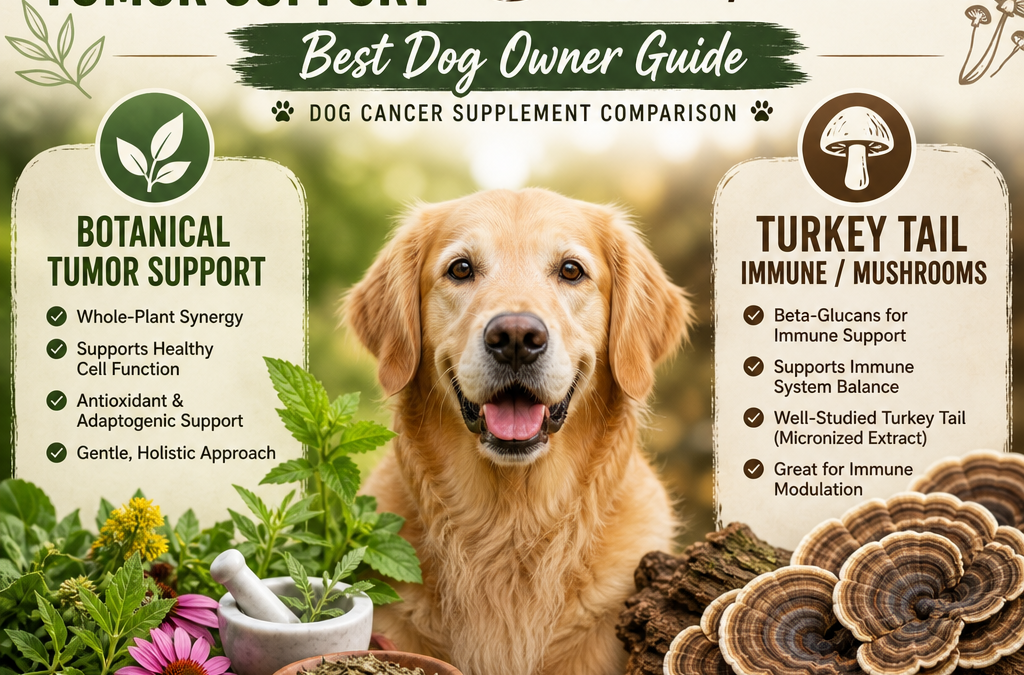
Botanisk tumor støtte vs Turkey Tail / immun / svampe er en vigtig sammenligning for hundeejere, der udforsker komplementær støtte under kræftbehandling. Begge tilgange kan anvendes sammen med konventionel veterinærbehandling, men de er ikke udskiftelige. Botaniske formler kombinerer ofte flere planteekstrakter udvalgt til antioxidant, anti-inflammatorisk, fordøjelses- eller generelle velværeformål, mens Turkey Tail og andre medicinske svampe typisk bruges til at støtte immunfunktionen.
En gennemtænkt sammenligning af hundekræfttilskud bør fokusere på beviser, sikkerhed, produktkvalitet, behandlingskompatibilitet og den enkelte hunds diagnose. Tilskud kan tilbyde støttende fordele, men de bør aldrig erstatte kirurgi, kemoterapi, strålebehandling, målrettet terapi, smertestyring eller andre veterinæranbefalinger.
Indholdsfortegnelse
- Forstå forskellen mellem botanisk og svampestøtte
- Hvad siger forskningen om Turkey Tail til hunde?
- Potentielle fordele ved botanisk tumor støtte
- Sammenligning af immun svampe med multi-urte formler
- Sikkerhed og medicininteraktioner
- Hvordan man vurderer et hundekræfttilskud
- At træffe en praktisk beslutning
Forstå forskellen mellem botanisk og svampestøtte
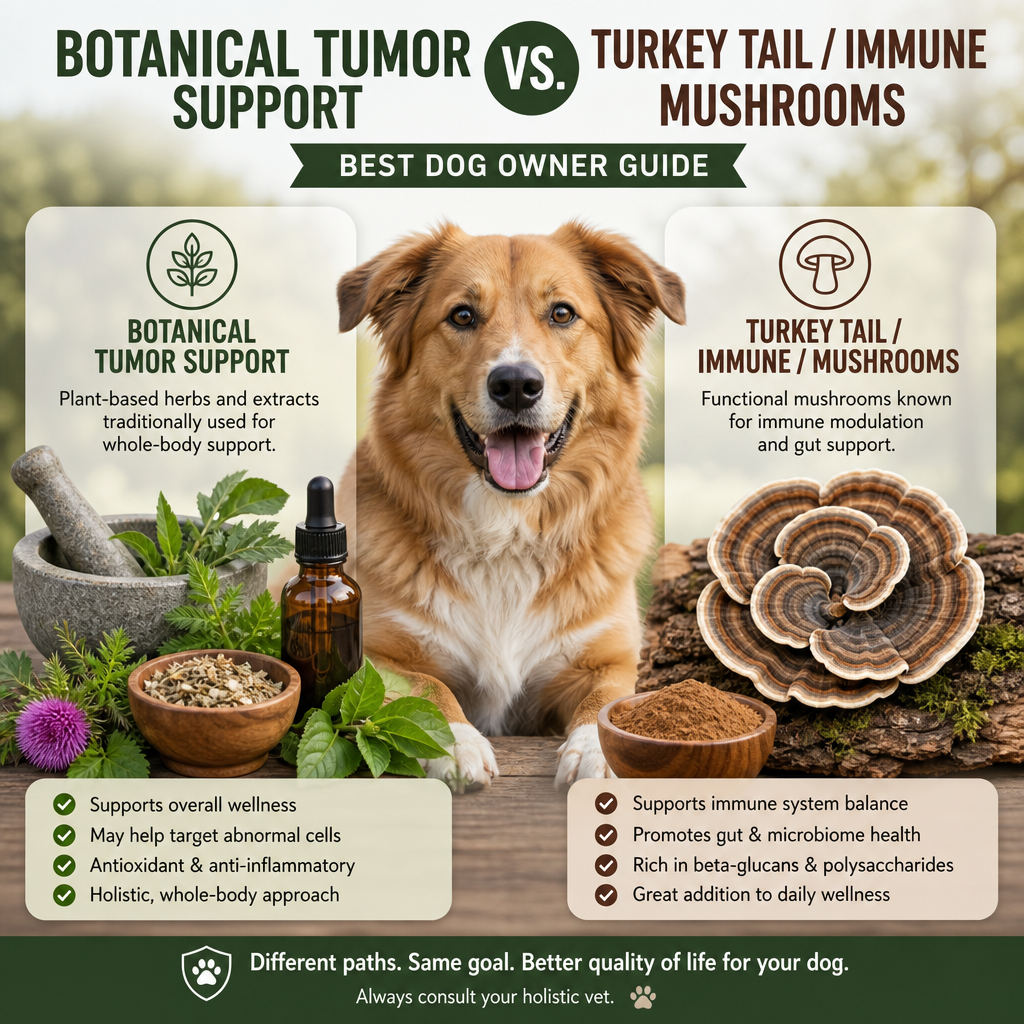
Botanisk tumor støtte refererer normalt til en blanding af plantebaserede ingredienser. Afhængigt af produktet kan disse inkludere urter, rødder, medicinske planter, koncentrerede ekstrakter, vitaminer, mineraler og andre forbindelser. Deres tilsigtede roller kan variere meget. Nogle formler er designet til at støtte appetit og fordøjelse, mens andre lægger vægt på antioxidantaktivitet, normal inflammatorisk balance eller generel vitalitet.
Turkey Tail, videnskabeligt kendt som Trametes versicolor eller Coriolus versicolor, er en medicinsk svamp, der har fået særlig interesse inden for immunstøtteforskning. Den indeholder polysaccharider og andre forbindelser, der kan påvirke immun signalering. Andre svampe, der ofte findes i hundetilskud, inkluderer Reishi, Maitake, Shiitake, Agaricus blazei og Cordyceps. For et relateret kig på svampebaserede produkter, se alternativer til medicinske svampe til hunde.
Den væsentlige forskel er, at botaniske blandinger ofte retter sig mod flere kroppens systemer gennem en kombination af planteforbindelser, mens svampeprodukter generelt er centreret omkring immunmodulation og svampe-specifikke bestanddele. I praktiske termer kan botanisk tumor støtte føles bredere, mens en svampeformel ofte er mere fokuseret.
Hvad siger forskningen om Turkey Tail til hunde?
Turkey Tail har tiltrukket opmærksomhed på grund af forskning, der involverer polysaccharidforbindelser som PSK og PSP. I menneskelig medicin er disse forbindelser blevet undersøgt som hjælpemidler til konventionel kræftbehandling. Forskning på hunde er mere begrænset, men nogle tidlige studier har undersøgt Turkey Tail hos hunde med naturligt forekommende kræftformer.
Et ofte diskuteret område er hundehemangiosarkom, en aggressiv kræft, der påvirker blodkarvæv. Foreløbig forskning har undersøgt, om standardiserede Turkey Tail-ekstrakter kan hjælpe med at støtte hunde, når de bruges sammen med veterinær onkologi. Disse fund er lovende, men bør fortolkes omhyggeligt. Små studier beviser ikke, at hvert Turkey Tail-produkt vil give de samme resultater, og de beviser ikke, at svampe kan behandle eller helbrede kræft.
Produktstandardisering er betydningsfuld. Et kosttilskud lavet af hele svampepulver kan adskille sig væsentligt fra et, der indeholder et koncentreret, testet ekstrakt. Forskelle i svampearter, vækstbetingelser, ekstraktionsmetode, beta-glucanindhold, forureninger og portionsstørrelse kan påvirke kvalitet og konsistens.
Når ejere sammenligner botanisk tumorstøtte vs Turkey Tail / immun / svampe, kommer den stærkeste evidens normalt fra produkter, der klart identificerer kilde-materialet og testmetoderne. National Center for Complementary and Integrative Health tilbyder en nyttig oversigt over kosttilskudskvalitet og sikkerhed på Kosttilskud og kræft.
Potentielle fordele ved botanisk tumor støtte
Botaniske formler kan være nyttige, når en hund har brug for bred ernæringsmæssig og wellness-støtte. Afhængigt af ingredienserne kan et omhyggeligt designet produkt hjælpe med at adressere:
- Appetit og fordøjelseskomfort
- Normal inflammatorisk balance
- Oxidativt stress
- Lever- og metabolisk støtte
- Generel energi og vitalitet
- Genopretning efter sygdom eller behandling
Dog betyder “naturlig” ikke automatisk, at det er sikkert eller effektivt. Botaniske ingredienser kan have lægemiddellignende effekter. Nogle kan påvirke blodkoagulation, blodtryk, leverenzymer, immunaktivitet eller sedation. En blanding med mange ingredienser kan også gøre det svært at identificere, hvilken komponent der hjælper eller forårsager en reaktion.
Af denne grund bør hundeejere undgå at bedømme et botanisk produkt kun ud fra antallet af ingredienser, der er angivet på etiketten. Flere ingredienser betyder ikke nødvendigvis bedre støtte. En kortere formel med gennemsigtig dosering og kvalitetstestning kan være mere passende end en kompleks blanding med proprietære mængder.
I konteksten af botanisk tumorstøtte vs Turkey Tail / immun / svampe vælges den plantebaserede mulighed ofte for bredere støtte mål snarere end et enkelt immunfokuseret formål. Den bredere rækkevidde kan være nyttig, men kræver også en mere omhyggelig gennemgang af ingredienslisten og hundens nuværende medicin.
Sammenligning af immun svampe med multi-urte formler
Når man overvejer botanisk tumorstøtte vs Turkey Tail / immun / svampe, afhænger det bedste valg af hundens kliniske behov og målene for kosttilskuddet.
Svampebaserede produkter kan være mere tiltalende, når det primære mål er immunstøtte, og formlen giver klart angivne svampearter, ekstraktforhold og beta-glucan-niveauer. Turkey Tail vælges ofte, fordi det har mere kræftrelateret hundeforskning end mange andre svampe.
En botanisk blanding kan overvejes, når hunden har brug for bredere støtte, såsom hjælp til at opretholde fordøjelsen, appetitten eller normale inflammatoriske reaktioner under behandling. Men det bredere udvalg af ingredienser skaber også flere muligheder for interaktioner. En formel, der indeholder flere urter, kan være mindre egnet til en hund, der tager flere medikamenter, end et enklere, velkarakteriseret produkt.
Ingen af kategorierne bør beskrives som universelt overlegne. Diagnosen, behandlingsplanen, blodprøver, alder, lever- og nyrefunktion samt nuværende symptomer påvirker alle beslutningen. Hvis du ønsker en landespecifik supplement sammenligning, kan denne samme praktiske tilgang ses i guider som K9 Immunity / K9 Immunity Plus Alternativ, hvor ingrediensgennemsigtighed og klinisk tilpasning betyder mere end markedsføringspåstande.
For nogle hunde kan botanisk tumor støtte vs Turkey Tail / immun / svampe slet ikke være en enten-eller beslutning. I stedet kan det bedre svar være at vælge et produkt, der matcher den højeste prioritet og undgå at stable flere overlappende formler.
Sikkerhed og medicininteraktioner
Før du introducerer et supplement, skal du drøfte det med dyrlægen eller veterinæronkologen. Dette er især vigtigt, hvis en hund modtager kemoterapi, strålebehandling, kortikosteroider, ikke-steroide antiinflammatoriske lægemidler, antikoagulantia, anfaldsmedicin eller immunsuppressiv terapi.
Potentielle bekymringer inkluderer:
- Øget blødningsrisiko omkring operation
- Ændringer i lægemiddelmetabolisme
- Overdreven immunstimulering eller suppression
- Gastrointestinal ubehag
- Lever- eller nyrestress
- Allergiske reaktioner
- Forstyrrelse af omhyggeligt timet kræftbehandling
Kosttilskud skal muligvis også stoppes før operation eller visse procedurer. En dyrlæge kan hjælpe med at afgøre, om et produkt skal bruges, pauses eller undgås helt.
Dette er en grund til, at botanisk tumor støtte vs Turkey Tail / immun / svampe bør gennemgås med samme alvor som enhver anden del af en kræftbehandlingsplan. Et supplement, der virker blidt på papiret, kan stadig påvirke hundens behandlingsplan eller laboratorieværdier.
Hvordan man vurderer et hundekræfttilskud
En pålidelig hund kræft supplement sammenligning bør begynde med etiketten og producenten snarere end markedsføringspåstande. Se efter følgende kvaliteter:
- Fuld ingrediensafsløring: Hver aktiv ingrediens skal være angivet med en mængde pr. portion.
- Klare doseringsinstruktioner: Etiketten skal forklare dosering efter vægt og identificere, om anbefalingerne er til vedligeholdelse eller terapeutisk støtte.
- Tredjeparts testning: Testning for identitet, styrke, tungmetaller, pesticider, mikrober og andre forurenende stoffer tilføjer tillid.
- Passende ekstraktionsdetaljer: For svampe skal produktet forklare, om det bruger frugtlegemer, mycelium, varmt vand ekstraktion eller en anden metode.
- Veterinær- eller videnskabelig overvågning: Formler udviklet med kvalificeret veterinær- eller videnskabelig input er at foretrække frem for produkter, der udelukkende er baseret på testimonials.
- Batch konsistens: Et anerkendt firma bør være i stand til at levere analysecertifikater eller batchinformation.
Vær forsigtig med produkter, der lover at mindske tumorer, helbrede kræft, erstatte kemoterapi eller virke for enhver type kræft. Disse påstande er ikke i overensstemmelse med ansvarlig veterinær pleje.
Når folk spørger, om botanisk tumor støtte vs Turkey Tail / immun / svampe er den bedre mulighed, afhænger svaret normalt af, hvilket produkt der kan bevise kvalitet, konsistens og rimelig kompatibilitet med hundens nuværende plejeplan.
At træffe en praktisk beslutning
Den mest nyttige tilgang er at definere formålet med supplementeringen. Er målet immunstøtte, appetitvedligeholdelse, fordøjelseskomfort, genopretning eller generel livskvalitet? Når målet er klart, vælg det simpleste produkt, der passer til det formål og kan overvåges sikkert.
Introducer kun ét nyt supplement ad gangen. Begynd med den dyrlæge-godkendte mængde, observer hunden i flere dage, og hold øje med appetit, afføringskvalitet, energi, opkast, kløe og andre ændringer. Hold en skriftlig liste over alle medikamenter og kosttilskud, så det veterinære team kan gennemgå den komplette behandlingsplan.
Livskvalitet bør forblive det centrale mål. Et supplement er ikke nyttigt, hvis det forårsager kvalme, reducerer appetit, komplicerer behandlingen eller skaber unødvendige omkostninger uden en klar fordel. Regelmæssige undersøgelser og anbefalede blodprøver er essentielle for at overvåge sygdommen og opdage behandlingsrelaterede ændringer.
I sidste ende er botanisk tumor støtte vs Turkey Tail / immun / svampe ikke en konkurrence med én universel vinder. Turkey Tail kan være en rimelig immunstøtte mulighed for nogle hunde, mens en omhyggeligt udvalgt botanisk formel bedre kan imødekomme bredere wellness behov. Det sikreste valg er et baseret på veterinær vejledning, gennemsigtig produktkvalitet, realistiske forventninger og tæt observation af den enkelte hund.
For hundeejere i Estland og videre er målet ikke at finde et perfekt supplement. Det er at vælge det mest passende støtteværktøj, bruge det omhyggeligt og holde hundens veterinære behandlingsplan i centrum for hver beslutning.