
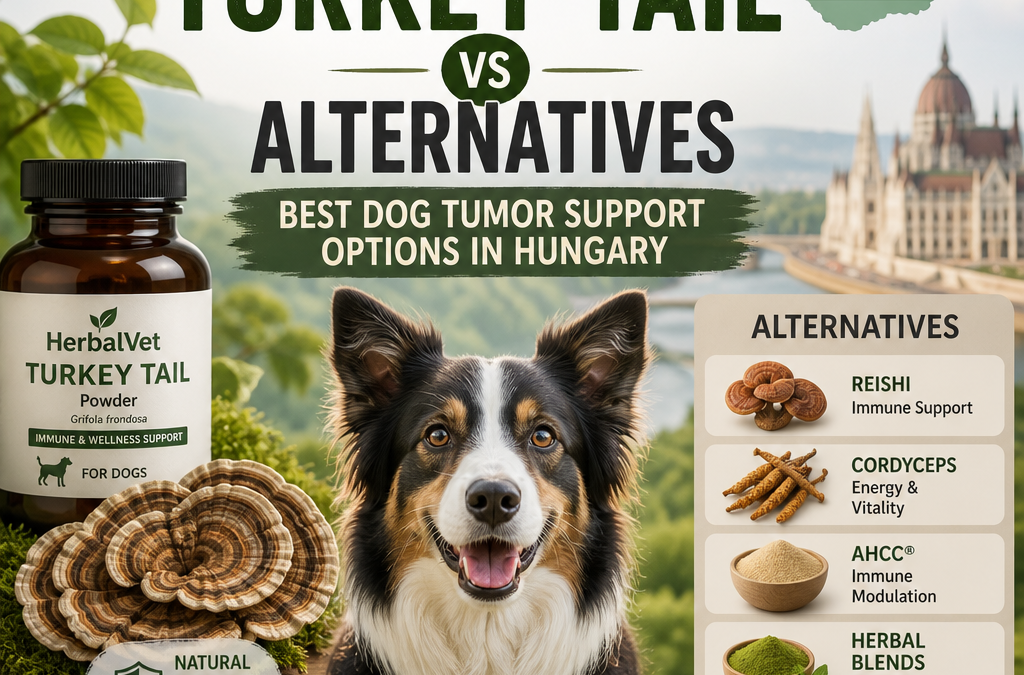
HerbalVet Turkey Tail vs Alternativer er en vigtig sammenligning for ungarske hundeejere, der søger støtte under en kæledyrs kræftbehandling. Turkey Tail svamp, veterinære diæter, kosttilskud og integrative terapier kan alle spille en rolle i en bredere plejeplan. Dog bør intet kosttilskud erstatte diagnose, kirurgi, kemoterapi, strålebehandling eller andre behandlinger anbefalet af en kvalificeret dyrlæge.
Forståelse af Turkey Tail for hunde
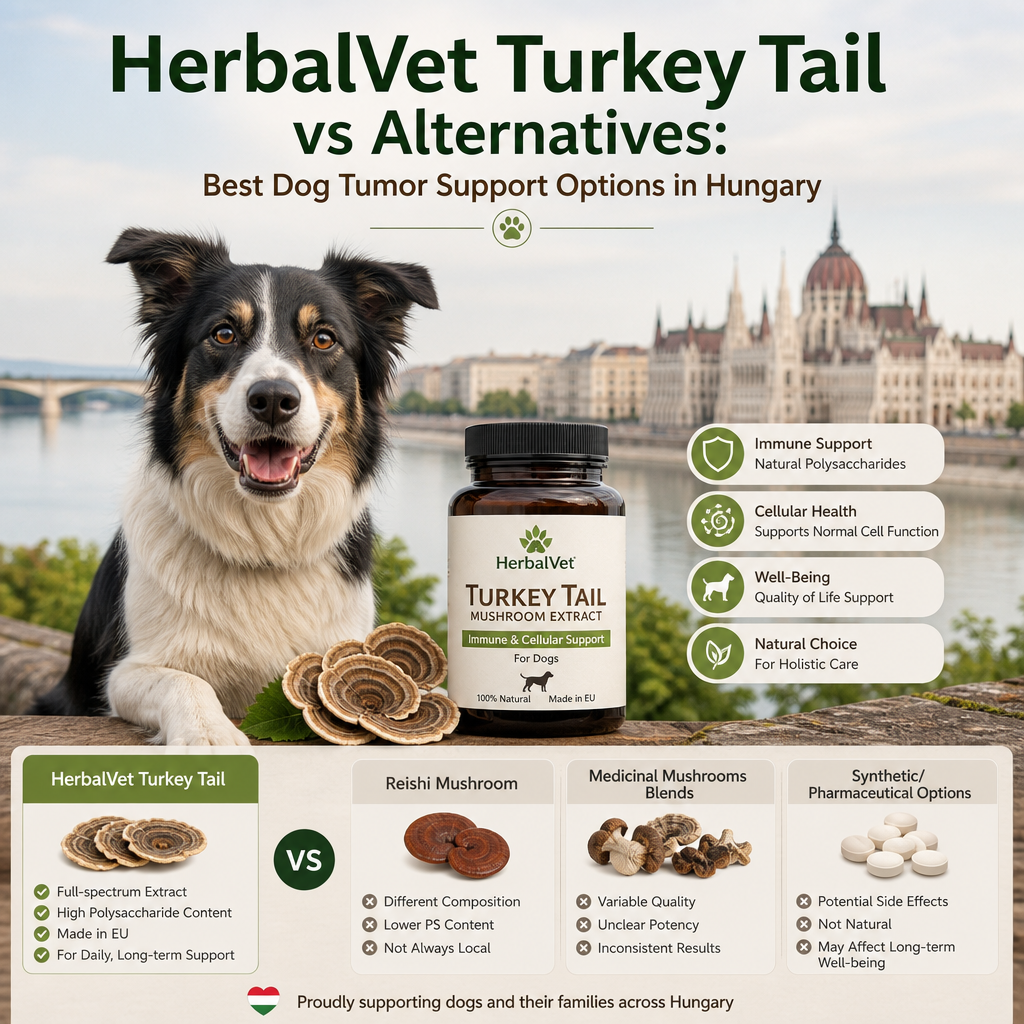
Tyrkisk Hale (Trametes versicolor) er en medicinsk svamp, der traditionelt bruges i forskellige wellness-praksisser. Den indeholder beta-glucaner og andre forbindelser, der har tiltrukket videnskabelig interesse på grund af deres potentielle virkninger på immunaktivitet. Hos hunde diskuteres Turkey Tail produkter ofte som komplementær støtte til dyr diagnosticeret med tumorer eller der kommer sig efter intensiv behandling. For læsere, der ønsker en bredere baggrund, denne oversigt over Turkey Tail svampe for hunde med kræft forklarer, hvorfor ingrediensen er så bredt diskuteret i integrativ veterinærpleje.
Den vigtigste overvejelse er produktkvalitet. Svampe kosttilskud kan variere betydeligt i mængden af aktive forbindelser, de indeholder, den del af svampen, der bruges, udvindingsmetoder, renhed og doseringsinstruktioner. Et produkt lavet til mennesker er måske ikke passende for hunde, mens en veterinærformulering kan give klarere vejledning til dyrebrug.
Turkey Tail betragtes generelt som et støttende kosttilskud snarere end en direkte kræftbehandling. Det kan hjælpe med at opretholde den generelle tilstand hos nogle hunde, men beviserne for mange specifikke tumor typer og kliniske situationer er stadig begrænsede. Ejere bør derfor diskutere ethvert kosttilskud med deres dyrlæge, især hvis hunden modtager medicin eller gennemgår kemoterapi.
I nogle tilfælde kan dyrlæger sammenligne Turkey Tail muligheder med andre svampeprodukter eller støttende formler, der er designet til lignende mål. Det er derfor, HerbalVet Turkey Tail vs alternativer bedst forstås som et spørgsmål om pasform, kvalitet og sikkerhed snarere end en simpel søgning efter det “stærkeste” kosttilskud.
Når familier spørger om HerbalVet Turkey Tail vs alternativer, afhænger svaret normalt af hundens diagnose, appetit, nuværende behandling og tolerance over for kosttilskud. Et produkt, der fungerer godt for én patient, kan være uegnet for en anden, især hvis hunden allerede tager medicin eller har fordøjelsessensitivitet.
Støttende pleje bør også afspejle sygdommens stadium. En hund, der netop er diagnosticeret med en masse, kan have brug for en meget anden plan end en hund, der afslutter kemoterapi eller lever med kronisk kræftbehandling. I hvert tilfælde bør HerbalVet Turkey Tail vs alternativer gennemgås som en del af det større behandlingsbillede, ikke som en selvstændig beslutning.
Ejere bør også huske, at “naturlig” ikke altid betyder harmløs. Selv velkendte kosttilskud kan påvirke appetit, afføringskvalitet eller lægemiddelmetabolisme. Det er en af grundene til, at en omhyggelig diskussion med det veterinære team er så vigtig, før man starter noget nyt.
HerbalVet Turkey Tail vs Alternativer: Hvad bør ejere sammenligne?
Når man vurderer HerbalVet Turkey Tail vs alternativer, er det nyttigt at se ud over markedsføringspåstande. Flere praktiske faktorer kan hjælpe med at bestemme, om et produkt er passende. En omhyggelig gennemgang af disse detaljer kan også gøre det lettere at vælge mellem flere hundetumorstøtte muligheder uden at stole på løfter, der ikke understøttes af beviser.
En nyttig måde at nærme sig HerbalVet Turkey Tail vs alternativer på er at adskille produktkvalitet fra de ønskede resultater. Et velproduceret kosttilskud er måske stadig ikke det bedste valg for hver hund, og et billigere produkt kan være tilstrækkeligt, hvis det har klar mærkning og pålidelige produktionsstandarder.
Når folk sammenligner importerede onkologi/støtte kosttilskud, er etiketten kun én del af beslutningen. Den mest nyttige sammenligning starter med hundens virkelige behov. En hund, der taber sig, kan have brug for en kalorietæt formel, mens en hund med fordøjelsesproblemer kan have mere gavn af et blidt, letfordøjeligt produkt. En hund, der tager flere medikamenter, kan have brug for en enklere formel med færre aktive ingredienser.
Et pålideligt kosttilskud bør klart identificere svampespecien, ekstraktionsmetoden, koncentrationen og doseringsvejledningen. Nogle produkter angiver kun “svampeblanding” uden at forklare, hvor meget Turkey Tail der er inkluderet. En gennemsigtig etiket gør det lettere for en dyrlæge at vurdere mulige fordele og risici.
Når ingredienslisten er vag, bliver sammenligning vanskelig. Ejere, der prøver at beslutte mellem HerbalVet Turkey Tail vs alternativer, bør se efter et produkt, der forklarer, om det bruger frugtlegeme, mycelium eller en blandet kilde, fordi disse detaljer kan påvirke sammensætning og konsistens.
Veterinær egnethed
Produkter, der er designet specifikt til hunde, kan inkludere doseringsinstruktioner baseret på kropsvægt. De kan også undgå ingredienser, der er uegnede til dyr. Dette gør ikke automatisk hvert veterinært kosttilskud effektivt, men det kan gøre ansvarlig brug lettere.
Hvis et produkt ikke har nogen doseringsvejledning til hunde, kan ejeren og dyrlægen være nødt til at estimere brugen mere forsigtigt. I så fald bliver HerbalVet Turkey Tail vs alternativer mindre om branding og mere om, hvorvidt produktet kan bruges sikkert i en reel klinisk indstilling.
Test- og produktionsstandarder
Se efter information om batchtest, forurenende stoffer, tungmetaller, mikrobiologisk renhed og produktionskontroller. Kosttilskud, der er indkøbt i Ungarn eller importeret til Den Europæiske Union, bør ideelt set have klar mærkning og sporbarhed. Når den information mangler, kan ejere finde det svært at bedømme produktets pålidelighed.
Produktionskvalitet er vigtig, fordi hunde med kræft allerede kan være fysisk stressede. Et forurenet eller dårligt standardiseret produkt tilføjer undgåelig risiko. Af den grund bør en forsigtig køber, der sammenligner HerbalVet Turkey Tail vs alternativer, prioritere testinformation, når det er tilgængeligt.
Tolerance og bekvemmelighed
Hunde varierer i, hvordan de reagerer på kosttilskud. Pulverprodukter kan være lettere at blande med mad, mens kapsler kan give en mere ensartet mængde. Fordøjelsesproblemer, nedsat appetit, opkastning eller diarré bør tages alvorligt. Ethvert nyt kosttilskud bør introduceres forsigtigt og stoppes, hvis der opstår bekymrende symptomer, medmindre dyrlægen rådgiver andet.
Bekvemmelighed betyder også noget for langvarig brug. Hvis en hund nægter kapsler eller afviser mad med tilsatte pulver, kan selv et godt kosttilskud være upraktisk. I mange hjem handler HerbalVet Turkey Tail vs alternativer om, hvad hunden faktisk vil acceptere hver dag.
Hvis en familie sammenligner HerbalVet Turkey Tail vs alternativer, kan det hjælpe at skrive hundens nuværende medicin, nylige laboratorieresultater og det primære mål for støtte ned. På den måde kan dyrlægen beslutte, om kosttilskuddet er passende, unødvendigt eller potentielt risikabelt.
Det hjælper også at spørge, om produktet er beregnet til immunstøtte, fordøjelseskomfort eller generel velvære. Det samme svar passer ikke til hver hund, og nogle ejere kan opdage, at HerbalVet Turkey Tail vs alternativer faktisk er et spørgsmål om praktisk anvendelse snarere end styrke.
Derudover bør ejere overveje, om produktet passer ind i hundens daglige rutine. Et kosttilskud, der kræver flere doser om dagen, kan være sværere at opretholde end et, der kan gives én gang dagligt med mad. Konsistens kan være lige så vigtig som ingredienslisten, når en hund allerede kæmper med behandlingsudmattelse.
Andre hundetumorstøtte muligheder
Turkey Tail er kun én mulig komponent af støttende pleje. De bedste muligheder for hundetumorstøtte afhænger af diagnosen, tumorens placering, sygdomsstadiet, alder, generelle helbred og behandlingsplan.
For nogle hunde er den mest nyttige støtte slet ikke en svampeformel. Det kan være en velafbalanceret kost, bedre smertelindring eller en behandlingsjustering, der forbedrer appetit og komfort. Det er derfor, at sammenligning af HerbalVet Turkey Tail vs alternativer altid bør inkludere det bredere medicinske billede.
Veterinær onkologi behandling
Den primære behandling kan omfatte kirurgi, kemoterapi, strålebehandling, immunterapi eller en kombination af tilgange. I nogle tilfælde er behandlingen beregnet til at fjerne tumoren; i andre sigter den mod at bremse progressionen og opretholde livskvaliteten.
En veterinær onkolog kan forklare forventede fordele, mulige bivirkninger, omkostninger og alternativer. Tidlig henvisning kan være særligt værdifuld, når en tumor er aggressiv, svær at fjerne eller placeret nær vitale organer.
For hunde med mere komplekse tilfælde kan den bredere plan ligne den støttende tilgang, der er diskuteret i Turkey Tail støtte til hunde med lymfom, hvor ernæring, symptomkontrol og onkologisk pleje alle betyder noget på samme tid.
Det er også almindeligt for dyrlæger at gennemgå tumor type, før de anbefaler et supplement. En mastcelle tumor, lymfom, mælkekirtelmasse eller blødt vævssarkom kan hver især involvere forskellige prioriteter. I den sammenhæng bør HerbalVet Turkey Tail vs alternativer ses som en del af en tumorspecifik diskussion.
Terapeutisk ernæring
Ernæring kan være en af de mest praktiske måder at støtte en hund med kræft. Hunde kan have brug for højere kalorieindhold, omhyggeligt afbalanceret protein eller mad, der er lettere at fordøje. Der er dog ikke en universel “kræftdiæt”, der er egnet til hver patient.
Pludselige kostændringer kan forværre fordøjelsesproblemer, og restriktive hjemmelavede diæter kan skabe næringsstofmangler. En dyrlæge eller certificeret dyrlægeernæringsekspert kan anbefale en passende fodringsplan baseret på hundens tilstand og behandling.
Nogle hunde opretholder vægten bedre med mindre, hyppigere måltider, mens andre klarer sig bedre med en meget velsmagende opskrift med tilsat fugt. Disse praktiske justeringer kan være lige så værdifulde som et supplement, når det primære mål er at bevare styrke og appetit.
Omega-3 fedtsyrer
Veterinære kilder til omega-3 fedtsyrer, især EPA og DHA, bruges nogle gange til at støtte hud, inflammationshåndtering og ernæringsmål. De kan også tilføje kalorier til kosten. Ikke desto mindre kan høje doser forårsage fordøjelsesproblemer eller interagere med visse medikamenter, så doseringen bør være professionelt vejledt.
Fordi omega-3'er er almindelige i støttende pleje, nævnes de ofte sammen med HerbalVet Turkey Tail vs alternativer. Alligevel tjener de et andet formål, så ejere bør ikke antage, at ét produkt kan erstatte det andet.
Probiotika og fordøjelsessupport
Kemoterapi, antibiotika, stress og ændringer i appetit kan påvirke fordøjelseskanalen. Et veterinært probiotikum kan hjælpe nogle hunde med at opretholde en mere konstant afføringskvalitet. Disse produkter bør vælges omhyggeligt, fordi ikke alle menneskelige probiotika er passende eller tilstrækkeligt undersøgt for hunde.
Fordøjelsessupport kan være særligt vigtig, når en hund taber sig eller spiser mindre. Hvis et supplement forværrer kvalme eller afføringskonsistens, kan det ende med at reducere den samlede plejekvalitet i stedet for at forbedre den.
Smerte- og symptomhåndtering
Livskvalitet afhænger ofte mere af effektiv symptomkontrol end af et enkelt supplement. Smertemedicin, anti-kvalme behandling, appetitstøtte, væsketerapi og mobilitetsassistance kan hjælpe en hund med at forblive komfortabel. Palliativ pleje er ikke det samme som at give op; det er en struktureret tilgang fokuseret på komfort og daglig funktion.
Ejere, der stadig sammenligner HerbalVet Turkey Tail vs alternativer, ønsker måske også at gennemgå, om målet er immunstøtte, appetitstøtte eller generel komfort. Forskellige produkter kan imødekomme forskellige behov, og nogle kan være mindre nyttige end en ligetil symptomhåndteringsplan.
I praktiske termer kombinerer den stærkeste plan ofte behandling, overvågning og et par omhyggeligt udvalgte støttende værktøjer. Det er derfor, HerbalVet Turkey Tail vs alternativer bør overvejes sammen med kost, smertestyring og hundens samlede respons på terapi.
Nogle familier drager også fordel af en anden mening, især når diagnosen er uklar, eller behandlingsplanen føles overvældende. En frisk gennemgang kan hjælpe med at bekræfte, om den nuværende tilgang er tilstrækkelig, eller om yderligere støtte er berettiget.
Hvordan Turkey Tail passer ind i en bredere plejestrategi
Turkey Tail-produkter er mest nyttige, når de matches til et klart mål. For én hund kan målet være at opretholde appetit; for en anden kan det være at støtte immunfunktionen under kræftterapi. Det er derfor, HerbalVet Turkey Tail vs alternativer bør vurderes i kontekst snarere end kun efter etiketten.
Ejere antager nogle gange, at en stærkere formel altid er bedre, men flere ingredienser betyder ikke automatisk bedre støtte. Et enklere produkt med pålidelig dosering kan være lettere at bruge og overvåge, især når hunden allerede tager flere medikamenter.
Et andet problem er timing. Nogle dyrlæger foretrækker at introducere én ændring ad gangen, så det er lettere at se, hvad der hjælper, og hvad der ikke gør. Hvis for mange produkter begynder på én gang, bliver det svært at forstå, hvilken ændring der påvirkede appetit, energi eller afføringskvalitet.
Hvis hunden er stabil, kan en dyrlæge anbefale at observere baseline appetit og vægt, før der tilføjes et supplement. Det gør opfølgningen mere meningsfuld og hjælper familien med at se, om HerbalVet Turkey Tail vs alternativer tilbyder nogen praktisk fordel for deres kæledyr.
At føre en daglig log kan være meget nyttigt. Noter appetit, vandindtag, afføringskvalitet, energi og eventuel opkastning eller ubehag. Denne enkle rutine giver det veterinære team bedre information og kan guide smartere beslutninger om støttende pleje.
Sikkerhedsovervejelser i Ungarn
Ungarske kæledyrsejere bør købe kosttilskud fra anerkendte veterinærklinikker, etablerede apoteker eller betroede producenter. Vær forsigtig med produkter, der lover at mindske tumorer, helbrede kræft eller erstatte konventionel behandling. Sådanne påstande er ikke en erstatning for klinisk evidens.
Det er også vigtigt at give dyrlægen en komplet liste over alt, hvad hunden modtager, herunder urteprodukter, vitaminer, olier og menneskelige medikamenter. Nogle kosttilskud kan påvirke blodkoagulation, leverenzymer, immunaktivitet eller metabolismen af kræftlægemidler. Disse oplysninger kan påvirke behandlingsbeslutninger og laboratorieovervågning.
Før du begynder på Turkey Tail eller et andet produkt, skal du registrere hundens appetit, vægt, afføringskvalitet, energi, smerte tegn og medicinplan. At spore disse detaljer kan hjælpe med at identificere, om en ændring er gavnlig, ineffektiv eller forårsager bivirkninger.
Evidensbaseret information fra organisationer som American Veterinary Medical Association's guide til kræft hos hunde kan også hjælpe ejere med at forstå, hvorfor støttepleje bør koordineres med et veterinært team. Dette er især nyttigt, når man sammenligner flere hundetumorstøtte muligheder og forsøger at beslutte, hvad der er passende for et specifikt kæledyr.
Fordi produktkvalitet og doseringsvejledning kan variere, foretrækker mange familier i Ungarn at holde diskussionen praktisk: hvad har hunden brug for, hvad bliver der allerede brugt, og hvad kan overvåges sikkert? Disse spørgsmål betyder mere end branding, når man overvejer HerbalVet Turkey Tail vs alternativer.
Ejere bør også tænke på adgang. Et supplement, der er let at få fat i konsekvent, kan være mere nyttigt end et produkt, der er svært at genbestille. God støttepleje afhænger ofte af en stabil forsyning lige så meget som af ingredienskvalitet.
Hvis en hund gennemgår aktiv behandling, bør enhver bivirkning rapporteres hurtigt. Tab af appetit, usædvanlig træthed, opkastning, diarré eller en pludselig ændring i adfærd kan indikere, at den nuværende plan skal gennemgås.
Valg af en støttende plejeplan
Den mest ansvarlige tilgang er at betragte kosttilskud som en del af individuel veterinærpleje. Spørg, om produktet har evidens for hundens specifikke tilstand, hvordan det kan interagere med den nuværende behandling, hvilken dosis der er passende, og hvilke advarselstegn der kræver øjeblikkelig opmærksomhed.
HerbalVet Turkey Tail kan være værd at diskutere med en dyrlæge, men alternativer som terapeutisk ernæring, omega-3 kosttilskud, fordøjelsessupport, smertelindring og specialist onkologi pleje kan være lige så eller mere vigtige afhængigt af hundens behov. En afbalanceret plan fokuserer på målbare mål: opretholdelse af appetit, bevarelse af kropsforhold, kontrol af smerte, støtte til mobilitet og beskyttelse af livskvalitet.
For mange familier er de bedste hundetumorstøtte muligheder ikke defineret af ét supplement. De kommer fra at kombinere nøjagtig diagnose, evidensinformeret behandling, omhyggelig overvågning og medfølende daglig pleje. Når HerbalVet Turkey Tail vs alternativer tilgås med denne tankegang, er ejere bedre forberedt på at vælge støtte, der passer til hundens diagnose, behandlingsfase og samlede komfort.
Hvis du overvejer HerbalVet Turkey Tail vs alternativer for en hund med tumorer, skal du starte med din dyrlæge, holde forventningerne realistiske og vælge den mulighed, der bedst støtter hele patienten frem for markedsføringsbudskabet.
Bruges omhyggeligt, kan HerbalVet Turkey Tail vs alternativer blive en del af en klarere, sikrere plejeplan snarere end en forvirrende produkt søgning. Det bedste resultat er ikke blot at vælge et supplement, men at vælge støtte, der passer til hundens medicinske behov og daglige livskvalitet.
I sidste ende er en rolig, veldokumenteret tilgang normalt bedst. Ved at fokusere på komfort, ernæring, overvågning og veterinær vejledning kan ejere træffe bedre beslutninger og reducere unødvendig trial and error.
Det er den reelle værdi af at sammenligne HerbalVet Turkey Tail vs alternativer: det hjælper familier med at bevæge sig fra usikkerhed til en praktisk, veterinærledet plan, der støtter hunden som helhed.