
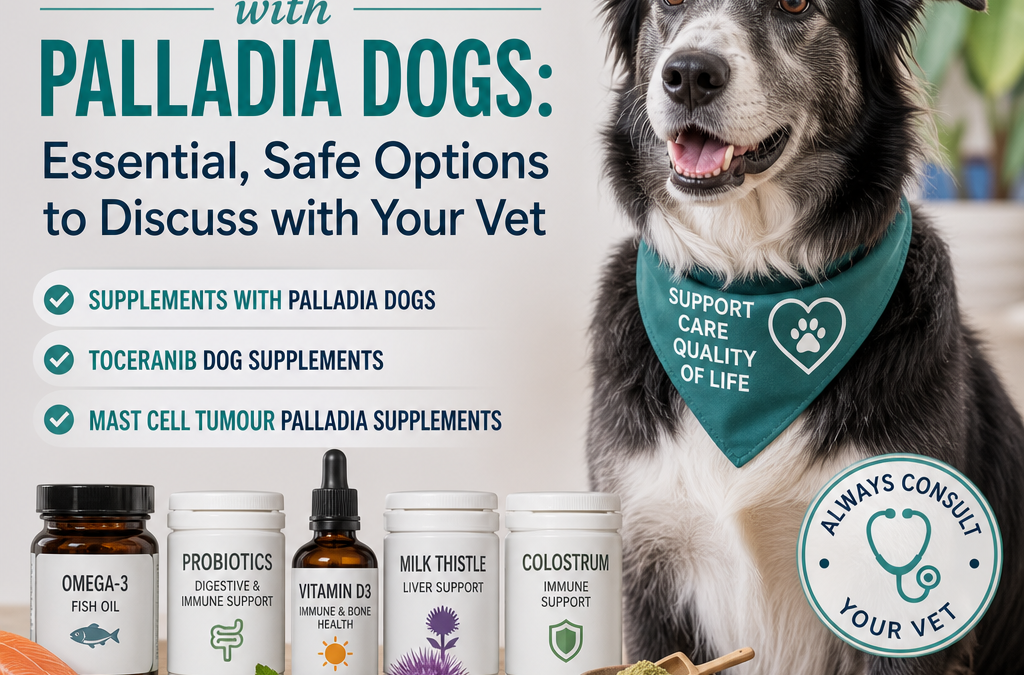
Kosttilskud med Palladia Hunde kan være en nyttig del af støttende kræftbehandling, men de bør aldrig tilføjes tilfældigt. Palladia, også kendt ved sit generiske navn toceranib fosfat, er en receptpligtig medicin, der primært bruges til at håndtere visse canine mastcelle tumorer. Fordi det påvirker cellulær signalering og vækst af blodkar, kan det interagere med kosttilskud, medicin eller underliggende sundhedsmæssige forhold. Den sikreste tilgang er at diskutere hvert produkt med din dyrlæge, ideelt set før den første dosis gives.
Indholdsfortegnelse
- Forståelse af Palladia og dens rolle i hunde
- Hvorfor veterinær vejledning er vigtig
- Kosttilskud med Palladia Hunde: Potentielt nyttige støttende muligheder
- Toceranib hundekosttilskud, der kræver ekstra forsigtighed
- Mastcelle tumor Palladia kosttilskud og histamin bekymringer
- Hvordan man sikkert introducerer ethvert kosttilskud
Forståelse af Palladia og dens rolle i hunde
Palladia er en målrettet kræftbehandling, der virker ved at blokere specifikke receptor tyrosin kinaser involveret i tumorvækst og blodforsyning. Det ordineres ofte til hunde med mastcelle tumorer, selvom dyrlæger kan overveje det i andre situationer afhængigt af den individuelle sag.
Medicinen kan give meningsfulde fordele, men den kan også forårsage bivirkninger. Almindelige bekymringer inkluderer nedsat appetit, opkastning, diarré, vægttab, sløvhed, halthed og ændringer i blodprøver. Mere alvorlige komplikationer kan inkludere gastrointestinal ulceration, blødning, leverproblemer, nyreproblemer eller forsinket sårheling.
Disse risici forklarer, hvorfor kosttilskud ikke bør betragtes som automatisk harmløse. Et naturligt produkt kan stadig påvirke blodkoagulation, leverenzymer, blodtryk, fordøjelse eller måden, hvorpå en medicin absorberes og metaboliseres. For hunde, der modtager kosttilskud med Palladia hunde, betyder detaljerne lige så meget som produktetiketten.
Ejere ser ofte efter støttende behandling, der forbedrer komforten uden at tilføje unødvendig risiko. Det er et fornuftigt mål, men det fungerer bedst, når dyrlægen ved præcist, hvad der bruges, og hvorfor. Selv håndkøbsprodukter kan ændre, hvordan Palladia tolereres fra en hund til en anden.
Hvorfor veterinær vejledning er vigtig
Når man overvejer kosttilskud med Palladia hunde, er det første spørgsmål ikke blot, om et produkt er “sikkert.” De vigtigere spørgsmål er, om det er passende for hundens tumor, nuværende symptomer, laboratorieresultater, kost og fuld medicinliste.
Dyrlæger kan overvåge:
- Komplet blodtælling
- Lever- og nyrefunktion
- Appetit og kropsvægt
- Afføringskvalitet og opkastning
- Hydrering
- Blodtryk når det er angivet
- Tegn på smerte, blødning eller gastrointestinal irritation
Et kosttilskud, der kunne være rimeligt for en sund hund, kunne være uegnet for en hund, der modtager kemoterapi eller målrettet kræftbehandling. For eksempel kunne et produkt med milde blodfortyndende virkninger være bekymrende hos en patient, der allerede er i risiko for gastrointestinal blødning. Tilsvarende kunne et kosttilskud, der behandles af leveren, potentielt ændre toceranib niveauer eller øge medicinrelateret toksicitet.
Før du bruger et supplement, skal du give din dyrlæge det præcise produktnavn, ingrediensliste, koncentration, portionsstørrelse og producentinformation. En omhyggelig gennemgang er især vigtig, når folk søger efter kosttilskud med Palladia hunde og antager, at hver “naturlig” mulighed er udskiftelig.
For bredere baggrund om pleje af mastcelle tumorer, se Kutane vs. subkutane mastcelletumorer hos hunde: nøgleforskelle, diagnose og behandling.
Kosttilskud med Palladia Hunde: Potentielt nyttige støttende muligheder
Nogle kosttilskud kan betragtes som en del af en bredere plejeplan, selvom deres egnethed afhænger af hundens helbred og behandlingsrespons.
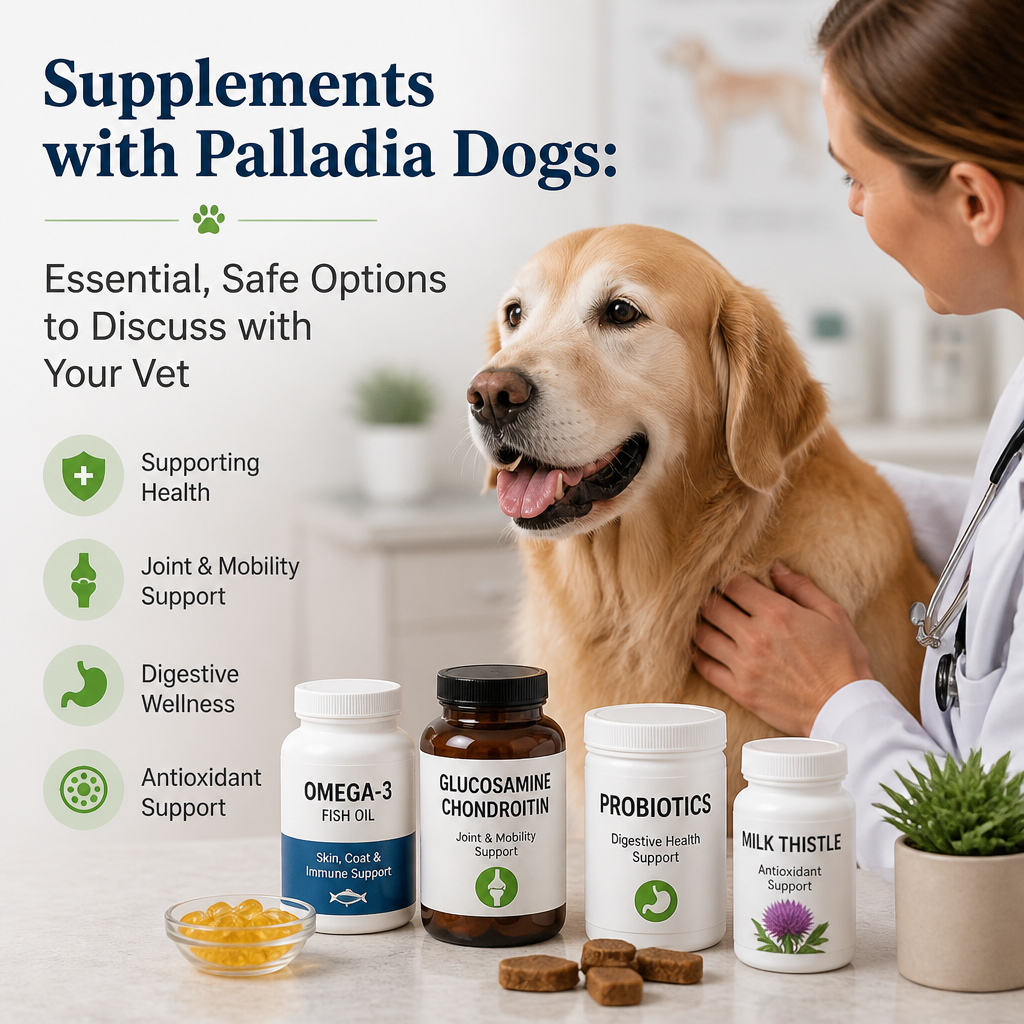
Veterinær omega-3 fedtsyrer
Fisk olie giver EPA og DHA, som kan støtte hudens sundhed, leds komfort og normal inflammatorisk balance. Nogle hunde med kræft oplever også nedsat appetit, vægttab eller inflammation, hvilket gør ernæringsstøtte især vigtig.
Dog er fiskeolie ikke passende i hver dosis eller for hver patient. Det kan forårsage fordøjelsesproblemer og kan påvirke blodpladefunktionen eller blødningsrisikoen. Brug et veterinærkvalitetsprodukt med en klart angivet EPA- og DHA-indhold i stedet for at stole på vage “fisk olie” etiketter.
Fordøjelsesstøtte
Veterinære probiotika eller omhyggeligt udvalgte præbiotiske produkter kan hjælpe nogle hunde, der oplever milde fordøjelsesændringer. Palladia kan påvirke mave-tarmkanalen, så det er værdifuldt at opretholde normal afføringskvalitet og appetit.
Probiotika er ikke en erstatning for veterinærbehandling, når en hund har vedvarende diarré, opkastning, blod i afføringen, mavesmerter eller dehydrering. Disse symptomer kan signalere en mere alvorlig negativ reaktion, der kræver hurtig vurdering.
Led- og mobilitetsstøtte
Hunde, der modtager kræftbehandling, kan blive mindre aktive eller udvikle ubehag fra deres sygdom. Ingredienser som glucosamin, chondroitin eller visse veterinære ledformler kan støtte mobilitet i passende tilfælde. Produktet bør gennemgås for yderligere ingredienser, især urtekombinationer, der kan påvirke blødning, sedation eller lægemiddelmetabolisme.
Ledstøtte kan være særligt nyttig, når en hund føler sig stiv, mindre villig til at gå eller simpelthen mere træt under behandlingen. Målet er ikke at tilføje så mange produkter som muligt, men at vælge målrettet hjælp, der passer til hundens nuværende behov.
Kosttilskud
En kalorieholdig veterinærdiæt, appetitstøtte eller et målrettet vitamin- og mineraltilskud kan anbefales, hvis en hund taber sig eller ikke spiser tilstrækkeligt. I mange tilfælde er det mere nyttigt at forbedre ernæringen gennem en komplet og afbalanceret kost end at tilføje flere separate produkter.
Menneskelige multivitaminer bør generelt undgås. De kan indeholde overdrevne niveauer af visse næringsstoffer eller ingredienser, der er giftige for hunde, såsom xylitol, jern, vitamin D eller stimulanter.
Hvis du sammenligner støttende produkter, kan denne guide til Hund Tumor Kosttilskud: 7 Sikker, Effektive Støtte Muligheder Sammenlignet hjælpe dig med at diskutere muligheder mere selvsikkert med din dyrlæge.
Når de vælges omhyggeligt, kan kosttilskud med Palladia hunde hjælpe med at opretholde appetit, hydrering og komfort. Det sagt, bør støttende pleje altid forblive sekundær i forhold til den behandlingsplan, der er fastlagt af onkologiteamet.
Toceranib hundekosttilskud, der kræver ekstra forsigtighed
Søgninger efter toceranib hundesupplementer fører ofte ejere mod antioxidantblandinger, urteprodukter og immunstøttende formler. Disse produkter kan lyde tiltalende, men “immunboosting” er ikke et præcist medicinsk krav, og nogle ingredienser kan interferere med behandlingen.
Brug særlig forsigtighed med:
- Gurkemeje eller curcuminprodukter
- Hvidløgsholdige formler
- Ginkgo
- Ginseng
- Højdosis vitamin E
- Koncentreret grøn teekstrakt
- Skt. Johannesurt
- CBD eller hampprodukter
- Højdosis antioxidantkombinationer
- Produkter, der markedsføres som tumorkure eller kræftdetoxer
Sikkerheden af disse ingredienser afhænger af dosis, renhed, formulering og hundens andre helbredstilstande. Nogle kan påvirke leverens enzymer, sedation, blodtryk, koagulation eller gastrointestinal funktion. Andre kan have begrænset evidens hos hunde og inkonsekvente produktionsstandarder.
Et supplement bør aldrig erstatte Palladia, kirurgi, strålebehandling, smertelindring, ernæringspleje eller opfølgende overvågning. Produkter, der lover at mindske tumorer eller helbrede kræft uden klinisk evidens, fortjener særlig skepsis. Når ejere spørger om supplementer med Palladia hunde, er dette ofte den vigtigste påmindelse: støtte kan være nyttig, men det kan ikke erstatte behandling.
For et dybere kig på behandlingsrespons og langsigtede forventninger, besøg Cornell Universitets dyrekræftinformation om mastcelle tumorer.
Mastcelle tumor Palladia kosttilskud og histamin bekymringer
Mastcelle tumorer frigiver histamin og andre inflammatoriske stoffer, som kan bidrage til maveirritation, sår, hævelse, kløe og fordøjelsesproblemer. Dette er en grund til, at dyrlæger nogle gange ordinerer yderligere medicin, såsom syre-reducerende lægemidler eller antihistaminer, sammen med Palladia.
Mastcelle tumor Palladia supplementer bør derfor vælges med det gastrointestinale system i tankerne. Et supplement, der irriterer maven, øger blødningsrisikoen eller forsinker opmærksomheden på opkastning og mørke afføringer, kan være skadelig. Hunde med mastcelle tumorer kan have brug for medicin, der er specifikt udvalgt til at beskytte maven frem for et generelt fordøjelsessupplement.
Hold øje med advarselsskilt, herunder:
- Gentagen opkastning
- Sorte eller tjærede afføringer
- Frisk blod i opkast eller afføring
- Alvorlig diarré
- Nægtelse af at spise
- Blege tandkød
- Kollaps eller markant svaghed
- Pludselig mavesmerte
- Hurtig hævelse eller forværrede tumorrelaterede symptomer
Disse tegn kræver veterinær opmærksomhed og bør ikke håndteres med kosttilskud derhjemme. I mange tilfælde er den sikreste reaktion at pause ethvert ikke-essentielt produkt, ringe til klinikken og beskrive præcist, hvad hunden har indtaget.
Mastcelle tumor Palladia kosttilskud skal også passe ind i hundens overordnede mavebeskyttelsesplan. Hvis din dyrlæge allerede har ordineret andre medikamenter, bør beslutningen om kosttilskud tage højde for timing, potentiel overlapning og muligheden for fordøjelsesirritation.
Hvordan man sikkert introducerer ethvert kosttilskud
Hvis en dyrlæge godkender et produkt, introducer kun ét nyt kosttilskud ad gangen. Dette gør det lettere at identificere årsagen til en reaktion. Følg den anbefalede dosis præcist og undgå at øge den, fordi en lille mængde synes at være godt tolereret.
Hold en simpel optegnelse over:
- Kosttilskud navn og dosis
- Tidspunkt det gives
- Palladia doseringsplan
- Appetit og energi
- Opkastning eller afføringsændringer
- Vægt
- Eventuelle nye medikamenter
Spørg om kosttilskuddet skal gives med mad, adskilt fra Palladia, eller stoppes før blodprøver eller procedurer. Brug aldrig resterende produkter ordineret til et andet kæledyr, og undgå at kombinere flere formler, der indeholder overlappende ingredienser.
Målet med støttende pleje er at hjælpe en hund med at opretholde komfort, ernæring, aktivitet og livskvalitet, mens den modtager effektiv kræftbehandling. Kosttilskud kan have en plads i den plan, men de fungerer bedst, når de vælges konservativt og overvåges af en veterinærprofessionel. Omhyggelig kommunikation, regelmæssige tjek og hurtig rapportering af bivirkninger er langt vigtigere end at bruge et stort antal produkter.
Når de bruges omhyggeligt, kan kosttilskud med Palladia hunde passe ind i en fornuftig plejeplan, men kun når dyrlægen bekræfter, at produktet, dosis og timing er passende for den enkelte patient.
Hvis du gennemgår kosttilskud med Palladia hunde under behandling, hold fokus på sikkerhed, konsistens og observation. Det rigtige valg er det, der støtter din hund uden at komplicere Palladia terapi.