
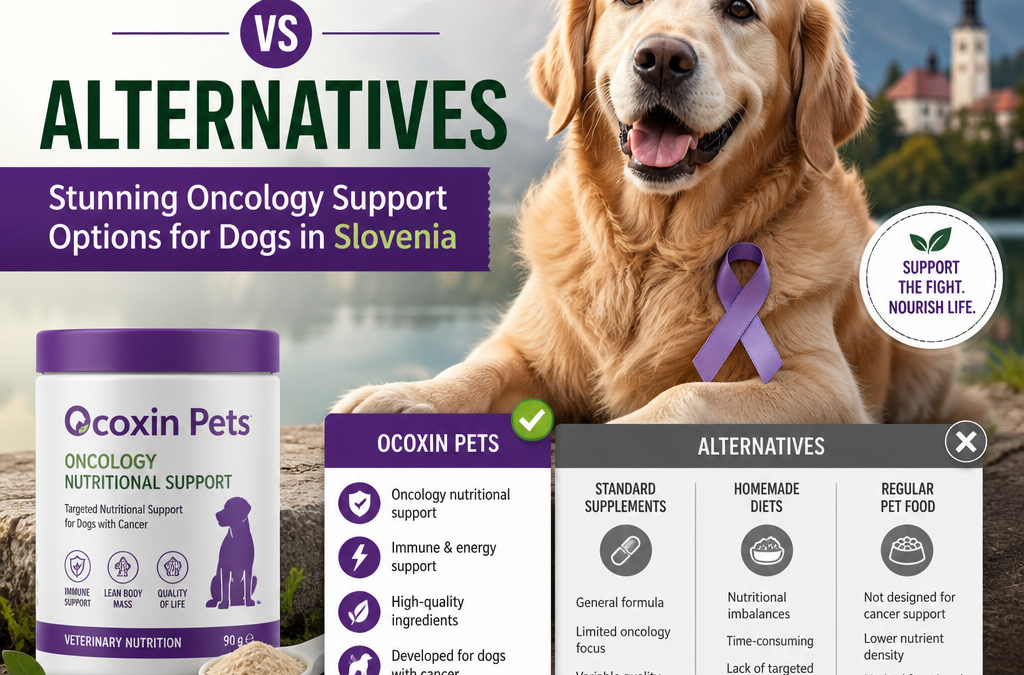
Ocoxin Pets vs alternatives είναι μια σημαντική σύγκριση για τους Σλοβένους ιδιοκτήτες σκύλων που αναζητούν υποστηρικτική φροντίδα κατά τη διάρκεια της θεραπείας του καρκίνου. Όταν ένας σκύλος λαμβάνει διάγνωση όγκου, η διατροφή, η άνεση και η ποιότητα ζωής γίνονται κεντρικές ανησυχίες μαζί με τη θεραπεία από κτηνίατρο. Τα συμπληρώματα μπορεί να βοηθήσουν στην υποστήριξη της όρεξης, της ενέργειας, της πέψης ή της γενικής ευημερίας, αλλά θα πρέπει να συμπληρώνουν—όχι να αντικαθιστούν—ένα εξατομικευμένο σχέδιο ογκολογίας από έναν κτηνίατρο. Για περισσότερες πληροφορίες σχετικά με τις ευρύτερες επιλογές φροντίδας, δείτε Ο καρκίνος των σκύλων: Βασικός χρήσιμος οδηγός για την ογκολογία των κατοικίδιων.
- Κατανόηση της ογκολογικής διατροφικής υποστήριξης για σκύλους
- Ocoxin Pets vs alternatives: τι θα πρέπει να συγκρίνουν οι ιδιοκτήτες;
- Επιλογές υποστήριξης όγκων σκύλων πέρα από τα συμπληρώματα
- Πώς να επιλέξετε ένα κατάλληλο υποστηρικτικό προϊόν
- Κόκκινες σημαίες που απαιτούν άμεση κτηνιατρική προσοχή
- Μια ισορροπημένη προσέγγιση για τους Σλοβένους ιδιοκτήτες σκύλων
Κατανόηση της ογκολογικής διατροφικής υποστήριξης για σκύλους
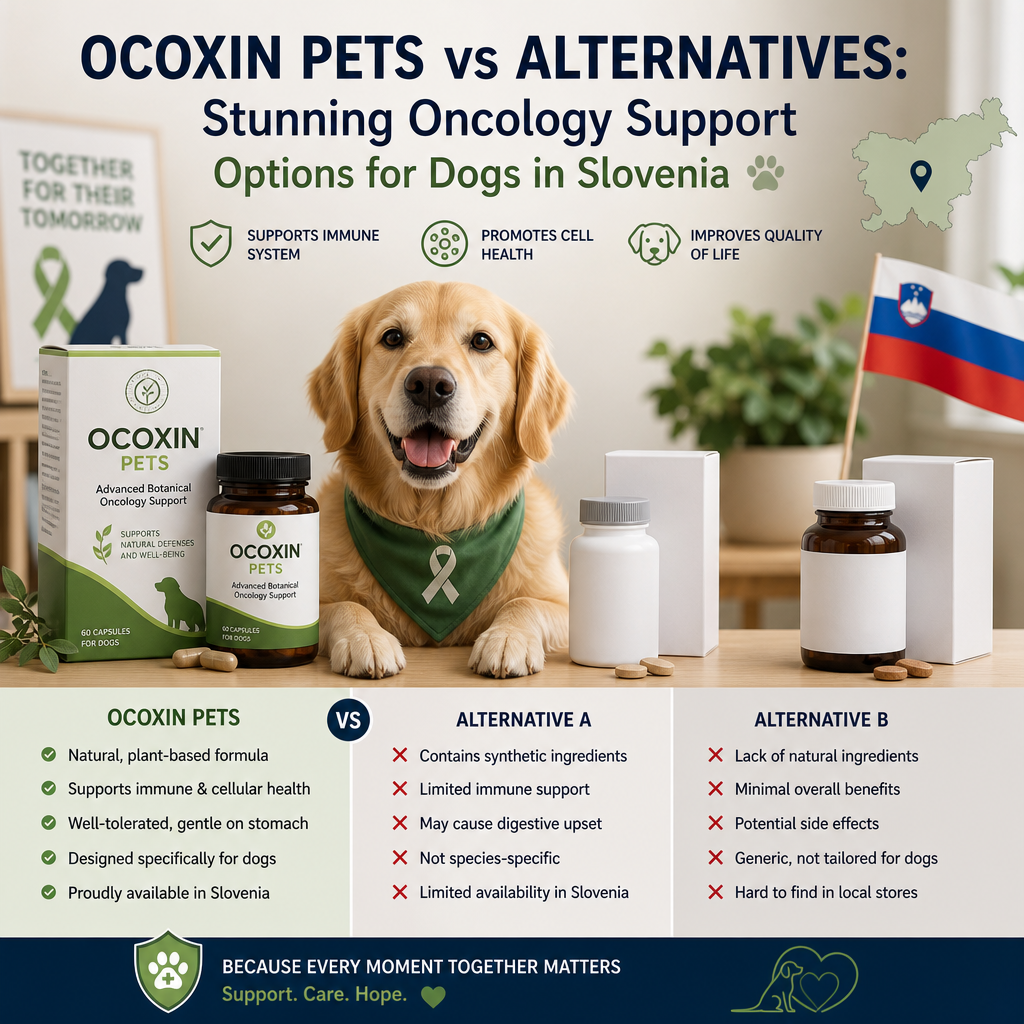
Η ογκολογική διατροφική υποστήριξη αναφέρεται σε διατροφικές στρατηγικές και συμπληρωματικά προϊόντα που έχουν σχεδιαστεί για να βοηθούν τους σκύλους να διατηρούν τη δύναμη κατά τη διάρκεια της ασθένειας και της θεραπείας. Ο καρκίνος μπορεί να επηρεάσει τον μεταβολισμό, την όρεξη, την πέψη και την κατάσταση των μυών. Η χημειοθεραπεία, η ακτινοθεραπεία, η χειρουργική επέμβαση και η φαρμακευτική αγωγή μπορεί να προσθέσουν περαιτέρω προκλήσεις, συμπεριλαμβανομένης της ναυτίας, της μειωμένης όρεξης, της κόπωσης ή των αλλαγών στην υφή των κοπράνων.
Ένα κατάλληλο διατροφικό σχέδιο συνήθως επικεντρώνεται σε αρκετούς στόχους:
- Διατηρώντας ένα κατάλληλο σωματικό βάρος
- Διατήρηση της μυϊκής μάζας
- Υποστηρίζοντας τη φυσιολογική πέψη
- Παρέχοντας επαρκή ενυδάτωση
- Κάνοντάς τα γεύματα ελκυστικά και εύκολα ανεκτά
- Ρυθμίζοντας τη διατροφή γύρω από τις παρενέργειες που σχετίζονται με τη θεραπεία
Δεν υπάρχει μία και μοναδική “διατροφή καρκίνου” που να λειτουργεί για κάθε σκύλο. Η καλύτερη προσέγγιση εξαρτάται από τον τύπο του όγκου, το σχέδιο θεραπείας, την ηλικία, την κατάσταση του σώματος, τη λειτουργία των νεφρών και του ήπατος, το επίπεδο δραστηριότητας και τις υπάρχουσες ιατρικές καταστάσεις. Σε αυτό το πλαίσιο, το Ocoxin Pets vs alternatives θα πρέπει πάντα να κρίνεται με βάση τις πραγματικές ανάγκες του σκύλου, όχι απλώς μια ετικέτα ή μια διαφημιστική δήλωση.
Βοηθά επίσης να θυμόμαστε ότι η διατροφική υποστήριξη είναι μόνο ένα μέρος της πλήρους εικόνας φροντίδας. Ένας σκύλος με καρκίνο μπορεί να χρειάζεται ανακούφιση από τον πόνο, υποστήριξη της πέψης, παρακολούθηση της άσκησης, προσαρμογές στη φαρμακευτική αγωγή και συχνές παρακολούθησεις. Όσο πιο ολοκληρωμένο είναι το σχέδιο, τόσο πιο εύκολο γίνεται να προσδιοριστεί αν ένα προϊόν είναι πραγματικά χρήσιμο ή απλώς προσθέτει ένα ακόμη στοιχείο στη ρουτίνα.
Οι ιδιοκτήτες συχνά αισθάνονται πίεση να κάνουν τα πάντα δυνατά μόλις επιβεβαιωθεί η διάγνωση. Αυτή η ενστικτώδης αντίδραση είναι κατανοητή, αλλά η καλύτερη υποστήριξη είναι συνήθως στοχευμένη υποστήριξη. Ένα προϊόν που βοηθά έναν σκύλο να τρώει καλύτερα μπορεί να μην ταιριάζει σε έναν άλλο σκύλο με διαφορετικό τύπο όγκου ή πρόγραμμα θεραπείας. Γι' αυτό η προσεκτική παρατήρηση και η καθοδήγηση από κτηνίατρο είναι τόσο σημαντικές.
Ocoxin Pets vs alternatives: τι θα πρέπει να συγκρίνουν οι ιδιοκτήτες;
Το Ocoxin Pets χρησιμοποιείται σε ορισμένα κτηνιατρικά περιβάλλοντα ως υποστηρικτικό διατροφικό προϊόν για σκύλους και γάτες που αντιμετωπίζουν σοβαρές ασθένειες. Η σύνθεσή του προορίζεται να παρέχει διατροφική και αντιοξειδωτική υποστήριξη, αν και ο ακριβής ρόλος του θα πρέπει να συζητηθεί με έναν κτηνιατρικό επαγγελματία που είναι εξοικειωμένος με την πλήρη περίπτωση του ζώου. Για πολλούς ιδιοκτήτες, το Ocoxin Pets vs alternatives γίνεται μια πρακτική ερώτηση σχετικά με την καταλληλότητα, την ασφάλεια και τη καθημερινή χρήση.
Όταν συγκρίνουν το Ocoxin Pets vs alternatives, οι ιδιοκτήτες θα πρέπει να κοιτάξουν πέρα από τις διαφημιστικές δηλώσεις και να αξιολογήσουν πρακτικούς παράγοντες όπως:
Προφίλ συστατικών
Ανασκόπηση της πλήρους λίστας συστατικών, όχι μόνο των κύριων οφελών. Τα προϊόντα μπορεί να περιέχουν βιταμίνες, μέταλλα, εκχυλίσματα φυτών, αμινοξέα, αντιοξειδωτικά ή άλλες θρεπτικές ενώσεις. Ορισμένα συστατικά μπορεί να είναι ακατάλληλα για σκύλους με νεφρική νόσο, προβλήματα ήπατος, γαστρεντερική ευαισθησία ή συγκεκριμένα σχέδια φαρμακευτικής αγωγής. Γι' αυτόν τον λόγο, η συζήτηση για το Ocoxin Pets vs alternatives θα πρέπει να γίνεται με έναν κτηνίατρο πριν από την έναρξη οποιασδήποτε αγωγής.
Μια χρήσιμη συνήθεια είναι να σημειώνετε κάθε ενεργό συστατικό και να ρωτάτε τι υποτίθεται ότι κάνει το καθένα. Εάν ένα προϊόν περιέχει πολλαπλές ενώσεις με επικαλυπτόμενες λειτουργίες, το περισσότερο δεν είναι αυτόματα καλύτερο. Σε ορισμένες περιπτώσεις, μια πιο απλή φόρμουλα είναι πιο εύκολα ανεκτή και πιο εύκολη για τον κτηνίατρο να παρακολουθήσει. Εάν ένας σκύλος έχει ιστορικό παγκρεατίτιδας, χρόνιας νόσου του εντέρου ή δυσανεξίας σε τρόφιμα, η λίστα συστατικών γίνεται ακόμη πιο σημαντική.
Αποδείξεις και κτηνιατρική εποπτεία
Ένα συμπλήρωμα μπορεί να είναι χρήσιμο ως μέρος υποστηρικτικής φροντίδας, αλλά οι αποδείξεις μπορεί να διαφέρουν σημαντικά μεταξύ των προϊόντων. Ρωτήστε αν το προϊόν έχει κτηνιατρική έρευνα, δημοσιευμένες πληροφορίες, σαφείς οδηγίες δοσολογίας και πρότυπα ελέγχου ποιότητας. Ένας κτηνίατρος μπορεί επίσης να καθορίσει αν ένα προτεινόμενο συμπλήρωμα είναι κατάλληλο για έναν συγκεκριμένο όγκο και πρωτόκολλο θεραπείας. Με λίγα λόγια, το Ocoxin Pets vs alternatives θα πρέπει να κρίνεται με βάση τις αποδείξεις καθώς και την ευκολία.
Επειδή κάθε περίπτωση καρκίνου είναι διαφορετική, οι πιο σχετικές αποδείξεις είναι συχνά αυτές που ισχύουν για έναν σκύλο με παρόμοιες ανάγκες. Ένα προϊόν μπορεί να φαίνεται υποσχόμενο σε γενικές συζητήσεις ευεξίας, αλλά οι ασθενείς με ογκολογία απαιτούν περισσότερη προσοχή. Η ιδανική επιλογή είναι αυτή που ταιριάζει στο στάδιο της νόσου, στους στόχους θεραπείας και στην ικανότητα του σκύλου να τρώει, να απορροφά και να ανέχεται το προϊόν με συνέπεια.
Ανοχή και χορήγηση
Ένα θεωρητικά ωφέλιμο προϊόν έχει περιορισμένη αξία αν ένας σκύλος το αρνείται ή αναπτύσσει γαστρεντερικές διαταραχές. Η γεύση, το μέγεθος της κάψουλας, η υγρή μορφή, η συχνότητα δοσολογίας και η συμβατότητα με τα γεύματα έχουν σημασία. Κατά τη διάρκεια της θεραπείας για καρκίνο, η απλή χορήγηση μπορεί να κάνει την καθημερινή φροντίδα λιγότερο αγχωτική. Για ορισμένα νοικοκυριά, αυτή η πρακτική πλευρά του Ocoxin Pets vs alternatives έχει μεγαλύτερη σημασία από τις μικρές διαφορές στις λίστες συστατικών.
Η ανοχή θα πρέπει να παρακολουθείται προσεκτικά κατά τις πρώτες ημέρες χρήσης. Εάν ένα προϊόν αλλάξει την ποιότητα των κοπράνων, προκαλεί σάλιο, φαίνεται να προκαλεί ναυτία ή κάνει τον σκύλο απρόθυμο να φάει, ο κτηνίατρος θα πρέπει να ενημερωθεί άμεσα. Ακόμη και ήπιες γαστρεντερικές δυσφορίες μπορούν να υπονομεύσουν τους διατροφικούς στόχους σε έναν σκύλο που ήδη αγωνίζεται να διατηρήσει το βάρος του.
Ασφάλεια και αλληλεπιδράσεις
Ορισμένα συμπληρώματα μπορεί να επηρεάσουν την πήξη του αίματος, την αρτηριακή πίεση, τα ένζυμα του ήπατος ή την απορρόφηση φαρμάκων. Τα αντιοξειδωτικά προϊόντα αξίζουν ιδιαίτερη συζήτηση όταν ένας σκύλος λαμβάνει χημειοθεραπεία ή ακτινοβολία, επειδή ο χρόνος και η δόση της υποστήριξης με αντιοξειδωτικά μπορεί να έχουν σημασία. Ποτέ μην υποθέτετε ότι ένα φυσικό συστατικό είναι αυτόματα ακίνδυνο. Αυτό είναι ένα από τα πιο σημαντικά σημεία στη συζήτηση για το Ocoxin Pets vs alternatives.
Είναι επίσης σοφό να θυμόμαστε ότι ένας σκύλος μπορεί να παίρνει περισσότερα από ένα συνταγογραφούμενα φάρμακα. Αναλγητικά, φάρμακα κατά της ναυτίας, στεροειδή, αντιβιοτικά και διεγερτικά της όρεξης μπορούν να αλληλεπιδρούν διαφορετικά με τα υποστηρικτικά προϊόντα. Ένας κτηνίατρος μπορεί να βοηθήσει να προσδιοριστεί αν η χρονική στιγμή της δόσης έχει σημασία ή αν ένα προϊόν θα πρέπει να αποφεύγεται εντελώς.
Κόστος και διαθεσιμότητα στη Σλοβενία
Η μακροχρόνια υποστηρικτική φροντίδα μπορεί να γίνει δαπανηρή. Οι Σλοβένοι ιδιοκτήτες θα πρέπει να εξετάσουν αν ένα προϊόν είναι σταθερά διαθέσιμο μέσω κτηνιατρικής κλινικής, φαρμακείου ή αξιόπιστου προμηθευτή, και αν οι απαιτήσεις αποθήκευσης και παράδοσης είναι πρακτικές. Μια εναλλακτική χαμηλότερου κόστους μπορεί να είναι κατάλληλη, αλλά μόνο αν η σύνθεσή της και η ασφάλεια είναι αποδεκτές. Η σύγκριση του Ocoxin Pets με εναλλακτικές θα πρέπει επομένως να γίνεται τόσο σε κλινική όσο και σε πρακτική βάση.
Η διαθεσιμότητα έχει σημασία γιατί η διακοπή της υποστηρικτικής φροντίδας μπορεί να δυσκολέψει την εκτίμηση αν το προϊόν βοηθά. Αν η επιλεγμένη επιλογή δεν μπορεί να αποκτηθεί αξιόπιστα, οι ιδιοκτήτες μπορεί να χρειαστεί να αλλάξουν προϊόντα κατά τη διάρκεια της θεραπείας. Αυτό μπορεί να περιπλέξει την παρακολούθηση και να καταστήσει το συνολικό σχέδιο πιο δύσκολο στη διαχείριση. Για αυτόν τον λόγο, μια σταθερή προμήθεια είναι συχνά ένα ήσυχο αλλά σημαντικό μέρος της καλής υποστηρικτικής φροντίδας.
Αν συγκρίνετε μάρκες και ευρύτερα σχέδια φροντίδας, μπορεί επίσης να βοηθήσει να αναθεωρήσετε Καλύτερα Συμπληρώματα για Σκύλους με Καρκίνο: 7 Βασικές Συμβουλές Υποστήριξης από το Ηνωμένο Βασίλειο για ένα πρακτικό πλαίσιο που εφαρμόζεται καλά πέρα από ένα προϊόν.
Αναμενόμενο αποτέλεσμα και παρακολούθηση
Οι ιδιοκτήτες θα πρέπει να ρωτήσουν πώς φαίνεται η επιτυχία πριν ξεκινήσουν οποιοδήποτε συμπλήρωμα. Είναι ο στόχος καλύτερη όρεξη, βελτιωμένη συνέπεια κοπράνων, ευκολότερη ανάρρωση ή υποστήριξη για ενέργεια και κατάσταση σώματος; Χωρίς έναν μετρήσιμο στόχο, γίνεται δύσκολο να γνωρίζουμε αν το Ocoxin Pets σε σύγκριση με εναλλακτικές λειτουργεί. Ένα απλό ημερολόγιο γευμάτων, βάρους, πρόσληψης νερού, κινήσεων του εντέρου και επιπέδου ενέργειας μπορεί να κάνει την παρακολούθηση πιο χρήσιμη.
Η παρακολούθηση βοηθά επίσης στην πρόληψη της υπερβολικής χρήσης. Αν ένας σκύλος είναι σταθερός και τρώει καλά, ο κτηνίατρος μπορεί να αποφασίσει ότι ένα προϊόν θα πρέπει να συνεχιστεί, να προσαρμοστεί ή να διακοπεί ανάλογα με το συνολικό σχέδιο. Η υποστηρικτική φροντίδα είναι πιο αποτελεσματική όταν αναθεωρείται αντί να συνεχίζεται απλώς από συνήθεια.
Η συνολική ιατρική εικόνα του σκύλου
Ένα συμπλήρωμα μπορεί να είναι κατάλληλο για έναν αδύνατο σκύλο με μειωμένη όρεξη αλλά όχι για έναν σκύλο με νεφρική ανεπάρκεια, πεπτική νόσο ή πολλαπλά φάρμακα. Το ίδιο προϊόν μπορεί επίσης να είναι πιο ή λιγότερο χρήσιμο ανάλογα με το αν ο στόχος της θεραπείας είναι η θεραπεία, ο έλεγχος, η ύφεση ή η φροντίδα που επικεντρώνεται στην άνεση. Αυτό το ευρύτερο πλαίσιο θα πρέπει να καθοδηγεί κάθε σύγκριση του Ocoxin Pets με εναλλακτικές.
Για μια πιο προσεκτική ματιά στην υποστήριξη συγκεκριμένων ασθενειών, δείτε Βασικός Οδηγός για το Λεμφομά Σκύλου και την Ανοσολογική Καρκίνο για ένα άλλο παράδειγμα του πώς η διατροφή και η υποστηρικτική φροντίδα εντάσσονται σε ένα ευρύτερο σχέδιο ογκολογίας.
Επιλογές υποστήριξης όγκων σκύλων πέρα από τα συμπληρώματα
Τα συμπληρώματα είναι μόνο ένα μέρος της ολοκληρωμένης φροντίδας. Οι αποτελεσματικές επιλογές υποστήριξης όγκων σκύλων περιλαμβάνουν συχνά αρκετά συντονισμένα μέτρα. Όταν οι ιδιοκτήτες εξετάζουν το Ocoxin Pets σε σύγκριση με εναλλακτικές, θα πρέπει επίσης να εξετάσουν το ευρύτερο σχέδιο θεραπείας, όχι μόνο ένα προϊόν.
Κτηνιατρική ογκολογική θεραπεία
Ανάλογα με τη διάγνωση, η θεραπεία μπορεί να περιλαμβάνει χειρουργική επέμβαση, χημειοθεραπεία, ακτινοθεραπεία, ανοσοθεραπεία, ανακούφιση από τον πόνο ή παρηγορητική φροντίδα. Ένας κτηνιατρικός ογκολόγος μπορεί να εξηγήσει τα αναμενόμενα οφέλη, τις πιθανές παρενέργειες και τους ρεαλιστικούς στόχους θεραπείας. Σε ορισμένες περιπτώσεις, η διαχείριση της δυσφορίας και η διατήρηση της καθημερινής απόλαυσης μπορεί να είναι πιο σημαντικές από την επιδίωξη ενός εντατικού προγράμματος θεραπείας. Αυτό το ευρύτερο πλαίσιο βοηθά να γίνει η σύγκριση Ocoxin Pets vs alternatives πιο ουσιαστική.
Πολλοί ιδιοκτήτες διαπιστώνουν ότι το σχέδιο θεραπείας αλλάζει με την πάροδο του χρόνου. Ένας σκύλος μπορεί να ξεκινήσει με χειρουργική επέμβαση, στη συνέχεια να περάσει σε παρακολούθηση και μετά να χρειαστεί επιπλέον υποστήριξη αν η ασθένεια επιστρέψει. Αυτό σημαίνει ότι η καλύτερη επιλογή συμπληρώματος σε ένα στάδιο μπορεί να μην είναι πλέον η καλύτερη επιλογή αργότερα. Η επαναξιολόγηση είναι μέρος της καλής ογκολογικής φροντίδας.
Θεραπευτική διατροφή
Μια πλήρης εμπορική κτηνιατρική διατροφή μπορεί να συνιστάται όταν ένας σκύλος έχει κακή όρεξη, απώλεια βάρους, πεπτικά προβλήματα ή άλλη κατάσταση που επηρεάζει τη διατροφή. Ορισμένοι σκύλοι τα πηγαίνουν καλά με γεύματα πλούσια σε ενέργεια που σερβίρονται σε μικρές μερίδες. Άλλοι χρειάζονται μια προσεκτικά διαμορφωμένη σπιτική διατροφή που έχει σχεδιαστεί από έναν κτηνιατρικό διατροφολόγο.
Οι ιδιοκτήτες θα πρέπει να αποφεύγουν να κάνουν σημαντικές διατροφικές αλλαγές χωρίς καθοδήγηση. Οι σπιτικές διατροφές που βασίζονται σε λίγα συστατικά μπορεί να γίνουν ανεπαρκείς σε πρωτεΐνες, βιταμίνες, μέταλλα ή απαραίτητα λιπαρά οξέα, ιδιαίτερα όταν χρησιμοποιούνται για αρκετές εβδομάδες ή μήνες. Σε πολλές περιπτώσεις, εδώ είναι που η σύγκριση Ocoxin Pets vs alternatives γίνεται λιγότερο σημαντική από το να είναι σωστή η βασική διατροφή.
Οι ρουτίνες σίτισης έχουν επίσης σημασία. Οι σκύλοι με καρκίνο συχνά τα πηγαίνουν καλύτερα όταν τα γεύματα προσφέρονται σε σταθερές ώρες σε ήρεμο περιβάλλον. Μικρά, συχνά γεύματα μπορεί να είναι πιο εύκολα ανεκτά από μεγάλες μερίδες. Η ελαφριά θέρμανση της τροφής, η χρήση νόστιμων προσθέτων που έχουν εγκριθεί από τον κτηνίατρο ή η προσφορά τροφής μετά από φάρμακα ελέγχου ναυτίας μπορεί επίσης να βελτιώσει την πρόσληψη.
Διαχείριση όρεξης και ναυτίας
Ένας σκύλος που δεν τρώει μπορεί να χρειάζεται περισσότερα από ενθάρρυνση. Η ναυτία, ο πόνος, η δυσκοιλιότητα, η δυσφορία στο στόμα, οι παρενέργειες φαρμάκων ή το άγχος μπορούν όλα να μειώσουν την πρόσληψη τροφής. Η κτηνιατρική θεραπεία μπορεί να περιλαμβάνει φάρμακα κατά της ναυτίας, υποστήριξη όρεξης, έλεγχο του πόνου ή στρατηγικές για τη βελτίωση της αποδοχής των γευμάτων. Για ορισμένους σκύλους, η υποστηρικτική διατροφή λειτουργεί καλύτερα μόνο όταν η όρεξη και η ναυτία διαχειρίζονται ταυτόχρονα, γεγονός που είναι ένας ακόμη λόγος που η σύγκριση Ocoxin Pets vs alternatives δεν θα πρέπει να θεωρείται απομονωμένα.
Οι ιδιοκτήτες θα πρέπει επίσης να παρακολουθούν για λεπτές ενδείξεις ναυτίας, όπως γλείψιμο των χειλιών, σάλιο, απομάκρυνση από την τροφή, κρυψίνοια ή κατανάλωση χόρτου. Αυτές οι ενδείξεις μπορεί να εμφανιστούν πριν αρχίσει ο εμετός. Η πρώιμη παρέμβαση μπορεί να διευκολύνει τη διατήρηση της διατροφής και να αποφευχθεί μια καθοδική σπείρα στην κατάσταση.
Παρακολούθηση βάρους και μυών
Η τακτική καταγραφή του σωματικού βάρους, της όρεξης, της ποιότητας των κοπράνων, της πρόσληψης νερού και της δραστηριότητας μπορεί να βοηθήσει στην πρώιμη αναγνώριση αλλαγών. Η σωματική κατάσταση από μόνη της μπορεί να μην αποκαλύψει απώλεια μυών, οπότε οι ιδιοκτήτες θα πρέπει να ζητούν από την κτηνιατρική ομάδα να αξιολογεί την κατάσταση των μυών κατά τις επισκέψεις παρακολούθησης. Αυτή η παρακολούθηση βοηθά επίσης να προσδιοριστεί αν η σύγκριση Ocoxin Pets vs alternatives παράγει κάποιο αξιοσημείωτο όφελος.
Η κατάσταση των μυών είναι ιδιαίτερα σημαντική σε ασθενείς με καρκίνο επειδή η απώλεια άπαχου ιστού μπορεί να συμβεί ακόμη και όταν το σωματικό βάρος φαίνεται σταθερό. Ένας σκύλος μπορεί να φαίνεται ότι διατηρεί το βάρος ενώ στην πραγματικότητα χάνει δύναμη. Για αυτόν τον λόγο, ο αριθμός στη ζυγαριά είναι χρήσιμος, αλλά δεν θα πρέπει ποτέ να είναι η μόνη μέτρηση που χρησιμοποιείται.
Φροντίδα στο σπίτι με έμφαση στην άνεση
Ένας ήρεμος χώρος ξεκούρασης, αντιολισθητικά δάπεδα, εύκολη πρόσβαση σε νερό, ήπια άσκηση και προβλέψιμες ρουτίνες μπορούν να βελτιώσουν την ποιότητα ζωής. Οι σκύλοι μπορεί να ωφεληθούν από πολλές σύντομες βόλτες αντί για μία μεγάλη έξοδο, ειδικά κατά τη διάρκεια της θεραπείας. Η παρακολούθηση της αναπνοής, της κινητικότητας, του ύπνου, της συμπεριφοράς πόνου και του ενδιαφέροντος για τις οικογενειακές δραστηριότητες παρέχει πολύτιμες πληροφορίες για τον κτηνίατρο. Η καλή καθημερινή φροντίδα συχνά έχει σημασία όσο και η Ocoxin Pets σε σύγκριση με εναλλακτικές όταν ο στόχος είναι η άνεση και η σταθερότητα.
Η φροντίδα άνεσης μπορεί να περιλαμβάνει απλές ρυθμίσεις όπως επιπλέον κλινοσκεπάσματα, ράμπες για σκάλες ή αυτοκίνητα, ανυψωμένα μπολ αν συνιστάται από τον κτηνίατρο και διατήρηση του οικιακού περιβάλλοντος ήσυχου κατά τη διάρκεια της ανάρρωσης. Μικρές αλλαγές μπορούν να μειώσουν το άγχος και να διατηρήσουν την ενέργεια, που είναι πολύτιμη για τους σκύλους που ήδη ξοδεύουν μεγάλο μέρος των αποθεμάτων τους για να θεραπευτούν ή να αντιμετωπίσουν ασθένειες.
Συναισθηματική υποστήριξη για την οικογένεια
Αν και η φροντίδα του καρκίνου επικεντρώνεται στον σκύλο, η ικανότητα της οικογένειας να ακολουθήσει το σχέδιο είναι επίσης σημαντική. Οι σαφείς γραπτές οδηγίες, οι ρεαλιστικές προσδοκίες και οι τακτικές επαφές μπορούν να βοηθήσουν στην αποφυγή σύγχυσης. Όταν οι ιδιοκτήτες κατανοούν τι προορίζεται να επιτύχει κάθε μέρος του σχεδίου, είναι πιο πιθανό να παρατηρήσουν σημαντικές αλλαγές και λιγότερο πιθανό να νιώσουν καταβεβλημένοι από τις επιλογές προϊόντων.
Αυτή η συναισθηματική σαφήνεια έχει σημασία όταν συγκρίνουμε υποστηρικτικά προϊόντα επίσης. Η Ocoxin Pets σε σύγκριση με εναλλακτικές μπορεί να φαίνεται σαν μια απόφαση υψηλού ρίσκου, αλλά οι καλύτερες αποφάσεις συνήθως λαμβάνονται ήρεμα, με τη βοήθεια του κτηνιάτρου και με γνώμονα την καθημερινή άνεση του σκύλου.
Πώς να επιλέξετε ένα κατάλληλο υποστηρικτικό προϊόν
Πριν ξεκινήσετε την Ocoxin Pets ή οποιαδήποτε εναλλακτική, ετοιμάστε μια πλήρη λίστα με τα φάρμακα, τα συμπληρώματα, τη διατροφή και τις ιατρικές καταστάσεις του σκύλου. Συζητήστε το προϊόν με τον κτηνίατρο και ρωτήστε:
- Ποιος συγκεκριμένος στόχος προορίζεται να υποστηρίξει αυτό το προϊόν;
- Είναι η δόση κατάλληλη για το βάρος και την κατάσταση υγείας του σκύλου μου;
- Μπορεί να αλληλεπιδράσει με χημειοθεραπεία, φάρμακα για τον πόνο, στεροειδή ή άλλα φάρμακα;
- Πρέπει να χορηγείται με τροφή ή να διαχωρίζεται από τα φάρμακα;
- Ποιες παρενέργειες θα πρέπει να προκαλέσουν διακοπή;
- Πόσο καιρό θα πρέπει να χρησιμοποιείται πριν επανεκτιμηθεί η αξία του;
Ένας σαφής στόχος καθιστά τη συμπλήρωση πιο χρήσιμη. Για παράδειγμα, ο σκοπός μπορεί να είναι η βελτίωση της αποδοχής του γεύματος, η βοήθεια στη διατήρηση της σωματικής κατάστασης ή η παροχή επιπλέον διατροφικής υποστήριξης κατά τη διάρκεια της ανάρρωσης. Αν δεν υπάρχει μετρήσιμος στόχος, μπορεί να είναι δύσκολο να προσδιοριστεί αν το προϊόν βοηθά. Αυτό ισχύει ιδιαίτερα όταν συγκρίνουμε την Ocoxin Pets με εναλλακτικές για μακροχρόνια χρήση.
Μπορεί επίσης να βοηθήσει να ελέγξετε τις γενικές οδηγίες από το Κέντρο καρκίνου του Πανεπιστημίου Cornell για Ζώα, το οποίο παρέχει αξιόπιστο εκπαιδευτικό πλαίσιο σχετικά με τη φροντίδα ογκολογίας των ζώων.
Ένα άλλο χρήσιμο βήμα είναι να σκεφτείτε το τρέχον μοτίβο διατροφής του σκύλου. Ορισμένοι σκύλοι προτιμούν υγρά, ενώ άλλοι τα πηγαίνουν καλύτερα με μια μαλακή υφή τροφής ή ένα προϊόν αναμεμειγμένο σε ένα γεύμα. Εάν ένας σκύλος λαμβάνει ήδη πολλαπλά φάρμακα, η πιο απλή επιλογή μπορεί να είναι η καλύτερη. Η ευκολία χρήσης δεν είναι μια ασήμαντη λεπτομέρεια· μπορεί να καθορίσει εάν το υποστηρικτικό σχέδιο ακολουθείται αρκετά σταθερά ώστε να έχει σημασία.
Οι ιδιοκτήτες θα πρέπει επίσης να αποφεύγουν την ταχεία αλλαγή προϊόντων εκτός εάν υπάρχει ανησυχία για την ασφάλεια. Εάν ένας κτηνίατρος προτείνει μια δοκιμαστική περίοδο, μπορεί να αξίζει να δώσετε στο προϊόν αρκετό χρόνο για να δείξει εάν η όρεξη, η ενέργεια ή η πέψη βελτιώνονται. Ταυτόχρονα, οποιαδήποτε επιδείνωση των συμπτωμάτων θα πρέπει να αναφέρεται άμεσα αντί να περιμένετε για έναν προγραμματισμένο επανέλεγχο.
Κόκκινες σημαίες που απαιτούν άμεση κτηνιατρική προσοχή
Επικοινωνήστε με έναν κτηνίατρο άμεσα εάν ένας σκύλος βιώνει επαναλαμβανόμενο εμετό, σοβαρή διάρροια, άρνηση τροφής, έντονη αδυναμία, δυσκολία στην αναπνοή, ανεξέλεγκτο πόνο, χλωμά ούλα, κατάρρευση, ξαφνική διόγκωση της κοιλιάς ή αδυναμία να πιει. Η απώλεια βάρους που συνεχίζεται παρά τις προσπάθειες σίτισης απαιτεί επίσης έρευνα.
Τα υποστηρικτικά προϊόντα δεν μπορούν να διορθώσουν μια επείγουσα επιπλοκή ή να αντικαταστήσουν τη θεραπεία για λοίμωξη, απόφραξη, αφυδάτωση, αναιμία ή ανεξέλεγκτο πόνο σχετιζόμενο με όγκο. Ακόμη και η καλύτερη επιλογή Ocoxin Pets σε σύγκριση με εναλλακτικές δεν μπορεί να αντιμετωπίσει αυτές τις καταστάσεις έκτακτης ανάγκης από μόνη της.
Είναι επίσης σημαντικό να ζητήσετε βοήθεια εάν ο σκύλος φαίνεται ξαφνικά αποσυρμένος, αρνείται να σηκωθεί, κλαίει όταν τον αγγίζουν ή δείχνει μια αξιοσημείωτη αλλαγή στην προσπάθεια αναπνοής. Αυτά μπορεί να είναι σημάδια ότι το σχέδιο θεραπείας χρειάζεται γρήγορη προσαρμογή. Στους ογκολογικούς ασθενείς, οι μικρές αλλαγές μπορούν να γίνουν σοβαρές πιο γρήγορα από ό,τι περιμένουν πολλοί ιδιοκτήτες.
Μια ισορροπημένη προσέγγιση για τους Σλοβένους ιδιοκτήτες σκύλων
Η καλύτερη απόφαση στη συζήτηση Ocoxin Pets σε σύγκριση με εναλλακτικές δεν είναι απαραίτητα το προϊόν με τη μεγαλύτερη λίστα συστατικών ή τις πιο εντυπωσιακές αξιώσεις. Είναι η επιλογή που ταιριάζει στη διάγνωση του σκύλου, το σχέδιο θεραπείας, τις διατροφικές ανάγκες, την ανοχή, τον προϋπολογισμό και τους στόχους ποιότητας ζωής.
Για τις οικογένειες στη Σλοβενία, η συνεργασία μεταξύ του κύριου κτηνιάτρου, του κτηνιατρικού ογκολόγου και—όταν χρειάζεται—του κτηνιατρικού διατροφολόγου μπορεί να κάνει την υποστηρικτική φροντίδα πιο ασφαλή και πιο αποτελεσματική. Η διατροφική υποστήριξη θα πρέπει να αναθεωρείται τακτικά διότι οι ανάγκες ενός σκύλου μπορεί να αλλάξουν μετά από χειρουργική επέμβαση, κατά τη διάρκεια χημειοθεραπείας ή καθώς η ασθένεια προχωρά. Το ίδιο ισχύει όταν οι ιδιοκτήτες επανεξετάζουν το Ocoxin Pets σε σύγκριση με εναλλακτικές μετά από αλλαγές στη θεραπεία ή νέες παρενέργειες.
Με προσεκτική παρακολούθηση και επαγγελματική καθοδήγηση, οι επιλογές υποστήριξης όγκων σκύλων μπορούν να βοηθήσουν τους ιδιοκτήτες να επικεντρωθούν σε πρακτικούς στόχους: διατήρηση άνεσης, διατήρηση δύναμης, υποστήριξη όρεξης και μεγιστοποίηση του σημαντικού χρόνου μαζί. Όταν χρησιμοποιούνται με προσοχή, το Ocoxin Pets σε σύγκριση με εναλλακτικές γίνεται λιγότερο θέμα διαφήμισης και περισσότερο θέμα εύρεσης της ασφαλέστερης, πιο χρήσιμης υποστήριξης για τον κάθε σκύλο.
Για τους ιδιοκτήτες που προσπαθούν να αποκτήσουν μια ευρύτερη κατανόηση της φροντίδας όγκων, μπορεί επίσης να βοηθήσει να αναθεωρήσουν γενικές πληροφορίες για τον καρκίνο των σκύλων και να συγκρίνουν το προϊόν υποστήριξης με τις συνολικές προτεραιότητες θεραπείας αντί με μια άλλη ετικέτα μόνο. Αυτή η προσέγγιση κρατά τις αποφάσεις θεμελιωμένες στις πραγματικές ανάγκες του σκύλου αντί σε υποθέσεις σχετικά με το τι θα έπρεπε να λειτουργεί.
Στο τέλος, το πιο αποτελεσματικό υποστηρικτικό σχέδιο είναι συνήθως αυτό που μπορεί πραγματικά να ανεχθεί ο σκύλος μέρα με τη μέρα. Εάν μία επιλογή βοηθά στην όρεξη αλλά μια άλλη είναι πιο εύκολη στη χορήγηση, ο κτηνίατρος μπορεί να ζυγίσει προσεκτικά αυτές τις ανταλλαγές. Το Ocoxin Pets vs alternatives είναι επομένως καλύτερο να θεωρείται ως μέρος μιας συνεχούς συζήτησης φροντίδας, όχι ως απόφαση αγοράς μιας μόνο φοράς.