
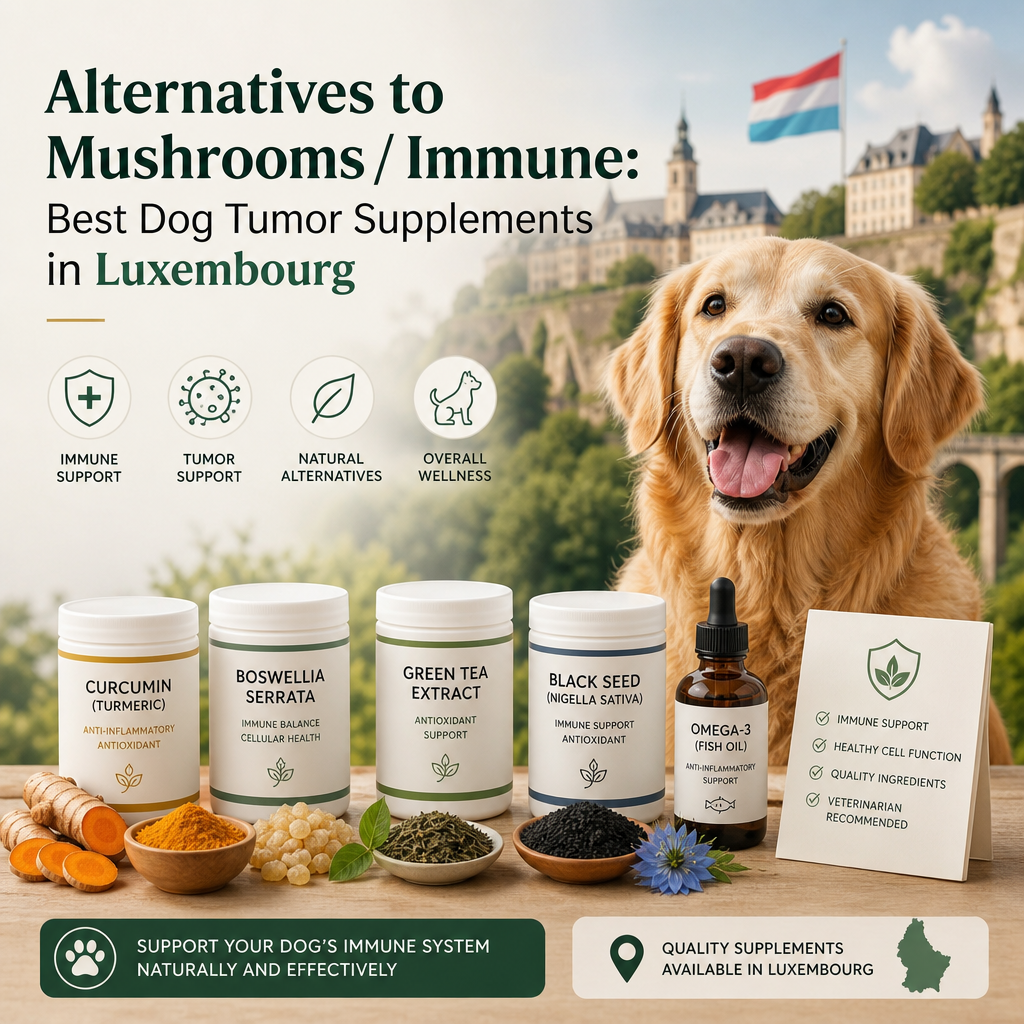
Εναλλακτικές λύσεις για Μανιτάρια / ανοσοποιητικό γίνονται ολοένα και πιο σχετικές για τους ιδιοκτήτες σκύλων στο Λουξεμβούργο που αναζητούν υποστηρικτικές επιλογές φροντίδας κατά τη διάρκεια της θεραπείας καρκίνου ενός κατοικίδιου. Ενώ τα προϊόντα ιατρικών μανιταριών συζητούνται ευρέως για την υποστήριξη του ανοσοποιητικού των σκύλων, δεν είναι τα μόνα διαθέσιμα συμπληρώματα. Πολλές εναλλακτικές λύσεις συμπληρωμάτων για όγκους σκύλων μπορεί να βοηθήσουν στην υποστήριξη της όρεξης, της πέψης, της ενέργειας και της συνολικής ευημερίας όταν χρησιμοποιούνται υπεύθυνα παράλληλα με την κτηνιατρική φροντίδα.
Μια διάγνωση όγκου μπορεί να είναι συντριπτική, και τα συμπληρώματα δεν θα πρέπει ποτέ να θεωρούνται ως αντικατάσταση για χειρουργική επέμβαση, χημειοθεραπεία, ακτινοβολία, συνταγογραφούμενα φάρμακα ή τακτική κτηνιατρική παρακολούθηση. Ωστόσο, η προσεκτικά επιλεγμένη διατροφική υποστήριξη μπορεί να συμπληρώσει ένα σχέδιο θεραπείας και να βοηθήσει στη διατήρηση της ποιότητας ζωής ενός σκύλου. Στο Λουξεμβούργο, οι ιδιοκτήτες μπορούν να βρουν πολλά προϊόντα μέσω κτηνιατρικών κλινικών, φαρμακείων, εξειδικευμένων καταστημάτων κατοικίδιων και ευρωπαϊκών διαδικτυακών προμηθευτών, αλλά η ποιότητα των προϊόντων και η επαγγελματική καθοδήγηση παραμένουν ουσιώδεις.
Πίνακας Περιεχομένων
- Γιατί να εξετάσετε εναλλακτικές λύσεις για Μανιτάρια / υποστήριξη ανοσοποιητικού;
- Εναλλακτικές λύσεις συμπληρωμάτων για όγκους σκύλων για διατροφική υποστήριξη
- Φυτικά προϊόντα και άλλες επιλογές εστιασμένες στο ανοσοποιητικό
- Επιλέγοντας ασφαλή προϊόντα στο Λουξεμβούργο
- Πώς να προσθέσετε ένα συμπλήρωμα υπεύθυνα
- Μια ισορροπημένη προσέγγιση στην υποστήριξη καρκίνου των σκύλων
Γιατί να εξετάσετε εναλλακτικές λύσεις για Μανιτάρια / υποστήριξη ανοσοποιητικού;
Ιατρικά μανιτάρια όπως η ουρά γαλοπούλας, η ρεϊσί, η σιτάκε και η μαϊτάκε χρησιμοποιούνται συχνά στη συμπληρωματική φροντίδα κατοικίδιων επειδή περιέχουν ενώσεις που σχετίζονται με την ανοσοποιητική δραστηριότητα. Παρ' όλα αυτά, ορισμένοι σκύλοι μπορεί να μην τα ανέχονται καλά, ενώ άλλοι μπορεί να παίρνουν φάρμακα που απαιτούν επιπλέον προσοχή. Τα μανιτάρια μπορεί επίσης να είναι ακατάλληλα για σκύλους με συγκεκριμένες αυτοάνοσες καταστάσεις, προβλήματα ήπατος, ευαισθησίες στην πέψη ή αλλεργίες.
Οι ιδιοκτήτες μπορεί επομένως να αναζητούν εναλλακτικές λύσεις για προϊόντα Μανιταριών / ανοσοποιητικού λόγω κόστους, διαθεσιμότητας, γεύσης, ανησυχιών σχετικά με αλληλεπιδράσεις ή επιθυμίας να υποστηρίξουν μια συγκεκριμένη ανάγκη. Για παράδειγμα, ένας σκύλος που υποβάλλεται σε θεραπεία μπορεί να χρειάζεται διατροφική υποστήριξη για τη διατήρηση του βάρους αντί για μια γενική φόρμουλα ανοσοποιητικού. Ένας άλλος σκύλος μπορεί να ωφεληθεί περισσότερο από υποστήριξη πέψης, ωμέγα-3 λιπαρών οξέων ή μια προσεκτικά ισορροπημένη διατροφή.
Η σωστή επιλογή εξαρτάται από τον τύπο του όγκου, το σχέδιο θεραπείας, την ηλικία, το βάρος, το ιατρικό ιστορικό και τις τρέχουσες εξετάσεις αίματος. Ένας κτηνίατρος θα πρέπει να εξετάσει κάθε συμπλήρωμα πριν εισαχθεί. Αυτό είναι ιδιαίτερα σημαντικό όταν ο στόχος είναι να συγκριθούν οι εναλλακτικές λύσεις για τις φόρμουλες Μανιταριών / ανοσοποιητικού με άλλες υποστηρικτικές επιλογές που μπορεί να είναι πιο κατάλληλες για έναν συγκεκριμένο ασθενή.
Ορισμένοι ιδιοκτήτες αρχίζουν να αναζητούν υποστήριξη αφού παρατηρήσουν αλλαγές στην όρεξη ή την ενέργεια, ενώ άλλοι θέλουν ένα προϊόν που μπορούν να συνδυάσουν με την συνταγογραφούμενη θεραπεία χωρίς να προσθέσουν περιττή πολυπλοκότητα. Και στις δύο περιπτώσεις, οι εναλλακτικές λύσεις για τα συμπληρώματα Μανιταριών / ανοσοποιητικού θα πρέπει να επιλέγονται με έναν πρακτικό στόχο στο μυαλό: να υποστηρίξουν την άνεση και τη διατροφή του σκύλου ενώ αποφεύγουν συστατικά που μπορεί να περιπλέκουν τη φροντίδα.
Εναλλακτικές λύσεις συμπληρωμάτων για όγκους σκύλων για διατροφική υποστήριξη
Ωμέγα-3 λιπαρά οξέα
Το ιχθυέλαιο που περιέχει EPA και DHA είναι μία από τις πιο συχνά εξεταζόμενες εναλλακτικές συμπληρωμάτων όγκου για σκύλους. Αυτά τα λιπαρά οξέα υποστηρίζουν την κανονική φλεγμονώδη ισορροπία και μπορεί να βοηθήσουν στη διατήρηση του δέρματος, του τριχώματος, της καρδιοαγγειακής λειτουργίας και της γενικής διατροφής. Μπορεί να είναι ιδιαίτερα χρήσιμα όταν η όρεξη ενός σκύλου είναι μειωμένη ή όταν η διατήρηση της σωματικής κατάστασης είναι προτεραιότητα.
Επιλέξτε ένα προϊόν κτηνιατρικής ποιότητας με σαφώς δηλωμένες ποσότητες EPA και DHA. Αποφύγετε να βασίζεστε μόνο στον συνολικό όγκο ιχθυελαίου, καθώς η περιεκτικότητα σε ενεργά λιπαρά οξέα είναι πιο σημαντική. Το ιχθυέλαιο μπορεί να προκαλέσει πεπτικές διαταραχές σε ορισμένους σκύλους και μπορεί να μην είναι κατάλληλο σε κάθε περίπτωση, ειδικά όταν ένας σκύλος έχει ιστορικό παγκρεατίτιδας, προβλημάτων αιμορραγίας ή προγραμματισμένης χειρουργικής επέμβασης.
Για πολλούς ιδιοκτήτες, τα ωμέγα-3 είναι ελκυστικά επειδή είναι εύκολα να προστεθούν σε μια καθημερινή ρουτίνα και μπορεί να συμπληρώσουν ένα ευρύτερο σχέδιο υποστήριξης. Παρ' όλα αυτά, δεν θα πρέπει να θεωρούνται ως μια καθολική λύση. Η καλύτερη χρήση των λιπαρών οξέων ωμέγα-3 είναι συνήθως σε μια προσεκτικά μετρημένη δόση που ταιριάζει με το βάρος του σκύλου, την πρόσληψη τροφής και το ιατρικό ιστορικό. Όταν αυτό γίνεται σωστά, μπορούν να είναι μεταξύ των πιο πρακτικών εναλλακτικών συμπληρωμάτων όγκου για σκύλους που είναι διαθέσιμα.
Αντιοξειδωτικά θρεπτικά συστατικά
Οι βιταμίνες και οι αντιοξειδωτικές ενώσεις περιλαμβάνονται μερικές φορές σε φόρμουλες διατροφικής υποστήριξης για σκύλους. Η βιταμίνη Ε, το σελήνιο, η βιταμίνη C και άλλα θρεπτικά συστατικά μπορεί να συμβάλλουν στην κανονική κυτταρική προστασία, αλλά περισσότερα δεν είναι πάντα καλύτερα. Η συμπλήρωση με υψηλές δόσεις αντιοξειδωτικών μπορεί ενδεχομένως να παρεμβαίνει σε ορισμένες θεραπείες καρκίνου, ανάλογα με τη θεραπεία και το χρονοδιάγραμμα.
Για αυτόν τον λόγο, οι ιδιοκτήτες θα πρέπει να αποφεύγουν να συνδυάζουν αρκετές πολυβιταμίνες ή ανθρώπινα προϊόντα αντιοξειδωτικών. Ένας κτηνίατρος μπορεί να καθορίσει εάν ένα συγκεκριμένο θρεπτικό συστατικό είναι απαραίτητο και εάν ταιριάζει με ασφάλεια με χημειοθεραπεία, ακτινοβολία ή άλλα φάρμακα. Σε πολλές περιπτώσεις, η πιο υπεύθυνη προσέγγιση είναι να χρησιμοποιείται ένα μόνο, σαφώς επισημασμένο προϊόν αντί να στοιβάζονται πολλές φόρμουλες που επικαλύπτονται σε σκοπό.
Όταν οι άνθρωποι αναζητούν εναλλακτικές λύσεις για την υποστήριξη του ανοσοποιητικού, συχνά υποθέτουν ότι μια πιο ισχυρή αντιοξειδωτική φόρμουλα πρέπει να είναι καλύτερη. Στην πραγματικότητα, η ασφαλέστερη επιλογή είναι αυτή που ευθυγραμμίζεται με το σχέδιο θεραπείας του σκύλου. Ένα μέτριο, στοχευμένο σχέδιο θρεπτικών συστατικών είναι συχνά πιο χρήσιμο από ένα προϊόν υψηλής δόσης με αβέβαιες αλληλεπιδράσεις.
Υποστήριξη πεπτικού και προβιοτικών
Η θεραπεία του καρκίνου μπορεί να επηρεάσει την όρεξη, την ποιότητα των κοπράνων και την πέψη. Τα κτηνιατρικά προβιοτικά, οι προβιοτικές ίνες ή οι δίαιτες υποστήριξης της πέψης μπορεί να βοηθήσουν ορισμένους σκύλους να διατηρήσουν μια πιο υγιή γαστρεντερική ρουτίνα. Αυτά τα προϊόντα δεν είναι θεραπείες όγκου, αλλά μπορούν να υποστηρίξουν την άνεση και την απορρόφηση θρεπτικών συστατικών.
Επιλέξτε προϊόντα που έχουν σχεδιαστεί για σκύλους και ακολουθήστε προσεκτικά τις οδηγίες αποθήκευσης. Ένας σκύλος με σοβαρούς εμετούς, επίμονη διάρροια, πυρετό ή υποψία ανοσοκαταστολής χρειάζεται άμεση κτηνιατρική αξιολόγηση αντί να βασίζεται σε ένα συμπλήρωμα που διατίθεται χωρίς συνταγή. Η υποστήριξη της πέψης συχνά παραβλέπεται, ωστόσο μπορεί να κάνει μια σημαντική διαφορά στο πόσο καλά ένας σκύλος ανέχεται την τροφή και τα φάρμακα.
Αν ένας σκύλος τρώει ήδη λιγότερο από το συνηθισμένο, ξεκινήστε με ένα απλό σχέδιο. Ένα προβιοτικό μπορεί να εισαχθεί πρώτα, ακολουθούμενο αργότερα από μια άλλη προσθήκη μόνο αν χρειαστεί. Αυτή η σταδιακή προσέγγιση διευκολύνει την αναγνώριση αν το συμπλήρωμα βοηθά. Επίσης, μειώνει την πιθανότητα να συγχέονται οι παρενέργειες με τα συμπτώματα της ίδιας της ασθένειας.
Υψηλής ποιότητας πρωτεΐνη και υποστήριξη θερμίδων
Μερικές φορές το πιο χρήσιμο συμπλήρωμα είναι ένα πλήρες διατροφικό προϊόν σχεδιασμένο να παρέχει θερμίδες και πρωτεΐνη. Διεγερτικά όρεξης, δίαιτες ανάρρωσης, υγρή διατροφή και ενεργειακά τζελ για ζώα μπορεί να είναι κατάλληλα όταν ένας σκύλος χάνει βάρος ή δυσκολεύεται να φάει.
Οι ιδιοκτήτες δεν θα πρέπει να αυξάνουν δραματικά την πρωτεΐνη, το λίπος ή τις θερμίδες χωρίς επαγγελματική καθοδήγηση. Ορισμένοι σκύλοι έχουν παθήσεις των νεφρών, του ήπατος, του παγκρέατος ή του γαστρεντερικού που απαιτούν μια ειδικά ισορροπημένη διατροφή. Ένα διατροφικό σχέδιο θα πρέπει να επικεντρώνεται στη διατήρηση μιας υγιούς σωματικής κατάστασης ενώ ελαχιστοποιεί τη ναυτία και την αποστροφή για το φαγητό.
Για τους ιδιοκτήτες στο Λουξεμβούργο που θέλουν να συγκρίνουν την προσέγγιση μιας άλλης χώρας, το K9 Immunity / K9 Immunity Plus Alternative στη Δανία οδηγός μπορεί να είναι ένα χρήσιμο σημείο αναφοράς για την επιλογή συμπληρωμάτων και την τοποθέτηση προϊόντων. Η εξέταση μιας άλλης αγοράς μπορεί να βοηθήσει να διευκρινιστεί η διαφορά μεταξύ γενικών τύπων ανοσοενίσχυσης και πιο στοχευμένης διατροφικής υποστήριξης.
Σε πρακτικούς όρους, η υποστήριξη θερμίδων είναι συχνά μία από τις πιο χρήσιμες εναλλακτικές λύσεις στα προϊόντα μανιταριών / ανοσοενίσχυσης, καθώς αντιμετωπίζει άμεσα ένα κοινό πρόβλημα: οι σκύλοι με καρκίνο χρειάζονται συχνά πιο αξιόπιστη πρόσληψη ενέργειας, όχι απλώς περισσότερες κάψουλες συμπληρωμάτων. Όταν η διατήρηση του βάρους είναι η άμεση ανησυχία, η υποστήριξη μέσω τροφής μπορεί να είναι πιο πολύτιμη από ένα ευρύ μείγμα ανοσοενίσχυσης.
Φυτικά προϊόντα και άλλες επιλογές εστιασμένες στο ανοσοποιητικό
Βότανα όπως η κουρκούμη, η βόσπολη, το γαϊδουράγκαθο, ο αστράγαλος ή η εχινάκεια προωθούνται μερικές φορές για υποστήριξη του ανοσοποιητικού ή της φλεγμονής. Ωστόσο, το “φυσικό” δεν σημαίνει αυτόματα ασφαλές. Τα βότανα μπορούν να επηρεάσουν την πήξη του αίματος, τα ένζυμα του ήπατος, την αρτηριακή πίεση, την καταστολή ή την απορρόφηση συνταγογραφούμενων φαρμάκων.
Τα προϊόντα κουρκούμης, για παράδειγμα, διαφέρουν σημαντικά στη σύνθεση και την απορρόφηση, ενώ το γαϊδουράγκαθο μπορεί να θεωρηθεί σε ορισμένα σχέδια υποστήριξης του ήπατος αλλά απαιτεί ακόμη και κτηνιατρική επίβλεψη. Οι ανθρώπινες κάψουλες βοτάνων μπορεί να περιέχουν ακατάλληλες δόσεις, γλυκαντικά, εκχυλίσματα με βάση το αλκοόλ ή πρόσθετα συστατικά που είναι επικίνδυνα για τους σκύλους.
Όταν εξετάζετε εναλλακτικές λύσεις στα προϊόντα μανιταριών / ανοσοενίσχυσης, επιλέξτε ένα προϊόν με διαφανή ετικέτα, δοκιμές παρτίδας, οδηγίες δοσολογίας και έναν κατασκευαστή με εμπειρία στη διατροφή των ζώων. Αποφύγετε προϊόντα που υπόσχονται να συρρικνώσουν όγκους, να θεραπεύσουν τον καρκίνο ή να αντικαταστήσουν τη συμβατική θεραπεία. Τέτοιες δηλώσεις είναι σημάδια προειδοποίησης και όχι αποδείξεις αποτελεσματικότητας.
Ορισμένα φυτικά προϊόντα προωθούνται ως ήπια, αλλά ο πραγματικός κίνδυνος εξαρτάται από το συστατικό, τη δόση και τα τρέχοντα φάρμακα του σκύλου. Ένα συμπλήρωμα που φαίνεται ακίνδυνο από μόνο του μπορεί να γίνει πρόβλημα αν αλλάξει τον τρόπο που επεξεργάζεται ένα άλλο φάρμακο. Γι' αυτό είναι καλύτερο να βλέπουμε τις εναλλακτικές λύσεις στα Μανιτάρια / υποστήριξη του ανοσοποιητικού ως ιατρικές επιλογές, όχι ως αξεσουάρ τρόπου ζωής.
Για περισσότερες πληροφορίες σχετικά με ασφαλείς αποφάσεις συμπληρωμάτων, το Οδηγός VCA Hospitals για συμπληρώματα κατοικίδιων προσφέρει μια πρακτική επισκόπηση του γιατί η ποιότητα των συστατικών και η καθοδήγηση από κτηνίατρο είναι σημαντικές.
Επιλέγοντας ασφαλή προϊόντα στο Λουξεμβούργο
Η αγορά του Λουξεμβούργου περιλαμβάνει τοπικές κτηνιατρικές υπηρεσίες και προϊόντα που διανέμονται από γειτονικές ευρωπαϊκές χώρες. Αυτό δίνει στους ιδιοκτήτες πρόσβαση σε μια ευρεία γκάμα συμπληρωμάτων, αλλά μπορεί επίσης να δυσκολέψει τη σύγκριση ποιότητας. Πριν από την αγορά, ελέγξτε αν το προϊόν αναγνωρίζει σαφώς τον κατασκευαστή, τα συστατικά, τις ενεργές ποσότητες, τη συνιστώμενη δόση για σκύλους, τις πληροφορίες παρτίδας ή παρτίδας και την ημερομηνία λήξης.
Είναι επίσης σημαντικό να ληφθούν υπόψη οι διαφορές στη γλώσσα και την ετικετοποίηση. Προϊόντα που πωλούνται μέσω ευρωπαϊκών ιστοσελίδων μπορεί να παρέχουν οδηγίες σε διαφορετικές γλώσσες ή να χρησιμοποιούν διάφορες μετρήσεις. Ρωτήστε έναν κτηνίατρο ή φαρμακοποιό κτηνιατρικών προϊόντων στο Λουξεμβούργο για να επιβεβαιώσετε τη σωστή δόση, ειδικά για μικρούς σκύλους, ηλικιωμένα ζώα ή σκύλους που λαμβάνουν πολλαπλά φάρμακα.
Μην χρησιμοποιείτε συμπληρώματα που περιέχουν ξυλιτόλη, υπερβολική βιταμίνη D, συμπυκνώματα σκόρδου, αλκοόλ ή άλλα συστατικά που είναι γνωστό ότι είναι επικίνδυνα για τους σκύλους. Κρατήστε όλα τα προϊόντα μακριά από την πρόσβαση, καθώς οι συμπυκνωμένες κάψουλες, τα έλαια και οι σκόνες μπορεί να προκαλέσουν δηλητηρίαση αν καταναλωθούν σε μεγάλες ποσότητες.
Όταν συγκρίνετε εναλλακτικές λύσεις στα Μανιτάρια / φόρμουλες ανοσοποιητικού, αναζητήστε σημάδια συνεπούς παραγωγής αντί για εντυπωσιακό μάρκετινγκ. Ένα καλά σχεδιασμένο προϊόν συνήθως εξηγεί τι προορίζεται να κάνει κάθε συστατικό και παρέχει ένα ρεαλιστικό πρόγραμμα δόσης. Αυτή η σαφήνεια είναι ιδιαίτερα χρήσιμη όταν ένας σκύλος ήδη αντιμετωπίζει μια σοβαρή διάγνωση και ο ιδιοκτήτης θέλει να αποφύγει την δοκιμή και το λάθος.
Οι ιδιοκτήτες στο Λουξεμβούργο μπορεί επίσης να διαπιστώσουν ότι ορισμένα προϊόντα είναι πιο εύκολο να βρεθούν από φαρμακεία ή κτηνιατρικές κλινικές παρά από γενικά καταστήματα κατοικίδιων. Σε αυτές τις περιπτώσεις, το όφελος είναι συχνά όχι μόνο η ευκολία αλλά και η υψηλότερη πιθανότητα να αποκτήσετε ακριβή ετικετοποίηση και επαγγελματική καθοδήγηση. Αν ένα προϊόν είναι άγνωστο, ζητήστε το πλήρες πάνελ συστατικών πριν το αγοράσετε.
Μπορεί να βοηθήσει να κρατήσετε μια απλή λίστα ελέγχου: ποιο είναι το ενεργό συστατικό, ποια είναι η δόση, ποια φάρμακα παίρνει ο σκύλος και ποιο πρόβλημα υποτίθεται ότι λύνει το προϊόν; Αυτή η διαδικασία διατηρεί την εστίαση στις ανάγκες του σκύλου και διευκολύνει την αξιολόγηση των εναλλακτικών λύσεων στα Μανιτάρια / προϊόντα ανοσοποιητικού με δίκαιο τρόπο.
Πώς να προσθέσετε ένα συμπλήρωμα υπεύθυνα
Εισάγετε μόνο ένα νέο προϊόν τη φορά. Αυτό διευκολύνει την αναγνώριση πεπτικών διαταραχών, αλλεργικών αντιδράσεων, αλλαγών στην όρεξη ή άλλων ανεπιθύμητων επιδράσεων. Ξεκινήστε με τη δόση που έχει εγκριθεί από τον κτηνίατρο αντί να υποθέσετε ότι μια μεγαλύτερη ποσότητα θα προσφέρει μεγαλύτερα οφέλη.
Καταγράψτε το όνομα του προϊόντος, τη δόση, την ημερομηνία έναρξης, την όρεξη, την ποιότητα κοπράνων, το βάρος, το επίπεδο ενέργειας και οποιαδήποτε συμπτώματα. Αυτές οι πληροφορίες μπορούν να βοηθήσουν την κτηνιατρική ομάδα να αποφασίσει αν το συμπλήρωμα είναι χρήσιμο. Σταματήστε το προϊόν και ζητήστε συμβουλές αν ο σκύλος αναπτύξει επαναλαμβανόμενο εμετό, διάρροια, ασυνήθιστους μώλωπες, σοβαρή ληθαργία, πρήξιμο, δυσκολία στην αναπνοή ή ξαφνική αλλαγή στη συμπεριφορά.
Οι τακτικές εξετάσεις και οι εξετάσεις αίματος παραμένουν απαραίτητες. Τα συμπληρώματα δεν μπορούν να αντικαταστήσουν την παρακολούθηση όγκων, την απεικόνιση, τη διαχείριση πόνου ή τις προσαρμογές θεραπείας. Ο πιο κατάλληλος ρόλος τους είναι συνήθως υποστηρικτικός: βοηθώντας έναν σκύλο να φάει, να διατηρήσει τη δύναμη, να ανεχτεί τη θεραπεία και να απολαύσει την καθημερινή ζωή.
Όταν ένα κατοικίδιο ήδη λαμβάνει θεραπεία, οι εναλλακτικές λύσεις στα προϊόντα μανιταριών / ανοσολογικής υποστήριξης θα πρέπει να προστεθούν προσεκτικά και να αναθεωρούνται σε κάθε επόμενη επίσκεψη ώστε το σχέδιο να μπορεί να προσαρμοστεί καθώς αλλάζει η κατάσταση του σκύλου. Αυτή είναι μία από τις πιο σημαντικές συνήθειες για ασφαλή μακροχρόνια φροντίδα, επειδή ένα συμπλήρωμα που φαίνεται κατάλληλο κατά τη διάγνωση μπορεί να μην ταιριάζει πλέον αργότερα στη θεραπεία.
Ορισμένοι σκύλοι χρειάζονται ένα συμπλήρωμα μόνο για μικρό χρονικό διάστημα, όπως κατά τη διάρκεια μιας φάσης κακής όρεξης ή μετά από έναν δύσκολο κύκλο θεραπείας. Άλλοι μπορεί να τα πηγαίνουν καλύτερα με μια μακροχρόνια ρουτίνα. Το κλειδί είναι να επαναξιολογείτε συχνά. Στην ογκολογία των σκύλων, η ευελιξία έχει μεγαλύτερη σημασία από ένα αυστηρό σχέδιο.
Αν ένας κτηνίατρος προτείνει να σταματήσετε ένα προϊόν πριν από τη χειρουργική επέμβαση ή μια διαδικασία, ακολουθήστε αυτή τη συμβουλή ακριβώς. Πολλοί ιδιοκτήτες ξεχνούν ότι τα συμπληρώματα μπορούν να επηρεάσουν την πήξη, την άνεση στο στομάχι ή τη διαχείριση φαρμάκων. Μια σύντομη παύση μπορεί να είναι η ασφαλέστερη επιλογή, ειδικά όταν ο σκύλος είναι ήδη ιατρικά ευάλωτος.
Για αυτόν τον λόγο, οι εναλλακτικές λύσεις στα προϊόντα μανιταριών / ανοσολογικής υποστήριξης λειτουργούν καλύτερα όταν ο ιδιοκτήτης κρατάει ένα απλό ημερολόγιο και μοιράζεται ενημερώσεις με την κτηνιατρική ομάδα. Μερικές σημειώσεις σχετικά με την κατανάλωση, την ποιότητα κοπράνων και την ενέργεια μπορούν να αποκαλύψουν περισσότερα από μια μακρά λίστα μη παρακολουθούμενων καψουλών.
Μια ισορροπημένη προσέγγιση στην υποστήριξη καρκίνου των σκύλων
Οι καλύτερες εναλλακτικές λύσεις συμπληρωμάτων όγκου σκύλου δεν είναι απαραίτητα οι πιο ακριβές ή αυτές με τους πιο ισχυρούς ισχυρισμούς μάρκετινγκ. Είναι προϊόντα που επιλέγονται για μια συγκεκριμένη ιατρική ανάγκη, υποστηριζόμενα από αξιόπιστη σήμανση και ενσωματωμένα σε ένα σχέδιο θεραπείας κτηνίατρου.
Για τους ιδιοκτήτες σκύλων στο Λουξεμβούργο, η ασφαλέστερη προσέγγιση είναι να συζητήσουν τα ωμέγα-3 λιπαρά οξέα, την πεπτική υποστήριξη, τις διατροφικές φόρμουλες, τα αντιοξειδωτικά και τα φυτικά προϊόντα με έναν κτηνίατρο πριν από τη χρήση. Εστιάζοντας σε αποδείξεις, ποιότητα προϊόντων και την κατάσταση του κάθε σκύλου, οι ιδιοκτήτες μπορούν να πάρουν ενημερωμένες αποφάσεις χωρίς να χάσουν από το στόχο: την υποστήριξη της άνεσης, της διατροφής και της ποιότητας ζωής κατά τη διάρκεια της φροντίδας του καρκίνου.
Είτε ο στόχος είναι η υποστήριξη της όρεξης, η πεπτική άνεση ή η ανθεκτικότητα στην καθημερινότητα, οι εναλλακτικές λύσεις στα προϊόντα μανιταριών / ανοσολογικής υποστήριξης μπορούν να είναι μέρος ενός λογικού σχεδίου όταν επιλέγονται προσεκτικά και χρησιμοποιούνται υπό την επίβλεψη κτηνίατρου.
Στην πράξη, οι πιο αποτελεσματικές εναλλακτικές λύσεις για τα Μανιτάρια / προϊόντα ανοσίας είναι συχνά αυτές που ταιριάζουν στις πραγματικές ανάγκες του σκύλου αντί για μια υπόσχεση μάρκετινγκ. Ένας σκύλος με απώλεια βάρους μπορεί να χρειάζεται θρεπτική αξία πλούσια σε θερμίδες, ενώ ένας άλλος μπορεί να ωφεληθεί περισσότερο από προβιοτικά ή ωμέγα-3 λιπαρά οξέα. Το κλειδί είναι να επιλέξετε υποστήριξη που ταιριάζει στο στάδιο θεραπείας του σκύλου, την ανοχή και τη συνολική υγεία.
Ορισμένοι ιδιοκτήτες ρωτούν επίσης αν ένα συμπλήρωμα υποστήριξης ανοσίας θα πρέπει να χρησιμοποιείται συνεχώς ή μόνο κατά τη διάρκεια της ενεργής θεραπείας. Η απάντηση εξαρτάται από τη διάγνωση και τα φάρμακα που εμπλέκονται. Σε πολλές περιπτώσεις, οι εναλλακτικές λύσεις για τα Μανιτάρια / προϊόντα ανοσίας είναι πιο χρήσιμες όταν είναι μέρος μιας σύντομης λίστας στοχευμένων προσθέσεων παρά από μια μακρά στοίβα επικαλυπτόμενων συνταγών. Αυτή η προσέγγιση διευκολύνει την αξιολόγηση των οφελών και την αποφυγή περιττών συστατικών.
Εάν ο κτηνίατρός σας προτείνει ένα συγκεκριμένο προϊόν, ρωτήστε πόσο καιρό θα πρέπει να χρησιμοποιείται, αν θα πρέπει να χορηγείται με τροφή και ποια παρενέργειες να παρακολουθείτε. Οι σαφείς οδηγίες είναι ιδιαίτερα σημαντικές όταν ένας σκύλος λαμβάνει επίσης ανακούφιση από τον πόνο, φάρμακα κατά της ναυτίας, στεροειδή ή χημειοθεραπεία. Η προσεκτική χρονομέτρηση μπορεί να μειώσει τον κίνδυνο στομαχικών διαταραχών και να βελτιώσει τη συνέπεια.
Για τους σκύλους που δυσκολεύονται με τη γεύση, οι κάψουλες μπορούν μερικές φορές να κρυφτούν σε τροφή, ενώ οι υγρές συνταγές μπορεί να είναι πιο εύκολες για κατοικίδια με κακή όρεξη. Ωστόσο, κάθε μορφή έχει τα μειονεκτήματά της. Τα έλαια μπορεί να είναι ακατάστατα και να προκαλούν χαλαρές κενώσεις, οι σκόνες μπορεί να είναι δύσκολο να μετρηθούν με ακρίβεια και τα μασώμενα προϊόντα μπορεί να περιέχουν επιπλέον συστατικά γεύσης. Ένας κτηνίατρος μπορεί να σας βοηθήσει να αποφασίσετε ποια επιλογή είναι πιο πρακτική.
Αξίζει επίσης να αναθεωρήσετε τη συνολική διατροφή. Μια πλήρης και ισορροπημένη τροφή μπορεί να κάνει μεγαλύτερη διαφορά από αρκετά μικρά συμπληρώματα, ειδικά αν ο σκύλος τρώει ήδη άσχημα. Η διατροφική υποστήριξη, η ενυδάτωση και η συχνή παρακολούθηση συχνά συνεργάζονται καλύτερα από οποιοδήποτε μεμονωμένο προϊόν. Με αυτή την έννοια, οι εναλλακτικές λύσεις για τα Μανιτάρια / συμπληρώματα ανοσίας θα πρέπει να θεωρούνται μέρος ενός ευρύτερου σχεδίου φροντίδας, όχι το κεντρικό κομμάτι του.
Οι ιδιοκτήτες στο Λουξεμβούργο που προμηθεύονται προϊόντα από όλη την Ευρώπη θα πρέπει να ελέγχουν διπλά τις μονάδες δοσολογίας και τις οδηγίες συσκευασίας, καθώς μια δόση που αναφέρεται κατά βάρος ή χιλιοστόλιτρο μπορεί να διαφέρει ανά μάρκα. Όταν έχετε αμφιβολίες, τραβήξτε μια φωτογραφία της ετικέτας και επιβεβαιώστε τις οδηγίες πριν δώσετε την πρώτη δόση. Αυτό το επιπλέον βήμα μπορεί να αποτρέψει λάθη και βοηθά να διασφαλιστεί ότι το προϊόν χρησιμοποιείται με ασφάλεια από την αρχή.
Με προσεκτική καθοδήγηση, οι εναλλακτικές λύσεις για τα Μανιτάρια / επιλογές ανοσίας μπορούν να υποστηρίξουν την άνεση, τη διατροφή και την καθημερινή ευημερία χωρίς να αντικαθιστούν την αποδεδειγμένη κτηνιατρική θεραπεία. Η πιο υπεύθυνη απόφαση είναι αυτή που ταιριάζει στον κάθε σκύλο, χρησιμοποιεί ποιοτικά προϊόντα και κρατά την κτηνιατρική ομάδα εμπλεκόμενη σε κάθε στάδιο.
Στο τέλος, ο στόχος δεν είναι να βρείτε ένα τέλειο συμπλήρωμα αλλά να δημιουργήσετε ένα πρακτικό, ασφαλές και προσαρμόσιμο σχέδιο υποστήριξης. Για πολλές οικογένειες, αυτό σημαίνει να συνδυάσουν τη θεραπεία από κτηνίατρο με προσεκτικά επιλεγμένες εναλλακτικές λύσεις στα Μανιτάρια / προϊόντα ανοσίας που ταιριάζουν στην όρεξη, τις ενεργειακές ανάγκες και τους ιατρικούς περιορισμούς του σκύλου. Όταν χρησιμοποιείται με αυτόν τον τρόπο, η υποστηρικτική φροντίδα γίνεται πιο συνεκτική και πιο εύκολη στη διαχείριση μέρα με τη μέρα.
Οι ιδιοκτήτες θα πρέπει να θυμούνται ότι κάθε σκύλος είναι διαφορετικός. Ένα κατοικίδιο μπορεί να ανταποκριθεί καλά στα ωμέγα-3 και την υποστήριξη της πέψης, ενώ ένα άλλο μπορεί να χρειάζεται μια διατροφή πλούσια σε θερμίδες και καθόλου επιπλέον συμπληρώματα. Γι' αυτό οι καλύτερες επιδόσεις προέρχονται συνήθως από την εξατομίκευση, όχι από την ακολουθία μιας γενικής τάσης συμπληρωμάτων. Όσο πιο κοντά ταιριάζει το σχέδιο στον σκύλο, τόσο πιο χρήσιμο γίνεται.
Αν δεν είστε σίγουροι από πού να ξεκινήσετε, ξεκινήστε με το πιο προφανές πρόβλημα: κακή όρεξη, χαλαρά κόπρανα, απώλεια βάρους ή χαμηλή ενέργεια. Στη συνέχεια, ρωτήστε αν ένα συμπλήρωμα αντιμετωπίζει αυτό το πρόβλημα άμεσα. Αυτό το απλό φίλτρο βοηθά να διαχωρίσετε τις χρήσιμες εναλλακτικές λύσεις στα Μανιτάρια / προϊόντα ανοσίας από προϊόντα που ακούγονται ελκυστικά αλλά δεν κάνουν πολλά για την πραγματική κατάσταση του σκύλου.
Με υπομονή και επίβλεψη από κτηνίατρο, οι ιδιοκτήτες στο Λουξεμβούργο μπορούν να επιλέξουν υποστήριξη που είναι λογική, ασφαλής και ευθυγραμμισμένη με τους στόχους θεραπείας. Αυτός είναι ο πιο αξιόπιστος τρόπος για να χρησιμοποιήσετε εναλλακτικές λύσεις στα Μανιτάρια / προϊόντα ανοσίας στην πραγματική φροντίδα καρκίνου σε σκύλους.