
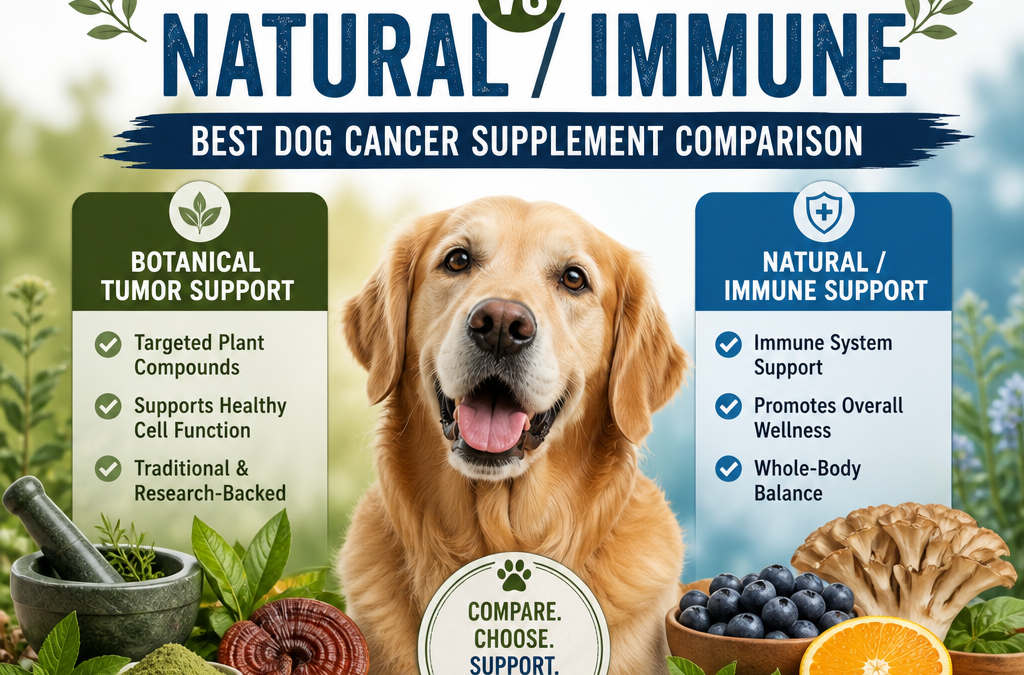
Η βοτανική υποστήριξη όγκου vs φυσική / ανοσοποιητική είναι μια σημαντική σύγκριση για τους ιδιοκτήτες σκύλων που εξερευνούν συμπληρωματική φροντίδα μετά από διάγνωση καρκίνου. Ενώ τα συμπληρώματα δεν μπορούν να αντικαταστήσουν τη θεραπεία από κτηνίατρο, προσεκτικά επιλεγμένα προϊόντα μπορεί να υποστηρίξουν την άνεση, τη διατροφή και τη γενική ευημερία. Η καλύτερη επιλογή εξαρτάται από τη διάγνωση του σκύλου, το σχέδιο θεραπείας, την ηλικία, τα φάρμακα και την ατομική κατάσταση υγείας.
Η φροντίδα του καρκίνου θα πρέπει πάντα να ξεκινά με έναν κτηνίατρο, ιδανικά έναν κτηνιατρικό ογκολόγο. Ορισμένα συμπληρώματα μπορεί να παρεμβαίνουν στη χημειοθεραπεία, την ακτινοβολία, τη χειρουργική επέμβαση, την αναισθησία ή τα συνταγογραφούμενα φάρμακα. Άλλα μπορεί να είναι ακατάλληλα για σκύλους με ηπατική νόσο, νεφρική νόσο, διαταραχές αιμορραγίας ή γαστρεντερική ευαισθησία. Η κατανόηση των διαφορών μεταξύ των προϊόντων βοτανικής υποστήριξης όγκου και των φυσικών ή ανοσοποιητικών τύπων μπορεί να βοηθήσει τους ιδιοκτήτες να έχουν πιο παραγωγικές συζητήσεις με την κτηνιατρική τους ομάδα. Εάν θέλετε ένα πρακτικό σημείο εκκίνησης, αυτή η σύγκριση συμπληρωμάτων καρκίνου σκύλου μπορεί να σας βοηθήσει να περιορίσετε τις επιλογές.
Πίνακας Περιεχομένων
Βοτανική υποστήριξη όγκου vs Φυσική / Ανοσοποιητική: Κατανόηση της διαφοράς
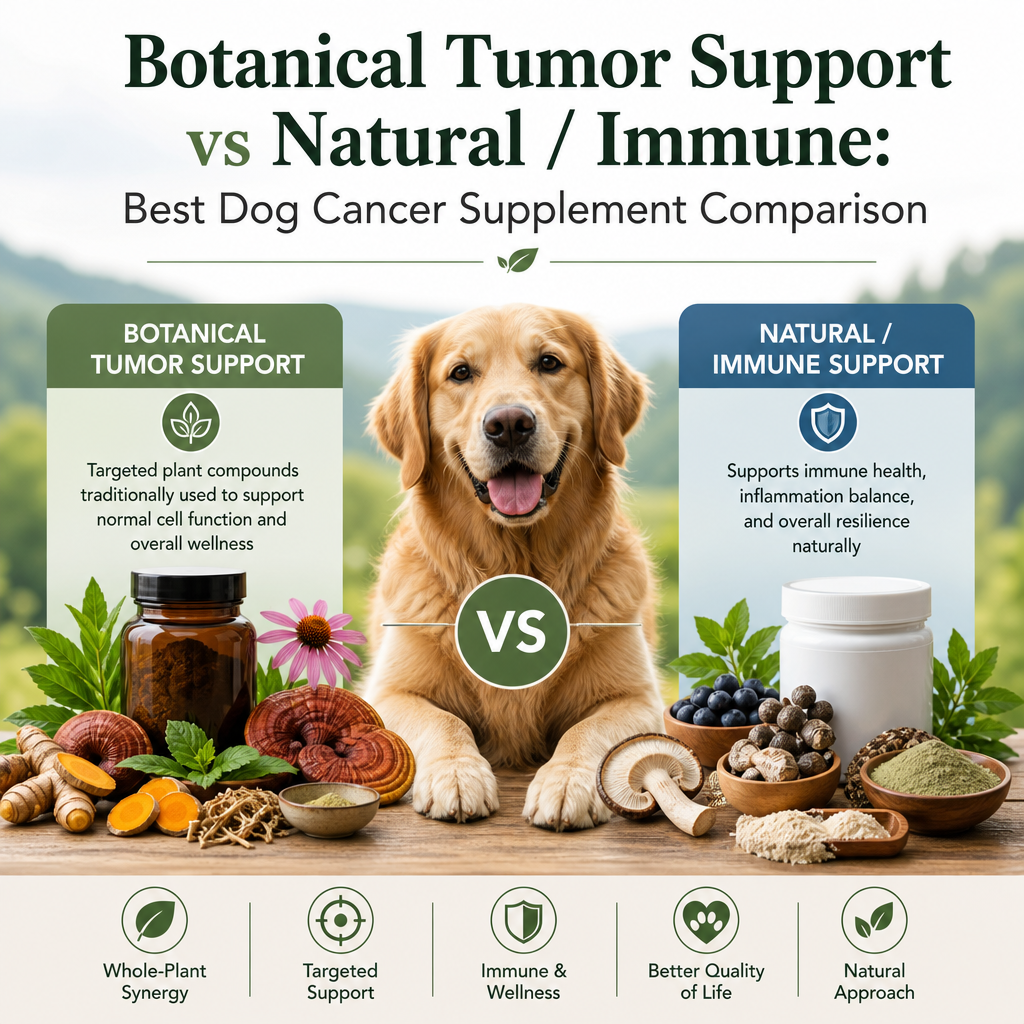
Τα συμπληρώματα βοτανικής υποστήριξης όγκου περιέχουν γενικά συμπυκνωμένα βότανα, εκχυλίσματα φυτών, μανιτάρια ή άλλες φυσικά προερχόμενες ενώσεις που επιλέγονται για τον πιθανό ρόλο τους στην κυτταρική υγεία. Κοινά συστατικά μπορεί να περιλαμβάνουν φαρμακευτικά μανιτάρια, ενώσεις κουρκουμά, εκχυλίσματα πράσινου τσαγιού, γαϊδουράγκαθο, βοσβελία ή συγκεκριμένα βότανα. Αυτά τα προϊόντα συχνά προωθούνται ως υποστηρικτικά της υγιούς φλεγμονώδους ισορροπίας, των αντιοξειδωτικών αμυνών, της φυσιολογικής κυτταρικής λειτουργίας ή της αντίδρασης του σώματος σε ανώμαλα κύτταρα.
Τα φυσικά ή ανοσοποιητικά συμπληρώματα συνήθως ακολουθούν μια ευρύτερη προσέγγιση ευημερίας. Αντί να εστιάζουν κυρίως σε κυτταρικές ή σχετικές με όγκους διαδρομές, μπορεί να στοχεύουν στην υποστήριξη της ανοσοποιητικής ισορροπίας, της πέψης, της όρεξης, της ενέργειας ή της γενικής διατροφικής κατάστασης. Τα συστατικά μπορεί να περιλαμβάνουν βήτα-γλυκάνες, προβιοτικά, ωμέγα-3 λιπαρά οξέα, βιταμίνες, μέταλλα, πεπτικά ένζυμα και εκχυλίσματα μανιταριών που υποστηρίζουν το ανοσοποιητικό.
Οι κατηγορίες μπορεί να επικαλύπτονται. Μια φόρμουλα με βάση τα μανιτάρια, για παράδειγμα, μπορεί να προωθείται τόσο για την υποστήριξη του ανοσοποιητικού όσο και για την ευημερία που σχετίζεται με τους όγκους. Η πιο σημαντική διάκριση είναι συνήθως ο προορισμός του προϊόντος, η συγκέντρωση των συστατικών, η ποιότητα των αποδείξεων και το προφίλ ασφάλειας—όχι απλώς αν είναι επισημασμένο ως “φυσικό.”
Για τους ιδιοκτήτες που συγκρίνουν επιλογές, ένας οδηγός εγκεκριμένος από κτηνίατρο μπορεί να είναι χρήσιμος. Για παράδειγμα, ορισμένοι αναγνώστες επίσης αναθεωρούν συμπληρώματα καρκίνου σκύλου όταν θέλουν μια ευρύτερη ματιά στην επιλογή συμπληρωμάτων για υποστήριξη καρκίνου σκύλου.
Όταν επιλέγετε μεταξύ βοτανικής υποστήριξης όγκου και φυσικών / ανοσοποιητικών προϊόντων, βοηθά επίσης να σκεφτείτε με όρους των τρεχουσών στόχων του σκύλου. Ορισμένοι σκύλοι χρειάζονται βοήθεια για τη διατήρηση της όρεξης και του σωματικού βάρους, ενώ άλλοι χρειάζονται μια φόρμουλα που να ταιριάζει σε προσεκτικά χρονομετρημένα προγράμματα φαρμακευτικής αγωγής. Μια σύγκριση συμπληρωμάτων καρκίνου σκύλου είναι πιο χρήσιμη όταν λαμβάνει υπόψη αυτές τις λεπτομέρειες του πραγματικού κόσμου αντί να βασίζεται μόνο σε ετικέτες.
Τι μπορεί να προσφέρει η βοτανική φόρμουλα
Τα βοτανικά προϊόντα συχνά επιλέγονται επειδή περιέχουν πολλούς φυτικούς συνδυασμούς με βιολογική δραστηριότητα. Ορισμένα συστατικά έχουν μελετηθεί σε εργαστηριακή ή ζωική έρευνα για τις αντιοξειδωτικές, αντιφλεγμονώδεις, ανοσορυθμιστικές ή κυτταρικές σήματα επιδράσεις. Ωστόσο, τα εργαστηριακά ευρήματα δεν αποδεικνύουν αυτόματα ότι ένα συμπλήρωμα θεραπεύει τον καρκίνο σε ζωντανούς σκύλους.
Πιθανά οφέλη μπορεί να περιλαμβάνουν υποστήριξη για κανονικές φλεγμονώδεις αντιδράσεις, διαχείριση οξειδωτικού στρες, λειτουργία του ήπατος ή όρεξη και άνεση. Ορισμένα συστατικά μπορεί επίσης να συμπληρώνουν ένα ευρύτερο διατροφικό σχέδιο. Για παράδειγμα, τα ωμέγα-3 λιπαρά οξέα περιλαμβάνονται μερικές φορές στη διατροφή καρκίνου των ζώων λόγω του ρόλου τους στη διατήρηση υγιών φλεγμονωδών οδών και υποστήριξης της σωματικής κατάστασης.
Ο κύριος περιορισμός είναι η μεταβλητότητα. Τα φυτικά προϊόντα μπορεί να διαφέρουν σημαντικά σε δραστικότητα, καθαρότητα, μέθοδο εξαγωγής και ακρίβεια ετικετών. Ένα συμπλήρωμα μπορεί να περιέχει ένα υποσχόμενο συστατικό αλλά να παρέχει μια ποσότητα που δεν έχει μελετηθεί σε σκύλους. Ορισμένα βοτανικά συστατικά μπορεί επίσης να επηρεάσουν την πήξη του αίματος, τα ένζυμα του ήπατος, την αρτηριακή πίεση ή τον μεταβολισμό των φαρμάκων.
Για αυτόν τον λόγο, το “περισσότερα συστατικά” δεν σημαίνει απαραίτητα “πιο αποτελεσματικά”. Μια πιο σύντομη φόρμουλα με διαφανή δοσολογία και αξιόπιστο ποιοτικό έλεγχο μπορεί να είναι ασφαλέστερη από ένα σύνθετο μείγμα με ιδιόκτητα ποσά.
Όταν συγκρίνετε βοτανική υποστήριξη όγκου και φυσικές / ανοσοποιητικές επιλογές, βοηθά να επαληθεύσετε τις αξιώσεις των συστατικών με βάση αξιόπιστο υλικό αναφοράς. Το Εθνικό Κέντρο Συμπληρωματικής και Εναλλακτικής Υγειονομικής Περίθαλψης των Η.Π.Α. εξηγεί πώς μελετώνται τα βοτανικά προϊόντα και γιατί η ποιότητα μπορεί να διαφέρει; δείτε την επίσημη επισκόπηση στο Ο οδηγός του NCCIH για βότανα και βοτανικά.
Οι ιδιοκτήτες θα πρέπει επίσης να θυμούνται ότι ένα βοτανικό προϊόν δεν σημαίνει αυτόματα ένα ασφαλέστερο προϊόν. Ακόμη και τα φυτικά συστατικά μπορεί να είναι ισχυρά, και ο λάθος συνδυασμός μπορεί να δημιουργήσει προβλήματα κατά την προετοιμασία για χειρουργική επέμβαση ή ενώ ο σκύλος λαμβάνει φαρμακευτική αγωγή. Στην πράξη, η βοτανική υποστήριξη όγκου και οι φυσικές / ανοσοποιητικές είναι λιγότερο σχετικά με το “φυσικό ισούται με ασφαλές” και περισσότερο σχετικά με την αντιστοίχιση της φόρμουλας με τον ασθενή.
Σε μια λεπτομερή σύγκριση συμπληρωμάτων καρκίνου σκύλου, οι βοτανικές φόρμουλες συχνά αξιολογούνται καλύτερα από την καθαρότητά τους. Μπορείτε να δείτε τις ακριβείς ποσότητες των συστατικών; Εξηγείται η μέθοδος εξαγωγής; Παρέχει ο κατασκευαστής πληροφορίες για δοκιμές παρτίδας ή άλλες πληροφορίες ποιοτικού ελέγχου; Αυτές οι λεπτομέρειες έχουν σημασία γιατί βοηθούν την κτηνιατρική ομάδα να κρίνει αν το προϊόν ταιριάζει στο σχέδιο φροντίδας.
Οι βοτανικές φόρμουλες μπορεί επίσης να επιλεγούν όταν ένας ιδιοκτήτης θέλει ένα προϊόν που στοχεύει σε πιο συγκεκριμένες διαδρομές, όπως η φλεγμονώδης ισορροπία ή η υποστήριξη του ήπατος. Παρ' όλα αυτά, η βάση αποδείξεων για πολλά συστατικά εξακολουθεί να εξελίσσεται, οπότε οι προσδοκίες θα πρέπει να παραμείνουν συντηρητικές. Ένα καλά επιλεγμένο βοτανικό προϊόν μπορεί να είναι ένα χρήσιμο εργαλείο υποστήριξης, αλλά θα πρέπει να παραμείνει ένα κομμάτι μιας μεγαλύτερης στρατηγικής που περιλαμβάνει διατροφή, ιατρική θεραπεία και παρακολούθηση μετά.
Τι μπορεί να προσφέρει η φυσική και ανοσοποιητική φόρμουλα
Τα συμπληρώματα που επικεντρώνονται στο ανοσοποιητικό χρησιμοποιούνται συνήθως όταν ένας σκύλος χρειάζεται ευρεία υποστήριξη κατά τη διάρκεια ασθένειας ή θεραπείας. Μπορεί να παρέχουν θρεπτικά συστατικά που εμπλέκονται στη φυσιολογική λειτουργία του ανοσοποιητικού, την υγεία του εντέρου και την ανάρρωση από το άγχος. Τα βήτα-γλυκάνια από φαρμακευτικά μανιτάρια, προβιοτικά, πρεβιοτικά, βιταμίνες και ιχνοστοιχεία βρίσκονται συχνά σε αυτά τα προϊόντα.
Η διατήρηση του γαστρεντερικού συστήματος μπορεί να είναι ιδιαίτερα πολύτιμη. Οι σκύλοι που υποβάλλονται σε θεραπεία για καρκίνο μπορεί να βιώσουν μειωμένη όρεξη, ναυτία, διάρροια, δυσκοιλιότητα ή αλλαγές στη γεύση και τις προτιμήσεις τροφίμων. Ένα υγιές πεπτικό σύστημα μπορεί να βοηθήσει στην υποστήριξη της απορρόφησης θρεπτικών συστατικών και της κατάστασης του σώματος, αν και τα προβιοτικά ή άλλα πεπτικά προϊόντα θα πρέπει να εισάγονται προσεκτικά.
Η υποστήριξη του ανοσοποιητικού δεν θα πρέπει να ερμηνεύεται ως διέγερση του ανοσοποιητικού με κάθε κόστος. Η βιολογία του καρκίνου είναι περίπλοκη και το ανοσοποιητικό σύστημα χρειάζεται ισορροπία αντί για αδιάκριτη ενεργοποίηση. Οι σκύλοι με αυτοάνοσες καταστάσεις ή αυτοί που λαμβάνουν ανοσοκατασταλτικά φάρμακα μπορεί να απαιτούν ιδιαίτερη προσοχή. Ένας κτηνίατρος μπορεί να καθορίσει αν ένα προϊόν που επικεντρώνεται στο ανοσοποιητικό είναι κατάλληλο και αν τα συστατικά του θα μπορούσαν να περιπλέκουν τη θεραπεία.
Σε ορισμένες περιπτώσεις, οι ιδιοκτήτες προτιμούν να συγκρίνουν ένα προϊόν με εναλλακτικές λύσεις συγκεκριμένων περιοχών πριν λάβουν απόφαση αγοράς. Αν ερευνάτε αυτό το θέμα στην Κεντρική Ευρώπη, μπορεί επίσης να βρείτε αυτή την σχετική επιλογή χρήσιμη: Εναλλακτικές λύσεις σε Ιατρικά Μανιτάρια / Κτηνιατρική Μυκοθεραπεία.
Οι φυσικές και ανοσοποιητικές φόρμουλες είναι συχνά ελκυστικές επειδή μπορεί να φαίνονται πιο απλές και γενικής χρήσης από ένα πολύ στοχευμένο βοτανικό μείγμα. Σε μια σύγκριση συμπληρωμάτων καρκίνου σκύλων, αυτό μπορεί να είναι πλεονέκτημα όταν ο κύριος στόχος είναι να υποστηριχθεί η πέψη, να διατηρηθεί η ενέργεια ή να παρασχεθεί ευρεία διατροφική υποστήριξη. Οι επιλογές βοτανικής υποστήριξης όγκων έναντι φυσικών / ανοσοποιητικών μπορούν επομένως να εξαρτώνται από το αν η προτεραιότητα είναι μια στρατηγική συστατικών με επίκεντρο ή μια πιο γενική προσέγγιση ευεξίας.
Ένα άλλο σημείο που αξίζει να εξεταστεί είναι η συνέπεια. Μια φόρμουλα που ο σκύλος ανέχεται καλά κάθε μέρα είναι συνήθως πιο χρήσιμη από ένα πιο περίπλοκο προϊόν που προκαλεί γαστρεντερική αναστάτωση. Οι ιδιοκτήτες συχνά διαπιστώνουν ότι τα προϊόντα υποστήριξης του ανοσοποιητικού λειτουργούν καλύτερα όταν εισάγονται αργά και παρακολουθούνται με την πάροδο του χρόνου, ειδικά αν ο σκύλος ήδη λαμβάνει πολλές συνταγές.
Σύγκριση συμπληρωμάτων καρκίνου σκύλων: Κύριοι παράγοντες προς αξιολόγηση
Μια πρακτική σύγκριση συμπληρωμάτων καρκίνου σκύλων θα πρέπει να εξετάσει περισσότερα από τις διαφημιστικές αξιώσεις. Ξεκινήστε αναθεωρώντας τη λίστα συστατικών και την ποσότητα κάθε ενεργού συστατικού. Προϊόντα που κρύβουν ποσότητες πίσω από ένα ιδιόκτητο μείγμα καθιστούν πιο δύσκολη για έναν κτηνίατρο την αξιολόγηση της ασφάλειας.
Αναζητήστε πληροφορίες κατασκευής, δοκιμές παρτίδας, ημερομηνίες λήξης και πρότυπα ποιότητας. Τα συμπληρώματα που έχουν παρασκευαστεί ειδικά για σκύλους είναι γενικά προτιμότερα από τα ανθρώπινα προϊόντα, τα οποία μπορεί να περιέχουν επικίνδυνες γλυκαντικές ουσίες, υπερβολικές δόσεις ή συστατικά ακατάλληλα για τον μεταβολισμό των σκύλων. Το ξυλιτόλη, για παράδειγμα, είναι εξαιρετικά τοξικό για τους σκύλους και μπορεί να εμφανιστεί σε ορισμένα ανθρώπινα συμπληρώματα.
Σκεφτείτε και το πρόγραμμα θεραπείας του σκύλου. Τα συμπληρώματα με πιθανές αραίωσες επιδράσεις του αίματος μπορεί να είναι ακατάλληλα πριν από τη χειρουργική επέμβαση. Τα προϊόντα πλούσια σε αντιοξειδωτικά μπορεί να απαιτούν συζήτηση πριν από την ακτινοβολία ή ορισμένα πρωτόκολλα χημειοθεραπείας. Τα βότανα που επηρεάζουν τα ένζυμα του ήπατος θα μπορούσαν να αλλάξουν τον τρόπο επεξεργασίας των συνταγογραφούμενων φαρμάκων. Ο χρόνος μπορεί επίσης να έχει σημασία, οπότε η κτηνιατρική ομάδα θα πρέπει να παρέχει συγκεκριμένες οδηγίες αντί να βασίζεται σε γενικές κατευθύνσεις ετικετών.
Τέλος, αξιολογήστε τον πραγματικό στόχο. Είναι η προτεραιότητα η όρεξη, η διατήρηση βάρους, η ποιότητα κοπράνων, η κινητικότητα, η άνεση, η ενέργεια ή η υποστήριξη κατά τη διάρκεια της θεραπείας; Ένα συμπλήρωμα που επιλέγεται για έναν σαφή σκοπό είναι πιο εύκολο να παρακολουθηθεί από ένα προϊόν που προορίζεται να αντιμετωπίσει κάθε πτυχή του καρκίνου ταυτόχρονα.
Εδώ είναι που η φράση βοτανική υποστήριξη όγκου έναντι Φυσικής / ανοσολογικής γίνεται πιο χρήσιμη στην πράξη: όχι ως διαφημιστικό σλόγκαν, αλλά ως γρήγορη υπενθύμιση να ταιριάζει η λειτουργία του προϊόντος με τις ανάγκες του σκύλου.
Για τους ιδιοκτήτες σκύλων που θέλουν να συγκρίνουν τύπους προϊόντων και να διατηρήσουν μια ευρύτερη λίστα ελέγχου αγορών στο μυαλό τους, η βοτανική υποστήριξη όγκου έναντι Φυσικής / ανοσολογικής θα πρέπει να είναι μόνο ένα μέρος της απόφασης. Η πιο ολοκληρωμένη σύγκριση συμπληρωμάτων καρκίνου σκύλων περιλαμβάνει την ποιότητα των συστατικών, τη σαφήνεια δοσολογίας και τη συμβατότητα με τους κτηνιάτρους.
Όταν εξετάζετε τις ετικέτες, είναι χρήσιμο να κάνετε μερικές απλές ερωτήσεις. Είναι το προϊόν προορισμένο να υποστηρίξει το ανοσοποιητικό σύστημα, το πεπτικό σύστημα ή μια πιο συγκεκριμένη κυτταρική οδό; Υποστηρίζονται τα ενεργά συστατικά από οποιαδήποτε δημοσιευμένη έρευνα; Φαίνεται η δοσολογία ρεαλιστική για το μέγεθος και την κατάσταση ενός σκύλου; Αυτές οι ερωτήσεις μπορούν γρήγορα να διαχωρίσουν τα χρήσιμα συμπληρώματα από τα προϊόντα που βασίζονται κυρίως σε γενικές αξιώσεις.
Οι ιδιοκτήτες θα πρέπει επίσης να είναι προσεκτικοί με προϊόντα που υπόσχονται πάρα πολλά. Οποιαδήποτε φόρμουλα που ακούγεται σαν μια αυτόνομη θεραπεία θα πρέπει να προκαλεί ανησυχία. Ένα υπεύθυνο κτηνιατρικό συμπλήρωμα μπορεί να υποστηρίξει την άνεση ή την ανθεκτικότητα, αλλά δεν θα πρέπει να αντικαθιστά τη φροντίδα που βασίζεται σε αποδείξεις. Με άλλα λόγια, η βοτανική υποστήριξη όγκου έναντι Φυσικής / ανοσολογικής είναι μια σύγκριση σχετικά με τη στρατηγική υποστήριξης, όχι υποκατάστατο για διάγνωση ή θεραπεία.
Εάν ο σκύλος ήδη λαμβάνει ένα προσεκτικά διαχειριζόμενο πρωτόκολλο καρκίνου, είναι σοφό να φέρετε τη λίστα συμπληρωμάτων σε κάθε ραντεβού. Οι μικρές λεπτομέρειες έχουν σημασία, συμπεριλαμβανομένου του πόσο καιρό ο σκύλος έχει λάβει το προϊόν και αν εμφανίστηκαν παρενέργειες μετά την έναρξή του. Αυτό το αρχείο μπορεί να βοηθήσει τον κτηνίατρο να αποφασίσει αν θα συνεχίσει, θα σταματήσει ή θα αλλάξει το σχέδιο.
Ασφάλεια, παρακολούθηση και ρεαλιστικές προσδοκίες
Κανένα συμπλήρωμα δεν θα πρέπει να θεωρείται ως θεραπεία για τον καρκίνο εκτός αν έχει αξιολογηθεί αυστηρά και έχει συστηθεί συγκεκριμένα από έναν εξειδικευμένο κτηνιατρικό επαγγελματία. Τα συμπληρώματα μπορεί να υποστηρίξουν την ποιότητα ζωής, αλλά δεν θα πρέπει να καθυστερούν τη χειρουργική επέμβαση, τη χημειοθεραπεία, την ακτινοβολία, τη διαχείριση πόνου ή άλλη τεκμηριωμένη φροντίδα.
Εισάγετε μόνο ένα νέο προϊόν τη φορά. Αυτό διευκολύνει την αναγνώριση παρενεργειών όπως έμετος, διάρροια, κνησμός, λήθαργος, αλλαγές στην όρεξη ή ασυνήθιστοι μώλωπες. Κρατήστε ένα αρχείο με το όνομα του προϊόντος, τη δόση, την ημερομηνία έναρξης και τυχόν αλλαγές στη συμπεριφορά ή τα συμπτώματα του σκύλου.
Η τακτική παρακολούθηση μπορεί να περιλαμβάνει αιματολογικές εξετάσεις, ελέγχους βάρους, εκτίμηση όρεξης και παρατήρηση της ενυδάτωσης και της ποιότητας των κοπράνων. Ένα προϊόν που είναι καλά ανεκτό σε έναν σκύλο μπορεί να μην είναι κατάλληλο για έναν άλλο. Η διακοπή ενός συμπληρώματος και η επικοινωνία με τον κτηνίατρο είναι κατάλληλη όταν εμφανιστούν ανησυχητικά συμπτώματα.
Σε μια σύγκριση συμπληρωμάτων καρκίνου σκύλου, η ασφάλεια θα πρέπει πάντα να υπερτερεί του ενθουσιασμού. Το καλύτερο συμπλήρωμα είναι αυτό που ταιριάζει στο σχέδιο θεραπείας, στην κατάσταση του σκύλου και στην ικανότητα του ιδιοκτήτη να παρακολουθεί τα αποτελέσματα με συνέπεια.
Οι αποφάσεις σχετικά με την υποστήριξη φυτικών όγκων έναντι της φυσικής / ανοσολογικής υποστήριξης γίνονται επίσης πιο εύκολες όταν οι ιδιοκτήτες θέτουν ρεαλιστικές προσδοκίες. Ένα συμπλήρωμα μπορεί να βοηθήσει με την όρεξη, την ποιότητα των κοπράνων ή την άνεση, αλλά μπορεί να παίζει μόνο υποστηρικτικό ρόλο στο συνολικό σχέδιο φροντίδας.
Είναι επίσης σημαντικό να θυμόμαστε ότι η “υποστήριξη του ανοσοποιητικού” δεν είναι πάντα ωφέλιμη σε κάθε κατάσταση. Ορισμένοι σκύλοι μπορεί να χρειάζονται το ανοσοποιητικό σύστημα να ρυθμιστεί αντί να ενισχυθεί, και ορισμένες ιατρικές καταστάσεις μπορούν να αλλάξουν τι είναι κατάλληλο. Γι' αυτό η υποστήριξη φυτικών όγκων έναντι της φυσικής / ανοσολογικής υποστήριξης θα πρέπει πάντα να συζητείται στο πλαίσιο της διάγνωσης, των φαρμάκων και των εργαστηριακών αποτελεσμάτων του ατομικού σκύλου.
Οι ιδιοκτήτες μπορούν να βελτιώσουν την ασφάλεια ρωτώντας την κτηνιατρική ομάδα σχετικά με τις περιόδους απομάκρυνσης πριν από τις ημέρες χειρουργείου ή διαδικασίας. Μπορούν επίσης να ρωτήσουν αν ένα συμπλήρωμα θα πρέπει να χορηγείται με τροφή, αν θα πρέπει να διαχωρίζεται από τις συνταγές και ποια προειδοποιητικά σημάδια θα δικαιολογούσαν τη διακοπή του. Αυτές οι απλές ερωτήσεις μπορούν να αποτρέψουν πολλά κοινά προβλήματα σε μια ρουτίνα συμπληρωμάτων.
Επιλέγοντας την πιο κατάλληλη προσέγγιση
Η επιλογή μεταξύ υποστήριξης φυτικών όγκων και φυσικής ή ανοσολογικής εστιασμένης συμπλήρωσης θα πρέπει να είναι εξατομικευμένη. Οι φυτικές φόρμουλες μπορεί να προσελκύσουν τους ιδιοκτήτες που αναζητούν στοχευμένα φυτικά συστατικά, ενώ τα φυσικά και ανοσολογικά προϊόντα μπορεί να είναι καλύτερα προσαρμοσμένα σε ευρύτερους στόχους ευεξίας όπως η πέψη, η διατροφή ή η ανάρρωση. Σε πολλές περιπτώσεις, το πιο χρήσιμο σχέδιο συνδυάζει μια πλήρη διατροφή, κατάλληλη κτηνιατρική θεραπεία, έλεγχο συμπτωμάτων και προσεκτικά επιλεγμένα συμπληρώματα.
Η πιο ισχυρή απόφαση δεν βασίζεται στην πιο εντυπωσιακή ετικέτα ή στη μεγαλύτερη λίστα συστατικών. Βασίζεται σε διαφανή δοσολογία, υπεύθυνη παραγωγή, κτηνιατρική καθοδήγηση και μετρήσιμους στόχους. Με ρεαλιστικές προσδοκίες και στενή παρακολούθηση, ένα προσεκτικά επιλεγμένο συμπλήρωμα μπορεί να γίνει ένα μέρος ενός ολοκληρωμένου σχεδίου που έχει σχεδιαστεί για να βοηθήσει έναν σκύλο να διατηρήσει την άνεση και την ποιότητα ζωής κατά τη διάρκεια της φροντίδας για τον καρκίνο.
Όταν αποφασίζετε μεταξύ βοτανικής υποστήριξης όγκου και φυσικών / ανοσολογικών επιλογών, θυμηθείτε ότι ο στόχος δεν είναι να επιλέξετε μια πλευρά. Ο στόχος είναι να επιλέξετε την ασφαλέστερη, πιο κατάλληλη υποστήριξη για τον κάθε σκύλο και να επανεξετάσετε αυτή την επιλογή καθώς αλλάζει το σχέδιο θεραπείας.
Για συνεχιζόμενη έρευνα, πολλοί ιδιοκτήτες συγκρίνουν επίσης τις συνθέσεις που χρησιμοποιούνται σε διάφορες χώρες, ειδικά όταν η διαθεσιμότητα ποικίλλει. Ένα σχετικό παράδειγμα είναι το K9 Ανοσία / K9 Ανοσία Plus Εναλλακτική άρθρο, το οποίο μπορεί να βοηθήσει τους αναγνώστες να κατανοήσουν πώς παρόμοια προϊόντα υποστήριξης του ανοσοποιητικού είναι τοποθετημένα σε διάφορες αγορές.
Βοτανική υποστήριξη όγκων έναντι Φυσικών / επιλογών ανοσίας πρέπει να θεωρούνται καλύτερα ως δύο προσεγγίσεις με κάποια επικάλυψη, όχι ως ανταγωνιστικές υποσχέσεις. Η σωστή επιλογή είναι αυτή που υποστηρίζει την άνεση του σκύλου, συνεργάζεται με το σχέδιο του κτηνιάτρου και μπορεί να παρακολουθείται με ασφάλεια με την πάροδο του χρόνου.
Για πολλές οικογένειες, το καλύτερο αποτέλεσμα προέρχεται από τη διατήρηση της διαδικασίας απλής. Επιλέξτε ένα προϊόν με σαφή σκοπό, αναθεωρήστε το με τον κτηνίατρο, παρακολουθήστε για αλλαγές και προσαρμόστε αν χρειαστεί. Αυτή η πειθαρχημένη προσέγγιση είναι συχνά πιο αποτελεσματική από την προσπάθεια πολλών συμπληρωμάτων ταυτόχρονα.
Συνοψίζοντας, μια προσεκτική σύγκριση συμπληρωμάτων καρκίνου σκύλου θα πρέπει να ισορροπεί τη λειτουργία, την ασφάλεια και την πρακτικότητα. Η βοτανική υποστήριξη όγκων έναντι Φυσικών / ανοσοποιητικών μπορεί και οι δύο να έχουν θέση στη φροντίδα, αλλά μόνο όταν η φόρμουλα ταιριάζει στις τρέχουσες ανάγκες του σκύλου και η ιατρική ομάδα συμφωνεί ότι είναι κατάλληλη.