
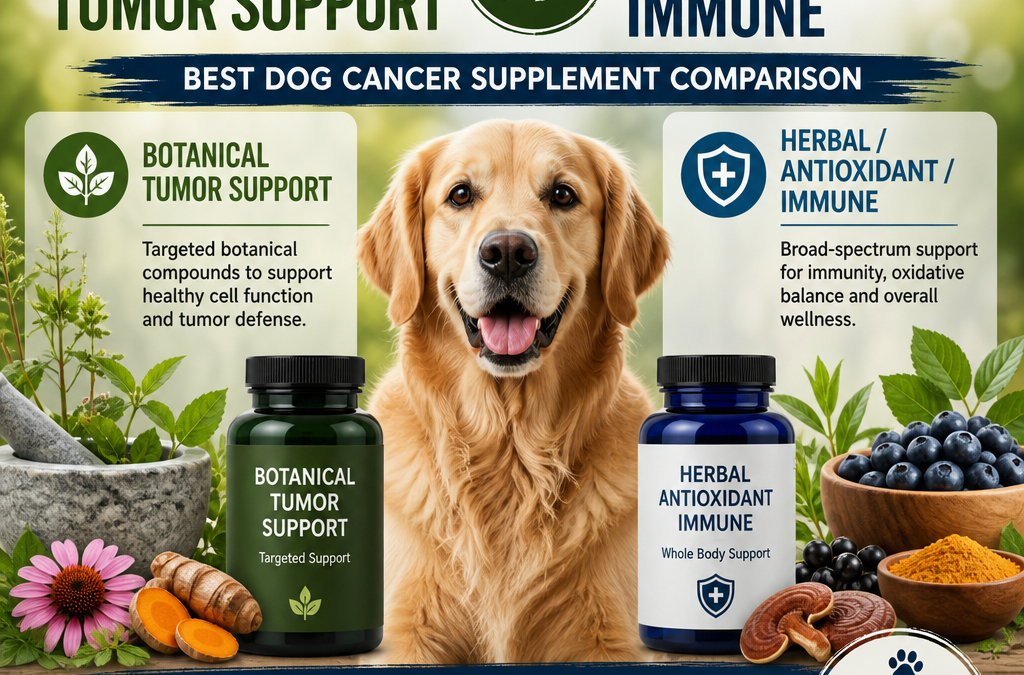
Η υποστήριξη φυτικών όγκων έναντι των βοτάνων / αντιοξειδωτικών / ανοσοποιητικών είναι μια σημαντική διάκριση για τους φροντιστές που συγκρίνουν συμπληρώματα για σκύλους με καρκίνο. Αυτές οι κατηγορίες συχνά επικαλύπτονται στη γλώσσα μάρκετινγκ, αλλά δεν είναι ταυτόσημες ως προς τον σκοπό, τα αποδεικτικά στοιχεία ή τις εκτιμήσεις ασφάλειας. Η κατανόηση του πώς λειτουργεί κάθε προσέγγιση μπορεί να βοηθήσει τους ιδιοκτήτες κατοικίδιων να έχουν πιο παραγωγικές συνομιλίες με τον κτηνίατρό τους και να αποφύγουν την επιλογή ενός προϊόντος βασισμένου μόνο σε μια μακρά λίστα συστατικών ή σε μια ελκυστική ετικέτα.
Ένα συμπλήρωμα δεν μπορεί να αντικαταστήσει τη διάγνωση του κτηνιάτρου, τη χειρουργική επέμβαση, τη χημειοθεραπεία, την ακτινοβολία, τη διαχείριση πόνου ή άλλη συνιστώμενη φροντίδα καρκίνου. Ωστόσο, η προσεκτικά επιλεγμένη διατροφική υποστήριξη μπορεί να έχει ρόλο στη διατήρηση της όρεξης, της άνεσης, της σωματικής κατάστασης, της κανονικής ανοσοποιητικής λειτουργίας και της ποιότητας ζωής. Η σωστή επιλογή εξαρτάται από τη διάγνωση του σκύλου, το σχέδιο θεραπείας, τα φάρμακα, τα εργαστηριακά αποτελέσματα και τη συνολική υγεία.
Πίνακας Περιεχομένων
Κατανόηση των κύριων κατηγοριών συμπληρωμάτων
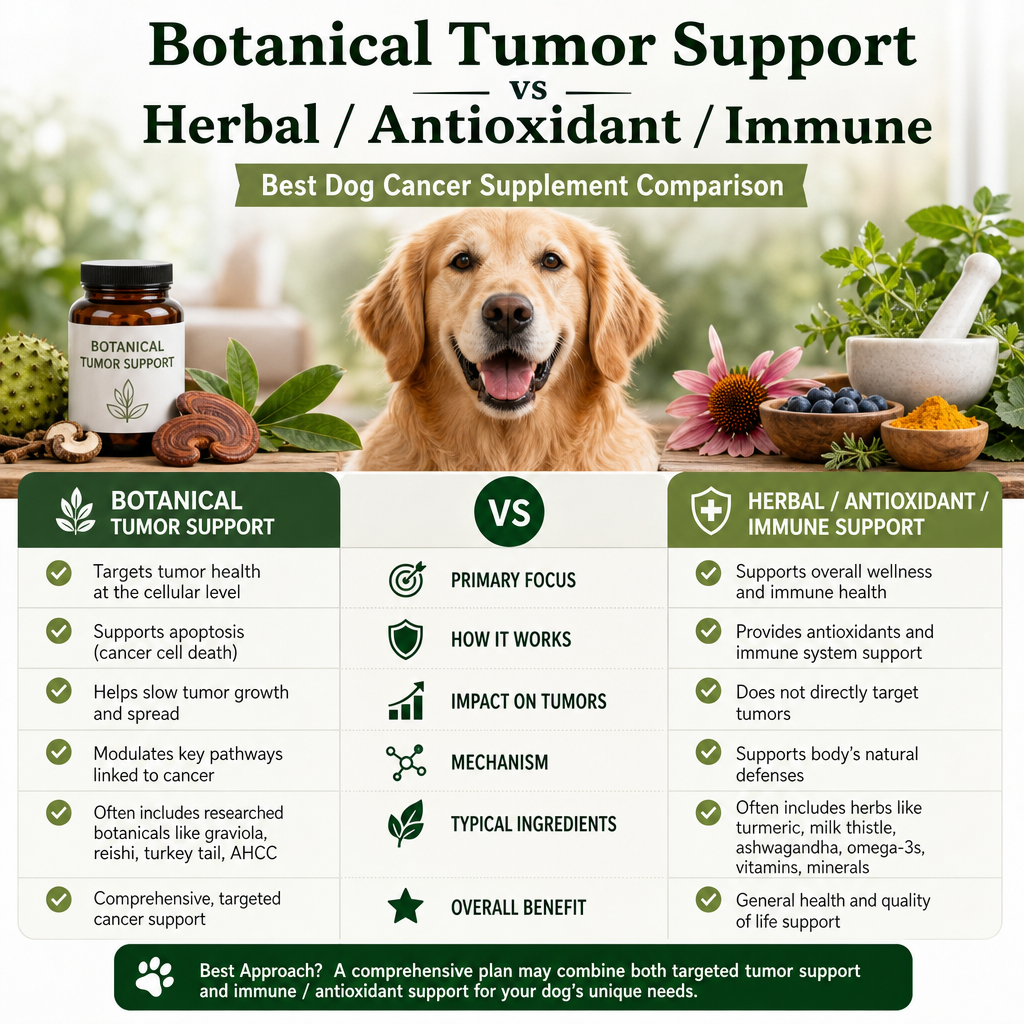
Ο όρος “βοτανικό συμπλήρωμα” είναι ευρύς. Μπορεί να περιγράφει ένα προϊόν που περιέχει ένα εκχύλισμα φυτού ή ένα μείγμα πολλών βοτάνων που χρησιμοποιούνται παραδοσιακά για την πέψη, τη φλεγμονή, την κυκλοφορία ή τη γενική ευεξία. Τα βοτανικά προϊόντα δεν είναι αυτόματα επικεντρωμένα στους όγκους, και το “φυσικό” δεν σημαίνει απαλλαγμένο από κινδύνους. Ορισμένες φυτικές ενώσεις μπορούν να επηρεάσουν την πήξη του αίματος, τα ένζυμα του ήπατος, την αρτηριακή πίεση, τη καταστολή ή την απορρόφηση συνταγογραφούμενων φαρμάκων.
Τα αντιοξειδωτικά συμπληρώματα έχουν σχεδιαστεί για να βοηθούν στη διαχείριση του οξειδωτικού στρες. Τα συστατικά μπορεί να περιλαμβάνουν βιταμίνες C και E, σελήνιο, καροτενοειδή ή φυτικές ενώσεις όπως οι πολυφαινόλες. Το οξειδωτικό στρες εμπλέκεται στη φυσιολογική γήρανση, τη φλεγμονή και πολλές διαδικασίες ασθενειών, αλλά περισσότερα αντιοξειδωτικά δεν είναι πάντα καλύτερα. Υψηλές δόσεις μπορούν να δημιουργήσουν ανισορροπίες, να προκαλέσουν τοξικότητα ή να παρεμποδίσουν ορισμένες θεραπείες καρκίνου, ανάλογα με την ένωση και τη θεραπεία.
Τα συμπληρώματα υποστήριξης του ανοσοποιητικού γενικά στοχεύουν να υποστηρίξουν την κανονική ανοσοποιητική ανταπόκριση αντί να στοχεύουν άμεσα έναν όγκο. Κοινά συστατικά μπορεί να περιλαμβάνουν φαρμακευτικά μανιτάρια, βήτα-γλυκάνες, προβιοτικά, ωμέγα-3 λιπαρά οξέα ή επιλεγμένες βιταμίνες και μέταλλα. Αυτά τα προϊόντα μπορεί να είναι χρήσιμα όταν ένας σκύλος έχει κακή διατροφική πρόσληψη ή χρειάζεται γενική υποστήριξη, αλλά η διέγερση του ανοσοποιητικού δεν είναι το ίδιο με τη θεραπεία του καρκίνου.
Η υποστήριξη φυτικών όγκων αναφέρεται συνήθως σε ένα πιο προσεκτικά διαμορφωμένο μείγμα φυτικών συστατικών που επιλέγονται επειδή μπορεί να επηρεάσουν τις διαδρομές που σχετίζονται με την ανώμαλη ανάπτυξη κυττάρων, τη φλεγμονή, τον σχηματισμό αιμοφόρων αγγείων, τη κυτταρική σήμανση ή τον προγραμματισμένο θάνατο κυττάρων. Αυτά τα προϊόντα συχνά προωθούνται ως συμπληρωματική υποστήριξη για σκύλους με καρκίνο, αλλά οι επιδράσεις τους μπορεί να διαφέρουν σημαντικά ανάλογα με το συστατικό, τη δόση, την ποιότητα εκχυλίσματος και τον τύπο του όγκου.
Επειδή η γλώσσα μάρκετινγκ μπορεί να είναι συγκεχυμένη, πολλοί ιδιοκτήτες επωφελούνται από την ανάγνωση μιας κατηγορίας τη φορά και τη σύγκριση του πρακτικού στόχου. Αν εξακολουθείτε να αποφασίζετε μεταξύ ευρέων τύπων ευεξίας και πιο στοχευμένων προϊόντων, η υποστήριξη όγκων από φυτά σε σύγκριση με τα βότανα / αντιοξειδωτικά / ανοσοποιητικά κατανοείται καλύτερα ως ένα φάσμα προθέσεων παρά ως μια ενιαία αυστηρή ετικέτα.
Η υποστήριξη φυτικών όγκων έναντι των βοτάνων / αντιοξειδωτικών / ανοσοποιητικών
Όταν συγκρίνετε την υποστήριξη όγκων από φυτά με τα προϊόντα βότανα / αντιοξειδωτικά / ανοσοποιητικά, η πιο σημαντική διαφορά είναι ο προορισμένος στόχος. Μια γενική φυτική φόρμουλα μπορεί να υποστηρίξει την πέψη ή την άνεση. Ένα προϊόν αντιοξειδωτικού εστιάζει κυρίως στην οξειδωτική ισορροπία. Μια φόρμουλα ανοσοποιητικού επιδιώκει να διατηρήσει ή να ρυθμίσει τη λειτουργία του ανοσοποιητικού. Μια φόρμουλα υποστήριξης όγκων από φυτά είναι συνήθως σχεδιασμένη γύρω από μηχανισμούς που σχετίζονται πιο στενά με τη βιολογία του καρκίνου.
Αυτή η διάκριση δεν σημαίνει ότι η υποστήριξη όγκων από φυτά αποδεικνύεται ότι θεραπεύει τον καρκίνο ή ότι άλλες κατηγορίες δεν έχουν αξία. Στην πράξη, ένα προϊόν μπορεί να ανήκει σε περισσότερες από μία κατηγορίες. Για παράδειγμα, ένα εκχύλισμα μανιταριού θα μπορούσε να προωθείται για υποστήριξη του ανοσοποιητικού ενώ περιέχει επίσης ενώσεις που μελετώνται για τις επιδράσεις τους στη φλεγμονή που σχετίζεται με όγκους. Μια φόρμουλα με βάση τον κουρκουμά μπορεί να περιγραφεί ως βότανο, αντιοξειδωτικό και υποστήριξη όγκων ταυτόχρονα.
Η ετικέτα θα πρέπει επομένως να εξετάζεται πιο προσεκτικά από το όνομα της κατηγορίας. Αναζητήστε το ακριβές είδος φυτού, τις τυποποιημένες ενεργές ενώσεις, τη μέθοδο εκχύλισης, την ποσότητα ανά μερίδα και τις πληροφορίες ελέγχου ποιότητας. Ένα ιδιόκτητο μείγμα που αναφέρει μόνο το συνολικό βάρος καθιστά δύσκολο να προσδιοριστεί αν κάθε συστατικό είναι παρόν σε μια σημαντική ποσότητα. Για ένα πρακτικό παράδειγμα μιας στοχευμένης προσέγγισης συμπληρωμάτων, δείτε Συμπληρώματα Καρκίνου Σκύλων: 7 Βασικές, Προσιτές και Θετικές Συμβουλές Αγοράς για Ιδιοκτήτες Κατοικίδιων στο Ηνωμένο Βασίλειο.
Ένας χρήσιμος τρόπος να σκεφτείτε την υποστήριξη όγκων από φυτά σε σύγκριση με τις φόρμουλες βότανα / αντιοξειδωτικά / ανοσοποιητικά είναι να ρωτήσετε τι είδους υποστήριξη ισχυρίζεται ότι παρέχει το προϊόν. Αν η απάντηση είναι ευρεία άνεση ή συντήρηση, η φόρμουλα μπορεί να έχει σχεδιαστεί περισσότερο σαν ένα γενικό συμπλήρωμα. Αν η απάντηση περιλαμβάνει διαδρομές που σχετίζονται με όγκους, η φόρμουλα είναι συνήθως πιο εξειδικευμένη και θα πρέπει να εξετάζεται με επιπλέον προσοχή.
Πώς οι κατηγορίες συχνά επικαλύπτονται στην πραγματική ζωή
Στη χρήση συμπληρωμάτων από κτηνιάτρους στον πραγματικό κόσμο, οι γραμμές μεταξύ αυτών των κατηγοριών δεν είναι πάντα καθαρές. Ένα μόνο συστατικό μπορεί να επηρεάσει τη φλεγμονή, την ανοσοποιητική απόκριση και το οξειδωτικό στρες ταυτόχρονα. Αυτή η επικαλυπτόμενη μπορεί να είναι χρήσιμη όταν η φόρμουλα είναι καλά σχεδιασμένη, αλλά μπορεί επίσης να κάνει ένα προϊόν να φαίνεται πιο προηγμένο από ό,τι υποστηρίζει η απόδειξη.
Για αυτόν τον λόγο, η υποστήριξη όγκων από φυτά σε σύγκριση με τα βότανα / αντιοξειδωτικά / ανοσοποιητικά δεν θα πρέπει ποτέ να κρίνεται μόνο από τις αξιώσεις της μπροστινής ετικέτας. Η πίσω ετικέτα έχει μεγαλύτερη σημασία. Αν ένα προϊόν περιγράφει έναν περίπλοκο μηχανισμό αλλά δεν δίνει σαφή ποσότητα για κάθε συστατικό, μπορεί να είναι δύσκολο να αξιολογηθεί αν η φόρμουλα είναι πραγματικά αρκετά ισχυρή για να έχει σημασία.
Οι ιδιοκτήτες που συγκρίνουν προϊόντα για έναν σκύλο με καρκίνο μπορεί επίσης να παρατηρήσουν ότι ορισμένες μάρκες σκοπίμως θολώνουν τις κατηγορίες. Αυτό είναι κοινό στην αγορά συμπληρωμάτων επειδή ένα προϊόν με πολλαπλές αξιώσεις μπορεί να προσελκύσει περισσότερους πελάτες. Παρ' όλα αυτά, η κατάσταση του σκύλου, το στάδιο της θεραπείας και τα τρέχοντα φάρμακα θα πρέπει να καθοδηγούν την τελική απόφαση, όχι η πιο πειστική φράση μάρκετινγκ.
Οι αποφάσεις για την υποστήριξη όγκων από φυτά σε σύγκριση με τα βότανα / αντιοξειδωτικά / ανοσοποιητικά είναι επίσης πιο εύκολες όταν οι φροντιστές συγκρίνουν τον σκοπό του προϊόντος με το τρέχον σχέδιο φροντίδας του σκύλου. Μια φόρμουλα που στοχεύει στην άνεση μπορεί να είναι αρκετή κατά τη διάρκεια της ανάρρωσης, ενώ μια πιο στοχευμένη επιλογή μπορεί να εξεταστεί όταν ο κτηνίατρος θέλει μια υποστηρικτική προσέγγιση με πιο σαφή καρκινική πρόθεση.
Σύγκριση πιθανών οφελών
Οι φόρμουλες υποστήριξης όγκων από φυτά μπορεί να είναι ελκυστικές όταν ένας κτηνίατρος θέλει ένα προϊόν με συγκεκριμένη λογική για τον καρκίνο. Ανάλογα με τα συστατικά, αυτές οι φόρμουλες μπορεί να προορίζονται για την υποστήριξη μιας υγιούς φλεγμονώδους αντίδρασης, τη διατήρηση φυσικών κυτταρικών αμυνών ή την συμπλήρωση ευρύτερης διατροφικής φροντίδας. Το πιθανό τους όφελος είναι συνήθως υποστηρικτικό παρά θεραπευτικό, και η έρευνα σε σκύλους μπορεί να είναι περιορισμένη σε σύγκριση με εργαστηριακές ή ανθρώπινες μελέτες.
Τα βότανα μπορεί να είναι χρήσιμα όταν η κύρια ανάγκη είναι η όρεξη, η πεπτική άνεση, η ήπια υποστήριξη άγχους ή η γενική ευεξία. Η καταλληλότητά τους εξαρτάται σε μεγάλο βαθμό από τα ατομικά βότανα. Ορισμένα είναι σχετικά ήπια, ενώ άλλα μπορεί να είναι ακατάλληλα για σκύλους με ηπατική νόσο, νεφρική νόσο, διαταραχές αιμορραγίας ή προγραμματισμένη χειρουργική επέμβαση.
Τα αντιοξειδωτικά μπορεί να βοηθήσουν στην αντιμετώπιση διατροφικών κενών ή οξειδωτικού στρες που σχετίζεται με ασθένεια, αλλά η συμπλήρωση θα πρέπει να είναι εξατομικευμένη. Οι σκύλοι που τρώνε μια πλήρη κτηνιατρική διατροφή μπορεί ήδη να λαμβάνουν επαρκή επίπεδα αρκετών αντιοξειδωτικών θρεπτικών συστατικών. Η προσθήκη συμπυκνωμένων προϊόντων χωρίς επαγγελματική καθοδήγηση μπορεί να είναι περιττή ή επιβλαβής.
Τα προϊόντα υποστήριξης ανοσίας μπορεί να εξεταστούν για σκύλους που βιώνουν κακή όρεξη, χρόνια ασθένεια ή άγχος που σχετίζεται με τη θεραπεία. Ωστόσο, το ανοσοποιητικό σύστημα είναι περίπλοκο και η αδιάκριτη διέγερση δεν είναι πάντα επιθυμητή. Ορισμένοι καρκίνοι και αυτοάνοσες καταστάσεις απαιτούν προσεκτική ρύθμιση του ανοσοποιητικού παρά γενικευμένη ενεργοποίηση του ανοσοποιητικού.
Ένας από τους πιο πρακτικούς τρόπους για να συγκρίνετε προϊόντα είναι να ρωτήσετε τι προσπαθεί να επιτύχει η φόρμουλα. Αν ο στόχος είναι η γενική ευεξία, ένα απλό βότανο μπορεί να είναι αρκετό. Αν ο στόχος είναι η ευρύτερη υποστήριξη για έναν σκύλο με καρκίνο, οι φόρμουλες υποστήριξης όγκων από φυτά σε σύγκριση με τα βότανα / αντιοξειδωτικά / ανοσοποιητικά θα πρέπει να εξεταστούν με την κτηνιατρική ομάδα ώστε τα συστατικά να ταιριάζουν με την κλινική κατάσταση.
Ο ποιοτικός έλεγχος επηρεάζει επίσης τα αποτελέσματα στον πραγματικό κόσμο. Δύο προϊόντα με παρόμοιες ετικέτες μπορεί να συμπεριφέρονται πολύ διαφορετικά αν το ένα χρησιμοποιεί τυποποιημένα εκχυλίσματα και το άλλο χρησιμοποιεί ασταθή πρώτες ύλες. Γι' αυτό οι συγκρίσεις υποστήριξης όγκων από φυτά σε σύγκριση με τα βότανα / αντιοξειδωτικά / ανοσοποιητικά θα πρέπει πάντα να περιλαμβάνουν το πρότυπο παραγωγής, όχι μόνο την κατηγορία μάρκετινγκ.
Για ορισμένους ιδιοκτήτες κατοικίδιων, η απόφαση για ένα συμπλήρωμα αρχίζει με ένα προϊόν που έχει ήδη προταθεί από έναν κτηνίατρο. Σε αυτές τις περιπτώσεις, η υποστήριξη φυτικών όγκων έναντι βοτάνων / αντιοξειδωτικών / ανοσοποιητικών θα πρέπει να αντιμετωπίζεται ως ένα πλαίσιο για την κατανόηση του γιατί επιλέχθηκε το προϊόν και ποιο αποτέλεσμα θα πρέπει να παρακολουθείται με την πάροδο του χρόνου.
Όταν οι ιδιοκτήτες ρωτούν για τις προσδοκίες, η ειλικρινής απάντηση είναι συνήθως σταδιακή και πρακτική παρά δραματική. Ένα χρήσιμο προϊόν μπορεί να υποστηρίξει την όρεξη, να βελτιώσει την καθημερινή άνεση ή να διευκολύνει την ανάρρωση από το άγχος. Ίσως να μην δημιουργήσει μια ορατή αλλαγή όγκου από μόνο του. Γι' αυτό η υποστήριξη φυτικών όγκων έναντι βοτάνων / αντιοξειδωτικών / ανοσοποιητικών θα πρέπει να μετριέται σε σχέση με τους στόχους ποιότητας ζωής, όχι με μη ρεαλιστικές υποσχέσεις.
Ορισμένοι φροντιστές αναζητούν επίσης προϊόντα που ταιριάζουν σε έναν συγκεκριμένο προϋπολογισμό ή ρουτίνα δοσολογίας. Αυτό είναι λογικό, διότι ένα συμπλήρωμα λειτουργεί μόνο αν μπορεί να χορηγηθεί με συνέπεια. Τα μασώμενα δισκία, οι κάψουλες, οι σκόνες και τα υγρά έχουν όλα πλεονεκτήματα και μειονεκτήματα. Αν ο σκύλος αρνείται το προϊόν, τα θεωρητικά οφέλη γίνονται ασήμαντα. Σε αυτό το πλαίσιο, η πιο αποτελεσματική φόρμουλα είναι συχνά αυτή που μπορεί να χρησιμοποιηθεί με ασφάλεια και τακτικά.
Οι συγκρίσεις υποστήριξης φυτικών όγκων έναντι βοτάνων / αντιοξειδωτικών / ανοσοποιητικών επωφελούνται επίσης από μια απλή ερώτηση: ταιριάζει το προϊόν στην τρέχουσα φάση φροντίδας του σκύλου; Για έναν σκύλο που είναι σταθερός και τρώει καλά, μια πιο ήπια φόρμουλα μπορεί να είναι αρκετή. Για έναν σκύλο με ενεργές ανάγκες θεραπείας, το ίδιο προϊόν μπορεί να είναι πολύ ευρύ ή πολύ αδύναμο για να είναι χρήσιμο.
Ένα άλλο πρακτικό σημείο είναι η συνέπεια. Ένα προϊόν με λογική δόση και απλό προφίλ συστατικών είναι συνήθως πιο εύκολο στη χρήση μακροπρόθεσμα από μια περίπλοκη φόρμουλα που δεν αρέσει στον σκύλο. Η υποστήριξη φυτικών όγκων έναντι βοτάνων / αντιοξειδωτικών / ανοσοποιητικών δεν είναι μόνο ένα επιστημονικό ζήτημα· είναι επίσης ένα ζήτημα καθημερινής φροντίδας.
Όταν συζητάτε τα οφέλη με έναν κτηνίατρο, είναι χρήσιμο να διαχωρίσετε τους βραχυπρόθεσμους στόχους άνεσης από τους μακροπρόθεσμους υποστηρικτικούς στόχους. Η όρεξη, η ποιότητα κοπράνων και η ενέργεια μπορεί μερικές φορές να βελτιωθούν πριν από οποιαδήποτε άλλη μετρήσιμη αλλαγή. Αυτό διευκολύνει την εκτίμηση του αν η υποστήριξη φυτικών όγκων έναντι βοτάνων / αντιοξειδωτικών / ανοσοποιητικών βοηθά με έναν ουσιαστικό τρόπο.
Ασφάλεια κατά τη διάρκεια της θεραπείας του καρκίνου
Η ασφάλεια είναι το κεντρικό ζήτημα σε οποιαδήποτε σύγκριση συμπληρωμάτων καρκίνου σκύλου. Ορισμένα συμπληρώματα μπορεί να αλλάξουν τον τρόπο με τον οποίο μεταβολίζονται ή μεταφέρονται τα φάρμακα χημειοθεραπείας. Άλλα μπορεί να αυξήσουν τον κίνδυνο αιμορραγίας όταν συνδυάζονται με χειρουργική επέμβαση, ασπιρίνη, μη στεροειδή αντιφλεγμονώδη φάρμακα ή αντιπηκτικά φάρμακα. Συστατικά με κατασταλτικές, υποτασικές ή υπογλυκαιμικές επιδράσεις μπορεί επίσης να δημιουργήσουν προβλήματα όταν συνδυάζονται με συνταγογραφούμενες θεραπείες.
Τα αντιοξειδωτικά απαιτούν ειδική προσοχή κατά τη διάρκεια ακτινοβολίας ή χημειοθεραπείας. Οι θεραπείες καρκίνου μπορεί να χρησιμοποιούν οξειδωτικούς μηχανισμούς ως μέρος της δράσης τους, επομένως ο χρόνος και η δοσολογία της αντιοξειδωτικής συμπλήρωσης θα πρέπει να συζητούνται με τον κτηνιατρικό ογκολόγο. Αυτό δεν σημαίνει ότι όλα τα αντιοξειδωτικά πρέπει να αποφεύγονται· σημαίνει ότι η απόφαση θα πρέπει να βασίζεται στο συγκεκριμένο φάρμακο, τον στόχο θεραπείας και τα διαθέσιμα στοιχεία.
Η ποιότητα είναι μια άλλη ανησυχία για την ασφάλεια. Τα συμπληρώματα μπορεί να διαφέρουν σε ισχύ, κίνδυνο μόλυνσης και πρότυπα παραγωγής. Επιλέξτε προϊόντα που κατασκευάζονται από εταιρείες που παρέχουν δοκιμές παρτίδας, σαφείς οδηγίες δοσολογίας, ημερομηνίες λήξης και διαφανείς πληροφορίες συστατικών.
Για γενικό υπόβαθρο σχετικά με την ποιότητα των συμπληρωμάτων και την κανονιστική εποπτεία, το Εθνικό Κέντρο Συμπληρωματικής και Ολιστικής Υγειονομικής Υπηρεσίας των Η.Π.Α. προσφέρει μια χρήσιμη επισκόπηση της ασφάλειας των διατροφικών συμπληρωμάτων στο Διατροφικά Συμπληρώματα και Καρκίνος. Αυτός ο τύπος αναφοράς είναι χρήσιμος όταν αξιολογείτε τις αξιώσεις που κάνουν οι μάρκες που προωθούν βοτανικά ή ανοσοποιητικά προϊόντα για σκύλους.
Ένα άλλο σημείο ασφάλειας είναι η συσσώρευση συστατικών. Πολλοί σκύλοι με καρκίνο ήδη λαμβάνουν φάρμακα, προϊόντα υποστήριξης αρθρώσεων, ιχθυέλαιο, προβιοτικά ή συνταγογραφούμενες δίαιτες. Η προσθήκη αρκετών νέων συμπληρωμάτων ταυτόχρονα μπορεί να καθιστά αδύνατο να προσδιοριστεί τι βοηθά και τι προκαλεί παρενέργειες. Ένα προσεκτικό σχέδιο είναι καλύτερο από ένα επιθετικό.
Εάν ένας σκύλος έχει ιστορικό παγκρεατίτιδας, ηπατικής νόσου, νεφρικής νόσου, προβλημάτων πήξης ή καρδιοπάθειας, το περιθώριο λάθους είναι ακόμη μικρότερο. Η υποστήριξη βοτανικών όγκων σε σύγκριση με τις επιλογές βοτάνων / αντιοξειδωτικών / ανοσοποιητικών θα πρέπει να εξετάζεται με επιπλέον προσοχή στη δόση και το χρόνο. Σε ορισμένες περιπτώσεις, η ασφαλέστερη επιλογή είναι να αναβληθεί ένα συμπλήρωμα μέχρι να είναι σταθερό το σχέδιο θεραπείας.
Οι αποφάσεις σχετικά με την υποστήριξη βοτανικών όγκων σε σύγκριση με τις βοτανικές / αντιοξειδωτικές / ανοσοποιητικές είναι ασφαλέστερες όταν η ομάδα ογκολογίας γνωρίζει ακριβώς τι παίρνει ήδη ο σκύλος. Μια πλήρης λίστα συμπληρωμάτων και φαρμάκων μπορεί να αποτρέψει την τυχαία επικάλυψη και να μειώσει την πιθανότητα αποφεύξιμων παρενεργειών.
Εάν ένας σκύλος γίνει πιο κουρασμένος, σταματήσει να τρώει, κάνει εμετό ή εμφανίζει μώλωπες μετά την έναρξη ενός συμπληρώματος, το προϊόν θα πρέπει να σταματήσει και να αναφερθεί στον κτηνίατρο. Αυτή η γρήγορη αντίδραση έχει μεγαλύτερη σημασία από την προσπάθεια να προχωρήσετε με μια αμφίβολη φόρμουλα. Η υποστήριξη βοτανικών όγκων σε σύγκριση με τις βοτανικές / αντιοξειδωτικές / ανοσοποιητικές είναι πάντα δευτερεύουσα σε σχέση με την ασφάλεια και την άνεση του σκύλου.
Πώς να επιλέξετε πιο υπεύθυνα
Ξεκινήστε με τη διάγνωση και το σχέδιο θεραπείας. Ένα συμπλήρωμα κατάλληλο για έναν σκύλο με λέμφωμα μπορεί να μην είναι κατάλληλο για έναν σκύλο με αιμορραγικό όγκο, καρκίνο του ήπατος, νεφρική νόσο ή προγραμματισμένη χειρουργική διαδικασία. Παρέχετε στον κτηνίατρο την πλήρη ετικέτα του προϊόντος, συμπεριλαμβανομένων των ανενεργών συστατικών και των οδηγιών δοσολογίας.
Στη συνέχεια, καθορίστε τον στόχο. Είναι η προτεραιότητα η όρεξη, η πεπτική υγεία, η διατήρηση του σωματικού βάρους, η άνεση, η υποστήριξη του ανοσοποιητικού ή μια στρατηγική συμπληρωματικής θεραπείας που επικεντρώνεται στον όγκο; Ένας σαφής στόχος διευκολύνει την αξιολόγηση του αν το προϊόν βοηθά. Εισάγετε μόνο ένα νέο συμπλήρωμα τη φορά όταν είναι δυνατόν και παρακολουθήστε την όρεξη, την ποιότητα των κοπράνων, την ενέργεια, τον εμετό, την κνησμό, τους μώλωπες και οποιεσδήποτε αλλαγές στα εργαστηριακά αποτελέσματα.
Τέλος, αξιολογήστε τα στοιχεία ρεαλιστικά. Οι εργαστηριακές μελέτες μπορούν να υποδείξουν βιολογική δραστηριότητα, αλλά δεν αποδεικνύουν ότι ένα συμπλήρωμα θα μειώσει έναν όγκο ή θα παρατείνει τη ζωή των σκύλων. Κλινικά στοιχεία, εμπειρία κτηνιάτρου, συνέπεια προϊόντος και ατομική αντίδραση έχουν σημασία. Ένα συμπλήρωμα θα πρέπει να θεωρείται ως ένα μέρος ενός ευρύτερου σχεδίου φροντίδας και όχι ως υποκατάστατο της τεκμηριωμένης ογκολογίας.
Εάν συγκρίνετε μάρκες, ρωτήστε αν η ετικέτα προσδιορίζει το ακριβές είδος, το μέρος του φυτού που χρησιμοποιείται και την ποσότητα κάθε δραστικού συστατικού. Αυτές οι λεπτομέρειες έχουν μεγαλύτερη σημασία από τις γενικές υποσχέσεις. Η υποστήριξη όγκων από φυτά σε σύγκριση με τα προϊόντα βοτάνων / αντιοξειδωτικών / ανοσοποιητικών συχνά πωλούνται με παρόμοια γλώσσα, αλλά η καλύτερη επιλογή εξαρτάται από τον κλινικό στόχο και την ανοχή του σκύλου.
Βοηθά επίσης να σκεφτείτε την πρακτικότητα. Ένα προϊόν που είναι δύσκολο να δοσολογηθεί, κακώς ανεκτό ή αδύνατο να χορηγηθεί σταθερά είναι απίθανο να βοηθήσει. Οι αποφάσεις σχετικά με την υποστήριξη όγκων από φυτά σε σύγκριση με τα προϊόντα βοτάνων / αντιοξειδωτικών / ανοσοποιητικών θα πρέπει επομένως να περιλαμβάνουν την ευχάριστη γεύση, το μέγεθος της κάψουλας, τη γεύση του υγρού και αν το πρόγραμμα ταιριάζει στη ρουτίνα του ιδιοκτήτη του κατοικίδιου.
Όταν έχετε αμφιβολίες, ζητήστε μια ανασκόπηση πριν ξεκινήσετε οτιδήποτε νέο. Αυτό είναι ιδιαίτερα σημαντικό αν ο σκύλος ήδη λαμβάνει χημειοθεραπεία, στεροειδή, ΜΣΑΦ, φάρμακα κατά των σπασμών ή φάρμακα για την καρδιά. Στη πραγματική κτηνιατρική φροντίδα, το ασφαλέστερο αποτέλεσμα προέρχεται συνήθως από προσεκτό συντονισμό παρά από την προσπάθεια να ταιριάξετε αρκετά συμπληρώματα μόνοι σας. Για σκύλους με ερωτήσεις σχετικά με την ανοσία που σχετίζεται με τον καρκίνο, ορισμένοι ιδιοκτήτες επίσης ανασκοπούν. Βιολογία καρκίνου σκύλων: Σημαντική ανοσολογική ανισορροπία, παράγοντες όγκου για να κατανοήσετε καλύτερα πώς οι επιλογές υποστήριξης μπορεί να ταιριάζουν στη μεγαλύτερη εικόνα.
Μπορεί επίσης να είναι χρήσιμο να κρατάτε ένα απλό ημερολόγιο για δύο έως τέσσερις εβδομάδες μετά την έναρξη ενός νέου προϊόντος. Σημειώστε τις διατροφικές συνήθειες, την πρόσληψη νερού, τις αλλαγές κοπράνων, τον βήχα, το επίπεδο ενέργειας και την άνεση. Αυτή η καταγραφή παρέχει στον κτηνίατρο περισσότερες χρήσιμες πληροφορίες από τη μνήμη μόνη της και διευκολύνει την απόφαση αν η υποστήριξη με φυτικά προϊόντα για όγκους σε σύγκριση με την υποστήριξη από βότανα / αντιοξειδωτικά / ανοσοποιητικά είναι πραγματικά ωφέλιμη για τον σκύλο.
Οι ιδιοκτήτες μερικές φορές θέλουν ένα συμπλήρωμα γιατί φαίνεται προληπτικό, και αυτό το συναίσθημα είναι κατανοητό. Ωστόσο, η πιο υπεύθυνη επιλογή είναι συνήθως αυτή που είναι κατανοητή, παρακολουθήσιμη και συμβατή με τη τρέχουσα φροντίδα του σκύλου. Οι σαφείς στόχοι και η σταθερή παρακολούθηση συχνά παράγουν καλύτερα αποτελέσματα από το να κυνηγάτε την πιο πρόσφατη ετικέτα.
Πριν από την αγορά, αξίζει επίσης να ελέγξετε αν η εταιρεία αποκαλύπτει δοκιμές ή ποιοτικό έλεγχο τρίτων. Οι διαφανείς μάρκες διευκολύνουν τη σύγκριση ενός προϊόντος με ένα άλλο και διευκολύνουν τους κτηνιάτρους να αξιολογήσουν τους κινδύνους. Η υποστήριξη με φυτικά προϊόντα για όγκους σε σύγκριση με τις επιλογές από βότανα / αντιοξειδωτικά / ανοσοποιητικά είναι πολύ πιο εύκολη όταν η ετικέτα είναι πλήρης και η δοσολογία είναι απλή.
Σε πολλές περιπτώσεις, το καλύτερο συμπλήρωμα δεν είναι το πιο περίπλοκο. Μια μετριοπαθής φόρμουλα που είναι ασφαλής, προσιτή και εύκολη στη χορήγηση μπορεί να είναι καλύτερη επιλογή από ένα μεγάλο μείγμα με ασαφή οφέλη. Αυτό ισχύει ιδιαίτερα όταν ο σκύλος ήδη αντιμετωπίζει άγχος από τη θεραπεία ή αλλαγές στην όρεξη.
Η πρακτική παρατήρηση
Η καλύτερη σύγκριση συμπληρωμάτων καρκίνου σκύλων δεν προσδιορίζει έναν καθολικό νικητή. Η υποστήριξη με φυτικά προϊόντα για όγκους μπορεί να είναι πιο κατάλληλη όταν ένας κτηνίατρος αναζητά ένα προσεκτικά επιλεγμένο, καρκινοκεντρικό μείγμα. Τα βότανα μπορεί να ταιριάζουν στη γενική ευεξία ή στην υποστήριξη συμπτωμάτων, ενώ οι φόρμουλες αντιοξειδωτικών και ανοσοποιητικών αντιμετωπίζουν στενότερους διατροφικούς ή φυσιολογικούς στόχους. Οι κατηγορίες μπορεί να επικαλύπτονται, και η ποιότητα της συγκεκριμένης φόρμουλας έχει μεγαλύτερη σημασία από την ετικέτα μάρκετινγκ.
Για τους σκύλους με καρκίνο, η ασφαλέστερη προσέγγιση είναι εξατομικευμένη, διαφανής και στενά παρακολουθούμενη. Συνεργαστείτε με έναν κτηνίατρο ή κτηνιατρικό ογκολόγο για να εξετάσετε πιθανές αλληλεπιδράσεις, να επιλέξετε ένα αξιόπιστο προϊόν, να καθορίσετε έναν ρεαλιστικό στόχο και να επανεκτιμήσετε την αξία του με την πάροδο του χρόνου. Η υποστηρικτική φροντίδα είναι πιο αποτελεσματική όταν προστατεύει την ποιότητα ζωής ενώ συμπληρώνει—όχι ανταγωνίζεται—την κύρια θεραπεία καρκίνου του σκύλου.
Με άλλα λόγια, η υποστήριξη με φυτικά προϊόντα για όγκους σε σύγκριση με βότανα / αντιοξειδωτικά / ανοσοποιητικά δεν είναι απλώς ένα ζήτημα ετικέτας. Είναι μια απόφαση σχετικά με την πρόθεση, την ποιότητα και την καταλληλότητα για τις ιατρικές ανάγκες του σκύλου. Εάν αυτοί οι τρεις παράγοντες είναι ευθυγραμμισμένοι, το συμπλήρωμα έχει πολύ καλύτερες πιθανότητες να είναι χρήσιμο.
Για πολλές οικογένειες, το καλύτερο αποτέλεσμα δεν είναι μια δραματική υπόσχεση αλλά μια σταθερή βελτίωση στην άνεση και τη σταθερότητα της καθημερινότητας. Εάν το προϊόν βοηθά τον σκύλο να τρώει καλύτερα, να παραμένει πιο ήρεμος ή να ανέχεται τη θεραπεία πιο άνετα, αυτό είναι σημαντική πρόοδος. Εάν δεν το κάνει, το σχέδιο μπορεί να προσαρμοστεί χωρίς ενοχές.
Η βοήθεια από φυτικά συμπληρώματα όγκων σε σύγκριση με τα βότανα / αντιοξειδωτικά / ανοσοποιητικά θα πρέπει επομένως να αντιμετωπίζεται ως μια πρακτική σύγκριση, όχι ως διαγωνισμός μάρκετινγκ. Με τη σωστή καθοδήγηση, το ασφαλέστερο προϊόν είναι συχνά αυτό που υποστηρίζει τις πραγματικές ανάγκες του σκύλου χωρίς να προσθέτει περιττό ρίσκο.