
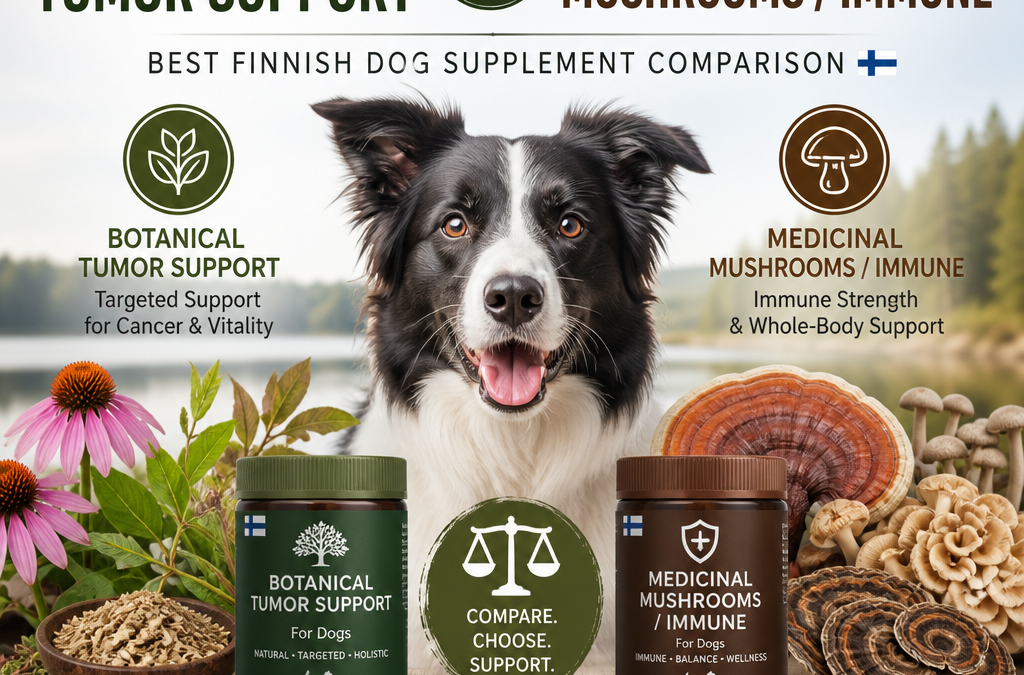
El soporte botánico para tumores frente a los hongos medicinales / inmunidad es una comparación importante para los dueños de perros finlandeses que buscan apoyo nutricional complementario durante un diagnóstico de cáncer. Estos suplementos no son tratamientos contra el cáncer y nunca deben reemplazar la atención veterinaria, la cirugía, la quimioterapia, la radiación o la medicación prescrita. Sin embargo, los productos cuidadosamente seleccionados pueden ayudar a apoyar el apetito, el bienestar general, la digestión o la función inmunológica cuando se utilizan bajo la guía profesional.
- Comprendiendo las dos categorías de suplementos
- Soporte botánico para tumores frente a hongos medicinales / inmunidad: diferencias clave
- Lo que la investigación puede y no puede decirnos
- Consideraciones de seguridad para perros con cáncer
- Cómo comparar un producto de manera responsable
- ¿Qué opción puede ser adecuada para un perro finlandés?
Comprendiendo las dos categorías de suplementos
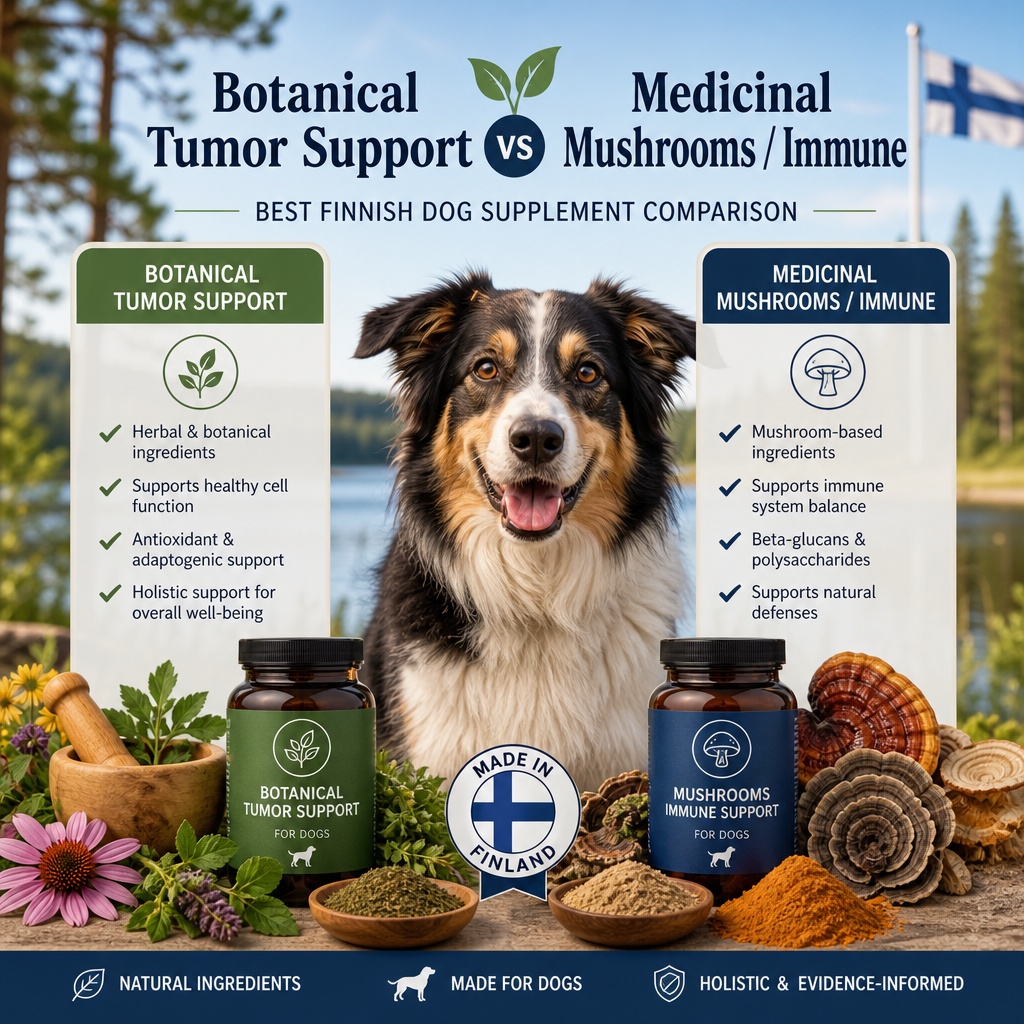
Los productos de soporte botánico para tumores suelen contener ingredientes de origen vegetal elegidos por sus propiedades antioxidantes, antiinflamatorias o de apoyo celular general. Dependiendo de la fórmula, pueden incluir hierbas, extractos de plantas concentrados, vitaminas, minerales o compuestos utilizados tradicionalmente para apoyar las funciones corporales normales.
Los productos de hongos medicinales, en contraste, suelen basarse en hongos como reishi, cola de pavo, shiitake, maitake o cordyceps. Sus compuestos clave a menudo incluyen beta-glucanos y otros polisacáridos. Estas sustancias se estudian por sus posibles efectos en la señalización inmunológica, aunque la investigación en perros sigue siendo limitada y la calidad del producto varía considerablemente.
La diferencia no es simplemente “plantas frente a hongos”. La distinción más útil se refiere al papel previsto del producto. Las fórmulas botánicas pueden proporcionar un apoyo nutricional y antioxidante más amplio, mientras que los productos de hongos medicinales se comercializan comúnmente para la modulación inmunológica. Ninguna categoría debe asumirse como efectiva directamente contra un tumor.
Para muchos dueños, el primer paso para evaluar el soporte botánico para tumores frente a los productos de hongos medicinales / inmunidad es preguntar qué problema se supone que el suplemento debe abordar. El apetito, la digestión, la resiliencia general y la calidad de vida son objetivos diferentes, y requieren ingredientes diferentes.
Soporte botánico para tumores frente a hongos medicinales / inmunidad: diferencias clave
Al comparar el soporte botánico para tumores frente a los productos de hongos medicinales / inmunidad, comience con el propósito de la etiqueta y el perfil de ingredientes en lugar del lenguaje de marketing.
Los productos botánicos pueden seleccionarse cuando un perro necesita apoyo nutricional general, ayuda para mantener un equilibrio inflamatorio normal o asistencia con el apetito y la vitalidad. Algunas fórmulas combinan varias hierbas, lo que puede dificultar su evaluación porque cada ingrediente puede tener diferentes efectos y posibles interacciones.
Los hongos medicinales a menudo están más enfocados en el apoyo relacionado con la inmunidad. Los beta-glucanos pueden interactuar con los receptores inmunológicos e influir en la actividad inmunológica, pero “aumento de la inmunidad” es una simplificación excesiva. Un sistema inmunológico que ya está activado no siempre se beneficia de una estimulación indiscriminada. El efecto deseado es el equilibrio, no simplemente más actividad.
Por esta razón, un perro que está recibiendo tratamiento contra el cáncer puede beneficiarse más de un producto estandarizado cuidadosamente elegido que de una mezcla compleja que contenga muchos ingredientes poco documentados.
Los dueños de perros que comparan el soporte tumoral botánico vs los hongos medicinales / inmunidad también deben prestar atención a la forma del producto. Las cápsulas, polvos, golosinas, tinturas y extractos líquidos pueden comportarse de manera diferente en el cuerpo, y la palatabilidad importa cuando un perro ya está comiendo menos de lo habitual.
Lo que la investigación puede y no puede decirnos
La investigación sobre los hongos medicinales y el soporte para el cáncer canino está en desarrollo, pero la evidencia no es igualmente fuerte para cada especie o suplemento. Algunos compuestos de hongos han sido investigados en estudios de laboratorio, modelos animales y entornos clínicos limitados. Los resultados de la investigación en humanos o de laboratorio no pueden ser transferidos automáticamente a los perros.
Los ingredientes botánicos tienen limitaciones similares. Un extracto de planta puede mostrar actividad antioxidante o antiinflamatoria en un tubo de ensayo, sin embargo, el mismo efecto puede no ocurrir en dosis orales prácticas en un perro. La absorción, el metabolismo, el tipo de tumor, la dosis y la salud general del perro influyen en los resultados.
Por lo tanto, una comparación responsable de suplementos para el cáncer en perros debería distinguir entre:
- Evidencia de laboratorio
- Estudios en roedores u otros animales
- Estudios clínicos en perros
- Evidencia clínica humana
- Uso tradicional sin fuerte confirmación clínica
La evidencia práctica más fuerte generalmente proviene de la experiencia veterinaria, la consistencia del producto, el monitoreo de seguridad y una comprensión clara de cómo el suplemento encaja en el plan de tratamiento del perro.
Si deseas un contexto más amplio sobre el soporte basado en hongos, el artículo en los beneficios de los hongos medicinales para perros explica cómo estos productos se utilizan comúnmente en el cuidado de apoyo.
Para los lectores que desean entender la ciencia detrás de los compuestos de hongos, el Centro Nacional de Salud Complementaria e Integrativa de EE. UU. proporciona una visión general útil de los hongos medicinales y su base de evidencia en https://www.nccih.nih.gov/health/providers/digest/mushrooms-science.
Consideraciones de seguridad para perros con cáncer
Los pacientes con cáncer pueden ser médicamente frágiles. Pueden tener apetito reducido, preocupaciones hepáticas o renales, anemia, problemas digestivos o una capacidad debilitada para tolerar ingredientes innecesarios. Los suplementos también pueden interactuar con medicamentos contra el cáncer, analgésicos, esteroides, anticoagulantes, anestésicos y terapias inmunomoduladoras.
Las preocupaciones potenciales incluyen cambios en la coagulación sanguínea, actividad alterada de las enzimas hepáticas, malestar gastrointestinal, reacciones alérgicas y efectos sobre la presión arterial o el azúcar en sangre. Ciertas hierbas y extractos de hongos pueden ser inapropiados antes de la cirugía o durante protocolos específicos de quimioterapia.
La calidad es otro problema importante. Elige productos hechos específicamente para perros, con cantidades de ingredientes claras, pruebas por lotes, información de fabricación e instrucciones basadas en el peso corporal. Evita productos que oculten cantidades en mezclas patentadas o hagan promesas como “cura el cáncer”, “destruye tumores” o “reemplaza la quimioterapia”. Estas afirmaciones son señales de advertencia en lugar de evidencia de efectividad.
Debido a que el soporte tumoral botánico vs los productos de hongos medicinales / inmunidad pueden interactuar con los planes de tratamiento, es inteligente introducir solo un producto a la vez y rastrear cualquier cambio en la calidad de las heces, el apetito, la energía o los vómitos.
Cómo comparar un producto de manera responsable
Una comparación útil de suplementos para el cáncer en perros debería examinar más que el número de ingredientes. Considere los siguientes factores:
Transparencia de ingredientes
La etiqueta debe identificar cada ingrediente y su cantidad por porción. Los productos de hongos deberían especificar idealmente la especie, la parte utilizada, el método de extracción y el contenido de beta-glucano. Las fórmulas botánicas deberían listar extractos estandarizados cuando sea posible.
Pureza del producto
Busque pruebas de metales pesados, pesticidas, microbios y contaminantes. Esto es especialmente importante con hongos, hierbas y productos provenientes de entornos donde puede ocurrir contaminación.
Compatibilidad veterinaria
El producto debe ser revisado por el veterinario del perro, particularmente si el tratamiento implica quimioterapia, radiación, cirugía, corticosteroides o anticoagulantes. Un oncólogo veterinario o un nutricionista clínico pueden proporcionar la orientación más relevante.
Tolerancia práctica
Un suplemento que cause vómitos, diarrea, mal apetito o letargo no está proporcionando un apoyo útil. Introduzca solo un nuevo producto a la vez, use la dosis más baja apropiada y monitoree al perro de cerca.
Metas realistas
Las metas más razonables son mantener la calidad de vida, apoyar la nutrición normal, ayudar a preservar el apetito y complementar el plan de tratamiento. Los suplementos no deben ser juzgados por promesas dramáticas o afirmaciones anecdóticas.
¿Qué opción puede ser adecuada para un perro finlandés?
Las condiciones finlandesas no cambian fundamentalmente cómo funciona un suplemento, pero el clima, la disponibilidad y los estándares regulatorios pueden influir en las decisiones de compra. Los propietarios deben comprar a proveedores nórdicos o europeos de buena reputación que proporcionen etiquetado claro y trazabilidad. Los productos importados de fuera de Europa pueden tener concentraciones inconsistentes o documentación de calidad limitada.
La mejor elección depende del perro individual. Un perro con mal apetito puede necesitar apoyo nutricional y digestivo en lugar de una mezcla de hongos centrada en la inmunidad. Un perro que recibe quimioterapia puede requerir una fórmula más simple para reducir los riesgos de interacción. Otro perro puede no necesitar un suplemento en absoluto si está comiendo bien y manteniendo una salud estable.
La atención veterinaria debe seguir siendo central. Las pruebas de sangre regulares, los controles de peso, el monitoreo del apetito y la comunicación con el equipo de oncología son más importantes que agregar múltiples productos. Para los propietarios finlandeses que comparan el soporte tumoral botánico vs las opciones de hongos medicinales / inmunidad, un enfoque calmado y consciente de la evidencia suele ser el más seguro.
Si el veterinario de su perro recomienda un plan de suplementos más amplio, también puede querer revisar el alternativas a la micoterapia veterinaria página para otra perspectiva sobre los productos de apoyo utilizados en el cuidado del cáncer.
Perspectiva final
El soporte tumoral botánico vs los hongos medicinales / inmunidad no es un concurso con un ganador universal. Las fórmulas botánicas pueden ofrecer un soporte más amplio basado en plantas, mientras que los hongos medicinales generalmente se eligen para propósitos relacionados con la inmunidad. Ambas categorías tienen limitaciones potenciales, evidencia incierta y posibles interacciones.
Para los dueños de perros finlandeses, el enfoque más seguro es seleccionar un producto transparente y probado en calidad que coincida con el diagnóstico, tratamiento y síntomas actuales del perro. Utilice un suplemento a la vez, monitoree cuidadosamente y mantenga informado al equipo veterinario. Un suplemento reflexivo puede complementar el cuidado responsable del cáncer, pero nunca debe distraer del tratamiento probado o crear expectativas poco realistas.
En resumen, el soporte tumoral botánico vs los productos de hongos medicinales / inmunidad pueden tener un lugar en el cuidado de apoyo, pero solo cuando su papel se entienda claramente y su uso esté coordinado con un veterinario.