por TCMVET | Hace 26 de agosto de 2026 | Investigación y noticias
Perro cáncer pérdida apetito: cuando un perro con cáncer deja de comer, pierde peso o muestra menos interés por sus alimentos, no se trata simplemente de un problema de conducta. La falta de apetito puede estar relacionada con la propia enfermedad, los efectos secundarios del tratamiento, el dolor, las náuseas, el estrés o cambios en el metabolismo. Actuar pronto, con orientación veterinaria, es esencial para conservar la fuerza, mejorar el bienestar y favorecer una mejor tolerancia a los cuidados oncológicos.
Causas más frecuentes
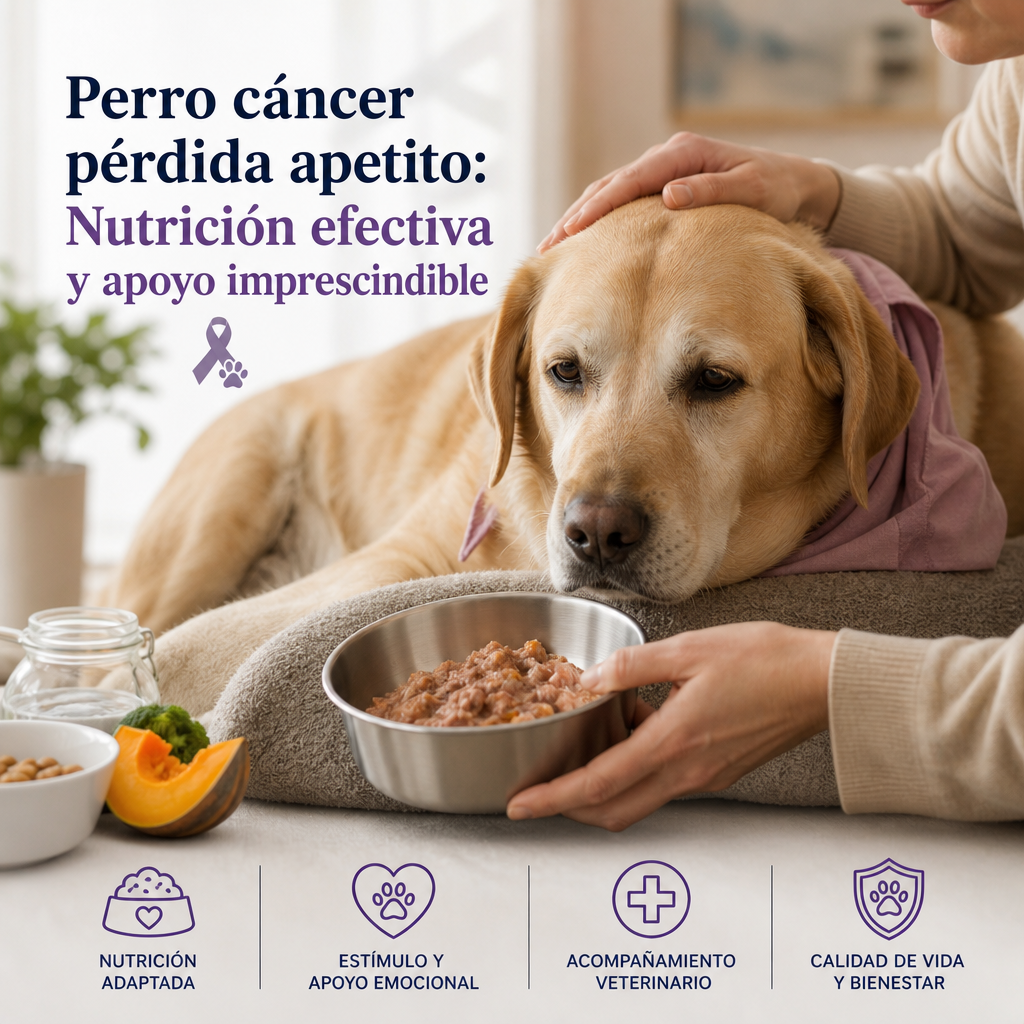
The perro cáncer pérdida apetito puede aparecer en cualquier etapa. Algunos tumores alteran el metabolismo y provocan un gasto energético elevado, mientras que otros afectan directamente al aparato digestivo, la boca o los órganos relacionados con la digestión. Además, la quimioterapia, la radioterapia y ciertos medicamentos pueden causar náuseas, vómitos, diarrea o cambios en el sabor y el olor de la comida.
El dolor también influye de manera importante. Un perro que siente molestias puede acercarse al comedero, oler la comida y alejarse. En casos de tumores orales, dentales o en la garganta, masticar y tragar puede resultar incómodo. Por este motivo, nunca conviene atribuir la falta de apetito únicamente a “caprichos” sin investigar la causa.
La pérdida de apetito persistente debe comunicarse al veterinario, especialmente si dura más de 24 horas, aparece junto con vómitos o diarrea, o se acompaña de apatía, dificultad para respirar, dolor o deshidratación.
Por qué necesita atención
La pérdida de peso es uno de los signos más preocupantes durante una enfermedad oncológica. Un perro cáncer pérdida peso puede estar perdiendo grasa, masa muscular o ambas. La disminución de músculo afecta a la movilidad, la fuerza y la capacidad del organismo para recuperarse, por lo que no basta con ofrecer alimentos muy calóricos sin supervisión.
En algunos pacientes aparece la caquexia, un síndrome asociado al cáncer en el que el cuerpo utiliza la energía de manera anormal y degrada tejido muscular. En estas circunstancias, aunque el perro coma algo, puede continuar adelgazando. La intervención nutricional debe enfocarse en mantener la masa corporal y proporcionar nutrientes de buena calidad, no solo en aumentar las calorías.
El control del peso debe realizarse con regularidad. Pesar al perro una vez por semana, en condiciones similares, permite detectar cambios antes de que sean evidentes visualmente. También es útil registrar la cantidad de alimento ingerida, la frecuencia de los vómitos, la consistencia de las heces y el nivel de actividad.
Principios fundamentales de la nutrición perro cáncer
The nutrición perro cáncer It must be individualized. There is no universal diet valid for all patients, as needs depend on the type of tumor, treatment, age, weight, renal and hepatic function, and the presence of other health problems.
Generally speaking, the diet should provide:
- High-quality proteins, necessary to maintain muscle mass.
- Sufficient energy in a volume that the dog can tolerate.
- Digestible fats, which can increase caloric density.
- Adequate water and moisture to reduce the risk of dehydration.
- Vitamins and minerals in balanced proportions.
Some dogs tolerate wet or slightly warm food better, as it releases more aroma and is easier to chew. Small portions offered several times a day can also work. Instead of presenting a large plate, dividing the daily ration into four or six servings can reduce nausea and prevent the animal from feeling overwhelmed.
Dietary changes should be made gradually when the situation allows. However, if the dog is hardly eating, the veterinarian may recommend a faster transition or a specific therapeutic diet. Improvised homemade recipes are not always complete and can lead to imbalances in calcium, phosphorus, vitamins, or amino acids.
The perro cáncer pérdida apetito It usually requires a joint review of the diet and symptom control for the feeding to be truly useful. For practical criteria on safe options, also consult best supplements for dogs with cancer: 7 essential, useful, and safe keys to choose.
How to safely stimulate appetite
The environment greatly influences feeding. It is advisable to offer food in a quiet place, away from noise, other animals, and strong odors. Some dogs eat better after a short walk, as long as their physical condition allows it. Patience is important: forcing food can increase rejection and stress.
Before trying to stimulate appetite, medical causes must be controlled. The veterinarian can assess medications for nausea, pain relievers, gastrointestinal protectants, or appetite stimulants. Human drugs or supplements should not be administered on your own, as some are toxic to dogs or interfere with cancer treatment.
It may also be helpful to change the texture: crushed food, veterinary pâté, or soft preparations can facilitate intake when there is oral pain or weakness. Water should always be available and changed frequently.
The perro cáncer pérdida apetito improvement occurs more often when simple and consistent measures are combined: calm environment, small portions, and adequate clinical control. If you are considering additional support, check this resource on suplementos para perros con cáncer: 7 consejos imprescindibles, seguros y positivos para elegir mejor y coméntalo siempre con tu veterinario antes de introducir cualquier cambio.
Alimentos y prácticas que requieren precaución
Los alimentos muy grasos, los restos de comida y los productos condimentados pueden causar problemas digestivos. Cebolla, ajo, chocolate, uvas, pasas, alcohol, xilitol y ciertos huesos son peligrosos para los perros. Tampoco es recomendable añadir suplementos antioxidantes, hierbas medicinales o megadosis de vitaminas sin consultar al oncólogo veterinario, porque algunos productos podrían modificar la respuesta a determinados tratamientos.
La alimentación cruda merece especial precaución en perros inmunodeprimidos. Las bacterias presentes en alimentos sin cocinar pueden representar un riesgo mayor durante la quimioterapia o cuando las defensas están bajas. La seguridad alimentaria debe ser una prioridad: recipientes limpios, conservación adecuada y retirada de la comida sobrante después de un tiempo razonable.
En el contexto de la perro cáncer pérdida apetito, conviene evitar experimentos rápidos con dietas extremas. Lo más seguro es ajustar la alimentación con un plan coherente, sencillo y revisado por un profesional.
También puede ayudar recordar que la perro cáncer pérdida apetito no siempre se resuelve solo cambiando el alimento; muchas veces hace falta tratar el dolor, las náuseas o la inflamación para que el perro vuelva a comer con normalidad.
Cuándo acudir al veterinario con urgencia
It is necessary to seek immediate veterinary attention if the dog is not eating or drinking, is vomiting repeatedly, has severe diarrhea, blood in the stool, very pale gums, marked weakness, a painful abdomen, difficulty breathing, or signs of dehydration. It should also be consulted quickly if weight loss is rapid or if the animal cannot keep any food down.
The veterinary team can perform tests, check hydration, adjust treatment, and design a nutritional plan. In some cases, when oral intake is not sufficient, assisted feeding techniques are considered. These decisions should be made on an individual basis, taking into account the comfort and quality of life of the dog.
As a general reference on warning signs and clinical evaluation, you can review the information from the Colegio de Medicina Veterinaria de la Universidad de Cornell, a recognized educational resource for pet owners and caregivers.
Si la perro cáncer pérdida apetito se acompaña de apatía notable o deshidratación, no conviene esperar a la siguiente revisión: cuanto antes se actúe, más opciones habrá de estabilizar al paciente.
El objetivo es conservar bienestar y calidad de vida
La nutrición no sustituye al tratamiento contra el cáncer, pero sí forma parte esencial del cuidado integral. Mantener un peso estable, controlar el dolor y las náuseas, ofrecer comidas apetecibles y vigilar la hidratación puede ayudar al perro a afrontar mejor la enfermedad.
Cada día conviene observar no solo cuánto come, sino también cómo duerme, si busca compañía, si puede caminar, si disfruta de sus rutinas y si muestra signos de dolor. Un plan coordinado entre la familia y el veterinario permite adaptar la alimentación a los cambios del paciente y priorizar siempre su bienestar.
The perro cáncer pérdida apetito requiere seguimiento, paciencia y decisiones prudentes. Con apoyo profesional, una nutrición perro cáncer bien planteada y una vigilancia continua del peso, es posible ofrecer más confort y mejores condiciones para cada etapa del tratamiento.
Cuando el objetivo es sostener la energía y el ánimo, la perro cáncer pérdida apetito debe verse como una señal clínica importante, no como un detalle menor. Con una intervención temprana y un plan adaptado, muchos perros pueden mantener mejor su fuerza, su comodidad y su calidad de vida.
por TCMVET | Hace 13 de agosto de 2026 | Investigación y noticias
Los suplementos para perros con cáncer pueden complementar el tratamiento veterinario, mejorar el bienestar y ayudar a mantener la calidad de vida, pero no sustituyen la quimioterapia, la cirugía, la radioterapia ni las indicaciones del especialista. Elegirlos correctamente exige valorar el tipo de tumor, el estado general del animal, los medicamentos que recibe y sus necesidades nutricionales. Una decisión informada evita interacciones, gastos innecesarios y posibles riesgos para la salud.
¿Qué función pueden cumplir los suplementos para perros con cáncer?
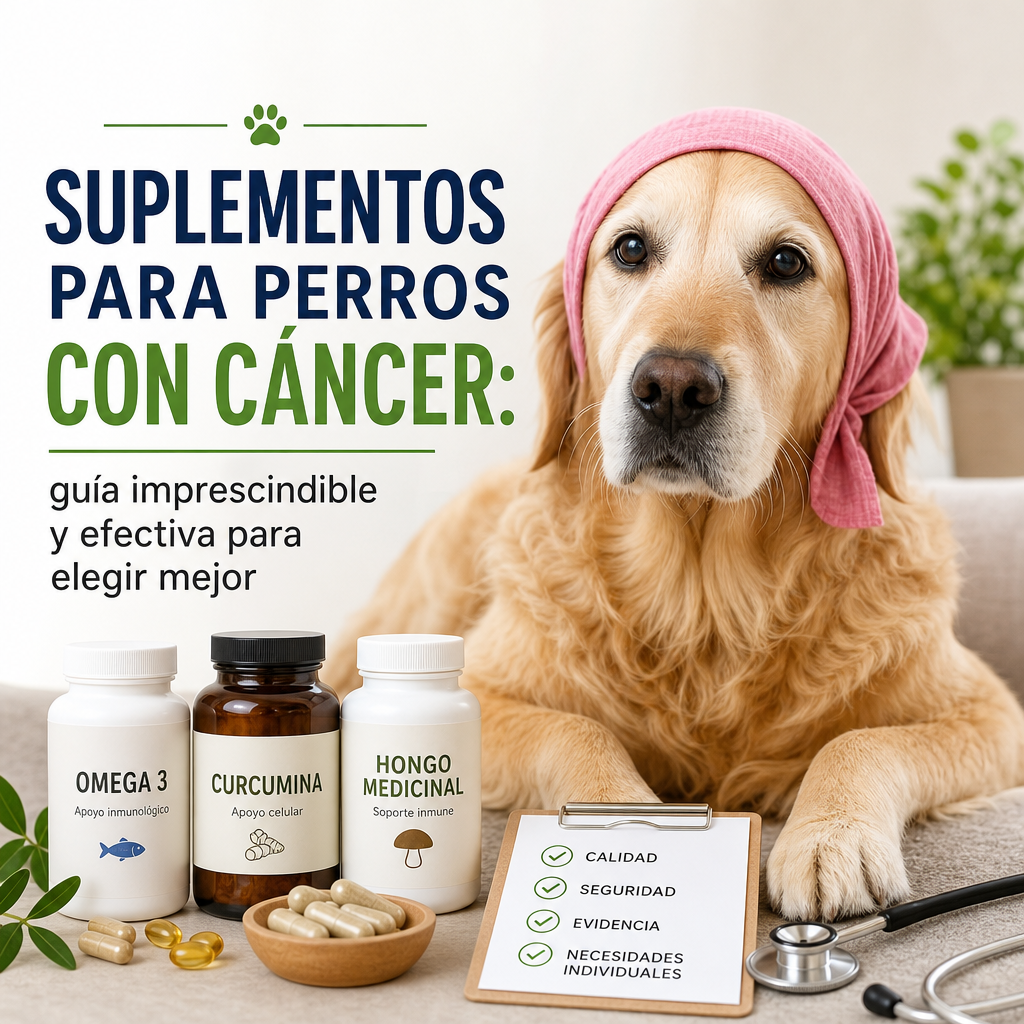
Un suplemento puede aportar apoyo nutricional durante una etapa en la que el perro presenta menos apetito, pérdida de peso, inflamación, alteraciones digestivas o mayor desgaste físico. Algunos productos están diseñados para complementar la alimentación con ácidos grasos, vitaminas, minerales, antioxidantes, aminoácidos o ingredientes destinados a favorecer la función intestinal.
Sin embargo, ningún suplemento ha demostrado curar por sí solo el cáncer. Su utilidad depende de cada caso y debe entenderse como parte de un plan integral. El objetivo principal es que el perro conserve una condición corporal adecuada, tolere mejor el tratamiento y mantenga una vida lo más cómoda y activa posible.
Antes de incorporar cualquier producto, conviene consultar al veterinario que conoce el historial clínico. La misma sustancia puede ser apropiada para un paciente y poco recomendable para otro, especialmente si existen enfermedades renales, hepáticas, cardíacas o problemas de coagulación.
También es importante recordar que el tiempo de uso, la dosis y la forma de administración influyen en el resultado. En algunos casos, un suplemento se utiliza durante una fase concreta del tratamiento; en otros, se mantiene como apoyo de largo plazo si hay buena tolerancia y un beneficio claro.
Cuando se valoran opciones, los suplementos para perros con cáncer deben encajar con el plan clínico general y con la realidad del día a día del animal. Si el perro ya está comiendo mejor, gana peso o tolera bien el tratamiento, el objetivo puede ser mantener ese progreso sin introducir cambios innecesarios.
Cómo elegir un suplemento para perro con cáncer
La elección debe comenzar por una evaluación profesional y no por la publicidad del producto. Un suplemento para perro con cáncer debe seleccionarse teniendo en cuenta varios factores:
Diagnóstico y tratamiento actual
The type of tumor, its location, and the stage of the disease influence the animal's needs. Additionally, some ingredients may modify the absorption or metabolism of certain drugs. For this reason, it is essential to inform the veterinarian about all products administered, including those sold as natural.
Nutritional status
A dog that is losing weight, muscle mass, or appetite may need a specific nutritional strategy. Sometimes, the problem is not solved with vitamins, but with a more energetic diet, wet food, several small meals, or a plan formulated by a veterinarian specialized in nutrition.
Quality and composition
It is preferable to choose products from reliable manufacturers, with clearly specified ingredients and quality controls. The label should indicate the amount of each component, the recommended dosage according to weight, and usage precautions. Products with opaque proprietary blends make it difficult to know the actual amount the dog receives.
It is also useful to check if the manufacturer provides technical information, batch analysis, or support from a veterinary professional. When comparing several suplementos para perros con cáncer, transparency is often as important as the ingredient list.
Another practical aspect is the ease of administration. Some dogs accept soft capsules well, others prefer powder mixed with food, and others tolerate a liquid presentation better. The best option is usually the one that can be given regularly without causing stress or food rejection.
Finally, it is advisable to read the warnings on the packaging carefully. A serious product explains when it should not be used, what to do if digestive discomfort occurs, and in which cases closer supervision is required. This information helps avoid common mistakes and choose more confidently.
Ingredientes que suelen considerarse como apoyo
Omega-3 fatty acids, especially EPA and DHA from fish oil, are studied for their role in modulating inflammation and maintaining body condition. Not all dogs need the same dosage, and oils can cause digestive discomfort if administered in excess. They should also be used with caution in animals with coagulation disorders or those receiving certain medications.
Probiotics and prebiotics can be useful when there are intestinal disturbances, diarrhea, or changes in the microbiota related to stress and treatments. Their effect depends on the strains used and the specific situation of the animal. A product suitable for a healthy dog may not necessarily be the best during oncological therapy.
Amino acids and protein-rich nutritional supplements can help maintain muscle mass when the patient eats little or loses weight. Still, in dogs with kidney or liver disease, the amount and type of protein must be carefully adjusted.
Some antioxidants, such as vitamins C and E, are marketed to support cellular defenses. However, high doses and indiscriminate combinations can be counterproductive, especially during certain treatments. The veterinarian must decide if they are appropriate, in what amount, and when.
In practice, the suplementos para perros con cáncer More useful are usually those that respond to a specific need: helping with appetite, supporting digestion, or facilitating weight maintenance. This logic of use avoids accumulating products without a clear benefit.
In addition, some patients benefit from formulas aimed at joint support or general well-being, especially when the disease limits their mobility. In those cases, the value of the supplement is not in promising spectacular results, but in offering support compatible with the dog's real condition and routine.
Apoyo perro cáncer: la alimentación es la base
The best support for dogs with cancer usually starts with a complete, balanced diet tailored to their tolerance. Many animals accept wet food better, slightly warm foods, or small portions distributed throughout the day. It is important to avoid sudden changes, as they can increase nausea or diarrhea.
Hydration is also essential. Water should always be available, and if the veterinarian deems it appropriate, strategies can be used to stimulate intake, such as adding moisture to the food. When the dog goes too long without eating, vomits repeatedly, or cannot keep water down, veterinary attention is needed.
Pain control, nausea, constipation, and anxiety are essential parts of well-being. Sometimes, improving these symptoms has a much greater impact than adding several supplements to the diet.
At this point, it is worth remembering that the suplementos para perros con cáncer work better when they accompany a well-planned nutritional base. Without an adequate diet, even the most complete product loses practical effectiveness.
In addition, a stable meal routine can help the dog maintain appetite and better accept treatment. In many cases, the veterinarian also assesses whether it is advisable to use high-energy density foods or specific formulas for oncology patients, always according to digestive tolerance and body condition.
A useful strategy is to observe which schedules, textures, and temperatures are more acceptable. Some dogs eat better in the morning; others prefer several small portions. Adjusting these details can make a real difference without the need to add too many products at once.
If the animal shows muscle mass loss, monitoring weight alone may not be sufficient. In those cases, the veterinarian may assess body condition, muscle mass, and overall progression to decide whether to reinforce the diet before considering more. suplementos para perros con cáncer.
Ingredientes y prácticas que requieren precaución
“Natural” does not necessarily mean safe. Medicinal plants, concentrated extracts, and human products can cause toxicity, affect the liver or kidneys, and alter the action of medications. Some supplements also contain xylitol, a dangerous sweetener for dogs, or excessive doses of minerals and vitamins.
Human medications or products intended for other species should never be administered without professional authorization. It is also not advisable to combine several supplements with similar ingredients, as unnecessary accumulation may occur.
During chemotherapy or radiotherapy, any antioxidant, herb, or immunostimulant product should be reviewed with the veterinary oncologist. The priority is not to interfere with the main treatment or delay a necessary intervention.
If you want to expand your information on the clinical basis of oncological management, you can consult the AVMA pet cancer guide, a useful veterinary reference for understanding the overall treatment approach.
It is also advisable to be wary of absolute promises. Phrases like “cure,” “repair,” or “eliminate” the problem are often a sign of aggressive marketing, not scientific backing. In an oncological context, caution always outweighs the spectacularity of the packaging.
When the tutor has doubts, the most sensible thing is to bring the complete label to the consultation. This way, the professional can review the composition, detect possible interactions, and decide if that product makes sense within the current treatment.
Señales para suspender un suplemento
Aunque un producto parezca bien tolerado, hay que vigilar cambios en el comportamiento y la salud. Vómitos, diarrea persistente, picor, hinchazón, decaimiento intenso, sangrado, dificultad respiratoria o empeoramiento repentino requieren suspender la administración y contactar con el veterinario.
También conviene llevar un registro sencillo de la dosis, la fecha de inicio, el apetito, el peso, las heces y cualquier reacción observada. Esta información permite evaluar si el suplemento aporta un beneficio real o si debe cambiarse.
Cuando se documentan bien los cambios, es más fácil distinguir si los suplementos para perros con cáncer están ayudando o si el problema está relacionado con la dieta, la medicación o la progresión de la enfermedad.
Si aparecen efectos secundarios leves al principio, como una pequeña molestia digestiva, el veterinario puede indicar ajustes de dosis o un cambio de producto. En cualquier caso, la observación temprana ayuda a actuar con rapidez y a proteger la seguridad del paciente.
En casa, una buena práctica es revisar si el problema aparece siempre tras la misma toma o si coincide con otros cambios, como un nuevo alimento, una modificación de medicación o un episodio de estrés. Ese tipo de seguimiento aporta pistas muy útiles para la consulta veterinaria.
Preguntas frecuentes sobre suplementos y tratamiento
¿Se pueden usar varios suplementos a la vez?
Only if the veterinarian deems it necessary. Using multiple products at once can duplicate ingredients, increase costs, and complicate the detection of adverse effects. In general, it is preferable to start with a specific need and evaluate the response before adding more things.
Does a supplement replace a complete diet?
No. Supplements are designed to complement an adequate diet, not to replace it. If the dog is not eating well, the problem usually requires a broader review of the nutritional plan.
Are they effective for all types of cancer?
Not necessarily. The value of the suplementos para perros con cáncer changes depending on the tumor, the dog's condition, the medications in use, and the presence of other diseases. That is why the recommendation should be individualized.
What happens if the dog takes a “natural” supplement without supervision?
Nothing may happen, but there may also be interactions, digestive irritation, or unwanted effects. The label does not always reflect the real risk, so professional supervision remains important.
When is it advisable to prioritize nutritional support over the supplement?
When there is loss of appetite, food rejection, weight loss, or weakness, it is usually more useful to first correct the nutritional base. In many cases, a better-adapted diet provides more benefit than adding several isolated products.
What to review before buying
Before buying, it's advisable to ask yourself these questions: Is the objective clear?, Is the dosage easily understood?, Does the product mention possible interactions?, Is there information about purity or quality controls?, Has the veterinarian approved it for this specific case? These checks reduce the margin of error.
- Verify that the product is specific for dogs and not for humans.
- Check that the label indicates dosage, concentration, and complete ingredients.
- Avoid formulas with extensive mixtures if they do not explain the actual amount of each component.
- Confirm if it can be administered alongside the current treatment.
- Observe for several days if there is adequate digestive tolerance and appetite.
Taking these steps helps ensure that the suplementos para perros con cáncer are a supportive tool and not an unnecessary addition.
It is also advisable to keep the original packaging and note the batch, expiration date, and prescribed dosage. This habit facilitates clinical follow-up and allows for quick detection of any problems with the product or the dog's response.
When comparing one option to another, it is not enough to look at whether the packaging is attractive or if the formula includes many ingredients. Often, a simpler and well-explained composition is preferable to a complex mixture that is difficult to interpret.
Si el perro ya está tomando otros productos de apoyo, conviene revisar la lista completa antes de hacer una compra nueva. De ese modo se evita repetir ingredientes y se mantiene una estrategia más ordenada y segura.
Una decisión responsable y personalizada
Los suplementos para perros con cáncer pueden ser útiles cuando responden a una necesidad concreta y se integran en un plan veterinario. La mejor elección no es necesariamente el producto más caro ni el que promete resultados extraordinarios, sino aquel cuya composición, dosis y objetivo están claramente definidos.
El acompañamiento adecuado combina diagnóstico, tratamiento oncológico, nutrición, control de síntomas, actividad adaptada y observación diaria. Con orientación profesional y expectativas realistas, los suplementos pueden convertirse en una herramienta complementaria para proteger el bienestar del perro sin reemplazar la atención médica que necesita.
Si se usan con criterio, los suplementos para perros con cáncer pueden formar parte de un cuidado más completo, prudente y centrado en la calidad de vida. Esa sigue siendo la meta principal: apoyar al animal sin comprometer su seguridad.
En resumen, una decisión responsable prioriza la seguridad, la evidencia disponible y la situación clínica real del perro. Cuando el plan se adapta al paciente, el tutor gana tranquilidad y el animal recibe un apoyo más útil y coherente.
En este contexto, los suplementos para perros con cáncer no son una solución milagrosa, pero sí pueden ser un complemento valioso dentro de un manejo bien supervisado.
Choose calmly, review the composition, and seek professional guidance are simple steps that greatly improve decision-making. Thus, nutritional support is used more intelligently and with less room for avoidable errors.
