
K9 INU / INUFactor est souvent discuté par les propriétaires de chiens suédois à la recherche d'un soutien supplémentaire après un diagnostic de cancer. Un examen attentif de K9 INU / INUFactor devrait se concentrer sur ce que le produit est censé faire, comment il peut s'intégrer aux traitements vétérinaires, quelles preuves sont disponibles et comment l'acheter et l'utiliser de manière responsable en Suède. Les suppléments peuvent parfois jouer un rôle de soutien, mais ils ne doivent jamais remplacer un diagnostic professionnel, une chirurgie, une chimiothérapie, une radiothérapie, une gestion de la douleur ou d'autres traitements recommandés par un vétérinaire.
Qu'est-ce que K9 INU / INUFactor ?
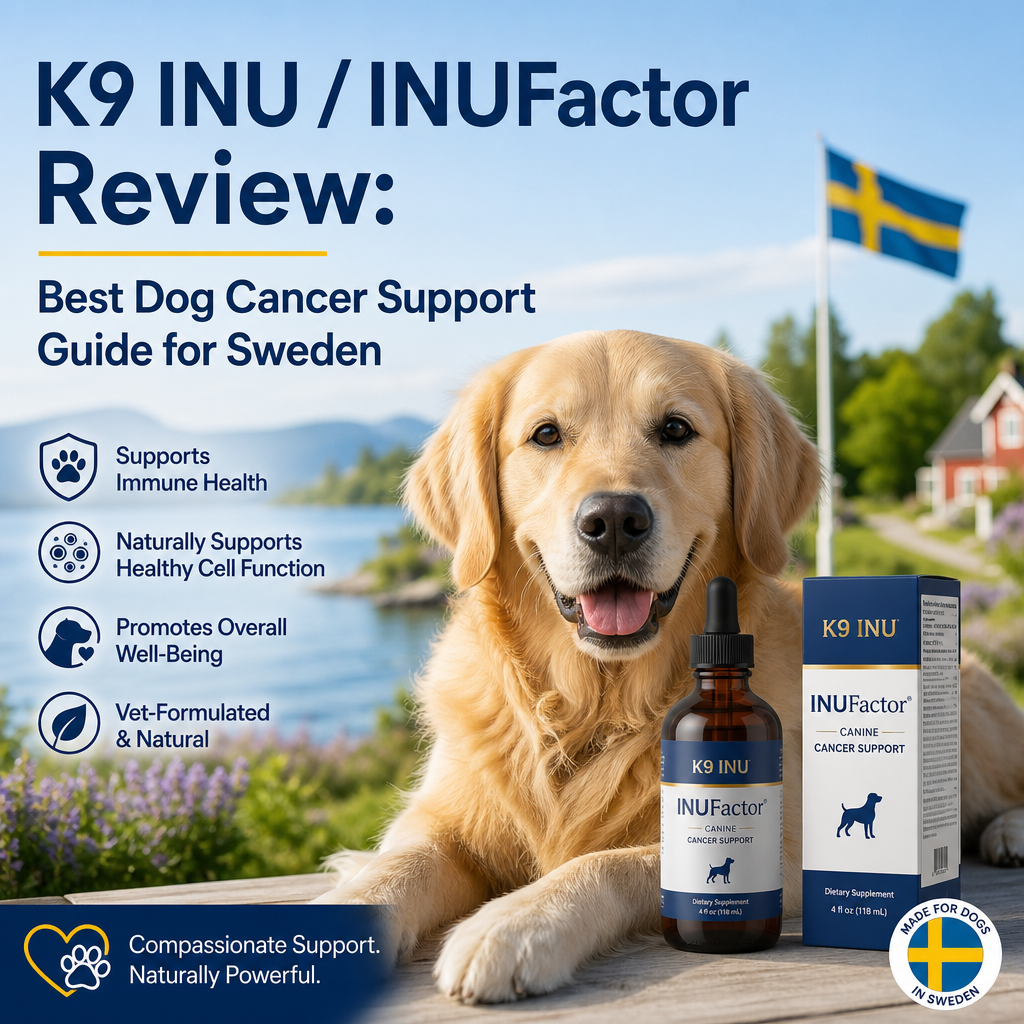
K9 INU / INUFactor est généralement présenté comme un supplément nutritionnel pour les chiens, avec un accent sur le soutien immunitaire et la santé globale. Les produits de cette catégorie sont couramment commercialisés pour les chiens faisant face à des défis de santé graves, y compris le cancer, les maladies chroniques, la perte d'appétit ou la récupération après un traitement.
Le terme “ soutien ” est important. Un supplément n'est pas la même chose qu'un médicament anticancéreux prouvé. Son but peut être d'aider à maintenir un statut nutritionnel, une fonction immunitaire normale, de l'énergie ou un bien-être général. Les ingrédients exacts, la concentration, les instructions d'alimentation et les normes de fabrication doivent toujours être vérifiés sur l'étiquette officielle du produit ou l'emballage, car les formulations et la disponibilité peuvent changer.
Un examen responsable de K9 INU / INUFactor devrait donc éviter de faire des affirmations absolues. Aucun supplément ne peut garantir qu'une tumeur va rétrécir, prévenir le retour du cancer ou prolonger la vie d'un chien. La question la plus utile est de savoir si le produit est approprié pour un chien individuel lorsqu'il est considéré avec les soins vétérinaires.
Pour de nombreux propriétaires, l'attrait de K9 INU / INUFactor vient du désir de faire quelque chose de proactif après avoir entendu un diagnostic de cancer. Cette réaction est tout à fait compréhensible. Pourtant, une décision réfléchie dépend du diagnostic exact du chien, des médicaments actuels, de l'appétit, du poids et du plan de traitement global. Ce qui fonctionne pour un chien peut être inutile ou même risqué pour un autre.
Lorsque les propriétaires comparent K9 INU / INUFactor avec d'autres options de soutien, il est utile de penser en termes pratiques : le produit peut-il s'intégrer à la routine du chien, peut-il être obtenu de manière fiable en Suède, et peut-il être utilisé sans compliquer le plan de traitement ? Ces questions importent plus qu'une page de vente bien présentée.
K9 INU / INUFactor soutien cancer chez les chiens : Ce que les propriétaires doivent savoir
Lorsque un chien a un cancer, les besoins nutritionnels peuvent changer. Certains chiens perdent l'appétit, éprouvent des nausées, perdent du poids ou deviennent moins actifs. D'autres peuvent continuer à manger mais nécessitent une surveillance plus étroite car leur état change rapidement. C'est pourquoi le soutien cancer chez les chiens K9 INU / INUFactor devrait être considéré comme faisant partie d'un plan de soins plus large plutôt que comme une solution autonome.
14. – Un lit doux et antidérapant et des rampes ou des escaliers pour éviter les sauts
- Maintenir un poids corporel sain
- Fournir des protéines et des calories adéquates
- Gérer la douleur et les nausées
- Soutenir l'hydratation
- Surveiller les selles, l'appétit et l'énergie
- Réduire le stress et préserver le confort quotidien
- Suivre le calendrier de traitement vétérinaire
Un supplément peut être envisagé si un vétérinaire estime que ses ingrédients sont appropriés et peu susceptibles d'interférer avec les médicaments. Les chiens subissant une chimiothérapie, un traitement par corticostéroïdes, une chirurgie ou d'autres thérapies peuvent être particulièrement sensibles aux changements dans l'alimentation et la supplémentation.
Les propriétaires doivent tenir un registre écrit de tout ce que leur chien reçoit, y compris les médicaments sur ordonnance, les suppléments, les friandises, les huiles et les produits à base de plantes. Cela facilite l'identification des interactions possibles par le vétérinaire et l'évaluation des changements dans les symptômes.
Pour des conseils généraux sur les signes d'alerte, le diagnostic et la planification du traitement, le Collège américain de médecine interne vétérinaire fournit des informations éducatives utiles sur le site Web de l'ACVIM.
Il est également sage de se rappeler que les produits de soutien ne sont pas jugés uniquement par leur son dans les textes marketing. Un chien avec une tumeur peut sembler s'améliorer pour plusieurs raisons à la fois, y compris un meilleur contrôle de la douleur, des changements temporaires d'appétit, un soutien hydrique ou le cours naturel de la maladie. Un plan de soins clair aide à séparer ces facteurs autant que possible.
En pratique, K9 INU / INUFactor devrait être considéré comme une partie possible d'une stratégie plus large de confort et de soins. Si le chien a déjà des difficultés avec la perte de poids ou un mauvais appétit, l'équipe vétérinaire peut d'abord se concentrer sur la stabilisation de l'apport alimentaire, de l'hydratation et des effets secondaires avant d'envisager tout supplément.
Évaluer les preuves derrière K9 INU / INUFactor
Les preuves les plus solides en médecine vétérinaire proviennent d'études cliniques bien conçues impliquant des chiens avec des conditions clairement définies. Les informations marketing, les témoignages personnels et les avis en ligne peuvent fournir un aperçu des expériences des utilisateurs, mais elles ne prouvent pas qu'un produit traite le cancer.
Lors de l'évaluation de K9 INU / INUFactor, recherchez des informations claires sur :
- Ingrédients: L'étiquette doit identifier les ingrédients actifs et inactifs, les quantités par portion et tout allergène potentiel.
- Contrôle de la qualité : Les fabricants responsables doivent fournir des informations sur les normes de production, les tests de lots et la sécurité des produits.
- Utilisation prévue : Le produit doit clairement indiquer s'il s'agit d'un aliment complet, d'un aliment complémentaire ou d'un supplément diététique.
- Instructions d'alimentation : La posologie doit être basée sur le poids et l'état de santé du chien, et non sur des suppositions.
- Avertissements : L'emballage doit expliquer quand il est nécessaire de demander un avis vétérinaire.
- Recherche indépendante : Les preuves publiées sont plus fiables lorsque les études sont transparentes, évaluées par des pairs et pertinentes pour les chiens.
Un avis positif peut décrire une amélioration de l'appétit ou de l'énergie, mais ces changements peuvent également résulter du contrôle de la douleur, d'une meilleure nutrition, d'une réponse au traitement ou de fluctuations naturelles de la maladie. De même, une expérience négative ne signifie pas nécessairement que chaque chien réagira de la même manière. Des facteurs individuels tels que le type de tumeur, l'âge, la fonction organique, les médicaments et le stade de la maladie sont très importants.
Une autre façon utile d'évaluer K9 INU / INUFactor est de demander si les affirmations sont suffisamment spécifiques pour être testées. Si une entreprise dit qu'un supplément “ soutient la santé immunitaire ”, cette phrase peut être trop large pour avoir un sens par elle-même. Si elle indique les ingrédients exacts, le dosage et l'utilisation ciblée, un vétérinaire peut plus facilement juger si ces ingrédients sont sensés pour un chien particulier.
Pour les propriétaires qui souhaitent un contexte plus large sur le cancer chez les chiens, le aperçu du cancer chez les chiens du Cornell Veterinary Cancer Center offre des informations éducatives qui peuvent aider à formuler des questions pour l'équipe vétérinaire.
Que rechercher dans une affirmation de supplément digne de confiance
Les affirmations de produits utiles sont spécifiques et mesurables. Des phrases vagues comme “ soutient le corps naturellement ” ou “ aide à combattre le cancer ” ne suffisent pas à juger si un supplément est approprié. De meilleures informations incluent les quantités d'ingrédients, les instructions d'utilisation, les notes de sécurité et si l'entreprise peut expliquer comment le produit est fabriqué. Si un vendeur évite ces détails, c'est un signe d'alerte.
Il est également sensé de comparer les affirmations du supplément avec les besoins réels du chien. Un produit peut sembler impressionnant, mais si le chien souffre de nausées, de mauvaise appétit, de problèmes rénaux ou d'effets secondaires de médicaments, la première priorité est généralement de stabiliser le problème sous-jacent avec l'aide d'un vétérinaire.
Les propriétaires demandent souvent si un supplément peut vraiment être “ soutenant le cancer ” si les preuves sont limitées. La réponse honnête est qu'un supplément peut encore avoir sa place dans les soins axés sur le confort, mais seulement lorsque les bénéfices attendus sont réalistes et que les risques sont faibles. C'est pourquoi les preuves derrière K9 INU / INUFactor doivent être considérées avec soin plutôt qu'acceptées au pied de la lettre.
En lisant des études ou des résumés de produits, recherchez des informations sur la population canine, la durée d'utilisation et si les résultats ont été mesurés de manière significative. Des rapports courts et des histoires anecdotiques peuvent être encourageants, mais ils ne suffisent pas à établir un modèle fiable de bénéfice.
K9 INU / INUFactor Suède : Considérations d'achat et réglementaires
Pour les propriétaires de chiens à la recherche de K9 INU / INUFactor en Suède, acheter auprès d'une source réputée est essentiel. Vérifiez si le vendeur fournit une adresse commerciale physique, des coordonnées transparentes, un étiquetage clair des produits, des informations sur l'expédition et une politique de retour raisonnable. Soyez prudent avec les sites Web qui font des affirmations de guérison garantie du cancer ou utilisent des histoires avant-après dramatiques sans preuves vérifiables.
Les acheteurs suédois devraient également considérer si le produit est classé comme un supplément alimentaire, un aliment complémentaire ou un autre type de produit animal. Des règles peuvent s'appliquer à l'étiquetage, à l'importation, aux ingrédients et aux affirmations marketing. Si le produit est expédié de l'extérieur de la Suède, des frais de douane, des retards de livraison et des restrictions sur certains ingrédients peuvent s'appliquer.
Avant de commander, confirmez :
- Le produit est destiné aux chiens
- La date d'expiration et les informations sur le lot sont visibles
- Les instructions de dosage sont claires
- Le vendeur explique les exigences de stockage
- Le produit arrive scellé et intact
- Le service client peut répondre aux questions sur les ingrédients et l'utilisation
Un vétérinaire suédois peut également aider à déterminer si le produit est approprié et si une alternative disponible localement serait plus facile à surveiller.
Si vous souhaitez vérifier les règles locales de santé animale et les conseils aux consommateurs, un bon point de départ est le Conseil Suédois de l'Agriculture, qui fournit des informations officielles sur les réglementations liées aux animaux et aux questions d'alimentation.
En examinant les options K9 INU / INUFactor Suède, faites attention à savoir si le vendeur est transparent sur les ingrédients d'une manière qui correspond à ce qui apparaît sur l'étiquette. Une annonce fiable devrait faciliter la comparaison entre la description du produit et l'emballage physique. Si le libellé est incohérent, le choix le plus sûr est généralement de faire une pause et de demander des éclaircissements avant d'acheter.
Pour de nombreux acheteurs, le chemin le plus sûr est de confirmer la source avant la première commande et de conserver toute la documentation sur le produit. Cela rend les discussions de suivi avec le vétérinaire beaucoup plus faciles si des questions se posent plus tard.
Avantages et limites possibles
Le bénéfice potentiel d'un produit tel que K9 INU / INUFactor peut résider dans le soutien à la nutrition générale, à l'appétit ou au bien-être, selon sa formulation. Certains chiens tolèrent bien les suppléments et peuvent sembler plus à l'aise ou énergiques. Cependant, ces observations doivent être interprétées avec prudence.
Les limitations possibles incluent des troubles digestifs, un refus de manger le produit, des réactions allergiques, une consommation de calories inutile ou des interactions avec des médicaments. Certains ingrédients peuvent ne pas convenir aux chiens atteints de maladies rénales, de maladies du foie, de diabète, de pancréatite, de troubles de la coagulation ou devant subir une chirurgie.
Arrêtez d'utiliser un supplément et contactez un vétérinaire si le chien développe des vomissements répétés, une diarrhée sévère, un gonflement du visage, des difficultés respiratoires, une léthargie marquée, une douleur qui s'aggrave ou des changements soudains d'appétit et de comportement.
Les propriétaires doivent également se rappeler que “ naturel ” ne signifie pas automatiquement sûr. Les ingrédients à base de plantes, les extraits concentrés et les mélanges inhabituels peuvent toujours affecter le corps de manière puissante. Cela est particulièrement important lorsqu'un chien reçoit déjà des médicaments sur ordonnance ou est affaibli par une perte de poids liée au cancer.
Une autre limitation pratique est la cohérence. Si un produit est difficile à se procurer, coûteux à expédier ou indisponible à une date ultérieure, il peut être plus difficile de maintenir une routine stable. La cohérence est importante lorsqu'un chien fait déjà face à une maladie, car des changements soudains dans les suppléments peuvent rendre difficile de savoir ce qui aide et ce qui cause des effets secondaires.
Avant de commander, confirmez :.
Le produit est destiné aux chiens.
Quand un supplément peut ne pas être le bon choix
La date d'expiration et les informations sur le lot sont visibles.
S'il y a un doute, un vétérinaire peut aider à peser le bénéfice possible par rapport au risque de retarder des soins plus efficaces.
Les propriétaires devraient également reconsidérer la supplémentation si le chien devient moins intéressé par la nourriture après avoir commencé le produit. Chez un chien déjà atteint de cancer, les changements d'appétit peuvent rapidement devenir graves, donc un nouveau supplément ne devrait jamais être poursuivi aveuglément si l'alimentation s'aggrave.
Si le chien semble à l'aise et stable, le produit peut toujours être réévalué lors des contrôles réguliers. L'objectif n'est pas de garder un supplément simplement parce qu'il a été commencé ; l'objectif est de garder uniquement ce qui semble aider.
Comment discuter du produit avec votre vétérinaire
Apportez l'emballage ou une liste complète des ingrédients au rendez-vous. Expliquez pourquoi vous envisagez K9 INU / INUFactor, quels traitements votre chien reçoit, et s'il y a eu des changements dans l'appétit, le poids, les selles, la soif ou l'activité.
Les questions utiles incluent :
- Ce produit est-il adapté au diagnostic de mon chien ?
- Un ingrédient pourrait-il interférer avec le traitement actuel ?
- La posologie est-elle appropriée pour le poids et la santé des organes de mon chien ?
- Devrait-il être arrêté avant la chirurgie ou la chimiothérapie ?
- Quels signes indiqueraient que le supplément cause des problèmes ?
- Existe-t-il des options nutritionnelles mieux soutenues ?
Le vétérinaire peut recommander un plan nutritionnel, un régime prescrit, un soutien à l'appétit ou une autre forme de soins de soutien à la place.
Pendant la conversation, essayez d'être spécifique plutôt que général. Par exemple, notez si votre chien ne mange qu'une partie des repas, évite certaines textures, boit plus ou moins d'eau que d'habitude, ou semble nauséeux après la médication. Ces détails aident le vétérinaire à faire une recommandation plus éclairée.
Il peut également être utile de demander comment surveiller les progrès au fil du temps. Un supplément doit avoir un but clair, comme soutenir l'appétit ou aider à maintenir le poids. Si aucun changement mesurable n'est attendu ou s'il n'y a aucun moyen de savoir si le produit aide, cela peut ne pas être le meilleur investissement.
Avant de commander, confirmez :.
Le produit est destiné aux chiens.
Surveillance pratique après le début d'un supplément
La date d'expiration et les informations sur le lot sont visibles.
Un simple journal à domicile peut inclure :
- L'appétit quotidien et l'apport alimentaire
- Le poids corporel, si recommandé par le vétérinaire
- La qualité et la fréquence des selles
- Les épisodes de vomissements ou de nausées
- Le niveau d'énergie et la volonté de bouger
- La qualité du sommeil et l'agitation
- Tout nouveau médicament ou changement de régime
Ce type de suivi peut révéler des tendances qui sont faciles à manquer d'un jour à l'autre. Un chien peut avoir un ou deux bons jours puis décliner à nouveau, ou peut montrer un appétit stable mais une qualité de selles qui se détériore. Ces schémas sont importants pour décider si le produit doit être poursuivi.
La surveillance est particulièrement précieuse car les produits de soutien au cancer sont souvent utilisés pendant des périodes de changement. La chirurgie, la chimiothérapie, la thérapie par stéroïdes, les médicaments contre la douleur et les stimulants d'appétit peuvent tous modifier la façon dont un chien se sent. Des notes écrites aident à distinguer l'effet du supplément de l'effet du traitement lui-même.
De nombreux propriétaires trouvent utile de prendre des photos de l'emballage et de conserver les reçus, les numéros de lot et les dates d'expiration. Si un effet secondaire se produit, ces informations peuvent aider le vétérinaire ou le fabricant à identifier si un lot spécifique ou un profil d'ingrédients peut être impliqué.
Un simple examen hebdomadaire peut également prévenir une réaction excessive à un bon ou un mauvais jour. Rechercher des tendances au fil du temps donne une image plus précise de la nécessité de maintenir le produit dans la routine.
Évaluation finale
Un examen équilibré de K9 INU / INUFactor devrait conclure que le produit peut être considéré comme un soutien complémentaire pour certains chiens, mais il ne remplace pas les soins vétérinaires contre le cancer. Les preuves, la transparence des ingrédients, la qualité du produit et les conseils professionnels sont plus importants que des promesses audacieuses ou des témoignages isolés.
Pour les familles en Suède, l'approche la plus sûre est de vérifier la source du produit, d'examiner attentivement l'étiquette, d'en discuter avec un vétérinaire et de surveiller la réponse du chien. L'objectif central doit toujours être le confort, le soutien nutritionnel et la qualité de vie, tandis que le traitement basé sur des preuves reste au centre du plan de soins.
Choisir un soutien pour un chien avec des tumeurs peut sembler écrasant, surtout lorsque les affirmations en ligne sont émotionnelles ou exagérées. Rester concentré sur les conseils vétérinaires, la nutrition pratique et la surveillance sécurisée donne aux propriétaires un chemin plus clair à suivre. Si un supplément est utilisé, il doit correspondre à l'état du chien, sans remplacer le jugement médical.
En fin de compte, la meilleure décision est celle qui protège le confort du chien et évite les risques inutiles. Cela signifie évaluer le produit honnêtement, garder le vétérinaire impliqué et prioriser les traitements qui sont soutenus par des preuves solides.
Pour les propriétaires suédois spécifiquement, le meilleur résultat provient généralement de la combinaison d'une recherche minutieuse avec une supervision vétérinaire claire. C'est la manière la plus responsable d'évaluer K9 INU / INUFactor et de décider s'il appartient à un plan de soutien contre le cancer.
Avec les bonnes attentes, K9 INU / INUFactor peut être évalué comme une petite partie d'une stratégie de soins plus large plutôt que comme une promesse de guérison. Cette perspective aide les propriétaires à prendre des décisions plus calmes et plus sûres pour leurs chiens.