
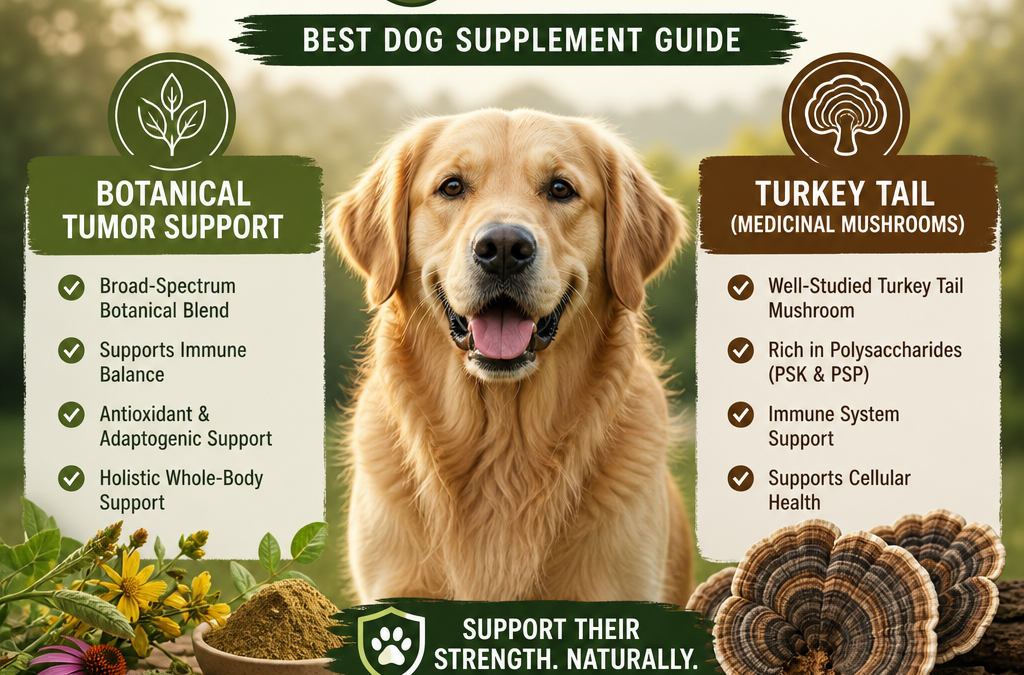
Il supporto botanico per i tumori rispetto al Turkey Tail / funghi medicinali è un confronto utile per i proprietari di cani che esplorano opzioni complementari durante la cura del cancro. Entrambi gli approcci possono fornire composti di supporto, ma non sono intercambiabili e nessuno dei due dovrebbe sostituire la diagnosi veterinaria, la chirurgia, la chemioterapia, la radioterapia o altri trattamenti raccomandati. La scelta migliore dipende dal tipo di cancro del cane, dai farmaci attuali, dalla salute generale e dalle esigenze nutrizionali.
Comprendere il confronto degli integratori per il cancro nei cani
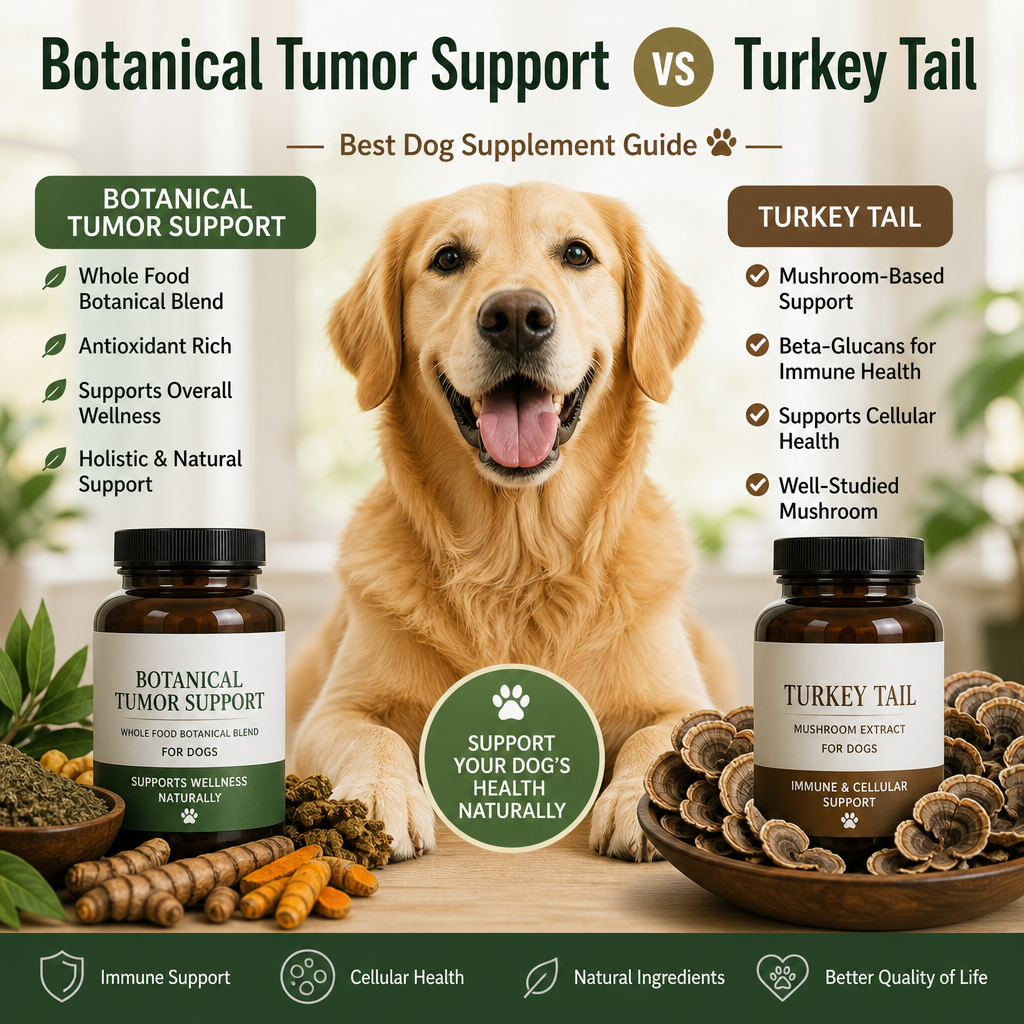
Gli integratori alimentari per cani con cancro sono generalmente utilizzati per supportare la funzione immunitaria, le difese antiossidanti, l'appetito, la digestione o la vitalità generale. Non hanno lo stesso livello di evidenza dei trattamenti convenzionali per il cancro e la qualità del prodotto può variare significativamente.
Un confronto tra integratori per il cancro nei cani dovrebbe iniziare con diverse domande pratiche:
- Qual è la diagnosi del cane e lo stadio del cancro?
- L'integratore viene utilizzato insieme al trattamento o invece del trattamento?
- Potrebbe influenzare la coagulazione del sangue, gli enzimi epatici o l'attività immunitaria?
- Il veterinario ha esaminato l'intero elenco degli ingredienti?
- Il prodotto è fabbricato con test per contaminanti e dosaggio accurato?
Queste domande sono importanti perché “naturale” non significa automaticamente sicuro. Gli estratti botanici e i funghi medicinali possono contenere composti concentrati che interagiscono con i farmaci prescritti o diventano inappropriati per i cani con condizioni epatiche, renali, gastrointestinali o autoimmuni.
È anche utile ricordare che le cure di supporto funzionano meglio quando si integrano nel piano di trattamento complessivo. Per molte famiglie, un integratore è solo una parte della cura del cancro, insieme alla gestione del dolore, alla nutrizione e agli esami di follow-up. Se hai bisogno di un punto di riferimento più ampio per le opzioni di integratori, consulta i Migliori Integratori per Cani con Cancro: 7 Consigli Essenziali di Supporto nel Regno Unito.
Quando si confrontano il supporto tumorale botanico vs Turkey Tail / funghi medicinali, l'obiettivo non è trovare una soluzione miracolosa. L'obiettivo è scegliere un prodotto che sia ragionevolmente sicuro, compatibile con il trattamento e realistico su ciò che può fare per il cane. Questa mentalità aiuta le famiglie a prendere decisioni più calme e informate.
Che cos'è il supporto botanico per i tumori?
Il supporto tumorale botanico si riferisce tipicamente a una formula contenente diversi ingredienti di origine vegetale selezionati per azioni complementari. A seconda del prodotto, la miscela può includere erbe tradizionalmente associate alla protezione antiossidante, all'equilibrio dell'infiammazione, alla circolazione, alla digestione o al supporto immunitario.
Gli ingredienti botanici comuni possono includere curcuma o curcumina, cardo mariano, estratti di tè verde, erbe medicinali, piante adattogene o altri composti concentrati. Tuttavia, le formule variano ampiamente. Due prodotti etichettati come “supporto tumorale” possono avere ingredienti, metodi di estrazione e usi previsti completamente diversi.
I potenziali vantaggi di una miscela botanica includono:
- Molteplici ingredienti mirati a diverse aree di supporto
- Composti nutrizionali e antiossidanti in un unico prodotto
- Possibile supporto digestivo, epatico o infiammatorio, a seconda della formula
- Flessibilità per adattare gli ingredienti alle esigenze individuali di un cane
La principale limitazione è la complessità. Un prodotto multi-ingrediente può rendere più difficile identificare quale componente stia aiutando o causando un effetto collaterale. Alcuni botanici possono anche influenzare il metabolismo dei farmaci o la coagulazione del sangue. Ad esempio, la curcuma concentrata, i composti derivati dall'aglio, il ginkgo o alcuni estratti erboristici possono richiedere cautela prima di un intervento chirurgico o quando un cane assume farmaci anticoagulanti.
È per questo che il supporto botanico per i tumori è meglio considerato uno strumento di supporto mirato piuttosto che un prodotto di benessere generale. Un veterinario può aiutare a determinare se la formula corrisponde alla diagnosi del cane, al trattamento attuale e al livello di tolleranza.
In termini pratici, le formule botaniche possono essere più utili quando un cane ha bisogno di più di un tipo di supporto contemporaneamente. Una miscela accuratamente scelta può potenzialmente assistere l'appetito, il supporto epatico, l'equilibrio dell'infiammazione e la resilienza generale. Tuttavia, più ingredienti contiene un prodotto, più diventa importante esaminare attentamente ogni componente ed evitare di assumere che “di più” significhi automaticamente “meglio”.”
Per i proprietari che confrontano prodotti di supporto in tutta Europa, la stessa attenta revisione si applica sia che l'obiettivo sia un ampio supporto botanico o un'opzione focalizzata sui funghi. Il supporto botanico per i tumori rispetto ai funghi Turkey Tail / medicinali dovrebbe sempre essere giudicato in base alla qualità degli ingredienti, alla chiarezza della dose e a quanto bene il prodotto si adatta al piano di cura attuale del cane.
Cos'è il Turkey Tail?
Turkey Tail, scientificamente noto come Trametes versicolor, è un fungo medicinale riconosciuto per il suo distintivo aspetto a ventaglio, a bande. Contiene polisaccaridi e altri composti che hanno attirato l'interesse scientifico, in particolare beta-glucani e polisaccaridi legati a proteine come PSK e PSP.
Negli ambienti veterinari, il Turkey Tail è spesso discusso come un integratore di supporto immunitario per i cani con cancro. Alcune ricerche iniziali hanno esplorato i composti derivati dai funghi nella cura del cancro nei cani, inclusi studi che coinvolgono cani con tumori di origine naturale. Questi risultati sono incoraggianti ma non dimostrano che ogni prodotto Turkey Tail produrrà lo stesso risultato.
Motivi potenziali per cui i proprietari considerano il Turkey Tail includono:
- Un profilo di ingredienti più mirato
- Beta-glucani e polisaccaridi di origine naturale
- Interesse nella ricerca sulla risposta immunitaria e sul supporto al cancro
- Disponibilità in polveri, capsule e formule veterinarie
I prodotti Turkey Tail richiedono comunque una valutazione attenta. L'identità del fungo, le condizioni di crescita, il metodo di estrazione, la concentrazione e la purezza possono influenzare il prodotto finale. Una polvere di fungo di base potrebbe non essere equivalente a un estratto standardizzato contenente livelli misurati di composti attivi. I prodotti dovrebbero idealmente fornire informazioni chiare sulla verifica delle specie, sul contenuto di beta-glucano, sui test e sul dosaggio.
Per i proprietari che preferiscono materiale di riferimento naturale, il National Center for Complementary and Integrative Health offre una panoramica utile sui funghi medicinali e sulla sicurezza degli integratori presso Risorsa sui funghi medicinali del NCCIH.
Alcuni proprietari di cani scelgono il Turkey Tail perché sembra più semplice e facile da comprendere rispetto a una grande miscela botanica. Questa semplicità può essere un vantaggio, soprattutto quando un animale domestico sta già assumendo più farmaci. Anche così, il Turkey Tail non è automaticamente delicato per ogni cane, e le differenze di qualità tra i prodotti possono essere significative.
Quando le famiglie discutono il supporto tumorale botanico vs Turkey Tail / funghi medicinali con il loro veterinario, la conversazione spesso si concentra su quanto supporto sia necessario e su quanti variabili possano essere introdotte in modo sicuro. Turkey Tail può essere un'opzione più pulita sulla carta, ma solo se l'estratto è affidabile e il cane lo tollera bene.
5 differenze chiave nel supporto botanico per i tumori rispetto al Turkey Tail / funghi medicinali
La differenza centrale è ampiezza contro focus. Il supporto tumorale botanico di solito combina diversi ingredienti a base di piante, mentre Turkey Tail si concentra su un fungo medicinale e i suoi composti naturalmente presenti.
Ambito degli ingredienti
Una formula botanica può includere molti ingredienti, mentre Turkey Tail di solito si concentra su una sola specie. Questo rende il supporto tumorale botanico più complesso e Turkey Tail più facile da valutare ingrediente per ingrediente.
Obiettivi di supporto
Una miscela botanica può essere selezionata per supportare la digestione, la funzione epatica, l'infiammazione o l'assunzione generale di antiossidanti. Turkey Tail è più comunemente scelto per un supporto focalizzato sul sistema immunitario all'interno di un piano di cura per il cancro.
Preoccupazioni per il controllo della qualità
Entri gli approcci richiedono una revisione attenta del prodotto, ma le preoccupazioni per la qualità differiscono. Il supporto tumorale botanico dovrebbe essere controllato per la trasparenza degli ingredienti e la chiarezza della dose, mentre Turkey Tail dovrebbe essere valutato per la verifica della specie, il metodo di estrazione e il contenuto di beta-glucano.
Rischio di interazione
Le formule botaniche possono avere un rischio più ampio di interazioni farmacologiche perché combinano più composti vegetali. Turkey Tail è più semplice, ma può comunque causare disturbi digestivi o interagire con farmaci immunosoppressivi.
Adattamento pratico con il trattamento
Anche la forma di trattamento del cancro è importante. Un cane che riceve chemioterapia potrebbe aver bisogno di un piano di supplementazione diverso rispetto a un cane che si sta riprendendo da un intervento chirurgico o riceve cure palliative. Durante il trattamento, la priorità è evitare interazioni che potrebbero ridurre l'efficacia dei farmaci, aumentare la tossicità o interferire con la guarigione.
In breve, il supporto tumorale botanico vs Turkey Tail / funghi medicinali non è una scelta tra “forte” e “debole”. È una scelta tra due stili di supporto diversi, ciascuno con punti di forza e limitazioni specifici. L'opzione giusta dipende dalla situazione medica individuale del cane, non dal linguaggio di marketing sull'etichetta.
Un altro modo utile per confrontarli è attraverso il loro uso quotidiano. I prodotti botanici sono spesso scelti quando i proprietari vogliono una formula di benessere più ampia, mentre Turkey Tail è spesso selezionato quando l'obiettivo è un supplemento di funghi più focalizzato. Questa differenza può sembrare piccola, ma può contare molto quando un cane è fragile, anziano o già sta assumendo diverse prescrizioni.
Per rendere il confronto ancora più chiaro, considera questi modelli del mondo reale. Un cane con una storia medica complicata potrebbe essere un candidato migliore per un prodotto a base di funghi con un solo ingrediente, perché ci sono meno variabili da monitorare. Un cane con scarso appetito e molteplici esigenze di supporto potrebbe essere un candidato migliore per una formula botanica ben progettata, purché ogni ingrediente sia stato esaminato per la sicurezza. Non esiste una risposta unica, ed è esattamente per questo che la guida veterinaria è così importante.
Quando una formula botanica potrebbe essere una scelta migliore
Un prodotto botanico potrebbe avere senso quando l'obiettivo è un ampio supporto piuttosto che una strategia di supporto immunitario ristretta. Ad esempio, alcuni proprietari vogliono aiuto con la digestione, la circolazione, lo stress ossidativo o il supporto epatico nella stessa formula. In questi casi, un mix botanico potrebbe essere più facile da integrare nel piano di cura piuttosto che aggiungere diversi prodotti separati.
Il supporto botanico può essere anche attraente quando il cane tollera già bene gli ingredienti erboristici e il veterinario non ha preoccupazioni riguardo alle interazioni. Se un prodotto ha un'etichettatura chiara, test di terze parti e dosaggio conservativo, può offrire un'opzione pratica per un uso a lungo termine.
Tuttavia, il supporto ampio non dovrebbe diventare una congettura ampia. Se una formula include dieci ingredienti, tutti e dieci dovrebbero essere comprensibili. I proprietari dovrebbero sapere perché ciascuno è incluso e se qualcuno di essi potrebbe aumentare il rischio di sanguinamento, alterare la sedazione o interferire con la funzione renale o epatica. Quei dettagli contano ancora di più per un cane che è fragile o già monitorato da vicino.
Il supporto tumorale botanico rispetto al Turkey Tail / funghi medicinali differisce anche in quanto è facile per la famiglia osservare i cambiamenti. Con un mix botanico, troppi ingredienti attivi possono offuscare il quadro. Se un cane migliora, potrebbe essere difficile sapere perché. Se il cane sviluppa disturbi gastrici, potrebbe essere difficile identificare l'ingrediente responsabile. Ecco perché a volte il più semplice è più sicuro.
Quando il Turkey Tail potrebbe essere una scelta migliore
Il Turkey Tail potrebbe essere l'opzione migliore quando i proprietari vogliono un prodotto più mirato e un elenco di ingredienti più semplice. Questo può essere utile quando il piano di trattamento è già complesso e la priorità è minimizzare le variabili extra. Un estratto di fungo singolo può essere più facile da discutere con il team veterinario rispetto a una grande formula botanica.
Il Turkey Tail è anche spesso attraente perché è uno dei funghi medicinali più riconosciuti nelle discussioni sul supporto al cancro. Tuttavia, il riconoscimento non garantisce qualità. L'etichetta deve comunque identificare la specie, spiegare il tipo di estratto e mostrare come il prodotto è standardizzato. Un mix di funghi vago non è lo stesso di un integratore di Turkey Tail preparato correttamente.
In alcuni casi, un veterinario può suggerire il Turkey Tail come parte di una strategia di supporto immunitario più ampia mentre monitora la risposta del cane nel tempo. Questo può essere particolarmente utile per i cani la cui principale sfida è mantenere energia, appetito e stabilità durante il trattamento. Anche in questo caso, l'integratore dovrebbe essere considerato come cura di supporto, non come una cura.
Per i cani che ricevono già diverse prescrizioni, il Turkey Tail può essere a volte più facile da rivedere rispetto al supporto tumorale botanico rispetto ai mix di Turkey Tail / funghi medicinali con lunghi elenchi di ingredienti. Un prodotto più semplice può ridurre la possibilità di interazioni nascoste, ma merita comunque la stessa attenta revisione dell'etichetta.
Sicurezza e supervisione veterinaria
Prima di introdurre qualsiasi integratore, fornire al veterinario l'etichetta esatta del prodotto, la dimensione della dose e le quantità degli ingredienti. Questo è particolarmente importante se il cane assume farmaci chemioterapici, steroidi, farmaci antinfiammatori non steroidei, farmaci per le crisi, antibiotici o farmaci elaborati dal fegato.
Gli effetti collaterali possibili sia dai blend botanici che dal Turkey Tail possono includere vomito, diarrea, ridotto appetito, gas, prurito o letargia. Interrompere il prodotto e contattare un veterinario se si verificano sintomi digestivi gravi, gonfiore facciale, difficoltà respiratorie, lividi insoliti o debolezza marcata.
Gli integratori dovrebbero essere introdotti gradualmente, a meno che un professionista veterinario non consigli diversamente. Aggiungere più prodotti contemporaneamente rende difficile determinare quale abbia causato una reazione. Tenere un semplice registro della dose, dell'appetito, della qualità delle feci, dell'energia e di eventuali cambiamenti nei sintomi.
Se stai anche ricercando categorie di integratori correlati, il tuo veterinario potrebbe confrontare le opzioni rispetto a linee guida più ampie come Integratori Anti-Cancro Rivoluzionari per Cani: Potenziare la Salute con Erbe Cinesi per giudicare se un approccio botanico è appropriato.
È anche saggio pensare al tempismo. Alcuni integratori sono meglio iniziati quando il cane è stabile, mentre altri potrebbero dover aspettare fino a dopo l'intervento chirurgico o fino a quando la nausea è sotto controllo. Se un cane è nel mezzo della chemioterapia, un veterinario potrebbe voler rivedere gli esami del sangue prima e dopo l'inizio di un nuovo prodotto. Questo approccio cauto non è un segno di reazione eccessiva; è una parte normale della protezione di un animale domestico medicalmente fragile.
Poiché la frase supporto tumorale botanico vs Turkey Tail / funghi medicinali copre due stili di integratori diversi, i controlli di sicurezza dovrebbero essere adattati al prodotto, non alla categoria. L'approccio giusto è esaminare ogni ingrediente, ogni dose e ogni possibile interazione prima di prendere una decisione.
Come scegliere un prodotto di qualità
Cerca un'azienda che fornisca etichettatura trasparente, test specifici per lotto e chiare indicazioni di dosaggio per i cani. Idealmente, il prodotto dovrebbe essere testato per metalli pesanti, pesticidi, microbi e contaminanti. Evita prodotti che si basano solo su affermazioni vaghe come “cura il cancro” o “riduzione garantita del tumore”.”
Per il Turkey Tail, controlla se l'etichetta identifica Trametes versicolor, distingue il corpo fruttifero dal micelio e riporta il contenuto di beta-glucano piuttosto che solo i polisaccaridi totali. Per le formule botaniche, rivedi ogni ingrediente ed evita blend proprietari che nascondono quantità individuali.
Un prodotto rispettabile dovrebbe includere anche istruzioni per la conservazione, informazioni sulla scadenza e dettagli di contatto per il produttore. I prodotti formulati da veterinari possono offrire dosaggi più affidabili rispetto agli integratori umani generali, anche se la revisione professionale è ancora necessaria.
I proprietari in Europa a volte cercano riferimenti a prodotti specifici per regione quando confrontano le formule. Sebbene la disponibilità dei prodotti vari, queste pagine di categoria possono aiutarti a capire come la selezione degli integratori viene spesso affrontata nella pratica: Ocoxin Pets alternativa 5 Modi Potenti per Supportare i Cani in Spagna.
Un'abitudine utile è confrontare l'etichetta frontale con il pannello dei fatti del supplemento e il sito web del produttore. Se il linguaggio di marketing è pieno di promesse ma i dettagli tecnici mancano, questo è un segnale di avvertimento. I buoni prodotti rendono facile identificare ciò che il cane sta effettivamente ricevendo. Per i supplementi di supporto al cancro, la chiarezza è una forma di sicurezza.
Quando si confronta il supporto botanico per i tumori vs Turkey Tail / funghi medicinali, la qualità del prodotto spesso conta tanto quanto la scelta degli ingredienti stessi. Un estratto ben fatto o una formula botanica trasparente è di solito un'opzione migliore rispetto a un prodotto di tendenza con fonti poco chiare.
Modi pratici per utilizzare integratori di supporto
I supplementi di supporto funzionano meglio quando fanno parte di una routine. I cani di solito stanno meglio quando il dosaggio è costante, i pasti sono prevedibili e i cambiamenti vengono introdotti uno alla volta. Questo rende più facile notare se un prodotto sta aiutando, non sta facendo nulla o sta causando un problema.
Ecco modi pratici in cui i proprietari possono affrontare la supplementazione con maggiore attenzione:
- Iniziare con un nuovo prodotto alla volta.
- Dare il supplemento con il cibo se l'etichetta lo consente.
- Monitorare l'appetito, la qualità delle feci, l'energia e il comfort quotidianamente.
- Portare il prodotto esatto agli appuntamenti veterinari.
- Fermarsi e chiedere al veterinario prima di aggiungere erbe o miscele di funghi durante i cambiamenti di medicazione.
Queste abitudini sono particolarmente preziose per i cani più anziani, i cani con scarso appetito e i cani che stanno già ricevendo cure palliative. Un piccolo ma costante beneficio è spesso più realistico e utile rispetto a inseguire affermazioni drammatiche. In questo senso, il miglior piano di supplementazione è di solito quello più facile da monitorare e meno probabile che crei complicazioni.
Se il cane sta mangiando male, vomitando o perdendo peso rapidamente, i supplementi non dovrebbero distogliere dall'attenzione medica urgente. Il supporto nutrizionale, l'idratazione, il controllo del dolore e il follow-up diagnostico dovrebbero venire prima. Una volta che il cane è stabile, un veterinario può decidere se il supporto botanico per i tumori vs Turkey Tail / funghi medicinali ha senso come ulteriore livello di cura.
I proprietari dovrebbero anche evitare di cambiare il piano troppo spesso. Se un supplemento sembra aiutare, dargli abbastanza tempo per giudicare la risposta. Se causa disturbi digestivi o sembra non fare nulla, interromperlo e chiedere se il dosaggio, il momento o il prodotto stesso sono il problema. La pazienza è spesso più utile rispetto a cambiare costantemente prodotto.
Domande da porre al tuo veterinario
Prima di acquistare qualsiasi supplemento, è utile avere pronta una breve lista di controllo. Buone domande includono:
- Questo supplemento è appropriato per la diagnosi del mio cane?
- Potrebbe interagire con i farmaci attuali o l'anestesia?
- Dovrei scegliere una formula botanica o un estratto di fungo?
- Quali segni dovrei osservare dopo averlo iniziato?
- Quanto tempo dovrei provare il prodotto prima di decidere se è utile?
Queste domande possono risparmiare denaro e ridurre il rischio. Rendono anche la conversazione più concreta, il che è importante quando i proprietari si sentono sopraffatti dalle affermazioni di marketing e dai consigli di internet. Una breve discussione specifica con il veterinario è di solito più utile che cercare di indovinare basandosi solo sulle recensioni online.
Se il veterinario raccomanda di monitorare gli esami del sangue, segui attentamente quel consiglio. Gli esami di laboratorio possono aiutare a determinare se un integratore sta influenzando i valori epatici, i marcatori infiammatori o la stabilità generale. Quel tipo di monitoraggio è particolarmente utile quando si confronta il supporto tumorale botanico rispetto al Turkey Tail / funghi medicinali in un cane medicalmente complesso.
Prendere la decisione più informata
Non c'è un vincitore universale nella discussione sul supporto tumorale botanico rispetto al Turkey Tail / funghi medicinali. Il Turkey Tail può essere l'opzione più semplice quando l'obiettivo è un integratore di funghi medicinali mirato. Una miscela botanica può essere utile quando si considerano diversi bisogni di supporto, a condizione che gli ingredienti siano appropriati per il cane e compatibili con il trattamento.
L'approccio più responsabile è considerare entrambi come strumenti complementari piuttosto che cure per il cancro. Un piano di cura completo può includere trattamenti veterinari basati su evidenze, controllo del dolore, una dieta equilibrata, idratazione, esercizio fisico appropriato alla condizione del cane e monitoraggio attento della qualità della vita.
In definitiva, l'integratore giusto è quello che si adatta alla diagnosi, al piano di trattamento e al profilo di rischio individuale. La guida veterinaria, la trasparenza del prodotto e aspettative realistiche sono più importanti che scegliere un integratore basandosi solo sulle affermazioni di marketing. Quando i proprietari mantengono la discussione ancorata a fatti medici, il supporto tumorale botanico rispetto al Turkey Tail / funghi medicinali diventa una decisione pratica invece di un dibattito sul branding.
Per molti proprietari di cani, il miglior risultato non è trovare l'etichetta più impressionante ma trovare il supporto più adatto. Questo può significare scegliere un estratto di fungo mirato, una formula botanica progettata con cura, o decidere che la mossa più sicura è aspettare fino a quando il piano di trattamento è più stabile. In tutti i casi, la chiave è un uso riflessivo, un'osservazione attenta e una comunicazione onesta con il team veterinario.
Se stai ancora confrontando le opzioni, ricorda che il supporto tumorale botanico rispetto al Turkey Tail / funghi medicinali è solo una parte del quadro più ampio della cura del cancro. L'integratore dovrebbe completare il piano di trattamento del cane, non complicarlo.