
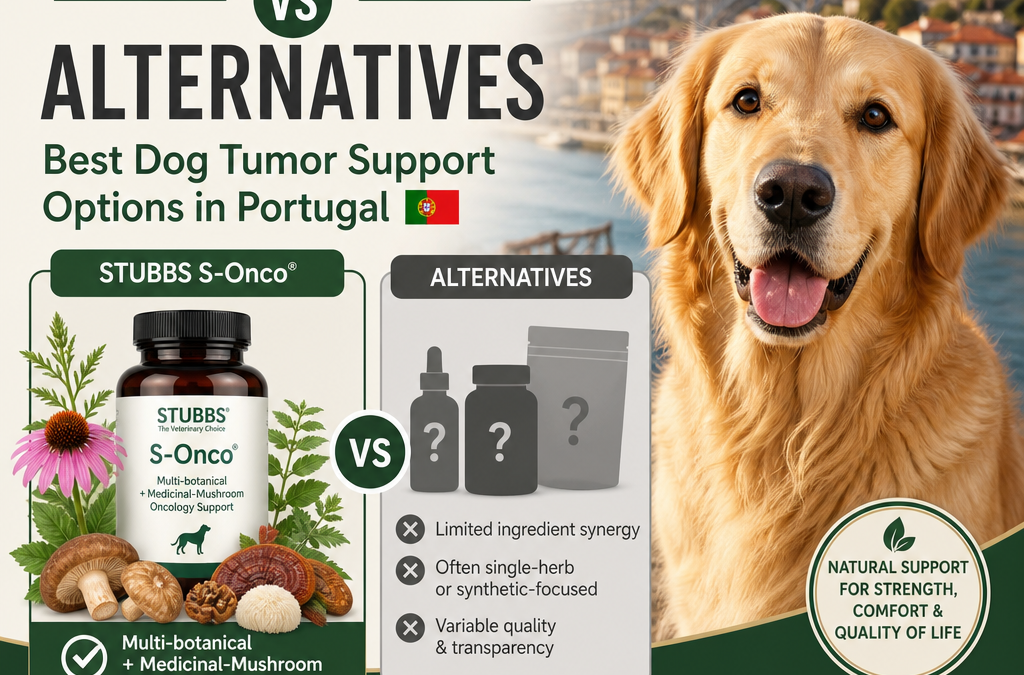
STUBBS S-Onco vs Alternatives è un confronto che molti proprietari di cani portoghesi considerano dopo una diagnosi veterinaria che coinvolge un tumore o un cancro. Scegliere un prodotto di supporto può sembrare opprimente, specialmente quando ci sono integratori, funghi medicinali, formule botaniche, diete speciali e trattamenti convenzionali disponibili. Il punto più importante è che i prodotti di supporto dovrebbero complementare—non sostituire—le cure oncologiche veterinarie. Una decisione ponderata considera la diagnosi del cane, il piano di trattamento, la salute generale, le interazioni con i farmaci, la qualità del prodotto e obiettivi realistici.
Indice dei Contenuti
- Comprendere le opzioni di supporto per i tumori nei cani
- STUBBS S-Onco vs Alternatives: cosa rende utile il confronto?
- Supporto oncologico multi-botanico + funghi medicinali
- Confrontare le categorie di integratori
- Sicurezza e considerazioni sui farmaci
- Come i proprietari di cani portoghesi possono prendere una decisione pratica
- Una conclusione equilibrata
Comprendere le opzioni di supporto per i tumori nei cani
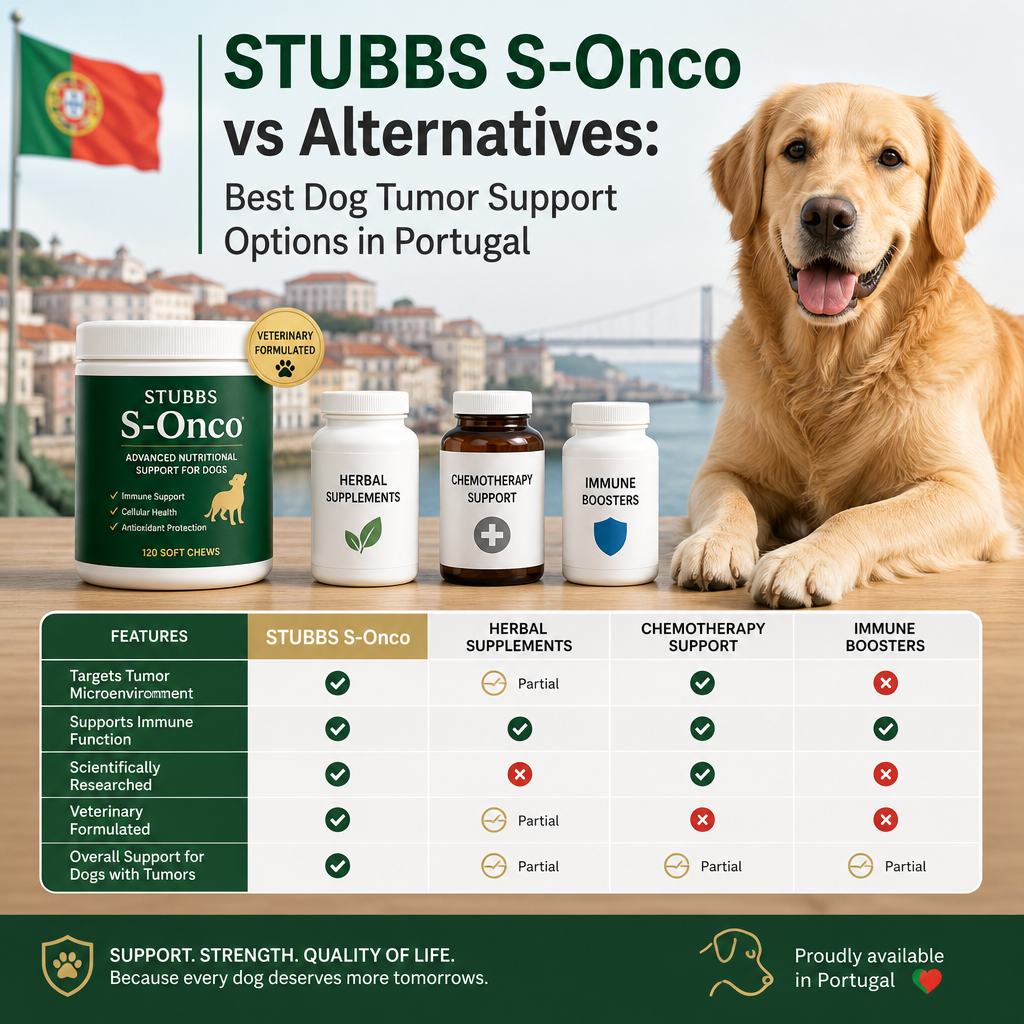
Le opzioni di supporto per i tumori nei cani sono progettate per aiutare a mantenere il benessere generale durante un periodo difficile. A seconda della formula, possono supportare l'appetito, la digestione, la funzione immunitaria, l'energia, le difese antiossidanti o il recupero durante la chirurgia, la chemioterapia o la radioterapia. Tuttavia, nessun integratore può essere considerato un trattamento garantito per il cancro, e le evidenze variano notevolmente tra ingredienti e prodotti.
La guida veterinaria dovrebbe venire prima perché i diversi tumori si comportano in modo diverso. Un integratore che può essere appropriato per un cane potrebbe non essere adatto per un altro, in particolare quando il cane ha malattie epatiche, problemi renali, rischi di sanguinamento, diabete o sta assumendo diversi farmaci. Il tuo veterinario potrebbe anche raccomandare di evitare determinati prodotti prima dell'intervento chirurgico o durante specifici protocolli di chemioterapia.
In Portogallo, i proprietari possono trovare prodotti attraverso cliniche veterinarie, farmacie, rivenditori di animali e negozi online. La disponibilità non prova necessariamente la qualità o l'efficacia. Prima di acquistare, controlla se il prodotto ha etichette chiare, informazioni sul lotto, istruzioni per il dosaggio, indicazioni per la conservazione e un produttore trasparente. È anche saggio chiedere se il prodotto è stato testato per contaminazioni, metalli pesanti, pesticidi e livelli accurati di ingredienti.
Per i lettori che confrontano opzioni tra mercati, questa guida su Integratori per tumori nei cani: 7 opzioni di supporto sicure ed efficaci a confronto è un utile passo successivo quando si valutano i tipi di prodotto e le priorità di sicurezza.
Può anche aiutare a impostare le aspettative in anticipo. Le cure di supporto riguardano solitamente il comfort, la stabilità e la preservazione della qualità della vita piuttosto che cambiamenti drammatici a breve termine. Un prodotto può essere utile se aiuta un cane a mangiare meglio, mantenere il peso corporeo o tollerare il trattamento con meno problemi digestivi. I migliori risultati spesso derivano dall'abbinare il giusto prodotto di supporto a routine alimentari costanti, monitoraggio regolare e comunicazione stretta con il team veterinario. Ecco perché STUBBS S-Onco vs alternative dovrebbe essere esaminato come parte dell'intero piano di trattamento, non in isolamento.
Molti proprietari vogliono anche un quadro chiaro per confrontare i prodotti. Un elenco di controllo pratico include trasparenza degli ingredienti, chiarezza del dosaggio, reputazione del produttore, standard di test, palatabilità e compatibilità con i farmaci attuali del cane. Se un prodotto non fornisce abbastanza dettagli per valutare questi punti, diventa più difficile giustificarne l'uso anche se il marketing sembra convincente. In altre parole, le opzioni di supporto per i tumori nei cani più utili sono spesso quelle più facili da valutare e monitorare nel tempo.
STUBBS S-Onco vs Alternatives: cosa rende utile il confronto?
La frase STUBBS S-Onco vs alternative si riferisce solitamente al confronto tra una formula di supporto oncologico combinata e prodotti più semplici o mirati. Un integratore multi-ingrediente può essere conveniente perché riunisce diversi ingredienti botanici e funghi in una sola formulazione. Al contrario, gli integratori individuali consentono un controllo più preciso sul dosaggio e possono rendere più facile identificare quale ingrediente provoca un beneficio o un effetto collaterale.
Un prodotto combinato può essere allettante quando i proprietari desiderano un ampio supporto nutrizionale e per il benessere. Può anche ridurre il numero di contenitori e i passaggi di somministrazione giornaliera. D'altra parte, una formula complessa può creare più potenziale per interazioni, specialmente se il cane sta già ricevendo farmaci o altri integratori.
Il miglior confronto non si basa solo sul numero di ingredienti. Considera la qualità delle prove, la concentrazione di composti attivi, gli standard di produzione, la palatabilità, il costo per porzione giornaliera e se la formula soddisfa le esigenze mediche del cane. Un prodotto con meno ingredienti ma con test più chiari e una migliore supervisione veterinaria può essere più appropriato rispetto a un lungo elenco di ingredienti con documentazione limitata.
Per un contesto più ampio sulle scelte di prodotto correlate in Europa, potresti trovare utile anche l' Alternative ai funghi medicinali / Micoterapia veterinaria: 7 migliori integratori per tumori nei cani in Svizzera articolo quando confronti le strategie di supporto.
C'è anche una ragione pratica per cui questo confronto è importante nella vita reale. Quando un cane non sta bene, i proprietari spesso vogliono agire rapidamente, e quell'urgenza può rendere la selezione del prodotto emotiva. Pertanto, STUBBS S-Onco vs alternative dovrebbe essere affrontato con una revisione calma e strutturata dell'etichetta, della diagnosi del cane e della fase di trattamento attuale. Un confronto attento può prevenire spese inutili e ridurre la possibilità di somministrare un prodotto che non si adatta bene alle esigenze del cane.
In alcuni casi, i veterinari possono preferire un approccio graduale. Ciò significa iniziare con un prodotto di supporto ben scelto, osservare attentamente il cane e solo allora considerare se è necessario un ulteriore supporto. Questo metodo è particolarmente utile quando il cane è già in chemioterapia, in trattamento per il dolore o con farmaci gastrointestinali. Più semplice è la prova, più facile è sapere se il supporto sta effettivamente aiutando.
Supporto oncologico multi-botanico + funghi medicinali
Il supporto oncologico multi-botanico + funghi medicinali spesso combina estratti vegetali con funghi come il tail di tacchino, reishi, maitake o shiitake. Questi ingredienti sono comunemente selezionati per i loro polisaccaridi, beta-glucani, polifenoli o altri composti naturalmente presenti. Nella ricerca di laboratorio e negli studi clinici preliminari, alcuni composti derivati dai funghi sono stati studiati per effetti legati al sistema immunitario e potenziali ruoli di supporto nella cura del cancro.
Tuttavia, i risultati di laboratorio non dovrebbero essere considerati come prova che un integratore finito controllerà o curerà il cancro nei cani. Il tipo di estratto, la concentrazione, la purezza, il metodo di preparazione e il dosaggio possono variare significativamente. “Polvere di fungo” non è necessariamente equivalente a un estratto standardizzato, e un alto numero di ingredienti non indica automaticamente un prodotto più forte.
Gli ingredienti botanici meritano anche una revisione attenta. Le erbe possono influenzare l'infiammazione, la coagulazione del sangue, gli enzimi epatici, la pressione sanguigna o il metabolismo dei farmaci prescritti. Alcune sostanze considerate sicure per le persone possono essere inadatte per i cani, in particolare a dosi concentrate. I proprietari dovrebbero fornire al veterinario l'etichetta completa piuttosto che fare affidamento su un nome di prodotto o una descrizione di marketing.
Quando si discutono formule multi-ingrediente, STUBBS S-Onco vs alternative spesso si riduce a se il cane ha bisogno di un supporto ampio o di un piano più mirato. In alcuni casi, un team veterinario può preferire un prodotto più semplice e aggiungere solo ciò che è necessario.
Vale anche la pena ricordare che gli ingredienti botanici e i funghi non sono intercambiabili solo perché suonano simili. Due formule possono entrambe menzionare i funghi, eppure una può utilizzare una piccola quantità di una polvere generale mentre l'altra contiene un estratto più concentrato con composti attivi meglio definiti. Questa distinzione può essere molto importante quando un cane sta affrontando una malattia grave. Per questo motivo, STUBBS S-Onco vs alternative dovrebbe essere valutato in base alla composizione e alla qualità, non solo per categoria generale.
Quando i proprietari esaminano i pannelli degli ingredienti, dovrebbero cercare più della semplice presenza di nomi familiari. Domande come “Quanto è incluso?”, “Quale parte del fungo è utilizzata?”, “L'estratto è standardizzato?” e “Ci sono ingredienti di riempimento che diluiscono la formula?” possono essere più utili rispetto all'etichetta frontale. Un prodotto ben formulato dovrebbe rendere questi dettagli facili da trovare.
Confrontare le categorie di integratori
Quando si valutano le opzioni di supporto per i tumori nei cani, è utile separare i prodotti in categorie ampie.
Formule oncologiche combinate: Queste possono includere diversi funghi, erbe, antiossidanti e composti nutrizionali. Offrono comodità e copertura ampia ma possono essere più difficili da valutare ingrediente per ingrediente.
Integratori a singolo ingrediente: Questi si concentrano su un composto, come un estratto di fungo specifico o acido grasso omega-3. Possono essere più facili da dosare e monitorare, anche se forniscono un supporto più ristretto.
Prodotti di supporto nutrizionale: Questi possono mirare all'appetito, al mantenimento del peso, alla salute gastrointestinale o al recupero. Per molti cani, mantenere la nutrizione e la condizione corporea è una priorità pratica durante il trattamento.
Terapie veterinarie prescritte: Chirurgia, chemioterapia, radioterapia, farmaci mirati e gestione del dolore non sono alternative agli integratori; sono opzioni mediche basate su evidenze che possono essere utilizzate insieme a cure di supporto accuratamente selezionate.
Approcci dietetici: Una dieta completa e bilanciata appropriata alla condizione del cane è essenziale. Le diete fatte in casa dovrebbero essere formulate con un nutrizionista veterinario perché le carenze nutrizionali possono peggiorare la debolezza e il recupero.
Per un confronto più mirato dei prodotti di supporto, vedere Alternativa STUBBS S-Onco: 5 Scelte Potenti e Positive per Cani con Tumori in Portogallo, che copre considerazioni pratiche per scegliere un altro approccio.
Queste categorie si sovrappongono nella vita reale, e questo è uno dei motivi per cui la selezione può essere confusa. Un integratore può agire in parte come supporto nutrizionale e in parte come formula botanica, mentre un altro prodotto può essere commercializzato come aiuto oncologico anche se il suo valore principale è il supporto dell'appetito. La giusta interpretazione dipende dalle reali esigenze del cane. Se il problema principale è la perdita di appetito, allora un aiuto nutrizionale palatabile può essere più utile di un complesso mix botanico. Se l'obiettivo è la cura di supporto generale durante il trattamento, una formula più completa potrebbe avere senso. STUBBS S-Onco vs alternative funziona quindi meglio come confronto di funzione, non solo di branding.
I proprietari a volte chiedono se “più ingredienti” significhi un supporto migliore. Non necessariamente. Ingredienti extra possono aumentare la possibilità di sovrapposizioni, costi non necessari o problemi di tollerabilità. Una formula più corta con documentazione chiara può essere più adatta, specialmente se il cane ha già un programma di medicazione complicato. In pratica, le migliori opzioni di supporto per i tumori nei cani sono quelle che si allineano con un obiettivo specifico e misurabile.
Sicurezza e considerazioni sui farmaci
Prima di iniziare STUBBS S-Onco o qualsiasi alternativa, discutere il prodotto con il veterinario curante. Questo è particolarmente importante se il cane sta ricevendo chemioterapia, corticosteroidi, farmaci antinfiammatori non steroidei, anticoagulanti, anticonvulsivanti, antibiotici o farmaci elaborati dal fegato.
Potenziali segnali di avvertimento dopo aver introdotto un integratore includono vomito, diarrea, riduzione dell'appetito, stanchezza insolita, prurito, gonfiore, lividi, sanguinamento o cambiamenti nella sete e nella minzione. Fermare il prodotto e contattare un professionista veterinario se compaiono sintomi gravi o persistenti. Non introdurre più integratori nuovi contemporaneamente, poiché farlo rende difficile identificare la causa di una reazione.
Tenere un registro scritto di ogni integratore, medicazione, dose e orario di somministrazione. Questa semplice abitudine aiuta il team veterinario a valutare le interazioni e decidere se un prodotto dovrebbe essere sospeso prima di una procedura o cambiato durante il trattamento.
Per comprendere meglio come vengono valutati gli ingredienti, il Centro Nazionale Statunitense per la Salute Complementare e Integrativa offre una panoramica utile di sicurezza della medicina erboristica e considerazioni sulle prove.
Anche il tempismo è importante. Alcuni prodotti di supporto possono essere accettabili durante periodi stabili, ma dovrebbero essere sospesi prima di un intervento chirurgico o riesaminati quando inizia un nuovo protocollo di chemioterapia. Questo è particolarmente rilevante per le formule che possono influenzare la coagulazione, l'infiammazione o il metabolismo epatico. Anche un prodotto che sembra delicato può diventare una preoccupazione se combinato con altri trattamenti. Ecco perché STUBBS S-Onco vs alternative dovrebbe sempre essere controllato rispetto all'elenco attuale dei farmaci.
I proprietari dovrebbero anche prestare attenzione a cambiamenti sottili piuttosto che aspettare effetti collaterali evidenti. Un integratore potrebbe non causare vomito, ma potrebbe comunque ridurre l'appetito, allentare le feci o rendere un cane meno interessato al cibo. Quei cambiamenti più piccoli possono influenzare la condizione corporea nel tempo. Registrare osservazioni quotidiane rende più facile vedere se il cane sta realmente beneficiando del prodotto o semplicemente tollerandolo.
Come i proprietari di cani portoghesi possono prendere una decisione pratica
Inizia chiedendo qual è l'obiettivo principale. L'obiettivo è supportare l'appetito, mantenere il peso, migliorare la tolleranza digestiva o fornire benessere generale durante il trattamento? Un obiettivo chiaro rende più facile misurare se un prodotto è utile.
Successivamente, rivedi l'etichetta con un veterinario. Cerca quantità esatte degli ingredienti piuttosto che miscele proprietarie vaghe. Chiedi riguardo alla forma di ciascun ingrediente, alla dose giornaliera per il peso del cane e se il produttore fornisce test indipendenti. Il costo dovrebbe essere calcolato al mese, non solo per contenitore, perché un prodotto più economico potrebbe richiedere una quantità giornaliera maggiore.
Infine, monitora i risultati oggettivi. Tieni traccia dell'appetito, del peso corporeo, della qualità delle feci, dell'attività, dell'idratazione e degli effetti collaterali legati al trattamento. Gli integratori non dovrebbero ritardare i test diagnostici, la chirurgia, le consultazioni oncologiche o i cambiamenti nel trattamento medico.
Come regola pratica, STUBBS S-Onco vs alternative dovrebbe essere deciso in base all'idoneità, non alle affermazioni di marketing. La scelta giusta è quella che supporta il piano di trattamento senza creare rischi evitabili.
Alcuni proprietari chiedono anche se lo stesso prodotto può essere utilizzato durante l'intero percorso di trattamento. In pratica, la risposta dipende dalla diagnosi del cane e dalla sua risposta. Una formula che sembra utile durante la perdita di appetito potrebbe non essere la scelta migliore prima dell'intervento chirurgico, e un prodotto tollerato durante il recupero potrebbe comunque necessitare di revisione una volta iniziata la chemioterapia. Questo è un altro motivo per cui STUBBS S-Onco vs alternative dovrebbe sempre essere rivalutato con il team veterinario piuttosto che trattato come un acquisto una tantum.
Un'altra domanda utile è se il cane riceva già un supporto sufficiente dalla dieta e dalle cure standard. Se il cane mangia bene, mantiene il peso e tollera il trattamento, un integratore potrebbe offrire solo un piccolo beneficio incrementale. Tuttavia, se l'appetito, la digestione o l'energia stanno diminuendo, un prodotto di supporto selezionato con cura può svolgere un ruolo più significativo. In entrambi i casi, il prodotto dovrebbe allinearsi con le reali esigenze del cane piuttosto che con assunzioni basate sull'etichetta.
I proprietari dovrebbero anche pensare alla coerenza. Se un prodotto è difficile da somministrare, ha un forte odore o causa lievi disturbi digestivi, l'uso a lungo termine potrebbe essere impraticabile. La palatabilità è importante perché il miglior piano di supporto è quello che il cane può effettivamente assumere regolarmente. Per questo motivo, la scelta tra STUBBS S-Onco vs alternative potrebbe dipendere dal formato, dal sapore e dal programma di dosaggio tanto quanto dalla lista degli ingredienti.
Può essere utile confrontare i prodotti fianco a fianco con una breve tabella decisionale nelle proprie note. Ad esempio, elenca la diagnosi del cane, i farmaci attuali, gli ingredienti del prodotto, il costo giornaliero, lo scopo previsto e eventuali avvertenze note. Anche un semplice confronto può rendere la decisione molto più chiara e ridurre la pressione di scegliere in base al packaging o alle affermazioni online. STUBBS S-Onco vs alternative diventa molto più facile da valutare quando i fatti sono scritti in un unico posto.
In caso di dubbi, chiedi al veterinario queste quattro domande: Questo prodotto è sicuro con l'attuale piano di trattamento? Ci sono prove che possa aiutare con il principale problema del cane? Esiste un'alternativa più appropriata? E quali segni dovremmo monitorare dopo averlo iniziato? Queste domande sono spesso più preziose che cercare un integratore “migliore” universale, perché le esigenze di supporto possono cambiare rapidamente durante la cura del cancro.
Una conclusione equilibrata
STUBBS S-Onco vs Alternatives non è una semplice competizione con un vincitore universale. Una formula combinata multi-botanica e funghi medicinali può adattarsi ad alcuni cani quando i suoi ingredienti, qualità e profilo di sicurezza sono stati esaminati da un veterinario. Altri cani possono beneficiare di un supporto nutrizionale mirato, di un singolo ingrediente ben caratterizzato o di nessun supplemento.
L'approccio più responsabile alle opzioni di supporto per i tumori nei cani è la cura individualizzata. Utilizzare i supplementi solo come parte di un piano più ampio che prioritizza una diagnosi accurata, un trattamento basato su evidenze, nutrizione, controllo del dolore, monitoraggio e qualità della vita. In Portogallo, i proprietari dovrebbero cercare indicazioni dal veterinario del cane o da un servizio di oncologia veterinaria prima di aggiungere qualsiasi prodotto, specialmente quando è in corso un trattamento convenzionale per il cancro.
Per molte famiglie, la decisione finale diventa più chiara dopo aver confrontato la formula, il piano di trattamento attuale del cane e le evidenze disponibili. In caso di dubbi, chiedere al team veterinario di aiutare a decidere se STUBBS S-Onco vs alternatives offre il supporto più sicuro e sensato per il singolo cane.
Man mano che il trattamento progredisce, è normale rivedere il piano più volte. Un prodotto che aveva senso all'inizio potrebbe non essere più necessario in seguito, mentre una scelta di supporto diversa potrebbe diventare più rilevante dopo un intervento chirurgico, durante la chemioterapia o in fase di recupero. L'obiettivo non è trovare un prodotto universale perfetto, ma scegliere il supporto più appropriato in ogni fase con supervisione veterinaria.
In questo senso, STUBBS S-Onco vs alternatives riguarda meno il branding e più l'adattamento pratico, la qualità e la sicurezza. Quando questi tre fattori vengono esaminati attentamente, i proprietari sono meglio posizionati per prendere decisioni informate che supportano sia il comfort che gli obiettivi di trattamento.
Usato bene, il supporto può essere una parte utile di un piano oncologico più ampio. Usato in modo sconsiderato, può aggiungere confusione, costi o rischi. Ecco perché un approccio misurato e consapevole delle evidenze è il migliore. Se un prodotto viene scelto con attenzione, monitorato con cura e regolato quando necessario, può contribuire in modo significativo al comfort del cane e al suo benessere quotidiano durante il trattamento.