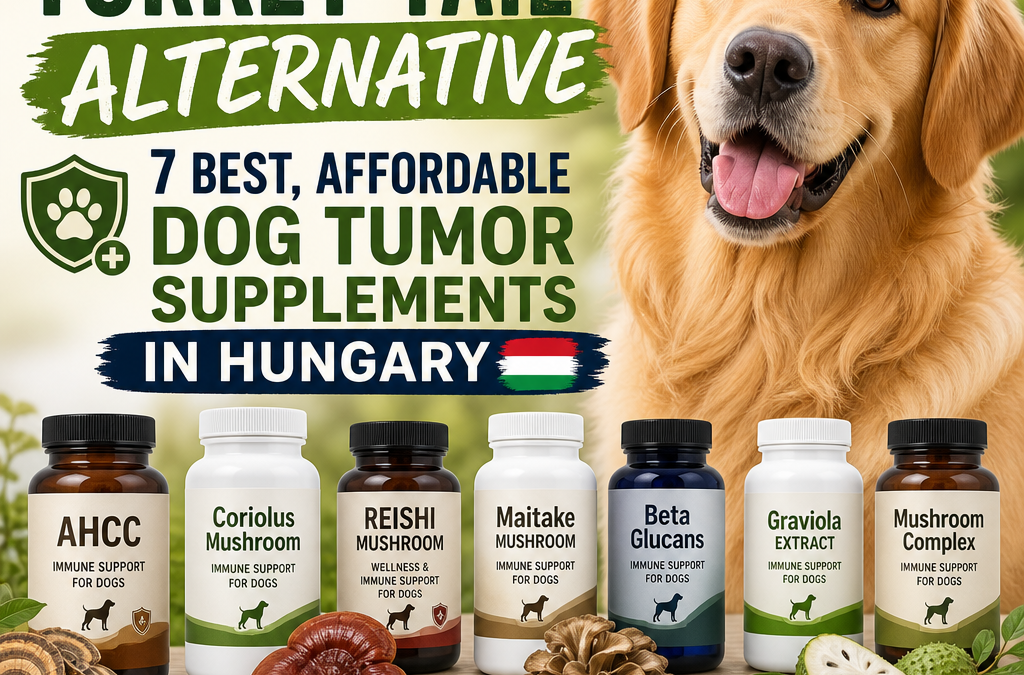
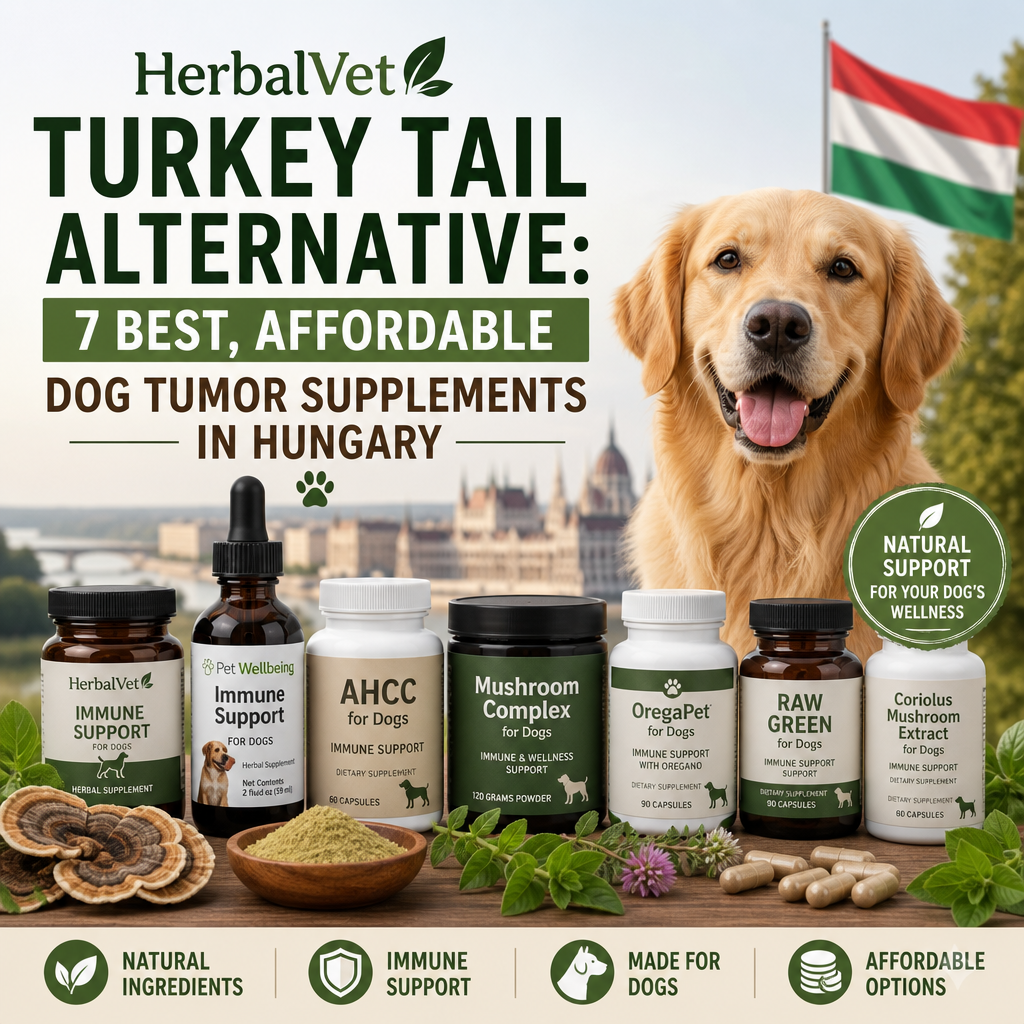
HerbalVet Turkey Tail Alternative products can help Hungarian dog owners explore more affordable supportive options when a veterinarian recommends nutritional assistance during cancer care. Turkey tail mushroom is widely discussed for its beta-glucans and immune-supporting potential, but no supplement should replace diagnosis, surgery, chemotherapy, radiation, or other veterinary treatment. The best choice depends on the dog’s tumor type, current medication, age, weight, and overall health.
When people search for an HerbalVet Turkey Tail alternative, they usually want something that is easier to source, better documented, or more affordable without compromising safety. In Hungary, availability can vary by retailer, so it helps to compare ingredients, extraction methods, testing standards, and veterinary suitability before buying. The goal is not to chase the trendiest product, but to find a supportive option that fits the dog’s real needs.
Why Consider Alternatives to HerbalVet Turkey Tail?
HerbalVet Turkey Tail may be unavailable, expensive, or difficult to source in Hungary. Some owners may also prefer a product with a clearer ingredient label, standardized mushroom extract, local availability, or a lower monthly cost. Looking at alternatives to HerbalVet Turkey Tail can be practical, but comparison should focus on quality rather than price alone.
A reliable supplement should clearly state the mushroom species, extraction method, concentration, serving size, batch information, and testing standards. Products made from fruiting bodies are often preferred because they may provide a broader range of naturally occurring compounds than products based mainly on mycelium or grain substrate. However, the label should always be evaluated carefully, since marketing terms such as “immune booster” do not prove clinical effectiveness.
For general background on the mushroom itself, the National Center for Complementary and Integrative Health provides a useful overview of turkey tail and its common uses: NCCIH turkey tail mushroom resource.
What matters most when choosing a supplement
Before comparing brands, decide what you actually need from the product. Some dogs need a single mushroom extract, while others may do better with nutritional support that helps maintain appetite and body condition. A thoughtful HerbalVet Turkey Tail alternative should match the treatment goal rather than simply repeat the same product category.
Look for clear dosing instructions, especially if the dog is small, elderly, or already taking medication. If the packaging is vague, if the seller cannot explain the extraction process, or if the label makes extreme claims, it is usually better to keep searching. In oncology support, transparency is more valuable than flashy marketing.
1. Turkey Tail Extract From Another Manufacturer
The most direct HerbalVet Turkey Tail alternative is a turkey tail supplement from a different company. Look for products containing トラメテス・バーシカラー, also known as turkey tail, and preferably a hot-water extract standardized for beta-glucans.
In Hungary, these products may be available through veterinary pharmacies, reputable supplement retailers, or European online stores that provide clear product documentation. Compare the amount of active extract per serving rather than the size of the container. A lower-priced package may contain a weaker product and become more expensive over time.
Before using any turkey tail extract, ask your veterinarian about possible interactions with immunosuppressive medicines, chemotherapy, corticosteroids, or drugs affecting blood clotting. This step matters even when the product seems simple, because the right HerbalVet Turkey Tail alternative for one dog may not be suitable for another.
It also helps to verify whether the product uses fruiting body material, mycelium, or a blend of both. Many buyers assume all mushroom supplements are similar, but manufacturing choices can change potency and quality. If the company publishes third-party testing, that is another useful sign that the supplement is being produced responsibly.
Some owners compare labels only by capsule count, but that can be misleading. A better comparison is the cost per gram of extract and the cost per day at the veterinarian-recommended dose. That approach can reveal whether a cheaper bottle is truly a better deal or simply a smaller serving in a different package.
When the goal is an HerbalVet Turkey Tail alternative, this category is usually the closest match in both use and expected support. Even so, the quality of each product can vary widely, so a careful label review is still essential.
2. Reishi Mushroom Supplements
レイシ、または ガノデルマ・ルシダム, is another mushroom used in complementary animal wellness products. It contains beta-glucans and triterpenes and is commonly marketed for immune balance and general vitality.
Reishi may be considered when a dog needs broader mushroom support rather than a single-species supplement. However, it is not automatically safer or more effective than turkey tail. Possible concerns include digestive upset, changes in blood clotting, and interactions with medication. Dogs with liver disease, bleeding disorders, or upcoming surgery require particular caution.
Choose a veterinary-formulated product whenever possible, and avoid human products containing alcohol, sweeteners, flavorings, or added herbs that are unsuitable for dogs. If your goal is an HerbalVet Turkey Tail alternative with a similar supportive role, reishi may be reasonable only when your veterinarian agrees with the overall plan.
Reishi is often discussed in the same conversation as turkey tail because both mushrooms appear in supportive care formulas. Even so, the exact use case may differ. A dog that tolerates one extract well may not tolerate another, and a dog with a sensitive stomach may need a gentler starting dose. That is why any switch should be gradual and monitored.
For many families, reishi becomes part of the same broader search for an HerbalVet Turkey Tail alternative when turkey tail is out of stock or too costly. The key is to keep the choice grounded in the dog’s individual health picture.
3. Maitake Mushroom Extract
Maitake, or グリフォラ・フロンドーサ, is another source of naturally occurring polysaccharides. It is included in some dog tumor supplements Hungary owners can purchase through specialist retailers or veterinary practices.
Maitake products are often combined with turkey tail, reishi, shiitake, or cordyceps. Combination formulas may be convenient, but they can make it difficult to identify which ingredient causes a reaction. For dogs taking several medications, a single-ingredient extract is often easier to monitor.
The product should provide clear dosing information based on body weight. Never assume that a human capsule can simply be opened and divided for a dog, since concentrations vary substantially between brands. A careful comparison can help you decide whether maitake is a better HerbalVet Turkey Tail alternative for your dog’s current needs.
Maitake can be a sensible option when the owner wants mushroom-based support but cannot source a dependable turkey tail product. Still, the same quality rules apply. Check whether the supplement is standardized, whether it has been tested for contaminants, and whether the company explains where the mushrooms are grown. Those details matter more than the front label.
If a dog has a history of allergies or a very sensitive digestive tract, starting with a lower amount and increasing slowly may reduce the chance of loose stools or nausea. Always document the response so that any benefits or side effects can be discussed with the veterinary team in a practical, evidence-based way.
As with any HerbalVet Turkey Tail alternative, maitake should be chosen for consistency and traceability, not for marketing buzz. A simple, well-documented product is often the safest place to start.
4. Medicinal Mushroom Blends for Dogs
A carefully formulated mushroom blend may provide several types of beta-glucans in one product. These formulas can be useful for owners seeking alternatives to HerbalVet Turkey Tail, particularly when a single turkey tail product is unavailable in Hungary.
The main disadvantage is that blends differ widely. Some contain meaningful amounts of each mushroom, while others use proprietary mixtures without revealing individual quantities. Avoid products that hide all ingredient amounts behind a single “complex” or “matrix” label.
A good blend should identify each mushroom species, the extract ratio, the active compound standardization, and recommended use for dogs. It should also be free from xylitol, excessive salt, artificial stimulants, and unnecessary additives. In practice, the strongest HerbalVet Turkey Tail alternative is often the one that is easiest to verify on the label.
Blends can be especially useful when a dog’s care plan already includes several supportive measures and the owner wants a more streamlined routine. However, convenience should never come at the expense of traceability. If one ingredient causes an issue, the veterinarian should be able to identify it quickly.
Another advantage of a well-made blend is that it may help owners who are not sure which medicinal mushroom to choose first. Even so, more ingredients do not automatically mean better support. In many cases, a simple and transparent formula is easier to use, easier to monitor, and easier to afford over time.
For owners comparing several options, a mushroom blend can be an acceptable HerbalVet Turkey Tail alternative, but only when the formula is clearly labeled and the dosage can be matched to the dog’s weight.
5. Omega-3 Fish Oil
Omega-3 fatty acids are not mushroom supplements, but they are among the more established nutritional options used to support general health in dogs with chronic illness. EPA and DHA may help maintain skin, joint, and inflammatory balance and can support overall nutritional status during treatment.
Select a purified fish oil made for pets or one recommended by a veterinarian. The label should specify the actual EPA and DHA content, not merely the total amount of fish oil. Store the product correctly because oxidized oil can be harmful and may develop an unpleasant smell.
Dogs with pancreatitis, blood-clotting problems, or planned surgery may need a different approach. Fish oil can also interact with certain medications, so professional guidance is important. While it is not a direct HerbalVet Turkey Tail alternative, omega-3s can be part of a broader supportive plan.
Owners sometimes overlook fish oil because it is not marketed as a cancer product, but nutritional support is often more useful than people expect. A dog that eats more consistently, maintains a healthier coat, and preserves body condition may cope better with the demands of illness and treatment. For that reason, omega-3s are worth considering alongside mushroom-based products, not instead of veterinary care.
When a dog needs a more complete support routine, fish oil may complement a HerbalVet Turkey Tail alternative rather than replace it. That combination should still be reviewed by the veterinarian to avoid unnecessary overlap or dosing errors.