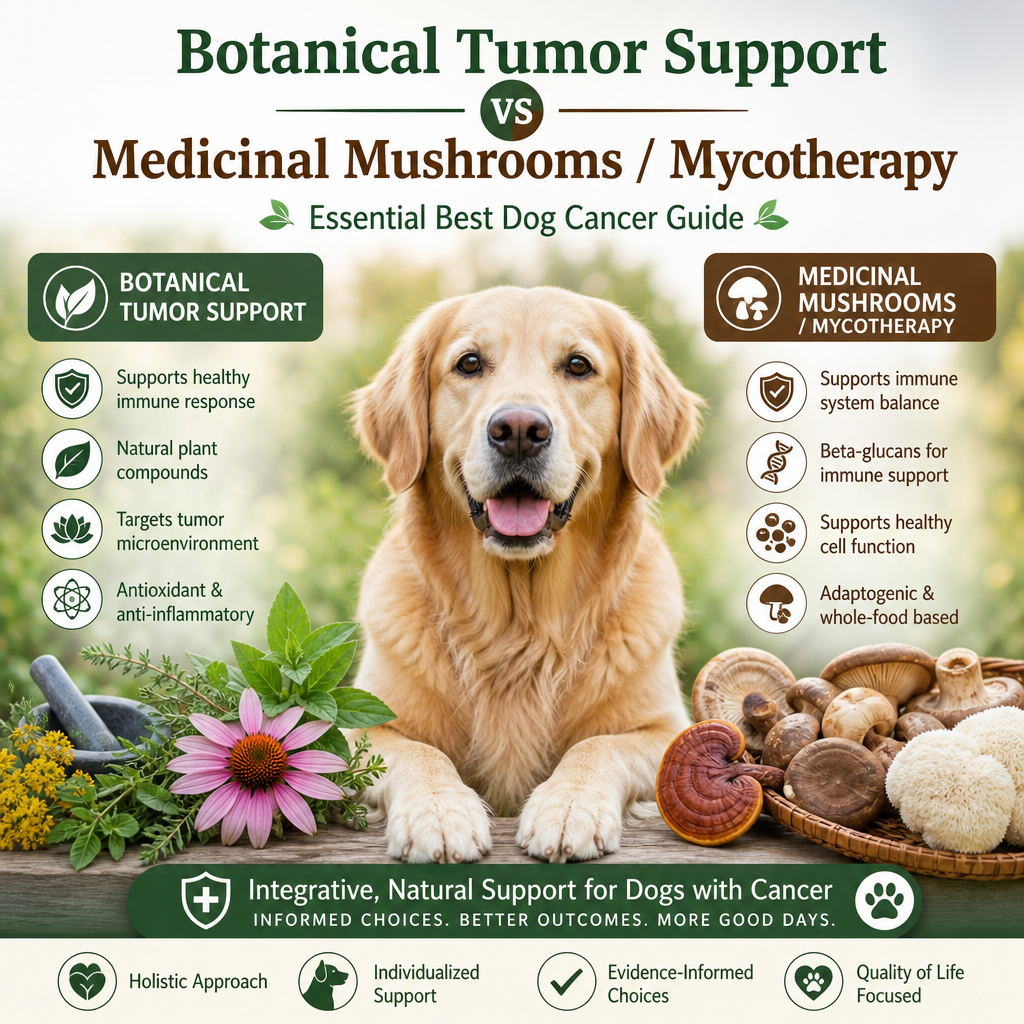
Botanical tumor support vs Medicinal mushrooms / mycotherapy is an important distinction for dog guardians exploring complementary options during cancer care. Both approaches may be used alongside veterinary treatment, but they are not interchangeable. Botanical formulas generally rely on plant compounds selected for antioxidant, anti-inflammatory, immune-modulating, or tissue-supportive effects. Medicinal mushrooms, often called mycotherapy, use fungi or mushroom extracts that contain compounds such as beta-glucans and triterpenes. Understanding how these categories differ can help owners make safer, more informed decisions.

For a broader overview of how fungi-based support fits into canine wellness, see 犬のための薬用キノコの利点:免疫健康を自然に高める.

When people compare botanical tumor support vs Medicinal mushrooms / mycotherapy, the most useful question is not which one is “stronger,” but which one matches the dog’s needs, diagnosis, and treatment plan. In cancer care, the right supplement is the one that can be used responsibly, at the right time, with clear goals and veterinary oversight.

Understanding botanical tumor support

botanical tumor support vs Medicinal mushrooms / mycotherapy illustration

Botanical tumor support refers to the use of herbs, plant extracts, and other botanical ingredients as part of a broader wellness plan for a dog with cancer. These products may be designed to support appetite, digestion, immune function, inflammation balance, liver health, or general resilience during conventional treatment.

Common botanical ingredients may include turmeric-derived curcuminoids, milk thistle, green tea compounds, ginger, astragalus, or other traditional herbs. Each plant has a different chemical profile and potential purpose. For example, milk thistle is often included for liver support, while ginger may be selected for digestive comfort. However, the presence of a familiar herb does not automatically make a product appropriate for every dog.

Botanical supplements can be complex because one plant may contain dozens of active compounds. The effects may vary according to extraction method, concentration, processing, and the dog’s health status. A product made from a standardized extract is not necessarily equivalent to a powdered whole herb, even when both use the same plant name.

In practice, botanical tumor support works best when the goal is specific and realistic. Some formulas are chosen to help maintain appetite, others to support the liver, and others to assist with inflammation balance. That variety is useful, but it also means the ingredients must be checked carefully before use. A formula that seems gentle may still be unsuitable if a dog has kidney disease, liver compromise, or a medication schedule that could be affected by plant compounds. This is why veterinary guidance matters before starting any supplement.

It also helps to think about botanical support in the same practical way as any other part of cancer care: by asking what problem it is meant to address. If the goal is digestive comfort, the product should be selected for that purpose. If the goal is liver support, the label and dosing should reflect that aim. That approach keeps botanical tumor support grounded in real-world needs rather than marketing language.

Some dog owners also appreciate that botanical products can be blended into a broader routine that includes diet, hydration, symptom control, and stress reduction. Even so, more ingredients do not automatically mean better results. A short, well-chosen formula is often easier to monitor than a complicated blend with multiple overlapping actions. In many cases, simplicity improves safety.

What is medicinal mushroom therapy?

Medicinal mushrooms, or mycotherapy, involve the use of mushrooms and mushroom extracts for supportive health purposes. Common examples include turkey tail, reishi, maitake, shiitake, cordyceps, and agaricus species. These fungi contain polysaccharides, beta-glucans, sterols, triterpenes, and other compounds that may influence immune signaling and inflammatory pathways.

Turkey tail is one of the most discussed mushrooms in veterinary cancer support because of research into its polysaccharide compounds. Some studies have explored its use in dogs with certain cancers, but evidence remains limited compared with standard veterinary oncology treatments. Reishi and maitake are also frequently used in integrative protocols, although their benefits can depend heavily on product quality, extraction technique, and dose.

Mycotherapy is not a cure for cancer. Its most reasonable role is usually supportive: helping maintain quality of life, supporting immune balance, and complementing a veterinarian-supervised treatment plan. Research in dogs is still developing, and findings from laboratory studies or human research cannot automatically be applied to canine patients.

Product type also matters. Some supplements use only the fruiting body, while others rely on mycelium or a blend of both. Extraction methods can change the final composition, including the concentration of beta-glucans and other compounds. When evaluating medicinal mushrooms, dog owners should ask what part of the mushroom is used, how it is extracted, and whether contaminant testing has been performed. Those details often separate a dependable formula from a marketing claim.

In many conversations about canine cancer support, medicinal mushrooms are discussed because they offer a well-defined category of compounds rather than a broad botanical mix. That can make them easier to evaluate in a dog cancer supplement comparison, provided the label is transparent and the company can explain its sourcing and testing methods.

Botanical tumor support vs Medicinal mushrooms / mycotherapy

When comparing these categories, the primary difference is their source and chemical composition. Botanical products come from plants, while medicinal mushroom products come from fungi. Their biological actions may overlap, but they are not identical.

Botanical formulas are often broader and may target several areas at once, such as digestion, inflammation, antioxidant defenses, and organ support. Mushroom products are commonly chosen for their immune-modulating compounds, especially beta-glucans. In some cases, a veterinarian may recommend one category; in others, a carefully designed protocol may include both.

Another difference is standardization. Mushroom quality can vary significantly depending on whether a product uses the fruiting body, mycelium, or a combination. It also matters whether the extract is water-based, alcohol-based, or dual-extracted. Botanical products face similar challenges, including variation in plant species, growing conditions, harvesting, and concentration.

Neither category should be judged only by its ingredient list. A high-quality product should identify the exact species, extraction method, active-compound content when relevant, lot testing, and contaminant screening.

In a real-world cancer plan, the decision is rarely about one being universally better than the other. Instead, the question is whether a botanical or mushroom product matches the dog’s medical needs, current medications, and ability to tolerate the supplement. That is why the comparison should be framed as a support strategy rather than a competition. Some dogs may benefit more from a plant-based formula aimed at digestive comfort, while others may be better suited to a mushroom extract chosen for immune support. The right answer depends on context.

How the two approaches differ in practice

Botanical products are often used for targeted support such as calming inflammation, assisting the liver, or easing digestive upset. Medicinal mushroom therapy is more often discussed in relation to immune balance and general resilience. Both can be part of a thoughtful plan, but neither should be added casually. The safest approach is to define the purpose first and then choose the product second.

One reason owners search for botanical tumor support vs Medicinal mushrooms / mycotherapy is that both options are commonly described as “natural,” yet the practical risks and benefits are not the same. A botanical formula may be chosen for a dog with poor appetite or digestive sensitivity, while a mushroom extract may be considered when immune support is the main goal. That difference matters when multiple drugs or therapies are already part of the treatment plan.

It is also important to note that natural does not mean automatically safer. A mushroom supplement can still cause stomach upset, and a botanical product can still affect metabolism or clotting. In other words, the category alone does not determine safety. Product quality, dosing, and the dog’s condition are often more important than the label category.

Dog cancer supplement comparison: what matters most

A useful dog cancer supplement comparison should consider more than whether a product is labeled “natural.” Important evaluation points include:

  • 獣医の監視: The supplement should be reviewed by the dog’s veterinarian, ideally with input from a veterinary oncologist or integrative veterinary professional.
  • 成分の透明性: 曖昧な独自ブレンドの背後に量を隠す製品は避けてください。.
  • 品質管理: Look for independent testing for heavy metals, pesticides, microbes, and inaccurate ingredient claims.
  • Medical compatibility: The product must be assessed alongside chemotherapy, radiation, surgery, steroids, pain medication, antibiotics, and other treatments.
  • The dog’s individual condition: Kidney disease, liver disease, clotting problems, gastrointestinal sensitivity, and immune disorders can affect supplement safety.
  • Clear treatment goals: A supplement should have a specific purpose, such as supporting appetite or digestive comfort, rather than being added without a defined reason.

A dog receiving chemotherapy may need a different supplement plan from a dog undergoing palliative care. The timing of administration may also matter. Some compounds can affect drug metabolism, platelet activity, blood pressure, or immune signaling.

When possible, compare products by evidence, not by promotional language. A transparent label, published ingredient standards, and a sensible dosing plan are more useful than broad claims about “supporting everything.” If a product cannot clearly explain what it is meant to do, it may not be the right fit for a dog with cancer.

For owners who want to understand why health conditions can change supplement needs, it may help to review a related topic such as 犬の癌生物学 有益な免疫の不均衡と腫瘍因子. A better understanding of tumor behavior, immune imbalance, and treatment context often leads to better supplement decisions.

When comparing botanical tumor support vs Medicinal mushrooms / mycotherapy, it is also wise to ask whether the product is meant for short-term symptom relief or longer-term supportive use. A formula used for nausea or digestive upset may be relevant only during a certain phase of treatment, while an immune-support formula may be used in a more ongoing way. That distinction can prevent unnecessary overlap and reduce the chance of mixing too many compounds at once.

Potential risks and interactions

Natural products can cause side effects and drug interactions. Herbs with blood-thinning properties may be inappropriate before surgery or for dogs with low platelet counts. Certain concentrated extracts can irritate the stomach or place additional demands on the liver. Mushroom products may occasionally cause digestive upset, allergic reactions, or changes in immune activity.

Antioxidant supplements require particular care. Although antioxidants are often promoted as universally beneficial, high doses may not be appropriate during some cancer treatments. The relationship between oxidative stress and chemotherapy is complex, and the effect can depend on the specific drug, dose, timing, and cancer type.

Owners should also avoid substituting supplements for proven treatment. Delaying surgery, chemotherapy, radiation, or other recommended care can allow disease to progress. Supportive products should be viewed as additions to a veterinary plan, not replacements for diagnosis and treatment.

The safest practical rule is simple: if a supplement might change how a drug behaves, it deserves a professional review. That includes possible effects on metabolism, clotting, blood pressure, or immune response. Even when a product seems gentle, the combination of cancer, medications, and underlying organ stress can make reactions less predictable.

Another practical risk is duplication. Some formulas combine mushrooms with botanicals, while others overlap with diet supplements or prescription support products. If multiple items include similar ingredients, the total dose may become higher than intended. Keeping a written list of every supplement makes it easier to spot overlap and discuss the full plan with the veterinarian.

Owners should also be cautious with online recommendations that are not tailored to the dog’s situation. A product that helped one dog may not be suitable for another dog with a different diagnosis, different lab values, or a different medication schedule. Cancer care is individualized, and supplement selection should be individualized too.

How to choose a responsible supportive plan

Start with an accurate diagnosis and a clear understanding of the treatment goals. Ask the veterinary team whether the proposed botanical or mushroom product could affect clotting, liver enzymes, kidney function, immune activity, or medication levels. Provide the exact product label rather than relying on a brand name alone.

Introduce only one new supplement at a time when possible. This makes it easier to identify side effects or benefits. Monitor appetite, vomiting, diarrhea, energy, thirst, urination, skin changes, and any signs of discomfort. Stop the product and contact the veterinarian if a concerning reaction occurs.

Regular bloodwork may be appropriate, especially when a dog has cancer or is receiving medications that affect the liver, kidneys, or bone marrow. Documentation also helps the veterinary team understand how the dog responds over time.

If you are comparing formulas at home, write down the active ingredients, dosage instructions, and the intended purpose of each product. That simple habit can prevent duplication and reduce the chance of using overlapping ingredients. It also makes follow-up conversations with the veterinary team more productive.

A careful plan often starts with a short list of priorities: symptom control, organ support, appetite support, or immune support. Once the priority is clear, it becomes easier to decide whether a botanical product, a mushroom extract, or a different supportive option makes sense. In this way, botanical tumor support vs Medicinal mushrooms / mycotherapy becomes a practical decision rather than a general debate.

For owners looking to support immune health in a more structured way, another helpful resource is 犬のための薬用キノコの利点:免疫健康を自然に高める. It can be useful to compare the general mushroom category with a specific product plan before making changes.

A simple decision checklist

  • Does the dog have a confirmed diagnosis and a current treatment plan?
  • Is the supplement intended to support a specific need?
  • Are the ingredients, extraction method, and dose clearly labeled?
  • Could the product interact with surgery, chemotherapy, or other medications?
  • Has the veterinary team reviewed the plan before use?

The role of evidence in decision-making

Evidence for canine cancer supplements varies widely. Some ingredients have laboratory or early clinical research behind them, while others are supported mainly by traditional use, anecdotal reports, or studies in humans. A promising mechanism does not guarantee a meaningful benefit in a living dog.

For reference on how evidence is organized in medicine and research, the National Center for Complementary and Integrative Health offers a useful overview of complementary approaches at the U.S. National Center for Complementary and Integrative Health.

The strongest approach combines available research with professional judgment and careful monitoring. The goal is not to find the most aggressive supplement regimen, but to support comfort, function, and quality of life without interfering with essential treatment.

Botanical tumor support and medicinal mushrooms may each have a place in integrative canine cancer care. Their value depends on the diagnosis, the dog’s overall health, product quality, and coordination with veterinary treatment. A thoughtful dog cancer supplement comparison should always prioritize safety, transparency, realistic expectations, and the individual needs of the patient. When used well, botanical tumor support vs Medicinal mushrooms / mycotherapy can be part of a careful plan; when used poorly, it can create confusion or risk. The best choice is the one that fits the dog, the diagnosis, and the treatment team’s guidance.

In summary, the most responsible path is to use evidence where it exists, stay alert to interactions, and choose only products with clear labeling and realistic goals. That approach supports better decisions for dogs facing cancer and helps owners avoid unnecessary trial and error.

TCMVETのある緑の陰陽ロゴ
プライバシーの概要

このウェブサイトは、最良のユーザーエクスペリエンスを提供するためにクッキーを使用しています。クッキー情報はブラウザに保存され、ウェブサイトに戻ったときにあなたを認識したり、ウェブサイトのどのセクションが最も興味深く有用であるかを理解するのに役立ちます。.