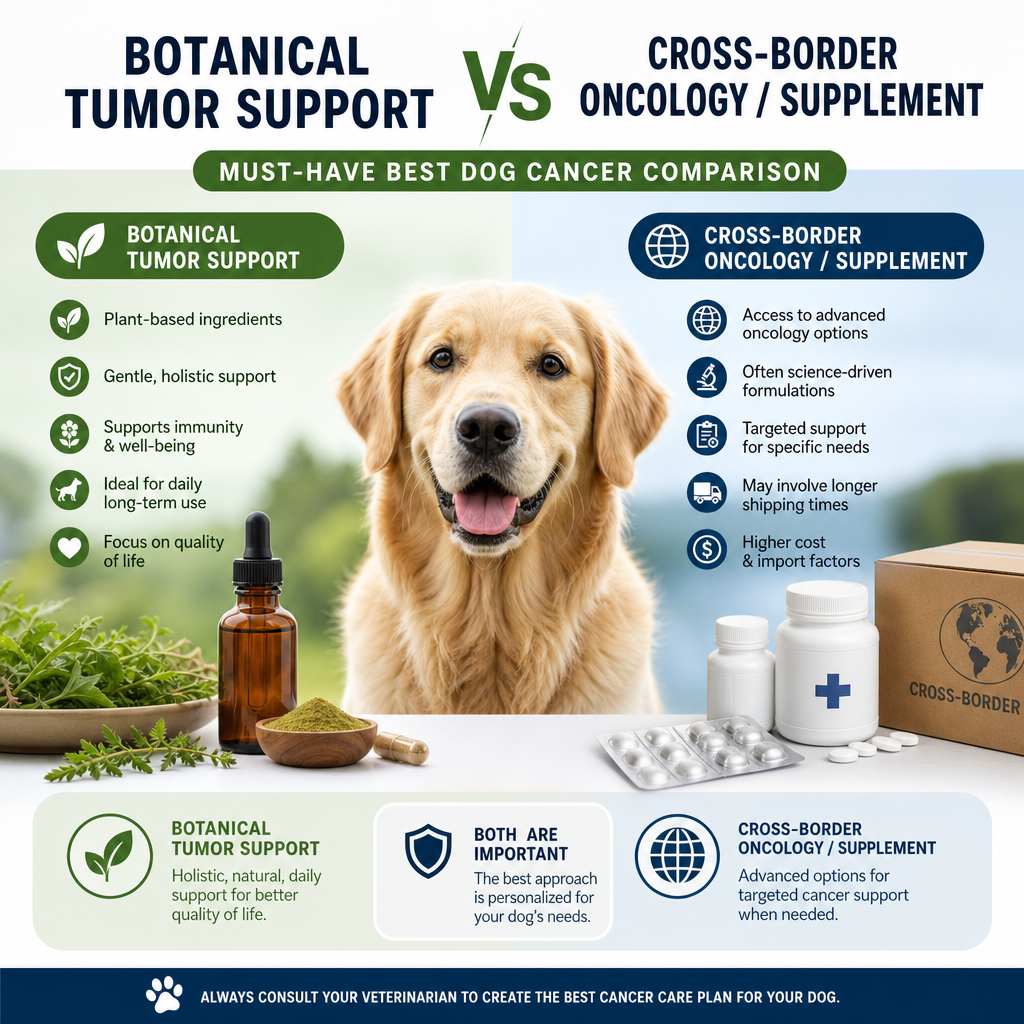
Botanical tumor support vs Cross-border oncology / supplement is an important comparison for dog owners exploring complementary care after a cancer diagnosis. Although supplements may play a supportive role, they should never replace veterinary evaluation, diagnostic testing, surgery, chemotherapy, radiation, or other evidence-based treatments. The right choice depends on the dog’s cancer type, overall health, current medications, and treatment goals.
When families compare botanical tumor support vs Cross-border oncology / supplement options, the first step is to separate marketing language from real clinical value. Some products are designed to support appetite, digestion, inflammation, liver function, or quality of life. Others are sold with bold claims that sound impressive but are not backed by strong veterinary evidence. A careful review of the label, the manufacturer, and the intended use can help owners avoid expensive mistakes while keeping treatment safe.
- 犬の癌サプリメント比較の理解
- Botanical tumor support: Potential advantages and limitations
- Cross-border oncology / supplement considerations
- What dog owners should know before choosing any product
- Key safety issues when comparing supplements
- How to evaluate evidence and product quality
- Questions to ask your veterinarian before starting a supplement
- Choosing a responsible supportive-care plan
犬の癌サプリメント比較の理解

A dog cancer supplement comparison should begin with a clear distinction between supportive products and cancer-directed medical care. Botanical tumor support vs Cross-border oncology / supplement choices may look similar on a product page, but they can serve very different purposes. Botanical products commonly contain plant-derived ingredients selected for antioxidant, anti-inflammatory, immune-supporting, or general wellness purposes. Examples may include medicinal mushrooms, turmeric compounds, milk thistle, green tea extracts, or other herbs. In some cases, these ingredients are used to support comfort during a difficult treatment period rather than to treat the tumor itself.
Cross-border oncology / supplement products may refer to supplements purchased from another country, imported protocols, or products marketed alongside international cancer-treatment approaches. These products can vary considerably in formulation, manufacturing standards, labeling, dosage instructions, and available safety data. The phrase “cross-border oncology” does not automatically indicate superior care or higher quality. It often describes where a product or treatment originates rather than proving how effective it is.
The most useful comparison focuses on evidence, transparency, safety, veterinary oversight, and compatibility with the dog’s primary treatment plan. A product may be helpful for a specific symptom, but that does not mean it is appropriate for every dog or every cancer type. For owners who also want to understand broader cancer warning signs, this article from Dog Cancer Symptoms: Helpful Early Tumor Signs can help put supportive care in context.
It is also helpful to remember that a supplement choice is rarely made in isolation. Most dogs with cancer are already receiving pain relief, anti-nausea medication, nutrition support, or other therapies. That means the safest and most useful plan is the one that fits into the existing medical schedule without creating avoidable risk.
In practice, botanical tumor support vs Cross-border oncology / supplement decisions often come down to the same core questions: What is the goal, what is the evidence, and how will the product affect the dog’s current care plan? Keeping those questions front and center helps owners avoid confusion and focus on useful support.
Botanical tumor support: Potential advantages and limitations
Botanical products may offer certain practical advantages. They are often designed to support appetite, digestion, inflammation management, liver function, or general resilience during illness. Some ingredients have been studied in laboratory settings or in limited animal research. For example, certain mushroom extracts and plant compounds have shown immune-modulating or anti-inflammatory activity in preliminary studies.
Some owners choose botanical support because they want something that feels gentler than conventional medicine. That preference is understandable, especially when a dog is already dealing with side effects from cancer care. In a well-designed plan, botanical tumor support may be used to support comfort, maintain interest in food, or help a dog cope with chronic inflammation. The goal should be support, not substitution.
However, laboratory findings do not prove that a supplement can shrink a tumor or extend survival in dogs. A product that affects cancer cells in a test tube may not reach the same concentration in the body. Absorption, metabolism, tumor biology, and interactions with other medications can significantly change the outcome. A promising ingredient is not the same as a clinically effective treatment.
Quality is another important consideration. Botanical products can differ by species, plant part, extraction method, concentration, and batch. A label may list an herb without identifying the amount of its active compounds. Products may also contain contaminants, pesticides, heavy metals, or ingredients that are not clearly disclosed. Choosing a company that provides independent testing and a certificate of analysis can reduce, but not eliminate, these concerns.
Botanical tumor support can be a useful term only when it describes realistic supportive care. It is not the same as a proven cancer cure, and it should not be presented that way. In practice, the best botanical tumor support for dogs is usually part of a monitored plan that respects the veterinarian’s treatment schedule. When owners keep expectations grounded, they are less likely to be disappointed or misled by exaggerated promises.
In many cases, botanical products make the most sense when the main objective is quality of life. That may include appetite support during chemotherapy, gastrointestinal comfort after medication changes, or additional nutritional support in a dog that is losing weight. These are meaningful goals, but they are different from claiming a direct tumor response.
Botanical tumor support vs Cross-border oncology / supplement comparisons also benefit from a simple reality check: supportive care can improve comfort, but it should not be expected to replace a structured oncology plan. That distinction keeps decisions practical and safer for the dog.
Cross-border oncology / supplement considerations
Cross-border oncology / supplement options may appeal to owners seeking treatments unavailable locally or hoping to access specialized cancer protocols. In some cases, international veterinary centers may provide legitimate expertise, advanced imaging, clinical trials, or specialist consultations. The quality of care should be evaluated based on the credentials of the veterinary team, the diagnostic process, published evidence, and communication with the dog’s primary veterinarian—not simply the country of origin.
Imported supplements require additional caution. Regulations differ between countries, and a product approved or sold in one region may not meet the same standards elsewhere. Dosage instructions may be based on different body-weight calculations, and shipping conditions may affect stability. Customs delays, temperature exposure, unclear expiration dates, and limited customer support can complicate treatment.
Owners should also verify whether the product is intended for dogs, whether the manufacturer has established quality-control procedures, and whether the product contains substances that could interfere with chemotherapy, anesthesia, blood clotting, or liver metabolism. This matters even more when the dog has a complex diagnosis or is taking several prescriptions at the same time.
Another practical issue is consistency. A supplement that arrives in one batch may not be identical to the next batch, especially when the manufacturing process is not well documented. When care depends on predictable dosing, especially during active oncology treatment, predictability matters as much as ingredient choice.
If you are comparing supportive options alongside tumor care, it can help to review broader cancer biology as well. The overview at 犬の癌生物学 有益な免疫の不均衡と腫瘍因子 explains why cancer behavior, immune response, and treatment response can vary so much from one dog to another.
For some families, cross-border oncology / supplement research starts with the hope of finding a better answer than they received locally. That hope is understandable. Still, the best international option is not the one with the most dramatic online language; it is the one that shows clear diagnostic reasoning, realistic goals, and a credible plan for follow-up care.
When you compare botanical tumor support vs Cross-border oncology / supplement products, pay attention to who is providing the oversight. A responsive veterinary team matters more than an impressive origin story, especially when safety and follow-up monitoring are involved.
What dog owners should know before choosing any product
Dog owners often look for the fastest way to help, but a smart decision begins with asking what problem the product is supposed to solve. Is the goal to reduce nausea, improve appetite, support liver function, ease inflammation, or address anxiety during treatment? A supplement can only be judged properly when the goal is clear.
It is also useful to match the supportive product to the dog’s life stage. A senior dog may need a different plan than a young dog with a newly diagnosed tumor. If aging is part of the picture, the article on Senior Dog Cancer: Important Tumor Risks, Aging Dog Health provides additional background on the special needs of older pets.
Timing matters too. A product that seems harmless on its own may become risky if started right before surgery or during a chemotherapy cycle. For that reason, veterinary teams often prefer to review the exact ingredient list before making a recommendation. A dog that is stable today may react differently once a new medication, diet change, or treatment phase begins.
It also helps to think in terms of daily function. Is the dog eating normally? Is there vomiting, diarrhea, constipation, panting, fatigue, or a new limp? Supplements are often considered when a dog needs support with these real-world symptoms. In that sense, the right choice is less about trendiness and more about whether the product has a sensible place in the dog’s current routine.
Owners comparing botanical tumor support vs Cross-border oncology / supplement choices should also remember that the best option may simply be the most practical one. A product that is affordable, consistent, and easy to monitor is often safer than a more complicated plan that cannot be followed reliably.
Key safety issues when comparing supplements
The phrase “natural” does not mean risk-free. Some herbs can cause vomiting, diarrhea, sedation, liver injury, kidney stress, or changes in blood pressure. Others may affect platelet function and increase bleeding risk during surgery. Supplements with antioxidant activity may theoretically interfere with certain treatments that rely partly on oxidative mechanisms, although the significance varies by product and therapy.
Drug interactions are especially important. A supplement may alter the absorption or breakdown of chemotherapy drugs, steroids, pain medications, antibiotics, or seizure medicines. Even common ingredients can become problematic when combined with several prescriptions or used in a dog with liver or kidney disease.
Before adding any product, provide the veterinarian with the complete label, ingredient list, concentration, suggested dose, and manufacturer information. The veterinarian may recommend bloodwork, a lower starting dose, or avoiding the product entirely during a particular phase of treatment.
Botanical tumor support deserves the same safety review as any other intervention. When owners use botanical tumor support with clear dosing and close monitoring, the risk of accidental harm is lower than when they add multiple products at once. That same caution applies to any imported formula in the cross-border oncology / supplement market.
There is also a difference between a side effect and a coincidence. If a dog develops lethargy, poor appetite, or digestive upset after starting a new product, the supplement should be considered as a possible cause rather than dismissed immediately. Careful observation helps the veterinary team decide whether to pause, adjust, or replace the product.
In short, botanical tumor support vs Cross-border oncology / supplement options should be screened for the same red flags: unclear labels, vague promises, no testing data, and no veterinary guidance. Safety remains the first filter, no matter how attractive the marketing looks.
How to evaluate evidence and product quality
A careful dog cancer supplement comparison should ask several practical questions:
- Has the product been studied in dogs, or only in laboratory cell cultures?
- Are the studies peer-reviewed and independent?
- Does the manufacturer disclose exact ingredient amounts?
- Is there batch testing for identity, purity, and contaminants?
- Does the product have a clear expiration date and storage guidance?
- Is the company transparent about adverse events and contraindications?
- Can a veterinarian contact the manufacturer with technical questions?
- Is the product being marketed as supportive care or as a cure?
Claims that promise to dissolve tumors, replace chemotherapy, or work for every type of cancer should be treated as warning signs. Cancer is not one disease, and a supplement cannot be assumed to work equally for lymphoma, mast cell tumors, osteosarcoma, hemangiosarcoma, or other cancers.
Owners who want to read reliable safety information can also review the メルク獣医マニュアル, a widely used clinical reference for veterinary topics and medication concerns. Primary reference sources like this are useful because they help owners check whether claims are biologically plausible before spending money or changing treatment.
When evaluating botanical tumor support, it helps to look beyond marketing language. The best products usually offer transparent sourcing, meaningful dosage information, and responsible labeling. The same is true for any cross-border oncology / supplement product, where translation issues and regional regulation differences can make labels harder to trust.
Evidence quality should also be weighed by outcome. A study that measures appetite, body condition, or tolerated dose is not the same as a study that proves tumor control. Supportive care studies can still be useful, but they should not be confused with cancer-treatment trials.
The strongest way to compare botanical tumor support vs Cross-border oncology / supplement brands is to look for the same things you would expect from any medical product: clarity, consistency, and accountability.
Questions to ask your veterinarian before starting a supplement
Before using botanical tumor support or any imported option, ask the veterinary team these simple but important questions:
- Does this product fit my dog’s diagnosis and current treatment plan?
- Could it interact with surgery, chemotherapy, anesthesia, or pain relief?
- 自宅で注意すべき副作用は何ですか?
- Should the product be paused before procedures?
- Do you recommend bloodwork or follow-up monitoring?
- Is there a safer alternative with better evidence?
These questions help turn a vague supplement choice into a practical medical decision. They also make it easier to compare different brands without getting distracted by aggressive advertising or one-size-fits-all claims.
It can help to bring a photo of the packaging, the front label, the supplement facts panel, and any dosing instructions. If the dog has already taken the product, note the start date and any changes in behavior, stool quality, appetite, or energy. Those details may be more useful than a general description like “it seemed helpful.”
When discussing botanical tumor support vs Cross-border oncology / supplement options with your veterinarian, be direct about your goals. A clear conversation usually leads to clearer recommendations and fewer surprises.
Choosing a responsible supportive-care plan
The safest approach is usually an integrated plan. A veterinary oncologist can explain the diagnosis, stage the disease, outline realistic treatment options, and identify supportive measures that fit the dog’s condition. A supplement may be considered when its ingredients, dosage, and potential interactions are understood.
Supportive care may also include pain control, nausea management, nutritional support, hydration, dental care, mobility assistance, and monitoring of quality of life. These measures often have clearer immediate benefits than an unproven product. Keeping a record of appetite, energy, vomiting, stool quality, pain, medication use, and daily enjoyment can help the veterinary team judge whether a supplement is helping or causing harm.
Ultimately, botanical tumor support vs Cross-border oncology / supplement should not be framed as a simple choice between “natural” and “advanced” care. Both categories include products and services with widely varying levels of evidence and oversight. The strongest decision is based on verified quality, honest claims, veterinary supervision, and compatibility with the dog’s established cancer treatment. Supplements may contribute to comfort or general support, but they should remain one carefully evaluated part of a comprehensive oncology plan.
For dogs with newly recognized tumor concerns, the article on American Eskimo Dog Cancer Risks: Essential Early Tumor Signs offers another reminder of why early veterinary assessment matters before any supplement is started.
In short, botanical tumor support can be helpful when it is thoughtful, transparent, and supervised, while cross-border oncology / supplement options should be judged on evidence rather than geography. Used carefully, both may have a place in a broader care plan, but neither should replace proven cancer treatment or timely veterinary guidance. The most positive outcome usually comes from making choices that are simple, documented, and aligned with the veterinarian’s plan.
Dog owners who stay patient, ask questions, and verify claims are more likely to choose a product that truly supports their pet. That careful approach is especially valuable when weighing botanical tumor support vs Cross-border oncology / supplement options, because the wrong decision can waste money, delay effective treatment, or create avoidable side effects. A calm, evidence-based plan is almost always the safest path forward.
As a final reminder, botanical tumor support vs Cross-border oncology / supplement decisions should always be made with the dog’s full medical picture in mind. When the product fits the diagnosis, the dosing is clear, and the evidence is reasonable, supportive care can play a helpful role without overshadowing proven treatment.