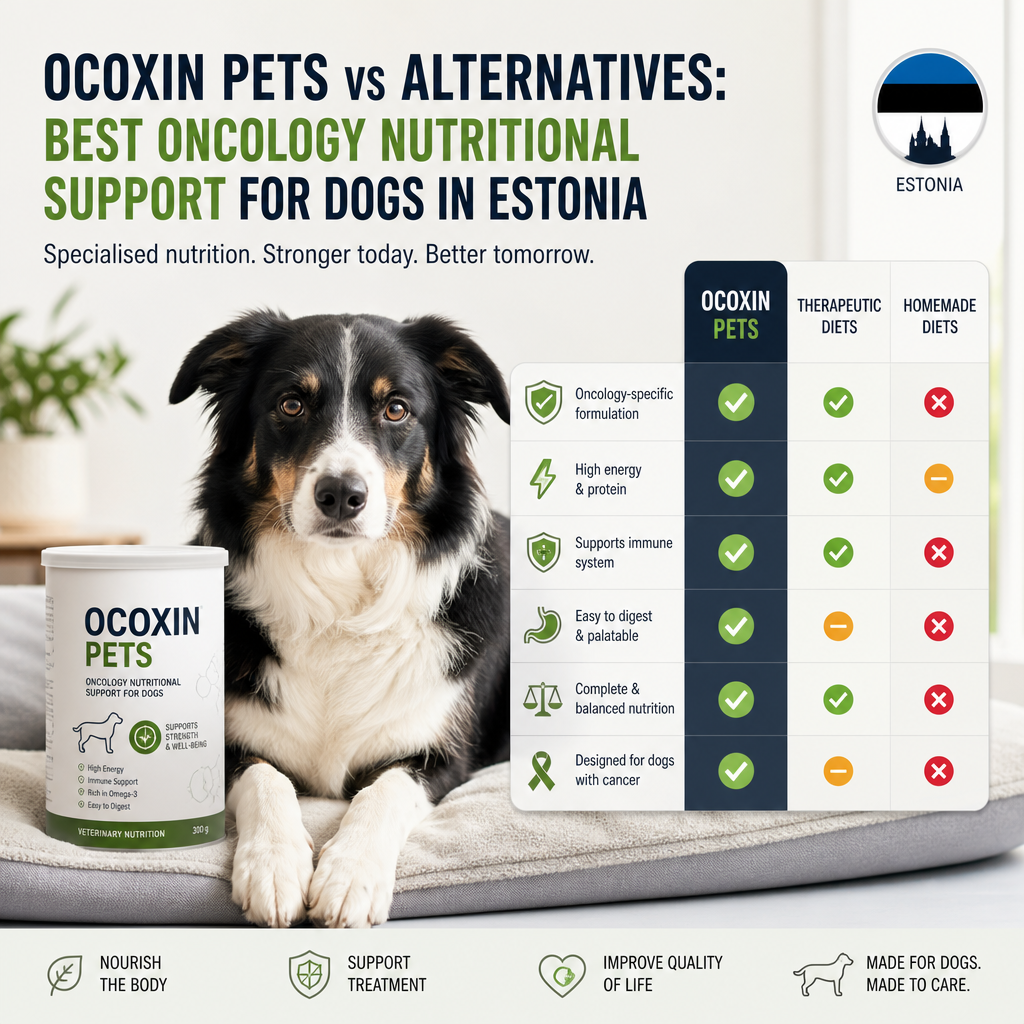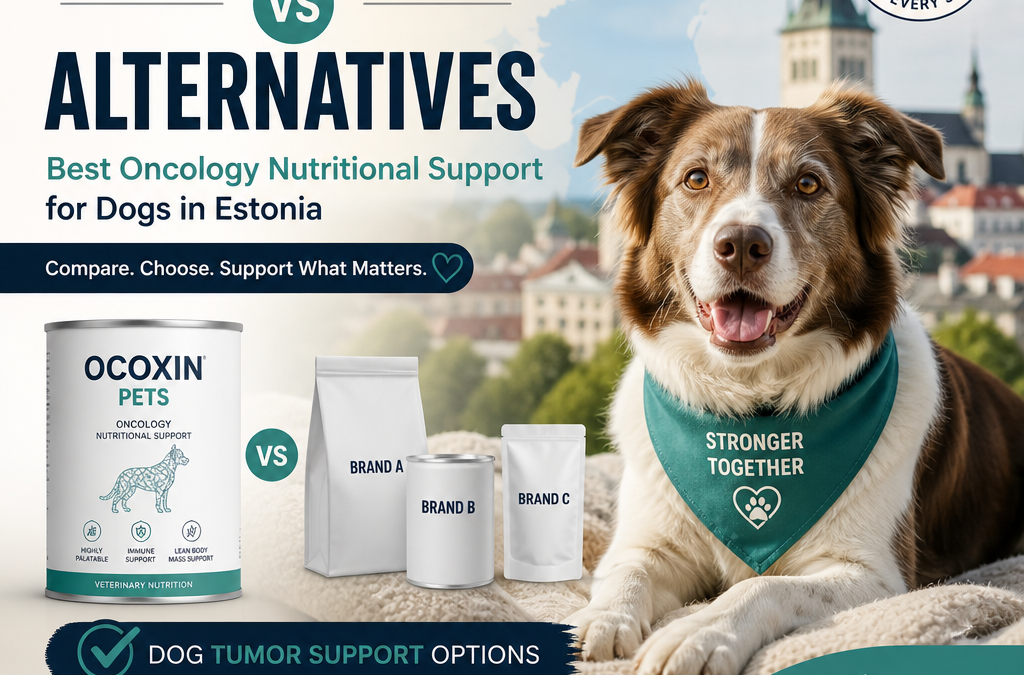
Ocoxin Pets vs alternatives is an important comparison for Estonian dog owners looking for supportive care during cancer treatment. A diagnosis of cancer can be overwhelming, but nutrition and carefully selected supplements may help maintain appetite, body condition, energy, and quality of life. These products should complement—not replace—veterinary diagnosis and treatment. The best choice depends on the dog’s tumor type, treatment plan, blood results, digestive health, and individual nutritional needs.
For many families, Ocoxin Pets vs alternatives becomes a practical question: should you choose a broad supportive formula, a therapeutic diet, or a more targeted supplement? The answer depends on the dog’s symptoms, current medications, and how well the dog is eating day to day. It also depends on whether the main goal is to support recovery, reduce treatment-related strain, or simply keep the dog comfortable and eating as normally as possible.
Why oncology nutritional support matters for dogs

Cancer can affect a dog’s body in several ways. Tumors may increase energy demands, alter metabolism, reduce appetite, or cause inflammation. Surgery, chemotherapy, and radiation therapy can also lead to nausea, fatigue, mouth discomfort, diarrhea, or temporary changes in eating habits. In some dogs, the first signs that something is wrong are subtle changes such as leaving food behind, drinking less, or losing muscle over the back and hips.
Maintaining adequate nutrition is therefore a central part of supportive oncology care. A dog that eats well and preserves muscle mass may tolerate treatment more effectively and recover better after procedures. Nutritional support can include a complete diet, appetite management, hydration, calorie-dense foods, omega-3 fatty acids, digestive support, and selected veterinary supplements. When appetite is poor, even a small improvement in calorie intake can make a meaningful difference over time.
However, supplements are not automatically harmless. Some ingredients can interfere with medications, affect blood clotting, influence liver enzymes, or place additional demands on the kidneys. Veterinary supervision is especially important when a dog is receiving chemotherapy, corticosteroids, pain medication, or anticoagulants. That is one reason Ocoxin Pets vs alternatives should always be reviewed in the context of the dog’s full medical plan.
For this reason, Ocoxin Pets vs alternatives should always be evaluated alongside the dog’s medical history, not as a quick product comparison alone. In some cases, the best support is simply making sure the dog eats enough of the right food. In others, a carefully chosen supplement can help bridge a gap while the veterinarian manages the disease and its side effects.
Ocoxin Pets: what it is designed to provide
Ocoxin Pets is a veterinary nutritional supplement commonly used as supportive care for dogs and cats with serious illnesses, including cancer. Its formulation is intended to provide a combination of nutritional and antioxidant ingredients that may support appetite, general condition, immune function, and recovery. The product is usually considered part of a broader care plan rather than a stand-alone solution.
The product is often considered when a dog is losing weight, eating poorly, or experiencing reduced vitality during treatment. Its liquid format may be useful for some animals that struggle to swallow tablets. Nevertheless, acceptance varies between dogs, and the appropriate amount should be determined according to the product instructions and veterinary advice. Some dogs take liquids more easily when mixed with a small amount of food, while others prefer a separate dose to avoid changing the smell or taste of the meal.
The main advantage of a combined formula is convenience. Instead of giving several separate products, owners may be able to provide one supplement containing multiple supportive ingredients. The limitation is that a combination product may not be ideal for every patient. A dog with kidney disease, diabetes, gastrointestinal sensitivity, or a specific medication plan may require a more targeted approach. In those cases, Ocoxin Pets vs alternatives may come down to whether the dog needs a broad supportive product or a more precise intervention.
That is why Ocoxin Pets vs alternatives should not be framed as a simple “better or worse” choice. A broader formula may help one patient, while another may do better with a prescription diet or a single nutrient chosen for a specific need. The most appropriate option is usually the one that fits the dog’s clinical picture, the owner’s ability to administer it consistently, and the veterinarian’s overall treatment strategy.
Ocoxin Pets vs alternatives: key differences
When comparing Ocoxin Pets vs alternatives, it is useful to evaluate products according to their purpose rather than focusing only on brand names or ingredient counts. No supplement has been proven to cure cancer, and nutritional support should not be presented as an alternative to surgery, chemotherapy, radiation, or other evidence-based veterinary treatment. Supportive care is valuable because it helps the dog cope better with the illness and treatment, not because it replaces them.
The most helpful comparison usually comes down to three questions: does the dog need complete nutritional support, symptom relief, or targeted supplementation? Once that is clear, choosing between Ocoxin Pets vs alternatives becomes much easier. The answer may also change over time. A dog that needs appetite support during chemotherapy might later need a more calorie-dense diet during recovery, or a simpler plan if digestion becomes sensitive.
Complete veterinary cancer diets
A therapeutic veterinary diet is often the foundation of oncology nutritional support. These diets are formulated to provide balanced protein, energy, vitamins, and minerals while taking into account the nutritional demands of illness. Some are highly palatable and calorie-dense, which can help dogs that eat only small portions. They may also be easier to use consistently because the nutrient profile is already balanced for long-term feeding.
A complete diet may be more important than an additional supplement if the dog is underweight or eating an unbalanced homemade meal plan. The veterinarian may recommend a specific food based on the tumor type, digestive tolerance, kidney function, and treatment goals. For example, a dog with a poor appetite may need a food that is richer and easier to chew, while a dog with digestive issues may need a simpler formula with high digestibility.
In discussions about Ocoxin Pets vs alternatives, diet often matters more than the supplement itself. If the dog will not eat enough calories, even a good product cannot fully compensate for the deficit. A supportive diet can be the most practical first step, especially when the goal is to preserve muscle and prevent further weight loss.
オメガ-3脂肪酸サプリメント
Fish oil containing EPA and DHA is another commonly discussed option. These fatty acids may support normal inflammatory responses and help maintain skin, coat, and general health. They also add calories, which can be useful for some underweight dogs. Many veterinary teams consider omega-3s because they are familiar, widely available, and easy to integrate into a larger care plan.
Quality and dosage matter. Products should be purified, stored correctly, and selected for veterinary use. Excessive amounts may cause digestive upset or increase bleeding risk, particularly before surgery or when combined with certain medicines. The VCA Hospitals guide to omega-3 fatty acids for pets is a useful overview for owners who want to understand how these supplements are commonly used.
For some dogs, omega-3s may be a more targeted choice than a broad product. For others, Ocoxin Pets vs alternatives is not an either-or decision at all, because the veterinarian may recommend both a therapeutic diet and a carefully dosed fatty acid supplement. The key is to avoid assuming that “more supplements” automatically means better support.
Appetite and digestive support
Some dogs need help with nausea, reflux, constipation, diarrhea, or appetite loss rather than a broad nutritional supplement. In these cases, veterinary anti-nausea medication, appetite stimulants, probiotics, or a temporary change in diet may provide more practical benefit. When the stomach is unsettled, a dog may reject food simply because eating causes discomfort, so symptom control can be the first priority.
Digestive support should be individualized. A probiotic that suits one dog may worsen gas or diarrhea in another, and a high-fat product may be inappropriate for dogs with pancreatitis or gastrointestinal disease. This is where Ocoxin Pets vs alternatives must be judged carefully, because a product that seems supportive on paper may be less useful than a medicine that addresses the real problem.
Owners sometimes focus on supplements when the real issue is pain, nausea, or a treatment side effect that requires veterinary management. Addressing those issues can restore appetite more effectively than changing supplements alone.
Single-ingredient supplements
Single-ingredient products, such as specific vitamins, minerals, amino acids, or medicinal mushrooms, may appear attractive because they allow more precise dosing. However, targeted supplementation is safest when a deficiency or clear clinical need has been identified. Adding multiple products without coordination can result in excessive intake or interactions. This is especially important when the dog already receives a prescription diet that contains complete nutrition.
In practical terms, Ocoxin Pets vs alternatives may also mean choosing fewer products overall. A focused plan often works better than stacking several supplements without a clear goal. If the dog is already eating a good diet and only needs mild support, the simplest option is often the easiest to maintain and monitor.
Supportive care goals in real life
In real-world oncology care, the best option is usually the one that the dog accepts and the owner can give consistently. Ocoxin Pets vs alternatives should therefore be viewed through the lens of daily use: does the dog like the taste, does the formula fit the schedule, and does it complement the prescribed treatment plan? A theoretically ideal supplement has little value if the dog refuses it or if it complicates feeding.
It is also helpful to distinguish between “nutritional support” and “treatment support.” Some products are designed to help maintain body condition, while others are intended to ease symptoms or support digestion. Both can matter, but they are not interchangeable. Understanding that difference makes Ocoxin Pets vs alternatives much easier to navigate.
Dog tumor support options available in Estonia
Dog tumor support options in Estonia include veterinary oncology consultations, nutritional assessment, prescription diets, symptom-control medicines, and carefully selected supplements. Owners can seek guidance from their regular veterinarian or a veterinary clinic with experience in oncology. Estonia’s pet pharmacies and veterinary practices may stock several supportive products, but availability can change, and imported supplements may have different labeling or dosage recommendations.
When buying a product, check that it is intended for dogs, has clear ingredient and dosing information, and comes from a reliable supplier. Avoid products marketed with promises to destroy tumors, replace chemotherapy, or guarantee remission. Such claims are not a substitute for clinical evidence and may delay effective treatment. A cautious, evidence-based approach is especially important when the dog is already weakened by illness.
For readers comparing options across Europe, the internal resource Ocoxin Petsの代替品:イギリスで買える手頃な犬用腫瘍サプリメントベスト7 offers another practical look at supportive choices and how owners can assess them. This can be especially helpful if you are comparing ingredient profiles and delivery formats.
Estonian owners may also find it helpful to discuss product sourcing with their veterinary clinic. Imported supplements can vary in concentration and serving size, and the same name does not always mean the same formula in every country. That detail matters when comparing Ocoxin Pets vs alternatives because the real question is often how the product performs in the dog’s actual care routine.
How to choose the right nutritional support
The first step is to establish the dog’s current nutritional status. The veterinarian may assess body weight, muscle condition, appetite, hydration, blood work, and gastrointestinal signs. A dog can have a normal body weight while still losing muscle, so monitoring body condition alone is not always enough. Over time, changes in muscle can affect strength, recovery, and overall resilience.
Owners should also record how much the dog eats, any vomiting or diarrhea, changes in drinking, stool quality, and daily energy. This information helps the veterinary team determine whether the issue is insufficient calories, treatment side effects, pain, nausea, or disease progression. Even a simple feeding diary can make the Ocoxin Pets vs alternatives decision more informed and less guesswork-based.
Introduce only one new supplement at a time whenever possible. This makes it easier to identify both benefits and adverse reactions. Stop and contact the veterinarian if the dog develops persistent vomiting, severe diarrhea, unusual bruising, marked lethargy, or a sudden refusal to eat. Those signs may indicate a product mismatch or a separate medical concern that needs prompt attention.
If the dog is already receiving oncology care, ask whether the current plan needs more calories, a different protein level, or simpler digestibility rather than another supplement. In many cases, that small adjustment matters more than switching from one branded product to another, including Ocoxin Pets vs alternatives. A dog that eats a little more of the right food may improve faster than a dog given several products that do not fit its needs.
It is also worth asking whether the dog’s diet is already complete. If the answer is yes, an extra supplement should have a clear purpose. If the answer is no, then fixing the diet may be more important than adding a supportive product. This step alone can change the direction of the whole nutrition plan.
Practical decision points for owners
When comparing Ocoxin Pets vs alternatives, it can help to think in practical terms: can the dog eat enough on its own, does it need help managing symptoms, and is the chosen product easy to give every day? The most effective plan is usually the one that combines clinical logic with everyday realism. A good recommendation that cannot be followed consistently is less useful than a simpler plan that the dog tolerates well.
Owners should also consider budget and availability. If a product is difficult to find in Estonia or too expensive to maintain long term, it may not be the best choice even if its ingredients look appealing. Consistency matters more than novelty in most supportive care plans.
獣医と話し合うべき質問
Before starting Ocoxin Pets or an alternative, ask whether the product is suitable for the dog’s tumor type and current medications. It is also worth discussing whether the dog needs additional calories, a prescription diet, omega-3 supplementation, digestive support, or treatment for nausea and pain. These questions help prevent unnecessary product overlap and reduce the risk of interactions.
Ask how success will be measured. Useful goals may include stable body weight, improved appetite, better stool quality, or maintaining normal activity—not simply the expectation that a supplement will shrink a tumor. Regular reassessment is essential because nutritional needs can change during surgery, chemotherapy, recovery, or palliative care. A product that works early in treatment may need to be adjusted later as symptoms shift.
It may also help to ask whether the dog should avoid specific ingredients because of bleeding risk, kidney concerns, or digestive sensitivity. That conversation can make Ocoxin Pets vs alternatives a safer and more personalized decision. If you are uncertain, ask the veterinarian to rank the options in order of importance so the plan stays simple and manageable.
Owners can also ask whether the dog’s medications affect appetite or digestion. Sometimes the best supportive care is not a new supplement but a small change in timing, feeding frequency, or medication scheduling. Those details can improve comfort more than switching products.
サポートケアへのバランスの取れたアプローチ
The most effective oncology nutritional support is usually part of a broader plan. A complete and palatable diet, adequate hydration, symptom control, regular veterinary monitoring, and emotional comfort all contribute to a dog’s quality of life. Ocoxin Pets may be a reasonable option for some patients, while others may benefit more from a therapeutic diet, a specific nutrient, or medical treatment for an underlying problem. In many cases, the best result comes from combining a few well-chosen measures rather than relying on one product alone.
Comparing Ocoxin Pets vs alternatives should therefore focus on safety, clinical suitability, nutritional completeness, product quality, and the dog’s response over time. With individualized veterinary guidance, owners in Estonia can make informed decisions and provide supportive care that complements—not competes with—their dog’s cancer treatment. Monitoring the dog’s appetite, stool quality, weight, and comfort will tell you far more than a label ever can.
In the end, the best choice is the one that supports eating, comfort, and stability while fitting the dog’s diagnosis and treatment plan. That is the most practical way to decide between Ocoxin Pets vs alternatives for a dog with tumors in Estonia. When the plan is guided by the veterinarian and adjusted as the dog changes, supportive care becomes more effective, more predictable, and easier for the family to follow.
If you want a simple final rule, it is this: choose the option that helps the dog eat, keeps the plan realistic, and fits the medical picture. For many families, that is the heart of Ocoxin Pets vs alternatives and the key to making supportive care truly useful.