
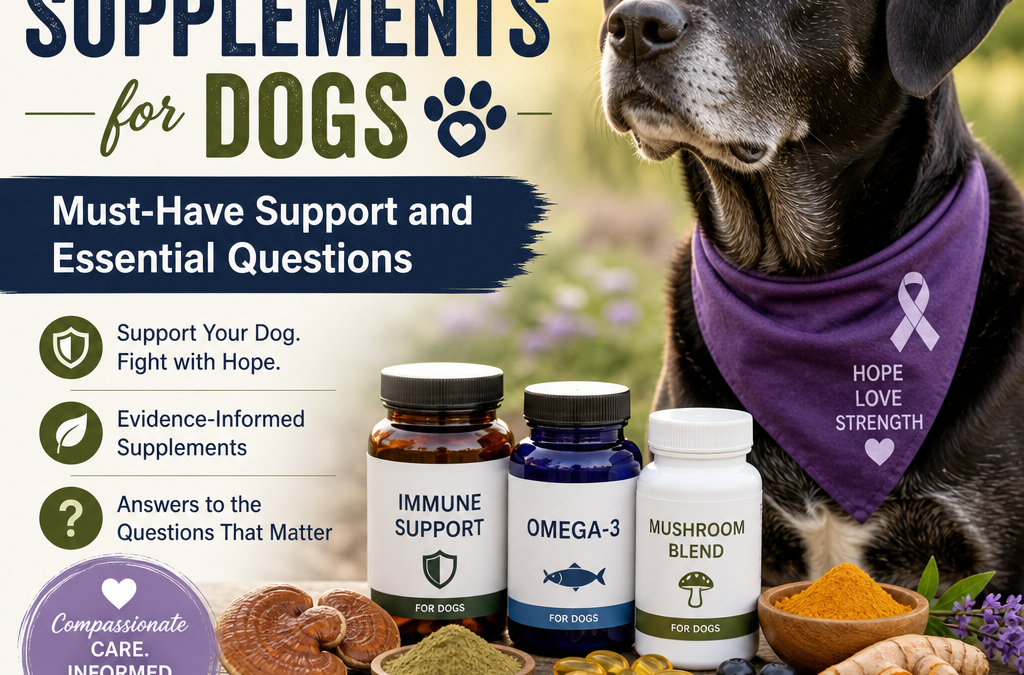
Suplementy na hemangiosarkom dla psów mogą zapewnić korzyści żywieniowe i wspierające podczas trudnej drogi przez raka, ale nigdy nie powinny zastępować leczenia weterynaryjnego. Hemangiosarkom to agresywny nowotwór komórek naczyń krwionośnych, który najczęściej dotyka śledziony, serca, wątroby i skóry. Ponieważ ta choroba może szybko postępować i powodować zagrażające życiu krwawienia, każdy suplement powinien być oceniany w kontekście diagnozy psa, leków, wyników laboratoryjnych i ogólnych celów opieki.
Zrozumienie naczyniakomięsaka u psów
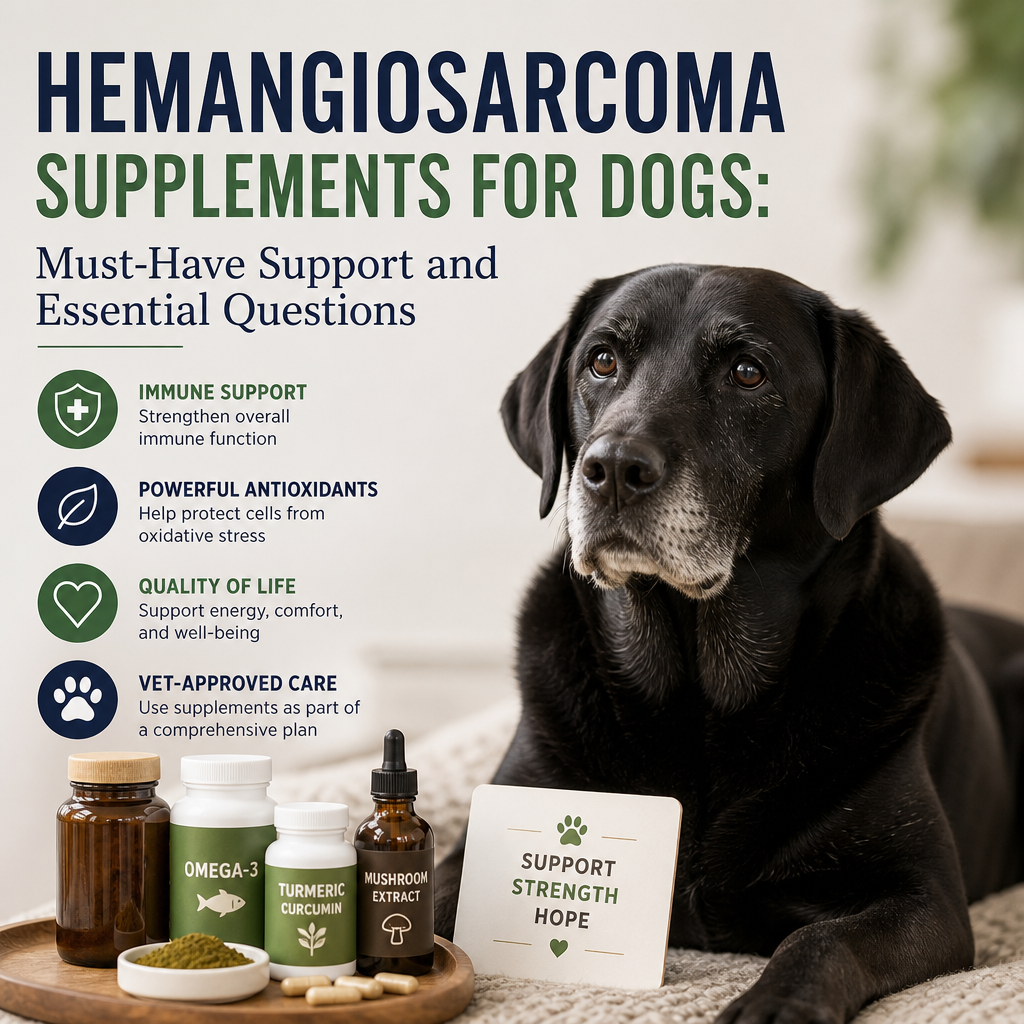
Suplementy na hemangiosarkom dla psów często omawiane są po diagnozie, ale najpierw warto zrozumieć samą chorobę. Hemangiosarkom często rozwija się w ciszy. Niektóre psy wykazują niewiele oznak, aż do pęknięcia guza, podczas gdy inne stopniowo rozwijają osłabienie, zmniejszony apetyt, utratę wagi, blade dziąsła, powiększenie brzucha lub nietolerancję wysiłku. Krwawiący guz może powodować omdlenia, szybkie oddychanie, skrajną letargię lub wstrząs i wymaga pilnej pomocy weterynaryjnej.
Leczenie może obejmować chirurgię, chemioterapię, zarządzanie bólem, wsparcie żywieniowe i regularne monitorowanie. Suplementy nie mogą usunąć guza ani niezawodnie zapobiec pęknięciu, ale starannie dobrane produkty mogą wspierać apetyt, trawienie, mobilność lub ogólne samopoczucie. Odpowiednie podejście zależy od tego, czy pies dochodzi do siebie po operacji, otrzymuje chemioterapię, żyje z zaawansowaną chorobą, czy otrzymuje opiekę paliatywną.
Co suplementy mogą i czego nie mogą zrobić
Głównym celem suplementy na hemangiosarcoma dla psów jest opieka wspierająca. Suplement może pomóc w zaspokojeniu udokumentowanej luki żywieniowej lub wspierać konkretny system ciała, ale nie jest to lekarstwo. Twierdzenia, że produkt może rozpuścić guzy, zastąpić chemioterapię lub zagwarantować przeżycie, powinny być traktowane z ostrożnością.
Potencjalne obszary wsparcia obejmują:
- Utrzymaniu odpowiedniego spożycia kalorii i białka
- Wspieranie normalnego trawienia i jakości stolca
- Pomoc w zarządzaniu stanem zapalnym pod kierunkiem weterynarza
- Dostarczanie składników odżywczych zaangażowanych w funkcje immunologiczne i komórkowe
- Wspieranie komfortu stawów i mobilności
- Promowanie jakości życia podczas leczenia lub rekonwalescencji
Psy z rakiem mogą mieć zmieniające się potrzeby żywieniowe. Niektóre tracą na wadze z powodu słabego apetytu, nudności, bólu lub zwiększonych wymagań metabolicznych. Inne doświadczają problemów trawiennych z powodu chemioterapii lub leków. Ocena weterynaryjna jest niezbędna przed dodaniem kilku produktów jednocześnie, ponieważ niepotrzebne suplementy mogą powodować skutki uboczne lub utrudniać zidentyfikowanie źródła problemu.
Aby uzyskać szerszy obraz zachowania guzów u psów, zobacz Wzrost nowotworów u psów: Przydatne informacje o postępie nowotworów.
Powszechnie omawiane suplementy w wsparciu dla psów z rakiem
Kwasy tłuszczowe omega-3
Olej rybny zawierający EPA i DHA jest często omawiany jako część suplementów na raka u psów. Te kwasy tłuszczowe mogą wspierać zdrowie skóry, układu sercowo-naczyniowego oraz zrównoważoną odpowiedź zapalną. Mogą być również przydatne dla psów z słabą jakością sierści lub przewlekłym stanem zapalnym.
Jednak olej rybny nie jest odpowiedni dla każdego pacjenta. Wysokie dawki mogą powodować biegunkę, przyczyniać się do dodatkowych kalorii lub wpływać na funkcję płytek krwi i ryzyko krwawienia. Ponieważ hemangiosarcoma może wiązać się z wewnętrznym krwawieniem, weterynarz powinien określić, czy produkt omega-3 jest bezpieczny, szczególnie przed lub po operacji lub gdy pies przyjmuje leki przeciwzakrzepowe lub przeciwpłytkowe.
Składniki odżywcze przeciwutleniające
Witaminy C i E, selen oraz inne związki przeciwutleniające są czasami zawarte w formułach wspierających walkę z rakiem. Te składniki odżywcze odgrywają ważne role biologiczne, ale więcej nie zawsze oznacza lepiej. Suplementacja przeciwutleniaczami w wysokich dawkach może być niewłaściwa podczas niektórych protokołów chemioterapii lub radioterapii, w zależności od planu leczenia i rozumowania weterynarza.
Źródło, dawka i czas mają znaczenie. Nigdy nie zakładaj, że ludzki produkt przeciwutleniający jest bezpieczny dla psa. Niektóre produkty zawierają składniki takie jak ksylitol, nadmiar witaminy D, kofeinę lub mieszanki ziołowe, które mogą być toksyczne.
Grzyby lecznicze
Związki pochodzenia grzybowego, w tym produkty z ogonem indyka, są często reklamowane jako wsparcie dla układu odpornościowego. Wczesne badania wzbudziły zainteresowanie niektórymi polisacharydami grzybowymi, ale dowody u psów pozostają ograniczone, a jakość produktów znacznie się różni.
Suplementy grzybowe mogą wchodzić w interakcje z lekami lub wpływać na aktywność układu odpornościowego. Powinny być wybierane tylko z udziałem weterynarza, najlepiej z firmy, która zapewnia niezależne testy tożsamości, zanieczyszczeń i stężenia.
Wsparcie trawienne i apetyt
Probiotyki, prebiotyki, enzymy trawienne i zatwierdzone przez weterynarza wsparcie apetytu mogą pomóc niektórym psom doświadczającym zmian żołądkowo-jelitowych związanych z leczeniem. Probiotyki mogą być przydatne w przypadku niektórych form biegunki, chociaż nie są odpowiednie dla każdego pacjenta z osłabionym układem odpornościowym.
Pies, który odmawia jedzenia przez dłuższy czas, wymiotuje wielokrotnie lub rozwija uporczywą biegunkę, potrzebuje oceny weterynaryjnej, a nie tylko suplementu. Odwodnienie i niewystarczające odżywienie mogą szybko stać się poważne.
Wsparcie stawów i mobilności
Glukozamina, chondroityna, małże zielonowargowe lub inne produkty wspierające ruch mogą pomóc psom, które mają zapalenie stawów lub ograniczoną ruchomość niezwiązaną z samym guzem. Utrzymanie komfortowej mobilności może wspierać dobrostan emocjonalny i zachować rutynę.
Te produkty nie leczą hemangiosarcomy bezpośrednio, a niektóre mogą wpływać na krwawienie lub wchodzić w interakcje z lekami. Każdy suplement wspierający mobilność powinien być przeglądany w kontekście operacji, anemii, osłabienia i możliwego wewnętrznego krwawienia.
Pomocny kontekst z badań dotyczących rozprzestrzeniania się nowotworów
Kiedy właściciele próbują zrozumieć, jak rak zachowuje się w organizmie, może również pomóc przeczytanie o rozprzestrzenianiu się i postępie u psów. Tło to może ułatwić dyskusje na temat leczenia i wyjaśnić, dlaczego opieka wspierająca ma tak duże znaczenie. Przydatnym odniesieniem jest ten artykuł na przerzutach u psów i wgląd w rozprzestrzenianie się nowotworów.
Kluczowe pytania do zadania przed użyciem suplementu
Przed rozpoczęciem jakiegokolwiek produktu zapytaj zespół weterynaryjny:
- Jaki konkretny problem ma rozwiązać ten suplement?
- Czy jest bezpieczny w przypadku chemioterapii, operacji, sterydów, leków przeciwbólowych lub innych recept?
- Czy może zwiększyć ryzyko krwawienia?
- Czy należy go przerwać przed zabiegiem?
- Jaka dawka jest odpowiednia dla wagi psa i jego stanu zdrowia?
- Czy może to wpłynąć na funkcję wątroby lub nerek?
- Jak będziemy wiedzieć, czy to pomaga?
- Które objawy wymagają natychmiastowego zaprzestania stosowania lub opieki awaryjnej?
- Czy produkt ma wiarygodne testy jakości?
- Czy badania krwi powinny być sprawdzane przed lub w trakcie stosowania?
Posiadanie pełnej listy suplementów, leków, przysmaków i produktów dietetycznych pomaga weterynarzowi zidentyfikować potencjalne interakcje. Przynieś rzeczywiste opakowanie lub zdjęcie etykiety składników, gdy to możliwe.
Aby uzyskać informacje na temat specyficznych chorób dotyczących guzów śledziony i ryzyka krwawienia, zapoznaj się z tym zasobem weterynaryjnym na hemangiosarcoma z Instytutu Bakera Cornell.
Wybór bezpieczniejszych suplementów na raka u psów
Kontrola jakości jest szczególnie ważna, ponieważ suplementy nie są regulowane w dokładnie taki sam sposób jak leki na receptę. Szukaj przejrzystego oznakowania, jasnych ilości składników aktywnych, informacji o partii, dat ważności i niezależnych testów. Unikaj produktów, które obiecują dramatyczne zmniejszenie guza, używają niejasnych mieszanek własnych lub polegają głównie na świadectwach.
Nie łącz wielu produktów z nakładającymi się składnikami. Ogólny multiwitamina, mieszanka wspierająca raka, olej rybny i produkt ziołowy mogą łącznie dostarczać nadmierne ilości niektórych składników odżywczych. Suplementy dla ludzi mogą również zawierać niebezpieczne dodatki lub dawki.
Odżywianie powinno pozostać podstawą suplementy na hemangiosarcoma dla psów wsparcia. Najlepsza dieta to taka, którą pies będzie jadł, może strawić i tolerować w ramach planu leczenia. Weterynaryjny dietetyk może pomóc w opracowaniu odpowiedniego planu na utratę wagi, zmniejszony apetyt, choroby nerek, problemy żołądkowo-jelitowe lub inne współistniejące schorzenia.
Kiedy to możliwe, trzymaj plan prosty i śledź jedną zmianę na raz. Takie podejście ułatwia określenie, czy produkt pomaga, powoduje skutki uboczne, czy nie robi nic. Zmniejsza to również szansę, że pies z rakiem będzie przytłoczony zbyt dużą ilością tabletek, proszków lub olejów w ciągu jednego dnia.
Dlaczego suplementy hemangiosarcoma dla psów wymagają ścisłego monitorowania
Suplementy na hemangiosarkom dla psów powinny być zawsze ściśle monitorowane, ponieważ ta choroba może szybko się zmieniać. To, co wydaje się pomocne w jednym tygodniu, może stać się niepotrzebne lub niebezpieczne, jeśli apetyt psa, wyniki krwi lub plan leczenia się zmienią. Suplement, który jest dobrze tolerowany na początku, może również wymagać dostosowania, jeśli zaplanowano operację lub jeśli anemia się pogarsza.
Weterynarze mogą zalecać ponowne sprawdzenie wyników krwi, wagi ciała, nawodnienia i zmian objawów w regularnych odstępach czasu. Pomaga to określić, czy wybrany plan wsparcia jest nadal odpowiedni. Zmniejsza to również szansę, że suplement zamaskuje problem, który wymaga uwagi medycznej.
Monitorowanie jakości życia
Najważniejszym wskaźnikiem opieki wspierającej jest często jakość życia. Monitoruj apetyt, spożycie wody, energię, oddychanie, komfort, wypróżnienia, wymioty, mobilność i radość z ulubionych aktywności. Nagła słabość, blada lub biała dziąsła, obrzęk brzucha, omdlenie, trudności w oddychaniu lub ciężka letargia mogą wskazywać na krwawienie lub inną sytuację awaryjną.
Suplementy powinny być wstrzymane, a weterynarz powinien być skontaktowany, jeśli pies rozwija nasilające się wymioty, biegunkę, nietypowe siniaki, zwiększone krwawienie, silne swędzenie, zmiany w oddychaniu lub nagły spadek zachowania.
Przemyślany plan łączy oparte na dowodach leczenie nowotworów, odpowiednie odżywianie, staranne monitorowanie objawów i realistyczne oczekiwania. Suplementy na hemangiosarcoma dla psów mogą odgrywać rolę w zapewnieniu komfortu i ogólnego wsparcia, ale najlepiej działają, gdy są wybierane ostrożnie i integrowane w kompleksowy plan opieki weterynaryjnej. W wielu przypadkach najbezpieczniejszą i najskuteczniejszą strategią jest użycie tylko kilku ukierunkowanych produktów zamiast długiej listy nieudowodnionych opcji.
Właściciele często szukają praktycznej pomocy, co jest zrozumiałe w obliczu diagnozy tak poważnej jak hemangiosarcoma. Celem nie jest znalezienie cudownego produktu, ale wsparcie siły, komfortu i godności, pozostając blisko związanym z zespołem weterynaryjnym.
Podsumowanie: suplementy na hemangiosarcoma dla psów mogą być przydatne, gdy są wybierane z wyraźnego powodu, starannie monitorowane i dopasowane do etapu choroby psa. Zawsze powinny uzupełniać, a nie zastępować profesjonalną opiekę weterynaryjną.
Dla właścicieli porównujących różne tematy dotyczące nowotworów u psów, może być również pomocne przeglądanie, jak guzy się rozprzestrzeniają i wpływają na narządy w czasie. Ten kontekst może ułatwić zrozumienie wyborów leczenia i decyzji dotyczących opieki wspierającej.