
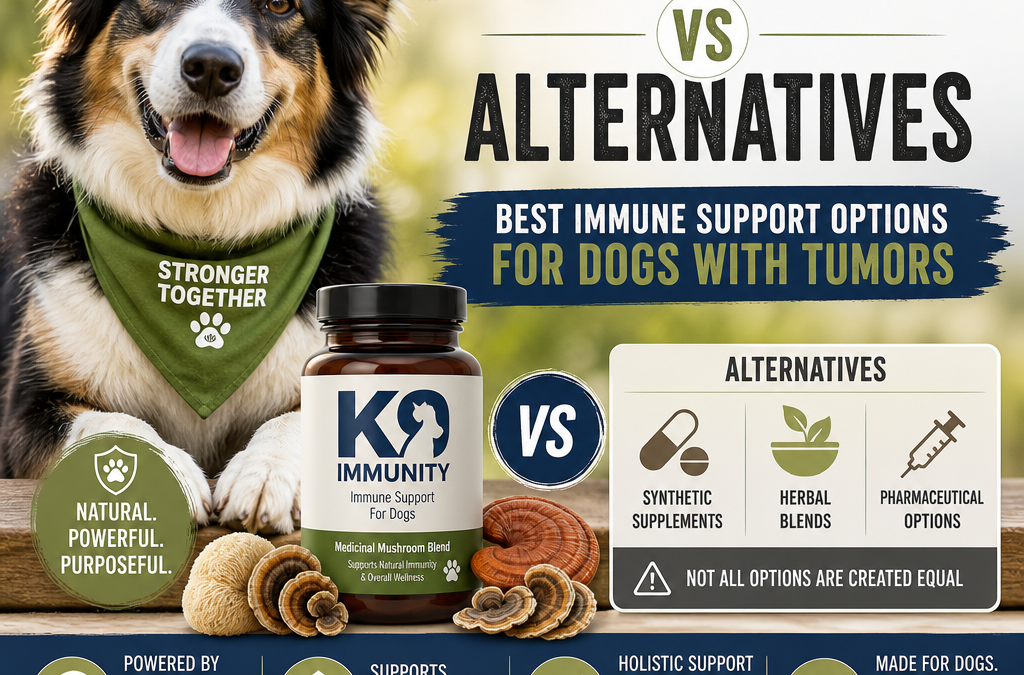
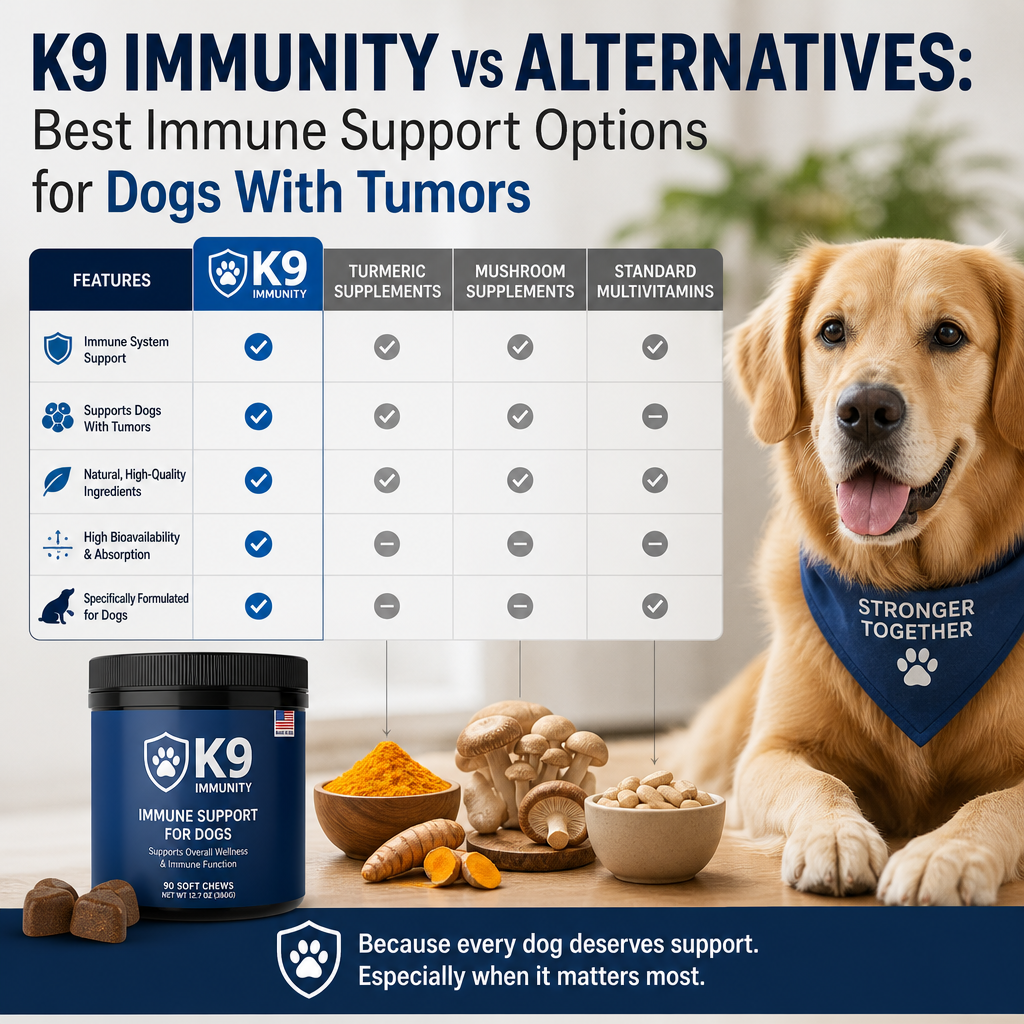
K9 Immunity vs Alternatywy to ważne porównanie dla właścicieli psów poszukujących wsparcia po diagnozie guza. Chociaż suplementy mogą pomóc w utrzymaniu ogólnego zdrowia, nigdy nie powinny zastępować leczenia weterynaryjnego, badań diagnostycznych, operacji, chemioterapii, radioterapii ani innych terapii zalecanych przez onkologa weterynaryjnego. Właściwy wybór zależy od rodzaju guza, ogólnego stanu zdrowia psa, aktualnych leków oraz jakości dowodów stojących za każdym produktem.
Jeśli porównujesz również szersze podejścia do wsparcia, zobacz nasz przewodnik po wsparciu immunologicznym dla psów z rakiem aby uzyskać pełniejszy przegląd praktycznych opcji. W wielu przypadkach K9 Immunity vs alternatywy sprowadza się do tego, czy chcesz suplementu skoncentrowanego na grzybach, szerszej mieszanki, czy zupełnie innej strategii wsparcia.
Spis treści
- Zrozumienie wsparcia immunologicznego dla psów z guzami
- K9 Immunity vs Alternatywy: czym jest K9 Immunity?
- Grzyby lecznicze / wsparcie immunologiczne
- Opcje wsparcia dla guzów u psów poza suplementami grzybowymi
- Staranna analiza suplementów
- Bezpieczeństwo i wskazówki weterynaryjne
- Podejmowanie świadomej decyzji
Zrozumienie wsparcia immunologicznego dla psów z guzami
Układ odpornościowy psa jest zaangażowany w rozpoznawanie nieprawidłowych komórek, zarządzanie stanem zapalnym oraz powracanie do zdrowia po chorobie lub leczeniu. Jednak “wzmacnianie” odporności to uproszczenie. Nadmiernie stymulowana odpowiedź immunologiczna może również przyczyniać się do stanu zapalnego lub zakłócać niektóre schorzenia medyczne. Z tego powodu celem wsparcia jest zazwyczaj pomoc w utrzymaniu normalnej funkcji odpornościowej, apetytu, energii, trawienia i jakości życia.
Suplementy reklamowane dla psów z rakiem często zawierają grzyby lecznicze, przeciwutleniacze, zioła, witaminy, minerały lub kombinacje tych składników. Ich zamierzona rola może obejmować wspieranie regulacji odporności, pomoc organizmowi w radzeniu sobie ze stresem fizjologicznym lub zapewnienie wsparcia żywieniowego podczas leczenia. Te produkty najlepiej postrzegać jako opcje uzupełniające, a nie bezpośrednie leki na guzy.
W praktyce najlepsze wyniki często pochodzą z wielowarstwowego planu: ukierunkowanej opieki weterynaryjnej, wysokiej jakości żywienia, kontroli objawów i starannie dobranych suplementów. Dlatego K9 Immunity vs alternatywy nigdy nie powinny być decydowane tylko na podstawie marketingu. Jakość produktu, przejrzystość składników i zgodność z leczeniem mają znaczenie równie ważne jak deklaracje na etykiecie.
Właściciele czasami oczekują, że suplement odpornościowy będzie działał jak terapia nowotworowa, ale tak nie działają produkty wspierające. Praktycznym celem jest zazwyczaj pomoc psu w utrzymaniu siły, lepszym jedzeniu, bardziej komfortowym znoszeniu leczenia i zachowaniu dobrego codziennego rytmu. Z tego powodu K9 Immunity vs alternatywy powinny być oceniane na podstawie tego, jak dobrze pasują do całego planu opieki, a nie na podstawie dramatycznych twierdzeń na opakowaniu.
Pomaga również myśleć w kategoriach celów. Czy głównym celem jest wsparcie apetytu, zarządzanie stanem zapalnym, równowaga odpornościowa, czy po prostu dodanie ekstraktu z grzybów do planu weterynaryjnego? Każdy cel może wskazywać na inny typ produktu. To kolejny powód, dla którego K9 Immunity vs alternatywy nie mogą być odpowiedziane jedną uniwersalną rekomendacją.
Wreszcie, opieka wspierająca powinna być monitorowana w czasie. Suplement, który wydaje się przydatny na początku, może później stać się zbędny, nieskuteczny lub źle tolerowany. Śledzenie wagi, stolców, apetytu, energii i zmian w lekach dostarcza zespołowi weterynaryjnemu lepszych informacji przy dostosowywaniu planu.
K9 Immunity vs Alternatywy: czym jest K9 Immunity?
K9 Immunity jest powszechnie kojarzone z wsparciem immunologicznym opartym na grzybach dla psów. Formuły w tej kategorii mogą zawierać ekstrakty z grzybów takich jak ogon indyczy, reishi, maitake, shiitake lub cordyceps. Te grzyby zawierają związki takie jak beta-glukany i inne polisacharydy, które przyciągnęły zainteresowanie naukowców ze względu na ich potencjalny wpływ na sygnalizację immunologiczną.
Dokładna formuła, metoda ekstrakcji, stężenie, standardy produkcji i instrukcje dawkowania mają znaczenie. Dwa produkty mogą wymieniać ten sam grzyb, ale dostarczać bardzo różne ilości aktywnych związków. Etykieta, która identyfikuje tylko całkowitą wagę grzyba, może dostarczać mniej użytecznych informacji niż ta, która określa proporcje ekstraktu, zawartość beta-glukanu, procedury testowe i źródła składników.
Niektórzy właściciele psów wybierają K9 Immunity, ponieważ jest ono specjalnie reklamowane do użytku psów i często przedstawiane jako wygodna, kompleksowa formuła. Mimo to, twierdzenia marketingowe powinny być oceniane ostrożnie. Dowody z badań laboratoryjnych, badań na ludziach lub małych badań weterynaryjnych nie dowodzą automatycznie, że suplement wydłuża życie lub zmniejsza guzy u każdego psa.
Porównując K9 Immunity z alternatywami, praktycznym pytaniem jest, czy twój pies potrzebuje szerokiej formuły, czy prostszego produktu z jednym wyraźnie określonym celem. Dla niektórych psów ekstrakt z jednego składnika może być łatwiejszy do śledzenia i dostosowywania. Dla innych, mieszanka wieloskładnikowa może być bardziej wygodna, jeśli pasuje do planu leczenia i jest dobrze tolerowana.
Inną kwestią jest spójność. Suplement, który działa dobrze w jednej partii, powinien być idealnie wspierany przez niezawodną produkcję z jednej partii do następnej. Jeśli produkt zmienia swój smak, teksturę lub ujawnienie składników w czasie, staje się trudniej monitorować reakcję. Dlatego K9 Immunity vs alternatywy powinny zawsze obejmować spojrzenie na przejrzystość marki, kontrolę jakości i to, jak łatwo jest podawać produkt codziennie.
Niektórzy właściciele preferują produkt, który łatwiej jest podzielić na kapsułki, proszki lub formaty do żucia. Inni potrzebują formuły, która pasuje do psa z wrażliwym żołądkiem. W takich przypadkach wybór między K9 Immunity a alternatywami może być mniej o etykiecie “najlepszy”, a bardziej o formacie, który twój pies może rzeczywiście tolerować konsekwentnie.
Grzyby lecznicze / wsparcie immunologiczne
Produkty z grzybów leczniczych / wsparcia immunologicznego są jednymi z najpopularniejszych alternatyw dla psów z rakiem. Szczególnie uwagę zwraca ogon indyczy, ze względu na związki takie jak polisacharyd-K i polisacharydowe peptydy. Wstępne badania weterynaryjne sugerowały możliwe korzyści u niektórych psów z określonymi nowotworami, ale dostępne dowody pozostają ograniczone i nie powinny być interpretowane jako gwarantowane leczenie.
Reishi może mieć właściwości modulujące układ odpornościowy i przeciwutleniające, podczas gdy maitake i shiitake są również badane pod kątem ich beta-glukanów. Cordyceps jest czasami włączany do formuł mających na celu wspieranie energii i wytrzymałości. Te składniki mogą być rozsądne do omówienia z weterynarzem, ale mogą również powodować problemy żołądkowo-jelitowe, zmiany apetytu lub reakcje alergiczne.
Grzyby lecznicze mogą wpływać na krzepnięcie krwi, metabolizm wątroby lub aktywność immunologiczną. Jest to szczególnie ważne dla psów otrzymujących chemioterapię, kortykosteroidy, niesteroidowe leki przeciwzapalne, leki przeciwzakrzepowe lub leki przetwarzane przez wątrobę. Profesjonalista weterynaryjny powinien przejrzeć pełną listę składników przed użyciem.
Jeśli chcesz porównać produkty na bazie grzybów w bardziej szczegółowy sposób, artykuł na korzyściach z grzybów leczniczych dla psów oferuje dodatkowe informacje na temat tego, jak te składniki są powszechnie stosowane w opiece wspierającej.
Innym powodem, dla którego właściciele badają K9 Immunity vs alternatywy, jest to, że produkty grzybowe mogą znacznie różnić się jakością ekstrakcji. Ekstrakcja na gorąco, podwójna ekstrakcja i standaryzowane testy beta-glukanów mogą wpływać na to, ile użytecznego materiału trafia do ostatecznego suplementu. Oznacza to, że dwa produkty o podobnych nazwach grzybów mogą zachowywać się bardzo różnie w rzeczywistości.
Warto również pamiętać, że “naturalne” nie oznacza automatycznie “lepsze” lub “bezpieczniejsze”. Nawet dobrze znany ekstrakt grzybowy może być niewłaściwy, jeśli koliduje z planem leczenia lub powoduje problemy trawienne. Celem w K9 Immunity vs alternatywy nie jest wybór najbardziej znanego składnika, ale wybór opcji, która jest najbardziej sensowna dla konkretnego psa.
Kiedy właściciele pytają o wsparcie oparte na grzybach, weterynarz może również chcieć wiedzieć, czy produkt jest stosowany jako ogólna pomoc w zdrowiu, wsparcie w powrocie do zdrowia, czy część szerszego planu onkologicznego. Ten kontekst ma znaczenie, ponieważ odpowiedź na K9 Immunity vs alternatywy może się zmieniać w zależności od etapu leczenia i aktualnego stanu psa.
Opcje wsparcia dla guzów u psów poza suplementami grzybowymi
Opcje wsparcia dla psów z nowotworami wykraczają daleko poza suplementy immunologiczne. Żywienie jest często jednym z najbardziej praktycznych obszarów do omówienia. Psy z rakiem mogą doświadczać zmniejszonego apetytu, nudności, utraty wagi, zaników mięśniowych lub zmienionych potrzeb żywieniowych. Pełna i zrównoważona dieta dostosowana do stanu psa może wspierać siłę i powrót do zdrowia. W niektórych przypadkach weterynaryjny specjalista ds. żywienia może zalecić dostosowania gęstości kalorycznej, białka, tłuszczu lub częstotliwości posiłków.
Zarządzanie bólem jest kolejnym centralnym elementem opieki wspierającej. Psy mogą ukrywać dyskomfort, więc oznaki takie jak niepokój, niechęć do ruchu, sapanie, zmiany w postawie, zmniejszone pielęgnowanie lub wycofanie powinny być omówione z weterynarzem. Odpowiednia ulga w bólu może znacząco poprawić codzienny komfort.
Dodatkowe opcje mogą obejmować leki przeciwwymiotne, wsparcie apetytu, plany nawadniania, rehabilitację fizyczną, opiekę dentystyczną oraz leczenie infekcji lub innych problemów medycznych. Dostosowania środowiskowe — takie jak podłogi antypoślizgowe, łatwiejszy dostęp do jedzenia i wody, wygodne posłanie oraz zmniejszenie stresu w domu — mogą również wnieść znaczącą różnicę.
Niektórzy właściciele poszukujący K9 Immunity vs alternatyw również odkrywają, że najbardziej pomocna interwencja wcale nie jest kolejnym suplementem. W niektórych przypadkach wsparcie z planu skoncentrowanego na żywieniu lub leku skoncentrowanego na objawach może przynieść bardziej wymierne korzyści niż sama formuła immunologiczna. Jest to szczególnie prawdziwe, gdy pies traci na wadze, odmawia jedzenia lub zmaga się z efektami ubocznymi leczenia.
Dla psów, które potrzebują szerszej opieki wspierającej, może również pomóc przegląd najlepsze suplementy dla psów z rakiem. To źródło może pomóc właścicielom przemyśleć bardziej kompleksową strategię wsparcia, zamiast koncentrować się tylko na jednej kategorii produktów.
W niektórych domach właściwą odpowiedzią może być połączenie narzędzi: starannie dobrany suplement, leki na receptę na objawy oraz praktyczne zmiany w domu, które zmniejszają stres. Taki bardziej kompletny widok jest często bardziej skuteczny niż poleganie na jakimkolwiek pojedynczym produkcie. To jeden z powodów, dla których K9 Immunity vs alternatywy powinny być częścią szerszej dyskusji na temat opieki wspierającej.
Na przykład, jeśli pies ma słaby apetyt, natychmiastowym priorytetem może być spożycie wystarczającej ilości kalorii, a nie wybór najbardziej skomplikowanej formuły immunologicznej. Jeśli pies odczuwa ból, komfort jest ważniejszy niż optymalizacja odporności. Tego rodzaju priorytetyzacja utrzymuje plan opieki realistycznym i humanitarnym, jednocześnie pozostawiając miejsce na K9 Immunity vs alternatywy, gdy suplement immunologiczny jest odpowiedni.
Staranna analiza suplementów
Porównując K9 Immunity z alternatywami, zbadaj więcej niż tylko nazwę produktu. Szukaj przejrzystego oznakowania, jasnych instrukcji dawkowania, testów jakości specyficznych dla partii, przesiewania zanieczyszczeń oraz producenta z odpowiednimi praktykami kontroli jakości. Produkty powinny być idealnie stworzone dla psów i powinny unikać składników znanych jako niebezpieczne dla nich.
Zastanów się, czy formuła zawiera niepotrzebne mieszanki własnościowe. Mieszanka własnościowa może ukrywać ilość każdego składnika, co utrudnia ocenę skuteczności lub bezpieczeństwa. Przydatne jest również zapisanie każdego suplementu, który otrzymuje twój pies, w tym olejów, produktów ziołowych, witamin i przysmaków. Ta lista pomaga weterynarzowi zidentyfikować potencjalne interakcje.
Koszt i wygoda mają znaczenie, ale nie powinny być jedynymi czynnikami decydującymi. Tańszy produkt z jednym składnikiem może być łatwiejszy do oceny niż złożona formuła, podczas gdy kompleksowy produkt może być bardziej wygodny dla niektórych właścicieli. Najlepszy wybór to ten, który pasuje do planu medycznego psa i może być monitorowany w sposób bezpieczny.
Kiedy to możliwe, poszukaj niezależnego wyjaśnienia składnika, zamiast polegać na języku marki. Na przykład, amerykańskie Krajowe Centrum Zdrowia Uzupełniającego i Integracyjnego dostarcza przydatnych informacji edukacyjnych na temat grzybów i innych suplementów na https://www.nccih.nih.gov/. Tego rodzaju źródło może pomóc właścicielom zrozumieć roszczenia przed dokonaniem zakupu.
Może być również przydatne porównanie liczby aktywnych składników, formy dawkowania i łatwości podawania. Kapsułka, którą można ukryć w jedzeniu, może być bardziej realistyczna niż proszek, który zmienia smak posiłku. Jeśli pies konsekwentnie odmawia produktu, nawet teoretycznie silna opcja może nie być praktyczna. W tym sensie K9 Immunity vs alternatywy powinny zawsze uwzględniać użyteczność w rzeczywistym świecie.
Czytanie etykiet również ma znaczenie. Szukaj instrukcji specyficznych dla gatunku, miejsca produkcji, dat ważności i testów przeprowadzonych przez strony trzecie, gdzie to możliwe. Produkt z jaśniejszą dokumentacją jest łatwiejszy do omówienia z weterynarzem i łatwiejszy do włączenia w długoterminową opiekę. Jest to szczególnie ważne, gdy K9 Immunity vs alternatywy są rozważane obok chemioterapii lub rekonwalescencji pooperacyjnej.
Bezpieczeństwo i wskazówki weterynaryjne
Przed wprowadzeniem produktu wspierającego odporność zapytaj weterynarza prowadzącego, czy jest on odpowiedni dla konkretnego guza i protokołu leczenia. Niektóre suplementy mogą być niewłaściwe przed operacją z powodu wpływu na krwawienie lub znieczulenie. Inne mogą zmieniać metabolizm leków lub powodować komplikacje u psów z chorobami nerek, wątroby lub układu pokarmowego.
Wprowadzaj tylko jeden nowy produkt na raz, chyba że weterynarz poda inne instrukcje. Monitoruj wymioty, biegunkę, swędzenie, letarg, zmiany apetytu, nietypowe siniaki lub pogarszające się objawy. Zatrzymaj produkt i skontaktuj się z zespołem weterynaryjnym, jeśli wystąpi poważna reakcja.
Najważniejsze jest unikanie roszczeń, które obiecują wyleczenie raka, eliminację guzów lub zastąpienie konwencjonalnego leczenia. Odpowiedzialna opieka wspierająca koncentruje się na mierzalnych celach, takich jak utrzymanie wagi, zachowanie mobilności, redukcja dyskomfortu i wspieranie jakości życia.
W wielu domach K9 Immunity vs alternatywy stają się mniej kwestią “najlepszego produktu”, a bardziej “najlepszego dopasowania”. Suplement, który wygląda imponująco na papierze, może być złym wyborem, jeśli koliduje z czasowaniem chemioterapii, powoduje problemy żołądkowe lub dodaje niepotrzebnej złożoności do codziennej opieki.
Jeśli diagnoza twojego psa dotyczy konkretnego typu nowotworu, może być również pomocne przeczytanie bardziej ukierunkowanego artykułu, takiego jak wspieranie odporności u psów z czerniakiem złośliwym, ponieważ typ guza może wpływać na to, które strategie wspierające mają sens.
Wskazówki weterynaryjne są szczególnie ważne dla psów przyjmujących wiele leków. Produkt grzybowy, mieszanka ziół lub formuła przeciwutleniająca mogą wydawać się nieszkodliwe, jednak mogą wciąż wchodzić w interakcje z lekami przeciwbólowymi, lekami przeciwwymiotnymi lub chemioterapią. Najbezpieczniejszą drogą jest omówienie pełnego planu z zespołem onkologicznym przed rozpoczęciem czegokolwiek nowego. To prawda, niezależnie od tego, czy rozważasz K9 Immunity vs alternatywy, czy zupełnie inny produkt wspierający.
Jeśli Twój pies niedawno przeszedł operację, czas leczenia ma jeszcze większe znaczenie. Produkt, który jest akceptowalny w stabilnym okresie, może nie być idealny w dniach wokół zabiegu. Czekanie na zatwierdzenie weterynaryjne to prosty sposób na zredukowanie unikałych komplikacji, jednocześnie dając wsparciu opieki uczciwą szansę.
Podejmowanie świadomej decyzji
Nie ma jednego najlepszego suplementu wspierającego odporność dla każdego psa z guzem. K9 Immunity może być jedną z opcji, szczególnie dla właścicieli zainteresowanych specyficzną dla psów formułą grzybów leczniczych, ale alternatywy mogą być bardziej odpowiednie w zależności od diagnozy psa, leków, budżetu i tolerancji. Niektóre psy mogą bardziej skorzystać z interwencji żywieniowej, kontroli bólu, rehabilitacji lub zarządzania apetytem niż z suplementu wspierającego odporność.
Przemyślana decyzja łączy wiarygodne informacje o produktach, realistyczne oczekiwania i nadzór weterynaryjny. Traktując suplementy jako część szerszego planu opieki, właściciele psów mogą skupić się na bezpieczeństwie, komforcie i indywidualnych potrzebach swojego towarzysza przez cały czas diagnozy i leczenia.
Porównując K9 Immunity z alternatywami, najważniejsze pytania są proste: Czy produkt ma wyraźny cel? Czy lista składników jest przejrzysta? Czy twój pies może go bezpiecznie przyjmować z aktualnym leczeniem? Jeśli odpowiedź brzmi tak, warto omówić to z zespołem weterynaryjnym. Jeśli nie, inny wspierający sposób może być bardziej odpowiedni.
Ostatecznie najlepsze wsparcie odporności to takie, które wspiera całego pacjenta, a nie tylko diagnozę. Może to oznaczać formułę grzybową, inny suplement lub opcję, która poprawia komfort i codzienną funkcję.
Dla wielu właścicieli decyzja staje się łatwiejsza, gdy uwaga przesuwa się z marketingu na codzienne wyniki. Jeśli twój pies je lepiej, porusza się wygodniej i dobrze toleruje terapię, plan wspierający prawdopodobnie spełnia swoją rolę. Jeśli nie, może nadszedł czas, aby ponownie ocenić K9 Immunity w porównaniu z alternatywami z zespołem weterynaryjnym i dostosować plan odpowiednio.
Takie podejście utrzymuje rozmowę praktyczną, świadomą dowodów i skoncentrowaną na jakości życia psa. Zapewnia również, że K9 Immunity w porównaniu z alternatywami pozostaje pomocnym porównaniem, a nie substytutem zindywidualizowanej opieki weterynaryjnej.