
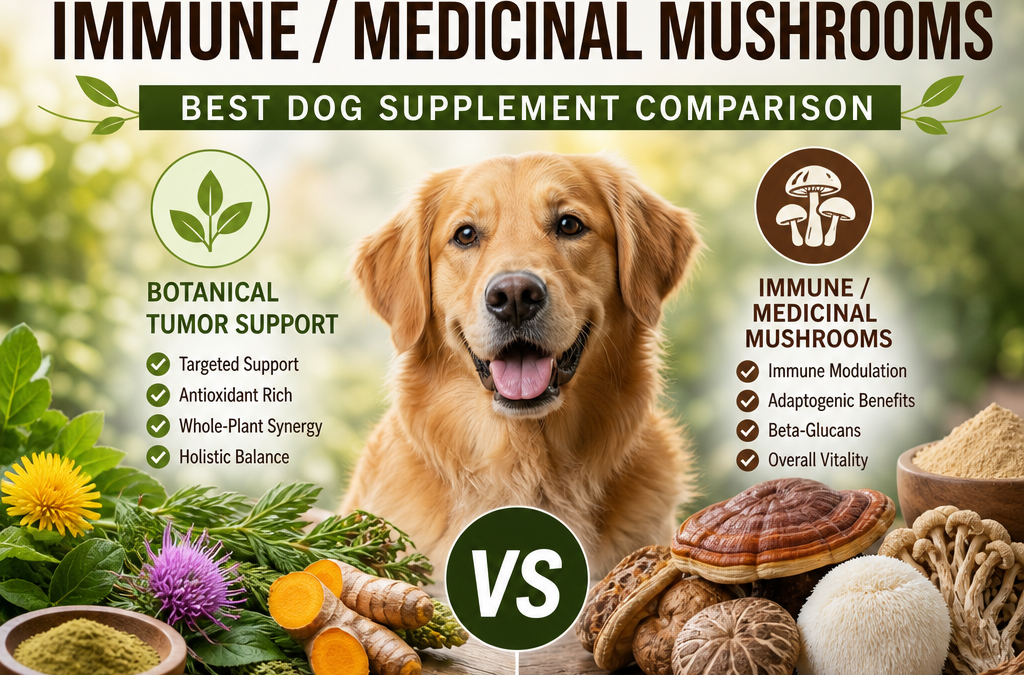
Wsparcie botaniczne w przypadku nowotworów w porównaniu do grzybów immunologicznych / leczniczych jest ważnym porównaniem dla właścicieli psów badających wsparcie w trakcie diagnozy nowotworu. Oba podejścia mogą zapewnić korzyści odżywcze lub zdrowotne, ale nie są wymienne i żadne z nich nie powinno zastępować leczenia weterynaryjnego. Właściwy wybór zależy od diagnozy psa, aktualnych leków, zdrowia wątroby i nerek, apetytu oraz ogólnego planu leczenia.
Spis treści
- Zrozumienie porównania suplementów dla psów z rakiem
- Wsparcie botaniczne w przypadku nowotworów: Co może zaoferować
- Grzyby immunologiczne i lecznicze: Co mogą zaoferować
- Wsparcie botaniczne w przypadku nowotworów w porównaniu do grzybów immunologicznych / leczniczych: Kluczowe różnice
- Jak ocenić etykietę suplementu
- Bezpieczeństwo podczas leczenia nowotworowego
- Dokonywanie praktycznego wyboru
Zrozumienie porównania suplementów dla psów z rakiem
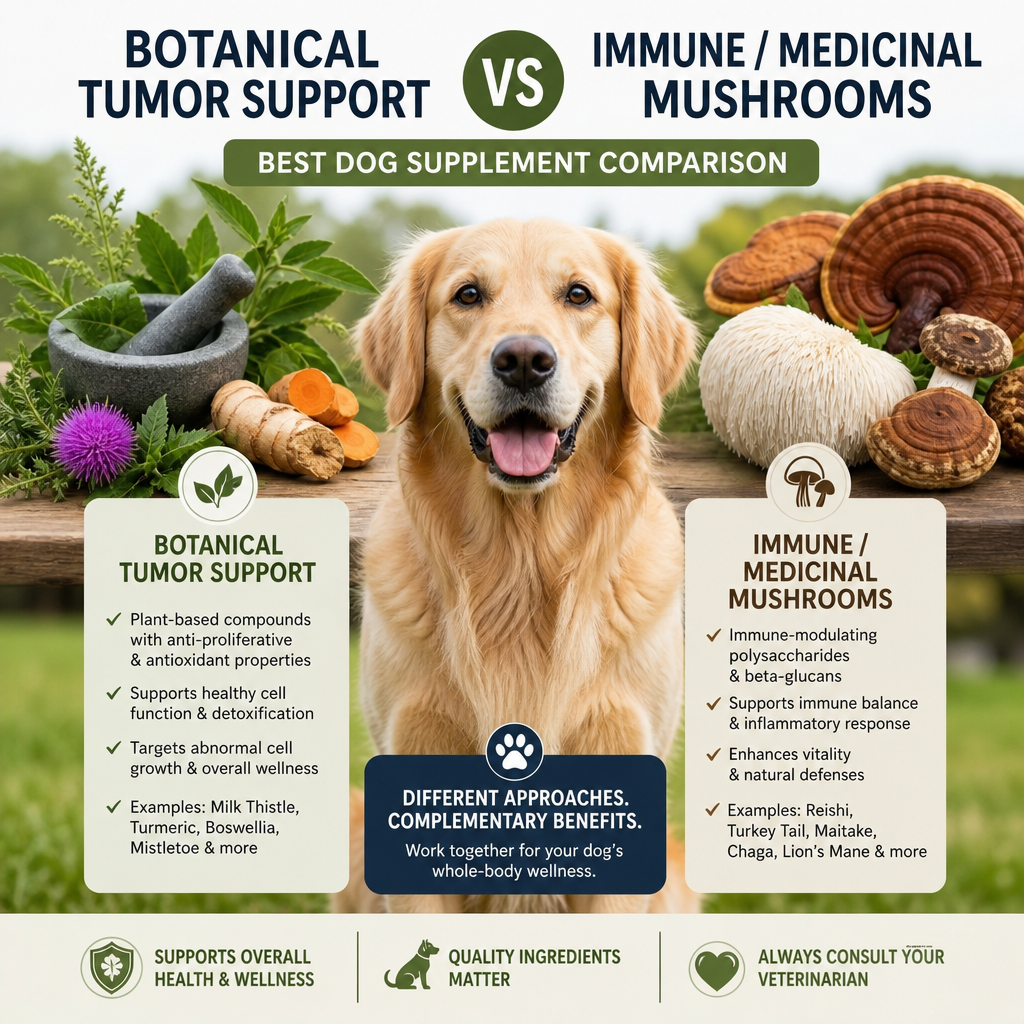
Suplementy reklamowane dla psów z nowotworem zazwyczaj mieszczą się w kilku kategoriach. Niektóre formuły botaniczne zawierają skoncentrowane ekstrakty roślinne tradycyjnie stosowane w celu wsparcia antyoksydacyjnego, trawiennego lub przeciwzapalnego. Grzyby immunologiczne i lecznicze zazwyczaj obejmują gatunki takie jak ogon indyka, reishi, maitake, shiitake lub cordyceps.
Produkty te często są promowane jako wspierające funkcję immunologiczną, utrzymujące apetyt, poprawiające energię lub pomagające organizmowi radzić sobie z chorobą. Jednak jakość produktów znacznie się różni. Etykieta suplementu może wymieniać znany składnik bez identyfikacji aktywnych związków, metody ekstrakcji, stężenia lub standardów testowania.
Użyteczne porównanie suplementów dla psów z nowotworem powinno zatem badać więcej niż tylko nazwę składnika. Właściciele powinni rozważyć zamierzony cel, dostępne dowody, potencjalne interakcje, jakość produktu oraz indywidualne potrzeby medyczne psa. Dla czytelników, którzy chcą szerszego przeglądu wsparcia opartego na grzybach, zobacz korzyściach z grzybów leczniczych dla psów.
Wsparcie botaniczne w przypadku nowotworów: Co może zaoferować
Formuły wsparcia botanicznego w przypadku nowotworów często łączą kilka ziół lub związków pochodzenia roślinnego. W zależności od produktu, składniki mogą obejmować kurkumę lub kurkuminę, ostropest plamisty, ekstrakt z zielonej herbaty, zioła lecznicze, rośliny bogate w omega lub inne związki wybrane w celu wsparcia antyoksydacyjnego i wątroby.
Potencjalne zalety formuł botanicznych obejmują:
- Szerokie wsparcie odżywcze lub antyoksydacyjne
- Składniki ukierunkowane na zdrowie trawienne lub wątrobowe
- Elastyczność w celu skierowania na konkretne problemy, takie jak apetyt lub stan zapalny
- Dostępność w produktach łączonych zaprojektowanych dla psów
Jednak “naturalne” nie oznacza automatycznie bezpieczne. Niektóre rośliny mogą wpływać na krzepnięcie krwi, ciśnienie krwi, enzymy wątrobowe lub sposób metabolizowania leków na receptę. Skoncentrowane ekstrakty mogą być znacznie silniejsze niż ta sama roślina spożywana jako jedzenie. Ponadto formuły zawierające wiele ziół mogą utrudniać identyfikację, który składnik jest odpowiedzialny za niepożądaną reakcję.
Produkty botaniczne mogą być szczególnie nieodpowiednie tuż przed operacją lub w połączeniu z lekami wpływającymi na krzepnięcie. Niektóre zioła mogą również budzić obawy u psów otrzymujących chemioterapię lub inne leki przetwarzane przez wątrobę.
Kiedy właściciele porównują wsparcie botaniczne dla guzów z grzybami immunologicznymi / leczniczymi, strona botaniczna często oferuje większą elastyczność, ale także więcej zmiennych. Może to być przydatne w niektórych przypadkach, jednak sprawia, że przegląd etykiety i wskazówki weterynaryjne są jeszcze ważniejsze.
Grzyby immunologiczne i lecznicze: Co mogą zaoferować
Grzyby lecznicze to grzyby cenione za związki takie jak beta-glukany, triterpeny, polisacharydy i inne składniki bioaktywne. Ogon indyka jest jednym z najczęściej omawianych grzybów w kontekście wsparcia dla psów z rakiem z powodu badań dotyczących związków polisacharydowych i aktywności immunologicznej. Reishi, maitake, shiitake i cordyceps są również często stosowane w produktach suplementacyjnych dla zwierząt.
Potencjalne korzyści z suplementów na bazie grzybów obejmują:
- Wsparcie dla normalnej odpowiedzi immunologicznej
- Zawartość beta-glukanów i innych naturalnie występujących związków
- Użycie jako część szerszego planu zdrowotnego
- Zwykle proste profile składników, gdy wybrany jest pojedynczy grzyb
Ograniczenia są równie ważne. Dowody z badań laboratoryjnych, badań na ludziach lub małych badań weterynaryjnych nie mogą być automatycznie stosowane do każdego psa lub typu nowotworu. Produkt grzybowy może zawierać ekstrakt z owocników, mycelium lub mieszankę obu, a te formy mogą różnić się zawartością aktywnych związków.
Grzyby mogą również powodować problemy trawienne, reakcje alergiczne lub zmiany w aktywności immunologicznej. Psy z chorobami autoimmunologicznymi, zaburzeniami krwawienia lub pewnymi problemami z organami wymagają dodatkowej ostrożności. Produkt, który łączy kilka grzybów z ziołami i witaminami, może oferować wygodę, ale może również zwiększać niepewność co do dawkowania i interakcji.
Jeśli twój weterynarz zaleca produkt na bazie grzybów, dobrym punktem wyjścia jest standaryzowany ekstrakt od renomowanej marki. To często łatwiej ocenić niż szeroką mieszankę, porównując wsparcie botaniczne dla guzów z grzybami immunologicznymi / leczniczymi do długoterminowego stosowania.
Wsparcie botaniczne w przypadku nowotworów w porównaniu do grzybów immunologicznych / leczniczych: Kluczowe różnice
Główna różnica polega na tym, że produkty botaniczne zazwyczaj koncentrują się na związkach pochodzenia roślinnego, podczas gdy produkty z grzybami leczniczymi podkreślają związki grzybowe związane z modulacją immunologiczną i ogólnym dobrostanem.
Formuły botaniczne mogą być bardziej odpowiednie, gdy głównym celem jest wsparcie trawienne, ochrona antyoksydacyjna lub zdrowie wątroby, pod warunkiem, że składniki są zgodne z leczeniem psa. Produkty grzybowe mogą być rozważane, gdy właściciel i weterynarz szczególnie oceniają składniki wspierające układ odpornościowy, zwłaszcza gdy dostępny jest wyraźnie standaryzowany ekstrakt.
Żadna z kategorii nie powinna być postrzegana jako bezpośrednie lekarstwo na raka. Suplementy nie mogą niezawodnie zmniejszać guzów, zapobiegać przerzutom ani zastępować chirurgii, chemioterapii, radioterapii, terapii celowanej ani opieki paliatywnej. Ich rola, gdy jest to odpowiednie, jest wspierająca, a nie lecznicza.
Dla niektórych rodzin decyzja sprowadza się do dopasowania produktu do aktualnych potrzeb psa. W tym sensie wsparcie botaniczne w przypadku nowotworów w porównaniu do grzybów immunologicznych / medycznych mniej polega na wyborze zwycięzcy, a bardziej na wyborze bezpieczniejszego, bardziej klarownego dopasowania do planu leczenia.
Jak ocenić etykietę suplementu
Etykieta wysokiej jakości powinna identyfikować dokładne składniki, ilości na porcję, metodę ekstrakcji oraz zalecaną wielkość porcji w zależności od wagi psa. Szukaj producentów, którzy zapewniają niezależne testy na obecność zanieczyszczeń, metali ciężkich, pestycydów, bakterii i tożsamości składników.
Ważne pytania obejmują:
- Czy produkt identyfikuje aktywne związki, takie jak beta-glukany, zamiast wymieniać tylko “proszek grzybowy”?
- Czy podano ilości dla każdego składnika?
- Czy produkt jest wytwarzany zgodnie z jednolitymi standardami jakości?
- Czy firma dostarcza certyfikat analizy?
- Czy zawiera niepotrzebne aromaty, słodziki lub mieszanki własne?
- Czy formuła jest zaprojektowana specjalnie dla psów?
Unikaj produktów zawierających składniki znane jako toksyczne dla psów, w tym ksylitol. Bądź również ostrożny z suplementami, które składają jednoznaczne obietnice, takie jak “zabija raka”, “zastępuje chemioterapię” lub “gwarantuje redukcję guza”. Takie twierdzenia są sygnałami ostrzegawczymi, a nie dowodami skuteczności.
Dla ogólnego kontekstu bezpieczeństwa, wytyczne Amerykańskiego Stowarzyszenia Medycyny Weterynaryjnej dotyczące bezpieczeństwa żywności i suplementów są pomocnym odniesieniem dla właścicieli zwierząt.
Bezpieczeństwo podczas leczenia nowotworowego
Nadzór weterynaryjny jest szczególnie ważny, gdy pies otrzymuje chemioterapię, radioterapię, kortykosteroidy, leki przeciwbólowe, leki przeciwzapalne, antybiotyki lub leki przeciwzakrzepowe. Niektóre suplementy mogą zmieniać wchłanianie lub metabolizm leków, wpływać na wyniki krwi lub zwiększać ryzyko krwawienia.
Zwykle rozsądnie jest wprowadzać tylko jeden nowy suplement na raz. Rozpocznij tylko za zgodą weterynarza i monitoruj wymioty, biegunkę, zmniejszony apetyt, letarg, swędzenie, żółtaczkę, nietypowe siniaki lub zmiany w pragnieniu i oddawaniu moczu. Może być zalecane badanie krwi, gdy produkt może wpływać na wątrobę, nerki, układ odpornościowy lub komórki krwi.
Czas również może mieć znaczenie. Weterynarz może zalecić wstrzymanie niektórych suplementów przed operacją lub dostosowanie ich stosowania w trakcie sesji leczenia. Nigdy nie zakładaj, że suplement jest nieszkodliwy tylko dlatego, że jest sprzedawany bez recepty.
Te środki ostrożności mają znaczenie, niezależnie od tego, czy rozważasz wsparcie botaniczne w przypadku nowotworów w porównaniu do grzybów immunologicznych / medycznych, ponieważ obie kategorie mogą wchodzić w interakcje z leczeniem, gdy są stosowane w niewłaściwym czasie lub w niewłaściwej kombinacji.
Dokonywanie praktycznego wyboru
Najlepszy wybór w porównaniu suplementów na raka u psów niekoniecznie jest produktem z najdłuższą listą składników. Prosta, przejrzysta formuła może być łatwiejsza do oceny i bezpieczniejsza do połączenia z opieką medyczną. Decyzja powinna opierać się na diagnozie psa, objawach, celach leczenia, wynikach laboratoryjnych i priorytetach dotyczących jakości życia.
Właściciele powinni przynieść pełną etykietę suplementu na wizytę u weterynarza, w tym instrukcje dotyczące dawkowania i ilości składników. Profesjonalista z zakresu onkologii integracyjnej lub weterynaryjnej może pomóc ocenić, czy formuła botaniczna, ekstrakt grzybowy, żaden z nich, czy starannie dobrana kombinacja ma sens.
Ostatecznie, wspierające suplementy powinny uzupełniać oparte na dowodach leczenie nowotworów. Dobre odżywianie, nawodnienie, kontrola bólu, regularne monitorowanie, redukcja stresu i utrzymanie komfortowej codziennej rutyny są często równie ważne jak jakakolwiek kapsułka czy proszek. Gdy są stosowane z rozwagą i pod profesjonalnym nadzorem, produkty botaniczne i grzybowe mogą mieć miejsce w kompleksowym planie — ale świadoma ostrożność jest niezbędna.
Jeśli nadal porównujesz wsparcie botaniczne w przypadku nowotworów z grzybami immunologicznymi / leczniczymi, najbezpieczniejszym krokiem jest przegląd etykiety z weterynarzem przed rozpoczęciem czegokolwiek nowego. Ten prosty krok może pomóc uniknąć interakcji i wybrać najbardziej odpowiednie wsparcie dla twojego psa.