

Suplementos para cães durante a quimioterapia podem parecer uma maneira natural de apoiar a força, apetite e bem-estar geral de um animal de estimação. No entanto, o tratamento do câncer altera como o corpo de um cão processa nutrientes e medicamentos, então até mesmo produtos comercializados como suaves ou naturais podem criar riscos. A abordagem mais segura é tratar cada suplemento como uma intervenção médica e discuti-lo com a equipe de oncologia veterinária antes de administrá-lo.
Usados com cuidado, suplementos para cães durante a quimioterapia podem ter um lugar nos cuidados de suporte, mas nunca devem ser adicionados de forma casual. Uma pequena mudança nos ingredientes, dose ou tempo pode fazer uma grande diferença quando um cão está recebendo tratamento para câncer. É por isso que um plano claro é mais importante do que uma longa lista de produtos.
Índice
- Por que suplementos para cães durante a quimioterapia requerem cautela
- Perguntas a fazer antes de usar suplementos para câncer em cães
- Tipos comuns de suplementos de quimioterapia canina
- Antioxidantes e quimioterapia: uma conversa cuidadosa
- Produtos herbais não são automaticamente mais seguros
- Sinais de alerta que requerem atenção veterinária imediata
- Fazer um plano de suplementos parte de um cuidado mais seguro para o câncer
Por que suplementos para cães durante a quimioterapia requerem cautela
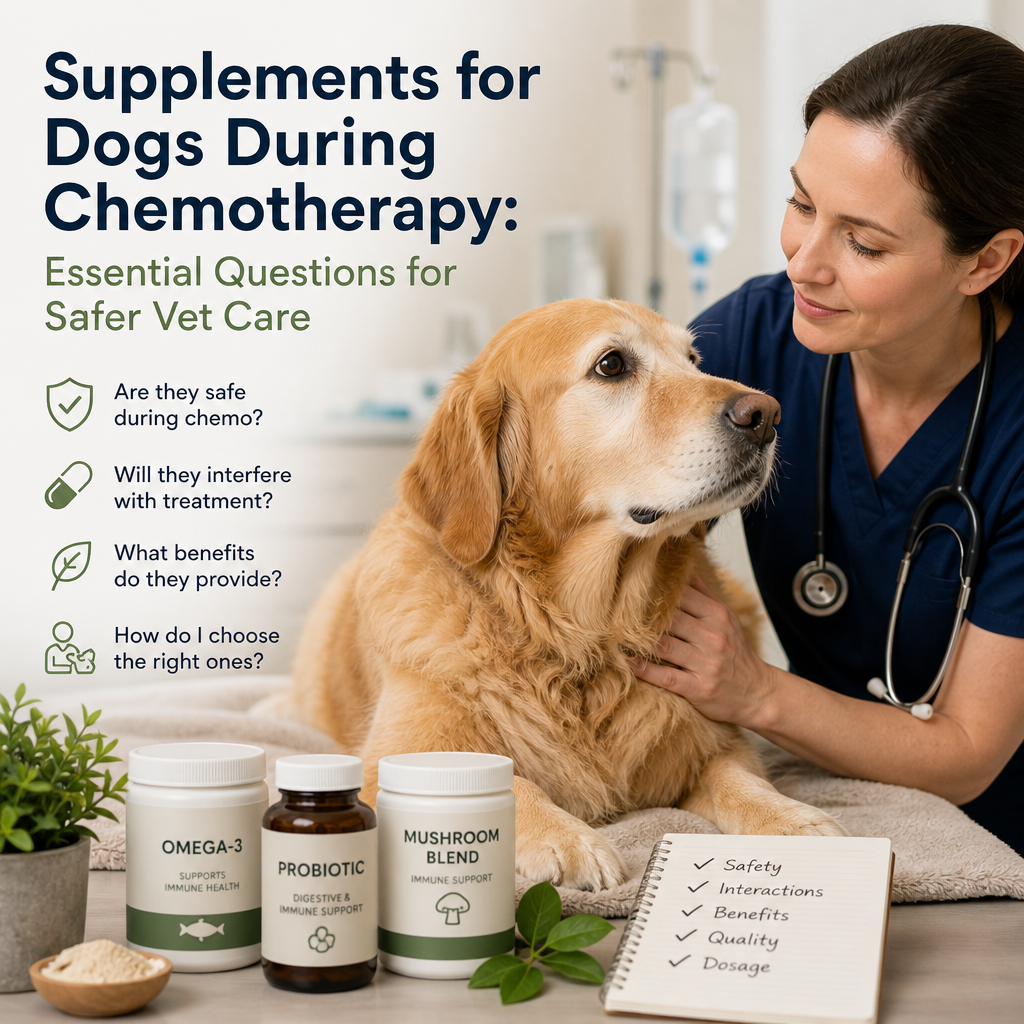
A quimioterapia é projetada para danificar ou destruir células cancerígenas que se dividem rapidamente, mas também pode afetar células saudáveis na medula óssea, trato digestivo e outros tecidos. Os cães podem experimentar náuseas, diarreia, redução do apetite, fadiga ou contagens de glóbulos brancos diminuídas. Devido a esses efeitos, os proprietários frequentemente procuram suplementos que possam melhorar a imunidade, proteger órgãos ou ajudar a manter o peso corporal.
O desafio é que suplementos para cães durante a quimioterapia pode interagir com medicamentos de quimioterapia de várias maneiras. Alguns podem mudar como um medicamento é absorvido ou metabolizado. Outros podem afetar a coagulação do sangue, pressão arterial, função renal ou enzimas hepáticas. Produtos antioxidantes também podem influenciar os mecanismos oxidativos envolvidos em alguns tratamentos de câncer, embora a importância varie de acordo com o medicamento, dose e paciente individual.
Um suplemento que é apropriado para um cão saudável pode, portanto, ser inadequado durante o tratamento. Os ingredientes do produto, concentração, qualidade de fabricação e tempo são todos importantes. Um rótulo “natural” não garante segurança, especialmente quando o corpo já está sob estresse devido ao câncer e à medicação.
Para informações adicionais sobre opções de suporte, veja Suplementos para Tumores em Cães: 7 Opções de Suporte Seguras e Eficazes Comparadas.
Também ajuda a pensar sobre o objetivo geral do tratamento. Alguns suplementos são destinados a apoiar o apetite ou a digestão por alguns dias, enquanto outros são comercializados para saúde imunológica ou uso a longo prazo. Essas não são a mesma coisa, e não devem ser tratadas da mesma maneira. Um cão com um estômago sensível após o tratamento precisa de um plano diferente de um cão que está estável e comendo bem.
Outro motivo para cautela é que pacientes com câncer frequentemente recebem vários medicamentos ao mesmo tempo. Medicamentos anti-náusea, antibióticos, analgésicos, esteroides e estimulantes de apetite podem já fazer parte do protocolo. Adicionar outro produto sem revisão pode dificultar o rastreamento da causa dos efeitos colaterais. Com suplementos para cães durante a quimioterapia, a simplicidade geralmente melhora a segurança.
Perguntas a fazer antes de usar suplementos para câncer em cães
Antes de adicionar qualquer produto, pergunte ao oncologista veterinário várias perguntas específicas:
- Este suplemento é compatível com o protocolo de quimioterapia?
- Poderia interferir com outro medicamento, como um anti-náusea, esteroide, antibiótico ou analgésico?
- Há evidências de que beneficia cães com este tipo de câncer?
- Poderia afetar a coagulação do sangue, a função renal, a função hepática ou a contagem de células sanguíneas?
- Deve ser interrompido antes da quimioterapia ou retomado apenas após os exames de sangue?
- O produto é fabricado para cães e foi testado quanto à qualidade e contaminação?
- Qual dose e cronograma são apropriados para este cão em particular?
Leve o recipiente real ou uma lista completa de ingredientes para a consulta. Os rótulos dos produtos podem variar, e alguns suplementos contêm misturas que não identificam claramente a quantidade de cada ingrediente. Produtos humanos também podem conter xilitol, vitamina D em excesso, ferro ou outras substâncias que são perigosas para cães.
Quando você não tem certeza, é melhor pausar e perguntar do que adivinhar. Isso é especialmente verdadeiro com suplementos para cães durante a quimioterapia, porque até pequenas mudanças nos ingredientes podem importar. Um pequeno atraso é geralmente mais seguro do que uma interação evitável.
Também pode ajudar perguntar se o suplemento é destinado a suporte de curto prazo durante uma semana difícil ou para uso mais prolongado ao longo do tratamento. A resposta pode mudar dependendo dos exames de sangue, apetite e efeitos colaterais. Se seu cão também estiver recebendo terapia de câncer prescrita, essa pergunta se torna ainda mais importante porque o tempo pode importar tanto quanto o próprio ingrediente.
Se você estiver comparando categorias de produtos ou tentando restringir opções, uma revisão mais ampla pode ser útil antes de tomar uma decisão. Você também pode consultar orientações sobre Suplementos para Tumores em Cães: 7 Opções de Suporte Seguras e Eficazes Comparadas para entender como os produtos de suporte são geralmente avaliados.
Tipos comuns de suplementos de quimioterapia canina
Não há um plano de suplemento universal para cães recebendo tratamento para câncer. As recomendações dependem do tipo de câncer, protocolo de tratamento, resultados laboratoriais, apetite, peso e condições médicas existentes.
Alguns proprietários esperam encontrar um produto que faça tudo, mas isso raramente existe. Nos cuidados do mundo real, um suplemento deve abordar um problema específico, como apetite ruim, fezes soltas, perda de peso ou baixa ingestão dietética. Quando o propósito é claro, é mais fácil julgar se o produto está ajudando.
Ácidos gordurosos de omega-3
O óleo de peixe fornece EPA e DHA, que podem apoiar a saúde da pele, ajudar a regular a inflamação e contribuir com calorias para a dieta. Alguns nutricionistas veterinários usam ácidos graxos ômega-3 como parte de um plano nutricional mais amplo para pacientes com câncer selecionados.
No entanto, o óleo de peixe pode causar desconforto gastrointestinal e pode influenciar a função plaquetária ou o risco de sangramento, particularmente em doses altas ou quando combinado com certos medicamentos. A qualidade também importa porque produtos rançosos ou contaminados podem ser prejudiciais. Um veterinário deve determinar se a suplementação de ômega-3 é adequada e calcular uma dose apropriada com base no peso e na saúde geral do cão.
Em alguns planos de cuidados, os ômega-3 são considerados um dos suplementos mais práticos para cães durante a quimioterapia, mas apenas quando a dosagem e o tempo são revisados primeiro. Se o cão já tiver diarreia ou um histórico de pancreatite, essa recomendação pode mudar.
Probióticos e suporte digestivo
A quimioterapia pode perturbar o trato gastrointestinal, e alguns cães desenvolvem fezes moles, diarreia ou alterações no apetite. Um probiótico veterinário pode ser considerado para suporte digestivo, mas probióticos não são automaticamente apropriados para todos os pacientes. Cães com supressão imunológica severa ou certas doenças graves podem exigir cautela extra.
Os produtos devem ser selecionados com orientação veterinária, especialmente se o cão tiver febre, diarreia sanguinolenta, vômito persistente ou uma contagem baixa de glóbulos brancos. Esses sintomas podem indicar complicações que requerem cuidados médicos em vez de suplementação. Nesses casos, a resposta correta geralmente é uma ligação para a clínica, não uma mudança nos suplementos.
Para cães com estômago irritado ou fezes variáveis, a nutrição de suporte pode ser mais útil do que adicionar vários produtos de uma só vez. Essa abordagem pode facilitar a identificação do que está ajudando e do que pode estar causando efeitos colaterais. Também reduz a chance de que suplementos para cães durante a quimioterapia sejam sobrepostos a um plano de medicação já complicado.
Suplementos nutricionais e suporte calórico
Manter o peso corporal e a massa muscular é frequentemente mais importante do que adicionar uma longa lista de produtos especiais. Dependendo da situação, um veterinário pode recomendar uma dieta completa e balanceada, um alimento altamente digestível, um produto de nutrição terapêutica ou suporte calórico cuidadosamente selecionado.
Evite forçar a alimentação ou fazer mudanças dietéticas repentinas sem orientação. A perda de apetite pode resultar de náusea, dor, constipação, efeitos colaterais de medicamentos ou progressão da doença. Tratar a causa subjacente é geralmente mais eficaz do que depender de um suplemento geral para apetite.
Os proprietários às vezes perguntam sobre suplementos para cães durante a quimioterapia porque esperam melhorar a energia rapidamente. Na prática, a ingestão constante de calorias e o controle dos sintomas geralmente fornecem um suporte mais confiável. Se a perda de peso estiver ocorrendo, a equipe pode se concentrar primeiro na textura dos alimentos, na frequência das refeições e no controle da náusea antes de recomendar qualquer outra coisa.
Vitamins and minerals
Cães que consomem uma dieta comercial ou veterinária completa e balanceada geralmente não precisam de suplementação ampla de vitaminas e minerais. Quantidades excessivas de certos nutrientes podem ser tóxicas ou podem colocar estresse adicional no fígado e nos rins. Vitamina D, cálcio, ferro e selênio são exemplos de nutrientes que não devem ser suplementados de forma casual.
Exames de sangue e uma avaliação dietética podem ajudar a determinar se existe uma deficiência. Em muitos casos, corrigir a dieta ou tratar um problema subjacente é mais seguro do que usar um multivitamínico. Um cão que está se alimentando mal pode precisar de suporte alimentar mais do que de uma mistura de vitaminas.
Se a dieta do seu cão se tornou limitada, seu veterinário pode encaminhá-lo a um especialista em nutrição certificado pelo Colégio Americano de Nutrição Veterinária.
Mesmo quando um produto parece simples, o rótulo pode esconder uma longa lista de ingredientes adicionados. Essa é uma das razões pelas quais os suplementos para cães durante a quimioterapia devem ser verificados linha por linha antes do uso. Uma única mistura pode conter ervas, antioxidantes e vitaminas tudo em uma fórmula.
Alguns proprietários também perguntam se um multivitamínico pode “cobrir as bases” durante o tratamento. Na maioria dos casos, a resposta é não. A suplementação ampla não é um substituto para um plano direcionado, e nutrientes extras podem criar mais problemas do que resolvem. O caminho mais seguro geralmente é combinar o produto com uma necessidade específica e um prazo específico.
Antioxidantes e quimioterapia: uma conversa cuidadosa
Antioxidantes são frequentemente incluídos em produtos de suplementos para câncer canino durante a quimioterapia. Esses compostos podem ajudar a neutralizar radicais livres, mas alguns medicamentos de quimioterapia dependem parcialmente de danos oxidativos para afetar as células cancerígenas. A pesquisa em pacientes veterinários ainda é limitada, e os efeitos podem diferir entre os medicamentos.
Isso não significa que todo antioxidante é prejudicial, nem significa que os antioxidantes devem ser sempre evitados. Significa que a decisão deve ser baseada no protocolo específico de quimioterapia. Não comece a usar altas doses de vitamina C, vitamina E, cúrcuma, curcumina ou fórmulas de antioxidantes misturados sem a aprovação da equipe de oncologia.
Em caso de dúvida, pergunte se o produto foi estudado juntamente com o medicamento exato que seu cão está recebendo. Essa pergunta pode evitar sobreposições evitáveis e ajuda a manter os suplementos para cães durante a quimioterapia alinhados com o plano de tratamento. Também mostra ao veterinário exatamente o que você espera apoiar, seja isso apetite, controle da inflamação ou recuperação entre as visitas.
Se a equipe de oncologia aprovar um antioxidante, pergunte se ele deve ser pausado nos dias de tratamento ou usado apenas entre as visitas de quimioterapia. O tempo pode ser tão importante quanto o próprio ingrediente. Um produto que é aceitável em dias de folga pode não ser apropriado logo antes ou depois da infusão.
Os proprietários muitas vezes assumem que mais proteção é sempre melhor. Com a terapia do câncer, essa suposição pode ser arriscada. O ponto não é bloquear todo o estresse no corpo; o ponto é apoiar o cachorro sem enfraquecer o efeito do tratamento. É por isso que essas conversas devem acontecer antes que a garrafa seja aberta.
Produtos herbais não são automaticamente mais seguros
Ingredientes herbais podem ter efeitos biológicos genuínos. Cúrcuma, cardo mariano, cogumelos medicinais, extratos de chá verde e outras plantas podem influenciar a inflamação, enzimas hepáticas, atividade imunológica ou coagulação do sangue. Alguns produtos também podem conter contaminantes ou variar substancialmente entre lotes.
O cardo mariano, por exemplo, é às vezes considerado para suporte hepático, mas ainda pode interagir com medicamentos e deve ser usado apenas quando um veterinário avaliou a função hepática e o plano de tratamento do cachorro. Da mesma forma, cogumelos medicinais não são um substituto para a quimioterapia e podem não ser adequados para cães que recebem tratamentos modificadores da imunidade.
Na prática, a abordagem mais útil não é assumir que um suplemento é seguro porque é à base de plantas. É verificar se ele se encaixa no diagnóstico do cachorro, nos exames de sangue e no cronograma de quimioterapia. Isso é especialmente importante se o cachorro já tiver doença hepática, doença renal, problemas de coagulação ou um histórico de sensibilidade digestiva.
Proprietários que estão considerando suplementos para cães durante a quimioterapia também devem verificar se a marca utiliza testes de terceiros. O controle de qualidade independente pode reduzir, embora não elimine, o risco de contaminação ou rotulagem imprecisa. Quando uma empresa fornece informações de fabricação transparentes, é mais fácil para a equipe veterinária avaliar o produto.
Misturas herbais também são mais propensas a incluir múltiplos ingredientes ativos em uma única cápsula ou mastigável. Isso pode dificultar a identificação do que está ajudando e do que está causando um problema. Se um cachorro desenvolver vômito ou uma erupção cutânea, um produto simples é mais fácil de parar e revisar do que uma fórmula complexa de múltiplos ingredientes.
Se você está considerando qualquer suporte à base de plantas, peça a lista exata de ingredientes e compartilhe-a com a equipe de oncologia. O fato de algo ser vendido como um produto de bem-estar para pets não significa que pertença a todos os planos de tratamento.
Sinais de alerta que requerem atenção veterinária imediata
Entre em contato com a equipe veterinária prontamente se um cachorro recebendo quimioterapia desenvolver vômitos repetidos, diarreia severa ou persistente, recusa em comer, fraqueza acentuada, gengivas pálidas, dificuldade para respirar, sangramento, febre ou mudanças comportamentais súbitas. Não tente gerenciar esses sinais apenas com suplementos.
Mantenha um registro escrito de cada medicamento, suplemento, petisco e dose. Inclua o horário em que cada produto é administrado e anote mudanças no apetite, fezes, energia e peso. Essas informações ajudam os veterinários a identificar efeitos colaterais e fazer ajustes mais seguros.
Se seu cachorro já está recebendo suplementos para cães durante a quimioterapia, traga a lista para cada reavaliação para que a equipe possa reavaliar o que ainda faz sentido. Um produto que era apropriado durante uma fase do tratamento pode se tornar desnecessário ou arriscado mais tarde.
Quando os sintomas mudam rapidamente, a escolha mais segura é parar o novo produto e ligar para a clínica. Uma resposta rápida pode evitar que efeitos colaterais menores se tornem mais sérios. Isso é particularmente importante quando a quimioterapia está afetando as contagens sanguíneas ou o estado de hidratação.
Fique atento a mudanças sutis também. Um cachorro que está menos interessado em comida, mais quieto do que o normal, ou bebendo muito mais ou menos do que o habitual pode estar dando sinais de alerta precoce. Essas mudanças valem a pena serem relatadas, mesmo que pareçam leves. Detectar um problema cedo pode permitir que a equipe de oncologia ajuste o tratamento ou os cuidados de suporte antes da próxima visita agendada.
Fazer um plano de suplementos parte de um cuidado mais seguro para o câncer
O plano mais útil é individualizado, baseado em evidências e revisado regularmente. Um oncologista veterinário pode colaborar com um nutricionista veterinário certificado para abordar perda de peso, preservação muscular, preferências alimentares e problemas digestivos. Os suplementos podem ter um papel, mas devem complementar—não substituir—o tratamento prescrito para câncer, controle de sintomas, exames de sangue de acompanhamento e nutrição apropriada.
Em última análise, os melhores suplementos de quimioterapia canina não são necessariamente os produtos com a lista de ingredientes mais longa. Eles são os produtos que têm um propósito claro, um padrão de qualidade verificado, uma dose cuidadosamente calculada e uma compatibilidade demonstrada com o tratamento do cachorro. Uma comunicação cuidadosa com a equipe veterinária dá aos proprietários a melhor chance de apoiar o conforto e a qualidade de vida, minimizando riscos evitáveis.
Para leitores que comparam opções de suporte, este artigo combina bem com Suplementos para Tumores em Cães: 7 Opções de Suporte Seguras e Eficazes Comparadas, que explica como ingredientes comuns são tipicamente usados no cuidado do câncer. O objetivo principal é o mesmo: tornar cada decisão mais segura, simples e bem informada.
Antes de começar qualquer coisa nova, lembre-se de que os suplementos para cães durante a quimioterapia são mais úteis quando resolvem um problema específico e se encaixam no plano de tratamento. Uma abordagem cuidadosa, caso a caso, é geralmente o caminho mais seguro.
Se o plano de cuidados do seu cachorro parecer complicado, escreva o objetivo de cada produto em uma frase. Por exemplo, um suplemento pode apoiar a digestão, outro pode ajudar com calorias, e outro pode estar em revisão para suporte ao fígado. Esse passo simples pode tornar os suplementos para cães durante a quimioterapia mais fáceis de acompanhar e discutir em cada visita de acompanhamento.
No final, a melhor escolha é aquela que ajuda seu cachorro a se sentir melhor sem criar novos riscos. Quando os proprietários, veterinários principais e equipes de oncologia se comunicam claramente, torna-se muito mais fácil escolher produtos sabiamente e parar qualquer coisa que não sirva mais a um propósito. Essa é a maneira mais segura de usar suplementos para cães durante a quimioterapia como parte de um plano de cuidados mais amplo para o câncer.