
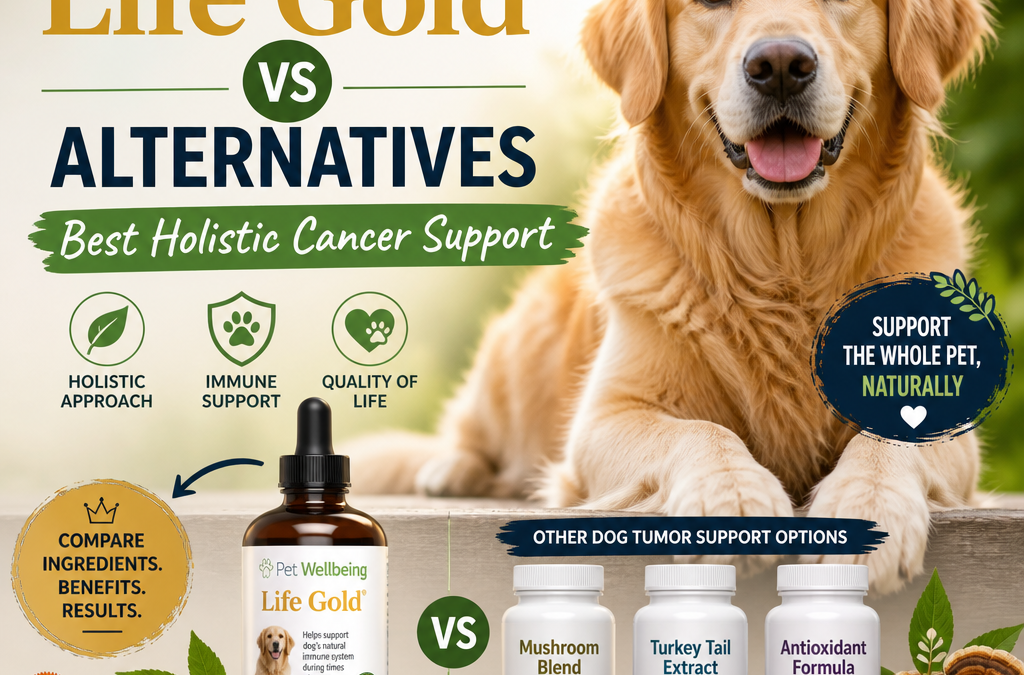
Pet Wellbeing Life Gold vs alternativas é uma comparação importante para guardiões de pets que exploram suporte holístico para câncer ao lado de cuidados veterinários. Quando um cachorro ou gato desenvolve um tumor, as famílias frequentemente buscam maneiras suaves de apoiar o conforto, apetite, função imunológica e qualidade de vida geral. Suplementos podem ter um papel, mas devem ser selecionados com cuidado e usados como parte de um plano médico completo, em vez de serem um substituto para diagnóstico ou tratamento.
O câncer não é uma única doença. Tumores diferem em localização, comportamento, estágio e resposta à terapia. Um suplemento que é apropriado para um animal pode ser inadequado para outro, particularmente quando um pet está fazendo quimioterapia, corticosteroides, medicamentos anti-inflamatórios, anticoagulantes ou outros medicamentos prescritos. Compreender ingredientes, evidências, segurança e objetivos práticos pode tornar a decisão mais informada.
Índice
Compreendendo o suporte holístico para câncer
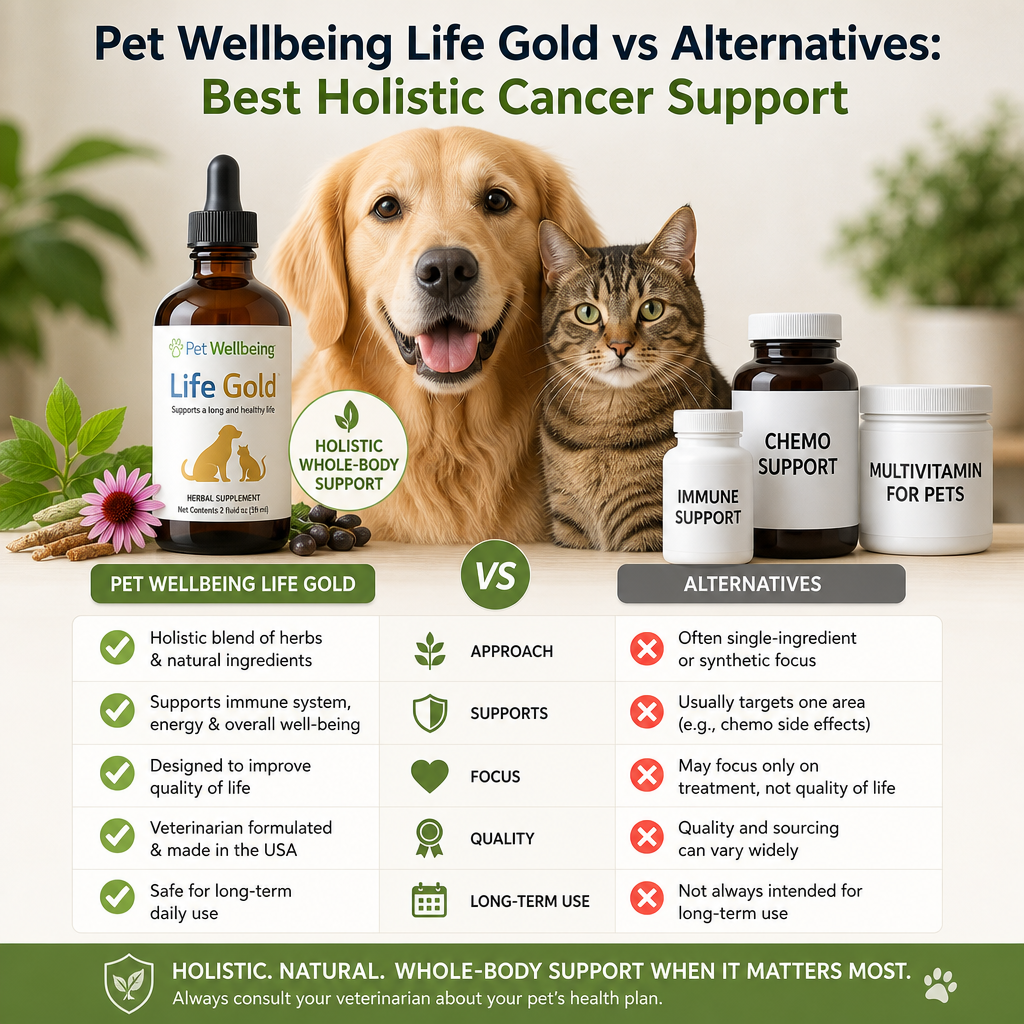
O suporte holístico para câncer foca no paciente como um todo, em vez de apenas no tumor. Isso pode incluir oncologia veterinária, manejo da dor, suporte nutricional, hidratação, assistência à mobilidade, redução do estresse e suplementos cuidadosamente escolhidos. O objetivo geralmente é ajudar um pet a tolerar o tratamento e manter uma vida diária melhor.
Uma abordagem holística não significa rejeitar a medicina convencional. Cirurgia, quimioterapia, radiação, terapias direcionadas e cuidados paliativos podem ser essenciais dependendo do diagnóstico. O cuidado integrativo combina essas opções com estratégias de suporte que abordam apetite, digestão, inflamação, sono, ansiedade e conforto.
Antes de escolher qualquer produto, um veterinário deve confirmar o diagnóstico e discutir a condição atual do pet. Perda de peso, vômito, fraqueza, dificuldade para respirar, dor persistente ou uma massa em crescimento rápido podem exigir atenção médica imediata. Suplementos não podem substituir imagem, biópsia, exames de sangue ou um plano de tratamento individualizado.
Na prática, o suporte holístico para câncer deve corresponder ao estágio da doença do pet e às necessidades diárias. Para alguns animais, o objetivo é manter o apetite e o peso estável. Para outros, pode ser apoiar a energia, o conforto das articulações ou um comportamento calmo durante as visitas de tratamento. É por isso que o mesmo produto não servirá para todos os pacientes.
Quando as famílias começam a comparar produtos de suporte, Pet Wellbeing Life Gold vs alternativas muitas vezes se torna menos sobre lealdade à marca e mais sobre adequação. A melhor opção geralmente é aquela que se alinha ao tipo de câncer do pet, medicamentos atuais e objetivos de conforto.
O cuidado de suporte também pode mudar ao longo do tempo. Um suplemento que fazia sentido logo após o diagnóstico pode ser menos apropriado após a cirurgia, durante a quimioterapia ou quando o apetite do pet muda. É por isso que qualquer comparação de Pet Wellbeing Life Gold vs alternativas deve ser revisitada à medida que o plano de tratamento evolui.
Pet Wellbeing Life Gold vs alternativas: o que comparar
Ao avaliar Pet Wellbeing Life Gold vs alternativas, a primeira consideração é o propósito pretendido do produto. Life Gold é comercializado como um suplemento herbal para cães e gatos, comumente utilizado por proprietários que buscam apoio durante doenças graves. Sua mistura botânica pode incluir ingredientes como cardo mariano, cúrcuma, astrágalo, reishi e outras ervas, dependendo da formulação e rotulagem do mercado.
Como as fórmulas podem mudar, os proprietários de animais de estimação devem ler o rótulo atual e revisar a lista completa de ingredientes com um veterinário. A presença de um ingrediente “natural” não significa automaticamente que é inofensivo. As ervas podem produzir efeitos farmacológicos, interagir com medicamentos ou afetar o fígado, rins, coagulação do sangue, pressão arterial ou sistema imunológico.
Pontos de comparação úteis incluem:
– Transparência dos ingredientes: O rótulo deve identificar claramente os ingredientes ativos e as quantidades sempre que possível.
– Controle de qualidade: Procure informações sobre a fabricação, consistência do lote e testes apropriados para contaminação.
– Adequação da espécie: Cães e gatos metabolizam alguns compostos de maneira diferente, e produtos projetados para uma espécie podem não ser seguros para outra.
– Evidência: Descobertas de laboratório ou uso tradicional não provam necessariamente que um suplemento reduz tumores ou prolonga a sobrevivência.
– Administration: Um produto deve ser prático para administrar e apropriado para o apetite do animal de estimação, saúde digestiva e cronograma de tratamento.
– Compatibilidade veterinária: O suplemento deve se encaixar com segurança em cirurgia, quimioterapia, radiação e outros medicamentos.
Nenhum suplemento deve ser julgado apenas pela contagem de ingredientes ou alegações de marketing. Uma fórmula mais curta com dosagem clara e qualidade confiável pode ser preferível a uma mistura complexa com concentrações incertas. Para uma visão mais ampla sobre abordagens relacionadas, alguns proprietários comparam essas escolhas com alternativas a cogumelos medicinais para suporte a tumores em cães como parte de um plano de cuidados maior.
Uma maneira prática de comparar Pet Wellbeing Life Gold vs alternativas é fazer três perguntas: Qual é o objetivo principal, qual é o risco de interação e quão fácil é monitorar os resultados? Se a resposta não for clara, o produto pode não ser a melhor opção naquele momento.
Também ajuda a pensar sobre o nível de apoio que você deseja. Algumas alternativas são projetadas para serem amplamente suportivas, enquanto outras se concentram em uma tarefa, como inflamação, digestão ou suporte ao fígado. Na discussão sobre Pet Wellbeing Life Gold vs alternativas, produtos mais específicos podem às vezes ser mais fáceis de integrar em um plano veterinário porque são mais simples de acompanhar.
Opções comuns de suporte a tumores em cães
As opções de suporte a tumores em cães variam de acordo com o tipo de câncer e os sintomas do animal de estimação. Alguns guardiões consideram cogumelos medicinais, ácidos graxos ômega-3, antioxidantes, suporte digestivo ou fórmulas herbais. Essas categorias podem oferecer benefícios de suporte, mas seus efeitos não são intercambiáveis.
Cogumelos medicinais como o rabo de peru atraíram interesse devido a compostos chamados polissacaropeptídeos. Pesquisas iniciais, incluindo investigações veterinárias, examinaram seu papel potencial no suporte imunológico e no cuidado do câncer. No entanto, a qualidade do produto e a concentração do extrato diferem substancialmente, portanto, os resultados de uma preparação não podem ser automaticamente aplicados a outra.
Ácidos graxos ômega-3, particularmente EPA e DHA, podem ajudar a suportar a pele, articulações e equilíbrio inflamatório. Eles também são às vezes incluídos em planos nutricionais para pets com câncer. A dose correta depende do peso corporal, dieta, estado de saúde e uso de medicamentos. O óleo de peixe pode causar desconforto digestivo e pode afetar a coagulação do sangue, tornando a orientação veterinária especialmente importante antes da cirurgia.
Cardo mariano é comumente usado para suporte hepático, enquanto a cúrcuma é frequentemente escolhida por suas propriedades anti-inflamatórias. Ambos podem ser incluídos em fórmulas holísticas, mas a absorção, dosagem e interações permanecem preocupações importantes. Os produtos de cúrcuma podem variar amplamente, e algumas formulações de absorção aprimorada podem ter efeitos mais fortes do que preparações padrão.
Uma dieta completa é outra opção de suporte fundamental. Pets com câncer podem precisar de alimentos densos em calorias e altamente digestíveis, especialmente quando o apetite é fraco. A estratégia nutricional correta depende do tipo de câncer, plano de tratamento, função renal e hepática, e preferências do pet. Dietas caseiras devem ser formuladas com um nutricionista veterinário para evitar deficiências.
Proprietários que desejam comparar rotas de suplementos com educação sobre riscos específicos da raça também podem achar útil revisar recursos sobre câncer canino, como riscos de câncer em Golden Retrievers e sinais precoces de tumor, especialmente quando estão tentando entender por que o suporte individualizado é importante.
Para famílias avaliando suporte holístico para câncer, as opções de suporte para tumores em cães mais úteis são geralmente aquelas que podem ser monitoradas claramente. Apetite, qualidade das fezes, peso, hidratação e conforto podem dizer mais do que uma descrição de produto jamais dirá.
Em muitos casos, a melhor das opções de suporte para tumores em cães não é a que tem o painel de ingredientes mais longo. É aquela que um pet pode tolerar consistentemente, que o veterinário pode revisar com segurança e que a família pode pagar para continuar ao longo do tempo.
Alguns proprietários também querem saber se um suplemento é mais apropriado durante o tratamento ativo ou durante os cuidados paliativos. Essa distinção é importante. Produtos de suporte podem ser usados de maneira diferente quando o objetivo é o controle de sintomas em vez de gerenciamento direto do tumor, e Pet Wellbeing Life Gold vs alternativas deve ser avaliado nesse contexto.
Como julgar evidências e expectativas
As evidências para suplementos variam amplamente. Alguns produtos têm estudos laboratoriais, alguns têm pequenos ensaios clínicos, e alguns dependem principalmente do uso tradicional. Isso não significa que os produtos mais fracos sejam inúteis, mas significa que as alegações devem ser pesadas em relação à qualidade real da evidência.
Também é importante separar os cuidados de suporte das alegações de tratamento. Um suplemento pode ajudar um animal de estimação a se sentir melhor sem provar que pode tratar câncer. Essa distinção é importante, especialmente quando um cachorro ou gato tem um tumor agressivo, está se recuperando de uma cirurgia ou está recebendo quimioterapia.
Os proprietários devem ter cautela com a linguagem que promete “destruir”, “remover” ou “reverter” tumores. Se um produto soa muito certo, muitas vezes é. Um plano veterinário responsável foca em metas realistas, como conforto, função, apetite e tolerância ao tratamento.
Também existem sinais práticos de que um produto está fazendo algo útil. Um animal de estimação pode ter um apetite mais constante, menos problemas digestivos, energia melhorada ou melhor mobilidade. Essas mudanças não provam uma cura, mas podem mostrar que um suplemento está servindo a um propósito de suporte dentro do plano mais amplo.
Por outro lado, se um animal de estimação ficar enjoado, sonolento, coçando ou menos interessado em comida após começar a usar um produto, a fórmula pode não ser uma boa combinação. Esta é mais uma razão pela qual Pet Wellbeing Life Gold vs alternativas deve ser avaliado com monitoramento em vez de suposições.
Mesmo quando um suplemento tem uma reputação promissora, ainda precisa ser julgado pelo paciente individual. Um cachorro com doença hepática, um gato com comprometimento renal ou um animal de estimação em anticoagulantes pode precisar de uma opção muito diferente de um animal adulto saudável com um tumor em estágio inicial.
Life Gold comparado com suplementos de ingrediente único
Um produto de combinação pode ser conveniente porque reúne várias ervas em uma única fórmula. Isso pode atrair proprietários que desejam suporte amplo sem dar múltiplas cápsulas ou líquidos. No entanto, produtos de combinação podem dificultar a identificação de qual ingrediente está ajudando ou causando uma reação.
Suplementos de ingrediente único oferecem maior controle. Por exemplo, um veterinário pode recomendar um produto específico de ômega-3, um extrato de cogumelo medido ou um suplemento nutricional com base nas necessidades de um animal de estimação. A desvantagem é que os proprietários devem gerenciar mais produtos e evitar cuidadosamente ingredientes sobrepostos.
Um veterinário também pode aconselhar a pausar os suplementos antes da cirurgia ou durante certos períodos de tratamento. Algumas ervas e antioxidantes podem potencialmente interferir no metabolismo de medicamentos, risco de sangramento ou nos efeitos pretendidos da terapia contra o câncer. O tempo e a coordenação são, portanto, tão importantes quanto a seleção do produto.
Esta é uma razão pela qual Pet Wellbeing Life Gold vs alternativas nunca deve ser reduzido a uma simples decisão de “natural é igual a melhor”. A melhor opção é aquela que se adapta à condição do animal de estimação, ao cronograma de medicação e ao plano de monitoramento.
Também há uma diferença entre suporte geral ao bem-estar e suporte focado em câncer. Um produto pode ser útil para conforto sem ser a escolha mais apropriada para um animal de estimação com um tumor. Ao olhar para Pet Wellbeing Life Gold vs alternativas, pergunte-se se a fórmula visa um objetivo amplo de bem-estar ou uma necessidade clínica mais específica.
Por exemplo, um suplemento de ingrediente único pode ser preferido quando o objetivo é abordar um problema claro, como apetite, inflamação ou suporte ao fígado. Um produto herbal misto pode ser mais atraente quando o objetivo é uma manutenção mais ampla, desde que o veterinário esteja confortável com o perfil de ingredientes.
É por isso que a comparação mais útil não é apenas o que está dentro do frasco, mas como a fórmula se encaixa em todo o plano de tratamento. Pet Wellbeing Life Gold vs alternativas se torna mais fácil de julgar quando a decisão está ligada a um resultado mensurável e a um cronograma específico.
Sete opções práticas de suporte holístico para câncer
Se você está restringindo o campo, essas sete categorias são as opções de suporte holístico para câncer mais comuns que os proprietários de animais discutem com veterinários:
- Misturas de ervas como Life Gold, que pode oferecer cuidados de suporte amplos.
- Extratos de cogumelos medicinais usado para suporte relacionado ao sistema imunológico.
- Ácidos gordurosos de omega-3 para inflamação e suporte nutricional.
- Suplementos de suporte ao fígado como cardo mariano quando clinicamente apropriado.
- para cães que precisam de suporte nutricional e equilíbrio inflamatório. para náuseas, qualidade das fezes e mudanças no apetite.
- Suporte nutricional direcionado incluindo dietas densas em calorias ou altamente digestíveis.
- Cuidados focados no conforto como manejo da dor, suporte à mobilidade e rotinas tranquilas.
Essas categorias não são intercambiáveis, e um animal de estimação pode se beneficiar de mais de uma ao mesmo tempo. A chave é evitar sobrepor produtos sem uma razão. Em uma revisão cuidadosa do Pet Wellbeing Life Gold vs alternativas, a simplicidade geralmente melhora a segurança e torna os resultados mais fáceis de interpretar.
Por exemplo, se a perda de apetite é a principal preocupação, uma fórmula que apoia a digestão e a palatabilidade pode ser mais importante do que uma mistura de ervas ampla. Se o problema é inflamação, um produto de ômega-3 ou outra opção direcionada pode ser mais sensato. Combinar o suporte com o sintoma geralmente é a abordagem mais inteligente.
As famílias às vezes comparam o suporte holístico com informações sobre câncer específicas da raça para entender o risco e a urgência. Recursos como riscos de câncer em Bichon Frise e sinais precoces de tumor podem ajudar a reforçar por que a avaliação veterinária precoce é importante, mesmo quando o objetivo é o suporte natural.
Diretrizes de segurança para suplementos holísticos
Sempre forneça ao veterinário fotografias dos rótulos dos suplementos, doses exatas e uma lista de todos os medicamentos. Monitore o animal de estimação após a introdução de um novo produto. Sinais de alerta possíveis incluem vômito, diarreia, perda de apetite, coceira, letargia, amarelamento das gengivas ou olhos, hematomas incomuns ou mudanças na urinação.
Introduza apenas um novo suplemento por vez, a menos que um profissional veterinário dê instruções diferentes. Isso facilita a identificação de um problema. Nunca use suplementos humanos para câncer, óleos essenciais, extratos de ervas concentrados ou produtos que contenham ingredientes questionáveis sem aprovação profissional. Algumas substâncias que são toleradas por pessoas podem ser tóxicas para animais de estimação.
Mantenha expectativas realistas. O suporte holístico para câncer pode ajudar com conforto, nutrição ou bem-estar geral, mas alegações de que um suplemento pode curar câncer devem ser vistas com ceticismo. O plano de cuidados mais forte combina diagnóstico preciso, tratamento baseado em evidências, controle de sintomas, suporte emocional e reavaliação regular.
Para leitores que desejam um ponto de referência sobre segurança e padrões de evidência, o guia da American Veterinary Medical Association sobre nutrição e suplementos para animais de estimação é uma fonte educacional útil.
Também é prudente confirmar se algum ingrediente pode ser inadequado para animais de estimação com preocupações hepáticas, renais ou de coagulação. Essa precaução é especialmente importante ao comparar o Pet Wellbeing Life Gold vs alternativas, pois misturas de ervas podem incluir múltiplos compostos ativos.
Se um animal de estimação tiver um procedimento agendado, pergunte ao veterinário se os suplementos devem ser interrompidos com antecedência. A resposta mais segura depende do produto, da dosagem, do momento da cirurgia e do estado de saúde do animal de estimação.
Tomando uma decisão informada
A melhor escolha na discussão sobre Pet Wellbeing Life Gold vs alternativas depende do animal de estimação individual, não de uma classificação universal. Life Gold pode ser considerado quando seus ingredientes, qualidade e uso pretendido se encaixam no plano veterinário. Uma alternativa pode ser melhor quando um animal de estimação precisa de um ingrediente específico, tem interações medicamentosas ou não pode tolerar uma mistura herbal complexa.
Acompanhe resultados práticos, como apetite, energia, qualidade das fezes, conforto, sono, mobilidade e interesse em atividades familiares. Essas observações ajudam a determinar se um produto está fornecendo suporte significativo. Exames de acompanhamento e testes apropriados permanecem essenciais, mesmo quando o animal de estimação parece melhor.
Em última análise, o suporte holístico responsável para câncer é cuidadoso, coordenado e centrado na qualidade de vida. Os suplementos podem ser uma parte das opções de suporte para tumores em cães, mas funcionam melhor quando escolhidos com orientação profissional e integrados em um plano mais amplo que respeite tanto as evidências científicas quanto as necessidades únicas do animal.
Se você estiver comparando Pet Wellbeing Life Gold vs alternativas para um cão ou gato com câncer, o próximo passo mais útil geralmente é uma revisão veterinária do plano de tratamento atual, do rótulo do suplemento e dos objetivos específicos para o cuidado de suporte. Essa abordagem mantém a decisão prática, segura e alinhada com as necessidades do animal de estimação.
Muitas famílias acham útil manter um registro simples após iniciar um novo produto. Anote as mudanças no apetite, fezes, conforto, sono e nível de atividade, e leve essas informações para a próxima consulta. Um registro curto pode tornar a avaliação de Pet Wellbeing Life Gold vs alternativas muito mais fácil de avaliar objetivamente.
No final, nenhum suplemento deve substituir um plano diagnóstico ou uma conversa reflexiva com um profissional veterinário. O melhor resultado geralmente é uma combinação de cuidados médicos, manejo de sintomas e o produto de suporte certo no momento certo.