
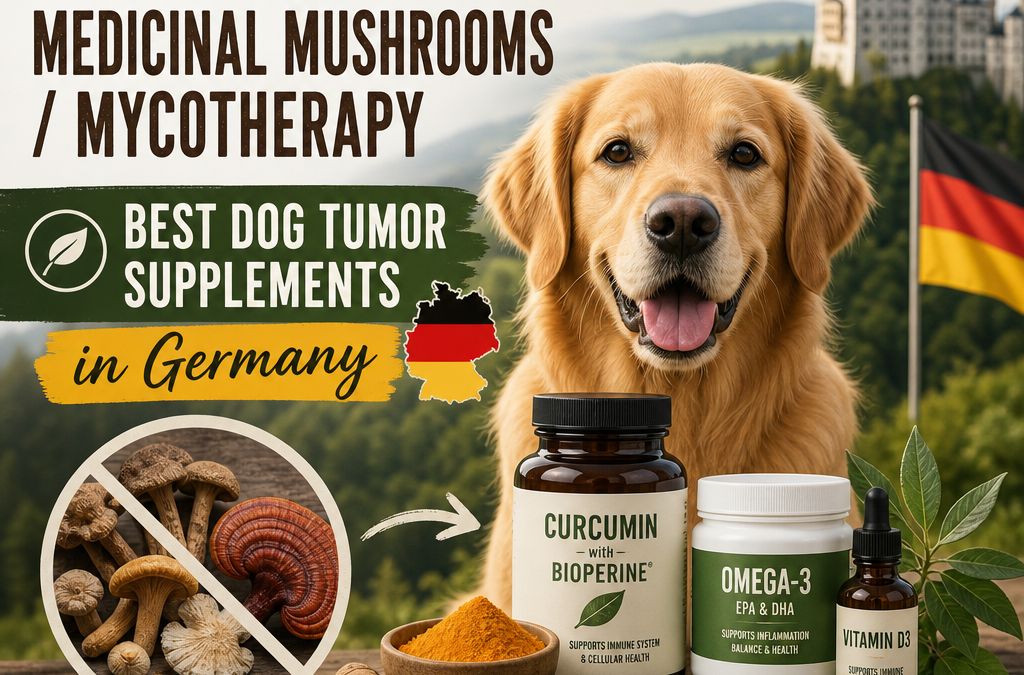
Alternativ till medicinska svampar / mykoterapi söks alltmer av hundägare i Tyskland som vill ha stödjande alternativ för en hund som diagnostiserats med en tumör. Medan svampextrakt som kalkonstjälk, reishi eller maitake ofta diskuteras inom komplementär cancervård, är de inte de enda kosttillskotten som finns tillgängliga. Andra näringsmässiga tillvägagångssätt kan hjälpa till att upprätthålla aptit, vikt, matsmältning, energi och allmän motståndskraft—men de bör alltid användas tillsammans med veterinärdiagnos och behandling, aldrig som en ersättning för professionell vård.
Innehållsförteckning
- Förståelse för alternativ till hundtumörtillskott i Tyskland
- Omega-3-fettsyror som ett praktiskt alternativ
- Högkvalitativt protein och näringsstöd
- Antioxidanttillskott: fördelar och begränsningar
- Prebiotika, probiotika och matsmältningsstöd
- Curcumin och växtbaserade formler
- Cannabinoidprodukter och veterinär försiktighet
- Hur man väljer säkrare tillskott i Tyskland
- Att stödja livskvalitet förblir prioriterat
Förståelse för alternativ till hundtumörtillskott i Tyskland
En tumördiagnos kan vara överväldigande, särskilt när ägare presenteras med många tillskott och motstridiga påståenden. Den mest användbara metoden är att fokusera på hundens individuella tillstånd snarare än att välja produkter baserat enbart på popularitet. Ålder, tumörtyp, sjukdomens stadium, nuvarande medicinering, aptit, organfunktion och planerad behandling påverkar alla vilka tillskott som kan vara lämpliga.
I Tyskland regleras husdjurskosttillskott vanligtvis som komplementärfoder snarare än som läkemedel. Denna åtskillnad är viktig. En produkt kan stödja näring eller allmänt välbefinnande, men den kan inte lagligt marknadsföras som en bevisad bot för cancer om den inte har genomgått den lämpliga medicinska godkännandeprocessen. Påståenden om att ett tillskott kan lösa upp tumörer, ersätta kemoterapi eller garantera remission bör behandlas med försiktighet.
Innan du introducerar någon produkt, diskutera den med en veterinär—helst en som är bekant med veterinär onkologi. Vissa tillskott kan påverka blodkoagulering, leverenzym, blodtryck, immunaktivitet eller absorption och metabolism av receptbelagda läkemedel.
Eftersom många läsare börjar med att söka efter alternativ till medicinska svampar / mykoterapi, är det bra att tänka bortom en enda kategori och jämföra näringsstöd, symtomhantering och produktkvalitet snarare än att enbart förlita sig på en populär etikett. I praktiken kombinerar den bästa planen ofta kost, övervakning och noggrant utvalda tillskott som passar hundens medicinska behov.
För hundar som får behandling är det också värt att fråga om något stödjande produkt kan påverka kirurgi, kemoterapi eller smärtkontroll. De säkraste alternativ till medicinska svampar / mykoterapi är vanligtvis de som väljs med ett tydligt mål, en definierad dos och en plan för uppföljning.
Omega-3-fettsyror som ett praktiskt alternativ
Fiskolja som innehåller EPA och DHA är ett av de mest vanligt övervägda kosttillskotten för hundtumörer. Dessa långkedjiga omega-3-fettsyror stödjer normal inflammatorisk reglering och kan vara användbara för hundar som upplever viktminskning, minskad aptit eller muskelförlust. De kan också bidra till hud-, päls- och kardiovaskulär hälsa.
En veterinär bör hjälpa till att bestämma den lämpliga dosen baserat på hundens kroppsvikt, kost, diagnos och allmänna hälsa. Produkter bör testas för renhet och oxidation, med tydlig information om det faktiska innehållet av EPA och DHA snarare än bara den totala mängden fiskolja.
Potentiella biverkningar inkluderar lösa avföringar, illamående eller en obehaglig fiskliknande lukt. Höga doser kan också påverka blodkoaguleringen, vilket gör veterinärövervakning särskilt viktig före operation eller hos hundar som får antikoagulantia.
Omega-3-fettsyror fungerar inte som en direkt cancerbehandling, men de kan vara en praktisk del av stödjande vård. För vissa hundar är de bland de mest användbara alternativ till medicinska svampar / mykoterapi eftersom de passar in i en bredare kostplan och är relativt lätta att administrera när produktkvaliteten är hög.
Högkvalitativt protein och näringsstöd
Cancer och andra allvarliga sjukdomar kan öka risken för viktminskning och muskelförlust. I dessa fall kan det mest värdefulla kosttillskottet vara en näringsmässigt lämplig kost med tillräckligt med kalorier och lättsmält protein snarare än en komplex örtformel.
Beroende på hundens tillstånd kan en veterinär rekommendera en energirik terapeutisk kost, ytterligare våtfoder eller noggrant utvalda proteinkällor. Vissa hundar har nytta av små, frekventa måltider, mild uppvärmning av maten eller smakförstärkning för att uppmuntra till ätande.
Proteinrestriktion bör inte införas automatiskt. Det kan vara lämpligt för vissa njur- eller leversjukdomar, men många hundar med tumörer behöver tillräckligt med protein för att bevara muskler. Eventuella större kostförändringar bör ta hänsyn till laboratorieresultat, behandlingsmål och hundens förmåga att smälta och tolerera maten.
Praktiska utfodringsidéer under behandling
Ägare känner ofta press att köpa speciella produkter när aptiten sjunker, men enkla förändringar i utfodringen kan vara de mest hjälpsamma. Försök att erbjuda mindre måltider oftare, använda mycket smakligt våtfoder eller tillsätta varmt vatten eller lågsalt buljong om din veterinär godkänner det. Om hunden går ner i vikt kan en veterinärdiet utformad för återhämtning göra mer än en lång lista med kosttillskott.
När man jämför alternativ till medicinska svampar / mykoterapi, näring är ofta den mest praktiska platsen att börja eftersom den stödjer energiintag, matsmältning och daglig komfort samtidigt. En hund som äter mer konsekvent är ofta lättare att övervaka, lättare att medicinera och mer bekväm överlag.
Det kan hjälpa att hålla en enkel utfodringslogg. Notera hur mycket hunden äter, vilka texturer som accepteras och om illamående, dregling eller kräkningar uppträder efter måltider. Denna journal kan vägleda din veterinär mer effektivt än gissningar om huruvida ett kosttillskott “fungerar.”
Antioxidanttillskott: fördelar och begränsningar
Vitaminerna C och E, selen och andra antioxidanta näringsämnen ingår ibland i stödjande formler. Dessa näringsämnen hjälper till att skydda celler från oxidativ skada när de ges i lämpliga mängder. Men mer är inte nödvändigtvis bättre. Överdriven tillskott kan orsaka toxicitet eller störa noggrant planerad behandling.
Förhållandet mellan antioxidanter och cancerterapi kan också vara komplext. Vissa kemoterapi- och strålbehandlingsprotokoll förlitar sig delvis på oxidativa mekanismer, så högdos användning av antioxidanter kanske inte är lämplig under varje behandlingsplan. Detta betyder inte att alla antioxidanter måste undvikas; det betyder att dosering och timing bör individualiseras.
En komplett kommersiell kost innehåller vanligtvis redan essentiella vitaminer och mineraler. Att lägga till flera överlappande produkter kan oavsiktligt skapa överdriven intag, särskilt av fettlösliga vitaminer som A, D och E.
Av den anledningen är några av de mest rimliga alternativ till medicinska svampar / mykoterapi inte “fler kosttillskott” utan bättre balanserade val med en smalare syfte. En enda väl utformad produkt är ofta säkrare än flera överlappande.
Prebiotika, probiotika och matsmältningsstöd
Matsmältningsproblem är vanliga hos hundar med cancer, särskilt under kemoterapi, efter antibiotika eller när aptit och aktivitetsnivåer förändras. Prebiotika och probiotika kan stödja en hälsosam tarmmiljö och hjälpa till att upprätthålla normal avföringskvalitet hos vissa hundar.
Produkter som är speciellt utformade för hundar är att föredra eftersom stammar, koncentration, lagringskrav och dosering kan variera kraftigt. Ett probiotikum bör inte ses som en behandling för en tumör, men det kan vara en användbar del av bredare stödjande vård.
Om en hund har ihållande kräkningar, svår diarré, blod i avföringen, uttorkning eller buksmärtor, är kosttillskott inte en ersättning för veterinärbedömning. Dessa symtom kan indikera infektion, behandlingskomplikationer, blockering, pankreatit eller ett annat brådskande problem.
För ägare som utforskar alternativ till Medicinska svampar / mykoterapi kan tarmstöd vara ett rimligt komplement till kost och hydrering eftersom det kan göra daglig utfodring enklare och hjälpa hunden att förbli starkare genom behandlingen. I många fall är matsmältningskomfort skillnaden mellan att upprätthålla vikt och att långsamt försämras över tid.
Fråga din veterinär om hunden kan ha nytta av ett probiotikum efter antibiotika, under stressiga perioder eller när avföringen blir inkonsekvent. Denna typ av riktad användning är ofta mer hjälpsam än kontinuerlig, oplanerad tillskott.
Curcumin och växtbaserade formler
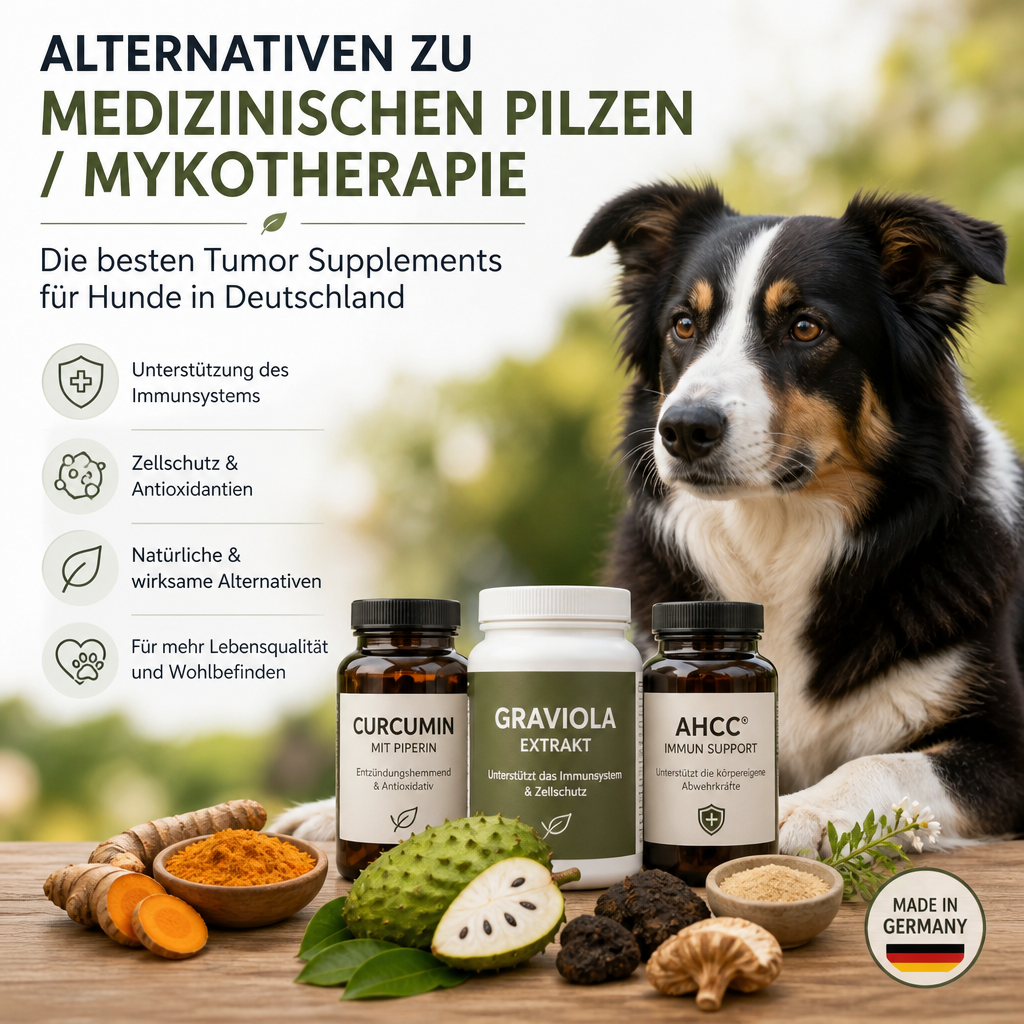
Kurkumin, som härstammar från gurkmeja, ingår ofta i kompletterande djurprodukter. Laboratorieforskning har undersökt dess antiinflammatoriska och cellulära effekter, men bevisen hos hundar med naturligt förekommande tumörer är fortfarande begränsade. Absorptionen är också variabel, och formuleringar kan innehålla ytterligare ingredienser som påverkar säkerheten.
Andra botaniska ingredienser—såsom boswellia, mjölktistel, grönt te-föreningar, eller traditionella europeiska örter—kan främjas för immun- eller leverstöd. “Naturlig” betyder inte automatiskt säker. Växtextrakt kan interagera med kemoterapi, lugnande medel, antiinflammatoriska läkemedel, eller mediciner som bearbetas av levern.
I Tyskland bör köpare kontrollera om en produkt tillhandahåller en komplett ingredienslista, batchinformation, tillverkarens detaljer, utfodringsanvisningar, och tydliga varningar. Undvik produkter med odeklarerade proprietära blandningar eller dramatiska löften. Om du jämför alternativ till Medicinalsvampar / mykoterapi, spelar produkttransparens lika stor roll som ingrediensnamnet.
Kurkumin och liknande botaniska ämnen kan vara värda att diskutera när målet är symtomstöd, inte bot. I det sammanhanget är de bästa alternativ till medicinska svampar / mykoterapi produkterna som förblir förståeliga, konsekventa, och lätta att övervaka över tid.
För allmän referens om hundcancervård och behandlingsplanering, är den American Veterinary Medical Association’s guide to cancer in dogs är en användbar utbildningsresurs.
Cannabinoidprodukter och veterinär försiktighet
CBD-produkter övervägs ibland för hundar med kronisk smärta, ångest, eller minskad livskvalitet. Bevisen fortsätter att utvecklas, och produktkvaliteten kan variera. CBD kan orsaka dåsighet, gastrointestinala besvär, eller förändringar i leverenzymaktivitet, och det kan interagera med andra mediciner.
Cannabinoidprodukter bör endast diskuteras med en veterinär som känner till hundens kompletta medicinlista. Produkter som innehåller betydande mängder THC är särskilt olämpliga eftersom THC kan vara giftigt för hundar.
Eftersom dosering och produktkomposition skiljer sig så mycket, bör cannabinoidtillskott aldrig väljas bara för att de är populära. Bland de många alternativ till medicinska svampar / mykoterapi, är CBD en som kräver särskilt noggrann granskning, tydliga förväntningar, och regelbunden omprövning.
Sju stödjande alternativ att diskutera med din veterinär
Om du jämför stödjande produkter för en hund med en tumör, är dessa sju kategorier de vanligaste utgångspunkterna:
- Omega-3-fettsyror för inflammationsstöd och kroppstillstånd
- Högkvalitativt lättsmält protein för att upprätthålla muskel och styrka
- Målmedvetna kalorier och återhämtningsinriktade dieter för viktstöd
- Noggrant doserade antioxidantnäringsämnen, när det är lämpligt
- Probiotika och prebiotika för matsmältningsstabilitet
- Växtbaserade formler som kurkumin, när det är kompatibelt med behandling
- CBD eller andra cannabinoidprodukter, endast under veterinärens vägledning
Dessa är inte botemedel, och de är inte utbytbara. Rätt val beror på hundens diagnos, aktuella symtom, mediciner och tolerans. I praktiken är de bästa alternativ till medicinska svampar / mykoterapi de som matchar ett tydligt kliniskt behov snarare än ett marknadsföringspåstående.
Hur man väljer säkrare tillskott i Tyskland
När du jämför alternativ för hundtumörkosttillskott, överväg följande punkter:
- Välj produkter med transparent märkning och exakta mängder ingredienser.
- Se efter information om kvalitetskontroll, såsom oberoende kontaminanttestning.
- Undvik produkter som påstår sig bota cancer eller ersätta veterinärbehandling.
- Introducera endast ett nytt kosttillskott i taget.
- Registrera produkten, dosen, startdatum, aptit, avföringskvalitet och andra förändringar.
- Stoppa produkten och kontakta en veterinär om negativa effekter uppstår.
- Omvärdera kosttillskott regelbundet när hundens tillstånd och behandling förändras.
Tyska veterinärpraktiker kan också erbjuda tillgång till veterinärnutritionstjänster, onkologikonsultationer och laboratorieövervakning. Blodtester kan vara särskilt användbara när en hund får kosttillskott som kan påverka levern, njurarna eller blodkoagulationen.
Om du läser om alternativ till medicinska svampar / mykoterapi eftersom en produkt inte passade din hund, kan det hjälpa att ta med etiketten till din veterinär för att jämföra ingredienser mot hundens diagnos och aktuella mediciner. En praktisk översyn är ofta mer värdefull än att prova nästa annonserade “mirakel”-produkt.
Det är också klokt att kontrollera om kosttillskottet tillverkades för husdjur eller var avsett för mänskligt bruk. Mänskliga produkter kan innehålla doser, sötningsmedel eller fyllmedel som inte är idealiska för hundar. Tydlig sourcing och enkla formuleringar gör stödjande vård lättare att hantera.
Att stödja livskvalitet förblir prioriterat
Syftet med komplementär vård är att hjälpa en hund att må och fungera så bra som möjligt. En användbar plan kan inkludera smärtkontroll, illamåendebehandling, aptitstöd, en lämplig diet, mild aktivitet, bekväm vila och känslomässigt stöd från familjen. Kosttillskott kan ibland bidra till denna plan, men de bör inte distrahera från beprövade behandlingar eller fördröja nödvändig vård.
För många hundar är det bästa alternativet till mykoterapi en noggrant anpassad kombination av näring, symtomhantering och regelbunden veterinärövervakning. Rätt val beror mindre på att hitta en enda “bästa” produkt och mer på att matcha stödjande vård med hundens diagnos, behandling och dagliga behov.
Med andra ord, de mest pålitliga alternativen till Medicinska svampar / mykoterapi är de som passar hundens aktuella medicinska situation, är lätta att tolerera, och regelbundet granskas med en veterinär. Om en produkt hjälper med aptit, avföringskvalitet, eller komfort utan att orsaka biverkningar, kan den förtjäna sin plats i planen.
Ägare som håller fokus på praktiska mål får vanligtvis bättre resultat än de som jagar dramatiska påståenden. I den meningen är de bästa alternativ till medicinska svampar / mykoterapi är inte de mest bländande – de är de säkraste, mest relevanta, och mest konsekventa alternativen för den enskilda hunden.
Om du fortfarande forskar om bredare produktalternativ, kan du också hitta vår guide till K9 Immunity Alternativ: 7 Bästa Prisvärda Hund Tumör Kosttillskott i Norge användbar för att jämföra komplementära stödsstrategier.
I slutändan är målet inte att ersätta veterinär onkologi, utan att stödja hunden med noggrant val, nära övervakning, och realistiska förväntningar. När de väljs genomtänkt, alternativ till medicinska svampar / mykoterapi kan spela en hjälpsam roll i komfort och livskvalitet.