
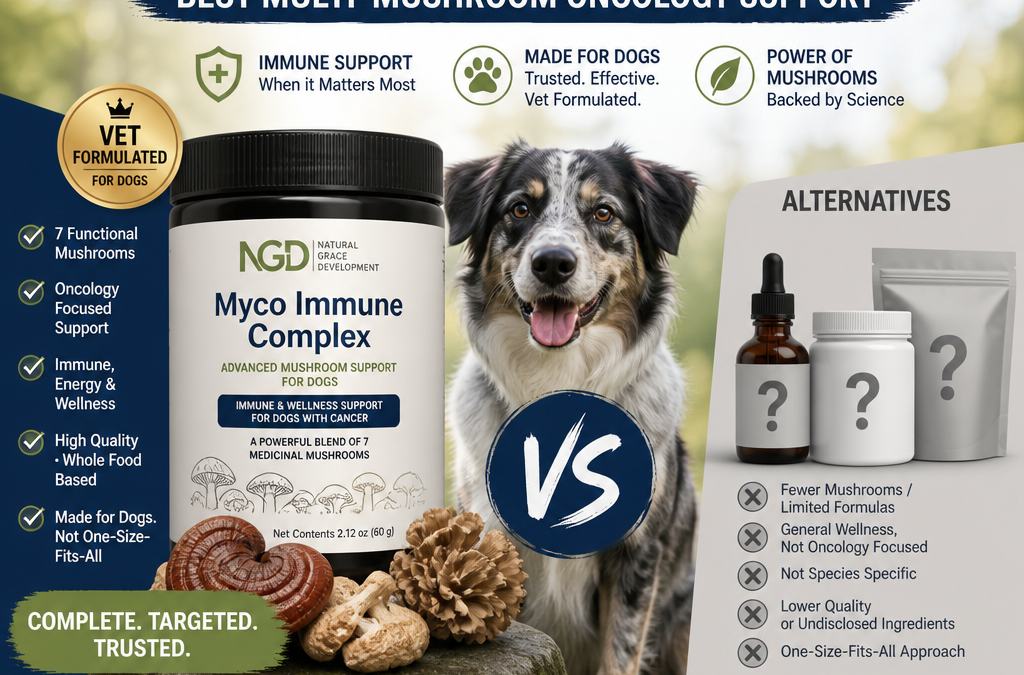
NGD Myco Immune Complex vs Alternatives is an important comparison for pet owners exploring supportive care for dogs with cancer or other serious health concerns. Multi-mushroom formulas are often discussed as complementary options because they may provide compounds associated with immune regulation, antioxidant activity, and general wellness. However, they are not substitutes for veterinary diagnosis or treatment. The best approach is to understand what these products contain, how they differ, and how they may fit safely into a veterinarian-guided care plan.
For readers in France and beyond, the same basic rule applies: compare the label, the extract method, the testing, and the dose before choosing a supplement. If you want another example of how formula design and affordability can affect selection, see this K9 Immunity alternative guide.
What Is a Multi-Mushroom Immune Complex?
A multi-mushroom immune complex typically combines extracts from several medicinal mushrooms in one supplement. Common ingredients may include turkey tail, reishi, maitake, shiitake, agaricus blazei, cordyceps, and lion’s mane. Each mushroom contains a different profile of polysaccharides, beta-glucans, triterpenes, antioxidants, or other naturally occurring compounds.
The goal of combining mushrooms is not necessarily to treat a tumor directly. Instead, these products are generally positioned as nutritional support for immune function, vitality, stress resilience, and overall well-being. In dogs undergoing cancer care, owners may consider them alongside surgery, chemotherapy, radiation, pain management, nutritional support, or palliative care.
Product quality matters substantially. Mushroom powders, hot-water extracts, dual extracts, and concentrated fruiting-body products are not equivalent. A label should clearly identify the mushroom species, plant part used, extraction method, serving size, and quality testing. Vague “mushroom blend” descriptions make it difficult to evaluate potency or compare formulas accurately.
When you review a formula, pay attention to whether the manufacturer explains the purpose of the blend. A transparent supplement will usually state whether it is designed for broad immune support, digestive comfort, stress response, or general vitality. In contrast, a vague marketing description can make it hard to understand how the product fits into a dog’s care plan.
In practice, the best multi-mushroom products are easy to evaluate because the label answers simple questions: What mushrooms are included? Are the extracts standardized? Are the ingredients sourced from fruiting bodies, mycelium, or both? Does the company disclose contaminant testing? These details matter because they help owners compare one supplement to another without relying on marketing language alone.
Another helpful question is whether the formula is intended for short-term use, long-term daily support, or use during active oncology care. A supplement designed for broad wellness may be very different from one created for dogs with serious disease. Understanding that distinction makes the comparison more practical and may reduce the temptation to choose a product simply because it sounds comprehensive.
Some owners also prefer to look at the manufacturing process itself. For example, hot-water extraction may be used to concentrate certain mushroom compounds, while dual extraction can target a wider range of constituents. That does not automatically make one approach superior in every case, but it does give a clearer basis for comparison when reviewing multi-mushroom immune formulas.
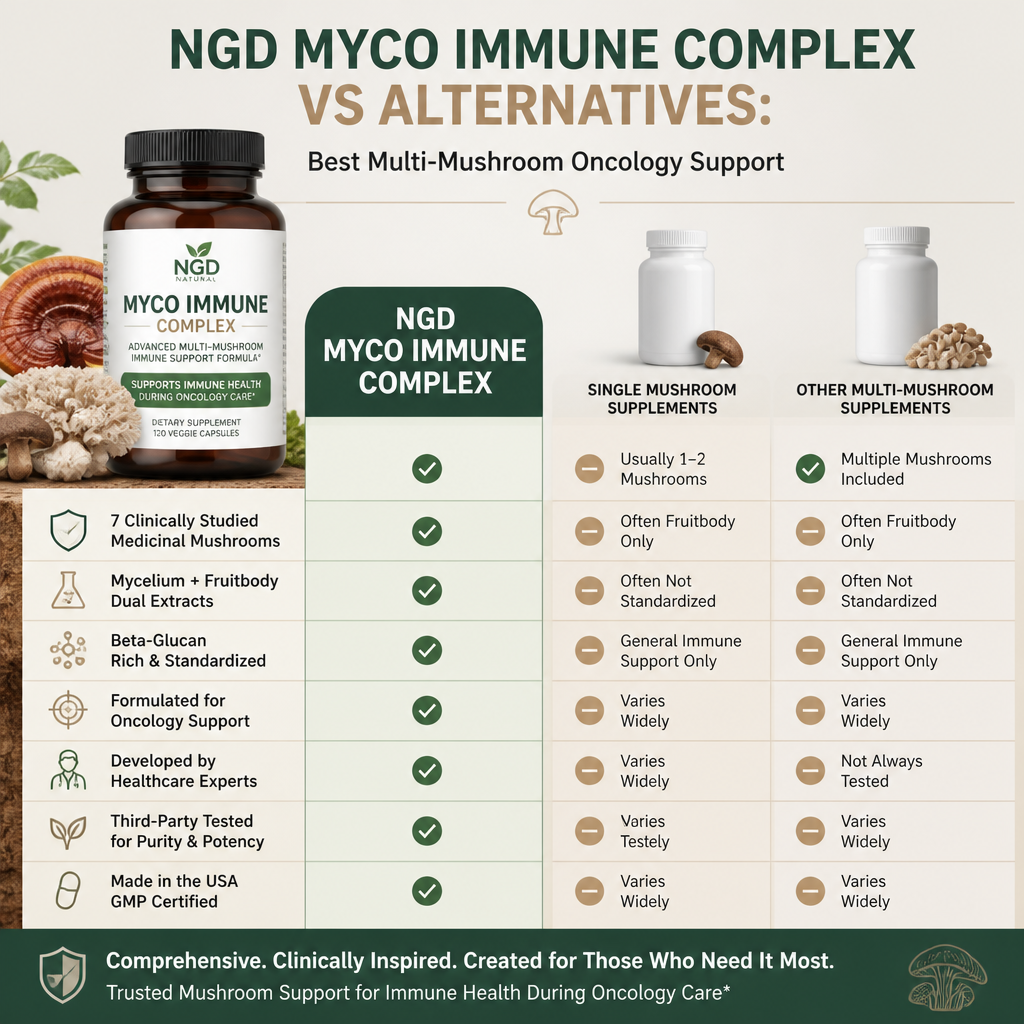
NGD Myco Immune Complex vs Alternatives
When comparing NGD Myco Immune Complex vs alternatives, begin with the formula rather than the marketing claims. A broad-spectrum blend may offer convenience by bringing several mushrooms together, while a single-mushroom product may provide more focused dosing and easier monitoring.
A multi-mushroom product can be appealing when the goal is general oncology support and the owner wants to avoid giving several separate supplements. It may also provide a wider range of mushroom compounds. On the other hand, single-ingredient products can be useful when a veterinarian recommends a particular mushroom, when a dog has a sensitive digestive system, or when the owner wants to introduce one supplement at a time.
Viktiga jämförelsepunkter inkluderar:
- Ingredienstydlighet: Look for exact mushroom species and amounts.
- Extraction quality: Extracts may concentrate compounds differently from raw powders.
- Beta-glucan information: Stating beta-glucan content is often more useful than listing only total mushroom weight.
- Testing: Independent testing can help verify identity, purity, and the absence of contaminants.
- Inactive ingredients: Flavorings, fillers, sweeteners, and preservatives should be reviewed carefully.
- Dosering instruktioner: Products should provide dog-specific guidance or clearly direct owners to consult a veterinarian.
- Formulation purpose: Some blends emphasize immune support, while others focus on energy, digestion, or cognitive health.
No supplement is automatically superior simply because it contains more mushrooms. A carefully made formula with transparent labeling may be more valuable than a larger blend with unspecified quantities.
In practical terms, the right choice often depends on how the dog tolerates each ingredient. Some owners prefer a simpler product first, then add support only if the veterinarian feels it is appropriate. Others choose a combination formula because it is easier to administer consistently. Both approaches can be reasonable when the product quality is strong.
The comparison also becomes clearer when you think about goals. If the main objective is maintaining general wellbeing during treatment, a multi-mushroom formula may be enough. If the goal is to support a specific plan recommended by the oncology team, a more targeted product may be easier to monitor and adjust over time.
Another practical difference is cost per day. A lower sticker price does not always mean better value if the serving size is large or the extract concentration is low. Likewise, a premium product may still be poor value if the label is unclear or the product is hard to dose consistently. For many owners, the best choice is the one that combines clarity, tolerability, and realistic long-term affordability.
For dogs already receiving medication, the comparison should also include compatibility with the current plan. A formula that seems impressive on paper may still be a poor fit if it complicates appetite, causes loose stool, or overlaps with an ingredient already used elsewhere in the care routine. The safest way to compare NGD Myco Immune Complex vs alternatives is to think beyond the label and evaluate the whole care context.
In addition, consistency matters more than novelty. A dog that accepts one product reliably is often better supported than a dog that cycles through several different supplements without a clear plan. That is why the best alternative is not always the one with the longest ingredient list; it is the one that can be used steadily, safely, and with veterinary oversight.
Oncology + Multi-Mushroom Support
The concept of oncology + multi-mushroom support is based on using mushroom-derived compounds as complementary nutritional tools during cancer care. Research on medicinal mushrooms has investigated beta-glucans and other constituents for their interactions with immune cells, inflammatory signaling, and antioxidant pathways. Turkey tail, in particular, has received attention in veterinary and human research because of its polysaccharide content.
Still, evidence varies by mushroom, extract, cancer type, species, and study design. Results from laboratory experiments or human clinical trials cannot automatically be applied to every dog. A supplement that appears promising in one setting may not have been evaluated for a specific canine tumor, medication combination, or health condition.
Supportive care may help some dogs maintain appetite, body condition, energy, and quality of life, but these outcomes should be monitored realistically. Owners should track appetite, water intake, stool quality, vomiting, activity, pain behaviors, weight, and any changes occurring after a supplement is introduced. This information can help the veterinary team decide whether the product appears well tolerated.
For pet owners researching oncology + multi-mushroom support, it helps to separate research language from marketing language. Terms such as “immune support” or “cellular support” are broad, and they do not guarantee a specific outcome for an individual dog. What matters most is whether the product is cleanly made, appropriately dosed, and well tolerated over time.
If you want to review a trusted educational source on cancer and complementary care, the National Cancer Institute’s complementary and integrative medicine overview explains how supportive therapies are typically evaluated in evidence-based care.
In real-world use, supportive mushroom products are usually considered part of a broader strategy rather than a stand-alone intervention. That strategy may include pathology review, imaging, staging, pain control, dietary planning, and scheduled rechecks. Within that framework, NGD Myco Immune Complex vs alternatives becomes a question of fit: which product is most appropriate for the dog’s current treatment stage, appetite level, and ability to tolerate supplements?
It also helps to avoid unrealistic expectations. A dog may seem brighter after starting a new formula simply because the overall care plan improved at the same time. Conversely, a poor response to one supplement does not prove that all mushroom blends are ineffective. This is why record-keeping is useful. Simple notes about appetite, energy, stools, and behavior can make it easier to judge whether the supplement is contributing positively.
Dog Tumor Support Options Beyond Supplements
Dog tumor support options extend well beyond mushroom products. Veterinary oncology care may include surgery, chemotherapy, radiation therapy, targeted medication, immunotherapy, pain control, anti-nausea treatment, and nutritional planning. The appropriate combination depends on the tumor’s type, stage, location, grade, and the dog’s age and general health.
Nutrition is another important consideration. Dogs with cancer may need a complete and balanced diet that supports stable weight and muscle mass. Some dogs benefit from appetite support or adjustments in meal texture and frequency. There is no universal “cancer diet,” and restrictive homemade diets can create nutritional deficiencies unless formulated by a veterinary nutrition professional.
Lifestyle support also matters. Comfortable bedding, reduced household stress, gentle activity, hydration, and regular monitoring can improve daily quality of life. For dogs with advanced disease, palliative care may focus on comfort rather than aggressive treatment. Supplements should serve that plan, not distract from signs of pain, breathing difficulty, dehydration, or rapid decline.
Many families also ask whether dog tumor support options should change after diagnosis or after treatment begins. The answer depends on the case. A dog that is stable on therapy may tolerate one plan well, while a dog with nausea, weight loss, or liver changes may need a simpler approach. That is why rechecking the plan with the veterinary team matters as much as choosing the product itself.
In some cases, the most useful support is not another supplement at all. Consistent meals, careful symptom tracking, and prompt follow-up for new signs often provide more value than adding multiple products at once. Supplements are best used as part of a broader, organized care strategy.
Owners comparing supplement options often benefit from writing down the dog’s current treatment goals before buying anything new. For example, the priority might be maintaining appetite during chemotherapy, preserving energy during recovery, or reducing the number of separate capsules a senior dog must take each day. Once those goals are clear, it becomes easier to decide whether a mushroom blend, a targeted supplement, or no supplement at all is the best next step.
For more practical comparison research, it may also help to review another product example such as the Healthy Hound Pure Turkey Tail alternative guide, especially if you are comparing single-ingredient support with a broader mushroom blend. Looking at both categories side by side can make it easier to understand where a multi-mushroom product fits within a canine oncology plan.
It is also worth noting that supportive care does not have to be complicated to be effective. Sometimes a dog does better with fewer variables, not more. A simple routine that combines veterinary treatment, stable nutrition, and one well-chosen supplement can be easier to maintain than a large stack of products with overlapping purposes.
Säkerhet och veterinärvägledning
Mushroom supplements can cause gastrointestinal upset, loose stool, reduced appetite, or allergic reactions. They may also interact with medications that affect the immune system, blood clotting, blood pressure, or liver metabolism. Dogs with autoimmune disease, bleeding disorders, liver or kidney problems, or upcoming surgery may require special caution.
Never use a human supplement without checking its ingredients. Some products contain xylitol, concentrated herbs, high levels of vitamins, or other substances that may be unsafe for dogs. Even a pet-labeled product should be reviewed with the veterinarian, particularly when the dog is receiving chemotherapy, corticosteroids, nonsteroidal anti-inflammatory drugs, or other prescription treatments.
Introduce only one new supplement at a time whenever possible. This makes it easier to identify adverse reactions and determine whether the product is helping. Follow the label or veterinary instructions, and avoid assuming that a higher dose will produce better results.
If a dog develops vomiting, diarrhea, itching, swelling, weakness, or loss of appetite after starting a new formula, stop the product and contact the veterinary team. Monitoring matters just as much as the ingredient list. Even a natural product can be unsuitable for a particular dog if the timing, dose, or overall health status is not right.
A veterinarian can also help determine whether a supplement is useful during a specific phase of care. For example, a dog preparing for surgery may need a different plan from a dog in long-term maintenance or one receiving palliative support. That timing issue is easy to overlook, but it can be just as important as the ingredient panel.
It is helpful to keep an updated list of every supplement, medication, and treat the dog receives. This reduces the risk of duplication and makes it easier to spot possible interactions. When owners bring that list to the veterinary visit, discussions about NGD Myco Immune Complex vs alternatives become far more productive because the conversation is based on the full picture rather than a single product page.
For dogs with a history of sensitivity, a gradual introduction may be the most cautious approach. Starting with a small amount and observing the dog over several days can reveal whether the supplement is tolerated before any full-dose plan is considered. That cautious mindset is especially helpful when a dog is already dealing with cancer-related stress or digestive instability.
Making a Practical Comparison
The best choice among NGD Myco Immune Complex and alternatives depends on the dog’s medical situation, the product’s quality, and the veterinary team’s recommendations. A broad formula may be convenient, while a targeted product may make more sense for a dog with specific needs or medication concerns. Cost, availability, palatability, and the ability to maintain consistent dosing are also practical factors.
Most importantly, owners should view multi-mushroom products as supportive supplements rather than cancer cures. Transparent labeling, responsible sourcing, realistic expectations, and veterinary oversight provide the strongest foundation for safe use. When integrated thoughtfully with evidence-based oncology care, nutrition, symptom management, and quality-of-life monitoring, a mushroom supplement may become one part of a comprehensive support plan for a dog facing cancer.
For that reason, NGD Myco Immune Complex vs alternatives should be judged on substance, not hype. If a formula is clearly labeled, appropriate for dogs, and easy to give consistently, it may fit well into a veterinarian-guided plan. If it lacks testing, hides the extract details, or creates digestive problems, another option is likely a better choice.
In the end, NGD Myco Immune Complex vs alternatives is less about finding a universal winner and more about matching the right supplement to the right dog. When owners, veterinarians, and oncology teams work together, support decisions become safer, simpler, and more meaningful.
To make the comparison even more practical, focus on three questions: Can the dog take it comfortably, does it fit the current treatment plan, and does the company provide enough information to trust the formula? If the answer to all three is yes, the supplement may deserve a place in the plan. If not, it is reasonable to keep looking.
In that sense, the phrase NGD Myco Immune Complex vs alternatives is really a reminder to compare with care. A good product should support the dog’s comfort and the owner’s ability to keep a consistent routine. That combination is often more valuable than a long list of ingredients or a bold marketing promise.
Whether you are evaluating a multi-mushroom blend, a single mushroom extract, or another form of canine oncology support, the same principles apply: clarity, safety, and fit. Those are the qualities that matter most when choosing support for a dog with tumors in France or anywhere else.