
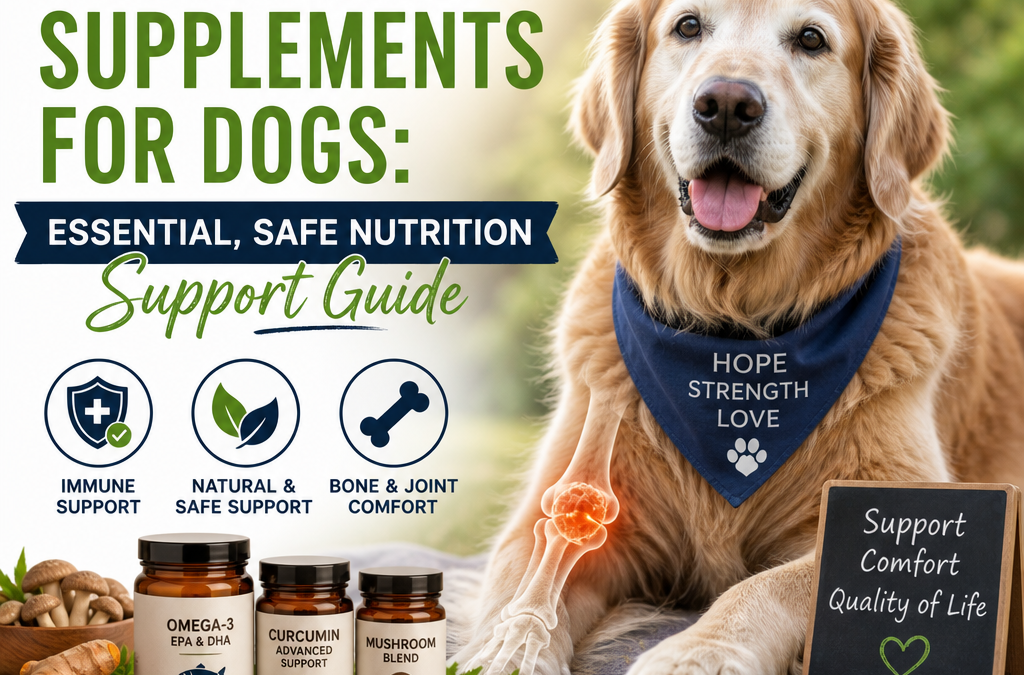
Osteosarkom Takviyeleri, köpekler için kanser tedavisi sırasında yardımcı besin desteği sağlayabilir, ancak bunlar bir tedavi değildir ve asla cerrahi, kemoterapi, ağrı kontrolü veya veteriner rehberliğinin yerini almamalıdır. Köpeklerdeki osteosarkom, genellikle ağrı, şişlik, topallama ve azalmış aktiviteye neden olan agresif bir kemik kanseridir. Tedavi planları, bir köpeğin yaşı, genel sağlığı, tümörün yeri ve kanser aşamasına göre farklılık gösterdiğinden, her takviye kullanılmadan önce bir veterinerle gözden geçirilmelidir.
İçindekiler
- Köpeklerde Osteosarkomun Anlaşılması
- Kemik Kanseri Köpek Takviyelerinin Potansiyel Faydaları
- Omega-3 Yağ Asitleri
- Antioksidanlar ve Kanser Tedavisi
- Eklem ve Hareket Desteği
- Sindirim ve İştah Desteği
- Köpek Osteosarkom Destek Ürünlerinin Güvenli Kullanımı
- Diyet, Ağırlık ve Yaşam Kalitesi
- Düşünceli Bir Takviye Stratejisi
Köpeklerde Osteosarkomun Anlaşılması
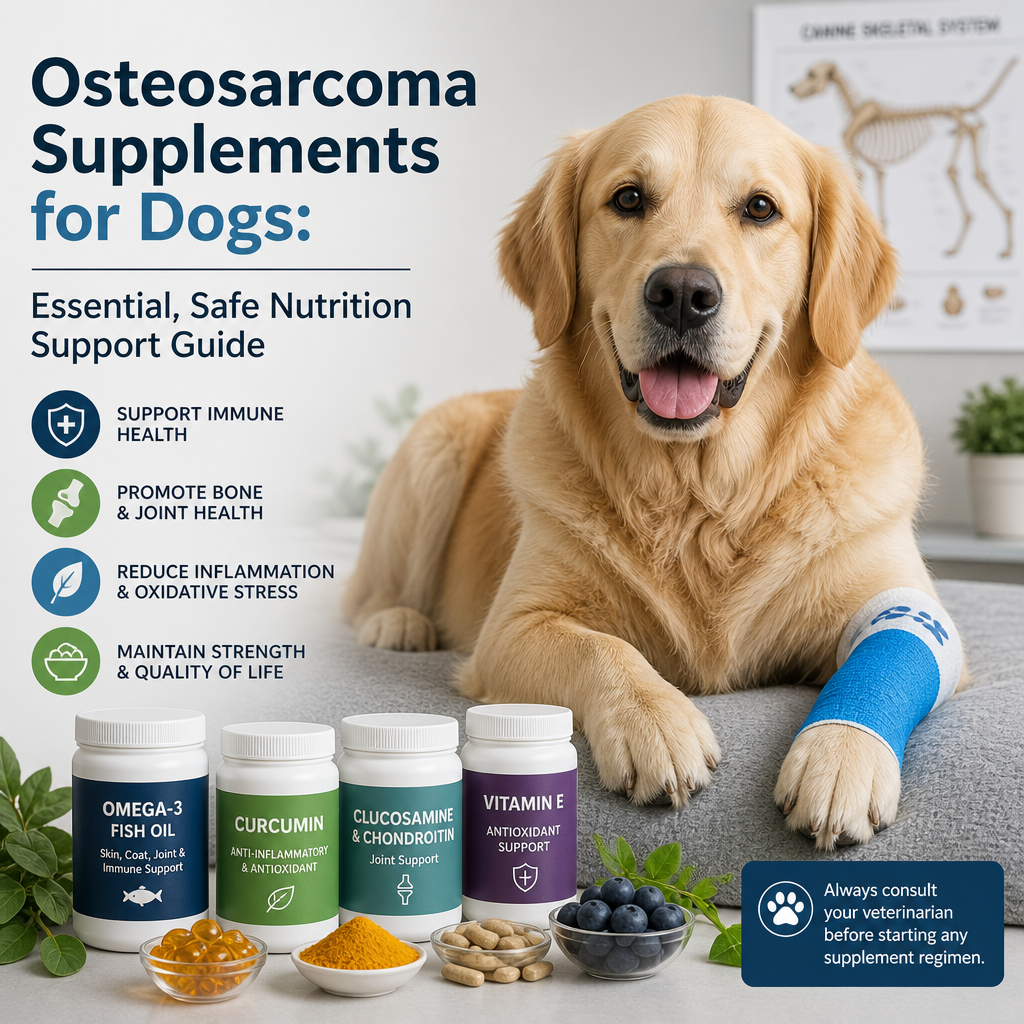
Osteosarkom, köpeklerde en yaygın birincil kemik tümörüdür. Genellikle uzuvları etkiler, ancak kafatasında, omurgada, kaburgalarda veya diğer kemiklerde de gelişebilir. Rottweiler, Büyük Danua, İrlanda Kurt İti ve Greyhound gibi büyük ve dev ırklar artan risk altındadır, ancak herhangi bir köpek bu hastalığı geliştirebilir.
Tedavi genellikle amputasyon veya uzuv koruyucu cerrahi, kemoterapi, seçilen vakalarda radyasyon ve kapsamlı ağrı yönetimini içerir. Beslenme, bu süreç boyunca önemli bir destekleyici rol oynamaktadır. Dengeli bir diyet, vücut ağırlığını korumaya, kasları korumaya, normal bağışıklık fonksiyonunu desteklemeye ve yaşam kalitesini artırmaya yardımcı olabilir.
Hiçbir takviye kanser hücrelerini seçici olarak ortadan kaldırmaz. Geleneksel tedavi yerine geçici olarak pazarlanan ürünler, etkili bakımı geciktirebilir veya ilaçlarla etkileşime girebilir. En güvenli yaklaşım, köpekler için osteosarkom takviyelerini veteriner tedavi planına dikkatlice seçilmiş eklemeler olarak görmektir.
Kanserin yayılması ve evrelenmesi hakkında daha geniş bir bağlam için, bazı sahipler bu kılavuzu gözden geçirmenin faydalı olduğunu bulurlar. köpeklerde metastaz ve tümörlerin yayılması ve veterinerlerinin önerileri.
Kemik Kanseri Köpek Takviyelerinin Potansiyel Faydaları
Kemik kanseri köpek takviyeleri genellikle tümörü tedavi etmekten ziyade bir veya daha fazla sağlık alanını desteklemek amacıyla tasarlanmıştır. Yaygın hedefler şunlardır:
- İştahı ve sağlıklı vücut ağırlığını desteklemek
- İnce kas kütlesini korumaya yardımcı olmak
- Normal iltihap dengesini teşvik etmek
- Eklem konforunu ve hareketliliği desteklemek
- Kötü iştah nedeniyle sınırlı olabilecek besin maddelerini sağlamak
- Kemoterapi veya iyileşme sırasında genel sağlığı desteklemek
En uygun ürün, köpeğin diyeti, kan testleri, ilaçları, böbrek ve karaciğer fonksiyonu ve tedavi programına bağlıdır. Bir hasta için makul olan bir takviye, başka bir hasta için uygun olmayabilir.
Büyük ırk köpek sahipleri genellikle kanser desteği ve erken uyarı işaretleri hakkında benzer sorular sorarlar. Evde başka bir risk altındaki ırkınız varsa, ayrıca okumak isteyebilirsiniz osteosarkom köpekleri ve yararlı büyük ırk rehberi.
Köpekler için osteosarkom takviyeleri neler yapabilir ve neler yapamaz
Osteosarkom Takviyeleri, köpeklerin beslenme boşluklarını doldurmaya, konforu desteklemeye ve bazı köpeklerin tedavi sırasında güçlerini korumalarını kolaylaştırmaya yardımcı olabilir. Tek başına bir tümörü küçültemezler ve tanı, evreleme veya takip görüntülemesini yerine geçmezler. En iyi sonuçlar genellikle takviye planı basit ve belirli bir klinik hedefle bağlantılı olduğunda gelir.
Pratik terimlerle, osteosarkom takviyeleri köpekler için gerçek bir sorunu çözmek üzere en faydalıdır; örneğin, iştahsızlık, hareket zorluğu veya bir prosedür sonrası iyileşme desteği gibi. Belirgin bir hedef yoksa, daha fazla ürün eklemek bakımda karışıklık yaratabilir.
Omega-3 Yağ Asitleri
EPA ve DHA içeren balık yağı, kanserli köpekler için en sık tartışılan takviyelerden biridir. Bu deniz omega-3 yağ asitleri, cilt, kardiyovasküler ve sinir sağlığını destekler ve sağlıklı bir iltihap yanıtını korumaya yardımcı olabilir. Ayrıca, eklem stresi veya azalmış hareketlilik yaşayan köpekler için de faydalı olabilirler.
Kalite ve dozaj önemlidir. Saflık için test edilmiş ve EPA ve DHA miktarını doğru bir şekilde listeleyen, yalnızca toplam balık yağı miktarını belirtmeyen bir veteriner onaylı ürün seçin. Aşırı balık yağı ishal, kilo alımı, yaraların iyileşmesinde gecikme veya özellikle belirli ilaçlarla birleştirildiğinde kanama riskinin artmasına neden olabilir.
Balık yağı, pankreatit, pıhtılaşma bozuklukları veya yaklaşan cerrahi işlemi olan köpeklerde dikkatli kullanılmalıdır. Kullanımını her zaman veteriner ekibine bildirin. Osteosarkom takviyeleri arasında, omega-3'ler genellikle tanıdık, dozajı kolay ve dikkatli bir şekilde eklendiğinde bazen iyi tolere edilebildiği için tartışılmaktadır.
Tolere edildiğinde, omega-3'ler osteosarkom takviyeleri için pratik bir parça olabilir çünkü aşırı karmaşık değildirler ve daha geniş bir konfor planını tamamlayabilirler. Yine de, en iyi şekilde destekleyici beslenme olarak görülmelidirler, kanser tedavisi olarak değil.
Antioksidanlar ve Kanser Tedavisi
C ve E vitaminleri, selenyum ve bitki bileşenleri gibi antioksidanlar, köpek osteosarkom destek ürünlerinde sıkça yer almaktadır. Ancak, antioksidan takviyesi kemoterapi ve radyasyon sırasında özel dikkat gerektirir.
Bazı kanser tedavileri, kanser hücrelerinde oksidatif hasar oluşturarak kısmen çalışır. Yüksek dozda antioksidan ürünler teorik olarak belirli tedavilerin etkinliğini azaltabilir, ancak kanıtlar besin, tedavi ve doz açısından değişiklik göstermektedir. Bu, antioksidanların her zaman zararlı olduğu anlamına gelmez, ancak yoğun ürünlerin veteriner onayı olmadan başlatılmaması gerektiği anlamına gelir.
Tam, dengeli bir ticari diyet genellikle temel vitamin ve mineral seviyelerini uygun şekilde sağlar. Yüksek dozda insan multivitaminleri özellikle risklidir çünkü aşırı miktarda D vitamini, demir veya köpekler için toksik olabilecek diğer bileşenler içerebilir.
Kanser beslenmesi ve diyet güvenliği hakkında kanıta dayalı bir genel bakış için, Ohio Eyalet Üniversitesi Veterinerlik Tıp Merkezi beslenme destek hizmeti faydalı bir eğitim kaynağıdır.
Eğer bir veteriner belirli bir besin maddesini öneriyorsa, bu, tedavi planı göz önünde bulundurularak seçilmelidir. Birçok durumda, köpekler için osteosarkom takviyelerinin en güvenli versiyonu, en az içerik ve kullanım için en net neden ile olanıdır.
Eklem ve Hareket Desteği
Osteosarkomlu köpekler genellikle önemli ağrı ve hareketlilik değişiklikleri yaşarlar. Glukozamin, kondroitin, yeşil dudaklı midye veya denatüre edilmemiş tip II kolajen içeren takviyeler, özellikle artrit diğer uzuvları veya omurgayı etkilediğinde bazı köpeklerde eklem fonksiyonunu destekleyebilir.
Bu ürünler kemik tümörünü tedavi etmez veya reçeteli ağrı kesici ilaçların yerini almaz. Etkileri de fark edilir hale gelmesi birkaç hafta sürebilir. Hareketliliği sürdürmek, duygusal iyilik hali ve kas koruma için önemli olabileceğinden, eklem takviyeleri daha geniş bir konfor planının bir parçası olarak değerlendirilebilir.
Veterinerler ayrıca fiziksel rehabilitasyon, yastıklı yatak, rampalar, kontrollü aktivite ve kaymaz zemin önerebilir. Bu pratik önlemler, besin ürünleri kadar önemli olabilir.
Birçok sahip için, köpekler için osteosarkom takviyeleri, hareket desteği ile birleştirildiğinde en mantıklısıdır, çünkü ağrı kesici ve hareketlilik genellikle iştah, ruh hali ve günlük işlevi etkiler.
Hareket desteği, ameliyat sonrası veya kemoterapi iyileşmesi sırasında özellikle değerli hale gelebilir. Bu dönemlerde, köpekler için osteosarkom takviyeleri genellikle yavaşça tanıtıldığında ve mide rahatsızlığı veya konfor değişiklikleri için izlenildiğinde en faydalı olur.
Sindirim ve İştah Desteği
Kemoterapi, ağrı, stres ve azalmış aktivite iştah ve sindirimi etkileyebilir. Veteriner probiyotikler, normal bağırsak fonksiyonunu desteklemeye yardımcı olabilir, ancak yoğun tedavi gören veya zayıflamış bağışıklık sistemine sahip köpekler için dikkatlice seçilmelidir.
İştah kötü olduğunda, küçük, sık öğünlerde yüksek lezzetli, tam bir diyet vermek, birden fazla takviye eklemekten daha faydalı olabilir. Yemeği hafifçe ısıtmak, farklı dokular sunmak ve sessiz bir alanda beslemek de yemeyi teşvik edebilir. Sürekli iştah kaybı, kusma, ishal veya kilo kaybı derhal bildirilmelidir çünkü bu belirtiler yalnızca besin takviyesi yerine tıbbi tedavi gerektirebilir.
Pratikte, köpekler için osteosarkom takviyeleri asıl beslenme başarısından dikkat dağıtmamalıdır. Eğer bir köpek güvenilir bir şekilde yemiyorsa, ilk öncelik genellikle bulantı, ağrı, kabızlık, stres veya ilaç yan etkilerini ele almaktır.
Bazı köpekler iştah destek ürünlerinden yalnızca geçici olarak fayda görebilirken, diğerleri daha uzun bir diyet ayarlama süresine ihtiyaç duyar. En iyi yaklaşım genellikle daha fazla osteosarkom takviyesi eklemeden önce beslenme planını basitleştirmektir.
Köpek Osteosarkom Destek Ürünlerinin Güvenli Kullanımı
Köpek osteosarkom destek ürünlerini tanıtmadan önce, etiketi bir veterinerle gözden geçirin. Önemli hususlar şunlardır:
- İçerik kalitesi: Açık dozaj ve kalite kontrol bilgilerine sahip saygın üreticilerden ürünler kullanın.
- İlaç etkileşimleri: Takviyeler kanama, kan basıncı, sedasyon, karaciğer metabolizması veya kemoterapiyi etkileyebilir.
- Ameliyat zamanı: Bazı ürünler, pıhtılaşma veya anestezi üzerindeki potansiyel etkileri nedeniyle ameliyattan önce durdurulmalıdır.
- Organ fonksiyonu: Böbrek veya karaciğer hastalığı, besinlerin ve ilaçların nasıl işlendiğini değiştirebilir.
- Toplam besin alımı: Birden fazla ürün, istemeden aynı vitamin veya mineralin aşırı miktarlarını sağlayabilir.
- Olumsuz reaksiyonlar: Yeni kusma, ishal, kaşıntı, zayıflık, morarma veya iştah kaybı gelişirse ürünü durdurun ve veterinerle iletişime geçin.
Bir veteriner özel olarak onaylamadıkça sarımsak, soğan, ksilitol, yoğunlaştırılmış uçucu yağlar, bilinmeyen bitkisel karışımlar veya insanlar için tasarlanmış bileşenler içeren ürünlerden kaçının. “Doğal” otomatik olarak güvenli anlamına gelmez ve bitkisel ürünler farmakolojik olarak aktif olabilir.
Bazı köpekler, evde ırk ile ilgili tümör riskleri için de izlenmektedir, bu nedenle bilgi sahibi olmak önemlidir. Örneğin, bu kaynak Avustralya Sığır Köpeği kanser riskleri ve erken tümör işaretleri sahiplerin veteriner dikkatine ne zaman ihtiyaç duyulduğunu daha erken tanımalarına yardımcı olabilir.
Köpekler için osteosarkom takviyeleri ile kaçınılması gereken yaygın hatalar
En yaygın hatalardan biri, birden fazla ürünü aynı anda eklemektir; bu, neyin yardımcı olduğunu ve neyin yan etkilere neden olduğunu anlamayı zorlaştırır. Diğer bir hata, aktif bileşenleri, tatlandırıcıları veya dozajı kontrol etmeden insan takviyelerini kullanmaktır. Köpekler için osteosarkom takviyeleri yavaşça tanıtıldığında ve dikkatlice takip edildiğinde, bunların değerli olup olmadığını değerlendirmek daha kolay hale gelir.
Bir diğer sorun, ölçülebilir hedeflere odaklanmak yerine trendleri takip etmektir. Bir ürün iştahı, konforu, hareketliliği veya iyileşmeyi gerçekçi bir zaman diliminde artırmıyorsa, plan içinde kalıcı bir yer edinmeyi hak etmeyebilir. Veteriner ekibi ile dikkatli bir inceleme, köpekler için osteosarkom takviyelerini pratik ve güvenli tutar.
Diyet, Ağırlık ve Yaşam Kalitesi
Osteosarkom beslenmesinin temeli, köpeğin sürekli olarak yiyeceği tam ve dengeli bir diyettir. Vücut durumu ve kas kütlesini korumak, genellikle karmaşık bir takviye planı izlemekten daha önemlidir. Düzenli kilo kontrolleri, iştah izleme ve periyodik kan testleri, veteriner ekibinin sorunları erken tanımlamasına yardımcı olabilir.
Bir veteriner beslenme uzmanı, kalori yoğunluğu, protein, yağ veya öğün sıklığına ayarlamalar önerebilir. Her köpek için işe yarayan tek bir kanser diyeti yoktur. Bir kısıtlayıcı diyetin veya bileşenin osteosarkomu tedavi edebileceği iddiaları güvenilir kanıtlarla desteklenmemekte ve beslenme yetersizliklerine yol açabilir.
Köpek osteosarkom desteği, ayrıca ağrı değerlendirmesi, dinlenme, güvenli egzersiz, duygusal konfor ve düzenli veteriner takibini de içermelidir. Nefes alma değişiklikleri, ani zayıflık, kontrolsüz ağrı, şiddetli halsizlik veya hızlı şişlik, acil veteriner müdahalesi gerektirir.
Birçok aile için, köpekler için osteosarkom takviyeleri, iyi beslenmeyi, rahat kalmayı ve mümkün olduğunca normal rutini korumayı vurgulayan daha büyük bir plana en iyi şekilde uyar.
Yardımcı beslenme alışkanlıkları gerçek bir fark yaratabilir. Suya erişimi sağlamak, mümkünse her gün aynı saatte yiyecek sunmak ve neyin yenildiğini tahmin etmek yerine takip etmek önemlidir. Bir köpek daha önce kabul edilen bir yiyeceği aniden sevmeyi bırakırsa, bu değişiklik hızlı bir şekilde tartışılmalıdır çünkü iştah değişiklikleri kanser ağrısı ve tedavi yan etkileri ile yaygındır.
Düşünceli Bir Takviye Stratejisi
Total besin alımı:.
Birden fazla ürün istemeden aynı vita… aşırı miktarda sağlayabilir.
Olumsuz reaksiyonlar:.
Sonunda, hedef mümkün olduğunca fazla ürün eklemek değil. Gerçekten bireysel hastayı destekleyen birkaç osteosarkom takviyesini seçmek ve ihtiyaçlar değiştikçe planın faydalı kalmasını sağlamak için sık sık yeniden değerlendirmektir.
Sonuç: Osteosarkom takviyeleri dikkatlice seçilmeli, sürekli kullanılmalı ve veteriner girişi ile ayarlanmalıdır. Seçimler düşünceli olduğunda, temel kanser tedavisine müdahale etmeden konfor ve beslenmeyi destekleyebilirler.