Immune / medicinal mushrooms are becoming an increasingly discussed option for pet owners seeking supportive care for dogs diagnosed with tumors. In Bosnia and Herzegovina, interest in natural wellness products is growing, but choosing a supplement should always be approached carefully. Medicinal mushrooms may support general immune function and quality of life, yet they are not a replacement for veterinary diagnosis, surgery, chemotherapy, radiation, or other proven cancer treatments.

A tumor diagnosis can be overwhelming. Owners often want to do everything possible to help their dog remain comfortable, active, and well nourished. Supportive supplements may have a role in a broader care plan, especially when selected with guidance from a veterinarian who understands the dog’s medical history, current medication, and specific type of cancer.

For many families, the conversation starts with careful research and ends with practical questions: which ingredients are included, how the product is made, and whether the formula is appropriate for a dog already dealing with illness. Those are the right questions to ask, because Immune / medicinal mushrooms should be chosen for quality and safety first, not for marketing claims.

Why immune and medicinal mushrooms are attracting attention

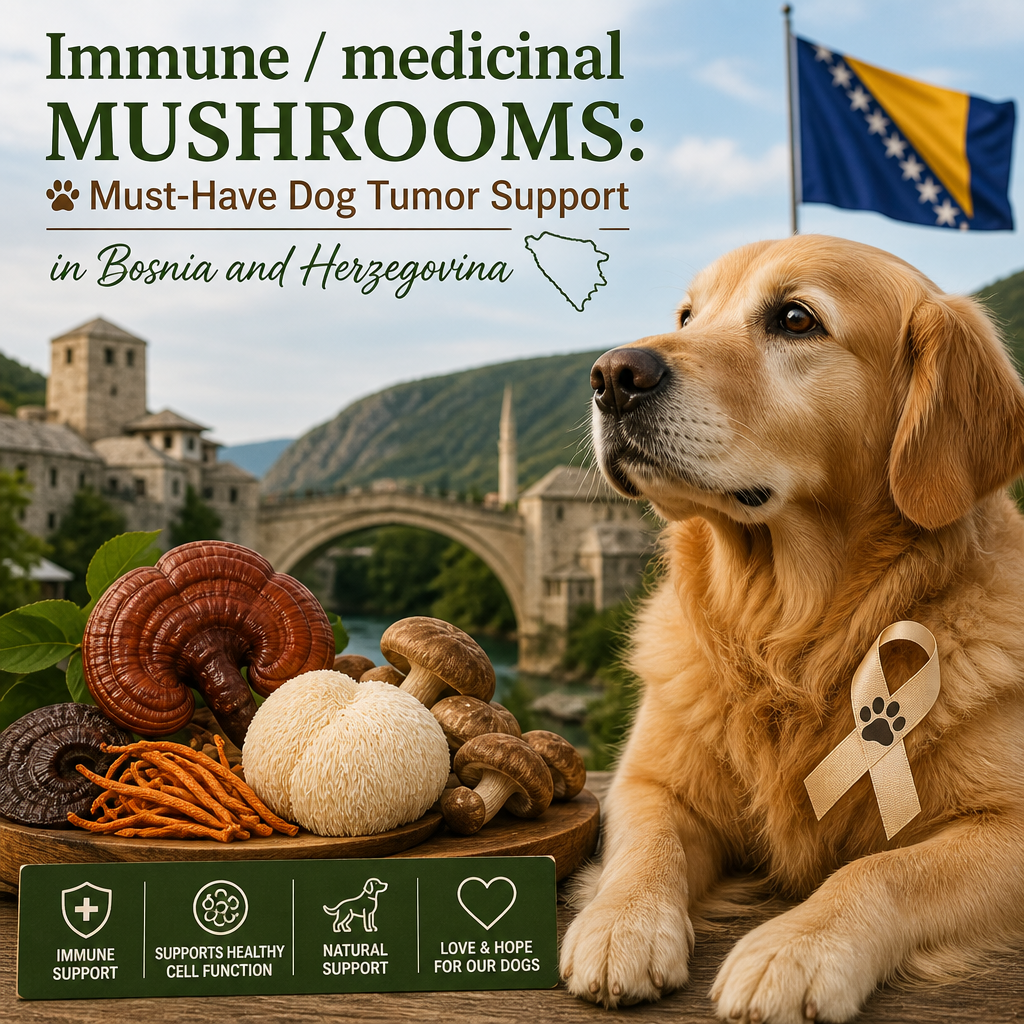
Immune / medicinal mushrooms illustration

Certain mushrooms contain naturally occurring compounds such as beta-glucans, polysaccharides, triterpenes, antioxidants, and other bioactive substances. These compounds are being studied for their potential effects on immune regulation, inflammation, oxidative stress, and overall resilience.

Common medicinal mushrooms found in canine supplements include:

  • Reishi, also known as Ganoderma lucidum
  • Turkey tail, or Trametes versicolor
  • Maitake, or Grifola frondosa
  • Shiitake, or Lentinula edodes
  • Cordyceps species
  • Chaga, or Inonotus obliquus

Each mushroom has a different nutritional and biochemical profile. Turkey tail, for example, has received attention in veterinary research because of compounds associated with immune support. Reishi is often included in wellness formulas intended to promote balance and support normal inflammatory responses. However, evidence varies by mushroom, product, dosage, and health condition.

It is important to understand that “natural” does not automatically mean safe for every dog. A dog with liver disease, kidney problems, diabetes, autoimmune disease, or a sensitive digestive system may respond differently to a supplement than a healthy dog.

For owners comparing options, the broader category of Immune / medicinal mushrooms should be viewed as supportive care rather than a stand-alone solution. Used well, they may fit into a structured plan that also includes diet, symptom relief, and follow-up veterinary care.

Dog tumor support Bosnia and Herzegovina: building a responsible care plan

When searching for dog tumor support Bosnia and Herzegovina, pet owners should begin with a complete veterinary assessment. The most useful plan depends on the tumor’s location, stage, grade, size, symptoms, and whether it has spread to other parts of the body. Blood tests, imaging, biopsy results, and medication history may all influence supplement decisions.

A supportive plan may include:

  1. Veterinary cancer treatment when appropriate
  2. A complete and balanced diet
  3. Pain and nausea management
  4. Hydration and appetite support
  5. Gentle exercise suited to the dog’s condition
  6. Stress reduction and a stable routine
  7. Carefully selected supplements
  8. Regular monitoring for changes

Mushroom products may be used as part of this wider approach, but they should not delay treatment or be presented as a cure. The goal of supportive care is often to help preserve comfort, appetite, energy, and everyday function while the primary condition is being managed.

Some owners also explore other evidence-informed supportive options, including 加強患有肥大細胞腫瘤的狗的免疫系統, when their veterinarian feels it is appropriate.

When the diagnosis is recent, it can help to slow the decision-making process. Ask what the medical priorities are for the next few weeks, whether there are any upcoming procedures, and which symptoms are most important to track at home. In that setting, Immune / medicinal mushrooms may become one part of a larger, carefully monitored routine rather than the first or only step.

What to look for in immune / medicinal mushrooms

Product quality is especially important when buying immune / medicinal mushrooms. Supplements can differ significantly in the type of mushroom used, extraction method, concentration, purity, and quality control.

尋找明確說明的產品:

  • The exact mushroom species
  • The amount of active extract per serving
  • Whether the product uses fruiting bodies, mycelium, or both
  • Extraction methods, especially for compounds that are difficult to digest
  • Batch or lot information
  • 儲存說明和到期日
  • 製造商聯繫信息
  • Independent testing for contaminants

Mushrooms can absorb contaminants from their growing environment. Reliable testing should address heavy metals, pesticides, bacteria, mold, and unwanted substances. Products with vague labels, exaggerated promises, or no dosage information should be treated cautiously.

For owners comparing dog cancer supplements Bosnia and Herzegovina, it is also worth checking whether the product is specifically formulated for dogs. Human supplements may contain ingredients that are unsuitable for animals, including sweeteners, excessive minerals, herbs, or high concentrations of compounds that have not been evaluated for canine use.

If you want to verify ingredient safety and supplement standards, the FDA 對獸醫飲食補充劑的指導 是一個有用的教育參考。.

Owners should also compare labels with a practical eye. A product that lists the mushroom species, the exact amount of extract, and the testing method is easier to evaluate than one that relies on broad claims. Clear labeling helps reduce guesswork, which matters when Immune / medicinal mushrooms are being considered for a dog already under medical stress.

潛在的好處和限制

The possible benefits of medicinal mushrooms are generally related to immune modulation and overall support rather than direct tumor elimination. Some research suggests that mushroom-derived compounds may influence immune cells and help the body maintain normal defenses. Other studies are exploring their antioxidant and anti-inflammatory properties.

These findings are promising, but laboratory research does not always translate into the same outcome in real dogs. A supplement that shows activity in a cell culture or animal study may not have the same effect when given orally in a commercial product. Dosage, absorption, tumor type, and the dog’s overall health all matter.

Owners should be cautious of claims that a mushroom supplement can dissolve tumors, replace chemotherapy, or guarantee longer survival. Responsible products and professionals should describe possible supportive benefits without making unrealistic promises.

In many real-world cases, Immune / medicinal mushrooms are most useful when expectations stay realistic and the overall treatment plan remains veterinarian-led. That means looking at quality of life, appetite, activity, stool quality, and comfort rather than focusing only on one supplement’s label.

Supportive care also works best when the dog’s daily routine is stable. Regular feeding times, easy access to water, and calm rest periods can make a bigger difference than owners sometimes expect. In that context, a mushroom supplement is one tool among several, not the whole strategy.

How they may fit into daily care

Some dogs do better with supplements added to food, while others need a more gradual introduction. A veterinarian can help decide whether to start slowly, whether to split doses, and whether to monitor liver or kidney values during use. This is especially useful when a dog is already taking multiple medications.

Many owners also want to know whether a supplement is appropriate for long-term use. The answer depends on the dog’s condition, the exact formula, and how well the product is tolerated over time. If the dog is stable and the ingredient profile is clean, Immune / medicinal mushrooms may be continued as part of an ongoing supportive plan with periodic reassessment.

Safety, dosage, and interactions

A veterinarian should approve any supplement before it is added to a dog’s routine. This is particularly important if the dog is receiving chemotherapy, corticosteroids, anti-inflammatory medication, blood thinners, antibiotics, or drugs for diabetes or autoimmune conditions.

Possible side effects may include digestive upset, loose stools, vomiting, reduced appetite, or allergic reactions. Some mushroom products may affect immune activity or blood clotting, which could be significant before surgery or during certain medical treatments.

Start only with a professional recommendation and observe the dog closely. Contact a veterinarian if there is persistent vomiting, diarrhea, weakness, facial swelling, breathing difficulty, unusual bleeding, yellowing of the eyes or gums, or a sudden change in behavior.

Because dogs with cancer can already be medically fragile, even a seemingly gentle supplement should be introduced carefully and monitored over time. When used thoughtfully, Immune / medicinal mushrooms may fit into a wider supportive plan, but they should never replace clinical oversight.

It is also sensible to consider timing. Some supplements may be easier on the stomach when given with food, while others may be better separated from medication. Your veterinarian can advise on spacing, especially if the dog has a history of nausea or reduced appetite. The more carefully the routine is planned, the easier it is to tell whether Immune / medicinal mushrooms are helping, causing side effects, or making no noticeable difference.

Choosing dog cancer supplements Bosnia and Herzegovina

Availability can vary between pharmacies, veterinary clinics, pet shops, and online retailers in Bosnia and Herzegovina. Buying from a reputable source is more important than choosing the cheapest option. Ask whether the product has a clear label, verified origin, veterinary guidance, and suitable storage conditions.

A veterinarian may also recommend checking the supplement against the dog’s complete treatment plan. Keeping a written list of all medications, vitamins, herbal products, and supplements helps prevent accidental duplication or interactions.

If you are comparing Immune / medicinal mushrooms with other supportive products, prioritize transparency, species-specific dosing, and quality control over marketing language.

It can help to compare several questions side by side: Is the source standardized? Does the seller explain the extraction process? Are there visible batch numbers? Does the company publish testing results? Those details can be more meaningful than broad claims about “strength,” “detox,” or “miracle support.” For dogs with tumors, sensible selection matters more than hype, and Immune / medicinal mushrooms should be judged by evidence, safety, and practicality.

Families sometimes ask whether one mushroom is better than another. In practice, the best product is often the one that is appropriate for the dog’s medical condition, easy to administer consistently, and manufactured with good quality controls. Even a strong ingredient profile is less useful if the dog refuses the supplement or has stomach upset after taking it.

購買前需要問的實用問題

Before choosing a supplement, ask whether the manufacturer can explain the ingredient source, the extraction method, and the quality checks behind the product. Those details matter because two products with similar labels may behave very differently in the body. For dogs undergoing treatment, the safest choice is usually the product with the clearest testing and the most conservative formulation.

It also helps to ask how the supplement fits into the dog’s current routine. If appetite is low, the taste and ease of administration matter. If the dog is on several medications, timing can reduce the chance of stomach upset. These small details can make Immune / medicinal mushrooms easier to use consistently without adding stress for the owner or the dog.

Owners should remember that the goal is support, not hype. A careful plan may include diet adjustments, pain control, follow-up exams, and a supplement with a sensible profile. That balanced approach gives Immune / medicinal mushrooms the best chance to be used responsibly and safely.

It is also worth asking who will monitor progress. A supplement that appears useful in the first week may not continue to be appropriate later, especially if the dog’s medication changes. Regular review keeps expectations grounded and protects the dog from unnecessary trial and error.

When to pause or stop a supplement

Any sudden change in stool quality, appetite, energy, or skin condition should prompt a review. If a dog becomes more lethargic, vomits repeatedly, or starts to show new signs after starting a supplement, it is reasonable to pause the product and contact the veterinarian. Even if the product is generally well tolerated, the individual dog’s situation can change quickly.

This is especially important around surgery, chemotherapy cycles, or medication changes. A supplement that was acceptable one month may not be ideal the next month. Monitoring and communication help keep supportive care aligned with the dog’s current needs.

In a complex case, a simple rule works best: if in doubt, ask the veterinarian first. That approach keeps Immune / medicinal mushrooms in their proper role as a possible supportive tool rather than an assumption-based fix.

For owners in Bosnia and Herzegovina, the strongest decisions are the ones built on veterinary guidance, product transparency, and realistic expectations. Used carefully, Immune / medicinal mushrooms may complement a well-planned care strategy while the dog continues to receive the medical attention it needs.

As a final thought, keep the focus on the whole dog, not just the supplement. Quality of life, comfort, digestion, mobility, and emotional well-being all matter. When those factors are tracked consistently, it becomes much easier to judge whether Immune / medicinal mushrooms are a helpful addition or simply not the right fit for that particular dog.

帶有TCMVET的綠色陰陽標誌
隱私概覽

本網站使用 cookies,以便我們能夠為您提供最佳的用戶體驗。Cookie 資訊儲存在您的瀏覽器中,並執行一些功能,例如在您返回我們的網站時識別您,並幫助我們的團隊了解您認為最有趣和有用的網站部分。.