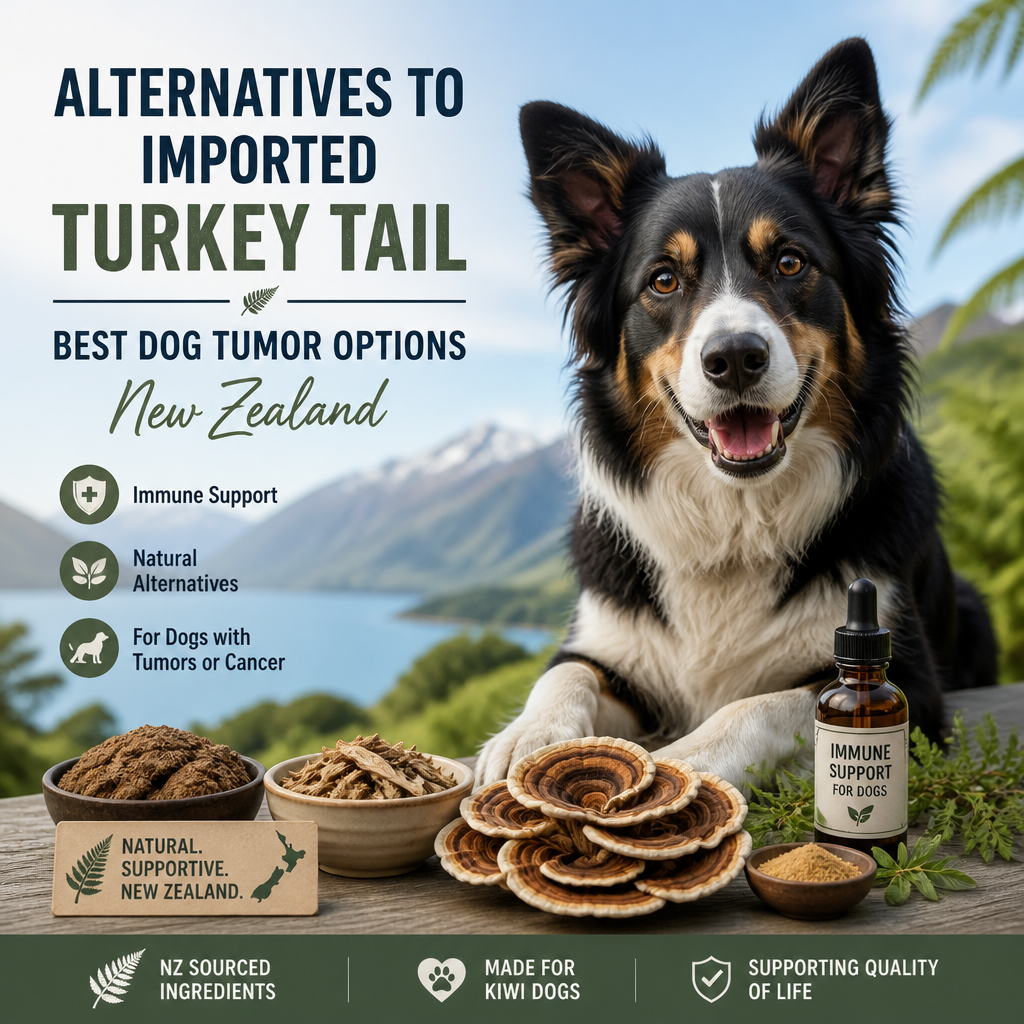
Alternatives to Imported cancer-support / Turkey Tail products can be useful for New Zealand dog owners seeking practical, locally available ways to support a dog with a tumour. However, no supplement can replace veterinary diagnosis, surgery, chemotherapy, radiation, pain relief, or other evidence-based treatment. The best approach combines professional guidance with carefully selected nutrition and supportive care that suit the dog’s specific condition.

Understanding dog tumour support

alternatives to Imported cancer-support / Turkey Tail illustration

A tumour may be benign or malignant, and cancers can behave very differently depending on their location, size, grade, and stage. A supplement that is appropriate for one dog may be unsuitable for another, particularly when the dog has liver or kidney disease or is taking prescription medication.

Before choosing dog tumour supplement alternatives, ask your veterinarian about the diagnosis and treatment plan. Important questions include whether the tumour has been biopsied, whether it has spread, what treatment is recommended, and whether any supplement could interfere with medication or surgery. A complete blood count and chemistry panel may also help identify problems that affect nutritional and supplement choices.

For more background on evidence-based pet nutrition and safety, the WSAVA 全球營養指南 offer a helpful starting point for discussing feeding plans with your veterinary team.

Why people look beyond imported Turkey Tail

Turkey Tail mushroom, commonly known as 花斑栓菌雲芝, is often discussed because of its polysaccharide compounds and limited research involving canine cancer support. Some studies have produced interesting results, but evidence remains specific to certain products, doses, cancer types, and clinical settings. A human supplement or poorly labelled imported product may not provide the same preparation used in research.

New Zealand owners may also face shipping delays, uncertain storage conditions, limited batch information, currency costs, and difficulty confirming ingredient quality. For these reasons, many people search for alternatives to Imported cancer-support / Turkey Tail products that are transparent, locally available, and easier to discuss with a veterinarian.

When people compare alternatives to Imported cancer-support / Turkey Tail, they are usually trying to balance quality, convenience, and safety. That means looking at ingredient sourcing, product freshness, and whether the formulation fits a dog’s diagnosis rather than chasing the most heavily marketed option.

Some owners also want options that are easier to reorder consistently. In cancer care, consistency matters because the goal is not a one-time “boost” but a stable plan that fits into the dog’s routine and can be monitored over time. That is one reason these alternatives to Imported cancer-support / Turkey Tail are best evaluated alongside your vet’s recommendations rather than in isolation.

Veterinary nutrition as a foundation

The most important supportive “supplement” is often a complete, balanced diet that maintains body weight and muscle. Dogs with cancer may lose appetite, muscle mass, or energy. Feeding a highly digestible food in small, frequent meals can make eating easier, especially when nausea or treatment side effects are present.

A veterinary nutritionist can help adjust calories, protein, fat, and fibre according to the dog’s condition. Some dogs benefit from calorie-dense meals, while others require a modified diet because of pancreatitis, kidney disease, diabetes, or gastrointestinal problems. Avoid making extreme dietary changes without guidance. Raw diets, prolonged fasting, and unbalanced homemade recipes can create infection or nutrient risks, particularly in dogs receiving cancer treatment.

If you are comparing alternatives to Imported cancer-support / Turkey Tail, start by asking whether diet alone needs improvement first. In many cases, improving calories, protein quality, and digestibility delivers more day-to-day support than adding several supplements at once.

Practical feeding changes can sometimes make a bigger difference than expected. Warming food slightly, offering meals in a quiet space, or splitting the day’s ration into three or four smaller servings may help a reluctant eater. These simple steps do not replace therapy, but they can support strength, hydration, and quality of life while a treatment plan is underway.

Practical nutrition priorities

  • Keep meals consistent and easy to digest.
  • Offer smaller portions if appetite is low.
  • Track body weight weekly when possible.
  • Adjust food choices to match other health issues.
  • Use veterinary advice before adding powders, oils, or herbal blends.

Omega-3脂肪酸

Marine-derived omega-3 fatty acids, especially EPA and DHA, are among the more commonly considered dog tumour supplement alternatives. They may support normal inflammatory regulation and help maintain skin, coat, and general nutritional health. In some cancer-care plans, omega-3s are considered as part of broader nutritional support.

Choose a veterinary-quality fish oil that clearly lists the amounts of EPA and DHA rather than only stating the total amount of “fish oil.” Products should also provide oxidation or freshness information where possible. Dosing must be confirmed with a veterinarian because high amounts may cause diarrhoea, affect platelet function, or interact with medication. Dogs with pancreatitis or bleeding disorders may need special caution.

Green-lipped mussel products from New Zealand are another source of marine nutrients and may be useful when joint comfort and mobility are concerns. They are not cancer treatments, but maintaining movement and comfort can improve daily wellbeing. Dogs with shellfish sensitivities should not receive them without professional advice.

For some families, these practical options fit neatly among alternatives to Imported cancer-support / Turkey Tail because they are easier to source locally and simpler to monitor for quality. That said, the right dose and product choice still depend on the dog’s health status.

When comparing fatty acid products, it is worth checking whether the company explains how the oil is protected from rancidity, how it should be stored, and whether the batch has been tested. A quality product may be more useful than a larger bottle with unclear labelling, especially if you are trying to reduce avoidable variables in a dog’s supportive care plan.

How to compare omega-3 products

  • Check EPA and DHA amounts on the label.
  • Look for freshness, storage, and expiration details.
  • Ask whether the product is designed for pets.
  • Avoid adding extra oils without a clear reason.

Medicinal mushrooms and immune-focused products

Besides Turkey Tail, products may contain mushrooms such as reishi, maitake, shiitake, or cordyceps. These ingredients are often marketed for immune support, but research quality varies, and products differ substantially in extraction method and concentration. “Mushroom blend” labels may not provide enough information to judge potency or safety.

If a mushroom product is considered, select one made for dogs or one specifically approved by a veterinarian. Look for clear species identification, standardised active compounds, batch testing, contaminant screening, and dosing instructions. Avoid products containing multiple herbs and mushrooms with undisclosed quantities. Immune-modulating ingredients may not be appropriate for every tumour or alongside immunosuppressive drugs.

Many owners searching for alternatives to Imported cancer-support / Turkey Tail are drawn to mushroom blends first because they sound familiar. The safer approach is to verify the actual species, the extraction method, and whether the product has any quality assurance behind it.

Antioxidants, herbs, and cautions

Some New Zealand dog owners also ask about antioxidants and herbal blends as part of the search for alternatives to Imported cancer-support / Turkey Tail. These products can seem appealing because they are often marketed as natural support, but “natural” does not automatically mean safe for a dog with cancer.

Antioxidants may be helpful in specific contexts, yet they can also be inappropriate around certain treatments depending on timing, dose, and the type of cancer care being used. Herbs can have active pharmacological effects, and some may alter liver enzymes, blood clotting, appetite, or blood pressure. That is why a veterinarian should review any product that claims broad immune, detox, or anti-tumour benefits.

If a supplement list includes multiple ingredients and no clear testing information, it is usually better to pause and ask for better documentation. The most responsible alternatives to Imported cancer-support / Turkey Tail are the ones that can be explained clearly, sourced reliably, and used without creating avoidable risks.

Choosing products in New Zealand

Availability matters when a dog needs ongoing supportive care. Products that are easy to source in New Zealand may be more practical than imported items with delayed shipping or unclear quality control. Look for labels that identify the manufacturer, country of origin, batch number, expiry date, and exact ingredient amounts.

It is also sensible to verify whether a product is designed for dogs, whether it has third-party testing, and whether the company provides customer support for questions about storage or dosing. If the supplement is expensive, compare the cost per effective dose rather than the shelf price alone.

For owners comparing alternatives to Imported cancer-support / Turkey Tail, a local product with clear documentation may be a better long-term choice than an imported product that is difficult to replace or monitor. Consistency and transparency often matter more than marketing claims.

When possible, bring the product label to your veterinary appointment. Your vet can help identify overlapping ingredients, unnecessary fillers, or ingredients that may interfere with treatment. If a product has no clear label or a vague “proprietary blend,” that is usually a sign to choose a different option.

購買前需要檢查的事項

  • Exact ingredient amounts and source information.
  • Storage guidance and expiry date.
  • Batch testing or quality assurance details.
  • Compatibility with prescription medicines.

Monitoring your dog’s response

Any supportive plan should be monitored for both benefits and side effects. Keep notes on appetite, stool quality, energy, mobility, thirst, vomiting, and weight. A sudden change in behaviour or digestion can signal that a supplement is not a good fit, even if it seemed promising at first.

Start only one new product at a time when possible. That makes it easier to tell whether a supplement helps or causes problems. If your dog is already taking medication, ask whether there should be a gap between dosing times. Some products are better given with food, while others may be more appropriate at a different time of day.

Many owners looking at alternatives to Imported cancer-support / Turkey Tail want a simple answer, but the safest answer is usually a monitored one. A careful trial, guided by your veterinarian, is far more useful than adding several new products at once.

If the dog’s tumour care plan changes, revisit every supplement on the list. A product that made sense before surgery may not be appropriate during chemotherapy, and a blend that was tolerated earlier may need to be stopped if the dog develops nausea, poor appetite, or abnormal bloodwork.

A sensible support plan

For New Zealand families, the best approach is to build supportive care around the dog’s diagnosis, treatment goals, and daily comfort. Start with nutrition, then consider carefully selected options such as omega-3 fatty acids or veterinarian-approved mushroom products. Keep the plan simple enough to monitor and practical enough to maintain.

The most useful alternatives to Imported cancer-support / Turkey Tail are not the ones with the boldest claims. They are the ones that are safe, transparent, and realistic for your dog’s condition and your household routine. Work with your veterinary team, recheck bloodwork when advised, and adjust the plan as the dog’s needs change.

With that approach, supportive care becomes more than a shopping list. It becomes a steady part of your dog’s overall cancer management, designed to protect comfort, maintain nutrition, and support quality of life as well as possible.

If you want to compare another locally relevant support option, see The Healthy Hound Pure Turkey Tail Alternative for New Zealand dogs for a related guide.

帶有TCMVET的綠色陰陽標誌
隱私概覽

本網站使用 cookies,以便我們能夠為您提供最佳的用戶體驗。Cookie 資訊儲存在您的瀏覽器中,並執行一些功能,例如在您返回我們的網站時識別您,並幫助我們的團隊了解您認為最有趣和有用的網站部分。.