por TCMVET | Hace 23 de agosto de 2026 | Investigación y noticias
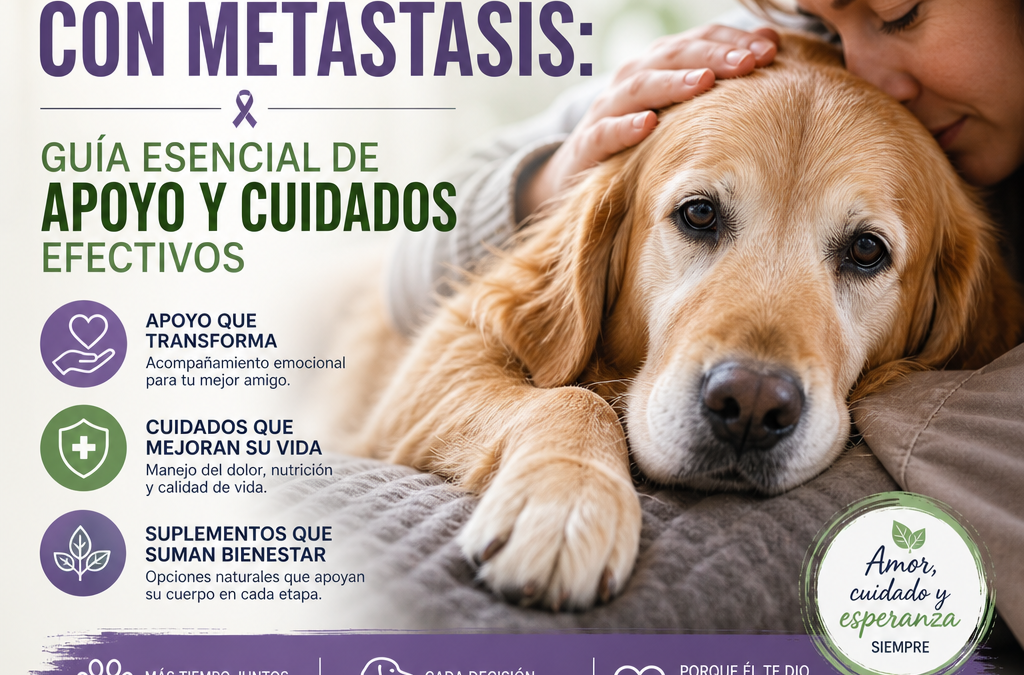
Cáncer perro metástasis apoyo: cuando un perro recibe un diagnóstico oncológico avanzado, toda la familia necesita información clara, acompañamiento y un plan de cuidados realista. La presencia de metástasis significa que las células tumorales se han extendido desde el lugar donde comenzó el cáncer hacia otros tejidos u órganos, pero no implica que no haya nada que hacer. El objetivo del tratamiento puede centrarse en controlar la enfermedad, aliviar el dolor, conservar la movilidad y mantener la mejor calidad de vida posible.
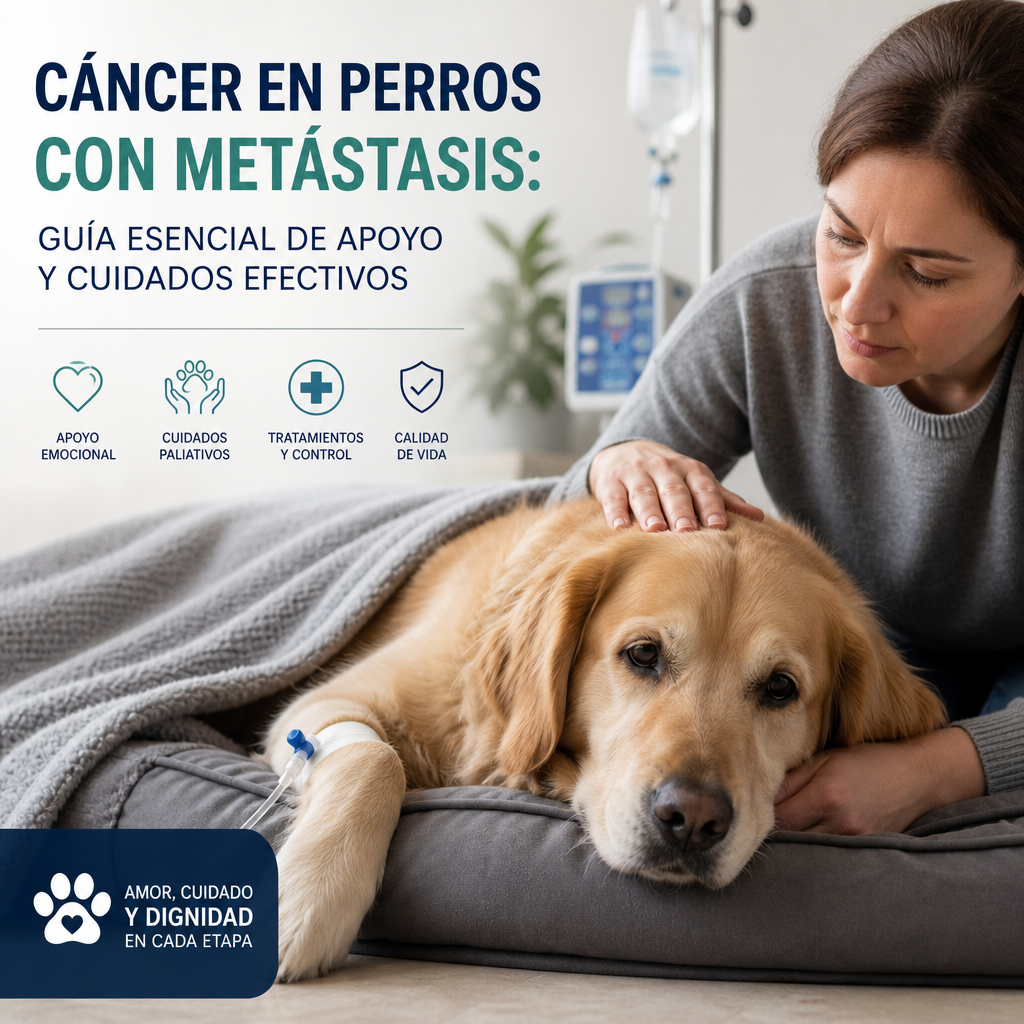
La metástasis ocurre cuando las células de un tumor primario viajan por la sangre o el sistema linfático y forman nuevos focos tumorales. Los pulmones, el hígado, los ganglios linfáticos y los huesos son algunos de los lugares que pueden verse afectados, aunque la localización depende del tipo de cáncer.
Un tumor perro metástasis requiere una valoración completa. El veterinario puede recomendar análisis de sangre, radiografías, ecografías, tomografía computarizada, citología o biopsia. Estas pruebas ayudan a conocer la extensión de la enfermedad y a determinar si conviene utilizar cirugía, quimioterapia, radioterapia, medicamentos paliativos o una combinación de tratamientos.
Es importante recordar que cada caso es diferente. La edad, el estado general, el tipo de tumor, la velocidad de crecimiento y la respuesta al tratamiento influyen en el pronóstico. La existencia de metástasis suele dificultar la curación, pero todavía pueden existir opciones para reducir síntomas y prolongar el bienestar.
En este punto, el cáncer perro metástasis apoyo debe enfocarse en decisiones informadas, realistas y centradas en el bienestar diario del animal.
Objetivos del tratamiento en el cáncer avanzado
En las fases metastásicas, el tratamiento no siempre busca eliminar por completo el cáncer. En muchos perros, la prioridad es ralentizar la progresión y controlar las molestias. Este enfoque se conoce como tratamiento paliativo y puede incluir analgésicos, antiinflamatorios, medicamentos contra las náuseas, estimulantes del apetito y terapias específicas contra determinados tipos de tumores.
La quimioterapia veterinaria suele administrarse con protocolos adaptados para proteger la calidad de vida. A diferencia de lo que muchas personas imaginan, los perros no siempre experimentan efectos secundarios intensos. Cuando aparecen, pueden incluir falta de apetito, vómitos, diarrea, cansancio o disminución temporal de las defensas. El veterinario debe explicar qué signos requieren atención inmediata.
La cirugía puede ser útil si existe un tumor localizado que provoca dolor, sangrado, obstrucción o dificultad para moverse. Sin embargo, cuando hay múltiples metástasis, es necesario valorar cuidadosamente si una intervención aportará beneficios suficientes frente a los riesgos de la anestesia y la recuperación.
En una etapa así, el cáncer perro metástasis apoyo también implica revisar con frecuencia si el plan sigue siendo proporcionado y amable para el perro.
Control del dolor y de los síntomas
El dolor puede manifestarse de formas sutiles. Algunos perros lloran o cojean, pero otros simplemente duermen más, dejan de subir escaleras, jadean sin motivo aparente, se esconden, cambian de postura con frecuencia o pierden interés por sus actividades habituales. Cualquier cambio persistente debe comunicarse al veterinario.
Pain management may require several medications and periodic adjustments. Human drugs should never be administered on one's own, as some are toxic to dogs even in small amounts. Acetaminophen, ibuprofen, and aspirin can cause serious problems if not used under precise veterinary guidance.
It is also advisable to observe breathing, feeding, hydration, bowel movements, and the ability to rest. Labored breathing, pale gums, repeated vomiting, bleeding, collapse, intense pain, or inability to stand are reasons to seek emergency veterinary services.
When pain is well controlled, cancer dog metastasis support becomes more effective because the dog can rest, eat, and move with less suffering.
Alimentación e hidratación durante la enfermedad
Nutrition does not cure cancer on its own, but it can help maintain strength and better tolerate certain treatments. The most important thing is that the dog eats a complete, balanced, and appropriate diet for its condition. In some cases, the veterinarian may recommend a diet with higher energy density, good quality proteins, or a texture that is easier to accept.
Small, frequent meals may work better than a large portion. It may also be helpful to offer food slightly warmed to enhance its aroma, as long as the animal tolerates it. Abrupt dietary changes should not be made, nor should raw foods be used without assessing the risks of contamination, especially if the dog is undergoing chemotherapy and has low defenses.
Dehydration can worsen fatigue and weakness. Clean, accessible water should be maintained in various places around the house. If the dog is not drinking, vomiting, or has diarrhea, the veterinarian may consider fluid therapy and supportive medications.
If appetite decreases steadily, it is advisable to seek professional guidance as soon as possible; in complex cases, the approach of cancer dog metastasis support helps to decide on dietary and medication adjustments without improvisation.
Suplementos para perros con cáncer: precauciones importantes
Los suplementos para perros con cáncer se han vuelto populares, pero no todos tienen evidencia suficiente ni son seguros para todos los animales. Algunos productos pueden interferir con la quimioterapia, alterar la coagulación, sobrecargar el hígado o los riñones, o modificar la absorción de otros medicamentos.
Before using omega-3, antioxidants, plant extracts, medicinal mushrooms, vitamins, or commercial products, it is essential to consult the veterinary oncologist. “Natural” does not automatically mean harmless. Additionally, doses for dogs should not be calculated based on human recommendations.
A supplement should only be incorporated when there is a specific goal, a veterinary dose, and monitoring. It is also advisable to choose products with quality controls and avoid mixtures with imprecise compositions. The main treatment should never be replaced by supplements, miracle diets, or remedies without medical backing.
To expand safe options and selection criteria, you can review this internal guide on best supplements for dogs with cancer.
En cualquier fase, el apoyo para perros con cáncer y metástasis debe priorizar la seguridad antes que las promesas comerciales.
Cuidados diarios y bienestar emocional
The environment should be comfortable, quiet, and safe. A cushioned bed, non-slip surfaces, and ramps can facilitate rest and reduce the risk of falls. Walks should be adapted to the dog's energy: short, slow, and frequent walks are usually better than long or intense activities.
Affectionate contact, familiar routines, and family companionship can reduce stress. It is not necessary to constantly stimulate them; some dogs need more hours of sleep and quiet spaces. Quality of life includes being able to rest, interact, eat with interest, move reasonably, and enjoy pleasant moments.
Keeping a daily record can help make objective decisions. Appetite, pain, mobility, breathing, vomiting, bowel movements, and moments of interest or joy can be noted. This data allows for detecting changes and discussing with the veterinarian more accurately.
Un apoyo cotidiano constante hace que el apoyo para perros con cáncer y metástasis sea más humano y más útil para toda la familia.
¿Cómo ayuda el apoyo para perros con cáncer y metástasis en la vida diaria?
Cuando la familia entiende qué observar y cómo actuar, el cuidado diario se vuelve más ordenado y menos angustiante. El apoyo para perros con cáncer y metástasis no se limita a dar medicamentos: también implica anticipar necesidades, reducir el esfuerzo físico y ajustar las rutinas para que el perro conserve energía.
For example, it is advisable to place the food and water bowls in an easily accessible location, avoid unnecessary stairs, and offer shorter but more frequent outings. In dogs with weakness or pain, a support harness can facilitate transfers and reduce the risk of falls.
It also helps to reserve moments of calm without excessive visits or noise. Some dogs benefit from a predictable routine, with stable schedules for eating, resting, and receiving medication. This stability can make the process more bearable for both the animal and the family.
If doubts arise about behavioral changes, loss of appetite, or fatigue, cancer dog metastasis support should include quick communication with the veterinarian to adjust the plan before discomfort progresses.
When to request an urgent veterinary check-up?
There are signs that should not wait for the next scheduled appointment. An urgent check-up is advisable if the dog has difficulty breathing, excessive bleeding, seizures, fainting, unrelenting pain, persistent vomiting, a very distended abdomen, or inability to stand.
It is also advisable to consult without delay if the dog stops eating or drinking completely, if dehydration progresses, or if the level of consciousness changes noticeably. In a context of advanced illness, acting quickly can prevent unnecessary suffering and allow timely adjustments to treatment.
In these situations, cancer dog metastasis support includes recognizing limits, asking for help, and not trying to solve the problem alone at home.
Cómo valorar la calidad de vida
Quality of life should be continuously reviewed, not just during crises. A practical tool is to observe if the dog has more good days than bad. Pain, hunger, hydration, hygiene, happiness, mobility, and interaction with the family can also be evaluated.
When symptoms are no longer controlled, the animal cannot rest, stops eating and drinking, suffers persistent pain, or shows more bad days than good, it is necessary to talk to the veterinarian about available options. In some cases, humane euthanasia may be the most compassionate decision to prevent suffering. Considering it does not mean abandoning the dog, but prioritizing its well-being when the disease has progressed too far.
Veterinary support, daily observation, and family affection are essential pillars. In the face of metastatic cancer, caring is not just about treating the tumor, but about protecting every possible day of comfort, dignity, and bond.
If you need a final thought, remember that cancer dog metastasis support does not replace professional care: it complements it with presence, consistency, and dog-centered decisions.
For general clinical information about metastasis and cancer, you can consult the explanation from the National Cancer Institute on metastatic disease..
por TCMVET | Hace 15 de agosto de 2026 | Investigación y noticias
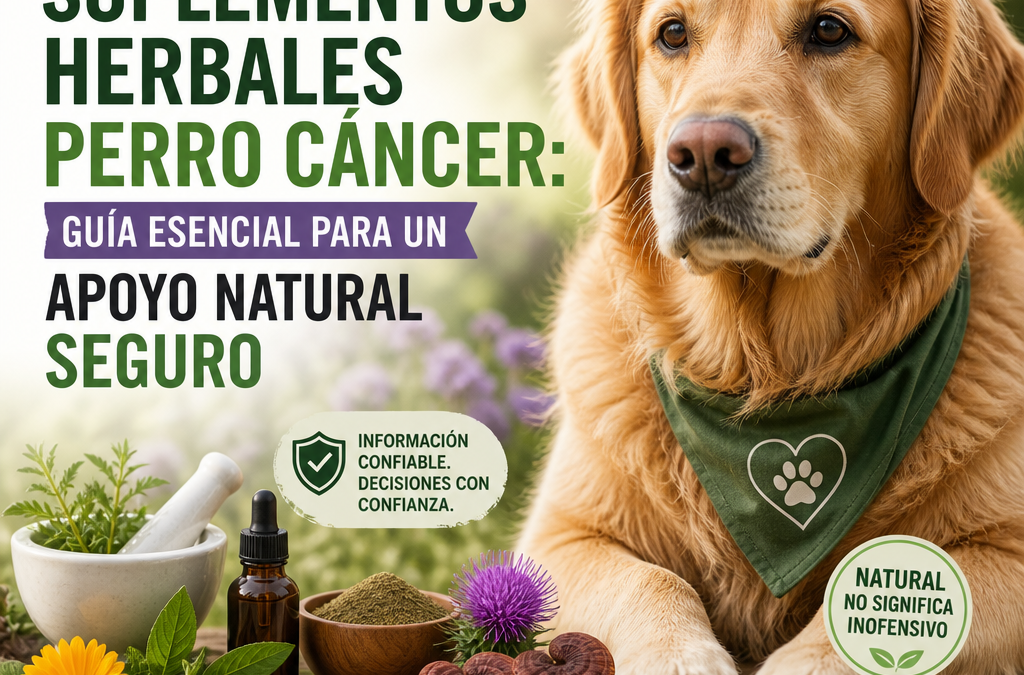
Herbal supplements for cancer dogs can be part of a complementary plan, but should never replace the diagnosis, surgery, chemotherapy, radiotherapy, or care indicated by a veterinarian. When a dog receives oncological treatment, any natural product must be evaluated with the same rigor as a medication. The species, weight, age, type of tumor, liver and kidney function, and the drugs used directly influence its safety.
In practice, the interest in herbal supplements for cancer dogs usually arises when the family seeks to alleviate symptoms, improve appetite, or support overall well-being. That intention is understandable and, in many cases, valuable. However, the real benefit depends on making the right choices, reviewing interactions, and maintaining realistic expectations. An appropriate supplement can help; an inappropriate one can worsen the situation.
What it means to offer natural support to a dog with cancer
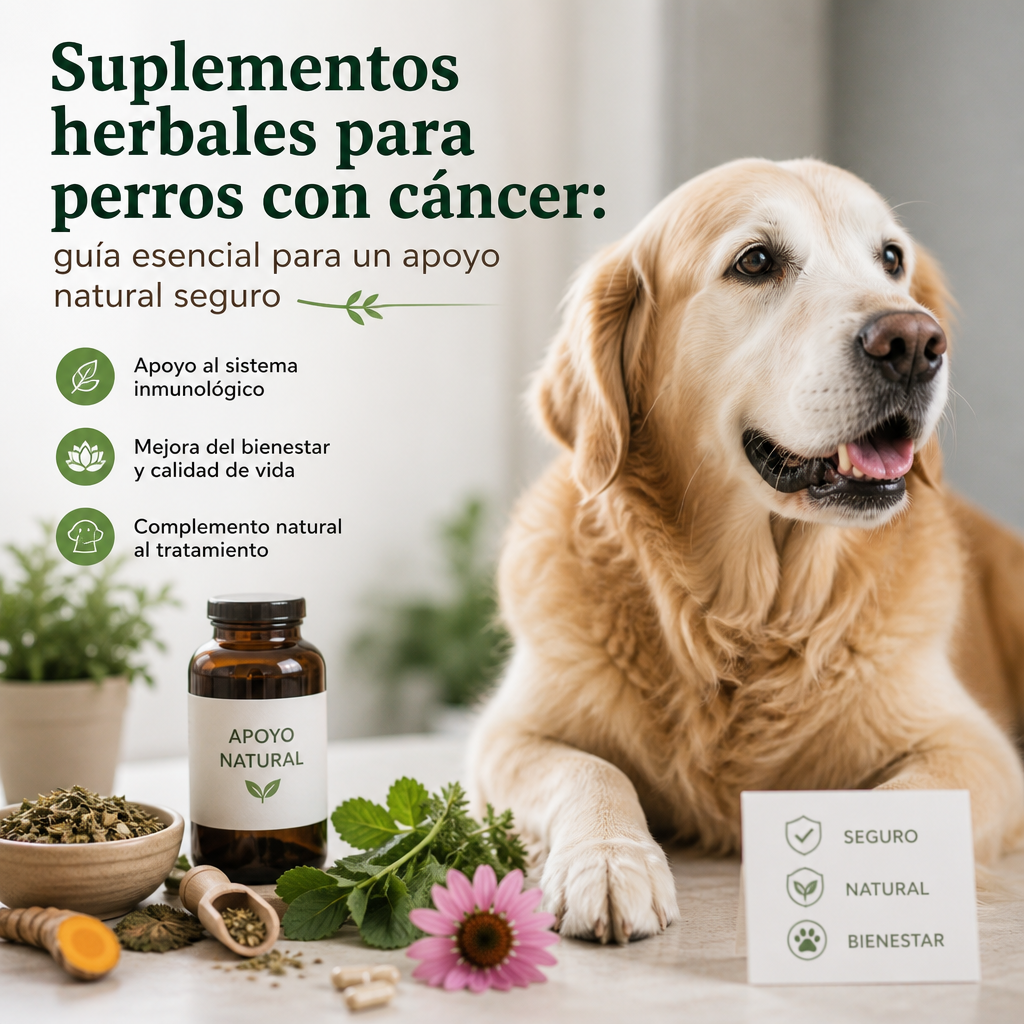
Natural support for tumor dogs usually refers to measures aimed at improving overall well-being, promoting adequate nutrition, and helping to manage some side effects of treatment. It may include a balanced diet, adapted activity, pain control, rest, environmental enrichment, and, in certain cases, supplements selected by a professional.
The realistic goal is not to “cure” cancer through plants. The goal is to accompany the main treatment, maintain quality of life, and avoid problems such as excessive weight loss, dehydration, nausea, or stress. A responsible complementary strategy is based on available evidence, periodic checks, and constant communication with the veterinary team.
In this context, herbal supplements for cancer dogs should be understood as a possible aid, not as a one-size-fits-all solution. If the dog is already receiving medication, the most prudent course is to review each ingredient before introducing it, even when the product is advertised as gentle or natural. It is also worth remembering that the same extract can behave differently depending on the dose, presentation, and clinical state of the animal.
The conversation with the veterinarian should include not only the tumor but also a history of allergies, previous illnesses, recent changes in appetite, and any other therapy the dog is receiving. This information allows for deciding whether natural support makes sense or if efforts should be focused on other more useful measures.
Herbal supplements for cancer dogs: why they require caution
Los suplementos herbales para el cáncer en perros pueden contener extractos concentrados con efectos biológicos importantes. Que un ingrediente sea natural no significa que sea inocuo. Algunas plantas pueden alterar la presión arterial, la coagulación, la función del hígado o la absorción de medicamentos. Otras pueden provocar vómitos, diarrea o reacciones alérgicas.
Additionally, the quality of products varies. A supplement of dubious origin may be contaminated, have a different concentration than indicated on the label, or include undeclared ingredients. Products intended for people are not always appropriate for dogs: they may contain xylitol, alcohol, essential oils, or other hazardous components.
Before administering any supplement, it is advisable to provide the veterinarian with a complete list of medications, vitamins, oils, and natural products that the animal receives. It is also important to keep the containers and check the exact dosage, concentration, and manufacturer.
If you want to expand general clinical information about the oncological approach in animals, consult this reference guide on cancer in dogs and supportive care.
En algunos casos, la mayor prudencia consiste en no añadir nada nuevo hasta estabilizar el tratamiento principal. Esto no significa rechazar todo apoyo complementario, sino evitar decisiones impulsivas. Con frecuencia, la combinación de supervisión, nutrición adecuada y ajuste de síntomas ofrece más beneficio que varios frascos de suplementos herbales para el cáncer en perros utilizados al mismo tiempo.
Herbs for tumor dogs: options that are studied but are not curative treatments
La expresión hierbas para tumores en perros engloba numerosas plantas propuestas en internet para animales con cáncer. Algunas, como la cúrcuma, el cardo mariano o ciertos hongos medicinales, se investigan por sus posibles propiedades antioxidantes, antiinflamatorias o inmunomoduladoras. Sin embargo, los resultados de estudios de laboratorio no equivalen a demostrar eficacia clínica en perros con tumores.
Turmeric, for example, may present absorption issues and is not suitable for all animals, especially those with biliary, gastrointestinal, or coagulation disorders. Milk thistle is used in some contexts as liver support, but it may interact with medications and its use should be individualized. Medicinal mushrooms also require standardized products and a professional assessment, as not all have the same composition.
Never apply a plant directly to a surgical wound, a mass, or a lesion without veterinary authorization. It is also not advisable to prepare homemade infusions, combine several herbs, or increase the dosage because the dog does not show immediate improvement.
In practice, many tutors look for herbal supplements for cancer thinking about relieving discomfort, but the benefit depends on the specific case. The key is to select only what has a real justification and avoid improvised mixtures. Furthermore, the fact that a plant is sold in natural stores or online does not guarantee that it is appropriate for an oncology patient.
It is also useful to distinguish between preliminary research and clinical use. A substance may seem promising in a laboratory study and still not be useful in a real dog due to issues of bioavailability, dosage, or digestive tolerance. That difference is fundamental to avoid false expectations.
Possible interactions with oncological treatments
One of the biggest concerns is the interaction between supplements and cancer medications. Some substances can modify the liver enzymes responsible for metabolizing drugs, causing them to act too intensely or lose effectiveness. Others may increase the risk of bleeding if the dog is taking anticoagulants or is going to undergo surgery.
Antioxidants also deserve special consideration. Although a balanced diet provides beneficial antioxidants, high doses of certain supplements could interfere with mechanisms used by some treatments to damage tumor cells. This does not mean that all antioxidants are prohibited, but their indication should be based on the specific protocol.
For safety, it is not advisable to start a supplement just before an intervention, a chemotherapy session, or an invasive procedure without prior consultation. The veterinarian may recommend suspending certain products for a specific period.
When talking about herbal supplements for cancer, it is also worth remembering that the interaction is not always immediate. Sometimes the problem appears after several days or weeks, so monitoring should be continuous and not just at the beginning of use.
Another relevant aspect is the sum of products. A tutor may think that several “mild” supplements are safer separately, but the combination can create a cumulative effect. Therefore, if the dog is already receiving a therapeutic diet, analgesics, antiemetics, or other drugs, each new ingredient should be reviewed with the same level of attention.
How to choose a supplement responsibly
An appropriate supplement should come from a reliable manufacturer, include a clear list of ingredients, and specify the amount of each active compound. It is also preferable to seek independent quality controls and avoid products that promise to cure any type of cancer, eliminate tumors quickly, or replace veterinary medicine.
The dose should not be calculated solely based on the size of the dog. Weight is important, but so are age, breed, body condition, organ function, and concurrent treatments. A dog with kidney or liver disease may need to avoid certain ingredients altogether.
Introducing one product at a time makes it easier to identify potential adverse effects. During the first few days, appetite, stool, vomiting, energy level, thirst, urine, and any changes in skin or breathing should be monitored. In case of an unexpected reaction, the product should be discontinued and the veterinarian contacted.
Herbal supplements for cancer in dogs should only be considered after reviewing the complete clinical picture. This review helps differentiate between a reasonable option and a product that could complicate treatment or reduce patient safety.
If there are doubts, it may be helpful to bring a written list to the office with the trade name, brand, ingredients, dosage, and the reason for wanting to use the supplement. This simple measure saves time and avoids communication errors, especially when multiple professionals are involved in the animal's care.
Natural measures that do support well-being
Natural support for tumors in dogs does not have to focus exclusively on herbs. A complete and palatable diet, tailored to the patient's needs, may be more important than any capsule. Some dogs need small, frequent meals to control nausea or maintain caloric intake. Fresh water should always be available.
Gentle exercise, if the animal's condition allows, helps maintain mobility and mood. Short walks, resting on a comfortable bed, and reducing noise or sudden changes can decrease stress. Keeping a daily record of appetite, weight, pain, activity, and symptoms is also useful, as it allows for quick detection of changes.
Pain and nausea control should be done with appropriate veterinary medications. Human analgesics, even in small amounts, can be toxic to dogs.
Additionally, the environment plays an important role. A predictable routine, a quiet space, and close supervision help the dog better tolerate difficult days. If the animal is tired or eating less, the priority should be to maintain its comfort rather than adding new herbal supplements for cancer in dogs without a clear need.
Other supportive measures may include gentle physiotherapy, sufficient rest, and adapting the environment so that the dog moves with less effort. In some patients, even small changes like bringing the water closer, avoiding stairs, or placing non-slip rugs can significantly improve quality of life.
Nutrition deserves special attention. A dog with cancer may lose muscle and weight even if it eats, so it is not enough to “give it something natural.” The important thing is that the diet provides adequate energy, protein, and palatability. Sometimes, that nutritional adjustment has a more visible impact than herbal supplements for cancer dogs chosen without a clear strategy.
Practical care during follow-up
A well-done complementary plan requires constant observation. Taking notes on appetite, stool quality, activity level, hydration, and pain helps to see if a product really contributes something. It also allows for early recognition of small changes that, in an oncology patient, can be the first sign of a bigger problem.
If the dog starts to refuse food, vomits more than usual, or shows lethargy after starting a new product, it is advisable to suspend it until receiving instructions. It is not advisable to “wait and see if it gets used to it” when there is suspicion of an adverse reaction.
En hogares donde conviven varios animales, hay que evitar errores de administración. Los productos naturales deben almacenarse fuera del alcance de otros perros y lejos de niños. También es importante no compartir suplementos entre mascotas, aunque parezcan tener síntomas parecidos.
La revisión periódica con el veterinario permite decidir si el suplemento sigue siendo útil o si debe retirarse. En algunos casos, lo que parece ayudar al principio deja de aportar beneficio más adelante, cuando el estado del tumor o el tratamiento cambia.
Si la familia desea mantener un enfoque conservador, puede priorizar tres pilares: alimentación, control de síntomas y bienestar ambiental. En muchos casos, esa base bien aplicada resulta más segura y eficaz que añadir múltiples suplementos herbales perro cáncer sin un objetivo clínico definido.
Warning signs
Hay que buscar atención veterinaria si aparecen vómitos persistentes, diarrea intensa, sangre en las heces o la orina, dificultad para respirar, debilidad marcada, desmayos, dolor evidente, rechazo total de la comida, abdomen muy distendido o un empeoramiento rápido de la masa. También es importante consultar si el perro pierde peso de forma continua o deja de beber.
In short, herbal supplements can have a limited and carefully supervised place within veterinary oncology. The priority should always be quality of life, safety, and an individualized plan. The best decision is not to choose the most popular plant, but to assess with a professional whether the product is necessary, compatible, and truly beneficial for that particular dog.
If used judiciously, herbal supplements for cancer dogs can fit into a supportive approach; if used uncontrolled, they can add avoidable risks. Therefore, veterinary supervision remains the most important part of the entire process.
For those seeking a broader reference on comprehensive care, the supporting information and clinical follow-up in cancer in dogs and supportive care can serve as a useful educational supplement.
It is also worth remembering that herbal supplements for cancer in dogs should not be evaluated solely based on opinions on the internet or isolated testimonials. Each dog's response depends on the diagnosis, the stage of the disease, and the primary treatment. A cautious approach avoids overloading the body with unnecessary products and allows focusing on what truly provides benefit.
If the veterinarian approves a product, the follow-up should include daily observation, clinical checks, and periodic review of the complete list of herbal supplements for cancer in dogs and other supplements. This way, any changes in appetite, energy, or digestive tolerance can be detected in time and corrected before they become a bigger problem.
In most cases, the best strategy is simple: choose a few well-justified things and follow up. Thus, natural support stops being a trend and becomes a real, safe, and tailored help for the dog's needs.
