
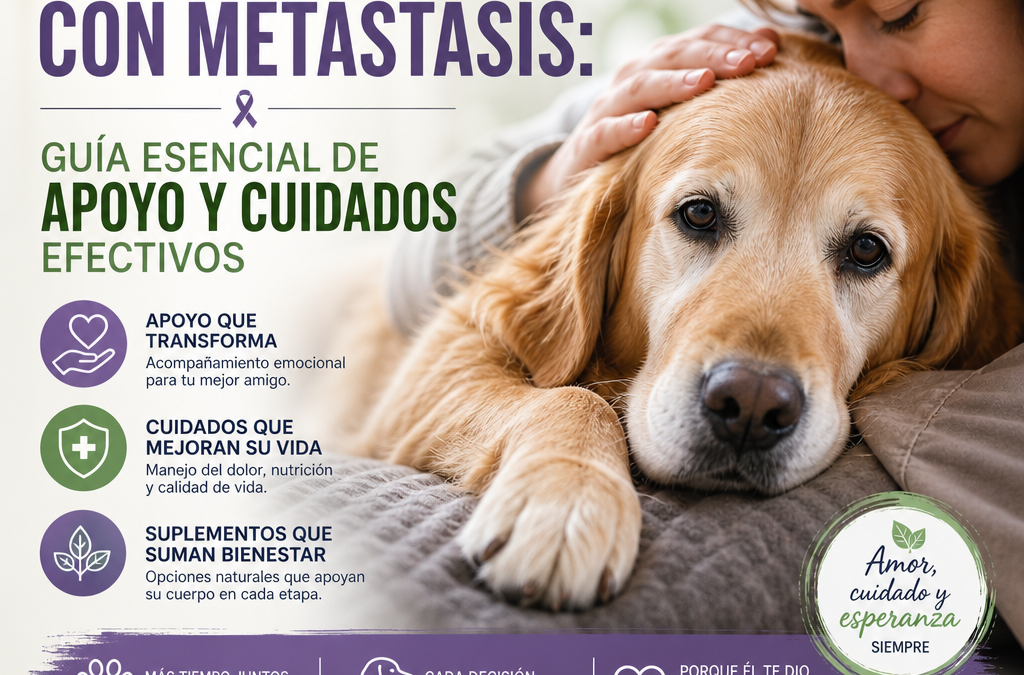
Cáncer perro metástasis apoyo: cuando un perro recibe un diagnóstico oncológico avanzado, toda la familia necesita información clara, acompañamiento y un plan de cuidados realista. La presencia de metástasis significa que las células tumorales se han extendido desde el lugar donde comenzó el cáncer hacia otros tejidos u órganos, pero no implica que no haya nada que hacer. El objetivo del tratamiento puede centrarse en controlar la enfermedad, aliviar el dolor, conservar la movilidad y mantener la mejor calidad de vida posible.
Tabla de contenidos
- ¿Qué significa que un tumor en un perro tenga metástasis?
- Objetivos del tratamiento en el cáncer avanzado
- Control del dolor y de los síntomas
- Alimentación e hidratación durante la enfermedad
- Suplementos para perros con cáncer: precauciones importantes
- Cuidados diarios y bienestar emocional
- Cómo valorar la calidad de vida
¿Qué significa que un tumor en un perro tenga metástasis?
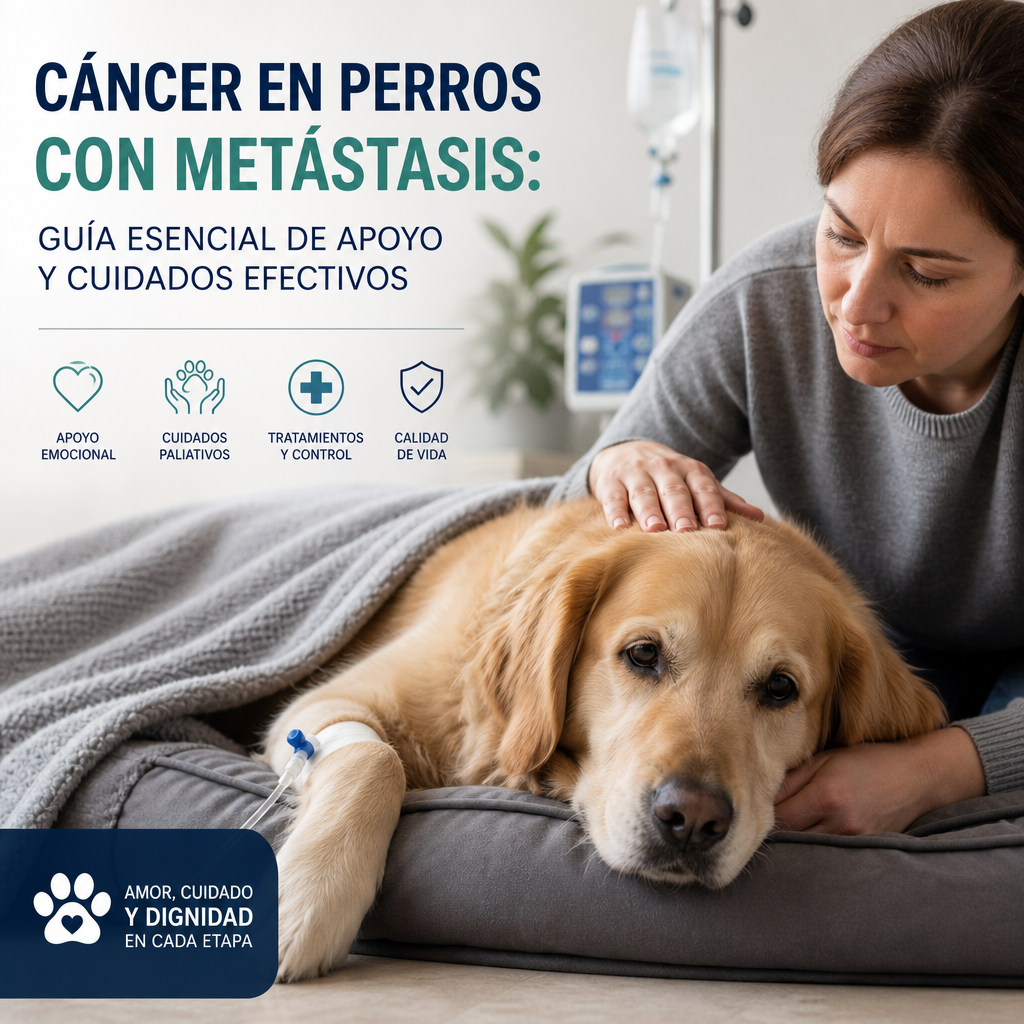
La metástasis ocurre cuando las células de un tumor primario viajan por la sangre o el sistema linfático y forman nuevos focos tumorales. Los pulmones, el hígado, los ganglios linfáticos y los huesos son algunos de los lugares que pueden verse afectados, aunque la localización depende del tipo de cáncer.
Un tumor perro metástasis requiere una valoración completa. El veterinario puede recomendar análisis de sangre, radiografías, ecografías, tomografía computarizada, citología o biopsia. Estas pruebas ayudan a conocer la extensión de la enfermedad y a determinar si conviene utilizar cirugía, quimioterapia, radioterapia, medicamentos paliativos o una combinación de tratamientos.
Es importante recordar que cada caso es diferente. La edad, el estado general, el tipo de tumor, la velocidad de crecimiento y la respuesta al tratamiento influyen en el pronóstico. La existencia de metástasis suele dificultar la curación, pero todavía pueden existir opciones para reducir síntomas y prolongar el bienestar.
En este punto, el cáncer perro metástasis apoyo debe enfocarse en decisiones informadas, realistas y centradas en el bienestar diario del animal.
Objetivos del tratamiento en el cáncer avanzado
En las fases metastásicas, el tratamiento no siempre busca eliminar por completo el cáncer. En muchos perros, la prioridad es ralentizar la progresión y controlar las molestias. Este enfoque se conoce como tratamiento paliativo y puede incluir analgésicos, antiinflamatorios, medicamentos contra las náuseas, estimulantes del apetito y terapias específicas contra determinados tipos de tumores.
La quimioterapia veterinaria suele administrarse con protocolos adaptados para proteger la calidad de vida. A diferencia de lo que muchas personas imaginan, los perros no siempre experimentan efectos secundarios intensos. Cuando aparecen, pueden incluir falta de apetito, vómitos, diarrea, cansancio o disminución temporal de las defensas. El veterinario debe explicar qué signos requieren atención inmediata.
La cirugía puede ser útil si existe un tumor localizado que provoca dolor, sangrado, obstrucción o dificultad para moverse. Sin embargo, cuando hay múltiples metástasis, es necesario valorar cuidadosamente si una intervención aportará beneficios suficientes frente a los riesgos de la anestesia y la recuperación.
En una etapa así, el cáncer perro metástasis apoyo también implica revisar con frecuencia si el plan sigue siendo proporcionado y amable para el perro.
Control del dolor y de los síntomas
El dolor puede manifestarse de formas sutiles. Algunos perros lloran o cojean, pero otros simplemente duermen más, dejan de subir escaleras, jadean sin motivo aparente, se esconden, cambian de postura con frecuencia o pierden interés por sus actividades habituales. Cualquier cambio persistente debe comunicarse al veterinario.
Pain management may require several medications and periodic adjustments. Human drugs should never be administered on one's own, as some are toxic to dogs even in small amounts. Acetaminophen, ibuprofen, and aspirin can cause serious problems if not used under precise veterinary guidance.
It is also advisable to observe breathing, feeding, hydration, bowel movements, and the ability to rest. Labored breathing, pale gums, repeated vomiting, bleeding, collapse, intense pain, or inability to stand are reasons to seek emergency veterinary services.
When pain is well controlled, cancer dog metastasis support becomes more effective because the dog can rest, eat, and move with less suffering.
Alimentación e hidratación durante la enfermedad
Nutrition does not cure cancer on its own, but it can help maintain strength and better tolerate certain treatments. The most important thing is that the dog eats a complete, balanced, and appropriate diet for its condition. In some cases, the veterinarian may recommend a diet with higher energy density, good quality proteins, or a texture that is easier to accept.
Small, frequent meals may work better than a large portion. It may also be helpful to offer food slightly warmed to enhance its aroma, as long as the animal tolerates it. Abrupt dietary changes should not be made, nor should raw foods be used without assessing the risks of contamination, especially if the dog is undergoing chemotherapy and has low defenses.
Dehydration can worsen fatigue and weakness. Clean, accessible water should be maintained in various places around the house. If the dog is not drinking, vomiting, or has diarrhea, the veterinarian may consider fluid therapy and supportive medications.
If appetite decreases steadily, it is advisable to seek professional guidance as soon as possible; in complex cases, the approach of cancer dog metastasis support helps to decide on dietary and medication adjustments without improvisation.
Suplementos para perros con cáncer: precauciones importantes
Los suplementos para perros con cáncer se han vuelto populares, pero no todos tienen evidencia suficiente ni son seguros para todos los animales. Algunos productos pueden interferir con la quimioterapia, alterar la coagulación, sobrecargar el hígado o los riñones, o modificar la absorción de otros medicamentos.
Before using omega-3, antioxidants, plant extracts, medicinal mushrooms, vitamins, or commercial products, it is essential to consult the veterinary oncologist. “Natural” does not automatically mean harmless. Additionally, doses for dogs should not be calculated based on human recommendations.
A supplement should only be incorporated when there is a specific goal, a veterinary dose, and monitoring. It is also advisable to choose products with quality controls and avoid mixtures with imprecise compositions. The main treatment should never be replaced by supplements, miracle diets, or remedies without medical backing.
To expand safe options and selection criteria, you can review this internal guide on best supplements for dogs with cancer.
En cualquier fase, el apoyo para perros con cáncer y metástasis debe priorizar la seguridad antes que las promesas comerciales.
Cuidados diarios y bienestar emocional
The environment should be comfortable, quiet, and safe. A cushioned bed, non-slip surfaces, and ramps can facilitate rest and reduce the risk of falls. Walks should be adapted to the dog's energy: short, slow, and frequent walks are usually better than long or intense activities.
Affectionate contact, familiar routines, and family companionship can reduce stress. It is not necessary to constantly stimulate them; some dogs need more hours of sleep and quiet spaces. Quality of life includes being able to rest, interact, eat with interest, move reasonably, and enjoy pleasant moments.
Keeping a daily record can help make objective decisions. Appetite, pain, mobility, breathing, vomiting, bowel movements, and moments of interest or joy can be noted. This data allows for detecting changes and discussing with the veterinarian more accurately.
Un apoyo cotidiano constante hace que el apoyo para perros con cáncer y metástasis sea más humano y más útil para toda la familia.
¿Cómo ayuda el apoyo para perros con cáncer y metástasis en la vida diaria?
Cuando la familia entiende qué observar y cómo actuar, el cuidado diario se vuelve más ordenado y menos angustiante. El apoyo para perros con cáncer y metástasis no se limita a dar medicamentos: también implica anticipar necesidades, reducir el esfuerzo físico y ajustar las rutinas para que el perro conserve energía.
For example, it is advisable to place the food and water bowls in an easily accessible location, avoid unnecessary stairs, and offer shorter but more frequent outings. In dogs with weakness or pain, a support harness can facilitate transfers and reduce the risk of falls.
It also helps to reserve moments of calm without excessive visits or noise. Some dogs benefit from a predictable routine, with stable schedules for eating, resting, and receiving medication. This stability can make the process more bearable for both the animal and the family.
If doubts arise about behavioral changes, loss of appetite, or fatigue, cancer dog metastasis support should include quick communication with the veterinarian to adjust the plan before discomfort progresses.
When to request an urgent veterinary check-up?
There are signs that should not wait for the next scheduled appointment. An urgent check-up is advisable if the dog has difficulty breathing, excessive bleeding, seizures, fainting, unrelenting pain, persistent vomiting, a very distended abdomen, or inability to stand.
It is also advisable to consult without delay if the dog stops eating or drinking completely, if dehydration progresses, or if the level of consciousness changes noticeably. In a context of advanced illness, acting quickly can prevent unnecessary suffering and allow timely adjustments to treatment.
In these situations, cancer dog metastasis support includes recognizing limits, asking for help, and not trying to solve the problem alone at home.
Cómo valorar la calidad de vida
Quality of life should be continuously reviewed, not just during crises. A practical tool is to observe if the dog has more good days than bad. Pain, hunger, hydration, hygiene, happiness, mobility, and interaction with the family can also be evaluated.
When symptoms are no longer controlled, the animal cannot rest, stops eating and drinking, suffers persistent pain, or shows more bad days than good, it is necessary to talk to the veterinarian about available options. In some cases, humane euthanasia may be the most compassionate decision to prevent suffering. Considering it does not mean abandoning the dog, but prioritizing its well-being when the disease has progressed too far.
Veterinary support, daily observation, and family affection are essential pillars. In the face of metastatic cancer, caring is not just about treating the tumor, but about protecting every possible day of comfort, dignity, and bond.
If you need a final thought, remember that cancer dog metastasis support does not replace professional care: it complements it with presence, consistency, and dog-centered decisions.
For general clinical information about metastasis and cancer, you can consult the explanation from the National Cancer Institute on metastatic disease..