Suplementos perro radioterapia: 7 consejos esenciales para un apoyo seguro, positivo y natural
Suplementos perro radioterapia es una consulta frecuente cuando una familia quiere ayudar a su perro durante el tratamiento, pero la decisión debe tomarse siempre con supervisión del veterinario oncólogo. La radioterapia puede ser muy útil para controlar determinados tumores, aunque también puede causar cansancio, irritación cutánea, cambios en el apetito o molestias localizadas. Un apoyo nutricional bien planteado puede contribuir al bienestar del animal, pero ningún suplemento sustituye la radioterapia, los medicamentos prescritos ni una alimentación completa.
Antes de comprar cualquier producto, conviene recordar que no todos los perros necesitan suplementos y que, cuando sí los necesitan, la prioridad es elegir solo lo que realmente aporte valor clínico. En oncología veterinaria, menos suele ser más: una dieta adecuada, un seguimiento estrecho y una selección prudente de productos suelen ofrecer mejores resultados que una larga lista de cápsulas sin objetivo claro.
Tabla de contenidos
- ¿Por qué valorar suplementos durante la radioterapia en perros?
- Suplementos perro radioterapia: opciones que pueden considerarse
- Apoyo perro cáncer radioterapia: más allá de los suplementos
- Suplementos durante radioterapia perro: riesgos y precauciones
- Cómo elegir un complemento de forma segura
- Preguntas frecuentes sobre suplementos y radioterapia
- Conclusión práctica para la familia
¿Por qué valorar suplementos durante la radioterapia en perros?

During oncological treatment, the dog's body needs to maintain good body condition, preserve muscle mass, and have enough energy to recover between sessions. However, needs vary depending on the type of tumor, the irradiated area, age, weight, renal and hepatic function, and additional treatments.
In some cases, the dog eats normally and does not require any supplements. In others, it may present a lack of appetite, nausea, weight loss, or difficulties chewing and swallowing, especially when radiation therapy affects the head, neck, or digestive system. Therefore, the main objective is not to add many products, but to identify the specific need and meet it safely.
Nutritional support should begin with a complete and balanced diet, tailored to the veterinary team's recommendations. If the animal loses weight, the professional may recommend a more energy-dense food, increase caloric density, or use a recovery diet. Supplements should only complement this plan.
It is also important to understand that the goal of radiation therapy is not to improve the overall condition by itself, but to control the tumor and reduce symptoms. When that clinical plan works, the dog may need less additional help. On the other hand, if digestive discomfort or significant fatigue arises, supplements may be considered as support and not as the main solution.
Además, un cambio de apetito o energía no siempre significa que el suplemento vaya a ayudar. A veces el problema está en el dolor, en una infección secundaria, en un efecto adverso del tratamiento o en una deshidratación que exige atención inmediata. Por eso es tan importante que cada decisión pase por una revisión veterinaria individualizada.
Para ampliar criterios de selección de productos seguros, también puede ser útil esta guía sobre best supplements for dogs with cancer.
Suplementos perro radioterapia: opciones que pueden considerarse
No existe una fórmula universal para todos los perros con cáncer. Algunos complementos pueden ser útiles en situaciones concretas, pero su uso debe individualizarse.
When discussing suplementos perro radioterapia, es importante separar los productos con un posible papel de apoyo de aquellos que solo generan expectativas sin respaldo clínico. También hay que distinguir entre el producto correcto y el momento correcto: algo útil durante la pérdida de apetito puede no ser necesario cuando el perro ya se encuentra estable.
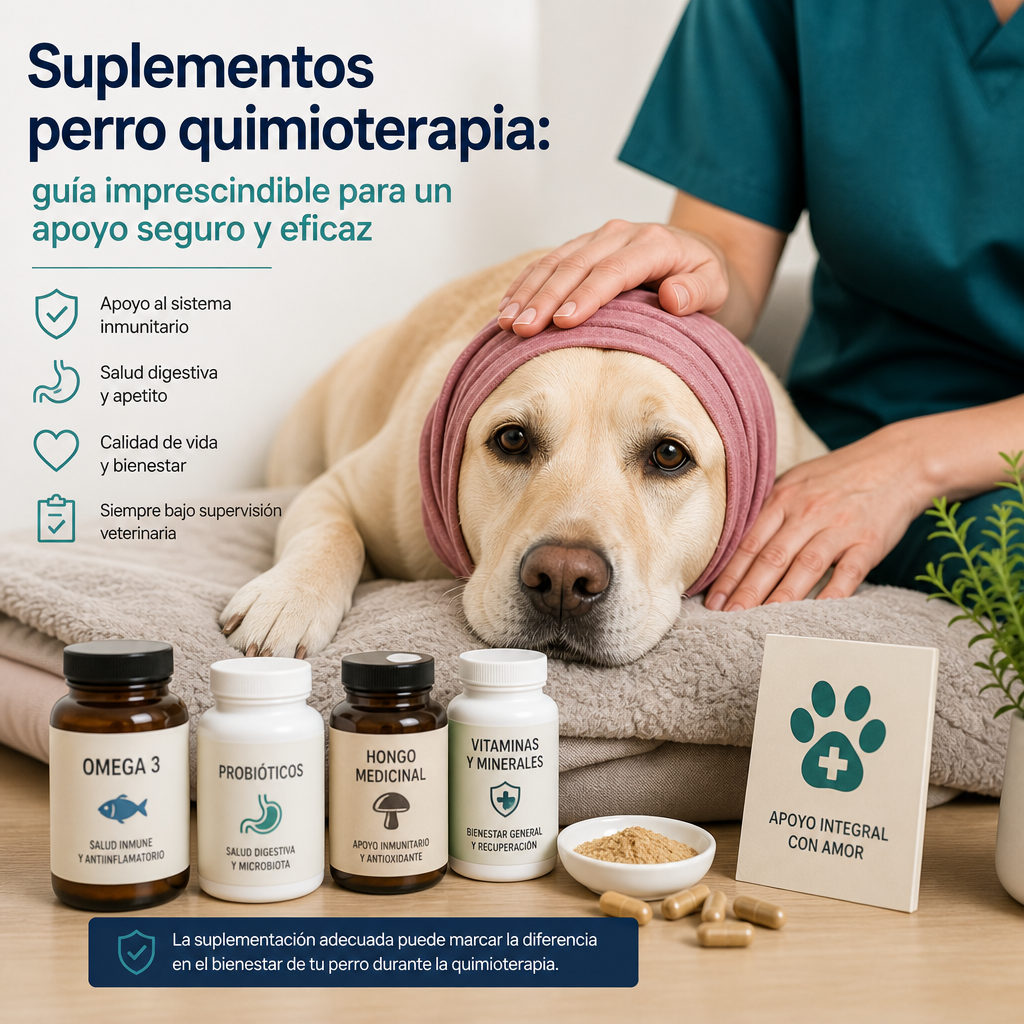
Omega-3 fatty acids
Los omega-3, especialmente el EPA y el DHA procedentes del aceite de pescado, se estudian por su posible papel en la respuesta inflamatoria y en el mantenimiento de la masa muscular. En algunos perros pueden formar parte del apoyo nutricional frente a la pérdida de peso o la inflamación asociada a la enfermedad.
Aun así, la dosis importa. Un exceso puede provocar diarrea, aumento de peso o alteraciones de la coagulación, y puede ser inadecuado si el perro toma ciertos medicamentos o tiene problemas pancreáticos. Es preferible utilizar productos veterinarios con concentración conocida y evitar aceites de procedencia dudosa.
En la práctica, los omega-3 suelen considerarse cuando existe una necesidad concreta y el perro tolera bien la dieta. No conviene iniciar varios cambios alimentarios a la vez, porque eso dificulta saber si el producto ayuda o si está empeorando la digestión. Si se introducen, debe hacerse con una pauta definida y seguimiento.
Probiotics and digestive support
Los probióticos pueden valorarse cuando existen alteraciones intestinales, diarrea o cambios en la microbiota relacionados con el estrés, la dieta o determinados medicamentos. No todos los productos tienen las mismas cepas ni la misma evidencia, por lo que conviene elegir un complemento formulado para perros.
Si hay vómitos persistentes, diarrea intensa, sangre en las heces o signos de deshidratación, no debe intentarse resolver el problema únicamente con un probiótico. Estos síntomas requieren valoración veterinaria, sobre todo durante un tratamiento oncológico.
En perros con estómago sensible, el profesional puede recomendar empezar con una cantidad pequeña y observar la tolerancia. Si el animal empeora tras el inicio del producto, se debe suspender hasta revisar la pauta. Un buen suplemento digestivo debe ayudar, no complicar el cuadro clínico.
Vitamins and minerals
Vitamins and minerals are essential, but a complete commercial diet usually provides the necessary amounts. Adding them without guidance can disrupt the diet and even cause toxicity. Fat-soluble vitamins, such as A, D, E, and K, can accumulate in the body.
Supplementation may be reasonable when there is a demonstrated deficiency, a properly formulated homemade diet, or a specific medical condition. In those cases, the veterinarian may recommend tests and calculate a precise dose.
It is also important to consider that the need for vitamins is not the same for all dogs. An animal that eats little, loses weight, or has a complex digestive process may require a different strategy than one that maintains a good appetite. Again, the clinical context dictates the decision.
Antioxidants
Antioxidants are one of the most controversial topics in veterinary oncology. Some supplements contain vitamins C and E, selenium, coenzyme Q10, or other substances with antioxidant activity. The problem is that radiation therapy uses controlled cellular damage as part of its mechanism of action. Therefore, high doses of certain antioxidants could theoretically interfere with the treatment, although the available evidence does not allow for making the same claims for all products and tumors.
La recomendación más prudente es no iniciar antioxidantes de alta concentración sin la aprobación expresa del oncólogo. Tampoco deben suspenderse medicamentos o tratamientos convencionales para sustituirlos por productos naturales.
En este punto, la seguridad debe prevalecer sobre cualquier promesa comercial. Un producto etiquetado como “refuerzo inmunitario” no significa que sea automáticamente adecuado durante la radioterapia. La oncología veterinaria necesita decisiones basadas en el caso clínico, no en generalidades.
Proteínas y calorías de soporte
En algunos casos, más que un suplemento clásico, lo que el perro necesita es una mejor cobertura de proteínas y energía. Si existe pérdida de masa muscular o apatía alimentaria, el veterinario puede recomendar enriquecer la ración o usar una dieta de alta densidad calórica. Ese ajuste puede ser más útil que añadir un producto aislado.
La proteína es importante para mantener tejidos, inmunidad y recuperación. Sin embargo, no debe aumentar de forma indiscriminada en perros con enfermedad renal u otras complicaciones. Por eso el ajuste debe hacerse con orientación profesional y no por intuición.
Ácidos grasos y apoyo de la piel
When radiation therapy causes skin irritation, the family often seeks external help. Although some nutrients may contribute to the overall condition of the skin, creams or oils should not be applied to the area without authorization. Irradiated skin is delicate and may react poorly to human products or perfumes.
If the skin needs support, the oncologist or veterinary dermatologist will indicate the most appropriate management. Sometimes, the correct local care weighs more than any oral supplement.
Apoyo perro cáncer radioterapia: más allá de los suplementos
Dog cancer radiation support includes much more than administering capsules, oils, or powders. Pain and nausea control, hydration, rest, and nutrition are fundamental pillars.
It is advisable to record appetite, water intake, weight, and bowel movements. A progressive weight loss may indicate that the dog needs a more comprehensive nutritional intervention. It is also important to offer food in a calm environment, maintain regular schedules, and avoid sudden diet changes.
If the irradiated area produces irritation, the instructions on hygiene and skin care must be followed exactly. Creams, essential oils, or human products should not be applied without authorization, as some may irritate the area or be toxic if the dog licks them.
Gentle exercise is usually beneficial, as long as the animal tolerates it. Short, calm walks can help maintain mobility and mood, but it's best to avoid intense exertion during the most tiring days.
Another essential part of support is daily observation. Small changes in posture, sleep, interest in the environment, or the frequency of bowel movements can be valuable clues. The sooner a problem is detected, the sooner the care plan can be adjusted.
When the family asks for help with suplementos perro radioterapia, they often also need guidance on simple routines: feeding schedules, frequent hydration, a comfortable environment, and sufficient rest. These measures do not replace treatment, but they do help the dog tolerate it better.
As an external reference on safety and clinical approach, information from the American Veterinary Medical Association on cancer in pets can be consulted..
Suplementos durante radioterapia perro: riesgos y precauciones
“Natural” does not automatically mean safe. Medicinal plants, concentrated extracts, and herbal products can interact with medications, alter coagulation, affect the liver, or modify the absorption of other treatments.
Before administering any supplement, the veterinarian must know:
- Trade name and complete composition.
- Intended dosage and frequency.
- Medications the dog is taking.
- Kidney, liver, digestive, or pancreatic diseases.
- Recent analysis results, when relevant.
- Start date and schedule of radiation therapy sessions.
It is also advisable to avoid products with proprietary blends, unspecified ingredients, or promises like “cure cancer,” “eliminate tumors,” or “replace chemotherapy.” These claims are not compatible with a responsible veterinary approach.
A particularly delicate point is the combination of several supplements at the same time. Although each one separately may seem innocent, together they can provide too much of a nutrient, upset the stomach, or complicate the interpretation of any side effects. The safest rule is usually to introduce one change at a time.
In dogs undergoing head and neck radiation therapy, intake issues may lead the family to try solutions on their own. However, forcing food, mixing many powders, or using flavorless products intended for humans can worsen food rejection. Keeping it simple is usually the best strategy.
Attention should also be paid to warning signs: repeated vomiting, severe diarrhea, marked lethargy, bleeding, difficulty swallowing, dehydration, or obvious pain. If any of these signs appear, it is not enough to adjust the supplement; a veterinary review is needed as soon as possible.
Cómo elegir un complemento de forma segura
The quality of the product is as important as the ingredient. It should be designed for animals, clearly indicate the concentration, include storage instructions, and come from a reliable manufacturer. Doses should be calculated based on the weight and clinical characteristics of the dog, not according to general recommendations found online.
Follow-up allows knowing if the supplement provides any benefit. If vomiting, diarrhea, itching, marked lethargy, bleeding, changes in urine, or worsening appetite occur, administration should be suspended until consulting with the veterinarian, unless the professional has indicated otherwise.
It is worth remembering that supplements for dogs undergoing radiation therapy only make sense when they fit into an overall plan. That plan usually includes an appropriate diet, symptom control, regular check-ups, and adjustments based on the animal's response. In some cases, the oncologist may also recommend reviewing resources about suplementos para perros con cáncer before deciding which product fits best with the clinical situation.
A practical way to choose is to ask four questions: Is there a real need? Is the product designed for dogs? Is the dosage clear? Does the veterinarian know what will be used? If the answer to any of these questions is no, the most prudent thing is to wait and review the case.
It also helps to keep a simple record with the start date, dosage, appetite, weight, and any digestive changes. That small diary helps the professional decide if the supplement is worth it or if it should be withdrawn.
In families seeking clear information about suplementos perro radioterapia, the best criterion is usually to choose only what is necessary, in the correct dosage and with professional follow-up. This prudence reduces risks and facilitates real support throughout the treatment.
In many cases, the veterinarian may prioritize pain control, hydration, and caloric intake before adding new products. If after that assessment there is still a specific need, the suplementos perro radioterapia can be part of the support plan, always within a simple and well-monitored strategy.
It is also worth remembering that not all dogs respond the same way. An animal with a good appetite and stable weight may not need additional supplements, while another with nausea or loss of muscle mass may benefit from a specific supplement. Therefore, the expression suplementos perro radioterapia should be understood as a search for personalized help, not as a universal recipe.
Safety depends both on the product and on the moment it is introduced. Starting several supplements at once complicates knowing which helps and which bothers. The most sensible thing is to introduce one change at a time, record the response, and review any side effects with the veterinary team. Thus, the suplementos perro radioterapia are integrated in an orderly manner into the animal's daily recovery.
If the dog tolerates the diet well, maintains its energy, and does not show digestive discomfort, it may only need observation and regular check-ups. If, on the contrary, there is weight loss, weakness, or digestive changes, the veterinarian will be able to assess the suplementos perro radioterapia that best fit its case, always without replacing the indicated oncological treatments.
Preguntas frecuentes sobre suplementos y radioterapia
Can I give supplements without consulting the oncologist?
It is not the most advisable. Although some products may seem harmless, they can interfere with medications, alter coagulation, or worsen digestive discomfort. A prior review avoids mistakes and helps to choose better.
Do supplements replace the diet?
No. The basis should always be a complete diet adapted to the dog. Supplements only complement a well-planned diet and should not be used to compensate for a deficient diet.
What should I do if my dog does not want to eat?
If the lack of appetite lasts more than a day, worsens, or is accompanied by vomiting, pain, or apathy, you should call the veterinarian. In some cases, it is necessary to adjust the treatment, offer a more palatable diet, or assess specific nutritional support.
Are all antioxidants dangerous?
That cannot be stated in general. The problem is the lack of uniformity among products, dosages, and clinical contexts. Some antioxidants may have specific uses, but they must always be approved by the oncologist before use.
Can I change supplements if I don't see quick results?
It is not advisable to do so by intuition. The appropriate thing is to review if the product is being given correctly, if the dosage is right, and if the real problem is another. Changing without control complicates the evaluation and may hide a side effect.
Conclusión práctica para la familia
In short, the suplementos perro radioterapia They can play a complementary role in selected cases, but the priority is to maintain an adequate diet, control symptoms, and follow the oncology protocol. The best support for a dog with cancer is an individualized plan, reviewed periodically and coordinated between the family and the veterinary team.
If the goal is to improve quality of life without adding risks, the combination of a correct dietary regimen, clinical supervision, and prudent selection of supplements for dogs undergoing radiotherapy is usually the safest and most useful option. In the event of any changes in appetite, weight, or general condition, a veterinary review should be the first measure.
Additionally, when the family seeks clear information about suplementos perro radioterapia, the most useful approach is to focus on a single idea: choose only what is necessary, in the correct dosage, and with professional follow-up. This prudence reduces risks and facilitates real support throughout the treatment.
In many cases, the veterinarian may prioritize pain control, hydration, and caloric intake before adding new products. If after that assessment there is still a specific need, the suplementos perro radioterapia can be part of the support plan, always within a simple and well-monitored strategy.
It is also worth remembering that not all dogs respond the same way. An animal with a good appetite and stable weight may not need additional supplements, while another with nausea or loss of muscle mass may benefit from a specific supplement. Therefore, the expression suplementos perro radioterapia should be understood as a search for personalized help, not as a universal recipe.
Safety depends both on the product and on the moment it is introduced. Starting several supplements at once complicates knowing which helps and which bothers. The most sensible thing is to introduce one change at a time, record the response, and review any side effects with the veterinary team. Thus, the suplementos perro radioterapia are integrated in an orderly manner into the animal's daily recovery.
If the dog tolerates the diet well, maintains its energy, and does not show digestive discomfort, it may only need observation and regular check-ups. If, on the contrary, there is weight loss, weakness, or digestive changes, the veterinarian will be able to assess the suplementos perro radioterapia that best fit its case, always without replacing the indicated oncological treatments.
With a calm, realistic, and well-supervised strategy, it is possible to offer support without adding unnecessary risks. This is the most responsible way to accompany the dog during radiotherapy and to make useful decisions at each stage of treatment.