
Los suplementos perro quimioterapia They can help maintain the well-being, appetite, and quality of life of the animal, but should never replace the treatment indicated by the veterinarian. During chemotherapy, the dog's body may experience digestive, metabolic, and hematological changes that require professional monitoring. Therefore, any vitamin, medicinal plant, oil, or nutritional supplement should be assessed individually and coordinated with the veterinary oncologist.
Tabla de contenidos
- Why consider supplements during chemotherapy in a dog?
- Dog cancer chemo support: main objectives
- Dog chemotherapy supplements: options that the veterinarian can evaluate
- Medicinal plants and natural products: essential precautions
- How to safely administer supplements
- Warning signs during chemotherapy
- A personalized and cautious approach
Why consider supplements during chemotherapy in a dog?
Chemotherapy aims to eliminate or control tumor cells, although it can also produce side effects. Some dogs may experience nausea, vomiting, diarrhea, decreased appetite, weight loss, fatigue, or alterations in blood tests. In these cases, the goal of supplements is not to “cure” cancer, but to support specific nutritional needs and contribute to a more comfortable recovery.
Los suplementos perro quimioterapia They can be useful when there is a specific deficiency, insufficient intake, or an associated condition that the veterinarian has identified. For example, an animal that eats little may need a specific nutritional strategy, while another with delicate kidney function will require avoiding certain products.
The response depends on the type of tumor, the pharmacological protocol, age, weight, general condition, and the presence of other diseases. Not all dogs need supplements, and in some cases, adding them without control can be counterproductive.
Dog cancer chemo support: main objectives
The Dog cancer chemo support It should focus on safe and realistic measures. Among the most common objectives are:
- Maintain an adequate body weight.
- Promote sufficient intake of proteins and energy.
- Control nausea, vomiting, or diarrhea under veterinary supervision.
- Help preserve muscle mass.
- Detect and treat dehydration early.
- Improve comfort and quality of life.
- Monitor possible alterations in the liver, kidneys, or blood cells.
Nutrition is often the main pillar. A complete, balanced, and well-tolerated food can provide more benefits than an extensive combination of supplements. If the dog stops eating, vomits repeatedly, or loses weight rapidly, it is preferable to consult the veterinarian soon rather than trying to resolve it solely with supplements.
Dog chemotherapy supplements: options that the veterinarian can evaluate
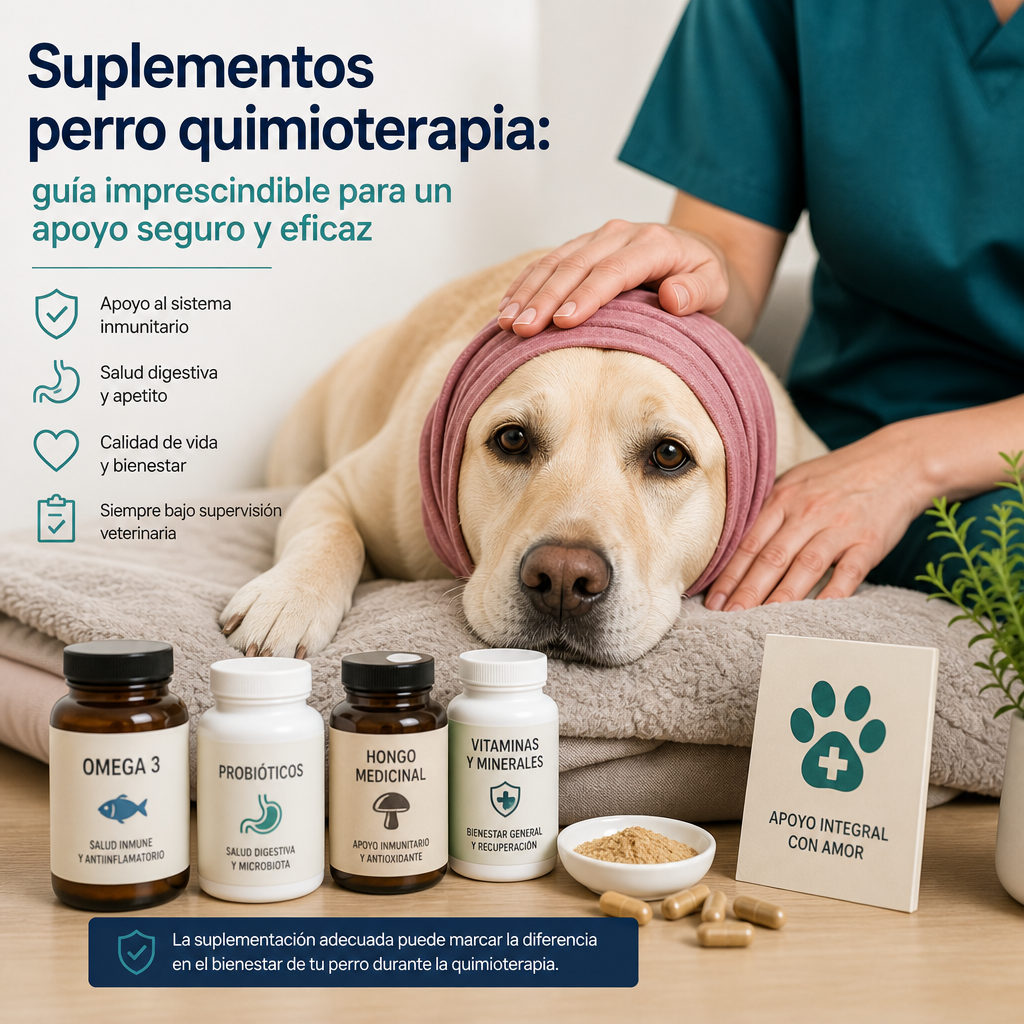
Omega-3 fatty acids
Omega-3s, especially present in purified fish oils, can be part of a nutritional strategy for some patients. They are studied for their relationship with inflammation and metabolism, although their benefits depend on the clinical situation and dosage.
It is important to use quality products, calculate the amount according to weight, and check their compatibility with other medications. They can also cause digestive discomfort or provide too many calories. Rancid oils or those of dubious origin should be avoided.
Probiotics and digestive support
Some dogs treated for cancer develop intestinal disturbances. A specific veterinary probiotic could help maintain the balance of the microbiota in certain cases, especially when there is diarrhea or changes in diet.
However, not all probiotics have the same composition or the same evidence. Additionally, in animals with very low defenses, serious illnesses, or active infections, their use must be strictly supervised.
Vitamins and minerals
Vitamins should not be administered automatically. If the dog receives a complete food, it usually does not need multivitamin supplements. Excess fat-soluble vitamins, such as A, D, E, or K, can accumulate and cause toxicity. Some minerals can also interfere with the absorption of medications or overload the kidneys.
Supplementation should be based on a demonstrated deficiency, an incomplete diet, or a specific clinical indication. Analyses and dietary evaluation are essential for making a safe decision.
Appetite and muscle mass supplements
When there is a loss of appetite, the veterinarian may recommend adjustments to the diet, more palatable foods, small and frequent meals, or specific medications. Some energy supplements may be useful, but they should be incorporated considering the caloric needs and the digestive state of the animal.
The preservation of muscle mass also depends on an adequate amount of protein, gentle activity when possible, and control of pain or nausea. No supplement replaces a well-formulated diet or the treatment of symptoms that prevent eating.
If you want to delve into the choice of supplements with criteria, you can review this guide on best supplements for dogs with cancer, especially useful for comparing options more safely.
Medicinal plants and natural products: essential precautions
“Natural” does not necessarily mean safe. Turmeric, milk thistle, garlic, ginseng, echinacea, CBD, and other substances can modify coagulation, blood pressure, liver function, or how the body processes drugs.
Some products can increase or decrease the concentration of a chemotherapy drug, alter its effects, or increase toxicity. There is also a risk of contamination, incomplete labeling, or imprecise doses in supplements intended for people.
For this reason, it is never advisable to administer herbs, concentrated extracts, or integrative medicine products without informing the veterinary oncologist. Coordination between professionals allows for assessing possible interactions and deciding whether the expected benefit justifies the risk.
Additionally, a review of reliable clinical sources can help better interpret each case. The AAHA's nutrition and weight management guide provides useful recommendations for making more informed decisions about diet and nutritional support.
How to safely administer supplements
Before starting, it is advisable to review with the veterinarian:
- The exact name and composition of the product.
- The calculated dose for the weight and clinical situation of the dog.
- The appropriate time to administer it.
- Possible interactions with chemotherapy and other medications.
- The side effects that should be monitored.
- The expected duration of use.
- The need to repeat tests or check-ups.
It is advisable to introduce only one product at a time. This will make it easier to identify if it causes diarrhea, vomiting, itching, drowsiness, or changes in appetite. It also helps to keep a daily record of food, water, stools, vomiting, energy, and medication.
In many households, the term suplementos perro quimioterapia is used for all kinds of products, but not all carry the same risk. An oil, a probiotic, or a vitamin do not behave the same way, and the correct guideline depends on the specific disease and the dog's tolerance.
Warning signs during chemotherapy
Some signs require quick contact with the veterinary clinic: persistent vomiting, severe or bloody diarrhea, fever, pale gums, difficulty breathing, marked weakness, obvious pain, complete refusal of food, inability to drink, or sudden lethargy.
Chemotherapy can temporarily reduce defenses, so an infection can progress rapidly. One should not wait for a supplement to take effect if significant symptoms appear. Supportive treatment, such as antiemetics, digestive protectants, fluid therapy, or dietary adjustments, should be indicated professionally.
If the dog shows rapid deterioration, the main goal is not to try more supplements, but to stabilize it as soon as possible. In that context, the suplementos perro quimioterapia only make sense when the oncologist confirms that they fit with the therapeutic plan.
A personalized and cautious approach
Los suplementos perro quimioterapia can play a complementary role, but their usefulness depends on an individual assessment. The priority should be to follow the oncology protocol, maintain proper nutrition, control side effects, and carry out the recommended check-ups.
Good support combines daily observation, communication with the veterinary team, and decisions based on available evidence. With careful planning, it is possible to accompany the dog during treatment more safely, reducing unnecessary risks and focusing all efforts on its well-being and quality of life.
If you are looking for a more specific selection to decide calmly, this other reading about suplementos para perros con cáncer can help you prioritize before introducing any new product.
In summary, chemotherapy does not automatically prevent the use of supplements, but it does require judgment. Well-chosen, they can support nutrition, comfort, and recovery; poorly used, they can complicate treatment. The best decision will always be the one made alongside the veterinary oncologist and with close monitoring of the dog.
When discussing suplementos perro quimioterapia, the key is to individualize: some dogs will need digestive support, others a caloric adjustment, and others no additional supplements. With professional supervision, the use of suplementos perro quimioterapia can be prudently integrated into the care plan, always prioritizing safety, tolerance, and quality of life.
In a well-designed plan, the suplementos perro quimioterapia are valued as support and not as a substitute for treatment. Therefore, it is advisable to calmly review what each patient really needs and avoid impulsive purchases guided only by commercial promises.
If the veterinarian confirms a specific need, the choice should be based on tolerance, product quality, and compatibility with the oncological protocol. With that caution, the suplementos perro quimioterapia can fit better into the daily routine without adding unnecessary risks.
The best strategy remains simple: observe the dog, adjust the diet, consult the clinical team, and use only the products that provide a clear benefit. Thus, the suplementos perro quimioterapia fulfill their role of real support and respect the main objective, which is to maintain the highest possible quality of life during treatment.