
Mast cell tumor supplements for dogs can be a common search when a family receives the diagnosis of a mast cell tumor and wants to provide their pet with the best possible care. However, no supplement replaces veterinary assessment, surgery, chemotherapy, radiation therapy, or other treatments indicated as needed. Supplements can be part of a support plan, but they should be chosen carefully, considering the tumor grade, the medications used, and the overall health of the dog.
What is a canine mast cell tumor?
The mast cell tumor is one of the most common skin tumors in dogs. It originates in mast cells, immune system cells that participate in inflammatory and allergic processes. These cells contain substances like histamine, heparin, and other molecules capable of causing inflammation, redness, itching, vomiting, or gastrointestinal disturbances when released in excess.
The appearance of the tumor can vary considerably. Some mast cell tumors look like small soft lumps that are not very noticeable, while others grow rapidly, become inflamed, ulcerate, or change in size. For this reason, any new mass should be examined by a veterinarian, usually through cytology and, when appropriate, biopsy and histopathology.
The prognosis depends on several factors: location, size, histological grade, proliferation index, involvement of lymph nodes or other organs, and the possibility of completely removing the lesion. Before considering a canine mast cell tumor supplement, it is essential to know this information and follow the plan recommended by the specialist.
Mast cell tumor supplements for dogs: what they can provide
Supplements do not directly destroy tumor cells nor guarantee an improvement in cancer. Their potential usefulness is related to nutritional support, preservation of muscle mass, maintenance of appetite, digestive health, or control of certain inflammatory processes.
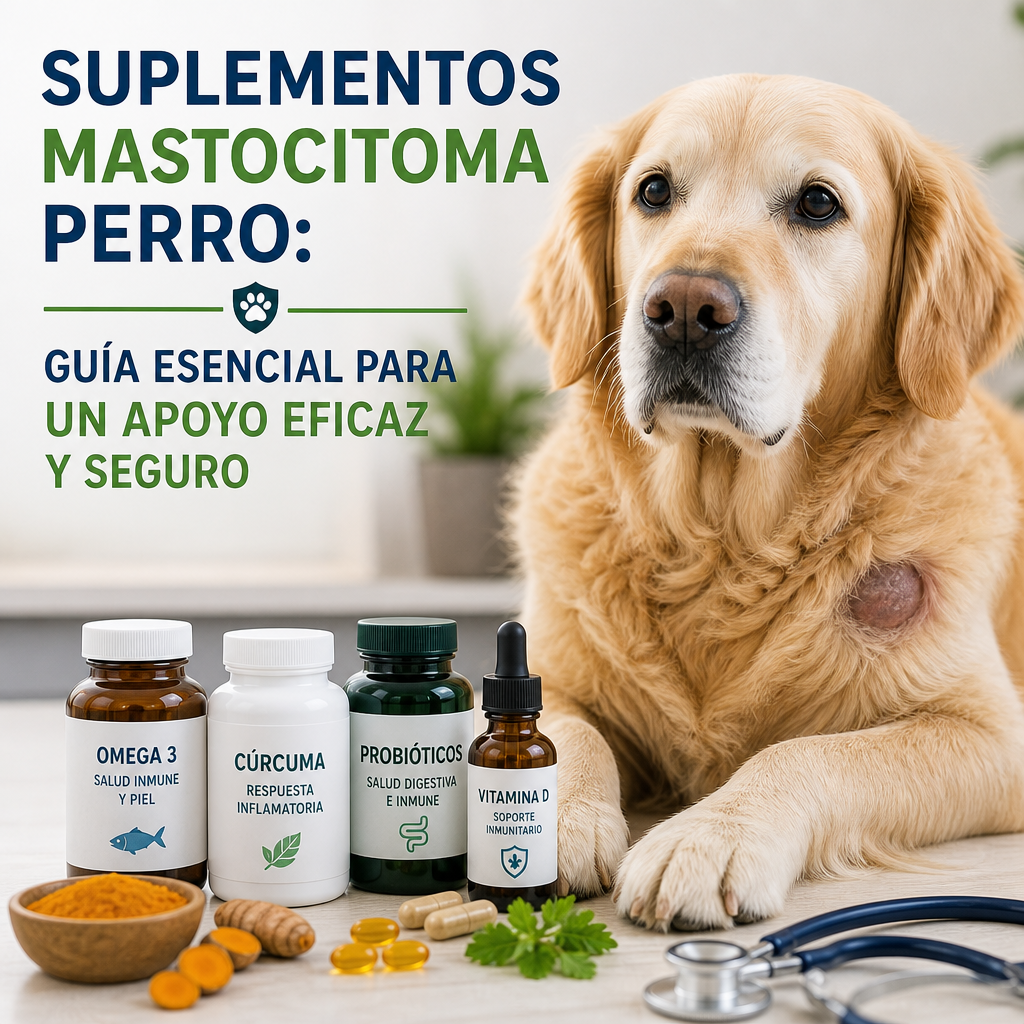
In some dogs, the veterinary team may consider mast cell tumor supplements as part of a support plan, always on an individualized basis. Among the options that are sometimes evaluated are:
- Omega-3 fatty acids from fish oil, always in adjusted doses.
- Selected antioxidants when there is a specific indication.
- Probiotics or digestive support during certain treatments.
- Nutritional supplements for dogs with weight loss or reduced appetite.
- Vitamins or minerals only if there is a demonstrated deficiency or a specific need.
The goal should be to support quality of life, not to replace oncological therapy. Additionally, a “natural” product is not necessarily safe. Some plants and substances can alter coagulation, modify blood pressure, irritate the stomach, or interfere with medications.
If you want to review general safety guidelines on nutrition and supplements in animals, a useful reference is the guide from the VCA Hospitals veterinary educational library, where different care approaches for pets are explained in detail.
Omega-3 and nutrition during treatment
Omega-3 fatty acids, especially EPA and DHA, are studied for their role in regulating inflammation and their potential usefulness in cancer patients. They may also contribute to maintaining skin and nutritional status. Still, evidence does not mean they are a curative treatment for mast cell tumors.
The choice of product and dosage are important. A low-quality oil may be oxidized or contain inaccurate concentrations. Additionally, excessive doses can cause diarrhea, weight gain, or alterations in coagulation, especially if the dog is receiving anti-inflammatories, anticoagulants, or is going to undergo surgery.
Daily feeding should be complete, balanced, and tailored to the patient's needs. In dogs with cancer, maintaining weight and muscle mass is often more important than imposing restrictive diets. A homemade diet should only be used if formulated by a veterinarian specialized in nutrition, as deficiencies can weaken the animal.
In this context, mast cell tumor supplements for dogs only make sense when they complement an adequate diet and regular clinical follow-up. If the dog eats less, loses weight, or shows nausea, it is advisable to act quickly to prevent the problem from worsening.
Mast cell tumor support for dogs: measures that do make a difference
Mast cell tumor support for dogs does not solely depend on supplements. Veterinary follow-up, daily observation, and symptom control are essential pillars. Some useful measures include:
Skin and tumor monitoring
It is advisable to observe if the mass changes in size, color, texture, or temperature. It is also important to record the presence of bleeding, discharge, ulceration, or persistent licking. Taking periodic photographs and noting measurements can help the veterinarian assess the evolution.
Digestive monitoring
The release of histamine can lead to vomiting, diarrhea, abdominal pain, or loss of appetite. In some cases, the veterinarian prescribes antihistamines or gastrointestinal protectants. These medications should not be administered on your own, as the regimen depends on weight, clinical situation, and interactions with other treatments.
Maintenance of appetite and weight
A sustained decrease in appetite requires attention. It is preferable to communicate any changes early, as there are nutritional and medicinal strategies to control nausea, improve intake, and prevent muscle mass loss.
Stress reduction
Rest, stable routines, and moderate exercise, if the dog's condition allows, can promote well-being. It is not necessary to overprotect them, but it is important to avoid excessive exertion, impacts on the injury, and situations that increase anxiety.
When the veterinarian wants to evaluate more options for comprehensive management, they can also consult resources on cancer in dogs to review support approaches and clinical follow-up.
Precautions before administering a supplement
Before adding any product, the veterinarian must know all the medications and supplements the dog is taking. This includes joint products, herbal remedies, vitamins, and enriched foods.
It is especially important to act with caution if there is scheduled surgery, liver or kidney disease, coagulation problems, digestive ulcers, or treatment with corticosteroids, antihistamines, anti-inflammatories, or antineoplastic drugs. The combination of several products can increase adverse effects without providing additional benefits.
It is also advisable to check the label: concentration of active ingredients, batch, expiration date, quality controls, and absence of potentially toxic ingredients. Human supplements should never be used without professional authorization, as they may contain xylitol, inappropriate doses of vitamins, stimulants, or other components dangerous to dogs.
To better guide clinical decisions, the veterinarian can rely on the technical data sheet and reference resources on canine mast cell tumors. The more information available about the case, the easier it will be to choose among the different mast cell tumor dog supplements without putting the animal at risk.
What signs require urgent attention
A dog with a mast cell tumor needs rapid evaluation if it presents repeated vomiting, severe or bloody diarrhea, black stools, marked weakness, pale gums, respiratory difficulty, generalized swelling, fainting, or a sudden growth of the mass. It should also be consulted promptly in the presence of evident pain, complete rejection of food, or notable deterioration in behavior.
These signs may be related to complications of the tumor, release of inflammatory mediators, side effects of treatment, or another independent problem. Waiting for a supplement to produce results may delay a necessary intervention.
In short, mast cell tumor supplements for dogs can play a complementary role when integrated into an individualized and supervised plan. The priority is always to obtain an accurate diagnosis, apply the indicated treatment, and protect quality of life. Proper nutrition, regular check-ups, and constant communication with the veterinary team provide a more secure and effective foundation than any isolated product. When used judiciously, mast cell tumor supplements for dogs can help, but only as support within a comprehensive veterinary management.