

Los suplementos de linfoma para perros son a menudo considerados por los dueños que quieren apoyar el confort, la nutrición y la resiliencia general de su mascota durante el tratamiento del cáncer. Sin embargo, los suplementos nunca deben reemplazar la atención veterinaria o la quimioterapia, radiación, cirugía o medicamentos prescritos. El enfoque más seguro es verlos como posibles adiciones a un plan de tratamiento integral, seleccionados con la guía de un veterinario que entienda el diagnóstico del perro, los medicamentos actuales, los resultados de laboratorio y las necesidades nutricionales.
Tabla de Contenidos
Comprendiendo el linfoma en perros y el cuidado de apoyo
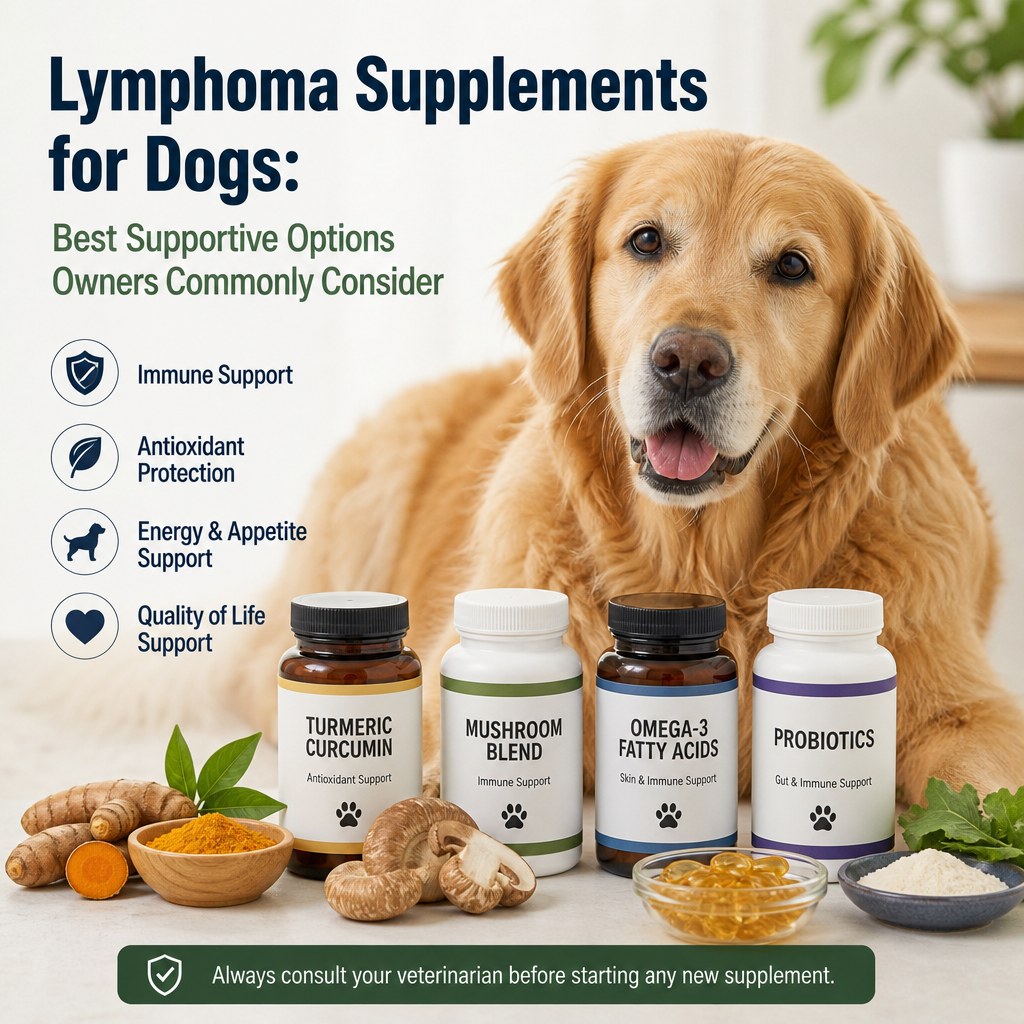
El linfoma es un cáncer del sistema linfático que puede afectar los ganglios linfáticos, el tracto gastrointestinal, la piel, el bazo, el hígado u otros órganos. Debido a que la enfermedad puede comportarse de manera diferente de un perro a otro, el tratamiento y el cuidado de apoyo deben ser individualizados. Algunos perros permanecen activos y comen normalmente, mientras que otros experimentan pérdida de apetito, malestar digestivo, pérdida de peso, fatiga o efectos secundarios relacionados con los medicamentos.
El apoyo para el linfoma en perros generalmente se centra en mantener la calidad de vida. Esto puede incluir proporcionar una dieta equilibrada, manejar náuseas o diarrea, fomentar la actividad apropiada, reducir el estrés, monitorear el peso y seguir el cronograma de tratamiento veterinario. Los suplementos a veces pueden contribuir a estos objetivos, pero “natural” no significa automáticamente seguro. Ciertos productos pueden interferir con la quimioterapia, afectar la coagulación sanguínea, sobrecargar el hígado o alterar cómo funcionan los medicamentos prescritos.
En muchos casos, los dueños comienzan a investigar suplementos de linfoma para perros poco después del diagnóstico porque quieren hacer todo lo posible para ayudar. Ese instinto es comprensible, pero los mejores resultados generalmente provienen de combinar buena nutrición, manejo de síntomas y monitoreo veterinario con productos de apoyo cuidadosamente elegidos. El objetivo no es abrumar al cuerpo con más pastillas o polvos; es agregar solo lo que realmente ayuda.
También es importante recordar que el linfoma puede cambiar rápidamente. Un perro que está estable hoy puede necesitar un enfoque de apoyo diferente la próxima semana si el apetito disminuye, los valores sanguíneos cambian o aparecen efectos secundarios del tratamiento. Por eso, los suplementos de linfoma para perros deben ser revisados regularmente en lugar de ser tratados como una decisión única.
Los dueños pueden sentir presión para actuar inmediatamente después de un diagnóstico, pero una breve pausa para revisar el panorama completo a menudo conduce a mejores decisiones. La edad, la condición corporal, el apetito, las recetas actuales y si el perro está recibiendo atención oncológica activa influyen en qué productos de apoyo pueden ser razonables. En otras palabras, el “mejor” suplemento depende del paciente individual, no solo de la etiqueta de la enfermedad.
Suplementos de linfoma para perros comúnmente discutidos con veterinarios
Cuando las personas preguntan sobre suplementos de linfoma para perros, los veterinarios a menudo revisan los medicamentos actuales del perro, el apetito, los valores del hígado y los riñones, y los objetivos de tratamiento antes de recomendar cualquier cosa. Los productos a continuación están entre las opciones de apoyo más comúnmente discutidas, pero cada uno debe ser considerado caso por caso.
Antes de elegir un producto, es útil pensar en términos de apoyo en lugar de cura. El objetivo es mejorar la comodidad, preservar la masa corporal magra, apoyar la digestión normal y reducir el estrés evitable en el cuerpo. Esa mentalidad facilita la evaluación de las afirmaciones en las etiquetas y evita productos que prometen mucho más de lo que pueden ofrecer.
Ácidos grasos omega-3
El aceite de pescado que contiene EPA y DHA es uno de los suplementos más comúnmente discutidos para perros con linfoma y otros cánceres. Estos ácidos grasos pueden ayudar a apoyar procesos inflamatorios normales, la salud de la piel, la función cardiovascular y la salud cognitiva. También pueden ser útiles para perros cuya dieta no proporciona suficientes omega-3.
La calidad y la dosis importan. Los productos deben estar hechos específicamente para mascotas o provenir de una fuente confiable con cantidades claras de EPA y DHA. El aceite de pescado puede causar malestar gastrointestinal o contribuir al riesgo de sangrado en dosis excesivas, particularmente cuando se combina con medicamentos anticoagulantes o antes de una cirugía. Un veterinario debe determinar si es apropiado y cuánto dar.
Para muchos perros, los omega-3 son atractivos porque son familiares y ampliamente disponibles. Sin embargo, incluso los suplementos comunes pueden causar problemas si la dosis es demasiado alta o si el producto contiene aditivos innecesarios. Cuando se discuten suplementos de linfoma para perros en la clínica, el aceite de pescado es a menudo uno de los primeros productos revisados porque es útil para algunos pacientes pero no universalmente apropiado.
Probióticos
Algunos perros que están recibiendo tratamiento contra el cáncer desarrollan cambios en el apetito, la consistencia de las heces o la comodidad digestiva. Los probióticos veterinarios pueden ayudar a apoyar un ambiente intestinal saludable, aunque los resultados varían y no son un tratamiento para el linfoma en sí. Un producto debe contener cepas claramente identificadas y ser almacenado de acuerdo con las instrucciones del fabricante.
Los probióticos pueden no ser adecuados para todos los perros, especialmente aquellos que están severamente inmunocomprometidos o críticamente enfermos. La orientación veterinaria es particularmente importante en estos casos. Los propietarios también deben evitar asumir que los productos probióticos humanos son automáticamente apropiados para los perros, ya que las formulaciones y los ingredientes adicionales pueden diferir.
El malestar digestivo es una de las razones más comunes por las que los propietarios exploran suplementos de linfoma para perros, y los probióticos a menudo son parte de esa conversación. Si la mascota tiene diarrea, distensión abdominal o náuseas, el equipo veterinario puede centrarse primero en medicamentos, horarios de comidas e hidratación antes de decidir si un probiótico vale la pena probar.
Nutrientes antioxidantes
Los antioxidantes como las vitaminas C y E, el selenio y otros compuestos a menudo se incluyen en fórmulas de apoyo para el cáncer. Ayudan a proteger las células del estrés oxidativo en circunstancias normales, pero su papel durante el tratamiento del cáncer es complejo. Algunos protocolos de quimioterapia y radiación dependen en parte del daño oxidativo a las células cancerosas. La suplementación con antioxidantes en dosis altas podría afectar teóricamente la actividad del tratamiento, aunque el impacto depende del nutriente específico, la dosis, el cáncer y la terapia.
Por esta razón, los productos antioxidantes deben ser revisados por el oncólogo veterinario antes de su uso. Una dieta completa y equilibrada puede proporcionar ya cantidades suficientes, y agregar múltiples productos puede crear involuntariamente una ingesta excesiva.
Esta es una razón por la cual los suplementos para linfoma en perros no deben seleccionarse solo en función del marketing. Una fórmula que suena impresionante puede seguir siendo innecesaria o inapropiada si duplica nutrientes ya presentes en la dieta o entra en conflicto con el plan de oncología. El enfoque más seguro es preguntar si el perro realmente necesita el ingrediente y, de ser así, cuánto es apropiado.
Hongos medicinales
Los ingredientes derivados de hongos, incluidos los compuestos de cola de pavo y otros hongos medicinales, a veces se utilizan como suplementos para perros con linfoma. Estos productos pueden influir en la actividad inmune, pero la investigación en el cuidado del cáncer veterinario aún se está desarrollando. La calidad del producto puede variar sustancialmente, y los extractos pueden diferir en potencia y pureza.
Las preocupaciones potenciales incluyen efectos gastrointestinales, reacciones alérgicas, problemas hepáticos e interacciones con medicamentos inmunomoduladores o contra el cáncer. Los suplementos de hongos deben considerarse solo después de que un veterinario revise el plan de tratamiento completo del perro.
Debido a que estos productos a menudo se promocionan con amplias afirmaciones de bienestar, los propietarios pueden asumir que son automáticamente seguros. Ese no siempre es el caso. Cuando los suplementos para linfoma en perros incluyen fórmulas a base de hongos, la especie exacta, el tipo de extracto y la dosis importan tanto como el nombre de la marca.
Fórmulas de cardo mariano y apoyo hepático
El cardo mariano se incluye con frecuencia en productos comercializados para el apoyo hepático. Puede considerarse cuando un perro tiene valores hepáticos anormales o está tomando medicamentos metabolizados por el hígado. Sin embargo, no es apropiado para cada paciente, y la evidencia de su uso en el cuidado del cáncer canino es limitada.
Muchas fórmulas de “apoyo hepático” contienen varias hierbas en lugar de un ingrediente estandarizado. Esto dificulta predecir beneficios, interacciones o efectos secundarios. El monitoreo veterinario de las enzimas hepáticas y otros valores sanguíneos sigue siendo más importante que confiar en un suplemento.
Para los propietarios que comparan suplementos para linfoma en perros, ayuda separar los productos que pueden apoyar la salud general de aquellos comercializados con amplias afirmaciones sobre el cáncer. Un suplemento puede ser útil sin ser curativo, y un plan realista suele ser más seguro que una larga lista de productos no probados.
El cardo mariano se menciona a menudo porque es familiar y ampliamente disponible, pero la familiaridad no debe confundirse con la prueba de beneficio. Los perros que reciben terapia contra el cáncer pueden tener valores hepáticos cambiantes, y la elección correcta depende del panorama completo, no de una sugerencia genérica de etiqueta.
Lo que los dueños deben preguntar antes de elegir suplementos
Antes de agregar suplementos para perros con linfoma, los propietarios deben proporcionar al veterinario el nombre exacto del producto, la lista de ingredientes, el tamaño de la porción y la información del fabricante. El equipo de atención puede recomendar detener un suplemento antes de la quimioterapia, cirugía o ciertos procedimientos diagnósticos. También pueden desaconsejar productos que afecten la actividad inmune, la coagulación sanguínea, la presión arterial o el metabolismo hepático.
- ¿Es este producto apropiado para el plan de tratamiento de mi perro?
- ¿Podría interactuar con la quimioterapia u otros medicamentos?
- ¿Tiene pruebas de calidad de terceros o etiquetado claro de ingredientes?
- ¿Qué dosis es segura para el tamaño y la condición de mi perro?
- ¿Debería detenerse antes de procedimientos, análisis de sangre o sesiones de tratamiento?
Unos minutos de revisión pueden prevenir muchos problemas más adelante. Esto es especialmente importante con los suplementos para linfoma en perros porque los protocolos de tratamiento pueden cambiar con el tiempo, y lo que era seguro en el diagnóstico puede no ser ideal después de un análisis de sangre o un ajuste de medicamentos.
Los propietarios también deben preguntar si el suplemento aborda una necesidad real. Si un perro está comiendo bien, manteniendo peso y tolerando el tratamiento, la prioridad puede ser simplemente continuar con una dieta equilibrada y monitorear de cerca. En contraste, un perro con náuseas o poco apetito podría beneficiarse más del control de síntomas que de otro suplemento.
Es útil llevar una lista completa de todo lo que recibe el perro, incluidos golosinas, vitaminas, mezclas herbales y productos de venta libre. Muchos propietarios olvidan que un masticable, polvo o bocadillo “funcional” puede contener los mismos ingredientes activos que una cápsula. Ese detalle es importante al evaluar los suplementos para linfoma en perros y verificar duplicaciones accidentales.
Cuando un oncólogo veterinario está involucrado, preguntar sobre el momento puede ser tan importante como preguntar sobre los ingredientes. Algunos productos pueden ser aceptables solo si se administran en un momento diferente de la quimioterapia u otros medicamentos. El objetivo es reducir la incertidumbre y mantener el horario de tratamiento lo más limpio y predecible posible.
La seguridad es lo primero
Evite combinar múltiples productos de apoyo al cáncer sin supervisión profesional. Los ingredientes superpuestos pueden llevar a dosis excesivas, especialmente con vitaminas, minerales, aceite de pescado o extractos herbales. Los productos destinados a humanos pueden contener xilitol, hierbas concentradas u otros ingredientes que son inseguros para los perros.
El monitoreo es igualmente importante. Contacte al equipo veterinario si el perro desarrolla vómitos, diarrea persistente, letargo creciente, moretones inusuales, poco apetito, amarillamiento de las encías o los ojos, cambios en la sed o la micción, o cualquier declive repentino. Estos signos pueden reflejar progresión de la enfermedad, efectos secundarios del tratamiento o una reacción a un suplemento.
También es prudente llevar un registro simple. Anote el nombre del suplemento, la fecha de inicio, la dosis y cualquier cambio en el apetito, las heces, la energía o la comodidad. Ese registro puede ayudar al equipo veterinario a decidir si el producto está ayudando o si debe ser detenido. Cuando los suplementos para linfoma en perros se rastrean cuidadosamente, se vuelve mucho más fácil separar el apoyo útil de la conjetura.
Para los lectores que desean aprender más sobre las señales de advertencia relacionadas con el cáncer y el monitoreo en perros, este artículo en Guía esencial y útil sobre el cáncer inmunitario y el linfoma canino ofrece información adicional sobre la condición en sí.
En caso de duda, la regla más segura es simple: si un suplemento cambia la coagulación de la sangre, la respuesta inmune, el metabolismo hepático o la tolerancia estomacal, pregunte primero. Ese enfoque protege al perro y ayuda al equipo de oncología a mantener el tratamiento en camino.
Los propietarios también deben ser cautelosos con los testimonios en línea que describen resultados dramáticos. Un producto que parecía útil para un perro puede no ser apropiado para otro perro con un estadio de cáncer diferente, medicamentos diferentes o un nivel de apetito diferente. Con los suplementos para linfoma en perros, el consejo individualizado es más confiable que las recomendaciones de talla única.
El control de calidad también importa. Los fabricantes de buena reputación son más propensos a proporcionar etiquetado claro, pruebas por lotes y dosificación consistente. Si un producto no identifica claramente sus ingredientes activos, o si la etiqueta es vaga sobre la concentración, es más seguro elegir una opción mejor documentada. Los equipos veterinarios a menudo prefieren productos que se pueden verificar en lugar de aquellos que dependen de un lenguaje vago de “mezcla”.
La nutrición y el cuidado diario importan más que un suplemento
Un suplemento altamente especializado no puede compensar las calorías inadecuadas, la deshidratación, el dolor no controlado o las náuseas no tratadas. Los perros con linfoma generalmente se benefician de una dieta completa y equilibrada que toleren bien. Dependiendo del paciente, un veterinario puede recomendar ajustar el tamaño de las comidas, la frecuencia de alimentación, la textura o la densidad calórica.
Los propietarios también pueden apoyar la comodidad manteniendo una rutina consistente, proporcionando un área de descanso tranquila, rastreando el apetito y el peso, y registrando síntomas. La actividad suave puede ayudar a preservar la movilidad y el estado de ánimo cuando el perro se siente bien, mientras que el descanso es apropiado durante los períodos de fatiga. Los exámenes regulares y las pruebas de sangre ayudan al equipo veterinario a ajustar el tratamiento de manera segura.
Si su perro tiene problemas con el apetito o cambios digestivos, puede ser útil pensar en los suplementos para linfoma en perros como solo una pequeña parte de un plan de atención más amplio. La consistencia de los alimentos, la hidratación y el control de síntomas a menudo importan más que cualquier ingrediente único.
El cuidado diario práctico puede hacer una diferencia significativa. Siempre debe haber agua fresca disponible, la comida debe ser fácil de acceder y los cambios estresantes en el hogar deben minimizarse cuando sea posible. Algunos perros se benefician de comidas más pequeñas y frecuentes, mientras que otros prefieren una rutina de alimentación más tranquila con menos distracciones. Estos pequeños ajustes pueden ser más valiosos que agregar otro producto al gabinete.
Los propietarios a menudo quieren un suplemento “mejor” claro, pero esa respuesta rara vez existe. La elección de apoyo adecuada depende de los síntomas del perro y la razón por la que se está considerando el suplemento. Por ejemplo, los omega-3 pueden ser más relevantes para un perro, mientras que el apoyo digestivo puede ser la prioridad para otro. Por eso, los suplementos para linfoma en perros deben ser elegidos para una necesidad específica en lugar de como una colección general de productos contra el cáncer.
También puede ayudar a establecer expectativas realistas. Un suplemento de apoyo puede mejorar la calidad de las heces, el apetito o la tolerancia al tratamiento, pero es poco probable que cambie el cáncer por sí mismo. Comprender esa distinción reduce la decepción y ayuda a los propietarios a centrarse en lo que realmente beneficia a su perro día a día.
En última instancia, los suplementos para linfoma en perros deben ser seleccionados como parte de un plan de atención individualizado en lugar de como una solución independiente. El uso reflexivo de productos apropiados puede apoyar la nutrición o el confort para algunos pacientes, pero la base más sólida sigue siendo el tratamiento del cáncer basado en evidencia, el monitoreo cuidadoso y la comunicación cercana con el equipo veterinario.
Para una orientación más amplia sobre información de bienestar rutinario y educación veterinaria, el Asociación Americana de Medicina Veterinaria recursos de cuidado de mascotas proporciona una referencia útil y reputada para los propietarios.
Con un plan cuidadoso, los suplementos para linfoma en perros pueden desempeñar un papel de apoyo sin agregar riesgos innecesarios. Las mejores elecciones son las que se ajustan al diagnóstico del perro, la etapa del tratamiento y el estado de salud general.
Al final, el plan más útil suele ser el más simple que aún satisface las necesidades del perro. Eso puede significar un suplemento cuidadosamente seleccionado, o puede significar ninguno en absoluto si la dieta actual y el plan de tratamiento ya están funcionando bien. La decisión correcta es la que apoya al perro de manera segura, consistente y con supervisión veterinaria.