
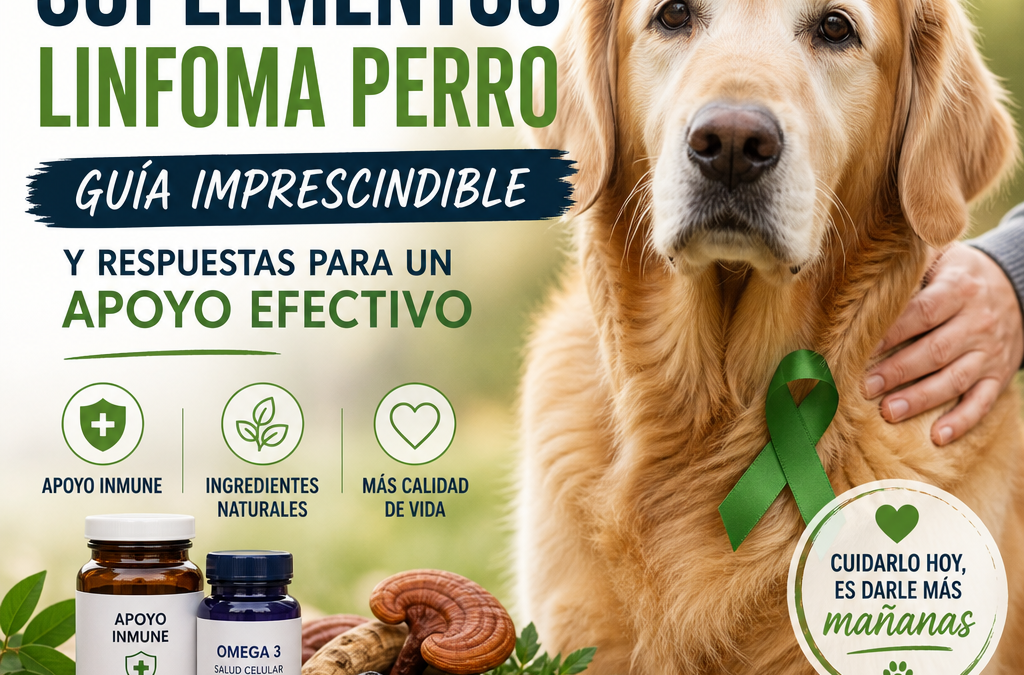
Suplementos linfoma perro es una búsqueda cada vez más frecuente entre las familias que desean apoyar a su mascota tras un diagnóstico de linfoma. Sin embargo, ningún suplemento sustituye la quimioterapia, la atención veterinaria ni los controles periódicos. Su utilidad puede encontrarse en complementar la alimentación, ayudar a mantener el peso y favorecer el bienestar general, siempre con una estrategia personalizada y segura.
En un caso de suplementos linfoma perro, el objetivo principal no debería ser “tratar” el cáncer por cuenta propia, sino sumar herramientas útiles para que el perro coma mejor, tolere mejor el tratamiento y conserve la mejor calidad de vida posible. Esa diferencia es esencial para tomar decisiones prudentes.
- Qué es el linfoma en perros y por qué requiere un enfoque integral
- Suplementos linfoma perro: qué objetivos pueden tener
- Nutrientes y productos que pueden valorarse
- Cómo elegir un suplemento para perro con linfoma
- Alimentación, hidratación y control del peso
- Linfoma perro apoyo: señales de un buen plan
- Important questions before starting any supplement
- Frequently asked questions about nutritional support
- The importance of veterinary support
Qué es el linfoma en perros y por qué requiere un enfoque integral
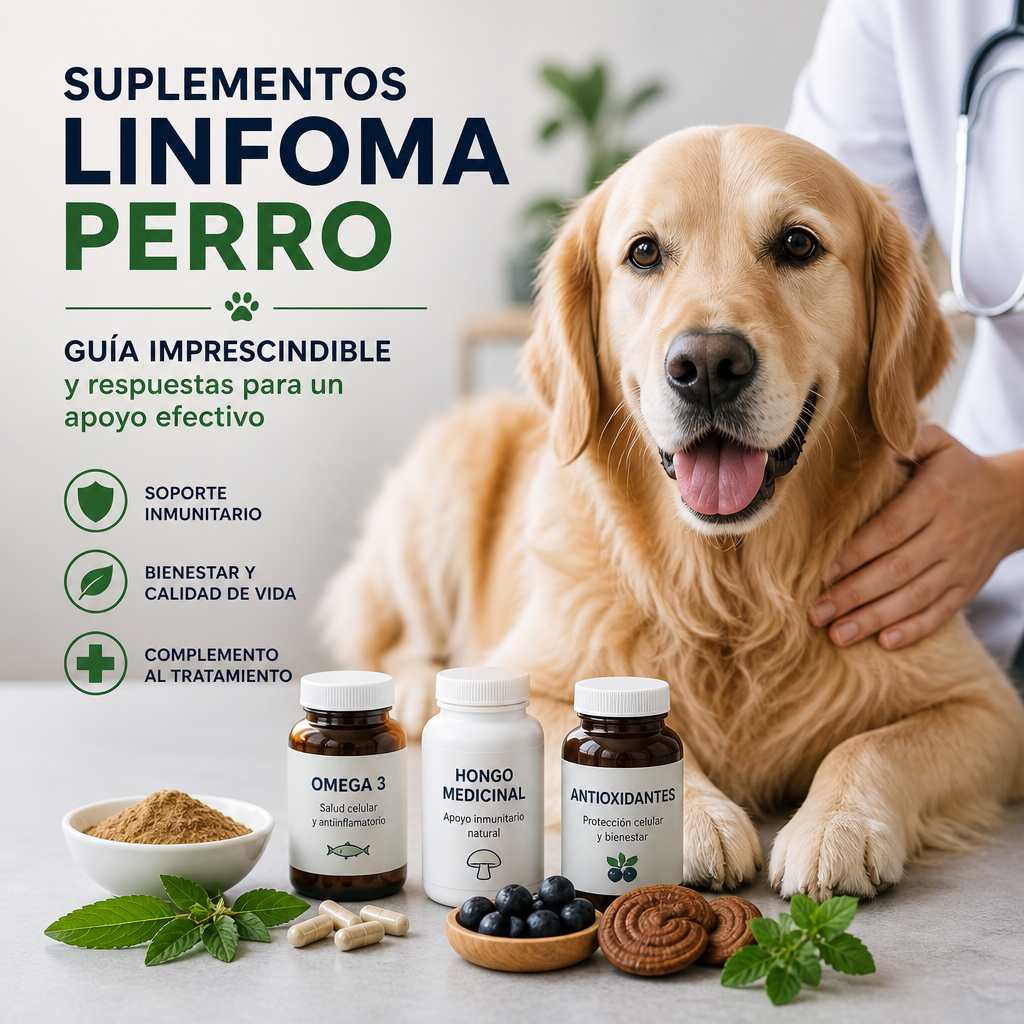
Lymphoma is a cancer that affects lymphocytes, cells of the immune system. It can appear in lymph nodes, the digestive tract, the skin, the spleen, the liver, or other organs. The signs depend on the location and progression of the disease, but may include enlarged lymph nodes, weight loss, fatigue, loss of appetite, vomiting, diarrhea, or difficulty breathing.
The most common treatment is chemotherapy, although the protocol depends on the type of lymphoma, the clinical stage, the dog's age, and its overall condition. In some cases, surgery, radiation therapy, corticosteroids, or other medications may also be used. Within this context, the suplementos linfoma perro should be considered a supportive tool, not an independent antitumor treatment.
A comprehensive approach usually combines medical control with adequate nutrition, stress management, symptom monitoring, and adjustments based on the patient's response. This perspective helps to decide more judiciously which supplement may be useful and which does not provide real value.
Suplementos linfoma perro: qué objetivos pueden tener
A supplement for a dog with lymphoma can be considered with different objectives. The first is to help meet nutritional needs when the animal eats less or loses muscle mass. The second is to support digestive function, especially if nausea, diarrhea, or changes in appetite occur. The third is to contribute to maintaining quality of life during treatment.
It is important to distinguish between nutritional support and a product that promises to cure cancer. Claims of “eliminating tumors,” “replacing chemotherapy,” or “activating defenses against lymphoma” should be considered warning signs. Cancer is a complex disease, and there is no universal supplement capable of replacing a veterinary protocol.
In practice, the suplementos linfoma perro can be useful when integrated into a realistic plan. Their value usually lies in alleviating some side effects, supporting food intake, or helping the dog better tolerate the treatment routine, always under professional supervision.
They can also have a secondary preventive function: to avoid significant nutritional losses, maintain interest in food, and reduce physical deterioration during periods of lower intake. When used with this approach, the result is usually much more measurable and safe.
Nutrientes y productos que pueden valorarse
Omega-3 fatty acids
Omega-3s, primarily found in purified fish oils, can be part of a supportive diet. The veterinarian may consider them when looking to improve the intake of specific fats or contribute to the inflammatory balance of the body. The dosage should be calculated based on the weight, diet, and clinical condition of the dog.
Not all oils are the same. It is preferable to choose veterinary products with clear information about the amount of EPA and DHA, contaminant control, and proper storage. Additionally, they should be used with caution in animals with coagulation disorders, pancreatitis, or certain treatments.
Probiotics and digestive support
Probiotics can be helpful in some dogs with gastrointestinal disturbances, especially when there is stress-related diarrhea, dietary changes, or certain medications. Their effect is not identical in all animals and depends on the strains used, the dosage, and the cause of the digestive problem.
A probiotic should not be used to delay consultation if the dog has persistent vomiting, blood in the stool, dehydration, or rapid deterioration. Diarrhea during chemotherapy may require medication, fluid therapy, or adjustments in treatment.
If the veterinarian approves it, probiotics can be part of a support strategy along with a digestible diet and clinical observation. In that context, the suplementos linfoma perro do not act as an isolated solution, but as one more piece of patient management.
Vitamins and minerals
Vitamins and minerals should only be supplemented when there is a specific need or professional recommendation. An excess of fat-soluble vitamins, such as A, D, E, or K, can accumulate and cause toxicity. Certain minerals may also interfere with the absorption of other nutrients or with kidney and liver function.
A complete and balanced diet usually meets basic needs. Adding multiple products without supervision can imbalance the diet instead of improving it.
Especially when the dog is already on a therapeutic diet, it is advisable to confirm whether it is really necessary to add another nutritional input. Often, the best adjustment is not to add more capsules, but to review the quality of the food and its daily tolerance.
Antioxidants and plant extracts
Antioxidants and plant extracts generate special interest, but require caution. Some may interfere with the action of certain drugs, modify coagulation, or affect liver metabolism. The fact that a product is “natural” does not mean it is harmless.
Before using turmeric, echinacea, medicinal mushrooms, milk thistle, cannabidiol, or other extracts, it is essential to inform the veterinary oncologist. The available evidence is often limited, variable, or based on laboratory studies that cannot always be extrapolated to dogs with lymphoma.
If you want to review a professional approach to oncology diagnosis and management, you can consult the clinical guide of the WSAVA on canine lymphoma as a reference for clinical support.
Nutritional support formulas
In some patients, the greatest benefit does not come from an isolated nutrient, but from a support formula designed for convalescence or chronic illness. These presentations often concentrate energy, improve palatability, and facilitate daily administration.
When chosen well, they can help the dog maintain its intake better and lose less weight. In that scenario, the suplementos linfoma perro are useful because they integrate with the diet, not because they “fight” the tumor on their own.
Cómo elegir un suplemento para perro con linfoma
The quality of the product is as important as its composition. It is advisable to check the label, the concentration of active ingredients, the manufacturer, the lot number, the expiration date, and the storage instructions. It is also recommended to choose products formulated for dogs, as some human supplements contain xylitol, caffeine, excessive doses of certain nutrients, or other dangerous ingredients.
The veterinarian must be aware of all the medications and supplements the animal receives. This information allows for the detection of possible interactions and avoids duplications. For example, a dog that is already consuming a therapeutic diet may not need an additional vitamin complex, while another with weight loss may benefit more from a complete nutritional strategy than from an isolated product.
When evaluating suplementos linfoma perro, the most prudent rule is to start with the essentials: control symptoms, ensure adequate intake, and avoid unnecessary combinations. Fewer products, but better selected, is usually a better strategy than accumulating capsules or powders without a clear objective.
It is also a good idea to check if the product has technical support, clear dosing information, and compatibility with oncological treatments. The easier it is to understand what it contributes, the simpler it will be to decide if it really fits into the patient's plan.
Alimentación, hidratación y control del peso
Nutritional support does not solely depend on supplements. Maintaining a sufficient intake of calories and proteins may be a priority, always adapting to renal, hepatic, digestive, and pancreatic function. Some dogs tolerate several small meals, wet foods, or a diet with higher palatability better.
Hydration is also essential. Water should be available at all times, and any marked decrease in consumption should be communicated to the veterinarian. Weight, body condition, and muscle mass should be monitored regularly, as progressive loss may indicate that the plan needs adjustment.
It is never advisable to force feeding without professional guidance. If the dog stops eating, vomits repeatedly, has severe diarrhea, is very weak, or has difficulty breathing, it needs veterinary evaluation.
In some cases, the veterinary team may prioritize a more digestible diet, a more concentrated energy intake, or a temporary change in format. These adjustments are often more useful than adding many suplementos linfoma perro without a defined need.
Food also serves an emotional function. Maintaining calm routines, offering meals at predictable times, and avoiding sudden changes can improve food acceptance. Such measures, although simple, often make a real difference.
Linfoma perro apoyo: señales de un buen plan
A canine lymphoma support plan should focus on measurable and realistic goals: preserving appetite, maintaining an appropriate weight, controlling digestive discomfort, reducing stress, and preserving activities that the animal enjoys. Monitoring allows us to know if a supplement provides any benefit or if, on the contrary, it causes adverse effects.
Keeping a simple record of appetite, bowel movements, vomiting, energy, weight, and medication can be very helpful during check-ups. It also makes it easier to identify changes related to chemotherapy or the introduction of a new product.
It is also advisable to assess whether the dog sleeps better, appears more active, or maintains a more stable walking routine. When a plan works, the benefits are usually reflected in small sustained changes rather than spectacular promises.
Good monitoring allows for a calm decision on whether to continue, adjust, or discontinue a supplement. This periodic reevaluation is one of the safest ways to use suplementos linfoma perro without losing sight of the main objective: well-being and clinical stability.
Important questions before starting any supplement
Before introducing a new product, it helps to ask some practical questions. What is the specific goal? Will it improve appetite, digestion, or weight? Is there reasonable evidence for this case? Could it interfere with current medication? Is the dosage appropriate for the dog's size and clinical condition?
It is also helpful to ask if the supplement is really necessary at this time. Sometimes the best step is to wait, observe the evolution, or first correct the diet. In other cases, the veterinarian may indicate that a specific formula does make sense given the present symptoms.
The families that seek suplementos linfoma perro often appreciate a clear criterion: introduce only one change at a time, evaluate its effect, and note any reactions. This method reduces confusion and facilitates more secure decisions.
It is also advisable to review whether the product fits with other health issues, such as kidney failure, pancreatitis, liver disease, or food allergies. What helps one dog may not be suitable for another with different backgrounds.
Frequently asked questions about nutritional support
Do supplements cure lymphoma?
No. They can support nutrition, well-being, or certain symptoms, but they do not replace oncological treatment.
Can I give several supplements at once?
Only if the veterinarian considers it appropriate. Combining many products increases the risk of interactions, excess nutrients, and adverse effects.
Are natural products always safe?
No. “Natural” does not mean harmless. Some plant extracts can interact with medications or affect the liver, coagulation, or the digestive system.
What if my dog doesn't want to eat?
Persistent lack of appetite deserves veterinary review. It may be necessary to adjust treatment, address nausea, or change the nutritional strategy.
Is it helpful to start early with nutritional support?
Yes, especially if the dog is already showing weight loss, decreased appetite, or digestive intolerance. Starting support early can facilitate better adaptation to treatment and avoid more difficult-to-reverse deterioration.
¿Cómo sé si un complemento está funcionando?
Lo ideal es comprobar si mejora el apetito, reduce molestias digestivas, mantiene el peso o ayuda a sostener la energía. Si no hay cambios positivos después de un periodo razonable, el veterinario puede plantear otra opción.
Cuándo suspender un producto y consultar de inmediato
Si tras iniciar un complemento aparecen vómitos, diarrea persistente, picor, hinchazón, apatía marcada o rechazo total del alimento, conviene suspenderlo y contactar con el veterinario. También hay que actuar con rapidez si el perro muestra signos de deshidratación, respiración anormal o debilidad intensa.
La seguridad debe estar por encima de cualquier expectativa. Un producto que empeora la tolerancia digestiva o interfiere con la medicación no merece mantenerse. En ese sentido, la prudencia es una parte importante del apoyo nutricional.
The importance of veterinary support
Cada perro con linfoma responde de manera diferente. Por eso, la selección de suplementos debe basarse en el diagnóstico, el protocolo utilizado, las analíticas y las enfermedades concurrentes. El veterinario puede recomendar no suplementar, introducir un único producto, modificar la dieta o priorizar el control de síntomas.
The main objective is not to manage the largest number of supplements, but to provide safe, reasoned support that is compatible with oncological treatment. Constant communication with the veterinary team allows for informed decisions and focuses on what is most important: the well-being and quality of life of the dog.
In summary, the suplementos linfoma perro can be a useful aid when used with criteria, realistic expectations, and professional follow-up. The combination of veterinary treatment, proper nutrition, and symptom monitoring remains the foundation of truly effective support.
If you are considering options for your pet, remember that the best outcome often comes from a simple, well-supervised plan tailored to the specific case. With that approach, the suplementos linfoma perro can add without confusing the main treatment or creating unnecessary risks.
To expand comprehensive care, also check our guide on cancer in pets and veterinary support options before making decisions about new supplements. This way, you can compare benefits, priorities, and risks with a more complete view.
When the goal is to support a dog with lymphoma, the best strategy is often the clearest: veterinary treatment, adapted nutrition, hydration, monitoring, and only those suplementos linfoma perro that provide real value. This simple, cautious, and positive approach helps protect their well-being day by day.