
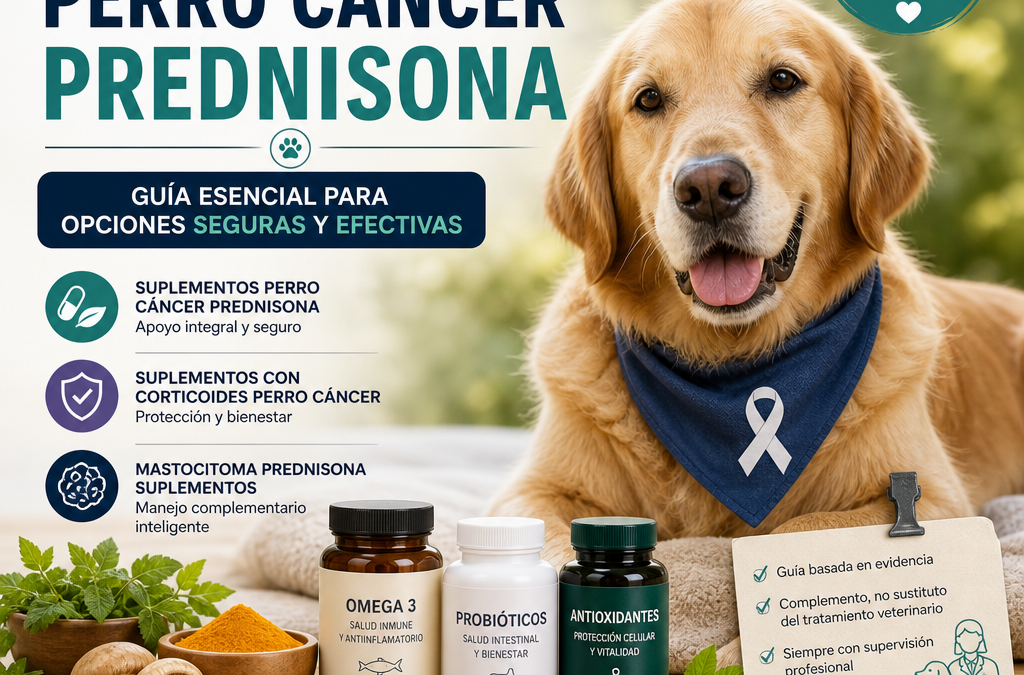
Dog cancer prednisone supplements is an increasingly common search among those accompanying an animal diagnosed with cancer and wishing to improve its well-being. However, combining prednisone with nutritional supplements should not be done haphazardly. Safety depends on the type of tumor, the dose of the corticosteroid, other treatments, liver and kidney function, and the general condition of the dog. A supplement may be useful in certain cases, but it can also interfere with medication or cause adverse effects.
When talking about dog cancer prednisone supplements, the correct question is not just “what product works,” but “what product is suitable for this dog, at this moment and with this treatment.” This individual review helps avoid common mistakes and prioritize what truly contributes to quality of life.
- What role does prednisone play in dogs with cancer?
- Corticosteroid supplements for dog cancer: a combination that requires caution
- Mast cell tumor prednisone supplements: what to consider
- What to review before giving dog cancer prednisone supplements
- How treatment affects appetite, digestion, and weight
- Supplements that can be evaluated with supervision
- How to choose a supplement responsibly
- Frequently asked questions about supplements and prednisone
- Warning signs during treatment
What role does prednisone play in dogs with cancer?
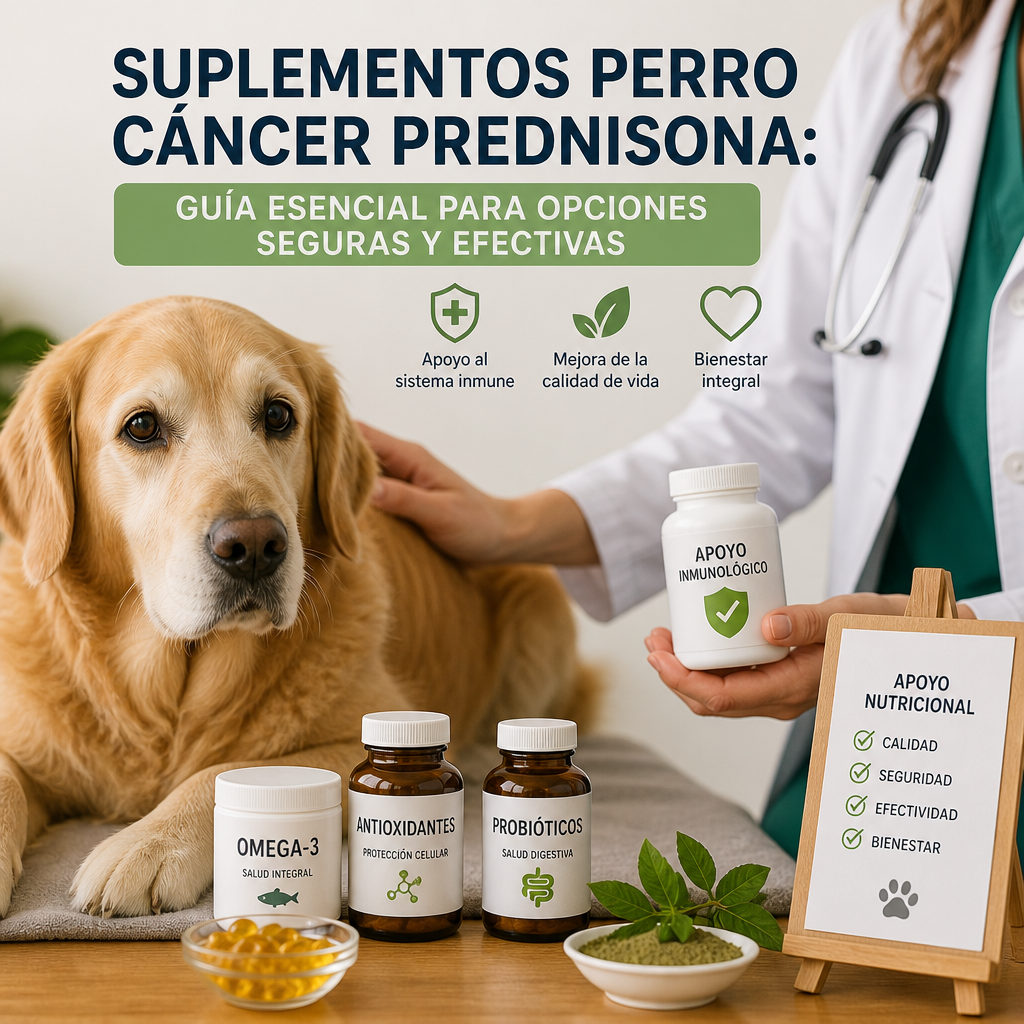
Prednisone is a corticosteroid used in veterinary medicine for its anti-inflammatory and immunosuppressive effects. In oncology, it may be part of the treatment for some lymphomas, mast cell tumors, and diseases associated with intense inflammation. It can also help temporarily reduce certain symptoms, such as pain, inflammation, loss of appetite, or nausea.
However, prednisone does not act the same in all types of cancer. In some tumors, it may be an important therapeutic component, while in others its function is primarily palliative. Additionally, prolonged use can lead to increased thirst and urination, excessive hunger, panting, muscle weakness, behavioral changes, a higher risk of infections, and metabolic disturbances.
For this reason, it should never be stopped suddenly or the dose changed without veterinary supervision. Withdrawal usually requires a gradual reduction to allow the body to recover its normal production of corticosteroids.
It is also worth remembering that dogs do not respond the same to treatment if they are malnourished, dehydrated, or very weak. In those cases, any decision regarding cancer dog supplements prednisone should be made with more caution, as the margin of tolerance may be lower.
Corticosteroid supplements for dog cancer: a combination that requires caution
The expression supplements with corticosteroids dog cancer can be misleading. Nutritional supplements do not replace prednisone nor should they be considered a “natural” way to administer corticosteroids. Some herbal products have anti-inflammatory or immunomodulatory effects, but that does not mean they are safe when combined with oncological treatment.
For example, certain plant extracts can increase the risk of bleeding, modify liver activity, or alter the absorption of other drugs. There are also supplements that stimulate the immune system, which may not be appropriate for dogs receiving corticosteroids or treatments aimed at controlling a specific immune response.
Before administering any product, it is advisable to review:
- Ingredients and exact concentration.
- Manufacturer and quality controls.
- Recommended dosage for the dog's weight.
- Possible interactions with prednisone, chemotherapy, or anti-inflammatories.
- Condition of the liver, kidneys, stomach, and immune system.
- Specific objective of the supplement.
Products intended for humans deserve special caution. They may contain xylitol, excessive doses of certain vitamins, caffeine, sweeteners, or other ingredients dangerous for dogs.
If the therapeutic plan includes more than one medication, it is advisable to review the drug information from a reliable veterinary source such as the clinical summary on prednisone from VCA to better understand its effects and general risks.
Mast cell tumor prednisone supplements: what to consider
In searches about mast cell tumor prednisone supplements, it is important to understand that the mast cell tumor can release histamine and other substances capable of causing inflammation, vomiting, diarrhea, digestive ulcers, or allergy-like reactions. Prednisone may be used in some protocols to reduce inflammation and control certain signs, but treatment depends on the tumor's grade, location, the possibility of surgery, and the results of diagnostic tests.
In dogs with mast cell tumors, the veterinarian may assess gastrointestinal protective measures, especially if there is a history of vomiting, dark stools, abdominal pain, or loss of appetite. It is not advisable to add plants, enzymes, antacids, or products to “boost defenses” on your own. The priority is to avoid digestive complications and maintain a coordinated plan with veterinary oncology.
An omega-3 supplement from purified fish oil may be considered in some patients, but the dosage should be adjusted and tolerance checked. Not all dogs need it, and an excessive amount can cause diarrhea, weight gain, or coagulation-related problems. Its use should be communicated to the veterinarian, especially if the dog will be operated on or is receiving other medications.
In this context, dog cancer prednisone supplements do not mean adding products haphazardly, but rather choosing only those that fit the clinical objective and the animal's condition.
What to review before giving dog cancer prednisone supplements
Before incorporating supplements dog cancer prednisone into a support plan, the review must be individual and practical. Ideally, it is best to first assess whether the dog really needs the product, what problem is being addressed, and if there is a simpler or safer alternative. In many cases, complete nutrition and symptom control provide more benefit than a long list of supplements.
The first review is compatibility with the current treatment. A supplement may seem harmless, but in dogs with cancer, it can alter the absorption of medication, increase digestive irritation, or overload already compromised organs. It is also important to check if the dog is taking antiemetics, analgesics, antibiotics, chemotherapy, or gastric protectants, because the combination of products changes the real risk.
The second review is the origin of the product. Clear labeling formulas, good traceability, and stable composition are usually preferable. If the packaging does not detail the exact amount of each ingredient, or if it promises curative results, it is advisable to be cautious. In veterinary oncology, transparency is as important as the chosen ingredient.
The third review is the clinical moment. A stable dog that eats well and maintains weight does not need the same approach as another with nausea, muscle loss, or diarrhea. In phases of weakness, prioritizing digestive tolerance and caloric intake is usually more useful than adding multiple supplements. When the dog is dehydrated, vomiting, or in pain, the supplement should wait.
The fourth review is the history of sensitivity. If the dog has reacted poorly to oils, yeasts, new proteins, or flavored tablets, that information helps avoid relapses. In cases where several products have already been tried, it may be better to simplify the plan and return to the essentials before adding more variables.
When might it make sense to add a supplement?
It can make sense when there is a specific goal, such as improving the palatability of the diet, supporting muscle mass, aiding intestinal function, or correcting a known deficiency. In those cases, the supplement is integrated into a veterinary plan and its effect is monitored. If it does not provide an observable benefit within a reasonable timeframe, it is prudent to reevaluate it.
Signs that the product is not agreeing with you
Signs of intolerance are usually digestive, but not always. If vomiting, diarrhea, a sudden increase in intestinal gas, itching, lethargy, worsening appetite, or changes in stool appear after starting a product, the supplement should be discontinued and the veterinarian consulted. In some dogs, the problem is not the main ingredient, but excipients, oils, flavorings, or doses that are too high.
How treatment affects appetite, digestion, and weight
Prednisone can significantly increase appetite, but that does not always mean the dog is eating better. Sometimes they eat more, even if the quality of the diet is not ideal or digestion does not support it. Other times hunger increases, but nausea, gastric discomfort, or changes in intestinal transit appear that hinder the proper absorption of nutrients.
En perros con cáncer, la pérdida de peso no siempre se debe a que coman poco. Puede existir desgaste muscular, inflamación sistémica o peor asimilación de nutrientes. Por eso, antes de pensar en suplementos perro cáncer prednisona, conviene revisar la ración total, el contenido energético, la proteína disponible y la frecuencia de las comidas.
La digestión también importa. Un complemento con aceite, fibra o varios extractos puede ser útil para un perro, pero demasiado pesado para otro con estómago sensible. Si el animal tiene náuseas frecuentes, conviene evitar cambios bruscos y mantener una pauta sencilla. La prioridad es que la dieta se tolere de forma constante.
Cuando el peso baja a pesar del apetito, el veterinario puede valorar ajustes nutricionales más concretos. En algunos casos será mejor subir calorías con una dieta más densa; en otros, ofrecer raciones pequeñas y frecuentes; y en otros, reducir el número de productos para evitar saturación digestiva.
Supplements that can be evaluated with supervision
La nutrición es una parte esencial del cuidado del perro con cáncer. En lugar de buscar un único producto milagroso, suele ser más útil revisar la alimentación completa. El objetivo es mantener una condición corporal adecuada, conservar la masa muscular y asegurar una ingesta suficiente de agua y nutrientes.
Entre los complementos que un profesional podría valorar se encuentran:
Omega-3 fatty acids
Los omega-3, especialmente EPA y DHA, pueden contribuir al control de ciertos procesos inflamatorios y apoyar la salud de la piel y las articulaciones. Deben proceder de productos de calidad, correctamente conservados y formulados para animales. El veterinario puede recomendar evitarlos temporalmente si existen alteraciones de coagulación, cirugía próxima o intolerancia digestiva.
Probiotics
Los probióticos pueden ser útiles en algunos perros con diarrea o alteraciones intestinales, aunque su beneficio depende de la cepa y de la causa del problema. En animales inmunodeprimidos o sometidos a quimioterapia, la elección debe ser especialmente cuidadosa.
Antioxidants
Vitaminas y antioxidantes no son automáticamente beneficiosos durante un tratamiento oncológico. Algunos protocolos pueden verse afectados por dosis elevadas de determinados antioxidantes, y el exceso de vitaminas liposolubles puede acumularse y causar toxicidad. Solo deben utilizarse cuando exista una indicación clara.
Apoyo nutricional
If the dog eats little, loses weight, or has difficulty maintaining muscle mass, it may be more important to adjust the diet, offer highly palatable foods, or use a specific veterinary diet rather than adding several supplements. Persistent weight loss should be communicated quickly to the medical team.
Digestive and hepatic support
In some patients, the veterinarian may prioritize products that promote gastrointestinal tolerance or help maintain liver function. This does not mean they should be used automatically, but rather evaluated when there is a specific need and clinical data to support it.
The correct approach to supplements for dogs with cancer and prednisone is to think in measurable goals: better appetite, less diarrhea, more energy, or better weight stability. If there is no clear goal, it is usually prudent not to add anything.
How to choose a supplement responsibly
Safety starts with defining the objective. Supporting appetite is not the same as treating diarrhea, protecting the skin, or supplementing an insufficient diet. A product with many ingredients is not necessarily better; in fact, complex formulas make it difficult to identify which component causes a reaction or interaction.
It is preferable to choose products with transparent composition, verifiable doses, and manufacturing controls. Promises to cure cancer, dissolve tumors, or replace chemotherapy, surgery, or radiation therapy should be avoided. Supplements can be part of comprehensive care, but they do not replace the indicated treatment.
The best strategy is to inform the veterinarian of all products administered, including oils, medicinal plants, vitamins, and functional treats. With an individual evaluation, it is possible to decide which supplements provide real benefits and which should be avoided while the dog is receiving prednisone.
It also helps to keep a simple record. Noting the start date, dosage, changes in appetite, stools, weight, and behavior allows for assessing whether the supplement is working or not. This follow-up turns a subjective decision into a more objective and useful review for the veterinary team.
If you want to expand general criteria on veterinary care and clinical management, you can also review the general information from the TCM Vet site as an institutional reference, although therapeutic decisions should always be individualized.
Frequently asked questions about supplements and prednisone
Can I give vitamins on my own?
It is not recommended without professional guidance. Some vitamins may be unnecessary, and others may accumulate. In dogs with cancer and treatment with corticosteroids, the evaluation should be individual.
Are natural products always safer?
No. “Natural” does not mean harmless. Several plants and extracts can interact with medications, irritate the stomach, or affect the liver.
Can I combine several supplements at once?
Only if the veterinarian considers it appropriate. The more products are added, the harder it is to know which helps and which harms. In many cases, less is more.
What happens if my dog has been taking prednisone for a long time?
Prolonged use can change metabolism, appetite, and muscle mass. Therefore, cancer dog prednisone supplements should be reviewed periodically and not maintained as a routine without a clinical objective.
Are they effective for all types of cancer?
No. The choice depends on the tumor, the stage of the disease, the therapeutic plan, and comorbidities. What is appropriate for one dog may not be for another.
Warning signs during treatment
A dog taking prednisone may show increased thirst, hunger, and urination, but there are signs that require veterinary attention. These include repeated vomiting, severe diarrhea, black or bloody stools, pale gums, fever, marked weakness, difficulty breathing, a very distended abdomen, total rejection of food, or sudden worsening.
It is also important to observe changes in the skin, the appearance of infections, wounds that do not heal, and accelerated loss of muscle mass. Keeping a record of appetite, weight, water intake, bowel movements, and medication can help the veterinarian detect problems and adjust treatment.
Cuando aparecen signos digestivos, los suplementos con corticoides perro cáncer deben revisarse de inmediato, porque el problema puede deberse a una interacción, a una dosis inadecuada o a una intolerancia individual. Una pausa temporal y una reevaluación suelen ser más seguras que seguir añadiendo productos.
Si además el perro está decaído, tiembla, respira rápido o deja de interesarse por la comida, no conviene esperar a la siguiente revisión programada. En estas situaciones, el control precoz evita complicaciones y permite ajustar mejor el manejo del paciente.
Cómo hablar con el veterinario antes de comprar suplementos
Una conversación breve pero concreta puede ahorrar muchos problemas. Conviene llevar el nombre exacto del producto, foto de la etiqueta, dosis propuesta y objetivo que se pretende alcanzar. También es útil mencionar si se trata de suplementos perro cáncer prednisona ya empezados por cuenta propia o solo de una idea de compra.
Las preguntas útiles suelen ser: ¿es compatible con la medicación actual?, ¿qué beneficio esperado tiene?, ¿cuánto tiempo debo probarlo?, ¿qué signos indican que lo suspenda? y ¿hay una opción más simple o más segura? Con esas respuestas, la decisión se vuelve más clara y más segura.
En algunos casos, el veterinario preferirá no añadir nada. Esa recomendación no significa falta de opciones, sino que el balance entre beneficio y riesgo no justifica el producto en ese momento. Esa prudencia suele ser una buena señal.
Conclusion
In summary, dog cancer prednisone supplements should only mean one thing: review calmly, confirm compatibility, and prioritize safety. If the goal is to improve quality of life, the most useful plan is usually the one that combines clinical monitoring, proper nutrition, and prudent decisions about each product.
The combination of corticosteroids and supplements is not necessarily bad, but it does require judgment. With veterinary supervision, a supplement can provide real support; without it, it can become a source of avoidable problems. When it comes to a dog with cancer, every choice matters.