
Supplements after tumor surgery in dogs can be part of the care of an oncology patient, but they should never be administered without the supervision of a veterinarian. After removing a tumor, the body needs time, energy, and nutrients to repair tissues, control inflammation, and regain normal functioning. Proper nutrition, rest, and medical follow-up are the foundation of recovery; supplements can be a complementary support when there is a specific need.
Table of contents
Recovery after tumor surgery in dogs
The recovery from tumor surgery in dogs depends on the type of tumor, its location, the size of the intervention, the age of the dog, and whether it receives additional treatments such as chemotherapy or radiotherapy. In the first few days, it is common to observe drowsiness, decreased appetite, some discomfort, and limited movement. However, these signs should progressively improve.
The veterinarian will indicate how to care for the wound, when to remove or check the stitches, and what medications to administer. It is important to respect the doses and schedules, especially when prescribing analgesics, antibiotics, or anti-inflammatories. Natural products should not be combined with drugs without authorization, as some may increase the risk of bleeding, alter blood pressure, or modify the action of certain medications.
During this period, the dog needs a calm, clean, and safe environment. It should avoid jumping, running, stairs, and rough play until receiving medical permission. It is also advisable to monitor the incision every day for signs of intense redness, discharge, foul odor, swelling, bleeding, or opening of the edges.
In this phase, the goal is not only for the wound to close but also for the animal to regain energy steadily. Therefore, rest, hydration, and the right food are as valuable as any nutritional supplement. A slow evolution does not always mean a problem, but it does require observing changes in appetite, mood, and mobility.
In some cases, the veterinarian may request more frequent follow-up checks to assess how the body responds and adjust the plan if pain, nausea, or excessive fatigue appears. This early monitoring helps detect small changes in time that may influence the recovery from tumor surgery in dogs and the animal's quality of life.
If the surgery was complex or the dog already had a low body condition, convalescence may take longer than expected. Nevertheless, with constant care, rest, and a good nutritional strategy, many dogs gradually improve and maintain a favorable evolution during the first weeks.
When can supplements be useful
Supplements can be considered when the diet does not meet the animal's needs, there is weight loss, decreased appetite, muscle weakness, or a confirmed nutritional deficiency. They can also be used as support in dogs undergoing oncological treatments, always within an individualized plan.
In many cases, the veterinary team first assesses whether the dog really needs a supplement or if it is enough to adjust the diet. That decision depends on the body condition, the type of tumor, the surgery performed, and the presence of side effects such as nausea, diarrhea, or constipation. In other words, it is not about adding products out of habit, but about responding to a specific need.
Among the supplements that the veterinarian might consider are:
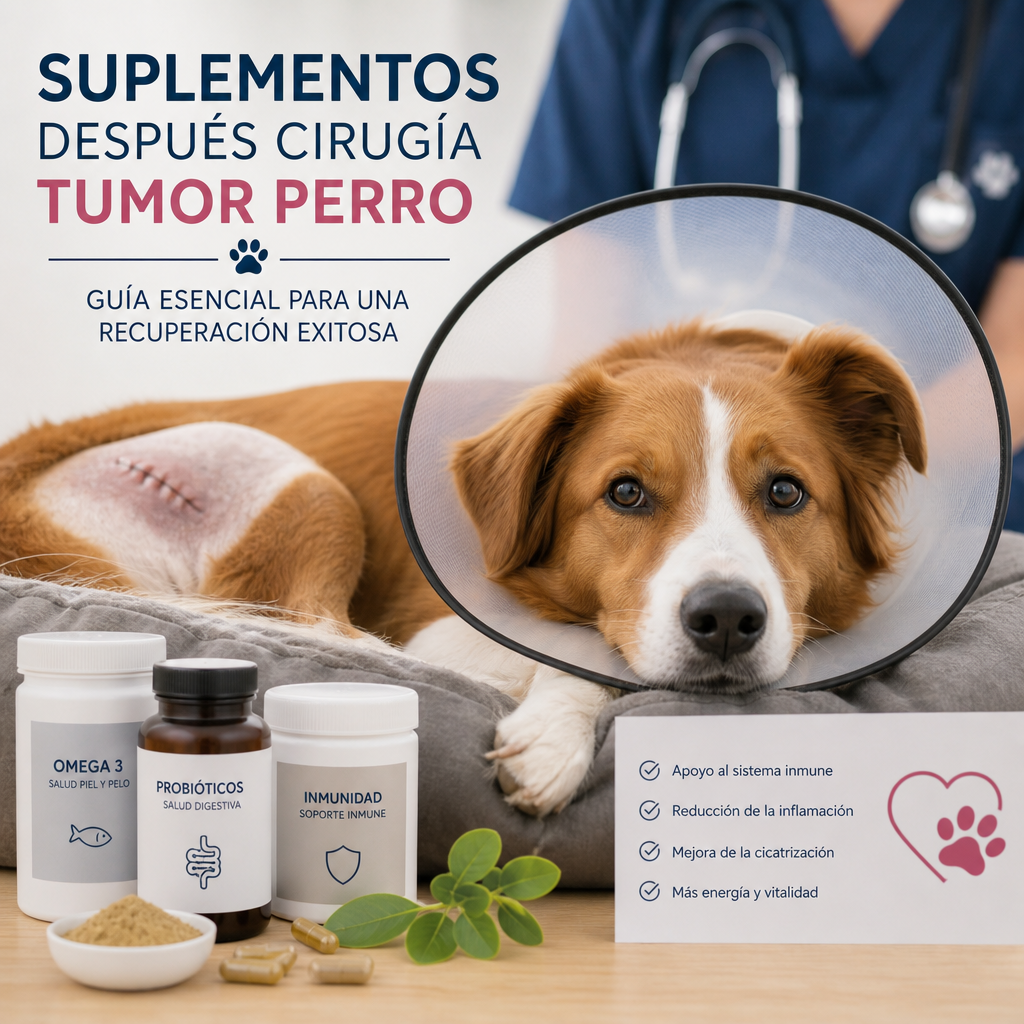
- Omega-3 fatty acids: present in quality fish oils, can help control certain inflammatory processes and assist in maintaining skin and coat health. The dosage should be calculated according to weight and health status.
- Probiotics: can be useful to promote intestinal balance, especially if the dog has received antibiotics or has diarrhea related to stress or treatment.
- Vitamins and minerals: are only recommended when there is a deficiency or a specific indication. An excess of fat-soluble vitamins, such as A, D, E, or K, can be harmful.
- Caloric supplements: can help dogs that eat little and need to maintain their weight, although they should be chosen according to their needs and digestive tolerance.
- Antioxidants: their use in cancer patients requires special caution. Some treatments may be affected by certain antioxidants in high doses, so they should not be administered on one's own initiative.
Not all products labeled as “natural” are safe. Quality, concentration, origin, and interaction with other treatments are fundamental factors. At this point, supplements after dog tumor surgery should only be seen as one more tool within a complete medical plan.
If you are looking for a broader guide to compare options and safety, you can also review the best supplements for dogs with cancer and keys to choosing them safely, where useful criteria for making informed decisions are explained.
To better understand why professional supervision is so important, it is worth remembering that each dog metabolizes nutrients and medications differently. What is useful for one may not be for another, especially when there are recent surgeries, changes in appetite, or simultaneous treatments.
Nutrition during post-surgery support for dog cancer
Nutrition is one of the pillars of post-surgery support for dogs with cancer. The goal is to provide high-quality proteins, sufficient energy, and an easily digestible diet. In many cases, the veterinarian may recommend a therapeutic food or a diet formulated by a veterinary nutrition specialist.
If appetite is low, small portions can be offered several times a day. Lightly heating the food can enhance its aroma and make it more appealing, always avoiding excessive temperatures. It is also important to keep fresh water available and monitor the amount ingested.
It is not advisable to abruptly change food or offer leftovers, processed meats, very fatty foods, or seasoned products. Some dogs need a gradual transition to avoid vomiting or diarrhea. If they stop eating for an extended period, lose weight rapidly, or vomit repeatedly, they should be evaluated by a professional.
It is important to remember that nutritional support is not just about “getting them to eat something.” In an oncology patient, every bite should provide useful energy and be tolerated without worsening digestive discomfort. Therefore, in some cases, wet diets, soft textures, or small frequent meals are recommended. The goal is to maintain muscle mass, promote healing, and prevent recovery from becoming slower than necessary.
If the dog shows persistent rejection of food, the veterinarian may suggest temporary strategies such as adjusting meal times, using appetite stimulants, or modifying the presentation of the food. A homemade unbalanced diet should never be improvised, as it could worsen weight loss or cause deficiencies.
During this stage, post-surgery support for cancer dogs also depends on adequate hydration. When the dog drinks little, it may be necessary to increase water intake through wet food or specific guidelines indicated by the professional. Proper hydration helps the intestine function better and allows tissues to recover more easily.
In addition, it is advisable to maintain stable schedules and a relaxed environment for meals. Noise, stress, and haste can reduce interest in food in sensitive or weakened dogs. A calm environment encourages the dog to associate feeding with safety and comfort.
Nutritional support and supplements after dog tumor surgery
When the veterinarian considers it appropriate, supplements after dog tumor surgery can help close small nutritional gaps, but only if they are integrated with a complete and well-tolerated diet. In a recovering dog, excess is often as unhelpful as lack of intake.
Therefore, before choosing supplements after dog tumor surgery, it is advisable to review what the animal eats, how much it tolerates, and if there are any digestive side effects. A useful product in one phase may cease to be so later on, so periodic reevaluation is part of the process.
When therapeutic feeding and supplements are combined after tumor surgery in dogs, the goal is to sustain energy, protect muscle mass, and prevent weight loss that complicates healing. This combination should be simple, practical, and easy to follow at home.
Pain control, rest, and physical activity
A dog that feels pain may show signs of restlessness, hide, pant, lick the affected area, or refuse food. The analgesic treatment should be administered exactly as indicated. Human medications such as ibuprofen, acetaminophen, or aspirin should never be used without veterinary authorization, as they can cause serious poisoning.
Rest promotes healing, but absolute immobility for too long can also weaken the muscles. Short walks on a leash are usually appropriate when the specialist authorizes them. Activity should gradually increase and adapt to the surgery performed.
To prevent the dog from licking or biting the wound, it may be necessary to use an Elizabethan collar or a postoperative garment. Although it may be uncomfortable, protecting the incision reduces the risk of infection and complications.
During rehabilitation, many caregivers wonder if it is advisable to speed up the return to routine. The answer is usually no. A sudden increase in activity can open the wound, cause pain, or delay healing. The most prudent course is to follow the evolution plan set by the veterinarian and observe how the dog responds to each small change.
It can also help to maintain stable schedules for feeding, resting, and walking. Routine reduces stress and allows the body to focus its resources on healing. In older or weakened dogs, this daily organization makes a significant difference in overall well-being.
In some patients, pain is not expressed in an obvious way. That’s why it’s useful to watch for discreet signals like stiffness when getting up, less interest in walking, a hunched posture, or changes in sleep. When pain is well controlled, the recovery from tumor surgery in dogs tends to be more orderly, and the dog tolerates feeding and mobility better.
Additionally, rest does not mean total isolation. The calm company of family, without intense play or excessive handling, can provide emotional security. A dog that feels accompanied tends to relax more and rest better, which also favors tissue repair.
Supplements after tumor surgery in dogs: safety and interactions
Supplements after tumor surgery in dogs are not harmless simply because they are sold without a prescription. A product may contain active ingredients that interact with painkillers, antibiotics, chemotherapy, or anticoagulants. Therefore, before starting any supplement, the veterinarian should review the complete medical history.
Among the most important risks are excess vitamins, the use of low-quality oils, contamination of some products, and lack of control over the actual dosage. In a dog with cancer, special attention should also be paid to antioxidant supplements or certain herbs that are promoted as “immune stimulants,” because they are not always suitable for all cases.
The following precautions help reduce problems:
- Do not start several products at once.
- Introduce only one change at a time to be able to detect adverse effects.
- Check if the supplement is formulated for dogs and not for humans.
- Verify the exact dosage according to the actual weight of the animal.
- Inform the veterinarian about oils, powders, capsules, functional snacks, and “natural” products.
If a reliable reference on food safety and nutrition is needed, the portal of the FDA's animal health information offers useful resources for owners and professionals. Although it does not replace veterinary consultation, it can serve as educational support to understand why quality control and supervision are so important.
When combining oncological treatments with supplements, the margin of error is reduced. Therefore, clinical follow-up and communication with the veterinarian are more valuable than any commercial promise. A prudent choice protects recovery and avoids unnecessary setbacks.
In practice, the safest approach is to treat any supplement as part of the treatment, not as an isolated addition. If a new product is suspended or started, the professional should be informed to assess whether it may alter the dog's appetite, digestion, coagulation, or overall response. This coordination is especially useful in the first weeks following surgery.
Además, algunos suplementos pueden resultar adecuados solo durante un tiempo limitado. Cuando el perro mejora, quizá ya no sean necesarios. Revisar periódicamente la utilidad real de cada producto evita gastos innecesarios y reduce el riesgo de sobrecargar el organismo con ingredientes que no aportan un beneficio claro.
Warning signs after surgery
La supervisión diaria permite detectar problemas a tiempo. Es necesario contactar con el veterinario si aparecen fiebre, apatía intensa, dolor que empeora, encías pálidas, dificultad para respirar, vómitos persistentes, diarrea intensa, falta total de apetito, incapacidad para orinar o una herida muy inflamada.
También se debe consultar si el perro aumenta o pierde peso de manera marcada, presenta debilidad repentina o desarrolla nuevos bultos. Los controles posteriores permiten revisar la cicatrización, analizar los resultados histopatológicos y decidir si hace falta continuar con otras terapias.
En algunos perros, los primeros signos de complicación son sutiles: menos ganas de moverse, jadeo sin motivo aparente, inquietud nocturna o rechazo de la comida que antes aceptaba bien. Si esos cambios aparecen, conviene no esperar “a ver si se le pasa”. Un aviso temprano puede evitar una recaída en el proceso de recuperación.
Additionally, it is important to monitor the general behavior. If the dog appears more lethargic than usual or stops showing interest in its surroundings, this may indicate pain, fever, or a digestive problem. Careful monitoring helps distinguish a mild discomfort from a situation that requires immediate attention.
Another important sign is an abnormal smell from the wound or the presence of persistent discharge. While some mild discomfort may be expected after surgery, a worsening condition instead of improvement requires a professional review. The sooner action is taken, the easier it usually is to correct the problem.
An individualized plan improves recovery
There is no universal supplement for all dogs operated on for a tumor. The best approach combines diagnosis, nutrition, medication, pain management, and regular check-ups. Before adding any supplement, the veterinarian must be aware of all the products the animal is taking, including oils, herbs, vitamins, and functional treats.
With constant vigilance and a tailored plan, many dogs can gradually regain their appetite, mobility, and well-being. The key is to understand that supplements are an addition, not a substitute for surgery, complete nutrition, or the indicated oncological treatment.
When the family actively participates in the follow-up, the evolution tends to be more orderly. Observing, noting changes, and communicating doubts to the specialist helps to detect real progress or small setbacks before they become a bigger problem. In that sense, home care is part of the treatment.
If your dog is going through this stage, remember that supplements after dog tumor surgery should be chosen with criteria, patience, and supervision. A good decision is not the one that promises more, but the one that better protects the animal's health and integrates safely into its recovery.
It also helps to periodically review if the plan is still appropriate. A dog may need different support as its appetite, energy, or the evolution of the wound changes. Adjusting calmly, instead of accumulating products, is usually the safest and most sustainable path for a healthy recovery.
In summary, combining postoperative care, quality nutrition, and veterinary control offers better results than relying solely on a specific product. If chosen well, supplements after dog tumor surgery can responsibly accompany the process, but always as part of a complete and well-supervised strategy.