
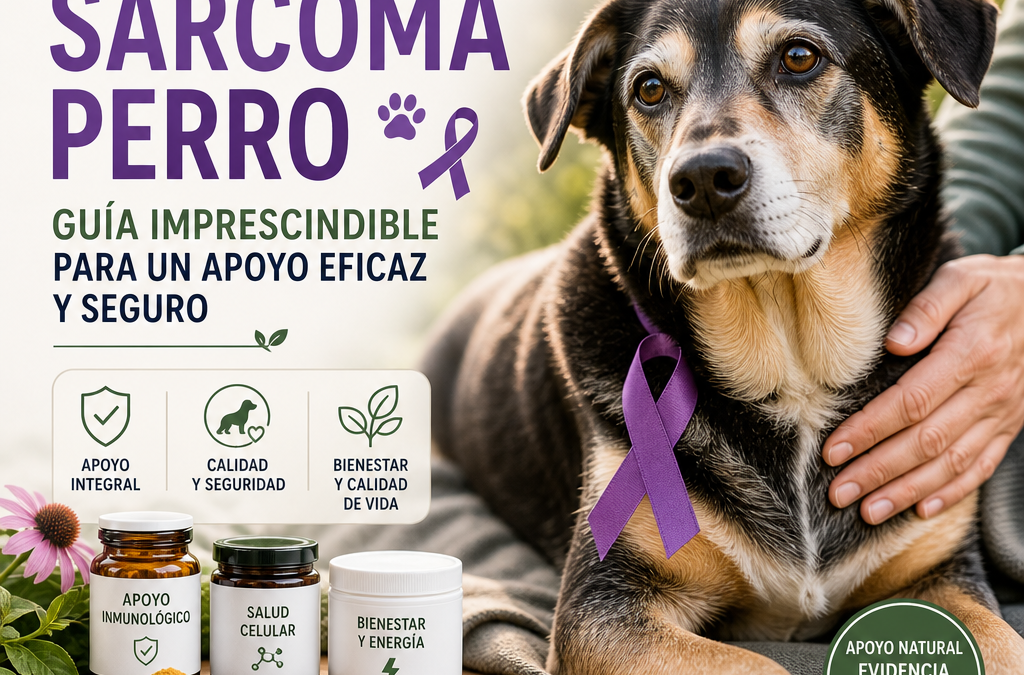
Los supplements sarcoma dog They are an increasingly common search among families who wish to improve their animal's well-being during diagnosis, treatment, or recovery. However, no supplement replaces surgery, chemotherapy, radiotherapy, or veterinary follow-up. Its function can be to support specific aspects, such as nutrition, muscle mass, digestion, or quality of life, as long as it is chosen individually and its safety is monitored.
In a case of soft tissue sarcoma, the main goal is not to accumulate products, but to build a realistic plan. This involves assessing the type of tumor, the clinical stage, the dog's appetite, its weight, its digestive tolerance, and the medications it receives. With that information, the supplements sarcoma dog can become a useful aid, but only within a well-designed veterinary strategy.
Tabla de contenidos
What is sarcoma in dogs?
Sarcoma is a type of tumor that originates in tissues such as muscle, fat, fibrous tissue, blood vessels, nerves, or bones. Among the most well-known is soft tissue sarcoma, which can appear as a mass under the skin or in deeper structures.
Not all sarcomas behave the same way. Some grow slowly and have a low probability of spreading, while others are more invasive. For this reason, diagnosis often requires cytology, biopsy, imaging tests, and, in certain cases, studies to assess whether metastasis exists.
Treatment depends on factors such as size, location, tumor grade, surgical margins, and the dog's overall condition. Surgery is usually one of the main options, although it can be combined with radiotherapy or chemotherapy.
After diagnosis, many families look for ways to better support their dog. At this stage, the supplements sarcoma dog can be part of a broader clinical conversation in which diet, pain management, physical activity, and quality of life goals are also reviewed.
Dog sarcoma supplements: what they can provide
Supplements do not eliminate the tumor, but in some cases, they can help meet specific needs. A dog with cancer may lose appetite, weight, or muscle mass, experience digestive discomfort, or have increased nutritional needs. Additionally, surgery and other treatments can create demanding recovery periods.
The realistic goal of a supplement is to provide support, not to promise a cure. Some products may contribute to:
- Maintaining adequate nutrient intake.
- Promoting the preservation of muscle mass.
- To support digestive function.
- Improving the palatability of the diet.
- Helping to cover confirmed deficiencies.
- Supporting recovery after an intervention.
The choice should be based on the animal's clinical situation, its analyses, the medications it receives, and the type of food it consumes.
When reviewing options for supplements sarcoma dog, it is advisable to first think of concrete and measurable objectives: eating better, losing less weight, tolerating treatment better, or gradually regaining energy.
It is also useful to prioritize. If the dog is already eating well and maintaining its weight, it may not need a broad nutritional supplement. On the other hand, if there is muscle loss, nausea, or diarrhea, the approach should be more specific. In that context, the supplements sarcoma dog only add value when they address a real need.
Soft tissue sarcoma dog nutritional support
When looking for supplements sarcoma dog to support the process, nutrition should be a priority. A complete and balanced diet, tailored to age, weight, activity, and concurrent diseases, forms the basis of any support strategy.
During the oncological process, some dogs eat less due to pain, stress, nausea, or changes in smell and taste. In these cases, the veterinarian may recommend foods with higher energy density, more appealing textures, or several small meals a day. If weight loss is significant, it may also be necessary to use veterinary recovery diets.
Protein is especially important for preserving muscle mass, but the amount and source should be tailored to each patient. A dog with kidney, liver, or digestive disease may need specific restrictions. Therefore, it is not advisable to increase protein or drastically modify the diet without professional supervision.
In some patients, the nutritional plan benefits from periodic review, especially if treatment changes or if nausea, diarrhea, constipation, or a marked decrease in appetite occurs. In that context, the supplements sarcoma dog may be useful only if they fit a real need and do not displace the base diet.
The Manual Veterinario Merck provides useful general clinical information to understand how tumors, nutrition, and therapeutic support are evaluated in veterinary medicine.
Additionally, a well-designed support plan also helps prevent common mistakes: giving too many products at once, choosing formulas without clear labeling, or trying to compensate for an insufficient diet solely with supplements. In a case of soft tissue sarcoma, consistency in feeding is often more valuable than the accumulation of ingredients.
If there is a loss of appetite, the veterinarian may consider additional strategies such as adjusting schedules, lightly warming the food to enhance aroma, or using a more palatable veterinary diet. At that stage, the supplements sarcoma dog should be considered a support and not the center of treatment.
When recovery is slow, it is also advisable to review the daily routine. Rest, comfort of the space, easy access to water, and the ability to eat without discomfort greatly influence the overall response. Therefore, a plan with supplements sarcoma dog works better if accompanied by practical adjustments at home.
Ingredients that are studied most frequently
Some ingredients frequently appear in formulas intended for the nutritional support of dogs with cancer. Their usefulness depends on the available evidence and the characteristics of the animal.
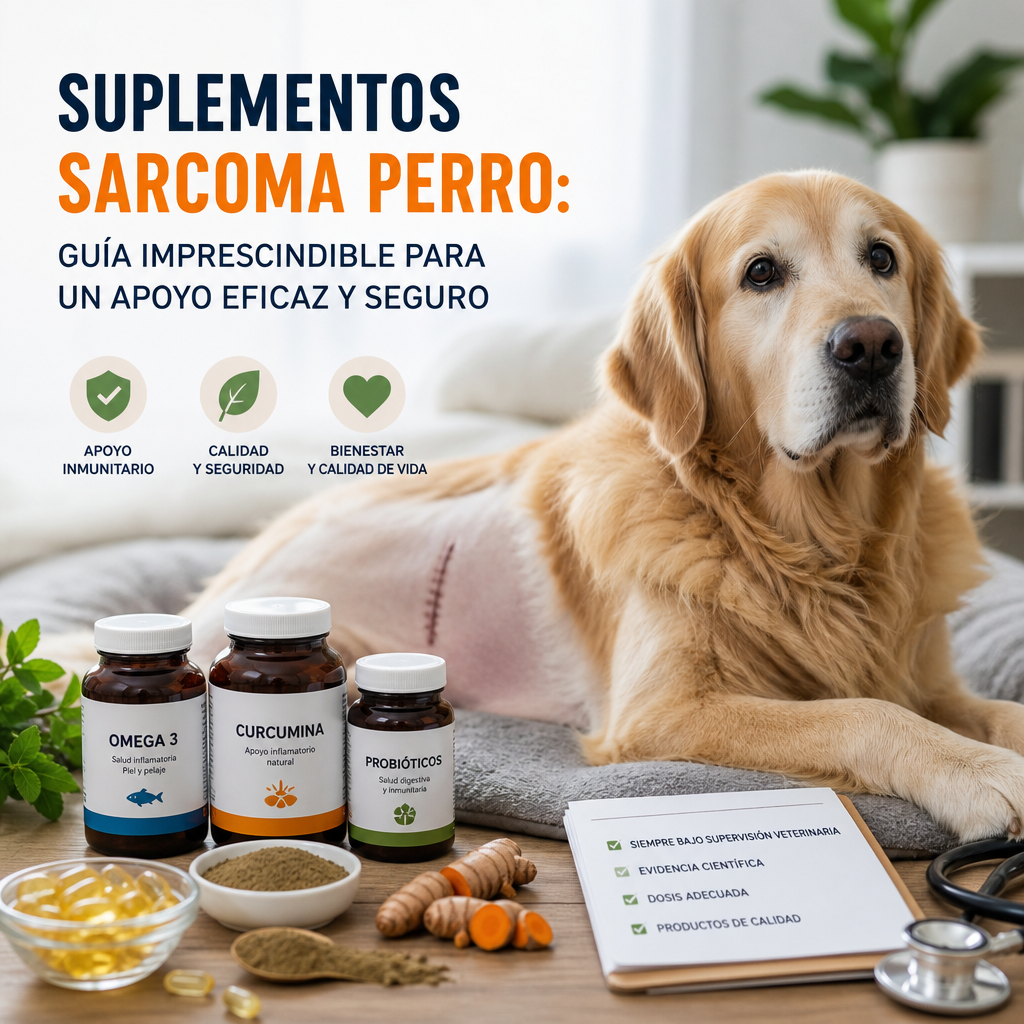
Omega-3 fatty acids, especially EPA and DHA from marine oils, can contribute to maintaining a balanced inflammatory response and the health of the skin, coat, and joints. However, high doses can cause digestive disorders or interfere with coagulation under certain circumstances.
Antioxidants, such as vitamins C and E, vitamin A, selenium, or certain polyphenols, are also included in some products. However, “more antioxidants” does not always mean “more benefits.” In animals undergoing chemotherapy or radiation therapy, the use of high doses should be reviewed with the veterinary oncologist, as some treatments generate part of their effect through oxidative processes.
Fiber supplements or probiotics can be useful if there are digestive disturbances, diarrhea associated with treatments, or sudden changes in diet. Their use should be tailored to the specific problem, as not all probiotics have the same composition or the same evidence.
In some contexts, the real need is not to add more ingredients, but to choose the right ones. Therefore, before buying supplements sarcoma dog, it is worth checking if the animal is already receiving a complete diet with sufficient nutrients and if there is a clear clinical reason to incorporate an additional product.
For more general information on evidence-based nutrition in dogs, you can consult the global nutrition guide from WSAVA can be consulted., a useful reference to contextualize dietary support in veterinary medicine.
If the dog has digestive discomfort, gentle and well-tolerated ingredients are usually preferable to complex formulas. On the other hand, if the goal is to support the body condition during a long process, the veterinarian may consider more complete combinations. In both cases, the supplements sarcoma dog should be chosen for their clinical usefulness, not for their popularity.
Dog sarcoma supplement: how to choose it safely
Before administering any supplement for dog sarcoma, it is important to review several aspects. First, the label should clearly indicate the ingredients, the amount per dose, the batch, and the usage recommendations. Products of dubious origin may contain variable concentrations, contaminants, or undeclared substances.
También conviene evitar los complementos que prometen “destruir el cáncer”, “curar tumores” o sustituir tratamientos veterinarios. Estas afirmaciones suelen carecer de respaldo científico y pueden retrasar decisiones importantes.
La dosis debe calcularse según el peso, la edad, la función renal y hepática, y el estado general del perro. Un producto seguro para un animal puede no serlo para otro. Además, algunos suplementos interactúan con fármacos, antiinflamatorios, anticoagulantes o medicamentos utilizados durante la quimioterapia.
Es recomendable introducir un solo producto cada vez. Así resulta más fácil identificar si produce beneficios, molestias digestivas, cambios en el apetito o cualquier reacción adversa.
También merece la pena valorar si el complemento aporta un beneficio medible. Cuando los supplements sarcoma dog se usan sin objetivo concreto, es más difícil saber si están ayudando de verdad o si solo añaden coste y complejidad al plan de cuidados.
En perros mayores o con otras enfermedades, la prudencia debe ser todavía mayor. Un historial de vómitos, insuficiencia renal, pancreatitis o alteraciones de coagulación puede cambiar por completo la elección del producto. Por eso, incluso una fórmula bien comercializada puede no ser adecuada en un caso concreto de supplements sarcoma dog.
Una buena pregunta para la consulta es: “¿Qué problema concreto quiero resolver con este producto?”. Si la respuesta no es clara, quizá no exista una necesidad real. Este criterio ayuda a evitar compras innecesarias y a mantener los supplements sarcoma dog dentro de un enfoque práctico y seguro.
Precautions and warning signs
Los suplementos pueden causar vómitos, diarrea, estreñimiento, pérdida de apetito o reacciones alérgicas. Si aparecen debilidad intensa, sangrado, dificultad respiratoria, vómitos persistentes, inflamación facial o empeoramiento repentino, se debe contactar con un veterinario de inmediato.
Nunca deben utilizarse productos humanos sin comprobar su seguridad. Algunos contienen xilitol, cafeína, vitamina D en cantidades peligrosas, hierro u otros componentes tóxicos para los perros. Tampoco es aconsejable combinar varios complementos con ingredientes repetidos, ya que puede producirse una sobredosificación inadvertida.
El seguimiento debe incluir controles de peso, apetito, hidratación, actividad, dolor y calidad de vida. En algunos casos, el veterinario solicitará análisis de sangre para comprobar la función de los órganos y valorar la tolerancia al tratamiento.
Si el animal toma medicación oncológica o analgésica, cualquier cambio debe comentarse antes de iniciar un nuevo producto. La prudencia es especialmente importante cuando se utilizan supplements sarcoma dog junto con terapias complejas o en pacientes frágiles.
Cuando aparecen efectos adversos, suspender el producto y consultar cuanto antes suele ser la decisión más segura. No todos los síntomas significan una reacción grave, pero sí indican que el plan debe revisarse. En este contexto, la observación diaria puede marcar la diferencia entre una molestia leve y una complicación mayor.
It is also important to remember that an apparent improvement does not always mean that the supplement is the cause. Sometimes the dog feels better due to pain adjustment, dietary changes, or the natural progression of treatment. That is why, even when it seems that the supplements sarcoma dog help, it is advisable to maintain a critical and periodic assessment.
A comprehensive approach to well-being
The support of a dog with sarcoma does not solely depend on supplements. Pain management, rest, adapted mobility, wound hygiene, and environmental enrichment are equally important. Maintaining calm routines and providing a comfortable place can reduce stress during recovery.
The diet should be appealing and easy to consume, while exercise should be adjusted according to medical advice, especially after surgery. Daily observation allows for the detection of changes before they become major problems.
Communication with the veterinary team also improves outcomes. If the dog refuses food, vomits, loses weight, or seems more painful, that information is as valuable as any list of ingredients. Sometimes, the most helpful plan is to simplify, not to add more things.
In short, the supplements sarcoma dog They can play a complementary role when responding to a specific need and are used under veterinary supervision. The safest strategy combines a precise diagnosis, an appropriate oncological treatment, a complete diet, and continuous monitoring of quality of life. Each dog needs an individual plan, and caution should always take precedence over commercial promises.
If the goal is to improve well-being with realistic expectations, the key is to review each step: what the dog eats, what medication it receives, how it tolerates treatments, and whether the chosen product really adds something. Thus, the supplements sarcoma dog go from being an impulsive purchase to becoming a reasoned aid within a well-supervised veterinary plan.
Before buying or administering any product, it is worth asking about its exact composition, the expected duration, possible adverse effects, and the follow-up method. With those answers, the supplements sarcoma dog cease to be a generic solution and are integrated into safer, more useful, and more humane clinical decisions.