
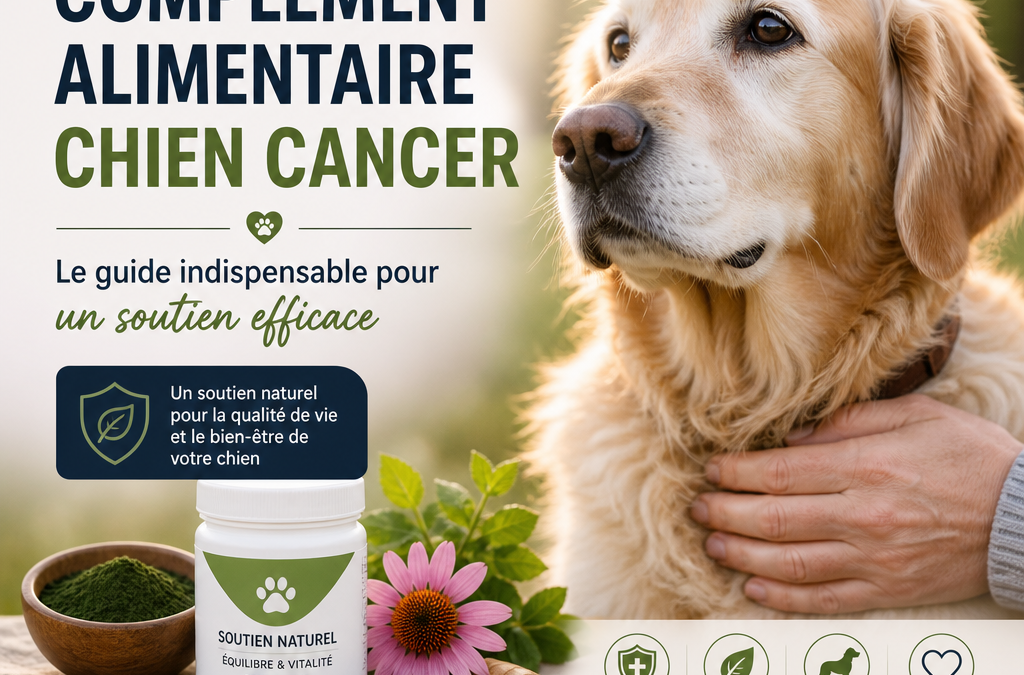
The complément alimentaire chien cancer peut jouer un rôle de soutien dans l’accompagnement d’un animal atteint d’une maladie tumorale, mais il ne remplace jamais les traitements prescrits par le vétérinaire. L’alimentation, le maintien du poids, la gestion des effets secondaires et le confort général sont des éléments essentiels pour préserver la qualité de vie du chien. Avec des conseils adaptés et une sélection rigoureuse des produits, les compléments peuvent contribuer à répondre à certains besoins spécifiques, toujours dans le cadre d’un suivi médical personnalisé.
Dans ce guide, l’objectif est de vous aider à comprendre quand un complément alimentaire chien cancer peut être utile, comment l’évaluer avec prudence et quels critères privilégier pour rester dans une démarche sûre, réaliste et réellement bénéfique pour votre compagnon.
Table of contents
- Pourquoi envisager un complément alimentaire pour un chien atteint de cancer ?
- Complément cancer chien : quels objectifs rechercher ?
- Complément alimentaire chien cancer : comment choisir un produit adapté ?
- Les précautions indispensables avant toute administration
- L’alimentation reste la base du soutien nutritionnel
- Suivre l’évolution du chien au quotidien
The choice of a complément alimentaire chien cancer doit toujours se faire avec prudence, car les besoins varient beaucoup selon le type de tumeur, l’âge, l’appétit, le traitement en cours et l’état général du chien. Un produit bien choisi peut aider à maintenir l’énergie, améliorer la tolérance digestive et soutenir le confort au quotidien, tandis qu’un complément mal adapté peut au contraire compliquer la prise en charge. Dans certains cas, le bon produit peut aussi faciliter l’observance du traitement en étant plus simple à administrer et mieux accepté par l’animal.
Il faut également garder à l’esprit que le contexte oncologique évolue souvent dans le temps. Un chien qui tolère bien une formule au début peut la supporter moins bien quelques semaines plus tard, notamment si l’appétit baisse ou si des troubles digestifs apparaissent. Revoir régulièrement les besoins du chien est donc une étape indispensable.
Pourquoi envisager un complément alimentaire pour un chien atteint de cancer ?
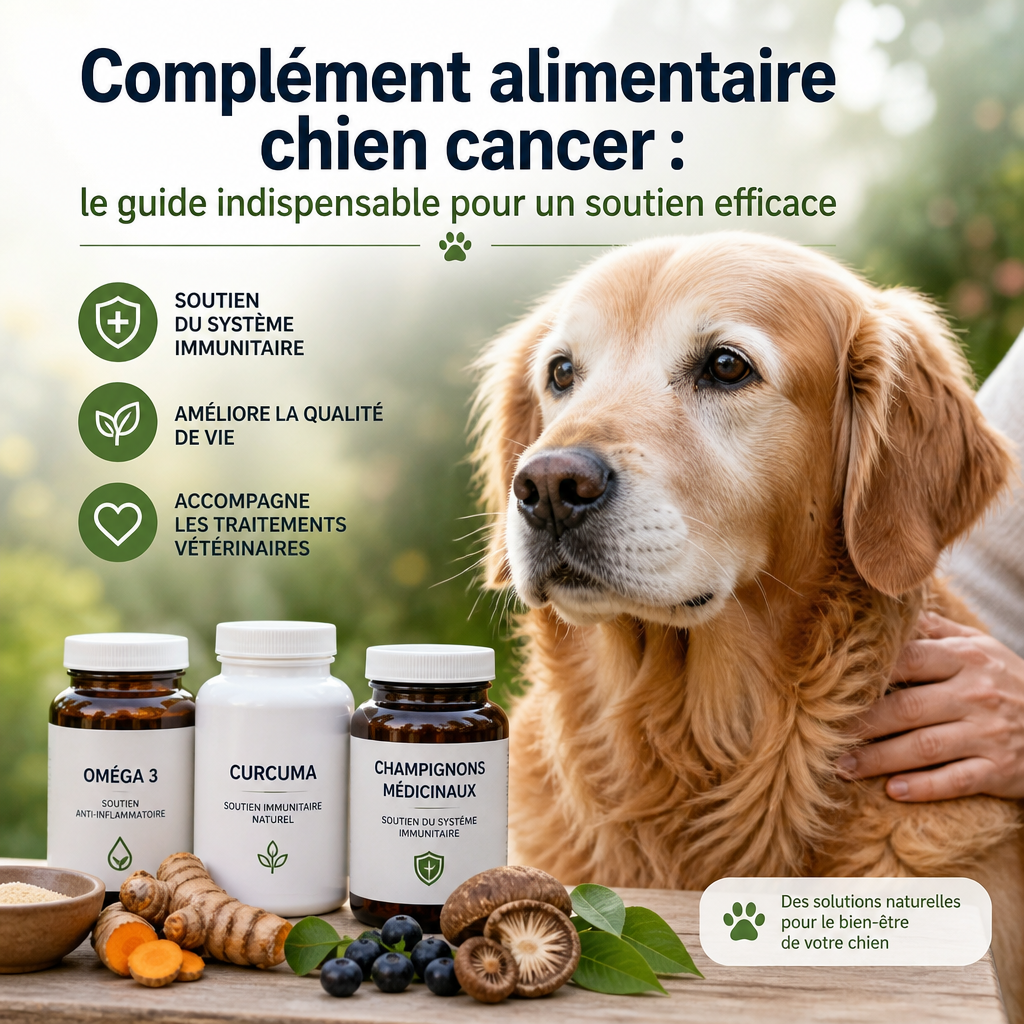
Le cancer peut modifier profondément les besoins nutritionnels d’un chien. La maladie, les traitements et le stress physiologique peuvent entraîner une perte d’appétit, une fonte musculaire, une fatigue importante ou une difficulté à maintenir un poids stable. Certains chiens présentent également des troubles digestifs, comme des nausées, des selles molles ou une sensibilité accrue de l’estomac.
Dans ce contexte, un complément alimentaire peut être utilisé pour renforcer l’apport en nutriments, soutenir la digestion ou favoriser le maintien de l’état général. L’objectif n’est pas de combattre directement la tumeur, mais d’aider l’organisme à mieux faire face à la maladie et aux traitements.
La priorité reste toutefois de traiter la cause médicale. Aucun produit naturel, aucune vitamine et aucun mélange de plantes ne doit être présenté comme une alternative à la chirurgie, à la chimiothérapie, à la radiothérapie ou aux autres soins recommandés par le vétérinaire. Un complément alimentaire chien cancer n’a de sens que dans une stratégie globale, construite avec un professionnel de santé animale.
Lorsque le chien traverse une période plus difficile, le but est souvent d’éviter une spirale négative : moins manger, perdre du poids, se fatiguer davantage et se montrer encore moins intéressé par l’alimentation. Un soutien nutritionnel bien pensé peut parfois contribuer à rompre ce cercle, à condition de rester cohérent avec la situation clinique.
Complément cancer chien : quels objectifs rechercher ?
Avant de choisir un produit, il est important d’identifier le besoin réel de l’animal. Tous les chiens atteints de cancer n’ont pas les mêmes symptômes ni les mêmes exigences nutritionnelles. Un complément alimentaire chien cancer pertinent doit donc répondre à une situation précise et mesurable.
It can be helpful to ask a few simple questions: is the dog eating less than before? Has he lost weight? Does he have digestive issues? Is he more tired? The goal is to select targeted support rather than a «one-size-fits-all» product with vague effects.
Maintain weight and muscle mass
Weight loss is common in sick dogs. It may be related to a decrease in appetite, pain, digestive issues, or increased energy expenditure by the body. A supplement rich in protein or calories can sometimes support intake, especially when the dog is eating little.
However, the quantity and composition must be adapted to his age, weight, activity, type of tumor, and the functioning of his kidneys and liver. A ration that is too rich or inappropriate can worsen certain disorders.
In a very emaciated dog, the priority is not just to “make him gain weight,” but to preserve lean mass as much as possible. This often requires a delicate balance between energy density, digestibility, and palatability. In this perspective, a complément alimentaire chien cancer can be useful if it truly helps improve intake without causing discomfort.
Support digestion
Cancer treatments can disrupt digestive comfort. Probiotics, specific fibers, or certain prebiotics may be considered to help maintain the balance of the intestinal microbiota. However, they are not suitable for all situations and should be introduced gradually.
Persistent diarrhea, repeated vomiting, or a total refusal to eat require prompt veterinary advice. These signs may indicate a complication that should not be masked by a supplement.
Digestive tolerance also depends on the formulation. Some dogs tolerate better an oil mixed with their food, while others prefer a palatable paste or a very simple powder. The right choice therefore depends as much on the composition as on the galenic form.
Contribute to overall comfort
Certain ingredients, such as omega-3 fatty acids from fish oils, are studied for their interest in inflammatory balance and nutritional support. They can be offered in certain situations, provided that dosages are respected and a quality product is chosen.
Antioxidants are also present in many formulas. Their use should be discussed with the veterinarian, especially when the dog is undergoing chemotherapy or radiotherapy. Depending on the protocol, the disease, and the animal's condition, certain contributions may be relevant while others should be avoided or limited.
Un complément alimentaire chien cancer It can also aim to improve perceived energy, recovery after meals, or appetite stability. Even if these effects remain variable, they can make a real difference in daily life when the animal is weakened.
Complément alimentaire chien cancer : comment choisir un produit adapté ?
The first criterion is safety. It is important to prioritize supplements formulated for dogs, with a clear composition, precise dosage, and satisfactory traceability. Products intended for humans are not always suitable for animals. They may contain xylitol, essential oils, excessive doses of vitamins, or other substances dangerous for the dog.
It is also advisable to avoid formulas with overly general promises, such as those claiming to «destroy cancer cells» or replace veterinary treatments. These claims are often insufficiently supported and can delay essential care.
The form of the product also matters. A powder mixed with food, an oil, or a palatable paste may be easier to administer than a capsule, especially if the dog is weakened or difficult. The supplement must remain well accepted: forcing the animal or degrading its appetite would be counterproductive.
To delve deeper into the issue of tumor progression in dogs, you can also consult this internal file on the metastasis in dogs and understanding tumor spread.
Another important point is to check the complete list of ingredients. In a complément alimentaire chien cancer, the presence of simple and well-identified substances is preferable to a formula that is too complex, especially if the dog is already receiving several medications. The more readable the composition, the better the veterinarian can assess the product's relevance and limit potential interactions.
Finally, it is important to pay attention to the manufacturing method and the quality of the manufacturer. A serious product clearly indicates the dosage, usage recommendations, precautions, and the species concerned. This transparency helps to choose a dog cancer dietary supplement that is both useful and prudent.
It may also be relevant to compare the logic of the product to the dog's actual condition. For example, a formula that is too rich is of no interest if the animal vomits often, while a lighter digestive support may be preferable. Conversely, a dog losing body condition may benefit from a more concentrated intake if its veterinarian deems it appropriate. The choice must therefore remain individualized.
Check palatability and ease of administration
In a sick dog, the best formula in the world is of no use if it is not consumed regularly. Palatability is therefore a decisive criterion. A complément alimentaire chien cancer must be accepted without stress, without repeated refusals, and without significant mood changes around mealtime.
If the dog refuses a new product, it is better to reassess the form, dose, or timing of administration rather than insisting harshly. A too-rapid change can create a lasting food aversion, which further complicates the situation.
Assess the benefit-risk ratio
Each supplement must be judged according to its potential benefits and limitations. A product may seem interesting on paper but become unsuitable in cases of renal insufficiency, concurrent treatment, or digestive sensitivity. The benefit-risk ratio is therefore central when choosing a complément alimentaire chien cancer.
This logic is particularly important when the dog is elderly, on multiple medications, or already very weakened. In these cases, the fewer superfluous ingredients, the better.
Les précautions indispensables avant toute administration
Before starting a supplement, it is essential to provide the veterinarian with a complete list of products used: medications, plants, vitamins, oils, and functional treats. Some substances can alter the absorption or metabolism of a treatment. Others may influence coagulation, blood pressure, or liver function.
The veterinarian will also be able to check blood tests, kidney status, liver function, and hydration levels. This information is essential to determine if a supplement is appropriate and to adjust the dosage.
It is generally better to introduce one product at a time, starting with the recommended amount. This allows for observing the dog's tolerance and more easily identifying any adverse reactions: vomiting, diarrhea, itching, unusual fatigue, or decreased appetite.
Monitoring should remain simple and rigorous. Note the changes after the introduction of a complément alimentaire chien cancer allows for distinguishing a true benefit from a temporary effect. This point is particularly useful when the dog is already weakened or under heavy treatment.
To better understand the recognized foundations of canine nutrition in a medical context, a good starting point is the reference sheet on the nutrition of dogs with cancer, which emphasizes the importance of maintaining body condition and appetite.
One must also be cautious with products labeled as «natural.» Natural does not always mean safe. Some plants, certain concentrated extracts, and some essential oils can pose problems, even in small doses. In an oncological context, caution is therefore essential.
Si le chien suit une chimiothérapie, le vétérinaire peut demander d’éviter certaines associations au moment du traitement. Un complément alimentaire chien cancer peut parfois être utile, mais son calendrier d’administration et sa composition doivent alors être clairement validés par le professionnel.
L’alimentation reste la base du soutien nutritionnel
Un complément alimentaire chien cancer ne peut pas compenser une alimentation globale inadaptée. Le chien doit recevoir une nourriture complète, suffisamment appétente et compatible avec sa situation médicale. Dans certains cas, une alimentation thérapeutique peut être recommandée. Dans d’autres, le vétérinaire pourra proposer une ration ménagère formulée avec l’aide d’un spécialiste en nutrition animale.
La priorité est souvent que le chien mange suffisamment, sans modifier brutalement ses habitudes. De petits repas fréquents, une nourriture légèrement réchauffée ou une texture différente peuvent parfois stimuler l’appétit. Toute modification importante doit cependant être progressive, sauf urgence médicale.
L’hydratation est tout aussi importante. Une gamelle d’eau propre doit rester accessible en permanence. Si le chien boit très peu, vomit ou présente des signes de déshydratation, une consultation est nécessaire.
Dans cette logique, le complément alimentaire chien cancer doit être vu comme une aide ciblée et non comme la base du traitement. L’alimentation, la gestion des symptômes et le confort digestif forment ensemble un soutien plus solide et plus cohérent.
Quand l’appétit fluctue, il peut être utile de fractionner les repas, d’éviter les odeurs trop fortes ou de proposer une nourriture plus facile à mâcher. Ces gestes simples peuvent parfois avoir plus d’impact qu’un ajout complexe. Un complément alimentaire chien cancer bien choisi s’intègre alors dans un ensemble de mesures pratiques et cohérentes.
Adapter la stratégie selon l’évolution de la maladie
La prise en charge nutritionnelle n’est pas figée. Au fil du temps, les besoins changent, tout comme les priorités. Pendant une phase de baisse d’appétit, l’objectif peut être de maintenir un minimum d’apports. Plus tard, lorsque le chien va mieux, on peut chercher à stabiliser le poids ou soutenir la récupération. Le complément alimentaire chien cancer doit suivre cette évolution et non rester identique par automatisme.
Cette souplesse évite de multiplier les produits inutiles. Elle permet aussi de réduire les risques d’interactions et de simplifier la routine quotidienne, ce qui est précieux pour un animal malade et pour son propriétaire.
Suivre l’évolution du chien au quotidien
Pour évaluer l’intérêt d’un complément alimentaire chien cancer, il est utile de noter régulièrement le poids, l’appétit, la quantité d’eau consommée, la qualité des selles, le niveau d’activité et les signes de douleur. Ces observations permettent au vétérinaire d’ajuster le traitement et de déterminer si le complément apporte un réel bénéfice.
Comfort should remain the primary goal. A dog that eats better, maintains its muscle mass, sleeps peacefully, and shows interest in its environment benefits from a coherent overall support. Conversely, an increase in fatigue, pain, respiratory difficulties, or prolonged loss of appetite should be reported quickly.
In practice, the good complément alimentaire chien cancer is the one that meets a specific need, integrates easily into the dog's routine, and does not conflict with the veterinary protocol. Regular monitoring helps maintain this coherence and react quickly if the situation changes.
Families can also keep a small tracking notebook with the start date of the product, the dose, appetite, stools, and weight. This type of reference facilitates exchanges with the veterinarian and helps avoid decisions made blindly. In a canine oncology context, simple but regular data is often more useful than a general impression.
When should a supplement be stopped or reevaluated?
A supplement should be reevaluated if it produces no visible effect after a reasonable period, if it causes digestive discomfort, or if it complicates the administration of medications. The goal is not to keep a product by principle, but to retain only what provides concrete help.
Il faut arrêter rapidement et consulter si le chien présente des vomissements répétés, une diarrhée importante, une baisse nette d’état général, une réaction cutanée ou un refus durable de s’alimenter. Dans ces situations, le complément peut être en cause, ou simplement inadapté au moment clinique du chien.
Cette logique de réévaluation fait partie intégrante d’un accompagnement responsable. Un complément alimentaire chien cancer doit rester un outil de soutien, pas une source de stress supplémentaire pour l’animal ni pour sa famille.
En résumé : choisir avec méthode, pas dans l’urgence
In summary, the complément alimentaire chien cancer peut constituer un soutien intéressant lorsqu’il répond à un besoin précis et qu’il est intégré à un protocole vétérinaire. La qualité de la formule, la sécurité des ingrédients, le respect des doses et le suivi régulier sont essentiels. Le meilleur accompagnement repose sur une approche globale associant soins médicaux, alimentation adaptée, hydratation, gestion des symptômes et attention constante au bien-être de l’animal.
Le choix le plus judicieux n’est pas forcément le plus complexe ou le plus vendeur. C’est souvent celui qui est simple, clair, bien toléré et réellement utile au quotidien. Avec une méthode réfléchie et un suivi vétérinaire, un complément alimentaire chien cancer peut aider à soutenir l’état général du chien sans ajouter de risques inutiles.
Finally, keep in mind that each dog evolves at its own pace. The right supplement today may not necessarily be the right one in three months. Vigilance, observation, and dialogue with the veterinarian remain the best benchmarks to provide your companion with support that is both cautious, effective, and respectful of their health.