
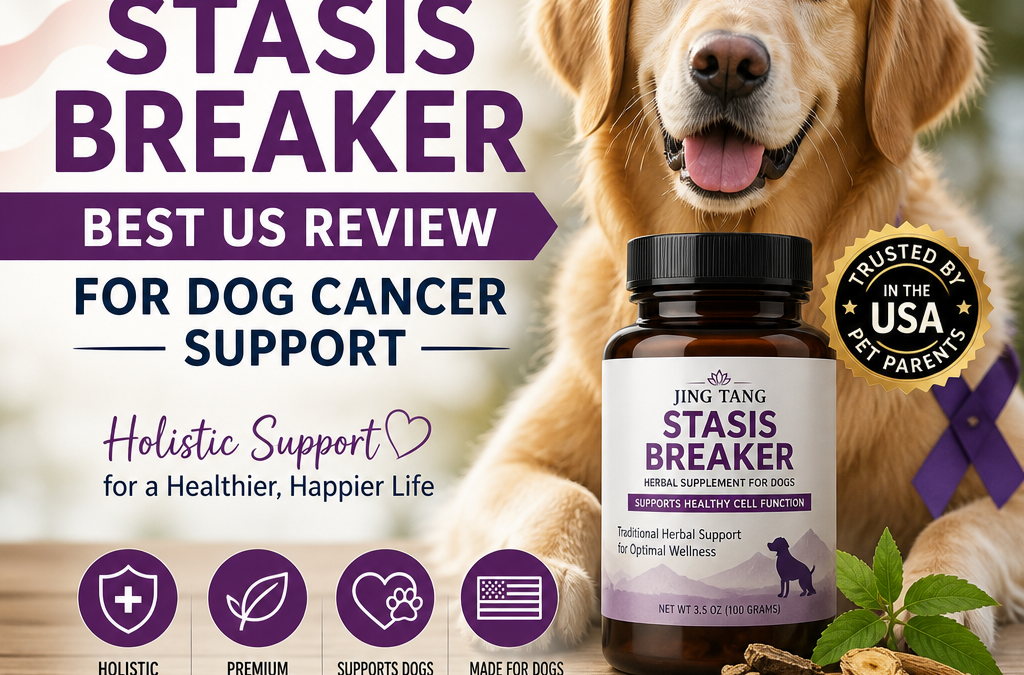
Jing Tang Stasis Breaker é uma fórmula herbal veterinária tradicional chinesa que alguns proprietários de animais de estimação exploram como parte de um plano mais amplo para cães com condições de saúde graves, incluindo câncer. Uma revisão cuidadosa do Jing Tang Stasis Breaker deve distinguir o uso herbal tradicional do tratamento comprovado do câncer, explicar como a fórmula pode se encaixar nos cuidados de suporte e enfatizar a importância da supervisão veterinária. Para famílias nos Estados Unidos, a obtenção do produto, controle de qualidade, dosagem e comunicação com um veterinário são especialmente importantes.
- O que é Jing Tang Stasis Breaker?
- Jing Tang Stasis Breaker Suporte ao Câncer em Cães: O Que os Proprietários Devem Saber
- Razões Potenciais Para Que Seja Considerado
- Segurança, Efeitos Colaterais e Interações Medicamentosas
- Escolhendo Jing Tang Stasis Breaker nos Estados Unidos
- Como Discutir Isso Com Seu Veterinário
- Como é um Plano Realista para o Proprietário
- Avaliação Final
O que é Jing Tang Stasis Breaker?
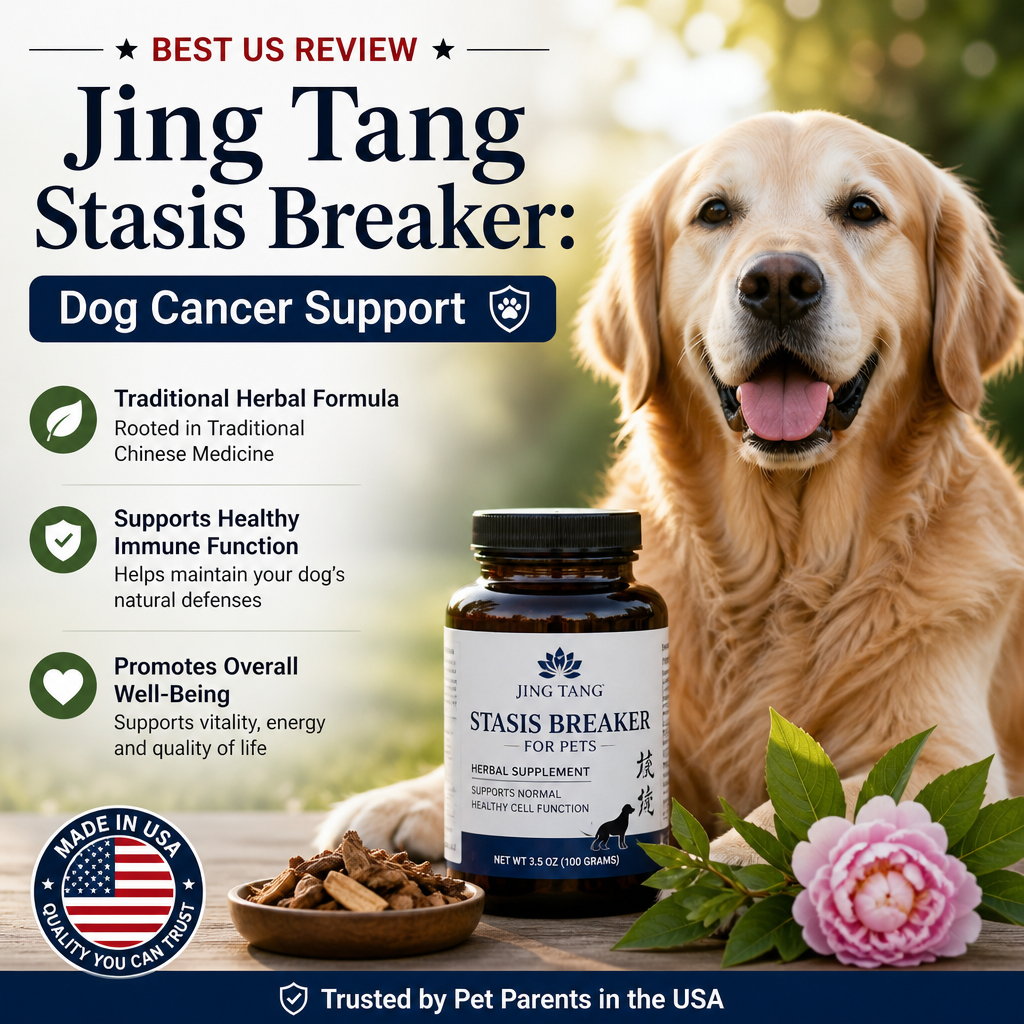
Jing Tang Stasis Breaker é um suplemento herbal veterinário associado à abordagem da medicina tradicional chinesa para o cuidado animal. Nesse contexto, “estase” geralmente se refere à circulação prejudicada ou ao acúmulo de energia e sangue que pode contribuir para desconforto, inchaço, massas ou outros padrões clínicos. A fórmula é comumente discutida em relação ao suporte à circulação e ao manejo tradicional de condições envolvendo massas ou sangue estagnado.
Os ingredientes exatos e as proporções podem variar dependendo do fabricante e da versão do produto. Por causa disso, os proprietários devem ler o rótulo atual com atenção, em vez de confiar em descrições encontradas em sites mais antigos ou listagens de revendedores. Um profissional veterinário qualificado familiarizado com medicina herbal pode explicar como os ingredientes individuais podem afetar um cão em particular.
Também é essencial entender que uma fórmula tradicional não é a mesma coisa que um medicamento de quimioterapia convencional, terapia de radiação, procedimento cirúrgico ou medicamento baseado em evidências. Jing Tang Stasis Breaker não deve ser apresentado como uma cura para o câncer. Em vez disso, pode ser considerado por alguns veterinários como um componente dos cuidados de suporte ou integrativos.
Para uma perspectiva clínica mais ampla sobre medicina veterinária integrativa, os proprietários de animais de estimação também podem revisar os recursos educacionais na página de medicina veterinária integrativa da American Veterinary Medical Association.
Proprietários que são novos em fórmulas herbais muitas vezes querem uma explicação simples de como elas diferem de medicamentos prescritos. A principal diferença é que misturas herbais são tipicamente usadas para apoiar o equilíbrio geral do corpo, em vez de direcionar um único caminho de doença da mesma forma que um medicamento contra o câncer poderia. Isso não as torna ineficazes ou sem sentido, mas significa que precisam ser avaliadas em contexto. Uma fórmula pode ser apropriada para um paciente e inadequada para outro, dependendo do tipo de tumor, medicamentos atuais e a condição geral do cão.
Outro ponto importante é que os produtos herbais veterinários são geralmente selecionados como parte de um plano de cuidados individualizado. Dois cães com o mesmo diagnóstico podem receber recomendações muito diferentes porque um tem apetite ruim, outro tem preocupações hepáticas e outro está se recuperando de uma cirurgia. A fórmula em si não substitui o julgamento clínico. Funciona melhor quando a avaliação do veterinário orienta o plano e o produto é usado com objetivos claros.
Jing Tang Stasis Breaker Suporte ao Câncer em Cães: O Que os Proprietários Devem Saber
A frase Jing Tang Stasis Breaker suporte para câncer em cães frequentemente aparece em buscas por proprietários que procuram opções suaves ou complementares após um diagnóstico de câncer. Na prática, o cuidado de suporte pode se concentrar em conforto, apetite, mobilidade, circulação, digestão e qualidade de vida geral. Esses objetivos são significativos, mas devem ser considerados juntamente com um diagnóstico confirmado e um plano de tratamento claramente definido.
O câncer não é uma única doença. Um caso de linfoma, tumor de mastócito, osteossarcoma, hemangiossarcoma ou sarcoma de tecidos moles pode exigir estratégias de tratamento muito diferentes. A idade do cão, peso, função orgânica, localização do tumor, estágio, medicamentos e resultados laboratoriais influenciam se um produto herbal é apropriado.
Alguns proprietários podem considerar uma fórmula herbal enquanto seu cão está passando por cirurgia, quimioterapia, radiação, imunoterapia ou cuidados paliativos. Isso torna a comunicação especialmente importante. Certas ervas podem influenciar sangramentos, pressão arterial, metabolismo hepático, atividade imunológica ou os efeitos de medicamentos prescritos. Um veterinário pode ajudar a determinar se adicionar um suplemento cria risco desnecessário ou se o monitoramento deve ser aumentado.
Quando os proprietários estão tentando classificar opções, uma pergunta prática é se o produto apoia o conforto sem complicar o tratamento. É por isso que a discussão com a equipe de oncologia é tão importante: a mesma fórmula pode ser razoável para um cão e inadequada para outro.
Também ajuda a estabelecer expectativas desde o início. O cuidado de suporte nem sempre significa mudança visível e dramática. Às vezes, o benefício é sutil, como energia mais estável, menos inquietação, movimento mais fácil após uma soneca ou melhor tolerância às refeições. Esses pequenos ganhos podem ser importantes tanto para o cão quanto para a família. Ainda assim, eles devem ser monitorados honestamente para que os proprietários possam dizer se o plano está realmente ajudando.
Jing Tang Stasis Breaker pode ser discutido em casos onde o objetivo do tratamento é apoiar o conforto enquanto os cuidados padrão continuam. Isso torna a fórmula parte de uma estratégia integrada em vez de uma solução única. Proprietários que abordam o suplemento com essa mentalidade geralmente estão melhor preparados para avaliar se vale a pena continuar.
Razões Potenciais Para Que Seja Considerado
Praticantes tradicionais de ervas veterinárias podem considerar fórmulas orientadas para a circulação quando um cão apresenta um padrão que inclui uma massa, inchaço localizado, dor, mobilidade reduzida ou outros sinais interpretados pela medicina chinesa. O objetivo geralmente não é substituir os cuidados oncológicos padrão, mas apoiar o conforto e a função do animal.
Os proprietários também costumam procurar suplementos que possam ajudar a manter a qualidade de vida durante um diagnóstico difícil. No entanto, as alegações do produto devem ser avaliadas com cuidado. Um suplemento comercializado para “suporte a tumores” ou “movimento sanguíneo” não demonstra automaticamente uma capacidade de reduzir tumores, prolongar a sobrevivência ou prevenir recorrências.
Uma revisão razoável deve, portanto, focar em expectativas realistas. O maior valor potencial pode estar em cuidados de suporte individualizados, particularmente quando um veterinário monitora a resposta do cão e ajusta o plano geral. As evidências para fórmulas herbais específicas em câncer canino permanecem limitadas em comparação com as evidências disponíveis para tratamentos oncológicos veterinários estabelecidos.
Na prática, isso significa que a fórmula pode ser discutida como uma parte de um plano maior que poderia incluir controle da dor, mudanças na dieta, suporte à hidratação, medicação anti-náusea, assistência à mobilidade e reavaliações regulares. O cuidado de suporte pode ser significativo mesmo quando não altera o câncer subjacente em si.
Alguns proprietários são atraídos pelo Jing Tang Stasis Breaker porque querem uma opção que pareça menos agressiva do que a terapia oncológica convencional. Esse desejo é compreensível. Muitas famílias estão procurando maneiras de ajudar seu cão a se sentir melhor sem adicionar muito estresse. O desafio é que “suave” nunca deve ser assumido apenas porque um produto é herbal. Suave para um cão pode ainda ser muito estimulante, muito secante ou mal ajustado à condição de outro cão.
Outra razão pela qual pode ser considerado é que certos veterinários integram a medicina herbal chinesa em um gerenciamento de sintomas mais amplo. Nesses contextos, a fórmula pode ser selecionada porque o padrão clínico sugere que o suporte à circulação poderia ser útil. Esse tipo de raciocínio é mais sutil do que simplesmente dizer que o cão tem câncer e, portanto, precisa de um suplemento. Depende de toda a imagem do paciente.
Os proprietários também devem lembrar que o produto pode ser usado de maneira diferente dependendo da fase do tratamento. Um cão se recuperando de cirurgia pode ter necessidades diferentes de um cão em cuidados paliativos ou um cão recebendo quimioterapia. Uma fórmula que parece razoável durante uma fase pode precisar ser pausada ou ajustada durante outra. Esta é mais uma razão pela qual o produto deve ser discutido como parte de um plano de tratamento em andamento, não como uma compra única.
Segurança, Efeitos Colaterais e Interações Medicamentosas
Produtos naturais podem causar efeitos colaterais. Dependendo da fórmula e do estado de saúde do cão, as preocupações possíveis podem incluir desconforto digestivo, vômitos, diarreia, apetite reduzido, reações alérgicas ou mudanças no risco de sangramento. Um cão com doença hepática ou renal pode processar ingredientes herbais de maneira diferente de um cão saudável.
Cuidado extra é apropriado quando um cão toma anticoagulantes, anti-inflamatórios, corticosteroides, agentes de quimioterapia, medicamentos para convulsões, medicamentos para o coração ou outros medicamentos com margens de segurança estreitas. Cirurgias e procedimentos invasivos também merecem atenção especial porque alguns suplementos podem afetar a coagulação ou a recuperação.
Pare o suplemento e entre em contato com um veterinário se o cachorro desenvolver vômitos repetidos, diarreia severa, hematomas incomuns, sangramentos nasais, gengivas pálidas, fraqueza, colapso, dor piorando, dificuldade para respirar ou uma queda repentina no apetite. Esses sinais nunca devem ser desconsiderados como um ajuste normal a um produto herbal.
Os proprietários também devem evitar combinar múltiplos suplementos com ingredientes sobrepostos, a menos que um veterinário tenha revisado a lista completa. “Mais natural” nem sempre significa mais seguro, especialmente para cães que já lidam com estresse relacionado ao câncer, apetite reduzido ou medicamentos concomitantes.
Também há uma questão prática de segurança relacionada à consistência. Dois produtos que parecem semelhantes podem não ser idênticos em força ou qualidade. Se um cachorro está respondendo bem a um lote e então muda repentinamente quando uma nova garrafa é aberta, a razão pode ser o próprio produto em vez da doença. Manter o rótulo, número do lote e detalhes da compra pode ser útil se o veterinário precisar investigar uma reação.
Quando um cachorro já está lidando com um diagnóstico de câncer, até mesmo um leve desconforto estomacal pode ter consequências desproporcionais. A redução da ingestão de alimentos pode levar à perda de peso, menor energia e pior tolerância ao tratamento. É por isso que qualquer novo suplemento deve ser introduzido com cautela e monitorado de perto. Os proprietários não devem esperar por um problema maior antes de perguntar se um efeito colateral pode estar relacionado.
Em muitos casos, a abordagem mais segura é começar apenas quando a equipe veterinária tiver revisado a lista completa de medicamentos e estabelecido quais mudanças observar. Um suplemento não precisa ser perigoso para criar problemas se for usado sem coordenação. A segurança muitas vezes é menos sobre o nome da fórmula e mais sobre o tempo, dose e a condição geral do cachorro.
Escolhendo Jing Tang Stasis Breaker nos Estados Unidos
Para os proprietários que pesquisam fornecedores do Jing Tang Stasis Breaker nos Estados Unidos, comprar de um canal veterinário respeitável é mais seguro do que comprar de um vendedor desconhecido do mercado. Procure por rotulagem clara, informações do lote, datas de validade, instruções de armazenamento e detalhes de contato do fabricante ou distribuidor. Os produtos devem chegar selados e não devem ter um odor incomum, embalagem danificada ou aparência inconsistente.
O mercado de suplementos dos Estados Unidos não opera exatamente como o mercado de medicamentos prescritos. Produtos herbais podem não passar pelo mesmo processo de aprovação pré-mercado exigido para medicamentos convencionais. Isso significa que os proprietários devem ser cautelosos com promessas dramáticas, depoimentos anônimos e alegações de que um produto pode curar câncer ou substituir o tratamento veterinário.
Uma clínica veterinária que trabalha com herbalistas veterinários certificados pode ser capaz de ajudar a verificar o produto, avaliar sua adequação e estabelecer um plano de monitoramento. Quando possível, forneça ao veterinário uma lista completa de suplementos, medicamentos, petiscos e alimentos que o cachorro recebe.
Para informações adicionais sobre o uso seguro de suplementos e qualidade do produto, o Centro Nacional de Saúde Complementar e Integrativa ervas em um recurso de visão geral é uma referência geral útil para leitores que desejam entender como os produtos herbais são avaliados.
Em um contexto de suporte ao câncer, é sábio pensar na origem como parte da segurança do tratamento. Fornecimento confiável, fabricação rastreável e rotulagem transparente são importantes porque mesmo uma fórmula bem escolhida pode se tornar um problema se o produto em si for inconsistente.
Os proprietários também devem estar cientes de que fazer um pedido de um fornecedor é apenas uma parte da decisão. Um produto pode ser autêntico e ainda assim não ser adequado para o cão. Por essa razão, a questão não é meramente se o suplemento está disponível nos Estados Unidos, mas se é apropriado para o paciente individual. A orientação do veterinário deve vir antes da conveniência ou do preço apenas.
Ao comparar fornecedores, procure uma política de devolução clara, suporte ao cliente acessível e informações sobre as condições de armazenamento durante o envio. Calor e umidade podem afetar produtos herbais, particularmente se o pacote ficar em uma caixa de correio ou caminhão de entrega por um longo tempo. Um bom manuseio é importante porque o produto deve permanecer o mais estável e previsível possível desde a compra até a administração.
Como Discutir Isso Com Seu Veterinário
Antes de iniciar o Jing Tang Stasis Breaker, traga o rótulo do produto e explique por que você está considerando isso. Pergunte se o diagnóstico do cão, exames de sangue, medicamentos atuais e procedimentos futuros criam alguma contraindicação. Também pode ser útil discutir metas mensuráveis, como apetite melhorado, movimento mais fácil, maior conforto ou digestão mais estável.
O monitoramento pode incluir testes de sangue periódicos, verificações de peso, registros de apetite e observação dos níveis de dor ou atividade. Manter um registro diário simples pode ajudar a identificar se uma mudança está associada ao suplemento, a outro tratamento ou à progressão natural da doença.
Mais importante, não atrase testes diagnósticos ou tratamento comprovado para câncer enquanto espera para ver se um produto herbal funciona. A avaliação precoce pode afetar as opções de tratamento disponíveis e o prognóstico do cão.
Se o seu veterinário não estiver familiarizado com a fórmula, pergunte se ele se sente confortável em coordenar com um profissional que tenha treinamento em medicina herbal veterinária. A colaboração pode reduzir a confusão, prevenir duplicações e facilitar o reconhecimento se o plano está ajudando.
Também pode ajudar abordar a conversa com um resumo escrito. Inclua o diagnóstico, medicamentos atuais, suplementos, mudanças de apetite, tendências de peso e quaisquer exames de sangue recentes, se você os tiver. Isso torna a consulta mais eficiente e fornece ao veterinário as informações necessárias para pensar sobre os riscos. Uma discussão bem organizada é especialmente valiosa quando o tratamento do câncer já é complexo.
Os proprietários devem se sentir à vontade para fazer perguntas diretas, como se a fórmula poderia interferir na anestesia, se deve ser interrompida antes de exames de imagem ou cirurgia, e se a dose deve mudar se o apetite cair. Estes não são detalhes menores. Eles são o tipo de perguntas que ajudam a transformar uma ideia vaga de suplemento em um plano mais seguro e prático.
Perguntas a Fazer Antes de Começar
- Este produto conflita com os medicamentos ou procedimentos atuais do meu cachorro?
- Quais mudanças devo observar em apetite, qualidade das fezes, mobilidade ou energia?
- Com que rapidez devo esperar algum benefício, se ocorrer?
- Quais efeitos colaterais significariam que eu deveria parar o suplemento imediatamente?
- Como mediremos se o plano vale a pena?
Como é um Plano Realista para o Proprietário
Um plano realista começa com a compreensão de que o Jing Tang Stasis Breaker não é um substituto para o cuidado oncológico. Pode ser parte de uma estratégia de suporte, mas não deve se tornar uma distração das necessidades médicas primárias do cão. Os donos mais eficazes geralmente se concentram em três coisas ao mesmo tempo: conforto, segurança e comunicação.
Conforto significa observar mudanças na movimentação, sono, apetite, hidratação e nível de estresse. Se o cão estiver mais disposto a comer, descansar calmamente ou se mover com menos hesitação, essa informação é útil. Segurança significa verificar efeitos colaterais e ser cauteloso com outros medicamentos. Comunicação significa atualizar o veterinário prontamente quando algo muda, especialmente se o cão já estiver frágil.
Os donos frequentemente acham útil pensar em blocos de tempo curtos em vez de tentar julgar tudo após apenas um ou dois dias. Produtos herbais podem não produzir mudanças imediatas, e um curto período de observação pode facilitar a identificação se a fórmula está ajudando de maneira significativa. Ao mesmo tempo, pontos de parada claros são importantes se o cão piorar ou surgir uma preocupação.
Também vale a pena considerar o lado emocional do cuidado. As famílias querem fazer algo útil, e escolher um suplemento pode parecer uma ação. Esse sentimento é compreensível. Ainda assim, a melhor ação é aquela que é informada, medida e coordenada com a equipe veterinária. Cuidado responsável não é sobre fazer o máximo; é sobre fazer o que melhor serve ao cão.
Quando o suplemento faz parte de um plano maior, os donos podem vê-lo listado ao lado de medicamentos para dor, uma dieta prescrita, suporte anti-náusea e exames de reavaliação. Esse tipo de estrutura geralmente é mais útil do que tentar fazer a fórmula herbal fazer tudo sozinha. Isso mantém as expectativas realistas e protege o cão de riscos desnecessários.
Para muitas famílias, o principal benefício de uma abordagem cuidadosa é a paz de espírito. Elas sabem que o produto foi revisado, a fonte foi verificada e os objetivos foram definidos com antecedência. Isso por si só pode reduzir a incerteza durante um momento já difícil.
Avaliação Final
Uma revisão equilibrada do Jing Tang Stasis Breaker deve descrever a fórmula como uma opção complementar em vez de um tratamento oncológico independente. Pode ter um lugar em um plano de cuidado integrativo individualizado, particularmente quando o veterinário primário e um praticante veterinário herbal qualificado coordenam de perto. No entanto, as evidências para benefícios específicos em câncer não são fortes o suficiente para apoiar alegações de cura, e a segurança depende do diagnóstico do cão, medicamentos, saúde dos órgãos e cronograma de tratamento.
Para famílias que buscam suporte para câncer em cães com Jing Tang Stasis Breaker nos Estados Unidos, a melhor abordagem é a obtenção cuidadosa, expectativas realistas, orientação profissional e monitoramento regular. O objetivo central deve permanecer o conforto, segurança e qualidade de vida do cão enquanto o tratamento convencional apropriado continua.
Usada de forma ponderada, a fórmula pode se encaixar em um plano de suporte mais amplo. Usada sem orientação, pode criar riscos evitáveis. É por isso que a escolha mais responsável é tratá-la como um ponto de discussão para sua equipe veterinária, não como um substituto para o cuidado médico.
Se você quer a conclusão mais prática, mantenha simples: confirme o diagnóstico, revise a lista completa de medicamentos, verifique a fonte e pergunte ao seu veterinário se o suplemento se encaixa na fase atual de tratamento do cão.
Para os proprietários de cães que continuam pesquisando Jing Tang Stasis Breaker após uma visita à oncologia, o melhor próximo passo geralmente não é outra página de vendas. É uma conversa com o clínico que conhece a história do cão. É aí que a fórmula pode ser avaliada de forma justa—com base no paciente, no plano de tratamento e nos objetivos reais de cuidado.