
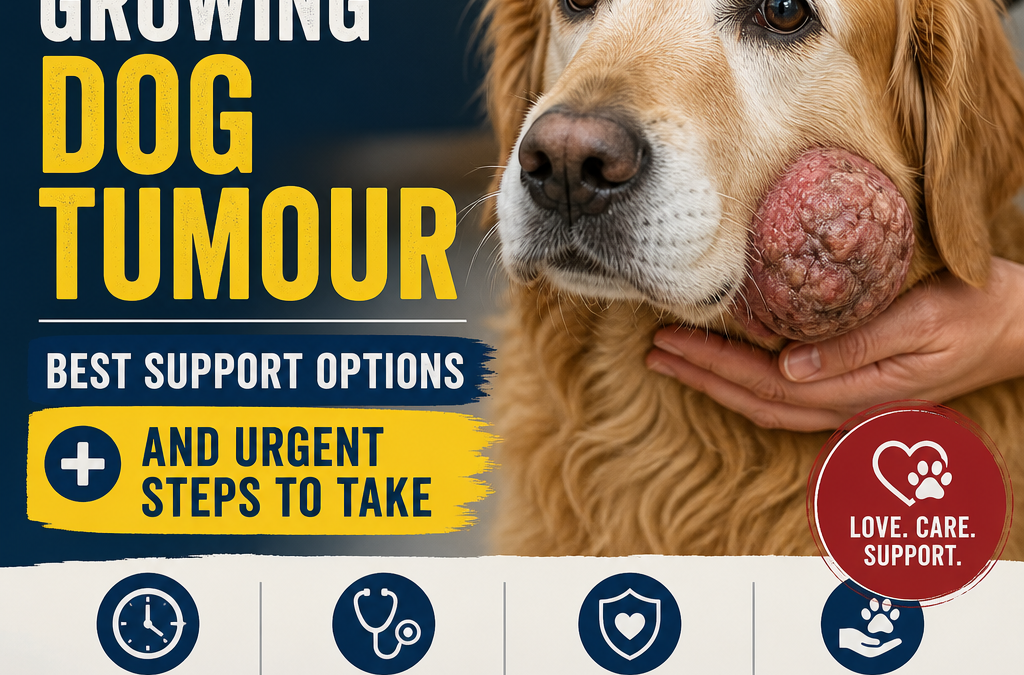
O tumor canino que cresce rapidamente pode ser assustador de descobrir, especialmente quando um nódulo parece mudar visivelmente ao longo de dias ou semanas. Embora algumas massas de crescimento rápido sejam benignas, o aumento rápido também pode indicar infecção, inflamação, sangramento ou um câncer agressivo. A resposta mais segura é organizar uma avaliação veterinária prontamente, monitorar mudanças cuidadosamente e focar no suporte prático ao tumor canino enquanto um diagnóstico está sendo estabelecido.
Índice
- Por que um tumor canino que cresce rapidamente precisa de atenção
- O que o veterinário pode fazer
- Compreendendo o suporte ao tumor canino durante o diagnóstico
- Tumor canino crescendo rapidamente: etapas de suporte chave enquanto você espera pelos resultados
- Apoio ao conforto e bem-estar diário
- Opções de tratamento para uma massa de crescimento rápido
- Tomando decisões com base na qualidade de vida
Por que um tumor canino que cresce rapidamente precisa de atenção
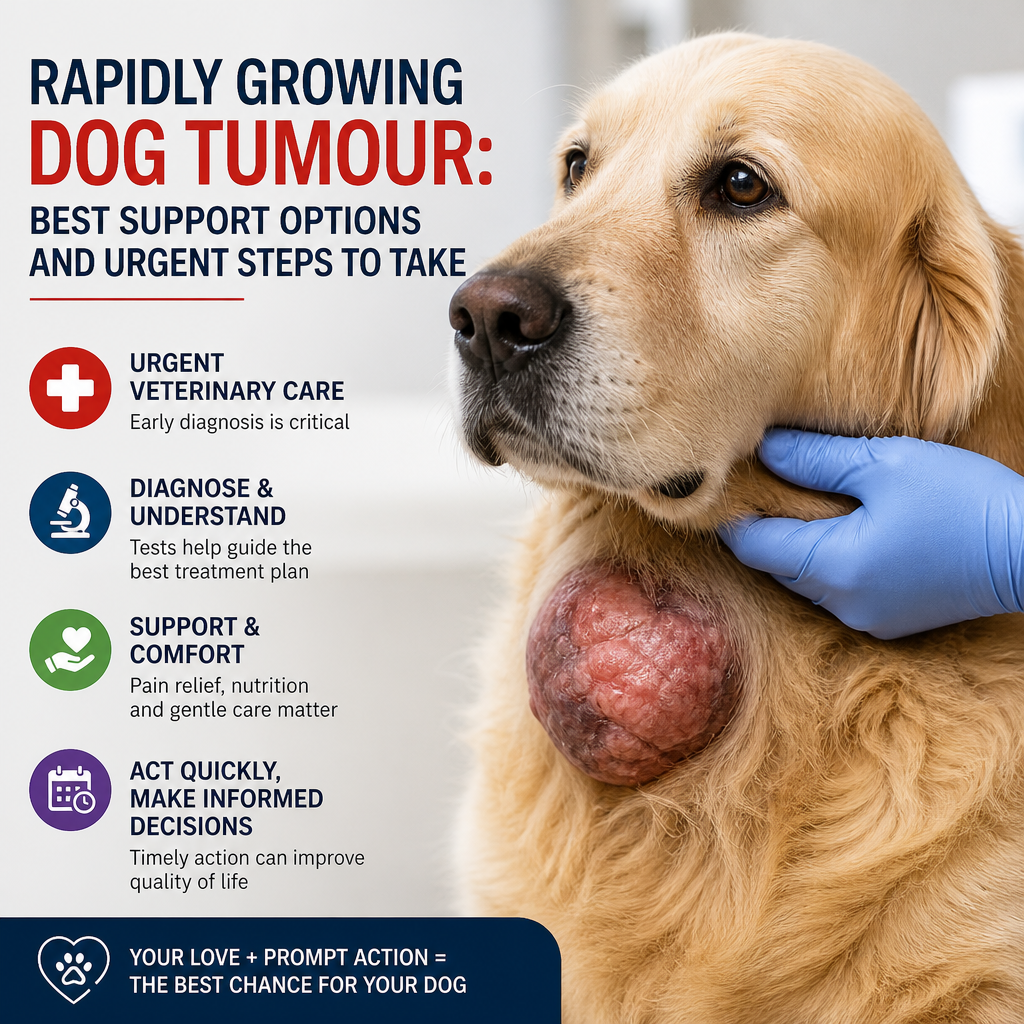
Um nódulo que cresce rapidamente nunca deve ser avaliado apenas pela aparência. Tumores podem se desenvolver na pele, tecido abaixo da pele, glândulas mamárias, boca, membros ou órgãos internos, e diferentes massas podem parecer muito semelhantes do lado de fora. Alguns são crescimentos gordurosos inofensivos, enquanto outros podem invadir o tecido próximo ou se espalhar para outras partes do corpo.
O crescimento rápido pode ocorrer porque as células tumorais estão se multiplicando rapidamente, mas também pode resultar de inchaço, acúmulo de fluidos, infecção ou sangramento dentro de uma massa. Um nódulo previamente estável que de repente se torna maior, vermelho, quente, doloroso ou ulcerado requer atenção especial. Um tumor canino que cresce rapidamente pode mudar o cronograma de tratamento, então é melhor agir cedo do que esperar para ver se ele se estabiliza por conta própria.
Para os proprietários que já estão comparando opções, melhores suplementos para cães com câncer pode fazer parte de uma discussão mais ampla com a equipe veterinária, mas suplementos nunca devem substituir um diagnóstico rápido.
Entre em contato com seu veterinário o mais rápido possível se você notar:
- Um nódulo aumentando de tamanho em um curto período
- Sangramento, secreção, crostas ou um cheiro desagradável
- Vermelhidão, calor, inchaço ou dor óbvia
- Mudanças no apetite, energia, movimento ou comportamento
- Dificuldade para respirar, engolir, urinar ou evacuar
- Vômito, fraqueza, colapso ou gengivas pálidas
- Uma massa que interfere na caminhada ou nas atividades diárias normais
Sinais de emergência, como colapso, sangramento severo, dificuldade para respirar, fraqueza extrema ou dor incontrolável, requerem cuidados veterinários imediatos em vez de uma consulta de rotina.
Em termos práticos, os proprietários de cães costumam notar a mudança primeiro porque uma coleira parece mais apertada, um membro parece desajeitado ou um animal de estimação começa a lamber um ponto mais do que o habitual. Esse padrão não diz o que é a massa, mas indica que o corpo está reagindo a algo que merece atenção.
O que o veterinário pode fazer
O primeiro passo geralmente é um exame físico. Seu veterinário avaliará a localização, tamanho, firmeza, mobilidade, aparência da superfície e relação com os tecidos circundantes da massa. Eles também podem verificar os linfonodos e procurar sinais de que o problema está afetando o resto do corpo.
Uma aspiração com agulha fina é frequentemente recomendada. Durante este procedimento, células são coletadas do nódulo com uma agulha pequena e examinadas sob um microscópio. Às vezes, pode identificar o tipo de massa, embora alguns tumores exijam uma biópsia para um diagnóstico definitivo.
Testes adicionais podem incluir:
- Testes de sangue e urina para avaliar a saúde geral
- Raios-X ou ultrassom para verificar envolvimento interno
- Imagens avançadas, como TC ou RM, para planejamento cirúrgico
- Uma biópsia de tecido para determinar o tipo e grau do tumor
- Amostragem de linfonodos para verificar a disseminação
Não esprema, perfure, massageie ou tente remover o nódulo em casa. Essas ações podem causar sangramento, infecção, dor e danos aos tecidos. Elas também podem dificultar a exame ou cirurgia posteriores.
Para orientações clínicas gerais sobre avaliação de câncer e testes de acompanhamento, o Manual Veterinário Merck é uma referência veterinária útil.
Pode ajudar anotar alguns detalhes práticos antes da consulta. Quando o nódulo apareceu pela primeira vez? O tamanho mudou diariamente, semanalmente ou apenas após atividade? A pele está intacta? Seu cachorro reage quando é tocado? Essas anotações podem ajudar o veterinário a decidir se o problema é provavelmente inflamatório, infeccioso ou neoplásico.
Compreendendo o suporte ao tumor canino durante o diagnóstico
O suporte para tumores em cães começa com a proteção do conforto e a prevenção da irritação da massa. Se a área estiver exposta a lamparinas ou arranhões, seu veterinário pode recomendar um colar elizabetano, um traje de recuperação ou um curativo protetor. Qualquer curativo deve ser aplicado corretamente e verificado regularmente, pois a umidade e a pressão podem agravar os danos à pele.
Mantenha a área limpa e seca, mas evite usar desinfetantes domésticos, óleos essenciais, cremes ou medicamentos humanos, a menos que seu veterinário os aprove especificamente. Alguns produtos comuns são tóxicos para cães ou podem interferir na cicatrização.
Registre o tamanho e a aparência da massa. Um simples registro pode incluir:
- Data e medidas em centímetros
- Fotografias tiradas do mesmo ângulo
- Mudanças na cor, textura ou secreção
- Sinais de dor ou sensibilidade aumentada
- Apetite, ingestão de água, energia e mobilidade
- Quaisquer medicamentos ou tratamentos administrados
Essas informações ajudam o veterinário a identificar quão rapidamente a massa está mudando e se o tratamento está tendo efeito.
Se você quiser comparar abordagens de suporte prático, este guia para suplementos para câncer em cães pode ajudá-lo a preparar perguntas para o seu veterinário.
Um bom suporte também significa limitar a tensão na área afetada. Use pisos antiderrapantes se seu cachorro estiver instável, mantenha a cama macia e facilite o acesso à comida e água. Se o nódulo estiver em um local onde um arnês ou colar esfrega, mude a forma como você passeia com seu cachorro até que a área seja avaliada.
Tumor canino crescendo rapidamente: etapas de suporte chave enquanto você espera pelos resultados
Quando um tumor canino crescendo rapidamente está sendo investigado, o suporte mais útil é a observação calma e consistente. Tente manter a rotina do seu cachorro o mais normal possível, enquanto reduz qualquer coisa que possa irritar a massa. Caminhadas curtas e silenciosas, cama macia e supervisão próxima podem tornar um período de espera difícil mais gerenciável.
Se o nódulo mudar de forma, sangrar ou se tornar mais doloroso, entre em contato com a clínica em vez de esperar por uma reavaliação agendada. Um tumor canino crescendo rapidamente pode precisar de um acompanhamento mais rápido se a massa estiver interferindo na alimentação, na eliminação, no sono ou no movimento.
Também pode ajudar anotar exatamente quando o nódulo mudou pela primeira vez. Em muitos casos, os proprietários notam que o tumor canino crescendo rapidamente não é apenas maior, mas também mais firme, mais quente ou mais sensível ao toque. Esses detalhes podem ajudar seu veterinário a decidir se exames de imagem urgentes, amostragem ou encaminhamento são necessários.
Verificações práticas do dia a dia em casa
Quando um tumor em um cachorro que cresce rapidamente está sendo monitorado, pequenas mudanças importam. Verifique seu cachorro no mesmo horário todos os dias para que você possa notar diferenças em tamanho, conforto, apetite ou respiração. Se a massa estiver sangrando, use um pano limpo e ligue para seu veterinário para obter instruções em vez de aplicar pressão por muito tempo ou tentar tratá-la você mesmo.
Manter um registro curto em casa pode tornar as consultas de acompanhamento mais produtivas. Anote se seu cachorro consegue se acomodar confortavelmente à noite, levantar-se sem dificuldade e completar rotinas normais, como ir ao banheiro e passeios curtos.
Também ajuda observar mudanças que podem parecer não relacionadas a princípio. Um cachorro que está comendo menos, se escondendo mais, ofegante em repouso ou evitando escadas pode estar desconfortável, mesmo que o nódulo em si não tenha mudado dramaticamente. Em casos onde um tumor em um cachorro que cresce rapidamente está afetando a boca, garganta, peito, abdômen ou membros traseiros, mudanças de comportamento podem aparecer antes que o diagnóstico subjacente seja confirmado.
Cuidados de suporte durante o período de espera
Enquanto você espera pelos resultados dos testes, concentre-se em reduzir o estresse. Evite brincadeiras bruscas, longas viagens de carro, a menos que necessário, e exposição a outros animais de estimação que possam esbarrar na área. Se seu cachorro estiver ansioso, converse com seu veterinário sobre maneiras seguras de mantê-lo calmo.
As refeições devem permanecer familiares, a menos que sua equipe veterinária sugira o contrário. Mudanças súbitas na dieta podem perturbar o estômago em um momento em que seu cachorro já está sob pressão. Água fresca deve estar sempre disponível, e você deve monitorar se seu cachorro está bebendo normalmente.
Se seu cachorro receber medicamento prescrito, siga as instruções de dosagem cuidadosamente. Nunca substitua analgésicos humanos ou prescrições antigas de outro animal de estimação. Um tumor em um cachorro que cresce rapidamente pode ser doloroso, mas o medicamento errado pode criar um segundo problema médico.
Tumor em cachorro que cresce rapidamente: quais mudanças importam mais
Nem toda mudança significa o pior cenário, mas alguns padrões merecem acompanhamento mais rápido. Uma massa que dobra de tamanho em um curto período, se torna ulcerada ou começa a drenar líquido deve ser reavaliada prontamente. Quando um tumor canino crescendo rapidamente se torna mais duro, mais fixo no lugar ou mais doloroso, isso pode sugerir envolvimento de tecidos mais profundos.
Outros sinais de alerta incluem perda de apetite, febre, vômito, tosse, respiração dificultada, dificuldade para urinar ou mudanças nas fezes. Esses podem indicar que o tumor está afetando o corpo de forma mais ampla ou que outra doença está presente ao lado do nódulo.
Também vale a pena considerar se a localização está limitando a função normal. Uma massa perto de uma articulação pode mudar a forma como um cachorro anda; uma na boca pode dificultar a mastigação; uma perto da parte traseira pode interferir na toalete. Em cada uma dessas situações, o suporte prático para tumores em cães não é apenas sobre conforto, mas também sobre preservar a função diária enquanto seu veterinário descobre a causa.
Apoio ao conforto e bem-estar diário
Enquanto os testes e o tratamento estão em andamento, mantenha uma rotina previsível. Os cães costumam lidar melhor quando as refeições, o descanso, os passeios e a medicação são dados em horários consistentes. Ofereça uma cama tranquila e confortável que seja fácil de acessar, especialmente se a massa afetar a mobilidade ou seu cachorro estiver se recuperando de um procedimento.
A nutrição também é importante. Forneça uma dieta completa e balanceada e monitore a ingestão de alimentos e água. Evite fazer mudanças dietéticas repentinas ou dar suplementos não comprovados. Alguns suplementos podem interagir com quimioterapia, alívio da dor, anestesia ou outros tratamentos prescritos.
O manejo da dor deve sempre ser orientado por um veterinário. Nunca administre analgésicos humanos como ibuprofeno, naproxeno ou paracetamol, a menos que especificamente instruído, pois esses medicamentos podem causar envenenamento sério em cães. O alívio da dor veterinário pode incluir medicamentos anti-inflamatórios prescritos, outros analgésicos ou medicamentos de suporte, dependendo do diagnóstico e da saúde do seu cachorro.
Atividades leves podem ajudar a manter a força, mas o exercício deve ser ajustado à condição do seu cachorro. Evite brincadeiras bruscas, saltos ou atividades que esfreguem contra a massa. Se seu cachorro ficar cansado, dolorido ou relutante em se mover, permita descanso e entre em contato com a equipe veterinária para orientação.
Muitos proprietários também se beneficiam ao estabelecer um plano simples de conforto em casa. Isso pode incluir roupas de cama laváveis, uma área de descanso tranquila, fácil acesso à água e uma anotação de quem está dando medicamentos e quando. O suporte prático muitas vezes reduz o estresse tanto para o cachorro quanto para a família enquanto o plano médico está sendo decidido.
O que observar entre as consultas
A tumor canino crescendo rapidamente também pode afetar o bem-estar geral antes que a causa subjacente seja conhecida. Fique atento a mudanças na respiração, postura, apetite, sono e interesse na vida familiar. Mesmo sinais sutis, como se esconder, ofegar em repouso ou relutância em subir escadas, podem indicar desconforto.
Pergunte a si mesmo se seu cachorro ainda tem energia suficiente para as rotinas que normalmente gosta. Se a resposta estiver mudando rapidamente, essa é uma informação útil para compartilhar com seu veterinário. A frase tumor canino crescendo rapidamente muitas vezes descreve a massa visível, mas a preocupação maior é como a condição está afetando o cachorro como um todo.
Os proprietários às vezes subestimam o valor de fotografar a massa do mesmo ângulo a cada dia. Pequenos registros visuais podem facilitar a discussão sobre o crescimento na clínica e podem ajudar o veterinário a avaliar se a massa está se expandindo uniformemente ou mudando apenas em uma área.
Opções de tratamento para uma massa de crescimento rápido
O tratamento depende do tipo, tamanho, localização, grau do tumor e se ele se espalhou. A cirurgia pode ser recomendada quando a massa pode ser removida com segurança. Remover um tumor com uma margem apropriada de tecido circundante pode, às vezes, proporcionar a melhor chance de controle.
Outros tratamentos podem incluir quimioterapia, radioterapia, medicação direcionada, imunoterapia ou uma combinação de abordagens. Em alguns casos, o tratamento visa eliminar a doença; em outros, tem como objetivo retardar a progressão e preservar o conforto.
Quando o tratamento curativo não é possível ou colocaria muita pressão sobre o cão, os cuidados paliativos podem ser a opção mais compassiva. Isso pode envolver controle da dor, cuidados com feridas, alívio da náusea, suporte ao apetite, assistência à mobilidade e monitoramento regular da qualidade de vida.
Proprietários que consideram diferentes caminhos de tratamento frequentemente discutem se produtos de suporte podem se encaixar ao lado dos cuidados veterinários. Essa conversa é especialmente importante quando um tumor em cães que cresce rapidamente pode exigir cirurgia, quimioterapia ou tratamento paliativo em um curto espaço de tempo.
Se o diagnóstico resultar em um tipo específico de câncer, seu veterinário pode explicar como o tumor geralmente se comporta, quais são os próximos passos prováveis e quanto tempo cada decisão levará. Por exemplo, algumas massas precisam de cirurgia rapidamente, enquanto outras são melhor gerenciadas por meio de monitoramento, alívio de sintomas ou encaminhamento para uma equipe de oncologia. O plano exato depende do cão individual, não apenas do tamanho da massa.
Perguntas a fazer antes de escolher um plano
Pergunte ao seu veterinário quais testes são mais urgentes, se a massa é provavelmente removível e quais efeitos colaterais podem seguir cada opção. Também é útil perguntar com que rapidez o tratamento deve começar, se o alívio da dor é apropriado agora e quais mudanças devem desencadear uma nova visita.
Se o seu cão tiver um diagnóstico específico, como doença da glândula anal, esta página sobre carcinoma de saco anal em cães explica outra condição que pode se apresentar com uma massa crescente perto da parte traseira.
Você também pode querer perguntar se o encaminhamento vale a pena considerar se a massa estiver em uma localização difícil ou próxima a estruturas vitais. Essa pergunta é importante porque um tumor em cães que cresce rapidamente pode, às vezes, ser tratado com mais segurança por um especialista que realiza esses procedimentos regularmente.
Opções de suporte para discutir com seu veterinário
O cuidado de suporte é mais útil quando é adaptado ao diagnóstico e usado ao lado do plano de tratamento principal. Dependendo do caso, seu veterinário pode discutir controle da dor, medicação anti-náusea, estimulantes do apetite, manejo de feridas, restrição de atividade ou ajustes na dieta do seu cão.
Alguns proprietários também perguntam sobre suplementos, suporte herbal ou nutracêuticos. Essas conversas devem ser tratadas com cuidado. Um produto que parece inofensivo ainda pode afetar o risco de sangramento, a função hepática, a anestesia ou o metabolismo de medicamentos. É por isso que um tumor em cães que cresce rapidamente deve ser discutido com o veterinário antes que qualquer coisa nova seja adicionada em casa.
Onde apropriado, produtos de suporte podem ser considerados como parte de um plano mais amplo. Para proprietários comparando essas opções, páginas como Pyravet Immunity + Cancer Support for Dogs With EBC-46 alternativa: Opções Poderosas e Acessíveis podem ser usadas para preparar perguntas, não para substituir conselhos médicos.
Se o tumor afeta a alimentação, seu veterinário também pode sugerir maneiras de tornar a comida mais fácil de gerenciar. Se afeta a locomoção, eles podem aconselhar rampas, arnês de suporte ou uso limitado de escadas. Se a massa é dolorosa ou ulcerada, as instruções de cuidados com feridas se tornam especialmente importantes. Essas medidas práticas podem fazer uma grande diferença no conforto dia a dia enquanto um tumor em cachorro crescendo rápido está sendo tratado ou monitorado.
Entendendo quando um tumor em cachorro crescendo rápido precisa de cuidados de emergência
Algumas situações nunca devem esperar por uma consulta de rotina. Se um tumor canino crescendo rapidamente é acompanhado de colapso, sangramento severo, gengivas pálidas, dificuldade para respirar, vômitos repetidos ou fraqueza súbita, trate como uma emergência. Nesses momentos, estabilizar seu cachorro é mais importante do que identificar a causa exata imediatamente.
Ligue para a clínica antes de chegar, se possível, especialmente se a massa estiver sangrando ativamente ou seu cachorro parecer angustiado. Isso dá à equipe tempo para se preparar para triagem e alívio da dor. Um tumor canino crescendo rapidamente pode às vezes ser gerenciável com cuidados planejados, mas uma mudança súbita na respiração ou circulação precisa de atenção imediata.
Se a massa estiver na cabeça, pescoço, boca ou membros, cuidados de emergência também podem ser necessários se interferir na alimentação, movimentação ou caminhada. Mesmo uma massa que parece externa pode se tornar séria se começar a afetar a função normal ou causar desconforto significativo.
Nunca atrase cuidados urgentes porque a massa já está sendo monitorada. Mudanças rápidas podem significar que a situação mudou de acompanhamento de rotina para um problema sensível ao tempo, e a estabilização precoce pode tornar o tratamento posterior mais seguro.
Tomando decisões com base na qualidade de vida
Um diagnóstico pode parecer esmagador, mas decisões não precisam ser tomadas sem apoio. Pergunte à equipe veterinária sobre os resultados prováveis, riscos de tratamento, custos esperados, tempo de recuperação e como a condição pode progredir sem tratamento.
Acompanhe indicadores de qualidade de vida, como:
- Disposição para comer e beber
- Interesse na família e em atividades normais
- Capacidade de descansar confortavelmente
- Mobilidade e capacidade de ir ao banheiro normalmente
- Dor, respiração e ansiedade
- Número de dias bons em comparação com dias difíceis
Um tumor em cachorro crescendo rapidamente deve ser tratado como uma razão para avaliação profissional imediata, não como um sinal para entrar em pânico. A avaliação precoce pode esclarecer o que é a massa e identificar opções antes que cause complicações. Com cuidados veterinários oportunos, monitoramento cuidadoso e apoio compassivo ao tumor em cachorro, os proprietários podem ajudar a proteger tanto o conforto quanto o bem-estar durante o diagnóstico e tratamento.
Se você está reunindo leituras de fundo, este artigo sobre opções alternativas Ocoxin Pets também pode ajudá-lo a entender conversas sobre cuidados de suporte em um plano de câncer mais amplo.
Para mais contexto sobre sinais de alerta e tomada de decisões veterinárias, o American College of Veterinary Internal Medicine explica recursos de medicina veterinária especializada que podem apoiar discussões informadas com seu veterinário.
No final, a resposta mais útil a um tumor em cachorro crescendo rapidamente não é adivinhar, pressionar ou esperar muito tempo. Exame imediato, observação cuidadosa e apoio reflexivo dão ao seu cachorro a melhor chance de permanecer confortável enquanto a causa é confirmada e um plano é elaborado.