Baituxiao dog is an increasingly common search among families looking for options to support a dog diagnosed with cancer. However, when it comes to animal health, it is essential to separate reliable information from commercial promises, especially in products whose composition, authorization, or scientific evidence may vary by country. In Spain, any decision should be made under the supervision of a veterinarian, preferably specialized in veterinary oncology.
Baituxiao is often presented online as a product intended to complement the care of dogs with tumor problems. Depending on the distributor, it may be described as a supplement, traditional formula, or support product. This variety of descriptions makes it necessary to carefully review its labeling, ingredients, manufacturer, country of origin, and marketing conditions.
A dietary supplement should not be confused with an oncological medication. A complementary product does not replace surgery, chemotherapy, radiotherapy, immunotherapy, or other treatments indicated by a professional. Furthermore, just because a product is “natural” does not automatically mean it is harmless or effective. Some substances can cause side effects, alter liver or kidney function, or interfere with medications used during treatment.
Baituxiao dog: what the evidence says
The available information about Baituxiao dog may mainly come from commercial pages, testimonials, or publications without scientific review. Individual testimonials do not demonstrate that a product cures or controls a tumor, as the outcome may depend on the type of cancer, the stage, the age of the animal, the treatment received, and many other factors.
To evaluate any product, it is advisable to look for studies published in recognized veterinary journals, data on safety, clearly established dosages, and controlled trials. If that information is not available, strong claims such as “eliminates tumors,” “cures cancer,” or “replaces chemotherapy” should be avoided. Such promises can delay effective treatments and seriously harm the animal.
Cancer is not a single disease. A mastocytoma, lymphoma, osteosarcoma, or carcinoma require different approaches. Even within the same type of tumor, treatment varies depending on location, size, extent, and the overall health of the dog.
What to ask before trying Baituxiao dog
Before using Baituxiao dog, it is advisable to confirm if there is clear information about ingredients, dosage, and possible interactions. It is also helpful to ask if the product is intended as nutritional support, if it has studies in dogs, and if its use fits with the current oncological plan. These questions help avoid hasty decisions based solely on advertisements or reviews.
In a veterinary oncology consultation, the specialist can explain whether the product provides any real benefit or, on the contrary, introduces unnecessary risk. This review is especially important when the dog is already receiving treatments that require close monitoring. If you are looking for a broader view of the clinical approach, you can also consult veterinary acupuncture as part of supervised integrative care.
Baituxiao Spain: legal and safety aspects
Those looking for Baituxiao Spain should check if the product is sold legally and if it complies with applicable regulations. In Spain, veterinary medicines must have the corresponding authorization and be used according to the technical data sheet or professional prescription. Supplements and animal foods must also meet labeling and safety requirements, but they do not have the same consideration as a medicine.
Before purchasing, it is advisable to review:
Name and address of the manufacturer or responsible marketing entity.
Complete list of ingredients and quantities.
Lot number and expiration date.
Instructions for use and species for which it is intended.
Warnings about pregnancy, previous illnesses, and interactions.
Sales channel and possibility of obtaining professional advice.
Special caution should be exercised with products sold only through social media, pages without contact information, packaging without understandable translation, or sellers who promise guaranteed results. It is also important to be wary of “before and after” photographs without verifiable veterinary reports.
A supplement may seem like a simple alternative, but it is not without risks. Some plants or compounds can modify coagulation, increase sedation, alter blood pressure, or affect liver enzymes. They can also interfere with the absorption or elimination of medications.
The risk may be greater in dogs receiving chemotherapy, anti-inflammatories, corticosteroids, anticoagulants, or medications to control pain. Therefore, the veterinarian must know all the products the animal is taking, including supplements, infusions, and preparations purchased online.
Baituxiao perro es una búsqueda cada vez más frecuente entre familias que desean….
¿Qué es Baituxiao para perro?.
How to make a responsible decision
Baituxiao perro: qué dice la evidencia.
Nunca conviene administrar un producto humano a un perro sin indicación veterinaria. Las dosis, los excipientes y la tolerancia pueden ser muy diferentes. Del mismo modo, no se debe modificar la pauta de un tratamiento oncológico porque el perro parezca encontrarse mejor o peor durante algunos días.
En este contexto, Baituxiao perro solo debería valorarse dentro de una estrategia clínica completa y nunca como sustituto del tratamiento principal. La prudencia es especialmente importante si el animal tiene vómitos, diarrea, pérdida de peso o alteraciones en los análisis. También conviene documentar cualquier cambio tras iniciar Baituxiao perro para poder informar con precisión al veterinario.
El primer paso es obtener un diagnóstico preciso. Normalmente puede incluir exploración física, análisis de sangre, pruebas de imagen, citología o biopsia. Con esa información, el veterinario puede explicar el pronóstico y las alternativas disponibles.
Care that can help the dog
Si la familia está considerando Baituxiao perro como complemento, debería llevar el envase o una fotografía clara de la etiqueta a la consulta. El profesional podrá revisar la composición, valorar posibles interacciones y determinar si existe algún motivo para evitarlo. La decisión debe basarse en el bienestar del animal, no en la presión de una publicidad emocional.
También es útil solicitar una segunda opinión en un centro con experiencia en oncología veterinaria. Una consulta especializada puede ayudar a comprender los objetivos del tratamiento: curar cuando sea posible, controlar el crecimiento tumoral, aliviar el dolor o mantener una buena calidad de vida durante el mayor tiempo posible.
Quality of life should be the primary criterion. Treatment only makes sense if its potential benefits outweigh its adverse effects and if it meets the animal's needs. In some cases, palliative care and pain management are as important as treatment aimed at the tumor.
When a family seeks options like Baituxiao dog, they usually do so out of love and the hope of helping. That intention is valuable, but it must be accompanied by clinical judgment. Choosing calmly, requesting tests, and consulting professionals helps avoid mistakes and better care for the patient.
Conclusion
Baituxiao perro y las búsquedas relacionadas con Baituxiao perro cáncer o Baituxiao España reflejan el deseo comprensible de encontrar apoyo frente a una enfermedad difícil. Aun así, no existen garantías de que un producto comercial cure el cáncer, y la falta de evidencia sólida debe considerarse una señal para actuar con prudencia. La evaluación veterinaria, la transparencia sobre los ingredientes y la comprobación de la autorización o el etiquetado son pasos esenciales. Nunca debe sustituirse un tratamiento oncológico establecido por un producto sin respaldo suficiente. La mejor decisión será siempre la que proteja la seguridad, el bienestar y la calidad de vida del perro.
Hierbas chinas perro cáncer: cuando un perro recibe un diagnóstico oncológico, es comprensible que su familia busque todas las opciones posibles para mejorar su bienestar. La medicina tradicional china (MTC o TCM) puede formar parte de un enfoque complementario, pero no debe sustituir la evaluación veterinaria, la cirugía, la quimioterapia, la radioterapia ni otros tratamientos indicados. La prioridad siempre debe ser controlar la enfermedad, aliviar los síntomas y preservar la calidad de vida con un plan seguro y personalizado.
En la práctica, hablar de hierbas chinas perro cáncer no significa elegir un remedio universal, sino valorar cada caso con cuidado. El tipo de tumor, la edad, el estado general, los análisis de sangre, la medicación y los síntomas del perro cambian por completo la decisión clínica. Por eso, una fórmula que puede ser útil en un paciente podría ser inapropiada en otro.
¿Qué significa usar hierbas chinas en un perro con cáncer?
Las hierbas chinas son fórmulas utilizadas dentro de la medicina tradicional china, un sistema terapéutico que considera el estado general del animal, sus síntomas, su energía, la digestión, la circulación y otros factores. En veterinaria integrativa, algunas fórmulas pueden emplearse como apoyo para el apetito, la digestión, el cansancio, la recuperación o determinados desequilibrios asociados a una enfermedad crónica.
Sin embargo, no existe una única fórmula válida para todos los perros con cáncer. Dos animales con el mismo tipo de tumor pueden tener edades, peso, función hepática, función renal, medicación y síntomas muy diferentes. Por esa razón, las hierbas deben seleccionarse de forma individual y administrarse bajo supervisión profesional.
El término “natural” tampoco significa automáticamente “inofensivo”. Muchas plantas contienen compuestos farmacológicamente activos capaces de producir efectos beneficiosos, interacciones o toxicidad. La calidad del producto, la dosis, la identificación correcta de cada planta y el estado de salud del perro son factores determinantes. En un plan bien diseñado, las hierbas chinas perro cáncer se consideran una herramienta complementaria y no un sustituto de la atención oncológica.
When a family hears about oriental medicine, it is important to separate expectations from reality. Some people expect a direct effect on the tumor, while others mainly seek comfort, better appetite, or less nausea. Both goals are legitimate, but they must be approached with caution and clear veterinary criteria.
Medicina china perro tumor: qué puede aportar
Chinese medicine for a dog with a tumor is usually considered a complement, not an independent curative treatment. The goal may be to support the animal's comfort and help manage some effects of the disease or conventional treatments.
Depending on the case, a veterinarian trained in integrative medicine could assess support for:
Improving appetite and food intake.
Reducing nausea or digestive discomfort.
Promoting a more comfortable recovery after an intervention.
Accompanying the management of fatigue and weakness.
Contributing to overall well-being during prolonged treatment.
Supporting hydration, mobility, or digestive function when appropriate.
The scientific evidence on Chinese herbs in veterinary oncology is still uneven. Some plants and formulas have been studied in laboratory models, animals, or small groups of patients, but the results cannot always be extrapolated to all tumors or all dogs. A formula used in a specific context does not necessarily work for a lymphoma, a mast cell tumor, an osteosarcoma, or a mammary tumor.
Además, el interés clínico de estas terapias no debe medirse solo por su posible acción sobre la masa tumoral. En muchos casos, las familias buscan hierbas chinas perro cáncer porque desean un apoyo práctico para que su perro coma mejor, descanse más tranquilo o tolere mejor el proceso terapéutico. Esa es una expectativa razonable, siempre que se mantenga dentro de un marco seguro.
Para quienes buscan información fiable, puede ser útil revisar recursos veterinarios especializados como el resumen de la AVMA sobre cáncer en mascotas, especialmente si se está valorando un plan complementario junto con el tratamiento convencional.
Seguridad antes de administrar cualquier fórmula
Antes de utilizar hierbas, el veterinario debe conocer el diagnóstico exacto, el estadio del cáncer, los tratamientos recibidos y todos los productos que el perro consume. También es importante revisar análisis de sangre, función renal y hepática, presión arterial, estado de hidratación y síntomas actuales.
La combinación de hierbas con medicamentos puede modificar la coagulación, la presión arterial, el metabolismo hepático o la respuesta inmunitaria. Esto es especialmente importante si el perro toma antiinflamatorios, corticoides, analgésicos, anticoagulantes, antibióticos, anticonvulsivos o fármacos de quimioterapia.
Some plants can increase the risk of bleeding before surgery, alter the elimination of medications, or cause gastrointestinal discomfort. Others may be inappropriate when there are liver or kidney problems. Therefore, it is not advisable to buy generic formulas online, use preparations intended for people, or follow dosages found in forums and social media.
It is also important to consider the quality of manufacturing control. A reputable product should offer traceability, clear ingredients, and absence of relevant contaminants. When it is not exactly known what the preparation contains, the risk increases, especially in weakened patients or those undergoing active oncological treatment.
TCM perro cáncer: cómo integrarla con el tratamiento veterinario
A responsible TCM approach for a dog with cancer begins with clear coordination among professionals. The veterinary oncologist and the traditional Chinese medicine specialist must share information about the diagnosis, treatment goals, and the patient's progress.
Complementary medicine should not delay a necessary test, an urgent surgery, or the start of oncological treatment. It should also not be presented as a guaranteed alternative to eliminate tumors. Communication is essential to avoid duplications, interactions, and decisions based on unrealistic expectations.
In some cases, the specialist may recommend pausing herbs before a surgical intervention or during certain cycles of chemotherapy. In others, they may consider that a specific formula is compatible with the established plan. The decision should be made individually, with monitoring and the ability to modify the protocol if adverse effects arise.
If you are already comparing options for nutritional and complementary support, you may also be interested in this resource about suplementos para perros con cáncer, because many families prioritize safety before adding any product.
Integrating hierbas chinas perro cáncer into the daily routine also requires organization. The best guideline is the one that the owner can consistently follow, accurately record, and discuss at each review. Adherence matters as much as the selection of the formula.
Cómo se utilizan en la práctica
In the consultation, the professional usually starts with a detailed medical history. They ask what symptoms are predominant, what foods the dog tolerates, if there is pain, if they sleep well, if they vomit, how the stools are, and what medications they are using. From there, they decide if the herbs fit into the overall plan.
Afterwards, a specific formula, a dose adjusted to weight, and a trial period are usually established. In many cases, the goal is not to “treat cancer” in isolation, but to improve functional parameters: eating better, having more energy, restoring digestive rhythm, or better tolerating conventional therapy.
During the first few days or weeks, monitoring is key. If the dog shows diarrhea, vomiting, lethargy, or food rejection, the professional may adjust the dosage, change the formula, or suspend it. The correct plan is the one that adapts to the patient, not the one that is maintained by inertia.
A common mistake is modifying several elements at the same time. If a new diet, an additional analgesic, and an herbal formula are introduced in the same week, it becomes difficult to know what helped and what harmed. To avoid confusion, it is ideal to introduce changes in an orderly manner and with simple but consistent records.
7 consejos para elegir hierbas chinas perro cáncer con criterio
Confirma el diagnóstico y el objetivo
Not all decisions start from the same point. The hierbas chinas perro cáncer may seek digestive support, improvement of appetite, or general comfort, but the objective must be clear from the beginning. A dog with pain, nausea, or weight loss needs different priorities than a stable dog under observation.
Before starting, it is advisable to define what you want to observe: more interest in food, fewer vomits, better recovery, or a reduction in general discomfort. If there is no objective, there will also be no clear way to assess whether the intervention is working.
Revisa posibles interacciones con tratamientos
Before adding hierbas chinas perro cáncer to the plan, it is advisable to review all medications and supplements. Even a well-known formula may be inappropriate if the dog is receiving chemotherapy, anti-inflammatories, or drugs that affect the liver, kidney, or coagulation.
The timing of administration also matters. Some formulas may interfere with a sensitive stomach or with medications that must be given on an empty stomach. Others require a prudent time separation to reduce the risk of intolerance.
Evita productos sin composición clara
The hierbas chinas perro cáncer must come from a reliable source, with identifiable ingredients, batch, and quality controls. Opaque preparations, without complete labels or with exaggerated promises, are not a good option for a vulnerable patient.
If a formula does not specify its components, it is not possible to verify interactions or anticipate reactions. The manufacturer's transparency is as important as the product's reputation.
Prioriza el seguimiento veterinario
Clinical follow-up allows checking if the hierbas chinas perro cáncer really help or if, on the contrary, digestive discomfort, excessive drowsiness, or changes in appetite appear. Without professional control, it is easy to confuse an adverse reaction with the natural progression of the disease.
A timely review prevents a small problem from becoming a significant complication. Additionally, it helps decide whether the formula should be maintained, adapted, or withdrawn.
Considera el estado hepático y renal
The function of the liver and kidney is key before using hierbas chinas perro cáncer. Si existen alteraciones en los análisis, el veterinario puede ajustar dosis, elegir otra fórmula o incluso desaconsejar el uso temporal del producto.
This is especially relevant in older dogs, in dehydrated patients, and in animals already receiving long-term medication. The goal is not to add unnecessary metabolic burden.
Observa cambios en conducta y síntomas
The hierbas chinas perro cáncer should not worsen the general condition. If the dog shows persistent diarrhea, vomiting, apathy, lack of appetite, or weakness, the veterinarian should be informed immediately and not assume that the body is “adapting.”.
In oncology, small changes matter. A subtle decrease in appetite or a slight loss of energy can be the first sign that something is wrong, whether due to the disease, another medication, or the herbal formula itself.
Integra el plan con nutrición y confort
The hierbas chinas perro cáncer work best when they fit within a comprehensive strategy that includes an appropriate diet, pain control, hydration, rest, and regular check-ups. This approach helps maintain quality of life without creating false expectations.
In many households, the dog's well-being improves when the entire environment supports it: a comfortable bed, easy access to water, stable schedules, palatable food, and walks adapted to their energy. Complementary therapy makes more sense when integrated into that global context.
What signs suggest that the formula is not suitable
In addition to alarm symptoms, there are subtler indications that may suggest that a formula is not appropriate. For example, if the dog accepts food worse right after starting the preparation, if the intestinal transit changes clearly, or if the animal seems more lethargic for several consecutive days, the plan should be reevaluated.
It is also important to monitor for the appearance of rashes, itching, excessive salivation, new bad breath, or changes in thirst. Not all reactions will be serious, but they do deserve attention. In integrative medicine, safety is built through continuous observation and adjustment.
When the family uses hierbas chinas perro cáncer with discipline and communication, the clinical information obtained is much more useful. Noting what was administered, when, and what happened afterward allows for a more precise correlation of each change.
Señales de alerta que requieren atención veterinaria
A dog receiving herbs or any supplement should be closely monitored. It is necessary to contact the veterinarian if persistent vomiting, intense diarrhea, blood in the stool, dark urine, yellowing of the gums, sudden loss of appetite, difficulty breathing, marked weakness, tremors, seizures, or significant changes in behavior occur.
It is also advisable to report any worsening of pain, rapid increase in the size of a mass, fever, dehydration, or inability to stand. These signs should not be automatically attributed to cancer or a supposed “detoxification.” An adverse effect requires professional evaluation.
To facilitate monitoring, owners can note the name of the formula, the dose, the time of administration, appetite, bowel movements, vomiting, activity level, and any changes in behavior. This record helps correlate symptoms with the introduction of a product and allows for more precise decision-making.
Cómo elegir un profesional y un producto confiable
The safest option is to consult a veterinarian with recognized training in traditional Chinese medicine or integrative veterinary medicine. The professional should be willing to work alongside the oncologist and clearly explain the objectives, possible benefits, limitations, and risks.
The product must have complete labeling, batch number, expiration date, and quality controls. It is preferable to avoid preparations without precise identification of ingredients, products that promise to cure any cancer, or formulas that do not indicate concentrations and usage guidelines. Contamination with heavy metals, pesticides, microorganisms, or undeclared medications is a real risk when the source is not controlled.
In short, the hierbas chinas perro cáncer They can be considered part of a carefully supervised integrative plan, focused on the dog's well-being and based on reliable veterinary information. The best strategy combines accurate diagnosis, appropriate oncological treatment, pain control, tailored nutrition, regular check-ups, and constant communication between the family and the medical team. The goal is not to replace conventional medicine, but to make responsible decisions that protect the safety and quality of life of the animal.
Preguntas frecuentes
¿Las hierbas chinas curan el cáncer en perros?
No. Pueden formar parte de un enfoque complementario para apoyar el bienestar, pero no deben presentarse como una cura independiente. El tratamiento oncológico veterinario sigue siendo la base de la atención.
¿Puedo dar una fórmula herbal sin consultar al veterinario?
No es recomendable. Aunque un producto sea “natural”, puede interactuar con medicamentos, afectar al hígado o al riñón o empeorar síntomas digestivos. La supervisión profesional reduce riesgos.
¿Son útiles siempre en perros con tumores?
No siempre. Su utilidad depende del tipo de tumor, del estado clínico, de los objetivos terapéuticos y de la tolerancia del perro. En algunos casos se usan; en otros, no aportan beneficios claros.
¿Qué debería vigilar en casa?
Observa apetito, energía, vómitos, diarrea, sed, dolor, respiración y conducta general. Si cambian de forma brusca, contacta con el veterinario cuanto antes.
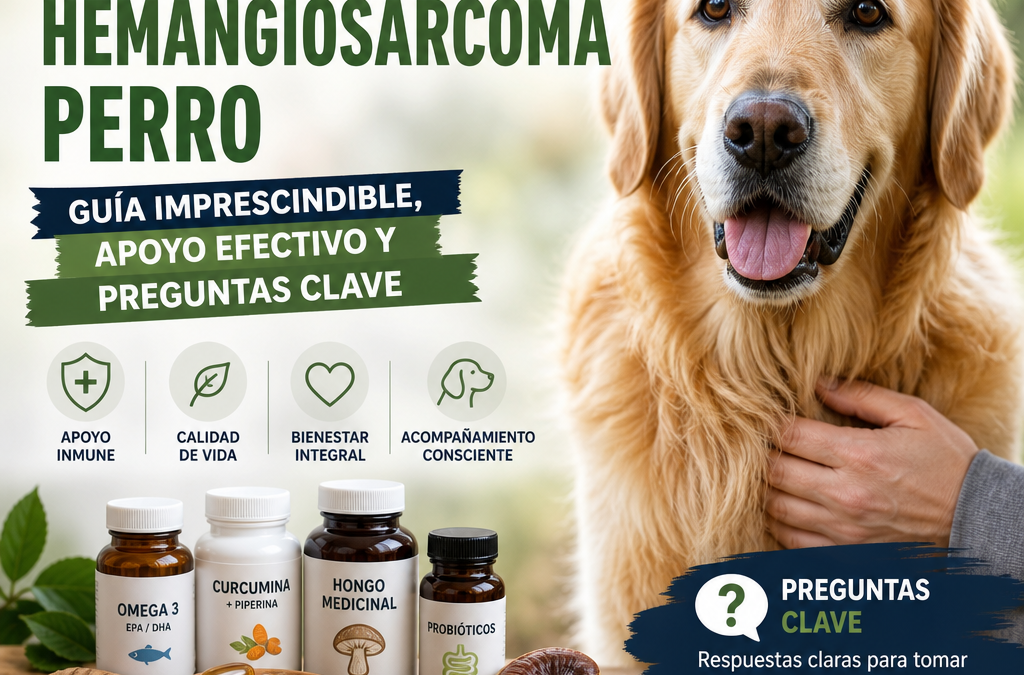
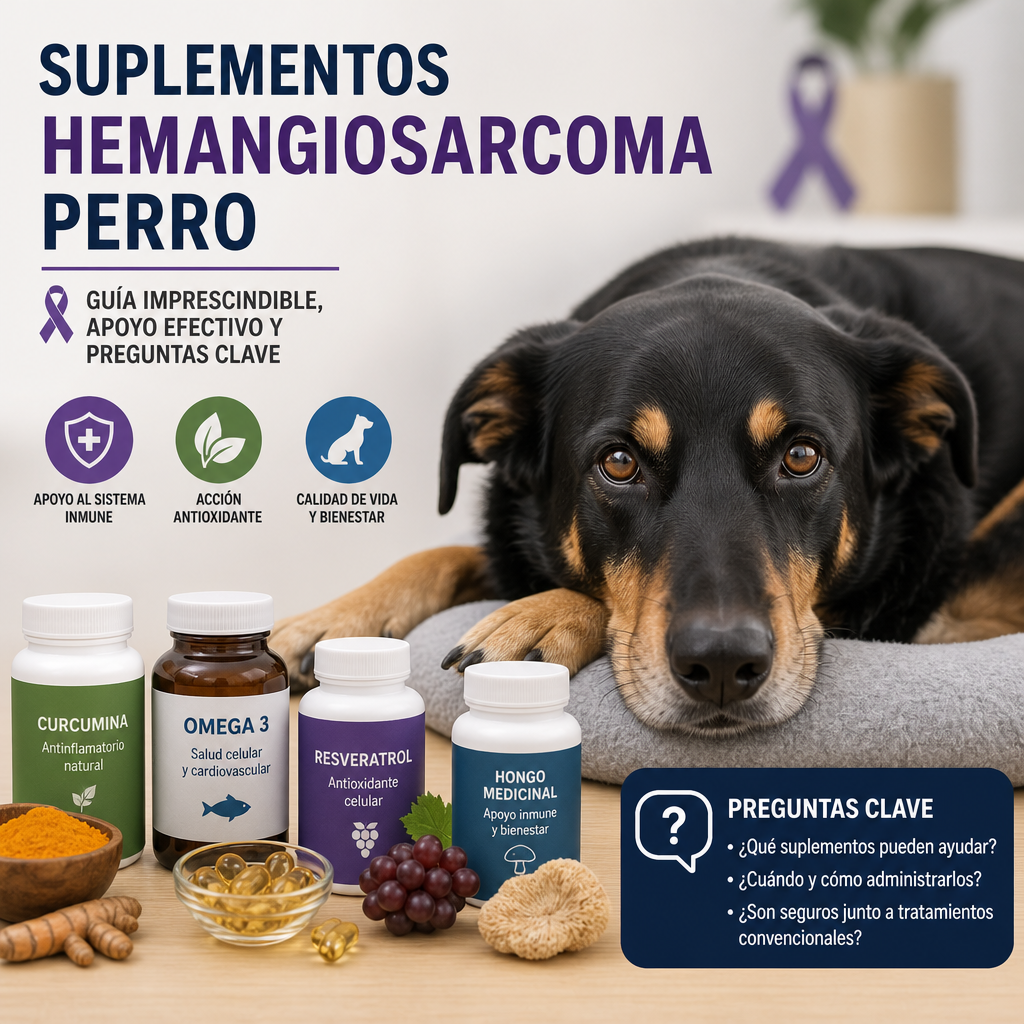
Hemangiosarcoma supplements for dogs can be a common search when a family receives this diagnosis and wants to provide the best possible care. However, no supplement replaces surgery, chemotherapy, pain management, or the veterinarian's recommendations. Hemangiosarcoma is an aggressive cancer that affects blood vessels and can frequently appear in the spleen, heart, liver, or skin. Therefore, any complementary product should be chosen wisely, considering the stage of the disease, the treatment, and the overall condition of the animal.
In this guide, we will see what hemangiosarcoma supplements for dogs can offer, what precautions to take, and what questions to ask before adding any supplement. The idea is to support the dog's quality of life without creating unnecessary risks or unrealistic expectations.
Hemangiosarcoma originates in the cells that form the lining of blood vessels. Due to its vascular nature, these tumors can bleed and spread to other organs. In many cases, the diagnosis occurs after an emergency caused by internal bleeding, especially when the tumor is located in the spleen.
The signs depend on the location and progression of the cancer. They may include weakness, pale gums, a distended abdomen, rapid breathing, fainting, weight loss, lack of appetite, or fatigue. Some dogs experience seemingly normal periods between episodes, which can make early detection difficult.
Treatment usually considers surgery, chemotherapy, and palliative care. The prognosis is variable and depends on factors such as the stage, location, presence of metastasis, and individual response.
At this stage, many families seek practical information about hemangiosarcoma supplements for dogs to understand if they can help stabilize appetite, energy, or daily comfort. This search is understandable, but it should always be accompanied by a complete veterinary examination.
Hemangiosarcoma supplements for dogs: what they can offer
Hemangiosarcoma supplements for dogs do not eliminate the tumor or guarantee increased survival. Their potential usefulness is related to nutritional support, preservation of muscle mass, maintenance of appetite, or protection of certain organs during intensive treatments. In some cases, they may also contribute to improving overall well-being.
Before administering any product, the veterinarian should review:
The diagnosis and stage of hemangiosarcoma.
Current medications, including chemotherapy.
Liver and kidney function.
The presence of anemia, coagulation disorders, or bleeding.
El peso, la edad y las enfermedades previas.
La dieta habitual y posibles deficiencias nutricionales.
La calidad también importa. Conviene elegir productos formulados específicamente para perros, con ingredientes identificables, dosis claras y controles de fabricación. Los suplementos humanos pueden contener sustancias peligrosas, concentraciones inadecuadas o edulcorantes como el xilitol.
Cuando se habla de suplementos hemangiosarcoma perro, también es útil pensar en el objetivo concreto. No es lo mismo intentar apoyar el apetito que proteger el tracto digestivo o ayudar con la movilidad. Cuanto más claro sea el objetivo, más fácil será decidir si un producto tiene sentido o si solo añade complejidad.
Cómo valorar si un suplemento merece la pena
Un suplemento útil debe responder a una necesidad real. Por ejemplo, si el perro ha perdido peso, el equipo veterinario puede priorizar una estrategia nutricional completa antes que varios productos aislados. Si hay molestias gastrointestinales, puede ser más sensato ajustar la dieta y valorar un apoyo digestivo específico. Si existe riesgo de sangrado, la prudencia debe ser máxima.
También conviene revisar la evidencia disponible. Algunos ingredientes tienen más respaldo que otros, pero incluso cuando existe información positiva, eso no significa que funcionen en todos los perros ni en todas las fases del cáncer. En este tipo de decisiones, el historial clínico pesa más que las tendencias de internet.
A good starting question is: does this supplement change something important for my dog or does it just add another capsule? If the answer is not clear, the veterinarian can better guide the choice.
Options that the veterinarian can evaluate
Some supplements for dogs with cancer are used as support, but their indication should be individualized.
Omega-3 fatty acids
EPA and DHA, primarily found in fish oils, can help maintain body condition and promote a balanced inflammatory response. In dogs with cancer, they are studied for their possible relationship with appetite and muscle metabolism. However, high doses can cause digestive issues or influence coagulation, a consideration especially relevant in a tumor with a tendency to bleed. In such cases, hemangiosarcoma dog supplements should always be reviewed with the veterinary oncologist.
Furthermore, not all oils are the same. Purity, freshness, and concentration of the product influence its tolerance. Rancid oil can worsen digestive discomfort and reduce food acceptance.
Antioxidants
Vitamins and antioxidant compounds can be part of some nutritional plans. However, during chemotherapy, it is not always advisable to add high doses of antioxidants, as they may interfere with the mechanism of certain treatments. The decision should be made by the veterinary oncologist. For general clinical information about cancer in companion animals, you can consult the guía de la AVMA sobre cáncer en mascotas.
In some situations, the goal is not to “add more” but to avoid excesses. A plan overloaded with vitamins or concentrated extracts can generate more doubts than benefits. Therefore, hemangiosarcoma dog supplements should be incorporated into the routine with a specific intention and follow-up.
Digestive support
Probiotics, soluble fiber, or certain gastrointestinal supplements can be useful if there is diarrhea, constipation, or alterations in the microbiota. Their use should be adapted to the dog's immune status, especially when receiving chemotherapy.
If vomiting or soft stools appear after starting a new product, the most prudent thing is to suspend it and consult. Sometimes the problem is not the supplement itself, but the combination with other recent changes in diet or medication.
Supplements for joints and well-being
In older or weakened dogs, some products aimed at joints can improve mobility and comfort. Still, they should not be considered a treatment for cancer, and it is always necessary to check that they do not interfere with other medications.
This type of support can be useful if the dog has stiffness, difficulty getting up, or less desire to move. Better physical comfort usually translates into more appetite, better rest, and a calmer daily coexistence.
Specialized nutritional support
In some patients, the veterinarian may recommend therapeutic diets or complete nutritional supplements rather than isolated products. When there is weight loss, the priority is usually to ensure sufficient calories and good digestibility. In other cases, the strategy focuses on stimulating intake with more palatable meals and small portions.
If the dog is selective, eating little or rejecting food should not be normalized. Appetite is often a sensitive indicator of the general state and deserves close monitoring.
Hemangiosarcoma dog support: care that makes a difference
Daily support does not solely depend on supplements. Proper nutrition is essential. The diet should provide high-quality proteins, sufficient energy, and a texture that facilitates intake. If the dog loses weight, vomits, or stops eating, it is important to act quickly and seek veterinary guidance.
Pain management is also a priority. Dogs can hide discomfort, but changes such as sleeping more, avoiding stairs, panting without reason, isolating themselves, or losing interest in food can indicate pain or weakness. Human painkillers should never be administered without authorization, as some are toxic to dogs.
The environment should be calm, safe, and comfortable. Short walks, as long as the veterinarian allows them, can help maintain some mobility without causing exhaustion. It is also advisable to avoid rough play, jumping, and intense exertion due to the risk of bleeding or collapse.
Los suplementos hemangiosarcoma perro pueden ser una búsqueda habitual cuando un….
En esta guía veremos qué pueden aportar los suplementos hemangiosarcoma perro, q….
Tabla de contenido
When the dog tolerates food worse, it is often more helpful to offer small and frequent portions rather than insisting on large meals. It may also help to lightly warm the food to enhance the aroma or alternate textures if the veterinarian approves. In some patients, palatability is as important as nutritional value.
Hydration deserves the same attention. If the dog drinks little, a professional can indicate whether it is advisable to add water to the food, use wet diets, or consider additional strategies. Dehydration can worsen weakness and affect recovery after an acute crisis.
In this context, hemangiosarcoma dog supplements should only be seen as one piece within a broader plan. The foundation remains medical management, proper nutrition, and symptom control.
It may also be helpful to divide the day into quiet feeding moments, without rush or distractions. If the dog associates food with nausea or discomfort, the veterinary team may recommend temporary adjustments to regain food acceptance.
When the main goal is to maintain weight, the consistency of the routine is often more valuable than continuously trying new products. A simple, stable, and well-tolerated plan usually works better than an improvised strategy.
Warning signs that require quick attention
A dog with hemangiosarcoma needs urgent attention if it shows very pale gums, sudden weakness, an enlarged abdomen, difficulty breathing, fainting, visible bleeding, or inability to stand up. These signs may indicate internal bleeding and should not be treated at home with supplements.
It is also advisable to contact the veterinarian if the dog stops eating for more than a day, vomits repeatedly, clearly worsens after starting a new product, or shows evident pain. In these situations, waiting is often worse than acting quickly.
Cancer dog supplements: important precautions
La palabra “natural” no significa necesariamente “seguro”. Algunas plantas y sustancias pueden aumentar el riesgo de sangrado, alterar la presión arterial, afectar al hígado o modificar la absorción de medicamentos. Entre los productos que requieren especial cautela se encuentran los extractos concentrados de plantas, ciertos hongos medicinales, la cúrcuma en dosis elevadas y los preparados con múltiples ingredientes.
También es importante evitar los cambios simultáneos. Si se incorpora un suplemento, conviene hacerlo de uno en uno y registrar cualquier modificación en el apetito, las heces, los vómitos, el nivel de energía o la aparición de hematomas. Esta información ayuda al veterinario a identificar beneficios o efectos adversos.
A dog with hemangiosarcoma needs urgent attention if it shows very pale gums, sudden weakness, an enlarged abdomen, difficulty breathing, fainting, visible bleeding, or inability to stand up. These signs may indicate internal bleeding and should not be treated at home with supplements.
También conviene revisar con el veterinario cualquier producto comprado por internet. No todos los fabricantes ofrecen la misma calidad, y algunos anuncios prometen resultados que no están respaldados por evidencia. Una elección prudente suele ser preferible a varias opciones dudosas. En caso de duda, el oncólogo veterinario puede indicar qué componentes se toleran mejor y cuáles conviene evitar. Cuando se trata de suplementos hemangiosarcoma perro, la seguridad debe ir siempre por delante de la urgencia por probar algo nuevo.
If the dog is already taking several medications, a written record helps avoid mistakes. Noting the schedule, dosage, and reason for each product reduces the risk of duplications and facilitates clinical review. This is especially valuable when combining oncological treatments, analgesics, and digestive support.
Frequently asked questions from owners
Can supplements cure cancer? No. They can support nutrition or well-being, but they do not cure hemangiosarcoma.
Is it better to start as soon as possible? Only if the veterinarian approves it. In some cases, starting too early or with too many products can complicate treatment.
Can several supplements be combined? Sometimes yes, but it should not be done without supervision. There are combinations that increase the risk of interactions or digestive disorders.
What signs indicate that a product does not agree with them? Vomiting, diarrhea, loss of appetite, lethargy, bleeding, behavioral changes, or worsening mobility justify reviewing the plan.
Are they useful if the case is advanced? They can still be useful if they help eat better, maintain comfort, or reduce discomfort, but always with realistic goals.
Is it necessary to use them all the time? Not necessarily. Some products are tested for a limited period and are continued only if they provide a clear benefit.
Key questions for the veterinary consultation
Before starting a supplement, it is helpful to ask:
Is this product compatible with chemotherapy or current medications?
Can it increase the risk of bleeding?
Does renal and hepatic function allow its use?
What dose corresponds to the weight and clinical condition of the dog?
How long should it be administered?
What signs would indicate that it should be discontinued?
Is it preferable to improve the diet first?
What realistic goals are expected: appetite, weight, digestion, or comfort?
Is there an alternative with less risk of interaction?
The main goal should be to preserve quality of life. Supplements can be part of a well-supervised support plan, but they should not delay effective treatments or create unrealistic expectations. In hemangiosarcoma, coordination between the family, the general veterinarian, and the oncologist allows for safer decisions focused on the specific needs of each dog. If the plan is reviewed frequently, hemangiosarcoma dog supplements can be integrated more prudently and usefully into daily care.
For more comprehensive care, it is worth remembering that hemangiosarcoma dog supplements work best when used as support and not as the main solution. Regularly reviewing the plan helps detect early changes and adjust the strategy quickly.
In practice, the most valuable thing is often to combine reliable information, clinical follow-up, and simple goals. Thus, hemangiosarcoma dog supplements can take their correct place: a potential support, never a promise of healing.
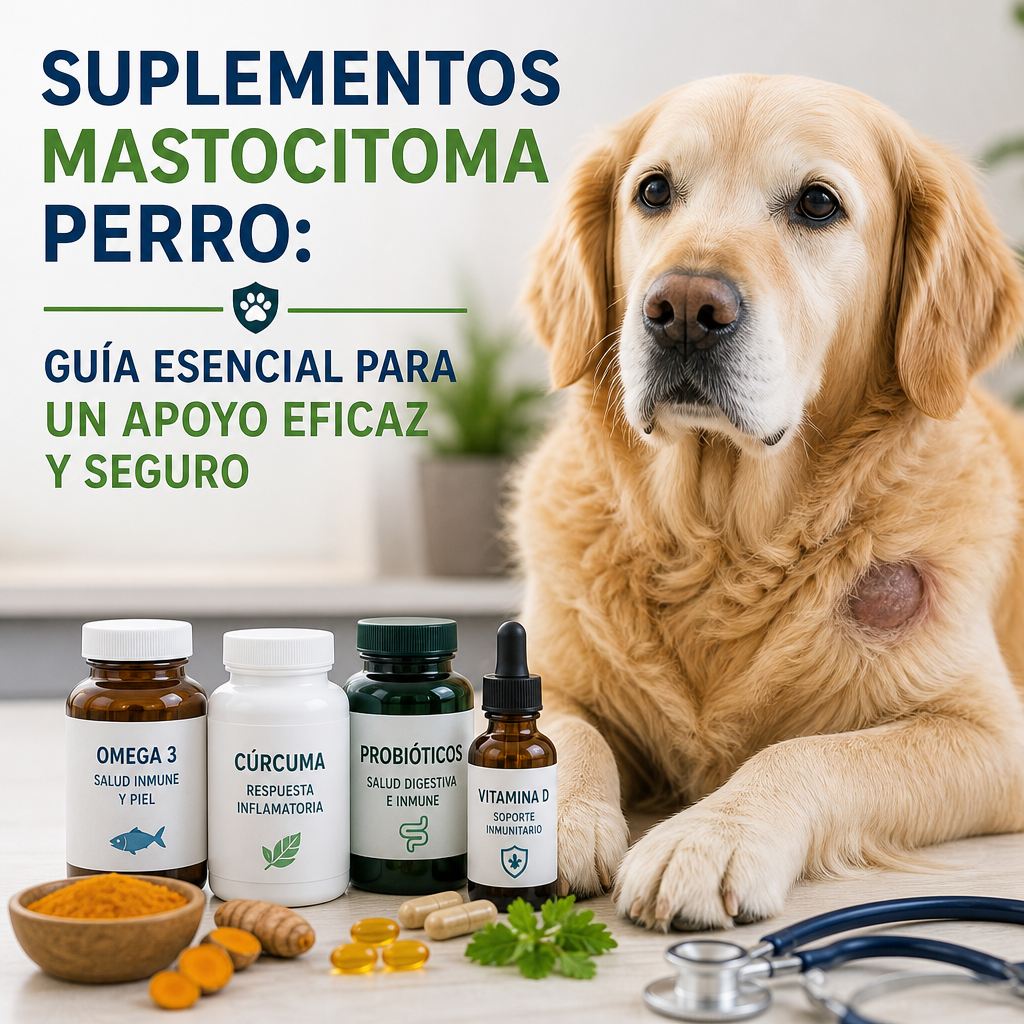
Mast cell tumor supplements for dogs can be a common search when a family receives the diagnosis of a mast cell tumor and wants to provide their pet with the best possible care. However, no supplement replaces veterinary assessment, surgery, chemotherapy, radiation therapy, or other treatments indicated as needed. Supplements can be part of a support plan, but they should be chosen carefully, considering the tumor grade, the medications used, and the overall health of the dog.
What is a canine mast cell tumor?
The mast cell tumor is one of the most common skin tumors in dogs. It originates in mast cells, immune system cells that participate in inflammatory and allergic processes. These cells contain substances like histamine, heparin, and other molecules capable of causing inflammation, redness, itching, vomiting, or gastrointestinal disturbances when released in excess.
The appearance of the tumor can vary considerably. Some mast cell tumors look like small soft lumps that are not very noticeable, while others grow rapidly, become inflamed, ulcerate, or change in size. For this reason, any new mass should be examined by a veterinarian, usually through cytology and, when appropriate, biopsy and histopathology.
The prognosis depends on several factors: location, size, histological grade, proliferation index, involvement of lymph nodes or other organs, and the possibility of completely removing the lesion. Before considering a canine mast cell tumor supplement, it is essential to know this information and follow the plan recommended by the specialist.
Mast cell tumor supplements for dogs: what they can provide
Supplements do not directly destroy tumor cells nor guarantee an improvement in cancer. Their potential usefulness is related to nutritional support, preservation of muscle mass, maintenance of appetite, digestive health, or control of certain inflammatory processes.
In some dogs, the veterinary team may consider mast cell tumor supplements as part of a support plan, always on an individualized basis. Among the options that are sometimes evaluated are:
Omega-3 fatty acids from fish oil, always in adjusted doses.
Selected antioxidants when there is a specific indication.
Probiotics or digestive support during certain treatments.
Nutritional supplements for dogs with weight loss or reduced appetite.
Vitamins or minerals only if there is a demonstrated deficiency or a specific need.
The goal should be to support quality of life, not to replace oncological therapy. Additionally, a “natural” product is not necessarily safe. Some plants and substances can alter coagulation, modify blood pressure, irritate the stomach, or interfere with medications.
If you want to review general safety guidelines on nutrition and supplements in animals, a useful reference is the guide from the VCA Hospitals veterinary educational library, where different care approaches for pets are explained in detail.
Omega-3 and nutrition during treatment
Omega-3 fatty acids, especially EPA and DHA, are studied for their role in regulating inflammation and their potential usefulness in cancer patients. They may also contribute to maintaining skin and nutritional status. Still, evidence does not mean they are a curative treatment for mast cell tumors.
The choice of product and dosage are important. A low-quality oil may be oxidized or contain inaccurate concentrations. Additionally, excessive doses can cause diarrhea, weight gain, or alterations in coagulation, especially if the dog is receiving anti-inflammatories, anticoagulants, or is going to undergo surgery.
Daily feeding should be complete, balanced, and tailored to the patient's needs. In dogs with cancer, maintaining weight and muscle mass is often more important than imposing restrictive diets. A homemade diet should only be used if formulated by a veterinarian specialized in nutrition, as deficiencies can weaken the animal.
In this context, mast cell tumor supplements for dogs only make sense when they complement an adequate diet and regular clinical follow-up. If the dog eats less, loses weight, or shows nausea, it is advisable to act quickly to prevent the problem from worsening.
Mast cell tumor support for dogs: measures that do make a difference
Mast cell tumor support for dogs does not solely depend on supplements. Veterinary follow-up, daily observation, and symptom control are essential pillars. Some useful measures include:
Skin and tumor monitoring
It is advisable to observe if the mass changes in size, color, texture, or temperature. It is also important to record the presence of bleeding, discharge, ulceration, or persistent licking. Taking periodic photographs and noting measurements can help the veterinarian assess the evolution.
Digestive monitoring
The release of histamine can lead to vomiting, diarrhea, abdominal pain, or loss of appetite. In some cases, the veterinarian prescribes antihistamines or gastrointestinal protectants. These medications should not be administered on your own, as the regimen depends on weight, clinical situation, and interactions with other treatments.
Maintenance of appetite and weight
A sustained decrease in appetite requires attention. It is preferable to communicate any changes early, as there are nutritional and medicinal strategies to control nausea, improve intake, and prevent muscle mass loss.
Stress reduction
Rest, stable routines, and moderate exercise, if the dog's condition allows, can promote well-being. It is not necessary to overprotect them, but it is important to avoid excessive exertion, impacts on the injury, and situations that increase anxiety.
When the veterinarian wants to evaluate more options for comprehensive management, they can also consult resources on cancer in dogs to review support approaches and clinical follow-up.
Precautions before administering a supplement
Before adding any product, the veterinarian must know all the medications and supplements the dog is taking. This includes joint products, herbal remedies, vitamins, and enriched foods.
It is especially important to act with caution if there is scheduled surgery, liver or kidney disease, coagulation problems, digestive ulcers, or treatment with corticosteroids, antihistamines, anti-inflammatories, or antineoplastic drugs. The combination of several products can increase adverse effects without providing additional benefits.
It is also advisable to check the label: concentration of active ingredients, batch, expiration date, quality controls, and absence of potentially toxic ingredients. Human supplements should never be used without professional authorization, as they may contain xylitol, inappropriate doses of vitamins, stimulants, or other components dangerous to dogs.
To better guide clinical decisions, the veterinarian can rely on the technical data sheet and reference resources on canine mast cell tumors. The more information available about the case, the easier it will be to choose among the different mast cell tumor dog supplements without putting the animal at risk.
What signs require urgent attention
A dog with a mast cell tumor needs rapid evaluation if it presents repeated vomiting, severe or bloody diarrhea, black stools, marked weakness, pale gums, respiratory difficulty, generalized swelling, fainting, or a sudden growth of the mass. It should also be consulted promptly in the presence of evident pain, complete rejection of food, or notable deterioration in behavior.
These signs may be related to complications of the tumor, release of inflammatory mediators, side effects of treatment, or another independent problem. Waiting for a supplement to produce results may delay a necessary intervention.
In short, mast cell tumor supplements for dogs can play a complementary role when integrated into an individualized and supervised plan. The priority is always to obtain an accurate diagnosis, apply the indicated treatment, and protect quality of life. Proper nutrition, regular check-ups, and constant communication with the veterinary team provide a more secure and effective foundation than any isolated product. When used judiciously, mast cell tumor supplements for dogs can help, but only as support within a comprehensive veterinary management.
Herbal supplements for cancer dogs can be part of a complementary plan, but should never replace the diagnosis, surgery, chemotherapy, radiotherapy, or care indicated by a veterinarian. When a dog receives oncological treatment, any natural product must be evaluated with the same rigor as a medication. The species, weight, age, type of tumor, liver and kidney function, and the drugs used directly influence its safety.
In practice, the interest in herbal supplements for cancer dogs usually arises when the family seeks to alleviate symptoms, improve appetite, or support overall well-being. That intention is understandable and, in many cases, valuable. However, the real benefit depends on making the right choices, reviewing interactions, and maintaining realistic expectations. An appropriate supplement can help; an inappropriate one can worsen the situation.
What it means to offer natural support to a dog with cancer
Natural support for tumor dogs usually refers to measures aimed at improving overall well-being, promoting adequate nutrition, and helping to manage some side effects of treatment. It may include a balanced diet, adapted activity, pain control, rest, environmental enrichment, and, in certain cases, supplements selected by a professional.
The realistic goal is not to “cure” cancer through plants. The goal is to accompany the main treatment, maintain quality of life, and avoid problems such as excessive weight loss, dehydration, nausea, or stress. A responsible complementary strategy is based on available evidence, periodic checks, and constant communication with the veterinary team.
In this context, herbal supplements for cancer dogs should be understood as a possible aid, not as a one-size-fits-all solution. If the dog is already receiving medication, the most prudent course is to review each ingredient before introducing it, even when the product is advertised as gentle or natural. It is also worth remembering that the same extract can behave differently depending on the dose, presentation, and clinical state of the animal.
The conversation with the veterinarian should include not only the tumor but also a history of allergies, previous illnesses, recent changes in appetite, and any other therapy the dog is receiving. This information allows for deciding whether natural support makes sense or if efforts should be focused on other more useful measures.
Herbal supplements for cancer dogs: why they require caution
Los suplementos herbales para el cáncer en perros pueden contener extractos concentrados con efectos biológicos importantes. Que un ingrediente sea natural no significa que sea inocuo. Algunas plantas pueden alterar la presión arterial, la coagulación, la función del hígado o la absorción de medicamentos. Otras pueden provocar vómitos, diarrea o reacciones alérgicas.
Additionally, the quality of products varies. A supplement of dubious origin may be contaminated, have a different concentration than indicated on the label, or include undeclared ingredients. Products intended for people are not always appropriate for dogs: they may contain xylitol, alcohol, essential oils, or other hazardous components.
Before administering any supplement, it is advisable to provide the veterinarian with a complete list of medications, vitamins, oils, and natural products that the animal receives. It is also important to keep the containers and check the exact dosage, concentration, and manufacturer.
If you want to expand general clinical information about the oncological approach in animals, consult this reference guide on cancer in dogs and supportive care.
En algunos casos, la mayor prudencia consiste en no añadir nada nuevo hasta estabilizar el tratamiento principal. Esto no significa rechazar todo apoyo complementario, sino evitar decisiones impulsivas. Con frecuencia, la combinación de supervisión, nutrición adecuada y ajuste de síntomas ofrece más beneficio que varios frascos de suplementos herbales para el cáncer en perros utilizados al mismo tiempo.
Herbs for tumor dogs: options that are studied but are not curative treatments
La expresión hierbas para tumores en perros engloba numerosas plantas propuestas en internet para animales con cáncer. Algunas, como la cúrcuma, el cardo mariano o ciertos hongos medicinales, se investigan por sus posibles propiedades antioxidantes, antiinflamatorias o inmunomoduladoras. Sin embargo, los resultados de estudios de laboratorio no equivalen a demostrar eficacia clínica en perros con tumores.
Turmeric, for example, may present absorption issues and is not suitable for all animals, especially those with biliary, gastrointestinal, or coagulation disorders. Milk thistle is used in some contexts as liver support, but it may interact with medications and its use should be individualized. Medicinal mushrooms also require standardized products and a professional assessment, as not all have the same composition.
Never apply a plant directly to a surgical wound, a mass, or a lesion without veterinary authorization. It is also not advisable to prepare homemade infusions, combine several herbs, or increase the dosage because the dog does not show immediate improvement.
In practice, many tutors look for herbal supplements for cancer thinking about relieving discomfort, but the benefit depends on the specific case. The key is to select only what has a real justification and avoid improvised mixtures. Furthermore, the fact that a plant is sold in natural stores or online does not guarantee that it is appropriate for an oncology patient.
It is also useful to distinguish between preliminary research and clinical use. A substance may seem promising in a laboratory study and still not be useful in a real dog due to issues of bioavailability, dosage, or digestive tolerance. That difference is fundamental to avoid false expectations.
Possible interactions with oncological treatments
One of the biggest concerns is the interaction between supplements and cancer medications. Some substances can modify the liver enzymes responsible for metabolizing drugs, causing them to act too intensely or lose effectiveness. Others may increase the risk of bleeding if the dog is taking anticoagulants or is going to undergo surgery.
Antioxidants also deserve special consideration. Although a balanced diet provides beneficial antioxidants, high doses of certain supplements could interfere with mechanisms used by some treatments to damage tumor cells. This does not mean that all antioxidants are prohibited, but their indication should be based on the specific protocol.
For safety, it is not advisable to start a supplement just before an intervention, a chemotherapy session, or an invasive procedure without prior consultation. The veterinarian may recommend suspending certain products for a specific period.
When talking about herbal supplements for cancer, it is also worth remembering that the interaction is not always immediate. Sometimes the problem appears after several days or weeks, so monitoring should be continuous and not just at the beginning of use.
Another relevant aspect is the sum of products. A tutor may think that several “mild” supplements are safer separately, but the combination can create a cumulative effect. Therefore, if the dog is already receiving a therapeutic diet, analgesics, antiemetics, or other drugs, each new ingredient should be reviewed with the same level of attention.
How to choose a supplement responsibly
An appropriate supplement should come from a reliable manufacturer, include a clear list of ingredients, and specify the amount of each active compound. It is also preferable to seek independent quality controls and avoid products that promise to cure any type of cancer, eliminate tumors quickly, or replace veterinary medicine.
The dose should not be calculated solely based on the size of the dog. Weight is important, but so are age, breed, body condition, organ function, and concurrent treatments. A dog with kidney or liver disease may need to avoid certain ingredients altogether.
Introducing one product at a time makes it easier to identify potential adverse effects. During the first few days, appetite, stool, vomiting, energy level, thirst, urine, and any changes in skin or breathing should be monitored. In case of an unexpected reaction, the product should be discontinued and the veterinarian contacted.
Herbal supplements for cancer in dogs should only be considered after reviewing the complete clinical picture. This review helps differentiate between a reasonable option and a product that could complicate treatment or reduce patient safety.
If there are doubts, it may be helpful to bring a written list to the office with the trade name, brand, ingredients, dosage, and the reason for wanting to use the supplement. This simple measure saves time and avoids communication errors, especially when multiple professionals are involved in the animal's care.
Natural measures that do support well-being
Natural support for tumors in dogs does not have to focus exclusively on herbs. A complete and palatable diet, tailored to the patient's needs, may be more important than any capsule. Some dogs need small, frequent meals to control nausea or maintain caloric intake. Fresh water should always be available.
Gentle exercise, if the animal's condition allows, helps maintain mobility and mood. Short walks, resting on a comfortable bed, and reducing noise or sudden changes can decrease stress. Keeping a daily record of appetite, weight, pain, activity, and symptoms is also useful, as it allows for quick detection of changes.
Pain and nausea control should be done with appropriate veterinary medications. Human analgesics, even in small amounts, can be toxic to dogs.
Additionally, the environment plays an important role. A predictable routine, a quiet space, and close supervision help the dog better tolerate difficult days. If the animal is tired or eating less, the priority should be to maintain its comfort rather than adding new herbal supplements for cancer in dogs without a clear need.
Other supportive measures may include gentle physiotherapy, sufficient rest, and adapting the environment so that the dog moves with less effort. In some patients, even small changes like bringing the water closer, avoiding stairs, or placing non-slip rugs can significantly improve quality of life.
Nutrition deserves special attention. A dog with cancer may lose muscle and weight even if it eats, so it is not enough to “give it something natural.” The important thing is that the diet provides adequate energy, protein, and palatability. Sometimes, that nutritional adjustment has a more visible impact than herbal supplements for cancer dogs chosen without a clear strategy.
Practical care during follow-up
A well-done complementary plan requires constant observation. Taking notes on appetite, stool quality, activity level, hydration, and pain helps to see if a product really contributes something. It also allows for early recognition of small changes that, in an oncology patient, can be the first sign of a bigger problem.
If the dog starts to refuse food, vomits more than usual, or shows lethargy after starting a new product, it is advisable to suspend it until receiving instructions. It is not advisable to “wait and see if it gets used to it” when there is suspicion of an adverse reaction.
En hogares donde conviven varios animales, hay que evitar errores de administración. Los productos naturales deben almacenarse fuera del alcance de otros perros y lejos de niños. También es importante no compartir suplementos entre mascotas, aunque parezcan tener síntomas parecidos.
La revisión periódica con el veterinario permite decidir si el suplemento sigue siendo útil o si debe retirarse. En algunos casos, lo que parece ayudar al principio deja de aportar beneficio más adelante, cuando el estado del tumor o el tratamiento cambia.
Si la familia desea mantener un enfoque conservador, puede priorizar tres pilares: alimentación, control de síntomas y bienestar ambiental. En muchos casos, esa base bien aplicada resulta más segura y eficaz que añadir múltiples suplementos herbales perro cáncer sin un objetivo clínico definido.
Warning signs
Hay que buscar atención veterinaria si aparecen vómitos persistentes, diarrea intensa, sangre en las heces o la orina, dificultad para respirar, debilidad marcada, desmayos, dolor evidente, rechazo total de la comida, abdomen muy distendido o un empeoramiento rápido de la masa. También es importante consultar si el perro pierde peso de forma continua o deja de beber.
In short, herbal supplements can have a limited and carefully supervised place within veterinary oncology. The priority should always be quality of life, safety, and an individualized plan. The best decision is not to choose the most popular plant, but to assess with a professional whether the product is necessary, compatible, and truly beneficial for that particular dog.
If used judiciously, herbal supplements for cancer dogs can fit into a supportive approach; if used uncontrolled, they can add avoidable risks. Therefore, veterinary supervision remains the most important part of the entire process.
For those seeking a broader reference on comprehensive care, the supporting information and clinical follow-up in cancer in dogs and supportive care can serve as a useful educational supplement.
It is also worth remembering that herbal supplements for cancer in dogs should not be evaluated solely based on opinions on the internet or isolated testimonials. Each dog's response depends on the diagnosis, the stage of the disease, and the primary treatment. A cautious approach avoids overloading the body with unnecessary products and allows focusing on what truly provides benefit.
If the veterinarian approves a product, the follow-up should include daily observation, clinical checks, and periodic review of the complete list of herbal supplements for cancer in dogs and other supplements. This way, any changes in appetite, energy, or digestive tolerance can be detected in time and corrected before they become a bigger problem.
In most cases, the best strategy is simple: choose a few well-justified things and follow up. Thus, natural support stops being a trend and becomes a real, safe, and tailored help for the dog's needs.