
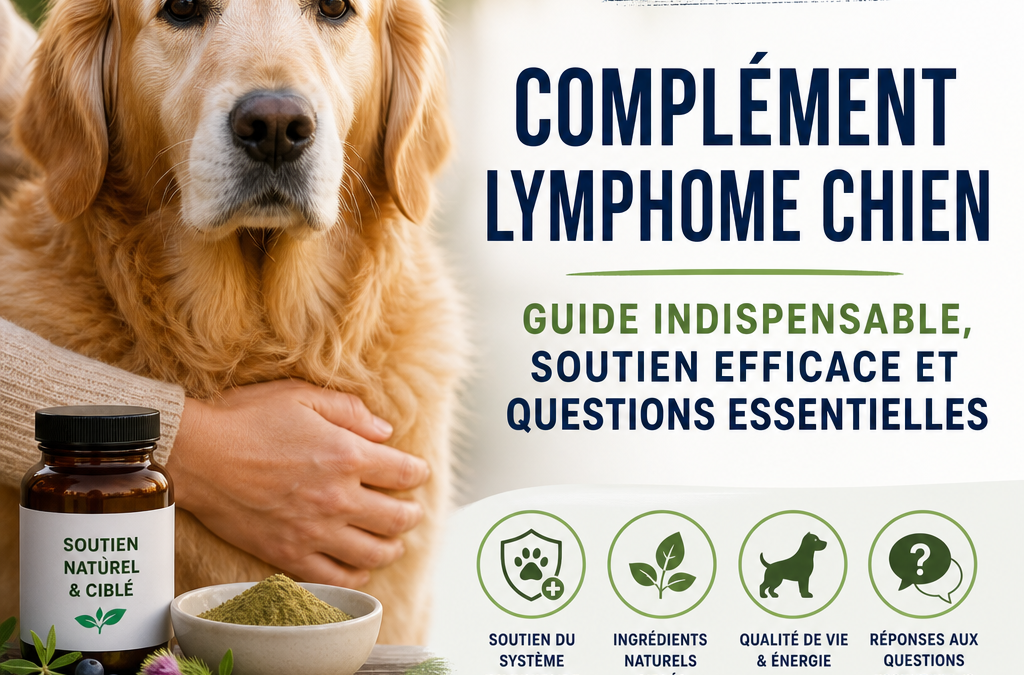
Lymphoma supplement for dogs, nutritional support, and veterinary assistance are naturally concerning topics for owners faced with the diagnosis of this disease. Lymphoma is a cancer of the lymphatic system that can affect the lymph nodes, spleen, liver, or other organs. Even though no supplement can replace medical treatment, a suitable diet and certain carefully selected inputs can contribute to the dog's overall comfort, nutritional status, and quality of life.
In this context, it is important to distinguish what can truly help from what is merely a commercial argument. A lymphoma supplement for dogs can support the body, but only within a coherent strategy, validated by the veterinarian and adapted to the progression of the disease. The goal is not to multiply products, but to choose the most useful, best tolerated, and safest options.
Table of contents
- Understanding lymphoma in dogs
- Lymphoma supplement for dogs: what role can it play?
- Dog lymphoma support: nutritional priorities
- Dietary supplement for dog lymphoma: essential precautions
- How to choose a supplement responsibly?
- Daily monitoring remains essential
- Important questions to ask the veterinarian
- Conclusion
Understanding lymphoma in dogs
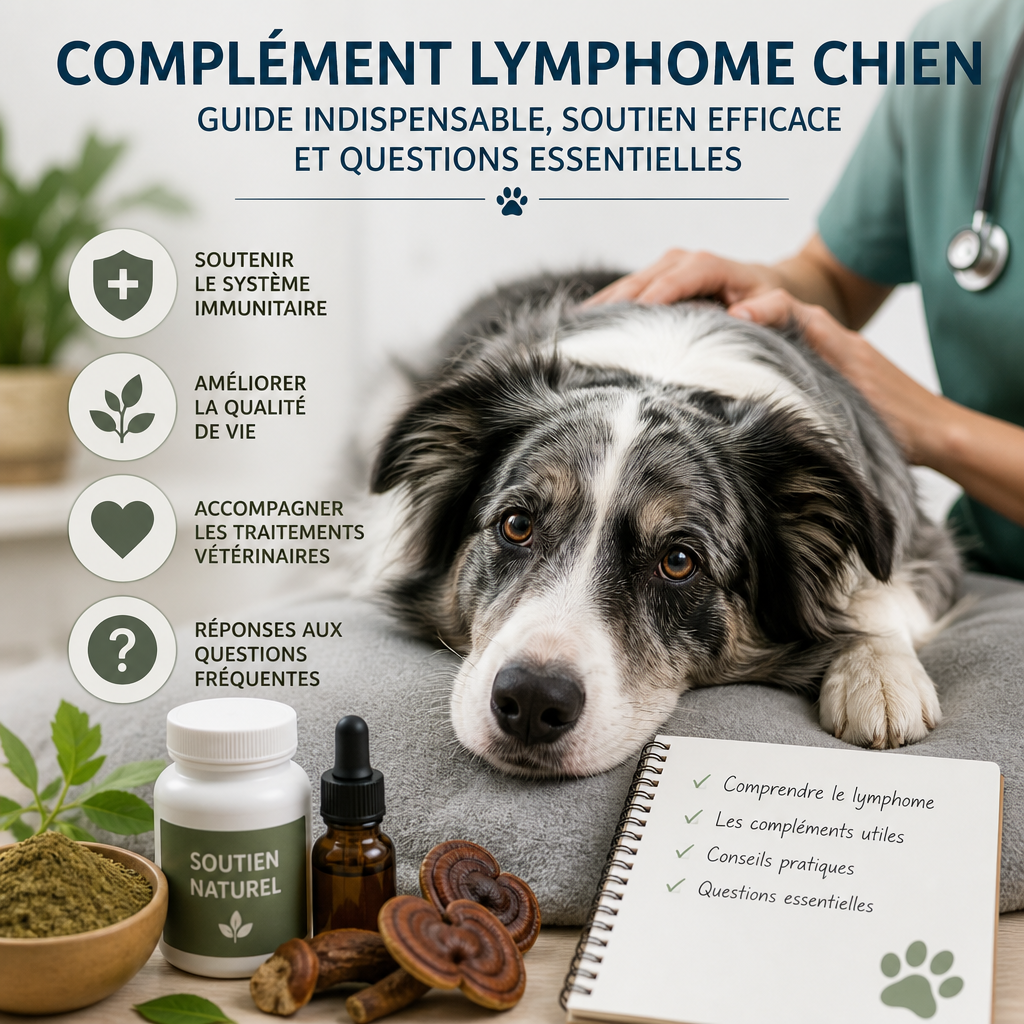
Le lymphome canin correspond à une multiplication anormale de lymphocytes, des cellules essentielles du système immunitaire. Il peut prendre différentes formes et évoluer plus ou moins rapidement selon le type de lymphome, son stade et l’état général de l’animal. Les signes possibles comprennent une augmentation du volume des ganglions, une fatigue inhabituelle, une perte d’appétit, un amaigrissement, des troubles digestifs, une soif accrue ou des difficultés respiratoires.
Le diagnostic repose généralement sur un examen clinique, une cytologie ou une biopsie, ainsi que sur des analyses complémentaires. Le vétérinaire peut ensuite proposer une chimiothérapie, un traitement palliatif à base de corticoïdes, une surveillance rapprochée ou une combinaison de plusieurs approches. Le choix dépend de nombreux facteurs, notamment l’âge du chien, la localisation de la maladie et les objectifs de soins.
Il faut aussi garder à l’esprit que deux chiens atteints de lymphome peuvent présenter des besoins très différents. Certains supportent bien les traitements et conservent un bon appétit, tandis que d’autres deviennent rapidement fragiles, nauséeux ou très fatigués. C’est pour cette raison qu’un complément lymphome chien ne peut jamais être recommandé de façon uniforme à tous les patients.
Pour mieux comprendre les options de prise en charge, il peut être utile de consulter des ressources vétérinaires reconnues, comme les informations générales de l’Merck Veterinary Manual en français, qui expliquent les bases des maladies cancéreuses chez le chien.
Cette maladie suscite souvent beaucoup d’inquiétude chez les familles. Pourtant, une information claire permet de reprendre une part de contrôle sur la situation. En comprenant mieux le déroulement des soins, les propriétaires peuvent poser les bonnes questions, surveiller les signes d’alerte et intervenir plus rapidement en cas de changement.
Lymphoma supplement for dogs: what role can it play?
Un complément lymphome chien doit être considéré comme un soutien, et non comme un traitement anticancéreux. Son objectif peut être de favoriser l’apport énergétique, de soutenir la digestion, d’aider au maintien de la masse musculaire ou de répondre à une carence identifiée. Chez un chien malade, ces aspects sont importants, car la baisse d’appétit et l’inflammation peuvent entraîner une perte de poids et une diminution des forces.
Certains compléments sont étudiés pour leur intérêt nutritionnel, notamment les acides gras oméga-3 issus d’huiles de poisson. Ils peuvent contribuer à l’équilibre de la réponse inflammatoire et soutenir la peau, le pelage et l’état général. Toutefois, la dose doit être adaptée au poids du chien et à sa situation médicale. Une supplémentation excessive peut provoquer des troubles digestifs ou poser problème chez certains animaux.
Probiotics can also be considered when the dog has digestive sensitivity, especially after certain treatments. However, they are not suitable for all situations, and their quality varies depending on the products. A veterinarian can recommend an appropriate formula, particularly if the animal is undergoing chemotherapy or suffers from recurrent diarrhea.
In some cases, a well-chosen dog lymphoma supplement can also help maintain better comfort during periods when appetite decreases. The idea is not to stack products but to target specific needs with caution.
On a daily basis, the goal remains simple: to support the dog without complicating its care. A dog lymphoma supplement can therefore serve as either a one-time or ongoing support, depending on the evolution of symptoms and medical recommendations.
However, there is an important nuance: some products are useful mainly for digestive tolerance, others for weight maintenance, and still others for overall quality of life. The right reflex is to define the main problem before choosing a product. This logic avoids unnecessary purchases and reduces the risk of interactions.
In weakened dogs, nutritional intakes often need to be more concentrated, more digestible, and more palatable. In this context, a dog lymphoma supplement can help complete a diet when needs are no longer met by food alone. This may concern dogs that eat less, sort their kibble, or refuse certain usual foods.
Dog lymphoma support: nutritional priorities
Dog lymphoma support starts with a complete, palatable, and well-tolerated diet. It is generally preferable to prioritize veterinary food or a diet formulated with the help of a veterinary nutritionist. The diet must provide enough quality protein, calories, vitamins, and minerals, without causing imbalance.
Proteins are essential to preserve muscles, especially when the dog eats less or loses weight. Contrary to some misconceptions, one should not systematically eliminate proteins without medical indication. The choice of their quantity and origin depends notably on the functioning of the kidneys, liver, and the general condition of the animal.
To stimulate appetite, it is sometimes useful to offer several small meals throughout the day, to slightly warm the food, or to choose a more pleasant texture. Dietary changes should be gradual, except in medical emergencies, to limit digestive disturbances.
Si vous cherchez des pistes alimentaires plus ciblées, vous pouvez aussi consulter notre article sur Meilleur complément alimentaire chien cancer : 7 choix efficaces et rassurants, qui complète utilement la réflexion sur le soutien nutritionnel.
Un apport énergétique bien pensé aide aussi à préserver la condition corporelle. Dans cette logique, un complément lymphome chien peut être utile s’il compense une baisse d’appétit, sans remplacer une ration équilibrée ni un suivi clinique régulier.
Lorsque le chien perd du poids, il ne faut pas attendre que la situation s’aggrave pour réagir. Une fonte musculaire rapide peut réduire la tolérance aux traitements et diminuer l’endurance au quotidien. Il est donc souvent utile de peser l’animal régulièrement, de surveiller les quantités réellement consommées et d’ajuster la stratégie alimentaire dès les premiers signes de baisse d’appétit.
Le choix de la texture compte aussi. Certains chiens préfèrent une pâtée plus odorante, d’autres acceptent mieux des aliments légèrement réchauffés ou humides. Parfois, un simple changement de format améliore nettement l’acceptation des repas, sans modifier le fond de la prise en charge. C’est un point pratique simple, mais important dans le lymphome chien soutien.
Il peut également être utile de réfléchir au rythme des repas. Des petites portions plus fréquentes sont souvent mieux tolérées qu’une grande ration unique, surtout chez les chiens nauséeux. Cette approche favorise parfois la prise alimentaire sur la journée et limite le découragement devant une gamelle trop volumineuse.
Dietary supplement for dog lymphoma: essential precautions
The term dietary supplement dog lymphoma covers very different products: oils, vitamins, plants, medicinal mushrooms, antioxidants, or formulas designed to support immunity. Their natural origin does not guarantee either their safety or their effectiveness. Some plants can interact with medications, alter coagulation, or influence liver function.
Antioxidants are a particularly delicate subject during chemotherapy or radiotherapy. Some treatments work in part through mechanisms related to oxidative stress. Significant supplementation with antioxidants could therefore, depending on the product and protocol, alter the desired effect. It is essential to seek the advice of the veterinary oncologist before any administration.
It is also important to avoid products intended for humans without professional validation. The dosage, excipients, and concentration may be unsuitable for dogs. Vitamin D, iron, zinc, and certain essential oils can become toxic in excessive amounts. Essential oils should never be given orally without specialized veterinary supervision.
Before introducing a dietary supplement for lymphoma dogs, it is advisable to check if there is already an ongoing treatment and if the animal has other associated diseases. This precaution limits risks and avoids unpleasant surprises.
A dietary supplement for lymphoma dogs should never be chosen solely based on marketing promises. It is wiser to prioritize consistency with the dog's clinical condition, digestive tolerance, and the goals set with the veterinarian.
Caution is even more important if the dog already has digestive disorders, kidney disease, liver damage, or is on heavy medication. In these situations, even a seemingly simple product can become unsuitable. The veterinarian can then prioritize: safety, tolerance, maintenance of general condition, and only then, potential addition of complementary support.
It is also recommended not to change several things at once. If a new product is introduced, it is better to avoid simultaneously modifying the diet, meal schedule, and medical protocol. Thus, if diarrhea or vomiting occurs, it becomes easier to identify the likely cause.
How to choose a supplement responsibly?
Before purchasing a product, it is useful to check its exact composition, concentration, dosage recommendations, and manufacturer traceability. A serious supplement should clearly indicate the ingredients and quantities provided. Promises such as «cures cancer,» «destroys tumor cells,» or «replaces chemotherapy» should raise alarms.
The veterinarian must know all products administered to the dog, including enriched treats, plants, and homemade preparations. This transparency helps avoid interactions and adapt monitoring. It also helps determine if fatigue, vomiting, or diarrhea is related to the disease, treatment, or supplement.
A lymphome dog supplement can be relevant when it meets a specific need: digestive support, appetite maintenance, omega-3 intake, or general comfort assistance. However, if the objective is vague, it is better to refrain and seek personalized advice.
In a responsible approach, it is also useful to regularly reassess the situation. A lymphome dog supplement that seems well tolerated at first may become unnecessary, or conversely unsuitable, if the dog's health status changes during treatment.
Price should not be the only criterion. A more expensive product is not necessarily more effective, and a cheap product is not necessarily bad. What really matters is the adequacy with the clinical need, the quality of manufacturing, and the ease of use on a daily basis. A supplement that the dog refuses to take or that triggers digestive issues will not provide the expected support.
It is also wise to read labels carefully. Some products combine many ingredients in small doses, which can complicate the assessment of their real interest. Others, on the contrary, offer a simpler and more readable formula. Depending on the context, a streamlined composition may be preferable to a heavily loaded formula.
Daily monitoring remains essential
Beyond a supplement, daily observation constitutes a real monitoring tool. It is advisable to note appetite, weight, water consumption, stool frequency, activity level, and any adverse effects. Rapid weight loss, repeated vomiting, persistent diarrhea, significant weakness, or difficulty breathing require prompt contact with the veterinarian.
Emotional comfort also matters. A calm environment, suitable walks, positive interactions, and respect for the animal's rhythm can help it cope better with care. Quality of life should remain at the center of decisions, taking into account the days when the dog eats, moves, sleeps comfortably, and still shows interest in its surroundings.
A lymphome dog supplement can sometimes accompany care, but it must be chosen on a case-by-case basis. The best support relies on appropriate veterinary treatment, a balanced diet, regular monitoring, and constant communication with the medical team. No product can guarantee healing, but a global and cautious approach can contribute to the dog's well-being throughout its care journey.
In practice, it is useful to have a small tracking notebook or to note information on your phone. This allows you to spot trends that are not always visible day-to-day: a gradual decrease in appetite, softer stools, a settling fatigue, or a change in behavior after adding a new product. This type of observation helps the veterinarian make more precise decisions.
Il ne faut pas non plus sous-estimer la valeur des visites de contrôle.
Important questions to ask the veterinarian
When a dog is diagnosed with lymphoma, owners often have many questions. Preparing a list before the consultation can help ensure nothing is forgotten and to better understand the recommendations. Here are some useful points to discuss with the veterinary team.
- Does the dog really need a supplement, or is the diet sufficient?
- Is the proposed product compatible with chemotherapy or other medications?
- Is there a risk of interaction with an ongoing treatment?
- What dose should be given based on weight and overall condition?
- What side effects should lead to stopping the product?
- How can one tell if the supplement is useful or not?
- Should digestive tolerance, palatability, or weight maintenance be prioritized?
These questions are particularly useful when a dog lymphoma supplement is being considered for the first time. They help secure the decision and maintain a coordinated care approach.
The veterinarian can also specify if certain ingredients should be avoided in the particular case of the animal. For example, a dog with coagulation disorders, liver disease, or a marked decrease in white blood cells will not have the same needs or contraindications as another more stable patient.
This dialogue step is essential, as it transforms a vague decision into a reasoned choice. It also helps families feel more at ease and better understand why a certain product is recommended and another is dismissed.
Conclusion
In summary, the proper use of a dog lymphoma supplement relies on three pillars: a veterinary opinion, careful product selection, and attentive monitoring of the animal. It is this combination that provides the safest and most useful support.
Dog lymphoma support is not limited to a single product. It also relies on diet, medical follow-up, digestive tolerance, appetite, and quality of life. A dog lymphoma dietary supplement can help in some cases, but only if it is integrated into a comprehensive and realistic strategy.
When faced with a dog suffering from this disease, the most important thing is to preserve its quality of life, limit risks, and proceed step by step. A well-chosen dog lymphoma supplement can contribute to this goal, provided it remains a support tool and not an unrealistic promise.