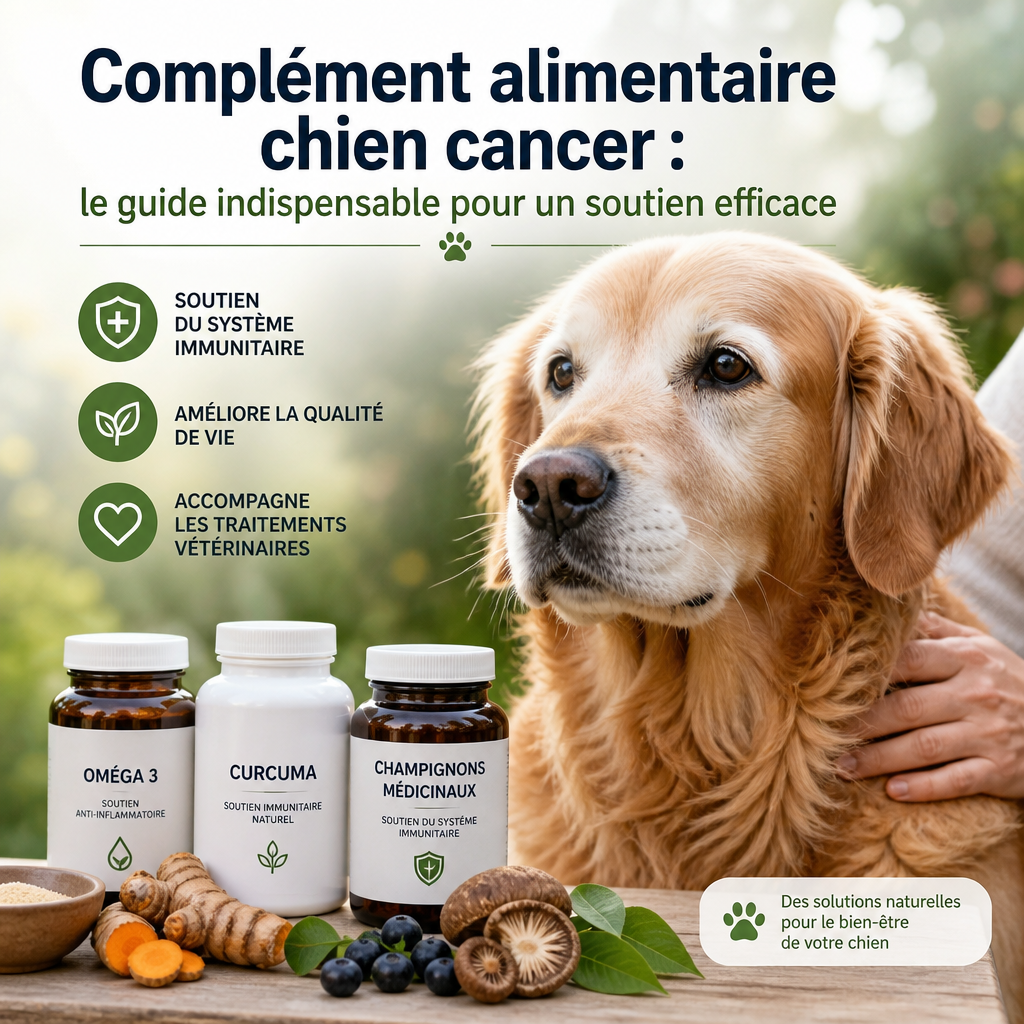
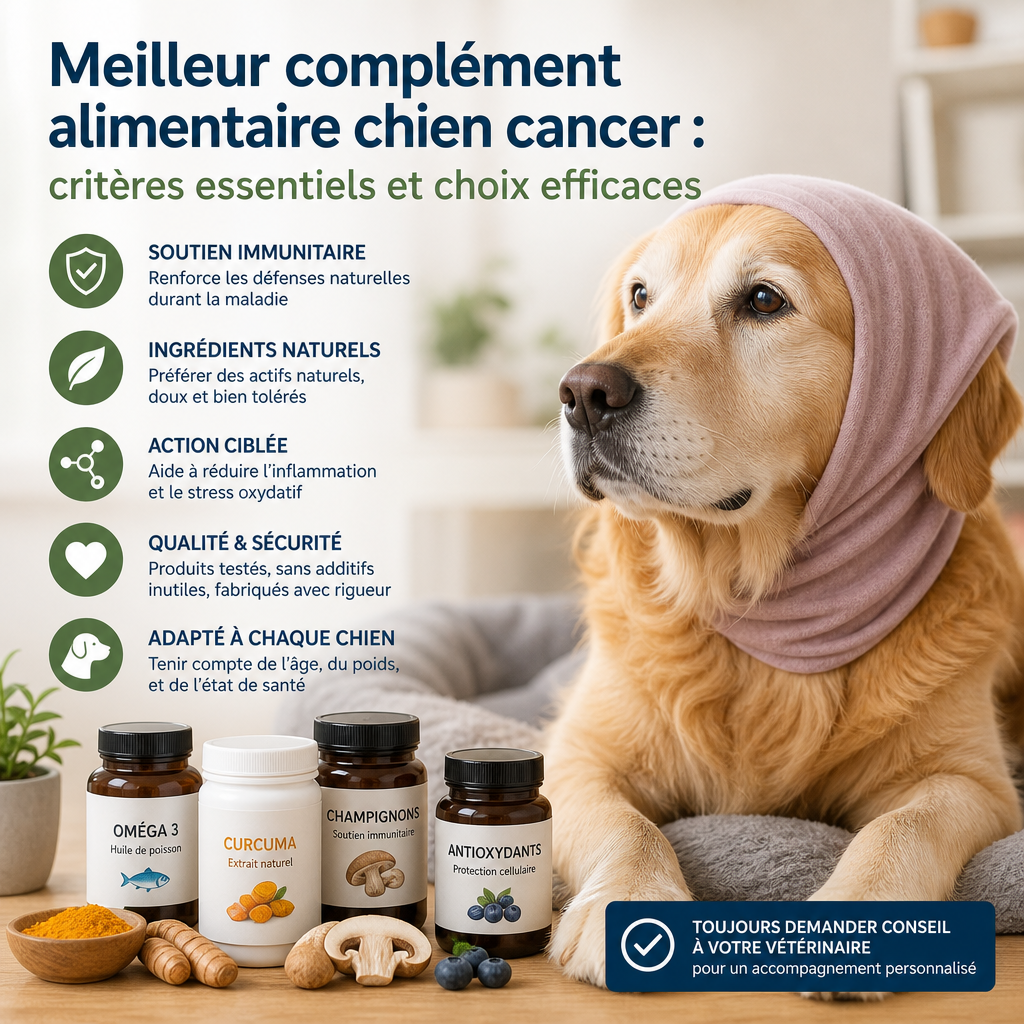
Medicinal mushrooms dog cancer: this combination of words raises a lot of hope among owners facing a tumor, but it must be approached methodically and cautiously.
Before choosing a supplement, it is useful to compare species, extracts, digestive tolerance, and possible interactions with medications.
Why focus on medicinal mushrooms in dogs with cancer?
Medicinal mushrooms contain polysaccharides, beta-glucans, triterpenes, and antioxidant compounds. These substances can act on different biological mechanisms: modulation of certain immune cells, support of the inflammatory response, and possible improvement of overall vitality.
In a dog with cancer, the realistic goal is not to «dissolve» a tumor with a supplement. It is rather to preserve quality of life, support the body during treatment, and assist with appetite, energy, or recovery, depending on the situation.
In this logic, medicinal mushrooms dog cancer are often considered as an adjunct support, not as an isolated solution.
It is also important to maintain a measured view of commercial promises. Formulations presented as «immune boosters» or «anti-tumor» do not always indicate whether the doses are truly suitable for the dog, nor whether the ingredients have been tested.
When treatments weaken the animal, a well-chosen support can sometimes help to get through this period with more comfort. However, safety remains the priority, especially if the dog is already on several medications.
Comparison of the main medicinal mushrooms
Turkey tail
Turkey tail, often referred to as Tramète versicolore, is one of the most studied mushrooms in the context of animal cancer. It contains polysaccharopeptides, notably the PSK and PSP fractions, which are the subject of research on immune modulation.
Its potential interest mainly concerns the support of natural defenses. Some veterinary data is encouraging, but it does not allow us to conclude that it directly treats all tumors. The quality of the extract, its dosage, and its standardization are essential.
For many owners, medicinal mushrooms for dog cancer start with this option, as it is frequently cited in the literature and in support protocols. This never exempts one from checking the source and the actual concentration of the product.
In practice, turkey tail is often chosen when looking for a product that is already documented and relatively easy to integrate. It can therefore serve as a starting point in a support strategy, provided that the veterinarian validates its use and that the animal tolerates it well.
Si vous comparez plusieurs options, gardez en tête que la meilleure formule n’est pas forcément la plus complexe. Une composition claire facilite souvent le suivi et limite les risques d’erreur.
Le reishi
Le reishi, ou Ganoderma lucidum, est traditionnellement utilisé pour soutenir la résistance de l’organisme. Ses triterpènes et ses polysaccharides sont étudiés pour leurs effets immunomodulateurs et anti-inflammatoires.
Chez le chien, il peut être envisagé dans certains protocoles d’accompagnement, mais il doit être utilisé avec précaution en cas de maladie hépatique, de troubles de la coagulation ou de prise d’anticoagulants. Un avis vétérinaire est indispensable avant toute administration prolongée.
Dans une démarche de champignons médicinaux chien cancer, le reishi attire l’attention parce qu’il vise surtout l’équilibre général, ce qui peut être intéressant chez un animal fragilisé par les traitements.
Son profil est parfois apprécié lorsque l’on souhaite un soutien global plutôt qu’une action ciblée. Cela dit, sa place dépend toujours du contexte clinique : un chien déjà très fatigué, avec une digestion sensible ou un bilan sanguin fragile, ne réagira pas comme un autre. C’est pourquoi la prudence reste essentielle.
Le reishi n’est donc pas un choix automatique. Il peut avoir sa place dans certains cas, à condition que le suivi soit rigoureux et que la tolérance soit bonne dès les premières prises.
Le shiitake
Le shiitake contient notamment du lentinane, un polysaccharide étudié pour son influence sur l’immunité. Il peut être intéressant lorsque l’on recherche un soutien nutritionnel complémentaire, particulièrement chez un animal fragilisé.
Cependant, le shiitake alimentaire et l’extrait concentré ne sont pas équivalents. Les produits destinés à la consommation humaine peuvent contenir des excipients ou des doses inadaptées au chien.
Si l’on compare les champignons médicinaux chien cancer, le shiitake est souvent retenu pour son profil connu, mais il doit toujours être choisi sous une forme pensée pour les animaux.
Ce point est d’autant plus important qu’un complément mal formulé peut gêner l’appétit ou la digestion, ce qui va à l’encontre de l’objectif recherché. Un produit simple, bien toléré et correctement dosé est souvent plus utile qu’une formule impressionnante sur le papier.
Lorsque le chien a déjà un appétit irrégulier, mieux vaut privilégier la facilité d’administration. Un complément accepté sans difficulté est plus susceptible d’être donné régulièrement, ce qui compte beaucoup dans la durée.
Le maitake
Le maitake, ou Grifola frondosa, est également étudié pour ses bêta-glucanes. Il est parfois proposé afin de soutenir l’immunité et la vitalité générale.
Les preuves cliniques chez le chien restent limitées. Il est donc préférable de le considérer comme un complément possible parmi d’autres, et non comme le choix automatiquement supérieur.
Dans un comparatif de champignons médicinaux chien cancer, le maitake peut être pertinent si l’on recherche un soutien global, mais la qualité du suivi reste plus importante que le nom du champignon lui-même.
Il peut convenir à certains profils, mais pas à tous. Pour un chien avec une maladie chronique associée, des troubles digestifs ou des traitements multiples, l’enjeu principal n’est pas de « multiplier les actifs », mais de vérifier que l’ensemble reste cohérent, supportable et utile dans la durée.
Cette approche mesurée aide aussi à éviter les déceptions. Le but n’est pas d’attendre un effet spectaculaire, mais d’observer un éventuel bénéfice discret et régulier sur le confort général.
Le cordyceps
Le cordyceps est souvent présenté comme un champignon favorisant l’énergie et la récupération. Il peut sembler intéressant chez un chien fatigué, mais les formulations commerciales sont très variables et les données spécifiques au cancer canin sont moins solides que pour certains autres champignons.
La prudence est particulièrement importante lorsque le chien reçoit plusieurs médicaments ou souffre d’une maladie rénale, hépatique ou auto-immune.
Comme pour l’ensemble des champignons médicinaux chien cancer, il faut s’assurer que la promesse marketing ne prend pas le pas sur la réalité clinique.
Cordyceps can be considered in certain cases, but it should be viewed as a complementary option rather than a primary lever. Clinical experience, the dog's overall condition, and the product's clarity should guide the decision more than current trends.
Before retaining it, it is useful to ask whether the dog really needs energy support or if another, simpler approach would be better suited to its condition.
How to compare options in a useful way?
A serious comparison is not limited to the reputation of a mushroom. It takes into account the desired purpose: appetite, immune support, general comfort, recovery, or treatment tolerance. Two products containing the same mushroom can have very different profiles depending on the extraction method, concentration, or excipients.
It is also useful to distinguish between supplements intended for dietary use and those with a more precise formulation. When the dog is already fragile, simplicity is often an advantage. The more complex the formula, the harder it becomes to identify what truly helps or what hinders.
Finally, keep in mind that medicinal mushrooms for dog cancer never replace the therapeutic decisions of the veterinarian. They can accompany a protocol, but they should not waste time in a disease where the speed of intervention often matters a lot.
To go further, it may be useful to cross-reference the information with a recognized scientific source such as the database PubMed, in order to distinguish the studied data from mere commercial promises.
Plants dog tumor: what precautions should be taken?
Research on plants for dog tumors is multiplying, but «natural» does not automatically mean «safe.» Turmeric, milk thistle, astragalus, or certain adaptogenic plants may be proposed in specific contexts, but their effects vary depending on the dose, the form used, and the health status of the animal.
A plant can modify the absorption or elimination of a medication. It can also influence coagulation, blood pressure, the liver, or the immune system. These interactions are particularly important before a surgical intervention or during chemotherapy.
Essential oils should also be avoided without veterinary supervision. Many are irritating or toxic to dogs when ingested, concentrated, or poorly diffused. Supplements containing multiple plants and mushrooms can sometimes be difficult to evaluate, as it becomes impossible to precisely identify the cause of a side effect.
Before combining medicinal plants and mushrooms for dog cancer, it is useful to ask the veterinarian if the ongoing protocol supports this type of addition. This simple step avoids many mistakes.
Another precaution is to introduce only one change at a time. If multiple products are started at the same time, it becomes very difficult to know which one is well tolerated. In the case of cancer, this rigor helps protect the dog and maintain a clear view of the clinical evolution.
Owners often want to act quickly, but a thoughtful addition is almost always more useful than an accumulation of solutions. This discipline also reassures the veterinarian, who can better interpret the observed effects.
Cancer dog supplement comparison: essential criteria
To make a reliable cancer dog supplement comparison, the first criterion is the transparency of the composition. The label must clearly indicate the species used, the amount of extract, the concentration of beta-glucans, and the recommended dose according to the dog's weight.
It is better to look for:
a product specifically formulated for dogs; ;
an analysis of purity and contaminants; ;
traceability of raw materials; ;
the absence of unnecessary additives; ;
recommendations validated by a veterinarian; ;
a precise and progressive dosage.
The form of the product also matters. A powder may be convenient, but its palatability varies. A standardized extract may be more concentrated than a simply dried mushroom. Price is never enough to judge quality: an expensive product is not necessarily better controlled.
In some cases, the best choice is also the one that simplifies the dog's routine. An easy intake, a good taste, and a good regularity of administration count as much as an appealing scientific argument. This is particularly true when it comes to supporting an already tired or difficult-to-feed animal.
When comparing a mushroom-based product with another more traditional support, consider the ease of integration into daily life. An effective product that is impossible to give often ends up being abandoned, which reduces any potential benefit.
How to integrate a supplement into a veterinary protocol?
Before starting, it is helpful to communicate to the veterinarian the complete list of products given to the dog: medications, vitamins, plants, mushrooms, and specific foods. The professional will be able to take into account the diagnosis, blood tests, ongoing treatments, and liver or kidney function.
The introduction should generally be gradual. It is necessary to monitor appetite, stools, vomiting, fatigue, itching, and any unusual changes. In case of an adverse reaction, the supplement should be discontinued and the veterinarian contacted.
Regular follow-up also helps to determine if the product provides a real benefit. The evolution of the tumor should be evaluated through recommended examinations, such as imaging, analyses, or clinical checks. The absence of visible change does not prove the effectiveness of a supplement, nor does an aggravation necessarily mean it is responsible.
In this context, medicinal mushrooms for dog cancer can be considered as a structured trial, with clear objectives: tolerance, comfort, appetite, energy, and quality of life.
To make the trial more reliable, it is useful to note the changes observed over a few days or weeks: desire to eat, activity level, digestive comfort, sleep, mobility, and unusual behaviors. This simple follow-up helps to make a decision based on the dog's real experience, and not just on a general impression.
If the dog is already receiving heavy treatment, the most important thing is often not to confuse the signals. A single well-chosen supplement is better than several products introduced too quickly.
Example of a simple approach to follow
Start by clarifying the main objective: better eating, better recovery, supporting immunity, or improving comfort. Then, choose a single product suitable for this objective, and observe tolerance over a defined period with the veterinarian.
This gradual approach allows for progress without haste. It also helps to avoid mistakes related to multiple changes, especially when the dog is going through a period of fragility.
Choose a coherent and reassuring strategy
Les champignons médicinaux peuvent représenter une piste d’accompagnement intéressante pour certains chiens atteints de cancer. Leur rôle potentiel concerne principalement le soutien de l’organisme et de la qualité de vie, avec un niveau de preuve variable selon les espèces et les produits.
La démarche la plus sûre consiste à privilégier un diagnostic précis, un traitement conventionnel adapté lorsque cela est nécessaire, une alimentation équilibrée et un suivi vétérinaire attentif. Les compléments ne doivent jamais retarder une prise en charge ni entretenir une promesse de guérison garantie.
En résumé, la queue de dinde, le reishi, le shiitake et le maitake sont les options les plus souvent étudiées, mais aucun ne convient automatiquement à tous les chiens. Une comparaison sérieuse repose sur la composition, la qualité, les interactions possibles et les besoins particuliers de l’animal. Utilisés avec discernement, les champignons médicinaux chien cancer peuvent trouver une place dans une stratégie globale centrée avant tout sur le confort et le bien-être du chien.
Pour aller plus loin, gardez une règle simple : si un produit semble trop prometteur, trop complexe ou trop flou, il mérite d’être reconsidéré. Un choix prudent, validé et bien suivi est souvent le plus rassurant pour le maître comme pour l’animal.
En pratique, l’approche la plus sereine consiste à avancer avec peu de produits, des objectifs clairs et une surveillance attentive. C’est souvent ce cadre qui permet d’obtenir le meilleur compromis entre espoir, prudence et qualité de vie.
The complément chien radiothérapie intéresse de nombreux propriétaires qui veulent soutenir leur animal pendant un traitement contre le cancer. La radiothérapie peut aider à contrôler une tumeur, réduire une douleur ou limiter le risque de récidive, mais elle demande aussi une surveillance attentive de l’état général du chien. Alimentation, hydratation, gestion des effets secondaires et qualité de vie jouent un rôle essentiel. Toutefois, un complément alimentaire ne remplace jamais le protocole défini par le vétérinaire et doit être choisi avec prudence.
Quand on parle de complément chien radiothérapie, l’objectif n’est pas d’ajouter le plus grand nombre de produits possible, mais de soutenir le chien de manière sûre, logique et adaptée à sa situation. Certains propriétaires recherchent un produit pour améliorer l’appétit, d’autres veulent aider la récupération ou mieux accompagner les séances. Dans tous les cas, la sécurité doit rester prioritaire.
La radiothérapie utilise des rayonnements ciblés pour détruire ou endommager les cellules tumorales. Selon la localisation de la tumeur, l’objectif peut être curatif, lorsqu’une disparition complète est recherchée, ou palliatif, afin de réduire la douleur et d’améliorer le confort.
Le traitement est généralement administré en plusieurs séances. Le chien peut recevoir une anesthésie ou une sédation afin de rester parfaitement immobile. Cette succession de rendez-vous, associée à la maladie elle-même, peut provoquer de la fatigue et modifier temporairement l’appétit ou le comportement.
Les effets secondaires dépendent de la zone traitée, de la dose et de la sensibilité individuelle. Une irritation cutanée, une inflammation des muqueuses, des nausées, une baisse d’appétit ou une fatigue accrue peuvent apparaître. Tous les chiens ne présentent pas les mêmes réactions, et certains effets se manifestent plusieurs jours ou semaines après le début des séances.
Dans ce contexte, le complément chien radiothérapie doit être pensé comme un soutien complémentaire, jamais comme une solution autonome. L’état de santé global, le type de tumeur, l’âge du chien et les médicaments associés influencent fortement les choix possibles.
Complément chien radiothérapie : pourquoi la prudence est indispensable
L’idée d’utiliser un complément chien radiothérapie may seem natural, especially to support the body's defenses or maintain nutritional status. However, «natural» does not automatically mean safe. Some plants, vitamins, or antioxidant substances can alter the action of medications, influence coagulation, or interact with radiation.
High-dose antioxidant supplements should be discussed with the veterinary team. Radiotherapy works in part through mechanisms involving free radicals in tumor cells. Therefore, it cannot be assumed that a high intake of antioxidants will always be beneficial during treatment.
Before any administration, the veterinarian must know:
- the exact name of the product; ;
- the complete list of ingredients; ;
- the intended dose; ;
- other medications used; ;
- the dog's pre-existing conditions; ;
- the type, location, and stage of the tumor.
This verification helps avoid inappropriate combinations and takes into account the animal's renal, hepatic, or digestive function. It also helps identify formulas that are too rich, poorly dosed, or poorly suited for a weakened dog. When in doubt, it is better to wait for the clinic's advice before starting a new product.
An important point is to distinguish a true need from a mere hope for protection. A complément chien radiothérapie It should only be introduced if it meets a clear objective: to compensate for a deficiency, support appetite, aid digestion, or complement an already studied ration. Without a specific objective, the risk of error increases.
What support for dog cancer radiotherapy should be prioritized?
The best support for dog cancer radiotherapy often relies on simple and personalized measures rather than an accumulation of products. The priority is to maintain a sufficient intake of calories and proteins while adhering to the recommendations of the veterinarian or veterinary nutritionist.
Preserve appetite
A dog that eats less for several days risks losing weight and muscle mass quickly. To stimulate feeding, it is sometimes possible to offer smaller and more frequent meals, slightly warm the food, or use an appropriate wet diet. These changes must remain compatible with the nutritional plan established for the animal.
If nausea, pain, or inflammation prevents the dog from eating, the cause should be treated rather than relying solely on a supplement. The veterinarian may prescribe an antiemetic, pain relief treatment, or an appetite stimulant when indicated.
Promote hydration
Good hydration helps the body function properly and limits complications related to dehydration. Several bowls of fresh water can be placed in accessible locations. For some dogs, a wet diet or controlled addition of water to the ration may be helpful.
Very low consumption, repeated vomiting, significant diarrhea, or dry gums warrant a quick call to the veterinary clinic.
Maintain a calm environment
Fatigue can be exacerbated by travel and treatment sessions. The dog should be able to rest in a comfortable space, at a stable temperature and away from overly stimulating activities. Short, quiet walks are generally preferable to intense efforts, unless there is a medical contraindication.
During this period, a complément chien radiothérapie is only of interest if it fits into a coherent, simple, and consistent care routine. Better to have targeted support than a long list of products added without a specific goal.
The dog's daily life is as important as the product itself. A stable routine, a predictable meal schedule, and gentle monitoring often help improve comfort without multiplying interventions. Before thinking about the ideal supplement, one must first secure the basics: eating, drinking, resting, and quickly reporting any changes.
Supplement during dog radiotherapy: what ingredients can be considered?
Un supplement during dog radiotherapy should only be used on professional recommendation. Depending on the situation, the veterinarian may consider nutritional support containing certain fatty acids, highly digestible proteins, or nutrients aimed at correcting an identified deficiency.
Omega-3s, for example, are sometimes studied as part of the nutritional support for dogs with cancer. However, their relevance depends on the disease, the diet, the dosage, and associated treatments. They are not necessarily suitable for all animals, especially in cases of digestive disorders or bleeding risk.
Probiotics may also be offered in certain situations, but their choice must take into account the dog's immune status. Similarly, vitamins and minerals should not be added systematically: unnecessary or excessive supplementation can disrupt the diet and overload certain organs.
Dans les échanges avec la clinique, il est utile de poser des questions précises : le produit est-il compatible avec la radiothérapie ? La dose est-elle adaptée au poids du chien ? Faut-il l’interrompre avant une séance ? Ces questions de sécurité sont particulièrement importantes si vous envisagez un complément chien radiothérapie en parallèle d’autres traitements.
Le choix d’un produit doit aussi tenir compte de la forme galénique. Une poudre, une capsule, une huile ou un comprimé n’ont pas les mêmes intérêts pratiques. Un chien en perte d’appétit acceptera parfois mieux une forme mélangée à la ration, tandis qu’un autre supportera mal certains excipients. Le confort d’administration est donc un vrai critère de sécurité, parce qu’un bon produit mal toléré finit souvent abandonné.
Dans certains cas, l’approche la plus utile n’est pas un complément isolé, mais une ration formulée pour soutenir le chien pendant son traitement. Cette option peut simplifier les choses, réduire les erreurs de dosage et éviter l’empilement de produits. Là encore, l’évaluation vétérinaire reste indispensable.
Les produits à éviter sans validation vétérinaire
Les mélanges commerciaux aux compositions complexes sont difficiles à évaluer. Il faut se méfier des produits qui promettent de « guérir » le cancer, de remplacer la radiothérapie ou de stimuler fortement l’immunité. Ces affirmations sont souvent insuffisamment prouvées et peuvent retarder une prise en charge adaptée.
Some plants and essential oils also pose toxicity risks in dogs. Curcumin, St. John's wort, garlic, certain preparations of medicinal mushrooms, or essential oils should not be used haphazardly. Their effectiveness and interactions with cancer treatments vary depending on the products and doses.
It is also advised against giving supplements intended for humans without veterinary medical advice. The concentrations, excipients, and physiological needs are not the same.
To understand the risks, best practices, and limits of accompanying products, another useful reference point is this article on the better dog cancer dietary supplement, which helps to compare options methodically.
One must also remain cautious with products that combine several families of active ingredients in a single formula. The longer the composition, the more difficult it becomes to know what is useful, what is unnecessary, and what could pose a problem. In the phase of radiotherapy, simplicity is often a better strategy than an overly ambitious «all-in-one» approach.
If your dog is already receiving pain medications, antiemetics, or treatments to support its general condition, the risk of interaction increases further. This is an additional reason to validate each addition before starting a complément chien radiothérapie.
Monitor the dog's progress during treatment.
Un carnet de suivi peut aider à repérer rapidement les changements. Il est utile d’y noter le poids, l’appétit, la quantité d’eau bue, les selles, les vomissements, le niveau d’activité et l’état de la peau ou des muqueuses. Des photographies régulières de la zone irradiée peuvent également faciliter l’évaluation des réactions cutanées.
Contactez rapidement le vétérinaire en cas de refus total de nourriture, vomissements persistants, diarrhée sévère, douleur marquée, abattement inhabituel, difficultés respiratoires, saignement ou irritation importante de la zone traitée. Une intervention précoce permet souvent d’améliorer le confort et d’éviter une aggravation.
Sur ce point aussi, le complément chien radiothérapie doit être réévalué si l’état général change. Une formule bien tolérée au début peut devenir inadaptée en cas de troubles digestifs, de perte de poids ou de traitement complémentaire.
Il est utile de noter non seulement les effets indésirables, mais aussi les effets positifs observés : meilleure prise alimentaire, énergie plus stable, selles mieux formées ou récupération plus rapide après une séance. Ces informations aident le vétérinaire à décider si le produit mérite d’être poursuivi, ajusté ou arrêté.
Le suivi permet aussi d’éviter les décisions prises uniquement sur impression. Un animal peut sembler « aller mieux » pendant quelques jours, puis révéler ensuite un problème de tolérance. La vigilance doit donc rester régulière, même si le chien paraît calme ou en forme.
7 questions de sécurité à poser avant de donner un complément
Avant d’introduire un produit, demandez au vétérinaire :
Ce complément est-il compatible avec le protocole de radiothérapie ?
Peut-il interférer avec les médicaments déjà prescrits ?
Y a-t-il un risque lié aux antioxydants, aux plantes ou aux huiles ?
La dose correspond-elle exactement au poids et à l’état du chien ?
Faut-il l’arrêter avant certaines séances ou interventions ?
Quels signes doivent m’alerter pendant le traitement ?
Existe-t-il une alternative plus simple ou plus sûre ?
Ces questions permettent de transformer une inquiétude légitime en décision raisonnée. Elles aident aussi à éviter les achats inutiles et à réserver le complément chien radiothérapie aux situations où un bénéfice réel est attendu.
Si vous avez plusieurs produits sous la main, il peut être utile de les lister avec leurs ingrédients exacts avant le rendez-vous. Cela facilite l’échange avec le vétérinaire et évite les oublis. Une photo de l’étiquette peut déjà faire gagner du temps et réduire le risque d’erreur.
En définitive, le complément chien radiothérapie doit s’inscrire dans une stratégie globale comprenant nutrition adaptée, hydratation, contrôle de la douleur, suivi des effets secondaires et communication régulière avec l’équipe soignante. Le produit le plus utile n’est pas forcément le plus complexe : il doit surtout être justifié, correctement dosé et compatible avec le protocole de radiothérapie.
Choisir un complément chien radiothérapie avec discernement, c’est protéger le chien, soutenir sa qualité de vie et garder la main sur les priorités médicales. Avec un suivi attentif, des questions précises et une bonne coordination avec la clinique, il est possible d’avancer de façon plus sereine pendant toute la durée du traitement.
The complément alimentaire chien cancer peut jouer un rôle de soutien dans l’accompagnement d’un animal atteint d’une maladie tumorale, mais il ne remplace jamais les traitements prescrits par le vétérinaire. L’alimentation, le maintien du poids, la gestion des effets secondaires et le confort général sont des éléments essentiels pour préserver la qualité de vie du chien. Avec des conseils adaptés et une sélection rigoureuse des produits, les compléments peuvent contribuer à répondre à certains besoins spécifiques, toujours dans le cadre d’un suivi médical personnalisé.
Dans ce guide, l’objectif est de vous aider à comprendre quand un complément alimentaire chien cancer peut être utile, comment l’évaluer avec prudence et quels critères privilégier pour rester dans une démarche sûre, réaliste et réellement bénéfique pour votre compagnon.
The choice of a complément alimentaire chien cancer doit toujours se faire avec prudence, car les besoins varient beaucoup selon le type de tumeur, l’âge, l’appétit, le traitement en cours et l’état général du chien. Un produit bien choisi peut aider à maintenir l’énergie, améliorer la tolérance digestive et soutenir le confort au quotidien, tandis qu’un complément mal adapté peut au contraire compliquer la prise en charge. Dans certains cas, le bon produit peut aussi faciliter l’observance du traitement en étant plus simple à administrer et mieux accepté par l’animal.
Il faut également garder à l’esprit que le contexte oncologique évolue souvent dans le temps. Un chien qui tolère bien une formule au début peut la supporter moins bien quelques semaines plus tard, notamment si l’appétit baisse ou si des troubles digestifs apparaissent. Revoir régulièrement les besoins du chien est donc une étape indispensable.
Pourquoi envisager un complément alimentaire pour un chien atteint de cancer ?
Le cancer peut modifier profondément les besoins nutritionnels d’un chien. La maladie, les traitements et le stress physiologique peuvent entraîner une perte d’appétit, une fonte musculaire, une fatigue importante ou une difficulté à maintenir un poids stable. Certains chiens présentent également des troubles digestifs, comme des nausées, des selles molles ou une sensibilité accrue de l’estomac.
Dans ce contexte, un complément alimentaire peut être utilisé pour renforcer l’apport en nutriments, soutenir la digestion ou favoriser le maintien de l’état général. L’objectif n’est pas de combattre directement la tumeur, mais d’aider l’organisme à mieux faire face à la maladie et aux traitements.
La priorité reste toutefois de traiter la cause médicale. Aucun produit naturel, aucune vitamine et aucun mélange de plantes ne doit être présenté comme une alternative à la chirurgie, à la chimiothérapie, à la radiothérapie ou aux autres soins recommandés par le vétérinaire. Un complément alimentaire chien cancer n’a de sens que dans une stratégie globale, construite avec un professionnel de santé animale.
Lorsque le chien traverse une période plus difficile, le but est souvent d’éviter une spirale négative : moins manger, perdre du poids, se fatiguer davantage et se montrer encore moins intéressé par l’alimentation. Un soutien nutritionnel bien pensé peut parfois contribuer à rompre ce cercle, à condition de rester cohérent avec la situation clinique.
Complément cancer chien : quels objectifs rechercher ?
Avant de choisir un produit, il est important d’identifier le besoin réel de l’animal. Tous les chiens atteints de cancer n’ont pas les mêmes symptômes ni les mêmes exigences nutritionnelles. Un complément alimentaire chien cancer pertinent doit donc répondre à une situation précise et mesurable.
It can be helpful to ask a few simple questions: is the dog eating less than before? Has he lost weight? Does he have digestive issues? Is he more tired? The goal is to select targeted support rather than a «one-size-fits-all» product with vague effects.
Maintain weight and muscle mass
Weight loss is common in sick dogs. It may be related to a decrease in appetite, pain, digestive issues, or increased energy expenditure by the body. A supplement rich in protein or calories can sometimes support intake, especially when the dog is eating little.
However, the quantity and composition must be adapted to his age, weight, activity, type of tumor, and the functioning of his kidneys and liver. A ration that is too rich or inappropriate can worsen certain disorders.
In a very emaciated dog, the priority is not just to “make him gain weight,” but to preserve lean mass as much as possible. This often requires a delicate balance between energy density, digestibility, and palatability. In this perspective, a complément alimentaire chien cancer can be useful if it truly helps improve intake without causing discomfort.
Support digestion
Cancer treatments can disrupt digestive comfort. Probiotics, specific fibers, or certain prebiotics may be considered to help maintain the balance of the intestinal microbiota. However, they are not suitable for all situations and should be introduced gradually.
Persistent diarrhea, repeated vomiting, or a total refusal to eat require prompt veterinary advice. These signs may indicate a complication that should not be masked by a supplement.
Digestive tolerance also depends on the formulation. Some dogs tolerate better an oil mixed with their food, while others prefer a palatable paste or a very simple powder. The right choice therefore depends as much on the composition as on the galenic form.
Contribute to overall comfort
Certain ingredients, such as omega-3 fatty acids from fish oils, are studied for their interest in inflammatory balance and nutritional support. They can be offered in certain situations, provided that dosages are respected and a quality product is chosen.
Antioxidants are also present in many formulas. Their use should be discussed with the veterinarian, especially when the dog is undergoing chemotherapy or radiotherapy. Depending on the protocol, the disease, and the animal's condition, certain contributions may be relevant while others should be avoided or limited.
Un complément alimentaire chien cancer It can also aim to improve perceived energy, recovery after meals, or appetite stability. Even if these effects remain variable, they can make a real difference in daily life when the animal is weakened.
Complément alimentaire chien cancer : comment choisir un produit adapté ?
The first criterion is safety. It is important to prioritize supplements formulated for dogs, with a clear composition, precise dosage, and satisfactory traceability. Products intended for humans are not always suitable for animals. They may contain xylitol, essential oils, excessive doses of vitamins, or other substances dangerous for the dog.
It is also advisable to avoid formulas with overly general promises, such as those claiming to «destroy cancer cells» or replace veterinary treatments. These claims are often insufficiently supported and can delay essential care.
The form of the product also matters. A powder mixed with food, an oil, or a palatable paste may be easier to administer than a capsule, especially if the dog is weakened or difficult. The supplement must remain well accepted: forcing the animal or degrading its appetite would be counterproductive.
Another important point is to check the complete list of ingredients. In a complément alimentaire chien cancer, the presence of simple and well-identified substances is preferable to a formula that is too complex, especially if the dog is already receiving several medications. The more readable the composition, the better the veterinarian can assess the product's relevance and limit potential interactions.
Finally, it is important to pay attention to the manufacturing method and the quality of the manufacturer. A serious product clearly indicates the dosage, usage recommendations, precautions, and the species concerned. This transparency helps to choose a dog cancer dietary supplement that is both useful and prudent.
It may also be relevant to compare the logic of the product to the dog's actual condition. For example, a formula that is too rich is of no interest if the animal vomits often, while a lighter digestive support may be preferable. Conversely, a dog losing body condition may benefit from a more concentrated intake if its veterinarian deems it appropriate. The choice must therefore remain individualized.
Check palatability and ease of administration
In a sick dog, the best formula in the world is of no use if it is not consumed regularly. Palatability is therefore a decisive criterion. A complément alimentaire chien cancer must be accepted without stress, without repeated refusals, and without significant mood changes around mealtime.
If the dog refuses a new product, it is better to reassess the form, dose, or timing of administration rather than insisting harshly. A too-rapid change can create a lasting food aversion, which further complicates the situation.
Assess the benefit-risk ratio
Each supplement must be judged according to its potential benefits and limitations. A product may seem interesting on paper but become unsuitable in cases of renal insufficiency, concurrent treatment, or digestive sensitivity. The benefit-risk ratio is therefore central when choosing a complément alimentaire chien cancer.
This logic is particularly important when the dog is elderly, on multiple medications, or already very weakened. In these cases, the fewer superfluous ingredients, the better.
Les précautions indispensables avant toute administration
Before starting a supplement, it is essential to provide the veterinarian with a complete list of products used: medications, plants, vitamins, oils, and functional treats. Some substances can alter the absorption or metabolism of a treatment. Others may influence coagulation, blood pressure, or liver function.
The veterinarian will also be able to check blood tests, kidney status, liver function, and hydration levels. This information is essential to determine if a supplement is appropriate and to adjust the dosage.
It is generally better to introduce one product at a time, starting with the recommended amount. This allows for observing the dog's tolerance and more easily identifying any adverse reactions: vomiting, diarrhea, itching, unusual fatigue, or decreased appetite.
Monitoring should remain simple and rigorous. Note the changes after the introduction of a complément alimentaire chien cancer allows for distinguishing a true benefit from a temporary effect. This point is particularly useful when the dog is already weakened or under heavy treatment.
To better understand the recognized foundations of canine nutrition in a medical context, a good starting point is the reference sheet on the nutrition of dogs with cancer, which emphasizes the importance of maintaining body condition and appetite.
One must also be cautious with products labeled as «natural.» Natural does not always mean safe. Some plants, certain concentrated extracts, and some essential oils can pose problems, even in small doses. In an oncological context, caution is therefore essential.
Si le chien suit une chimiothérapie, le vétérinaire peut demander d’éviter certaines associations au moment du traitement. Un complément alimentaire chien cancer peut parfois être utile, mais son calendrier d’administration et sa composition doivent alors être clairement validés par le professionnel.
L’alimentation reste la base du soutien nutritionnel
Un complément alimentaire chien cancer ne peut pas compenser une alimentation globale inadaptée. Le chien doit recevoir une nourriture complète, suffisamment appétente et compatible avec sa situation médicale. Dans certains cas, une alimentation thérapeutique peut être recommandée. Dans d’autres, le vétérinaire pourra proposer une ration ménagère formulée avec l’aide d’un spécialiste en nutrition animale.
La priorité est souvent que le chien mange suffisamment, sans modifier brutalement ses habitudes. De petits repas fréquents, une nourriture légèrement réchauffée ou une texture différente peuvent parfois stimuler l’appétit. Toute modification importante doit cependant être progressive, sauf urgence médicale.
L’hydratation est tout aussi importante. Une gamelle d’eau propre doit rester accessible en permanence. Si le chien boit très peu, vomit ou présente des signes de déshydratation, une consultation est nécessaire.
Dans cette logique, le complément alimentaire chien cancer doit être vu comme une aide ciblée et non comme la base du traitement. L’alimentation, la gestion des symptômes et le confort digestif forment ensemble un soutien plus solide et plus cohérent.
Quand l’appétit fluctue, il peut être utile de fractionner les repas, d’éviter les odeurs trop fortes ou de proposer une nourriture plus facile à mâcher. Ces gestes simples peuvent parfois avoir plus d’impact qu’un ajout complexe. Un complément alimentaire chien cancer bien choisi s’intègre alors dans un ensemble de mesures pratiques et cohérentes.
Adapter la stratégie selon l’évolution de la maladie
La prise en charge nutritionnelle n’est pas figée. Au fil du temps, les besoins changent, tout comme les priorités. Pendant une phase de baisse d’appétit, l’objectif peut être de maintenir un minimum d’apports. Plus tard, lorsque le chien va mieux, on peut chercher à stabiliser le poids ou soutenir la récupération. Le complément alimentaire chien cancer doit suivre cette évolution et non rester identique par automatisme.
Cette souplesse évite de multiplier les produits inutiles. Elle permet aussi de réduire les risques d’interactions et de simplifier la routine quotidienne, ce qui est précieux pour un animal malade et pour son propriétaire.
Suivre l’évolution du chien au quotidien
Pour évaluer l’intérêt d’un complément alimentaire chien cancer, il est utile de noter régulièrement le poids, l’appétit, la quantité d’eau consommée, la qualité des selles, le niveau d’activité et les signes de douleur. Ces observations permettent au vétérinaire d’ajuster le traitement et de déterminer si le complément apporte un réel bénéfice.
Comfort should remain the primary goal. A dog that eats better, maintains its muscle mass, sleeps peacefully, and shows interest in its environment benefits from a coherent overall support. Conversely, an increase in fatigue, pain, respiratory difficulties, or prolonged loss of appetite should be reported quickly.
In practice, the good complément alimentaire chien cancer is the one that meets a specific need, integrates easily into the dog's routine, and does not conflict with the veterinary protocol. Regular monitoring helps maintain this coherence and react quickly if the situation changes.
Families can also keep a small tracking notebook with the start date of the product, the dose, appetite, stools, and weight. This type of reference facilitates exchanges with the veterinarian and helps avoid decisions made blindly. In a canine oncology context, simple but regular data is often more useful than a general impression.
When should a supplement be stopped or reevaluated?
A supplement should be reevaluated if it produces no visible effect after a reasonable period, if it causes digestive discomfort, or if it complicates the administration of medications. The goal is not to keep a product by principle, but to retain only what provides concrete help.
Il faut arrêter rapidement et consulter si le chien présente des vomissements répétés, une diarrhée importante, une baisse nette d’état général, une réaction cutanée ou un refus durable de s’alimenter. Dans ces situations, le complément peut être en cause, ou simplement inadapté au moment clinique du chien.
Cette logique de réévaluation fait partie intégrante d’un accompagnement responsable. Un complément alimentaire chien cancer doit rester un outil de soutien, pas une source de stress supplémentaire pour l’animal ni pour sa famille.
En résumé : choisir avec méthode, pas dans l’urgence
In summary, the complément alimentaire chien cancer peut constituer un soutien intéressant lorsqu’il répond à un besoin précis et qu’il est intégré à un protocole vétérinaire. La qualité de la formule, la sécurité des ingrédients, le respect des doses et le suivi régulier sont essentiels. Le meilleur accompagnement repose sur une approche globale associant soins médicaux, alimentation adaptée, hydratation, gestion des symptômes et attention constante au bien-être de l’animal.
Le choix le plus judicieux n’est pas forcément le plus complexe ou le plus vendeur. C’est souvent celui qui est simple, clair, bien toléré et réellement utile au quotidien. Avec une méthode réfléchie et un suivi vétérinaire, un complément alimentaire chien cancer peut aider à soutenir l’état général du chien sans ajouter de risques inutiles.
Finally, keep in mind that each dog evolves at its own pace. The right supplement today may not necessarily be the right one in three months. Vigilance, observation, and dialogue with the veterinarian remain the best benchmarks to provide your companion with support that is both cautious, effective, and respectful of their health.
The best dog cancer dietary supplement always depends on the animal's overall condition, its treatments, and its nutritional needs. The goal is not to replace veterinary care, but to support energy, appetite, digestion, and daily comfort.
Faced with a cancer diagnosis, many owners seek the best dog cancer dietary supplement to help their companion without taking unnecessary risks. This approach is legitimate, provided that a simple rule is kept in mind: a useful supplement is one that is suitable, well-tolerated, and validated by the veterinarian.
Before making a decision, it is useful to calmly compare the composition, dosages, and the actual purpose of the product. A good choice is based on concrete facts, not on marketing promises. In this logic, the best dog cancer dietary supplement is one that integrates into the overall care of the dog and supports its quality of life without disrupting its treatments.
Cancer can also change daily priorities. Some dogs eat less, others lose weight, and still others primarily need digestive support or better palatability. The best dietary supplement for dogs with cancer is therefore not a one-size-fits-all formula, but a support tool to be personalized with care.
Why consider a dog cancer supplement?
Cancer can profoundly alter a dog's nutritional needs. Some animals lose their appetite, lose weight, or experience muscle wasting. Others suffer from nausea, digestive issues, or significant fatigue, especially during chemotherapy or radiation therapy.
A cancer supplement for dogs can have several objectives:
support energy intake when the dog eats less; ;
contribute to maintaining muscle mass; ;
provide essential fatty acids or certain targeted nutrients; ;
promote a more palatable diet; ;
support recovery and overall comfort.
However, a dietary supplement is not a cancer treatment. Its value lies mainly in its supportive role, as part of a strategy defined with the treating veterinarian or a veterinarian specialized in nutrition. To better understand the progression of the disease and its effects on the body, you can also consult this article on metastasis in dogs and the impact of tumor spread..
In some cases, the dog primarily needs a better caloric intake or an easier-to-consume ration. In others, the priority will be to maintain hydration, improve digestive comfort, or avoid excessive weight loss. The choice of supplement must therefore follow the needs of the moment, not a uniform approach.
It is also important to remember that the general condition of the dog can change rapidly. A supplement useful at the beginning of an illness may become less relevant if appetite decreases further, if stools change, or if the therapeutic protocol evolves. This is why veterinary follow-up remains essential to regularly reassess the best dog cancer dietary supplement.
Best dog cancer dietary supplement: essential criteria
The best dog cancer dietary supplement is not necessarily the most well-known product, the most expensive, or the one that contains the most ingredients. It must primarily be adapted to the real needs of the animal.
A transparent composition
The first step is to check the complete list of ingredients and their dosage. Serious products clearly indicate the quantities of each active substance, usage recommendations, and precautions for use.
It is preferable to avoid formulas that rely solely on general promises such as «boosts natural defenses» or «fights tumors,» without precise data or scientific explanations. A transparent composition allows the veterinarian to assess potential interactions with medications.
This transparency is all the more useful as some products display complex mixtures. When several extracts, vitamins, and plants accumulate in the same formula, the risk of overdose or interaction increases. For an already fragile dog, a simple, readable formula that is consistent with its health status is preferable.
Good digestive tolerance
A dog with cancer may already have a fragile digestive system. The chosen supplement must therefore be easy to administer and generally well tolerated. Powders to mix with food, properly dosed oils, or palatable bites can be practical, but the ideal form depends on the dog's preferences and any potential issues.
In case of vomiting, diarrhea, or persistent nausea, the addition of a new product should be postponed or done with caution.
Tolerance also depends on texture and smell. A supplement that is too fatty, too odorous, or too bulky may be refused, even if it is nutritionally interesting. The best dietary supplement for a cancer dog is therefore one that the dog actually accepts, without stress or food rejection.
An indication adapted to the dog's condition
A supplement intended for maintaining muscle mass does not meet the same need as a product aimed at supporting appetite or digestion. The choice must take into account weight, age, body condition, renal and hepatic function, as well as the care protocol.
A dog with significant weight loss may need a more energy-dense therapeutic diet even before considering a specific supplement.
It is also important to check the ease of use on a daily basis. If a product is too complex to dose, too odorous, or difficult to mix, it may be poorly accepted. A good supplement should therefore be useful, but also practical for the owner and comfortable for the animal.
Compatibility with ongoing treatments
The best cancer dog dietary supplement must also be compatible with the treatments already prescribed. Some products may be nutritionally interesting but unsuitable if the dog is receiving chemotherapy, an anti-inflammatory, a hepatic treatment, or a medication that alters appetite.
It is therefore wise to present the veterinarian with the complete list of what the dog is already receiving. This simple step helps avoid unnecessary combinations and secures the care process.
Nutrients often studied in dogs with cancer
Omega-3 fatty acids
Omega-3, including EPA and DHA from purified fish oils, are frequently studied in the context of nutrition for sick dogs. They can help support inflammatory balance and overall condition.
However, their dosage must remain controlled. Poor quality oil, improperly stored or overly dosed, can cause digestive issues and provide excess calories. The presence of antioxidants and the quality of purification are also important.
In practice, it is better to prioritize a reliable source, well-preserved and easy to dose. A regular and moderate intake is often more beneficial than a large dose given irregularly.
Proteins and amino acids
Maintaining muscle mass is a major goal for many dogs with cancer. Depending on the animal's condition, the veterinarian may recommend a diet rich in highly digestible proteins or nutritional support containing certain amino acids.
However, one should not significantly increase protein without prior assessment. In cases of renal, hepatic insufficiency, or other associated diseases, needs may be different.
A good strategy often involves starting with the basic diet before adding anything. If the ration already meets the needs well, the supplement will mainly serve to improve acceptance or target a specific need. If the ration is insufficient, even the best dog cancer dietary supplement will not compensate for an overall intake that is too low.
Antioxidants
Les vitamines et substances antioxydantes sont souvent présentes dans les compléments pour chiens atteints de cancer. Pourtant, leur utilisation demande de la prudence, surtout pendant certains traitements. Des doses élevées d’antioxydants peuvent théoriquement modifier l’action de certaines thérapies, même si les effets dépendent de la molécule, de la dose et du protocole utilisé.
La règle la plus sûre consiste à ne jamais administrer un complexe riche en vitamines ou en antioxydants sans en parler à l’équipe vétérinaire.
La prudence est particulièrement importante lorsque plusieurs compléments sont donnés en même temps. Deux produits différents peuvent contenir les mêmes vitamines ou les mêmes extraits actifs, ce qui augmente le risque de cumul involontaire.
Les probiotiques et les fibres
Les probiotiques ou certaines fibres peuvent être proposés lorsque le chien présente une digestion perturbée, notamment après un traitement médicamenteux. Leur intérêt dépend toutefois de la cause des troubles digestifs et de la tolérance individuelle.
Un complément destiné au confort intestinal ne doit pas retarder la prise en charge d’une diarrhée persistante, de vomissements ou d’une déshydratation.
Dans un contexte de maladie chronique, le bon produit n’est pas celui qui agit le plus fort, mais celui qui répond le mieux au besoin ciblé. Cette approche évite les achats inutiles et limite les risques d’erreur d’association avec d’autres traitements.
Les calories facilement assimilables
For some dogs, the main issue is not the vitamin or the plant, but the ability to eat enough. A highly palatable, digestible, and more energetic dietary supplement can help support food intake when the animal tires quickly.
In this case, the goal is simple: to maintain body condition without overloading the stomach. The best dietary supplement for cancer dogs can therefore be a relatively simple product, provided it meets the actual energy needs well.
Precautions before giving supplements to dogs with cancer
Even a product labeled as natural can be active and cause side effects. Some plants and extracts can interact with medications, alter coagulation, influence the liver, or disrupt the absorption of a treatment.
It is particularly important to seek advice before using:
concentrated medicinal plants; ;
mushroom extracts; ;
products rich in curcumin; ;
essential oils; ;
preparations containing high doses of vitamins; ;
supplements intended to strongly stimulate immunity.
The veterinarian must be aware of all products administered to the dog, including those purchased without a prescription. They can check for interactions, adjust the dose, and determine the most appropriate time for administration. For general medical references on oncology, the reference sheet of the’Les vitamines et substances antioxydantes sont souvent présentes dans les complé… La règle la plus sûre consiste à ne jamais administrer un complexe riche en vita….
La prudence est particulièrement importante lorsque plusieurs compléments sont d….
Autre point important : ne pas multiplier les essais. Changer plusieurs produits à la fois empêche de savoir lequel est utile, lequel est mal toléré et lequel pourrait être responsable d’un trouble digestif ou d’une baisse d’appétit.
How to choose and administer the right product?
Avant l’achat, il est utile de noter le poids du chien, son alimentation actuelle, ses médicaments, ses symptômes et l’évolution de son appétit. Ces informations aideront à distinguer un besoin réel d’une simple promesse commerciale.
L’introduction doit généralement être progressive, avec une observation de l’appétit, des selles, du poids et du comportement. Si le chien refuse sa ration après l’ajout du produit, vomit, développe une diarrhée ou semble plus abattu, il faut interrompre l’administration et contacter le vétérinaire.
Le suivi du poids et de la masse musculaire est essentiel. Le meilleur complément alimentaire chien cancer ne sera pertinent que s’il s’intègre à une alimentation suffisamment appétente, digestible et adaptée aux besoins énergétiques de l’animal.
Pour faciliter l’acceptation, il peut être utile de mélanger le complément à une petite portion très appétente au début, puis d’augmenter progressivement la quantité si la tolérance est bonne. Cette méthode simple permet de limiter les refus et de repérer rapidement un problème de tolérance.
A regular follow-up also helps to reassess the chosen product. If the dog's condition evolves, its nutritional priorities may change. A relevant supplement at the beginning of treatment may become unnecessary, or conversely be replaced by a formula more suited to the next phase.
In some cases, the veterinary team may recommend further splitting meals, testing another texture, or adjusting the timing of administration. These small changes can sometimes have as much effect as the supplement itself, especially when the dog is sensitive to smells or food volumes.
Signs that should prompt a reconsideration of the supplement choice
Certain signs should encourage a review of the product with the veterinarian:
marked decrease in appetite after introduction; ;
repeated vomiting or persistent diarrhea; ;
abdominal pain or bloating; ;
unusual fatigue after administration; ;
systematic refusal of the ration; ;
weight loss despite supplementation.
When these signs appear, it is not advisable to insist. The supplement may be unsuitable, poorly dosed, or simply poorly tolerated. A quick reassessment helps avoid unnecessary discomfort and maintain adherence to the main treatment.
It is also important to remain attentive to more subtle changes: a dog may seem «a little less interested» in its bowl before showing real signs of rejection. Reacting early often helps avoid a downward spiral of decreased appetite and loss of body condition.
A holistic approach above all
The choice of a cancer dog supplement must be part of a comprehensive approach that includes tumor treatment, pain management, nausea prevention, hydration support, and maintaining a reassuring environment.
In many cases, improving the main diet, splitting meals, or lightly warming the food can be as helpful as adding a new product. The priority remains to preserve the comfort and quality of life of the dog.
Thus, the best cancer dog supplement is one whose usefulness is clearly defined, whose composition is reliable, and whose administration is validated by a professional. Careful selection allows for supporting the animal without compromising its treatment or overloading its system.
In practice, the best decision is often the simplest: starting from the dog's real needs, checking tolerance, and then adjusting with the help of the veterinarian. This method provides the owner with a reassuring framework and increases the chances of choosing truly useful support.
If the dog tolerates the chosen product well, it can become a discreet but valuable support in daily life. If it is poorly tolerated, it is better to quickly review the strategy rather than insist. This flexibility is often the key to successful and calm management.
Frequently asked questions
Should a dietary supplement always be given to a dog with cancer?
Non. A supplement is not systematic. It must meet an identified need, such as loss of appetite, muscle wasting, digestive disorders, or insufficient nutrition. Without a clear objective, the benefit is limited.
Is a natural supplement necessarily safe?
Not necessarily. Natural does not mean harmless. Some plants, oils, or extracts can interact with treatments or cause side effects. The veterinarian remains the best contact before any use.
Can multiple supplements be given at the same time?
C’est parfois possible, mais seulement après validation vétérinaire. Additionner plusieurs produits augmente le risque de doublons, d’interactions ou de troubles digestifs. Mieux vaut avancer par étapes et surveiller la tolérance.
Comment savoir si le produit choisi est vraiment utile ?
On observe l’appétit, le poids, la masse musculaire, les selles et le confort général. Si ces paramètres se stabilisent ou s’améliorent sans effet indésirable, le complément peut être considéré comme pertinent. Sinon, il faut réévaluer le choix.
En résumé, le meilleur complément alimentaire chien cancer est celui qui sert un objectif précis, respecte la tolérance digestive et s’intègre à un suivi vétérinaire sérieux. Avec une sélection prudente, une bonne observation et des ajustements réguliers, il peut devenir un soutien utile et rassurant pour le chien comme pour son propriétaire.