Chien cancer perte appétit : 7 conseils puissants pour une nutrition efficace et rassurante
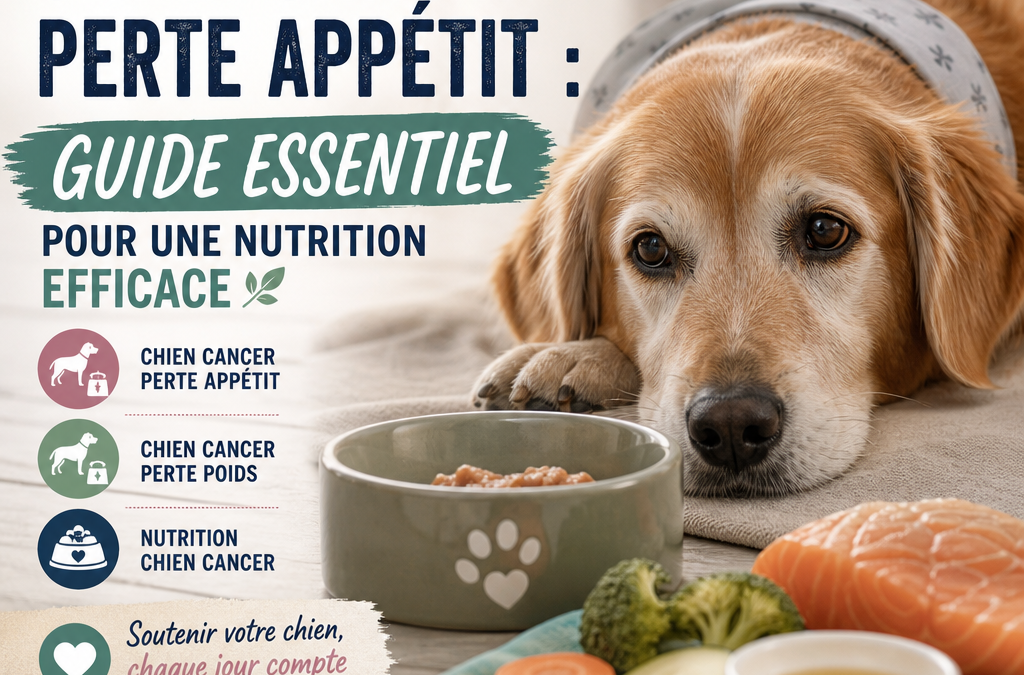
Chien cancer perte appétit : lorsqu’un chien atteint d’un cancer mange moins, chaque repas devient une source d’inquiétude pour sa famille. La diminution de l’appétit peut être liée à la maladie elle-même, aux traitements, à la douleur, aux nausées ou encore au stress. Une prise en charge nutritionnelle adaptée ne remplace pas les soins vétérinaires, mais elle peut contribuer à maintenir l’énergie, la masse musculaire et la qualité de vie de l’animal.
Table of contents
- Comprendre la perte d’appétit chez le chien atteint d’un cancer
- Quand faut-il consulter ?
- Pourquoi la masse musculaire est essentielle
- Les principes d’une nutrition adaptée
- Comment encourager un chien à manger ?
- Les compléments alimentaires sont-ils utiles ?
- Adapter les repas aux traitements
- Une approche globale pour préserver la qualité de vie
Comprendre la perte d’appétit chez le chien atteint d’un cancer
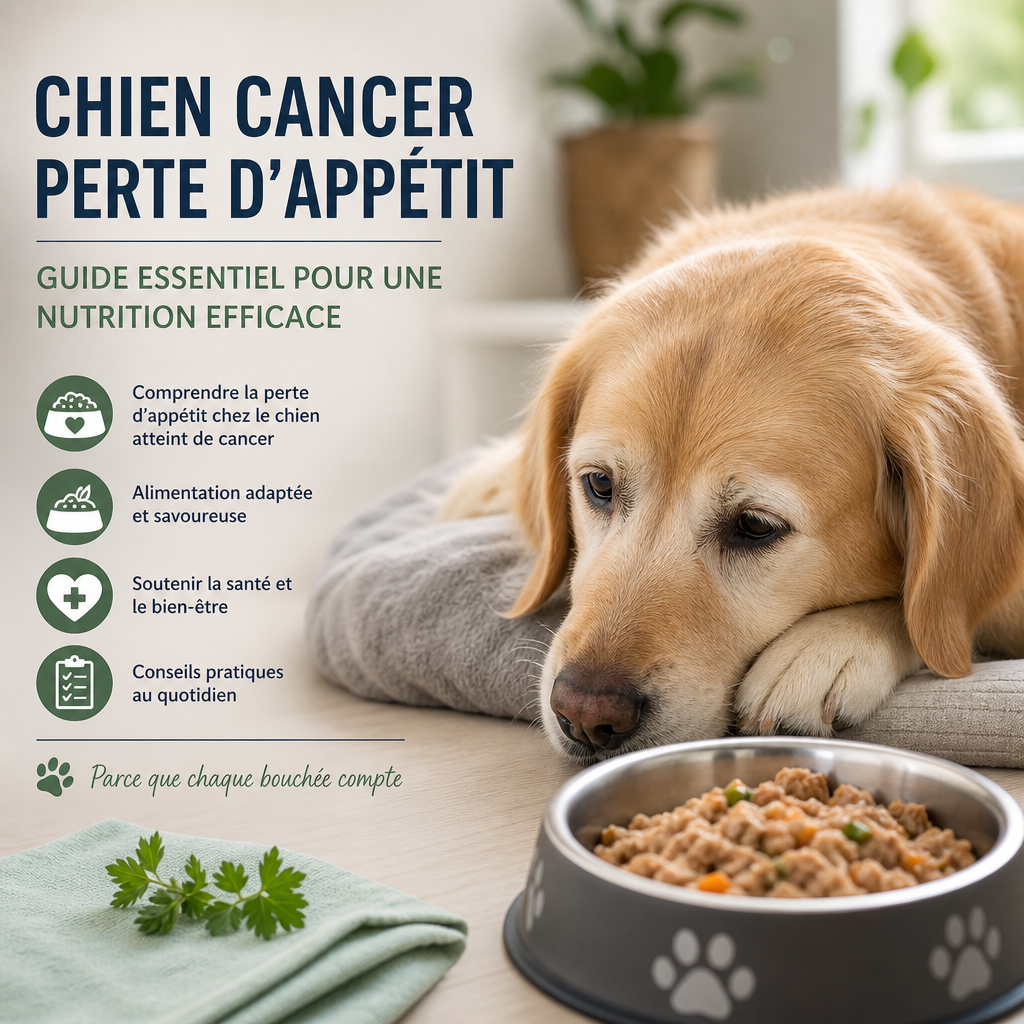
Le cancer peut modifier profondément le fonctionnement de l’organisme. Certaines tumeurs augmentent les besoins énergétiques, tandis que l’inflammation chronique perturbe l’utilisation des nutriments. Le chien peut alors perdre du poids et du muscle même lorsqu’il continue à manger une quantité apparemment correcte.
La perte d’appétit peut également être provoquée par :
- les nausées ou les vomissements ;
- la douleur ;
- les effets secondaires de la chimiothérapie ou de la radiothérapie ;
- des problèmes buccaux ou dentaires ;
- la fatigue et le stress ;
- des troubles digestifs ;
- une modification de l’odorat ou du goût ;
- une difficulté à mâcher ou à avaler.
Il est important de ne pas attribuer automatiquement cette situation au cancer. Une infection, une déshydratation, une insuffisance rénale ou un effet indésirable médicamenteux peuvent aussi expliquer le refus de manger. Une consultation vétérinaire permet de rechercher la cause et d’agir rapidement.
Pour mieux comprendre le contexte médical, vous pouvez aussi consulter des ressources fiables comme les recommandations de l’Cornell University College of Veterinary Medicine sur la nutrition et les soins vétérinaires.
Chien cancer perte appétit : quand faut-il consulter ?
Un chien qui saute exceptionnellement un repas n’est pas toujours en danger, surtout s’il reste alerte et boit normalement. En revanche, une absence d’alimentation prolongée, une perte de poids visible ou une baisse importante d’énergie doivent être signalées au vétérinaire.
Il faut consulter rapidement si le chien :
- ne mange presque plus pendant 24 heures ;
- vomit de façon répétée ;
- présente une diarrhée persistante ;
- refuse également de boire ;
- semble souffrir ou respire difficilement ;
- est très faible, désorienté ou apathique ;
- perd du poids rapidement ;
- ne parvient pas à garder les aliments ou l’eau.
Chez un animal affaibli, quelques jours de mauvaise alimentation peuvent accélérer la fonte musculaire et compliquer la récupération. Le vétérinaire pourra proposer un traitement contre les nausées, une meilleure gestion de la douleur, un stimulant de l’appétit ou une alimentation thérapeutique.
Dans les cas où la situation évolue vite, il ne faut pas attendre que le chien cancer perte appétit se dégrade davantage avant de demander conseil.
Chien cancer perte poids : pourquoi la masse musculaire est essentielle
Le terme chien cancer perte poids ne désigne pas seulement une diminution de la graisse corporelle. Dans de nombreux cas, le chien perd surtout de la masse musculaire. Cette fonte musculaire peut réduire la mobilité, affaiblir les défenses immunitaires et diminuer la tolérance aux traitements.
Le poids doit donc être surveillé régulièrement, mais il ne constitue pas l’unique indicateur. Il est utile d’observer aussi :
- la visibilité des côtes et de la colonne vertébrale ;
- le volume des muscles des cuisses et du dos ;
- la facilité à se lever et à marcher ;
- l’état du pelage ;
- le niveau d’activité ;
- la quantité de nourriture réellement consommée.
Peser le chien une fois par semaine, dans des conditions similaires, peut aider à détecter une évolution. Une perte de poids progressive doit être discutée avec le vétérinaire, même si l’animal semble encore relativement actif.
Sur ce point, un suivi attentif du chien cancer perte poids permet souvent d’intervenir avant que la fatigue ne devienne trop marquée.
Les principes d’une nutrition chien cancer adaptée
La nutrition chien cancer doit être personnalisée selon le type de tumeur, le stade de la maladie, les traitements en cours, l’âge et les éventuelles maladies associées. Il n’existe pas de régime universel capable de guérir le cancer.
De manière générale, l’objectif est de fournir une alimentation suffisamment énergétique, digestible et appétente. Les protéines de qualité sont importantes pour soutenir les muscles, mais leur quantité doit être adaptée si le chien souffre d’une maladie rénale ou hépatique. Les matières grasses peuvent augmenter la densité énergétique des repas, mais elles ne conviennent pas à tous les animaux, notamment en cas de pancréatite ou de troubles digestifs.
Veterinary therapeutic foods can be interesting, as their composition is designed to meet certain nutritional needs. However, they should be introduced gradually and chosen with the advice of a professional.
In some cases, the veterinarian may also recommend closer monitoring of hydration and body condition, especially if the dog presents a complementary nutritional support for dogs with cancer. L’objectif est de limiter la fonte musculaire sans surcharger le système digestif.
Well-thought-out cancer dog nutrition helps preserve strength, especially when appetite fluctuates from day to day.
Comment encourager un chien à manger ?
Several simple measures can make meals more appealing:
- offer small portions several times a day; ;
- serve the food slightly warmed to enhance its smell; ;
- provide meals in a quiet place; ;
- use a bowl that is easily accessible; ;
- moisten the kibble with warm water if the dog tolerates it; ;
- avoid sudden dietary changes; ;
- maintain regular feeding times; ;
- limit treats that spoil the appetite; ;
- present a diet with an appropriate texture in case of oral pain.
It is better not to force the dog to eat, as this can create a lasting aversion and increase its stress. If attempts at home fail, the veterinarian can assess the need for temporary nutritional assistance.
For some animals, a simple and stable routine helps a lot: same time, same place, same texture, and a very appetizing presentation. This approach may seem modest, but it truly supports the dog with cancer and loss of appetite on a daily basis.
When the smell of food becomes less appealing, it may be helpful to briefly offer several options that are compatible with the veterinarian's recommendations to rekindle the desire to eat.
Les compléments alimentaires sont-ils utiles ?
Supplements should be used with caution. Some products may interact with medications, disrupt coagulation, or worsen an existing condition. Omega-3 rich oils, for example, may sometimes be considered in a nutritional program, but their dosage must be validated by the veterinarian.
Vitamins, herbs, antioxidants, and products presented as capable of «fighting» cancer are not necessarily safe. A supplement should never replace chemotherapy, surgery, radiation therapy, or pain management. It is essential to communicate to the veterinarian the complete list of foods and products given to the dog.
If you wish to explore the available options further, also consult this guide on the best dietary supplement for dogs with cancer. Il rappelle les points de vigilance essentiels avant toute utilisation.
The right choice always depends on the clinical context, and a dietary supplement for dogs with cancer is only useful if it fits into a strategy validated by a professional.
Adapter les repas aux traitements
Nutritional needs may evolve over the course of the protocol. After a chemotherapy session, some dogs may experience nausea or temporary fatigue. It may then be helpful to offer smaller, digestible, and aromatic meals while following medical prescriptions.
In case of radiotherapy or surgery, the texture of food may need to be modified. If the mouth, throat, or digestive system are affected, soft food may be better tolerated. Conversely, some dogs cope better with familiar food rather than a new diet imposed during an already stressful time.
Regular follow-up allows for adjustments in quantities, meal frequency, and nutritional composition. The veterinarian can also guide the family to a specialist in animal nutrition when the situation is complex.
As the disease progresses, it may be helpful to also monitor the evolution of metastases and general signs of worsening. An article like cancer in dogs and tumor spread can help better understand the medical context, without replacing the veterinarian's advice.
In this phase, the goal remains to adapt meals to treatments without adding unnecessary stress to the dog cancer loss of appetite.
Une approche globale pour préserver la qualité de vie
Nutrition should not be considered separately from the rest of the care. Managing pain, nausea, anxiety, and fatigue directly influences the desire to eat. A comfortable dog, adequately hydrated, and settled in a reassuring environment is more likely to maintain a proper diet.
The main objective is not to enforce a perfect diet at all costs, but to preserve the well-being and strength of the animal. Careful observation, regular dialogue with the veterinarian, and quick adaptation of care often allow for better support of the dog during its illness.
In practice, monitoring weight, appetite, and muscle mass remains a very useful benchmark. For a dog with cancer and loss of appetite, the priority is to support the body without overburdening it, while adjusting the strategy day by day.
With early intervention, well-thought-out nutrition for dogs with cancer, and simple measures at home, it is often possible to improve dietary comfort and maintain quality of life for longer.
Finally, regular monitoring and quick adjustments can make a real difference when a dog with cancer and loss of appetite goes through a difficult period.