
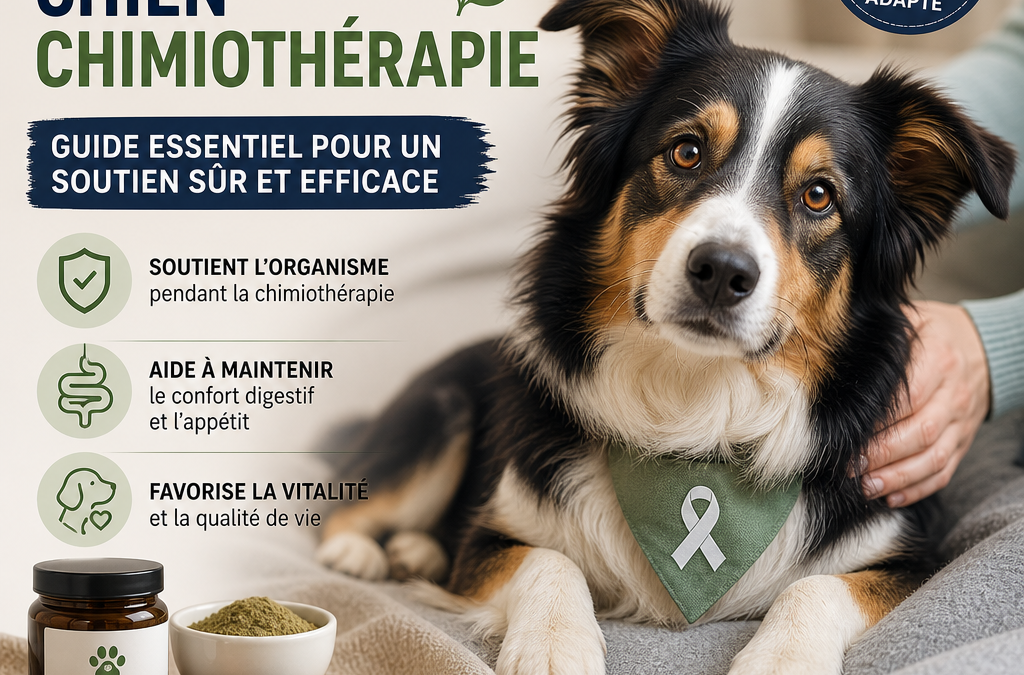
Dog supplement chemotherapy: supporting a dog with cancer requires a cautious, personalized approach that is always coordinated with the veterinarian. Some supplements can support appetite, digestion, general condition, or recovery, but they never replace cancer treatment and should not be administered without professional validation. The priority remains to preserve quality of life while avoiding interactions that could reduce the effectiveness of chemotherapy or increase its side effects.
Table of contents
Why consider a supplement for dogs during chemotherapy?
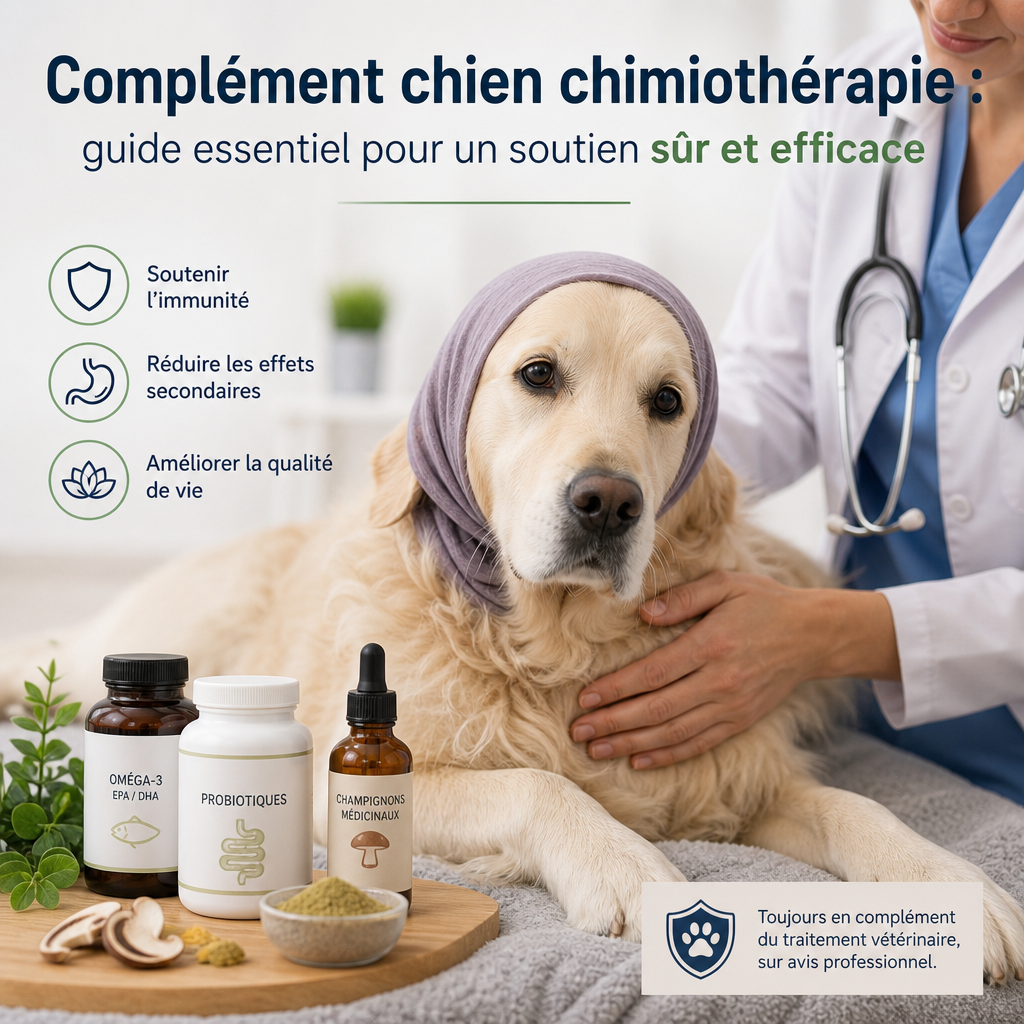
Veterinary chemotherapy is generally designed to limit side effects while controlling the disease. Despite this, some dogs may experience temporary fatigue, decreased appetite, nausea, loose stools, or digestive sensitivity. The disease itself can also alter nutritional needs and weaken the body.
A supplement can then be considered to meet a specific objective: to maintain energy intake, support muscle mass, promote normal digestion, or help the animal regain better comfort. It is not about indiscriminately stimulating immunity or «detoxifying» the body, but about supporting the functions that the dog truly needs.
Each situation is different. The type of cancer, the protocol used, other medications, age, weight, renal and hepatic function, as well as nutritional status strongly influence the choice of a product.
In this approach, a chemotherapy dog supplement must always be considered as targeted support, and not as a miracle solution. When well chosen, it can contribute to a gentler and more reassuring management for both the dog and its owner.
Supplements during dog chemotherapy: the main categories
Nutritional and energy support
Maintaining weight is an important element in dogs treated for cancer. A complete, palatable, and sufficiently caloric diet forms the basis. If the animal eats little, the veterinarian may recommend a more energy-dense food or an appropriate recovery food.
Nutritional supplements may contain proteins, fatty acids, vitamins, or minerals. However, they should not disrupt the diet or permanently replace a complete food. In a dog that refuses to eat, it is important to quickly identify the cause: nausea, pain, stress, constipation, oral inflammation, or treatment effects.
A dog chemotherapy supplement can be useful when the goal is simple and measurable, for example to limit muscle wasting or help the dog maintain a better energy level. The more precise the need, the more relevant the product choice will be.
Omega-3 fatty acids
Omega-3s, particularly EPA and DHA from purified fish oils, are sometimes used in the nutritional support of dogs with cancer. They can help maintain normal inflammatory status and support skin, coat, and overall condition.
The quality of the product is essential: it must be properly dosed, tested for contaminants, and suitable for the dog's weight. Special caution is needed in cases of coagulation disorders, pancreatitis, or the use of medications affecting platelets. The dosage should be defined with the veterinarian rather than chosen randomly based on the total amount of oil.
When used correctly, this type of dog chemotherapy supplement often fits into a broader nutritional strategy, especially when the goal is to support overall condition without overloading the protocol.
Digestive support and probiotics
Probiotics or fiber-rich supplements can sometimes help maintain digestive balance, especially in cases of irregular stools. However, diarrhea or vomiting after a chemotherapy session should not automatically be treated with a supplement. They may signal a complication requiring medical attention.
The veterinarian may recommend an appropriate probiotic strain, a temporarily more digestible diet, or treatment for nausea. Products intended for humans are not always suitable for dogs and may contain sweeteners or harmful excipients.
During periods when the intestine is more sensitive, a dog chemotherapy supplement aimed at digestive comfort can sometimes improve food tolerance and make meals more regular.
Additional resources to read
To delve deeper into the subject and compare the most suitable options, also consult ce guide sur le complément alimentaire chien cancer, which details practical advice for supporting a dog weakened by illness.
Support dog cancer chemo: essential precautions
The word «natural» does not mean «risk-free.» Some plants, essential oils, algae, medicinal mushrooms, or concentrated preparations can alter the action of medications, affect the liver or kidneys, influence coagulation, or unpredictably stimulate certain biological pathways.
Caution is particularly important with supplements marketed as immunostimulants, powerful antioxidants, or capable of enhancing the action of chemotherapy. Their effectiveness is not always demonstrated in dogs, and data obtained in humans or in the laboratory is not sufficient to guarantee their safety during a veterinary protocol.
Before any administration, provide the veterinarian with a complete list of products used: trade name, composition, dosage, frequency, and start date. This transparency allows for the evaluation of interactions and avoids duplicates, especially when several supplements already contain the same vitamins or minerals.
To better understand nutritional precautions and the quality of ingredients, you can also consult a recognized veterinary resource such as the Manuel vétérinaire Merck, which offers useful guidelines on canine health and therapeutic approaches.
In practice, a chemotherapy dog supplement should never be introduced solely based on a testimonial or commercial promise. The dog's medical context remains the only reliable starting point.
Comment choisir un complément adapté ?
A good supplement must meet an identified need and have a clearly indicated composition. Favor manufacturers who can provide precise information on the quality of raw materials, the concentration of active ingredients, and the controls performed. Beware of absolute promises like «cancer cure,» «replacement of chemotherapy,» or «total absence of side effects.».
The dosage must be calculated based on weight, health status, and the dog's protocol. Starting multiple products simultaneously is not recommended: in case of digestive reaction or allergy, it becomes difficult to identify the culprit. Introducing one change at a time, with the veterinarian's agreement, facilitates monitoring.
It is also useful to keep a notebook indicating appetite, water consumption, weight, stools, vomiting, activity level, and chemotherapy dates. These observations help the care team to quickly adjust the supportive treatment.
In some cases, a better dog cancer dietary supplement may be considered to more precisely target appetite, energy, or digestive comfort, provided it remains within a strategy validated by the veterinarian.
When can a chemotherapy dog supplement help?
In situations where appetite slightly decreases, where digestion becomes more sensitive, or where the animal seems tired, a chemotherapy dog supplement can sometimes provide useful support. The goal remains to support the dog without burdening its protocol, with simple, documented, and well-tolerated products.
It may also be considered during phases when the dog is recovering between two sessions, when the veterinary team wishes to preserve its vitality and maintain a reassuring feeding routine.
When to contact the veterinarian quickly?
A dog undergoing chemotherapy must be closely monitored, without being deprived of its usual activities. Contact the veterinarian quickly in case of repeated vomiting, significant or bloody diarrhea, complete refusal to eat, great weakness, fever, breathing difficulties, unusual pain, or dehydration.
After certain treatments, a decrease in white blood cells can increase the risk of infection. An abnormal temperature, chills, or marked lethargy therefore require prompt medical advice. Do not wait for a supplement to take effect when symptoms are significant.
If digestive signs, fatigue, or loss of appetite persist, it is necessary to review the care protocol rather than multiply products. A chemotherapy supplement for dogs should never delay a useful consultation.
A quick reaction often helps prevent a temporary discomfort from turning into a more serious problem. It is also the best way to ensure the dog's safety throughout the treatment.
A holistic approach above all
The best support relies on several complementary elements: an appropriate diet, good management of nausea and pain, a calm environment, adequate hydration, and regular veterinary check-ups. Gentle walks, rest, and maintaining reassuring habits can also contribute to well-being.
Un complément chien chimiothérapie peut trouver sa place dans cette stratégie lorsqu’il est choisi pour une indication précise et intégré au protocole médical. Utilisé avec discernement, il peut soutenir certains aspects de la santé et du confort. Utilisé sans supervision, il risque au contraire de provoquer des effets indésirables ou de compliquer le traitement. La décision la plus sûre consiste donc à privilégier la qualité de vie, l’observation quotidienne et un dialogue constant avec le vétérinaire oncologue.
En pratique, la question n’est pas seulement de savoir si l’on peut donner un complément chien chimiothérapie, mais surtout de déterminer lequel, à quel moment et avec quel objectif. Cette réflexion évite les erreurs fréquentes et aide à construire un accompagnement vraiment utile, centré sur le confort et la sécurité du chien.
Si votre chien est déjà suivi pour un cancer, notez les produits, les doses et les dates d’administration avant chaque rendez-vous. Cette simple habitude facilite l’échange avec le vétérinaire et permet d’ajuster rapidement la prise en charge si nécessaire.
Pour aller plus loin, retenez qu’un complément chien chimiothérapie n’est pertinent que s’il s’inscrit dans un suivi vétérinaire clair, avec des objectifs mesurables et une surveillance régulière. C’est cette approche qui aide le chien à traverser la chimiothérapie dans les meilleures conditions possibles.
When chosen carefully, a dog chemotherapy supplement can thus become a useful, discreet, and reassuring support, without ever replacing medical advice or the main treatment.
In summary, the best approach is to prioritize suitable products, precise monitoring, and regular communication with the veterinarian to best protect the dog during its treatment.