The complément chien radiothérapie intéresse de nombreux propriétaires qui veulent soutenir leur animal pendant un traitement contre le cancer. La radiothérapie peut aider à contrôler une tumeur, réduire une douleur ou limiter le risque de récidive, mais elle demande aussi une surveillance attentive de l’état général du chien. Alimentation, hydratation, gestion des effets secondaires et qualité de vie jouent un rôle essentiel. Toutefois, un complément alimentaire ne remplace jamais le protocole défini par le vétérinaire et doit être choisi avec prudence.
Quand on parle de complément chien radiothérapie, l’objectif n’est pas d’ajouter le plus grand nombre de produits possible, mais de soutenir le chien de manière sûre, logique et adaptée à sa situation. Certains propriétaires recherchent un produit pour améliorer l’appétit, d’autres veulent aider la récupération ou mieux accompagner les séances. Dans tous les cas, la sécurité doit rester prioritaire.
La radiothérapie utilise des rayonnements ciblés pour détruire ou endommager les cellules tumorales. Selon la localisation de la tumeur, l’objectif peut être curatif, lorsqu’une disparition complète est recherchée, ou palliatif, afin de réduire la douleur et d’améliorer le confort.
Le traitement est généralement administré en plusieurs séances. Le chien peut recevoir une anesthésie ou une sédation afin de rester parfaitement immobile. Cette succession de rendez-vous, associée à la maladie elle-même, peut provoquer de la fatigue et modifier temporairement l’appétit ou le comportement.
Les effets secondaires dépendent de la zone traitée, de la dose et de la sensibilité individuelle. Une irritation cutanée, une inflammation des muqueuses, des nausées, une baisse d’appétit ou une fatigue accrue peuvent apparaître. Tous les chiens ne présentent pas les mêmes réactions, et certains effets se manifestent plusieurs jours ou semaines après le début des séances.
Dans ce contexte, le complément chien radiothérapie doit être pensé comme un soutien complémentaire, jamais comme une solution autonome. L’état de santé global, le type de tumeur, l’âge du chien et les médicaments associés influencent fortement les choix possibles.
Complément chien radiothérapie : pourquoi la prudence est indispensable
L’idée d’utiliser un complément chien radiothérapie may seem natural, especially to support the body's defenses or maintain nutritional status. However, «natural» does not automatically mean safe. Some plants, vitamins, or antioxidant substances can alter the action of medications, influence coagulation, or interact with radiation.
High-dose antioxidant supplements should be discussed with the veterinary team. Radiotherapy works in part through mechanisms involving free radicals in tumor cells. Therefore, it cannot be assumed that a high intake of antioxidants will always be beneficial during treatment.
Before any administration, the veterinarian must know:
- the exact name of the product; ;
- the complete list of ingredients; ;
- the intended dose; ;
- other medications used; ;
- the dog's pre-existing conditions; ;
- the type, location, and stage of the tumor.
This verification helps avoid inappropriate combinations and takes into account the animal's renal, hepatic, or digestive function. It also helps identify formulas that are too rich, poorly dosed, or poorly suited for a weakened dog. When in doubt, it is better to wait for the clinic's advice before starting a new product.
An important point is to distinguish a true need from a mere hope for protection. A complément chien radiothérapie It should only be introduced if it meets a clear objective: to compensate for a deficiency, support appetite, aid digestion, or complement an already studied ration. Without a specific objective, the risk of error increases.
What support for dog cancer radiotherapy should be prioritized?
The best support for dog cancer radiotherapy often relies on simple and personalized measures rather than an accumulation of products. The priority is to maintain a sufficient intake of calories and proteins while adhering to the recommendations of the veterinarian or veterinary nutritionist.
Preserve appetite
A dog that eats less for several days risks losing weight and muscle mass quickly. To stimulate feeding, it is sometimes possible to offer smaller and more frequent meals, slightly warm the food, or use an appropriate wet diet. These changes must remain compatible with the nutritional plan established for the animal.
If nausea, pain, or inflammation prevents the dog from eating, the cause should be treated rather than relying solely on a supplement. The veterinarian may prescribe an antiemetic, pain relief treatment, or an appetite stimulant when indicated.
Promote hydration
Good hydration helps the body function properly and limits complications related to dehydration. Several bowls of fresh water can be placed in accessible locations. For some dogs, a wet diet or controlled addition of water to the ration may be helpful.
Very low consumption, repeated vomiting, significant diarrhea, or dry gums warrant a quick call to the veterinary clinic.
Maintain a calm environment
Fatigue can be exacerbated by travel and treatment sessions. The dog should be able to rest in a comfortable space, at a stable temperature and away from overly stimulating activities. Short, quiet walks are generally preferable to intense efforts, unless there is a medical contraindication.
During this period, a complément chien radiothérapie is only of interest if it fits into a coherent, simple, and consistent care routine. Better to have targeted support than a long list of products added without a specific goal.
The dog's daily life is as important as the product itself. A stable routine, a predictable meal schedule, and gentle monitoring often help improve comfort without multiplying interventions. Before thinking about the ideal supplement, one must first secure the basics: eating, drinking, resting, and quickly reporting any changes.
Supplement during dog radiotherapy: what ingredients can be considered?
Un supplement during dog radiotherapy should only be used on professional recommendation. Depending on the situation, the veterinarian may consider nutritional support containing certain fatty acids, highly digestible proteins, or nutrients aimed at correcting an identified deficiency.
Omega-3s, for example, are sometimes studied as part of the nutritional support for dogs with cancer. However, their relevance depends on the disease, the diet, the dosage, and associated treatments. They are not necessarily suitable for all animals, especially in cases of digestive disorders or bleeding risk.
Probiotics may also be offered in certain situations, but their choice must take into account the dog's immune status. Similarly, vitamins and minerals should not be added systematically: unnecessary or excessive supplementation can disrupt the diet and overload certain organs.
Dans les échanges avec la clinique, il est utile de poser des questions précises : le produit est-il compatible avec la radiothérapie ? La dose est-elle adaptée au poids du chien ? Faut-il l’interrompre avant une séance ? Ces questions de sécurité sont particulièrement importantes si vous envisagez un complément chien radiothérapie en parallèle d’autres traitements.
Le choix d’un produit doit aussi tenir compte de la forme galénique. Une poudre, une capsule, une huile ou un comprimé n’ont pas les mêmes intérêts pratiques. Un chien en perte d’appétit acceptera parfois mieux une forme mélangée à la ration, tandis qu’un autre supportera mal certains excipients. Le confort d’administration est donc un vrai critère de sécurité, parce qu’un bon produit mal toléré finit souvent abandonné.
Dans certains cas, l’approche la plus utile n’est pas un complément isolé, mais une ration formulée pour soutenir le chien pendant son traitement. Cette option peut simplifier les choses, réduire les erreurs de dosage et éviter l’empilement de produits. Là encore, l’évaluation vétérinaire reste indispensable.
Les produits à éviter sans validation vétérinaire
Les mélanges commerciaux aux compositions complexes sont difficiles à évaluer. Il faut se méfier des produits qui promettent de « guérir » le cancer, de remplacer la radiothérapie ou de stimuler fortement l’immunité. Ces affirmations sont souvent insuffisamment prouvées et peuvent retarder une prise en charge adaptée.
Some plants and essential oils also pose toxicity risks in dogs. Curcumin, St. John's wort, garlic, certain preparations of medicinal mushrooms, or essential oils should not be used haphazardly. Their effectiveness and interactions with cancer treatments vary depending on the products and doses.
It is also advised against giving supplements intended for humans without veterinary medical advice. The concentrations, excipients, and physiological needs are not the same.
To understand the risks, best practices, and limits of accompanying products, another useful reference point is this article on the better dog cancer dietary supplement, which helps to compare options methodically.
One must also remain cautious with products that combine several families of active ingredients in a single formula. The longer the composition, the more difficult it becomes to know what is useful, what is unnecessary, and what could pose a problem. In the phase of radiotherapy, simplicity is often a better strategy than an overly ambitious «all-in-one» approach.
If your dog is already receiving pain medications, antiemetics, or treatments to support its general condition, the risk of interaction increases further. This is an additional reason to validate each addition before starting a complément chien radiothérapie.
Monitor the dog's progress during treatment.
Un carnet de suivi peut aider à repérer rapidement les changements. Il est utile d’y noter le poids, l’appétit, la quantité d’eau bue, les selles, les vomissements, le niveau d’activité et l’état de la peau ou des muqueuses. Des photographies régulières de la zone irradiée peuvent également faciliter l’évaluation des réactions cutanées.
Contactez rapidement le vétérinaire en cas de refus total de nourriture, vomissements persistants, diarrhée sévère, douleur marquée, abattement inhabituel, difficultés respiratoires, saignement ou irritation importante de la zone traitée. Une intervention précoce permet souvent d’améliorer le confort et d’éviter une aggravation.
Sur ce point aussi, le complément chien radiothérapie doit être réévalué si l’état général change. Une formule bien tolérée au début peut devenir inadaptée en cas de troubles digestifs, de perte de poids ou de traitement complémentaire.
Il est utile de noter non seulement les effets indésirables, mais aussi les effets positifs observés : meilleure prise alimentaire, énergie plus stable, selles mieux formées ou récupération plus rapide après une séance. Ces informations aident le vétérinaire à décider si le produit mérite d’être poursuivi, ajusté ou arrêté.
Le suivi permet aussi d’éviter les décisions prises uniquement sur impression. Un animal peut sembler « aller mieux » pendant quelques jours, puis révéler ensuite un problème de tolérance. La vigilance doit donc rester régulière, même si le chien paraît calme ou en forme.
7 questions de sécurité à poser avant de donner un complément
Avant d’introduire un produit, demandez au vétérinaire :
Ce complément est-il compatible avec le protocole de radiothérapie ?
Peut-il interférer avec les médicaments déjà prescrits ?
Y a-t-il un risque lié aux antioxydants, aux plantes ou aux huiles ?
La dose correspond-elle exactement au poids et à l’état du chien ?
Faut-il l’arrêter avant certaines séances ou interventions ?
Quels signes doivent m’alerter pendant le traitement ?
Existe-t-il une alternative plus simple ou plus sûre ?
Ces questions permettent de transformer une inquiétude légitime en décision raisonnée. Elles aident aussi à éviter les achats inutiles et à réserver le complément chien radiothérapie aux situations où un bénéfice réel est attendu.
Si vous avez plusieurs produits sous la main, il peut être utile de les lister avec leurs ingrédients exacts avant le rendez-vous. Cela facilite l’échange avec le vétérinaire et évite les oublis. Une photo de l’étiquette peut déjà faire gagner du temps et réduire le risque d’erreur.
En définitive, le complément chien radiothérapie doit s’inscrire dans une stratégie globale comprenant nutrition adaptée, hydratation, contrôle de la douleur, suivi des effets secondaires et communication régulière avec l’équipe soignante. Le produit le plus utile n’est pas forcément le plus complexe : il doit surtout être justifié, correctement dosé et compatible avec le protocole de radiothérapie.
Choisir un complément chien radiothérapie avec discernement, c’est protéger le chien, soutenir sa qualité de vie et garder la main sur les priorités médicales. Avec un suivi attentif, des questions précises et une bonne coordination avec la clinique, il est possible d’avancer de façon plus sereine pendant toute la durée du traitement.
Chien cancer perte appétit : lorsqu’un chien atteint d’un cancer mange moins, chaque repas devient une source d’inquiétude pour sa famille. La diminution de l’appétit peut être liée à la maladie elle-même, aux traitements, à la douleur, aux nausées ou encore au stress. Une prise en charge nutritionnelle adaptée ne remplace pas les soins vétérinaires, mais elle peut contribuer à maintenir l’énergie, la masse musculaire et la qualité de vie de l’animal.
Comprendre la perte d’appétit chez le chien atteint d’un cancer
Le cancer peut modifier profondément le fonctionnement de l’organisme. Certaines tumeurs augmentent les besoins énergétiques, tandis que l’inflammation chronique perturbe l’utilisation des nutriments. Le chien peut alors perdre du poids et du muscle même lorsqu’il continue à manger une quantité apparemment correcte.
La perte d’appétit peut également être provoquée par :
les nausées ou les vomissements ;
la douleur ;
les effets secondaires de la chimiothérapie ou de la radiothérapie ;
des problèmes buccaux ou dentaires ;
la fatigue et le stress ;
des troubles digestifs ;
une modification de l’odorat ou du goût ;
une difficulté à mâcher ou à avaler.
Il est important de ne pas attribuer automatiquement cette situation au cancer. Une infection, une déshydratation, une insuffisance rénale ou un effet indésirable médicamenteux peuvent aussi expliquer le refus de manger. Une consultation vétérinaire permet de rechercher la cause et d’agir rapidement.
Pour mieux comprendre le contexte médical, vous pouvez aussi consulter des ressources fiables comme les recommandations de l’Cornell University College of Veterinary Medicine sur la nutrition et les soins vétérinaires.
Chien cancer perte appétit : quand faut-il consulter ?
Un chien qui saute exceptionnellement un repas n’est pas toujours en danger, surtout s’il reste alerte et boit normalement. En revanche, une absence d’alimentation prolongée, une perte de poids visible ou une baisse importante d’énergie doivent être signalées au vétérinaire.
Il faut consulter rapidement si le chien :
ne mange presque plus pendant 24 heures ;
vomit de façon répétée ;
présente une diarrhée persistante ;
refuse également de boire ;
semble souffrir ou respire difficilement ;
est très faible, désorienté ou apathique ;
perd du poids rapidement ;
ne parvient pas à garder les aliments ou l’eau.
Chez un animal affaibli, quelques jours de mauvaise alimentation peuvent accélérer la fonte musculaire et compliquer la récupération. Le vétérinaire pourra proposer un traitement contre les nausées, une meilleure gestion de la douleur, un stimulant de l’appétit ou une alimentation thérapeutique.
Dans les cas où la situation évolue vite, il ne faut pas attendre que le chien cancer perte appétit se dégrade davantage avant de demander conseil.
Chien cancer perte poids : pourquoi la masse musculaire est essentielle
Le terme chien cancer perte poids ne désigne pas seulement une diminution de la graisse corporelle. Dans de nombreux cas, le chien perd surtout de la masse musculaire. Cette fonte musculaire peut réduire la mobilité, affaiblir les défenses immunitaires et diminuer la tolérance aux traitements.
Le poids doit donc être surveillé régulièrement, mais il ne constitue pas l’unique indicateur. Il est utile d’observer aussi :
la visibilité des côtes et de la colonne vertébrale ;
le volume des muscles des cuisses et du dos ;
la facilité à se lever et à marcher ;
l’état du pelage ;
le niveau d’activité ;
la quantité de nourriture réellement consommée.
Peser le chien une fois par semaine, dans des conditions similaires, peut aider à détecter une évolution. Une perte de poids progressive doit être discutée avec le vétérinaire, même si l’animal semble encore relativement actif.
Sur ce point, un suivi attentif du chien cancer perte poids permet souvent d’intervenir avant que la fatigue ne devienne trop marquée.
Les principes d’une nutrition chien cancer adaptée
La nutrition chien cancer doit être personnalisée selon le type de tumeur, le stade de la maladie, les traitements en cours, l’âge et les éventuelles maladies associées. Il n’existe pas de régime universel capable de guérir le cancer.
De manière générale, l’objectif est de fournir une alimentation suffisamment énergétique, digestible et appétente. Les protéines de qualité sont importantes pour soutenir les muscles, mais leur quantité doit être adaptée si le chien souffre d’une maladie rénale ou hépatique. Les matières grasses peuvent augmenter la densité énergétique des repas, mais elles ne conviennent pas à tous les animaux, notamment en cas de pancréatite ou de troubles digestifs.
Veterinary therapeutic foods can be interesting, as their composition is designed to meet certain nutritional needs. However, they should be introduced gradually and chosen with the advice of a professional.
In some cases, the veterinarian may also recommend closer monitoring of hydration and body condition, especially if the dog presents a complementary nutritional support for dogs with cancer. L’objectif est de limiter la fonte musculaire sans surcharger le système digestif.
Well-thought-out cancer dog nutrition helps preserve strength, especially when appetite fluctuates from day to day.
Comment encourager un chien à manger ?
Several simple measures can make meals more appealing:
offer small portions several times a day; ;
serve the food slightly warmed to enhance its smell; ;
provide meals in a quiet place; ;
use a bowl that is easily accessible; ;
moisten the kibble with warm water if the dog tolerates it; ;
avoid sudden dietary changes; ;
maintain regular feeding times; ;
limit treats that spoil the appetite; ;
present a diet with an appropriate texture in case of oral pain.
It is better not to force the dog to eat, as this can create a lasting aversion and increase its stress. If attempts at home fail, the veterinarian can assess the need for temporary nutritional assistance.
For some animals, a simple and stable routine helps a lot: same time, same place, same texture, and a very appetizing presentation. This approach may seem modest, but it truly supports the dog with cancer and loss of appetite on a daily basis.
When the smell of food becomes less appealing, it may be helpful to briefly offer several options that are compatible with the veterinarian's recommendations to rekindle the desire to eat.
Les compléments alimentaires sont-ils utiles ?
Supplements should be used with caution. Some products may interact with medications, disrupt coagulation, or worsen an existing condition. Omega-3 rich oils, for example, may sometimes be considered in a nutritional program, but their dosage must be validated by the veterinarian.
Vitamins, herbs, antioxidants, and products presented as capable of «fighting» cancer are not necessarily safe. A supplement should never replace chemotherapy, surgery, radiation therapy, or pain management. It is essential to communicate to the veterinarian the complete list of foods and products given to the dog.
If you wish to explore the available options further, also consult this guide on the best dietary supplement for dogs with cancer. Il rappelle les points de vigilance essentiels avant toute utilisation.
The right choice always depends on the clinical context, and a dietary supplement for dogs with cancer is only useful if it fits into a strategy validated by a professional.
Adapter les repas aux traitements
Nutritional needs may evolve over the course of the protocol. After a chemotherapy session, some dogs may experience nausea or temporary fatigue. It may then be helpful to offer smaller, digestible, and aromatic meals while following medical prescriptions.
In case of radiotherapy or surgery, the texture of food may need to be modified. If the mouth, throat, or digestive system are affected, soft food may be better tolerated. Conversely, some dogs cope better with familiar food rather than a new diet imposed during an already stressful time.
Regular follow-up allows for adjustments in quantities, meal frequency, and nutritional composition. The veterinarian can also guide the family to a specialist in animal nutrition when the situation is complex.
As the disease progresses, it may be helpful to also monitor the evolution of metastases and general signs of worsening. An article like cancer in dogs and tumor spread can help better understand the medical context, without replacing the veterinarian's advice.
In this phase, the goal remains to adapt meals to treatments without adding unnecessary stress to the dog cancer loss of appetite.
Une approche globale pour préserver la qualité de vie
Nutrition should not be considered separately from the rest of the care. Managing pain, nausea, anxiety, and fatigue directly influences the desire to eat. A comfortable dog, adequately hydrated, and settled in a reassuring environment is more likely to maintain a proper diet.
The main objective is not to enforce a perfect diet at all costs, but to preserve the well-being and strength of the animal. Careful observation, regular dialogue with the veterinarian, and quick adaptation of care often allow for better support of the dog during its illness.
In practice, monitoring weight, appetite, and muscle mass remains a very useful benchmark. For a dog with cancer and loss of appetite, the priority is to support the body without overburdening it, while adjusting the strategy day by day.
With early intervention, well-thought-out nutrition for dogs with cancer, and simple measures at home, it is often possible to improve dietary comfort and maintain quality of life for longer.
Finally, regular monitoring and quick adjustments can make a real difference when a dog with cancer and loss of appetite goes through a difficult period.
Complément tumeur rate chien : lorsqu’une anomalie de la rate est diagnostiquée, chaque décision doit être prise avec le vétérinaire. La rate joue un rôle important dans le système immunitaire et la gestion des cellules sanguines, mais une masse splénique peut être bénigne ou maligne. Les compléments alimentaires ne remplacent donc ni les examens, ni la chirurgie, ni les traitements prescrits. Ils peuvent toutefois contribuer au confort général du chien et soutenir son organisme dans le cadre d’un suivi personnalisé.
Une tumeur de la rate peut être découverte lors d’une échographie, d’une radiographie ou d’un examen réalisé après l’apparition de symptômes. Certains chiens ne présentent aucun signe au début. D’autres montrent une fatigue inhabituelle, une baisse d’appétit, une perte de poids, des vomissements, une respiration rapide ou un abdomen distendu.
Splenic masses are sometimes non-cancerous, such as certain hematomas or benign nodules. They can also correspond to an hemangiosarcoma, an aggressive form of cancer that requires prompt management. Only the analysis of a sample, often obtained after a splenectomy, generally allows to know the exact nature of the lesion.
A tumor of the spleen can also rupture and cause internal bleeding. Sudden weakness, pale gums, a swollen belly, malaise, or collapse are veterinary emergencies.
In practice, the owner often discovers the problem during a health check or after an episode of malaise. This situation is very impressive, as the animal may seem almost normal just a few hours earlier. However, a splenic mass can evolve without visible alert for some time. This is why the diagnosis must always be confirmed by a complete clinical examination, followed by the necessary imaging and laboratory tests. Prompt management increases the chances of understanding the situation and acting correctly, especially when a spleen tumor in the dog is suspected.
It should also be noted that not all masses are synonymous with cancer. A benign mass can still cause mechanical complications, abdominal discomfort, or rupture. The prognosis therefore depends on the type of lesion, the general condition of the dog, and the timing of its discovery. The more precise the medical record, the better the veterinarian can recommend appropriate supportive care, including when it comes to spleen tumor dog supplement.
Quel rôle pour un complément tumeur rate chien ?
A supplement intended for a dog with a tumor should be considered as support, never as an autonomous anticancer treatment. Its goal may be to help maintain the general condition, appetite, digestion, muscle mass, or quality of life.
In this context, the term spleen tumor dog supplement mainly refers to nutritional support and not a curative solution. Before any administration, the veterinarian must be aware of the products being considered. Some ingredients may alter coagulation, influence liver or kidney function, or interact with chemotherapy, anti-inflammatories, or pain control medications. This precaution is particularly important in a dog with a spleen abnormality, as the risks of bleeding and anemia must be assessed.
A relevant supplement depends notably on:
the type of tumor and its stage; ;
the state of the liver and kidneys; ;
the dog's appetite and weight; ;
any treatments already prescribed; ;
any digestive disorders; ;
the presence or absence of anemia; ;
the date of any potential surgical intervention.
In some cases, the veterinarian may prefer a very gradual approach. It is then a matter of observing digestive tolerance, energy, food intake, and general comfort, in order to determine if a spleen tumor dog supplement provides a real benefit. This approach avoids unnecessarily multiplying products.
It is also important to keep in mind that health status can evolve rapidly. A dog that seems stable one day may show marked fatigue, increased pain, or a sudden drop in appetite the next day. That is why any spleen tumor dog supplement must remain integrated into regular veterinary follow-up and careful observation at home.
Proper use often relies on modest but concrete goals: helping to eat a little better, supporting digestion, limiting certain discomforts, and preserving available energy for daily activities. In a complex situation, a spleen tumor dog supplement does not aim to do «more,» but to do «better» with caution.
Tumeur rate chien soutien : les priorités au quotidien
The most effective support starts with simple and regular measures. The diet should be appetizing, digestible, and tailored to the dog's needs. In case of decreased appetite, it is often preferable to offer several small meals rather than one large ration. Texture, temperature, and smell can be adjusted to encourage food intake.
Monitoring weight is also essential. A gradual loss of muscle mass can weaken the animal and reduce its ability to recover after surgery or during treatment. The veterinarian may recommend a more energy-dense diet, increased protein intake, or a specific therapeutic ration. To go further on the nutritional approach, you can also consult this guide on the best dietary supplements for dogs with cancer..
Rest should be balanced with gentle activity. Rough play, jumping, and intense exertion should be avoided when a splenic mass poses a risk of rupture. Short, calm walks tailored to the dog's physical condition can help maintain its morale and mobility.
It is also helpful to maintain a stable routine. Fragile dogs often respond better to regular meals, outings, and rest times. This stability helps limit stress and facilitates the observation of any changes in general condition.
The dog's comfort also depends on the environment. Easy access bedding, non-slip flooring, a bowl at the right height, and a quiet space can make a real difference. These small adjustments, combined with a spleen tumor dog supplement if the veterinarian allows it, contribute to a better quality of life on a daily basis.
Lorsque la douleur est présente, il est important de ne rien improviser. Certains chiens deviennent moins actifs, se cachent ou refusent de s’alimenter. Dans ces situations, le spleen tumor dog supplement ne doit pas être envisagé comme une réponse unique, mais comme une pièce d'un ensemble comprenant le contrôle de la douleur, l'hydratation, l'alimentation et les examens de suivi.
La gestion du stress compte aussi beaucoup. Un environnement trop agité, des changements de rythme ou des manipulations répétées peuvent fatiguer davantage un chien déjà fragilisé. Un espace paisible, des gestes doux et des repères constants favorisent l'apaisement. Dans une démarche de tumeur rate chien soutien, ces détails ont souvent autant de valeur qu'un produit bien choisi, car ils influencent directement le confort et l'observance des soins.
Quels ingrédients sont parfois envisagés ?
Certains compléments sont étudiés pour leur intérêt nutritionnel ou antioxydant, mais leur utilisation doit rester encadrée. Les acides gras oméga-3, notamment issus d'huiles marines purifiées, peuvent soutenir l'équilibre nutritionnel et contribuer au maintien de l'état général. Leur dosage doit cependant être adapté, surtout en cas de troubles de la coagulation ou de chirurgie prévue.
Les probiotiques peuvent être utiles chez certains chiens souffrant de déséquilibres digestifs, notamment après une antibiothérapie ou lors d'un changement alimentaire. Ils ne traitent pas la tumeur, mais peuvent favoriser une meilleure tolérance digestive.
Vitamins, minerals, or antioxidants may be indicated in case of documented deficiency. It is not recommended to multiply products without control, as an excess of certain nutrients can become harmful or disrupt medical management.
Plants and products referred to as «natural» require particular vigilance. Turmeric, ginkgo, certain preparations of medicinal mushrooms, or concentrated extracts can affect coagulation, the liver, or the metabolism of medications. Natural does not automatically mean safe.
In a cautious approach, some veterinarians first rely on reference sources before validating an ingredient. The guidelines published by the American College of Veterinary Internal Medicine are useful for better understanding the precautions related to supportive treatments: Collège américain de médecine interne vétérinaire.
When it comes to choosing, it may be helpful to compare the formulation with the desired objective. A product intended to support appetite, for example, does not meet the same needs as a product focused on digestion or recovery. The right spleen tumor dog supplement is therefore the one that corresponds to the actual clinical situation, and not to a general marketing promise.
It is also preferable to check the simplicity of the formula. A product with too many ingredients can complicate the identification of an intolerance or side effect. Conversely, a readable formulation, with clear dosages, facilitates dialogue with the veterinarian and the evaluation of results. For a weakened dog, this clarity is reassuring and practical.
Enfin, certains compléments peuvent être intéressants à court terme, puis ne plus l’être si l’appétit change, si un traitement démarre ou si une intervention est programmée. C’est pourquoi l’usage d’un spleen tumor dog supplement doit rester souple et réévalué régulièrement. La meilleure option aujourd’hui n’est pas forcément la meilleure dans trois semaines.
Complément chien cancer : comment choisir un produit sérieux ?
Un complément chien cancer doit présenter une composition claire, un dosage précis et une traçabilité satisfaisante. Il est préférable de choisir un produit formulé pour les chiens, fabriqué selon des normes contrôlées, et accompagné d’indications précises concernant le poids et les contre-indications.
Les promesses de guérison, de destruction des cellules cancéreuses ou de remplacement de la chimiothérapie doivent inspirer la méfiance. Aucun complément ne peut garantir la disparition d’une tumeur. Les produits réellement utiles sont ceux qui s’intègrent à une stratégie globale : nutrition, douleur, prévention des nausées, contrôle des infections, suivi sanguin et soutien psychologique de l’animal.
Le vétérinaire peut également recommander d’arrêter temporairement certains compléments avant une opération ou pendant une phase de traitement particulière. Il est donc important de signaler tout produit utilisé, même s’il est vendu sans ordonnance.
Lorsque la chirurgie est envisagée, le dialogue est d’autant plus important. Certains produits peuvent sembler anodins, mais ils sont parfois inadaptés juste avant une intervention. Un spleen tumor dog supplement peut être utile à un moment donné, puis devoir être suspendu ensuite selon le contexte clinique.
Points de vigilance avant l’achat
Avant de choisir un produit, vérifiez la liste des ingrédients, la dose quotidienne recommandée, les avertissements concernant le saignement, la qualité des matières premières et la présence éventuelle d’un avis vétérinaire. Un produit simple, lisible et bien documenté est souvent plus rassurant qu’une formule très longue aux effets mal expliqués.
Si le chien suit déjà un traitement, notez chaque complément dans un carnet ou sur votre téléphone. Cette habitude aide le vétérinaire à repérer plus vite une interaction possible. Elle permet aussi de savoir si le spleen tumor dog supplement a été utile, neutre ou mal toléré au fil des semaines.
Avant toute commande, il est également judicieux de vérifier que la quantité de principes actifs correspond bien au poids réel de l’animal. Un produit trop concentré peut augmenter le risque d’effets indésirables, tandis qu’un produit trop faiblement dosé peut n’apporter aucun soutien concret. La prudence reste la meilleure approche pour un spleen tumor dog supplement.
Un bon réflexe consiste aussi à demander depuis combien de temps le produit est sur le marché, comment il est conservé et s’il existe des recommandations spécifiques pour les chiens âgés ou affaiblis. Ce type d’information ne remplace pas l’avis vétérinaire, mais aide à trier plus facilement les options sérieuses des solutions trop vagues. Dans le contexte d’un spleen tumor dog supplement, mieux vaut privilégier la transparence que la sophistication marketing.
Questions fréquentes sur le complément tumeur rate chien
Peut-on donner un complément sans l’avis du vétérinaire ?
Il est déconseillé d’ajouter un complément sans validation, surtout si une chirurgie, une chimiothérapie ou un traitement contre la douleur est en cours. Une tumeur de la rate peut s’accompagner de risques particuliers, notamment de saignement. Le vétérinaire peut donc vérifier la compatibilité avant de valider un produit.
Un complément peut-il remplacer les médicaments ?
Non. Un complément tumeur rate chien n’a pas vocation à remplacer un traitement médical. Il peut accompagner l’animal, mais ne doit jamais se substituer aux prescriptions, aux contrôles sanguins ou à une intervention recommandée par l’équipe vétérinaire.
Combien de temps faut-il pour voir un effet ?
Le délai varie selon le produit, l’état du chien et l’objectif recherché. Parfois, l’effet attendu concerne surtout le confort digestif ou l’appétit, et il faut alors observer les changements sur plusieurs jours ou semaines. L’important est de suivre l’évolution avec méthode plutôt que de changer de produit trop rapidement.
Faut-il arrêter les compléments avant une opération ?
Souvent oui, au moins pour certains produits. Cela dépend des ingrédients, du risque hémorragique et du type d’intervention. C’est une question à poser avant l’opération afin de sécuriser le protocole anesthésique et chirurgical.
Suivi médical et signes d’alerte
Le suivi peut inclure des analyses sanguines, des échographies, des contrôles du poids et une évaluation régulière de la qualité de vie. Il faut noter les changements d’appétit, de comportement, de respiration, de couleur des gencives et de niveau d’activité.
Une consultation urgente s’impose en cas de faiblesse brutale, d’effondrement, de gencives très pâles, de ventre qui augmente rapidement de volume, de respiration difficile ou de douleur intense. Ces signes peuvent révéler une hémorragie interne ou une complication grave.
Ultimately, a spleen tumor dog supplement peut avoir une place dans les soins de soutien, à condition d’être choisi avec prudence et intégré à un protocole vétérinaire. L’objectif principal reste de préserver le confort, l’énergie et la qualité de vie du chien, tout en traitant rapidement les complications et en respectant les besoins spécifiques de chaque animal.
Si votre chien a déjà reçu un diagnostic de masse splénique, le plus important est de garder une approche progressive : observer, noter, échanger avec le vétérinaire, puis ajuster les soins de soutien selon l’évolution. Dans ce cadre, le bon usage d’un spleen tumor dog supplement dépend toujours du dossier médical complet, et non d’un conseil générique valable pour tous les chiens.
Enfin, n’oubliez pas qu’un spleen tumor dog supplement ne remplace ni l’urgence en cas de rupture splénique, ni les examens de suivi, ni les décisions thérapeutiques prises avec l’équipe vétérinaire. Il sert uniquement à accompagner l’animal de façon raisonnée et personnalisée.
The most useful thing, in the end, is to keep a global vision: adapted diet, clinical monitoring, rest, pain management, and regular exchanges with the veterinarian. In this context, a spleen tumor dog supplement can complement supportive care, without ever taking the place of diagnosis or medical treatment.
This reassuring approach allows for a better experience during the sometimes long and unpredictable stages of a splenic mass. By staying attentive to warning signs, choosing serious products, and seeking professional advice before each change, you maximize the chances of providing your dog with safe and consistent support.
If the situation stabilizes after the initial examinations, it may be useful to regularly review priorities with the veterinarian: maintaining appetite, supporting hydration, protecting the digestive system, and avoiding interactions between products. At this stage, the spleen tumor dog supplement remains a tool among others, useful only if it fits into a clear, simple, and followed care strategy.
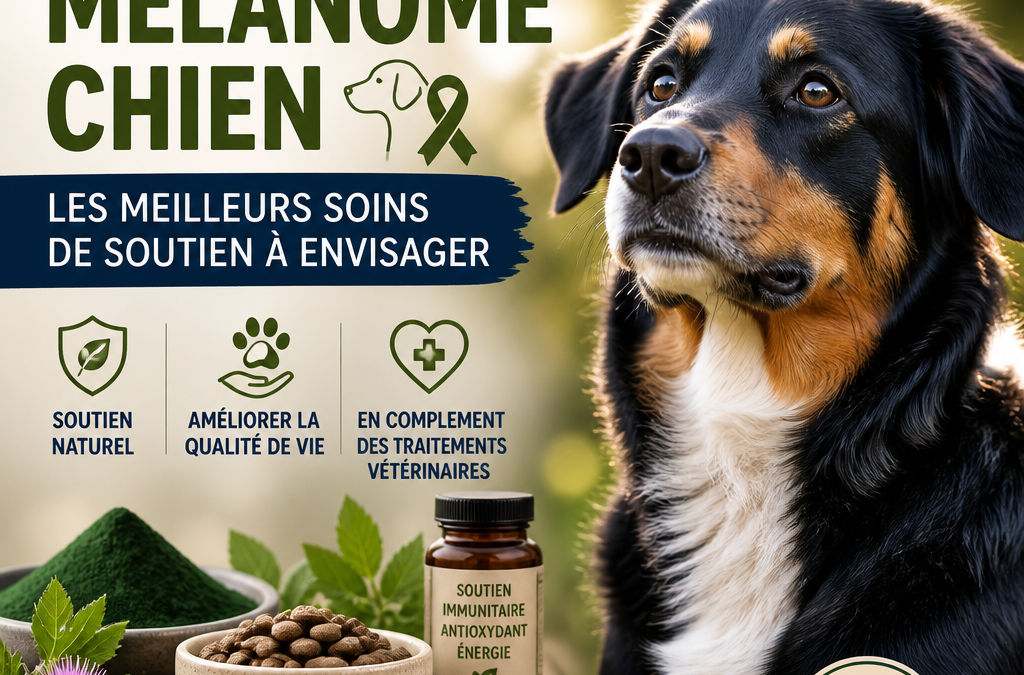
The complément mélanome chien peut aider à soutenir l’organisme d’un animal atteint, mais il ne remplace jamais le diagnostic, la chirurgie, l’immunothérapie ou tout autre traitement recommandé par le vétérinaire. Le mélanome est une tumeur formée à partir des mélanocytes, les cellules responsables de la pigmentation. Chez le chien, il peut apparaître dans la bouche, sur la peau, au niveau des doigts ou autour des yeux. Son évolution dépend notamment de sa localisation, de sa taille, de son grade et de la présence éventuelle de métastases. Une approche globale associe donc les soins médicaux à une alimentation adaptée, une surveillance attentive et des mesures visant à préserver la qualité de vie.
Tous les mélanomes canins ne présentent pas le même comportement. Les mélanomes cutanés de petite taille, notamment lorsqu’ils se développent sur des zones peu pigmentées, peuvent parfois être moins agressifs. En revanche, les mélanomes situés dans la cavité buccale ou au niveau des doigts sont souvent plus susceptibles d’évoluer rapidement.
The signs depend on the area concerned. A pigmented mass that changes appearance, persistent bad breath, bleeding in the mouth, difficulty eating, limping, or local swelling should prompt a consultation. The veterinarian may recommend cytology, a biopsy, blood tests, and imaging examinations to accurately assess the situation.
The main treatment may include surgical excision, radiotherapy, immunotherapy, or a combination of several options. Dietary supplements are only involved as support, after validation by the professional caring for the animal. To better understand tumor progression and possible consequences, you can also consult this article on metastasis and the spread of cancers in dogs.
As part of a complément mélanome chien, it is useful to keep a simple vision: the goal is not to promise a miraculous action, but to help the animal better endure the care, to maintain its strength, and to limit certain daily discomforts.
A supplement intended for a dog with melanoma should not be presented as an autonomous anticancer treatment. Its potential interest rather concerns the support of important functions during the disease or treatments: maintenance of general condition, nutritional intake, muscle support, digestive comfort, and assistance in recovery.
The choice must meet a clearly identified need. A dog that is losing weight will not have the same priorities as an animal that is eating normally but shows significant fatigue after a procedure. Similarly, a product suitable for a dog with healthy kidneys may be contraindicated in an animal suffering from kidney failure.
Before any administration, it is essential to check the composition, dosages, and any potential interactions with prescribed medications. Products intended for humans are not always suitable for dogs, as certain substances or concentrations may be toxic.
Un complément mélanome chien Bien choisi doit rester cohérent avec les priorités cliniques du moment. Si l’animal est douloureux, la priorité est d’abord le contrôle de la douleur. Si l’appétit baisse, il faut d’abord sécuriser les apports alimentaires. Si la tumeur provoque des saignements ou une gêne importante, la surveillance vétérinaire devient la base de tout le reste.
It is also important to distinguish between two situations. Some dogs receive a supplement to support recovery after surgery. Others need broader support, for example when the tumor is advanced or accompanied by persistent fatigue. In both cases, the strategy must be individualized.
Soutien nutritionnel et maintien du poids
Loss of appetite and weight loss can weaken a dog with cancer. A complete, palatable, and sufficiently energetic diet is therefore a priority. The veterinarian may recommend a therapeutic diet or a personalized ration based on age, weight, activity, tumor location, and any associated diseases.
Proteins play an important role in maintaining muscle mass, but their quantity must be adapted to the animal's profile. Fats can increase the energy density of meals, while some dogs may not tolerate them well digestively. It is also important to consider nausea, pain, or difficulty chewing when a melanoma affects the mouth.
To stimulate appetite, it can sometimes be helpful to offer small portions several times a day, to slightly warm the food, or to choose a texture that is easier to swallow. Any significant modification should, however, be gradual and monitored. In some cases, the veterinarian may recommend a better dog cancer dietary supplement adapted to the animal's profile to help maintain energy and appetite.
Monitoring weight once a week helps to quickly spot muscle wasting or a decline in overall condition. Even a modest variation can be significant in a sick dog, especially if it is accompanied by a decrease in meals or a change in behavior.
When evaluating a complément mélanome chien, the most useful criterion often remains its ability to support daily life without worsening digestive disorders. A product that is too rich, poorly tolerated, or difficult to administer quickly becomes counterproductive, even if it seems interesting on paper.
For some dogs, nutritional adjustment involves more frequent meals, a softer texture, or better palatability. For others, it is mainly about avoiding sudden changes and maintaining a stable routine. The veterinarian may also suggest monitoring food intake for several days to identify the best options.
If the dog eats less, one should not wait for weight loss to be visible to react. Muscle wasting can begin before apparent weight loss. This is why regular monitoring of weight, body condition, and muscle mass is so important in the follow-up of an animal with cancer.
Oméga-3, vitamines et antioxydants : prudence et mesure
Omega-3s, particularly from fish oil, are often studied in the context of nutritional support for sick dogs. They can contribute to the balance of the diet and the maintenance of skin and coat. However, they must be used at a dose appropriate to the animal's weight and health status. An excessive amount can cause digestive disorders or pose problems in some dogs.
Vitamins and antioxidants also require caution. A complete diet generally covers current needs, and unjustified supplementation can lead to imbalances. Some antioxidants or plant extracts can alter the action of medications or influence coagulation.
In the search for a complément mélanome chien, quality and transparency are more important than the number of ingredients. It is better to choose a clearly labeled formula, designed for dogs and recommended by a veterinarian, rather than a mixture presented as capable of curing the tumor.
The choice of a product must also take into account digestive tolerance. A dog that is already weakened may react to a change in formula, even when the ingredients seem simple. Introducing a new product one at a time makes it easier to identify any intolerance.
Omega-3s can sometimes be considered in a support strategy, but they do not replace clinical evaluation or cancer treatment. A good practice is to ask what exact dose is relevant, for how long, and with what concrete objective. This approach avoids excesses and limits disappointments.
On the vitamin side, the temptation is often to “boost” the animal as much as possible. However, in sick dogs, more is not always better. An excessively high intake of certain vitamins can disrupt the overall balance, especially if the animal is already receiving a complete diet. This is why each complément mélanome chien should be considered as a piece of the puzzle and not as an isolated solution.
Antioxidants deserve the same caution. Their role is sometimes mentioned to support cells against oxidative stress, but their use must remain consistent with the medical protocol. In case of doubt, the veterinarian or veterinary oncologist is best placed to arbitrate between potential benefit and risk of interaction.
Mélanome chien soutien : améliorer le confort au quotidien
The melanoma dog support is not limited to dietary supplements. Daily comfort is a major component of care. Effective pain management can improve appetite, sleep, mobility, and interactions with family. Pain relief medications should be prescribed and adjusted by the veterinarian.
The environment can also be adapted. A comfortable bed, stable temperature, less slippery floors, and easy access to water reduce unnecessary effort. If the dog suffers from a mouth lesion, soft meals can facilitate eating. In case of lameness, it is better to limit intense activities while maintaining short outings suited to its abilities.
Quality of life should be assessed regularly. Appetite, pain, breathing, mobility, hygiene, sleep, and interest in usual activities are useful indicators. Noting these elements over the days allows for quicker detection of deterioration.
Les moments de repos doivent être respectés, mais il ne faut pas non plus laisser l’animal s’isoler complètement. Un chien qui garde des repères familiers et un rythme de vie prévisible récupère souvent mieux au quotidien.
Une routine simple aide beaucoup : repas aux mêmes horaires, sorties régulières, zone de couchage calme et interactions rassurantes. Chez un chien atteint de cancer, ce cadre réduit le stress inutile. Le stress n’explique pas la maladie, mais il peut compliquer l’alimentation, le sommeil et l’acceptation des soins.
Il faut aussi penser à la bouche, souvent trop peu observée. Quand le mélanome touche la cavité buccale, la gêne peut être discrète au début puis s’aggraver rapidement. Une diminution du temps passé à mâcher, un refus de certains aliments, une salivation accrue ou une haleine plus forte doivent alerter. Dans ce contexte, le complément mélanome chien le plus pertinent est souvent celui qui facilite la prise en charge globale sans ajouter de contrainte supplémentaire.
Enfin, le soutien psychologique de la famille compte aussi. Un chien sensible perçoit les changements de rythme et de ton. Lui parler calmement, éviter les manipulations inutiles et rester cohérent dans les soins peuvent améliorer son confort émotionnel et rendre les traitements plus faciles à vivre.
Les plantes et produits naturels : une vigilance indispensable
Natural products are not automatically safe. Turmeric, certain seaweeds, medicinal mushrooms, essential oils, and various plants are sometimes suggested to support dogs with cancer. However, their effectiveness in canine melanoma remains variably documented, and some may interact with chemotherapy, immunotherapy, anti-inflammatory drugs, or anticoagulants.
Essential oils are particularly delicate to use in dogs and should not be administered orally without specialized veterinary supervision. Similarly, a product that seems to improve immunity could theoretically disrupt a treatment aimed precisely at modulating the immune response.
Before introducing a plant or extract, it is essential to communicate to the veterinarian the exact name of the product, its concentration, and the intended dose. This precaution helps avoid risky combinations and maintain consistent care.
Another common mistake is to multiply products in the hope of increasing the chances of success. In practice, this mainly makes it more difficult to identify a side effect or intolerance. If a dog is already taking several medications, it is better to simplify as much as possible what is not essential.
In the case of a complément mélanome chien, the most cautious approach often remains the most reasonable: one addition at a time, close monitoring, and then a reevaluation with the veterinarian. This framework limits risks and allows for a clear view of what truly helps the animal.
Suivi vétérinaire et signes d’alerte
Un complément mélanome chien should never delay a consultation. A rapid increase in mass, bleeding, increasing difficulty eating or breathing, repeated vomiting, marked fatigue, or significant weight loss require prompt professional advice.
Follow-up appointments are used to monitor the tumor, look for possible metastases, monitor side effects, and adjust treatments. Regular tests may be necessary, especially if the dog is receiving multiple medications or suffers from a chronic illness.
The veterinarian can also help prioritize: controlling pain, maintaining hydration, supporting nutrition, and reducing potential side effects. This coordination avoids multiplying unnecessary products and simplifies long-term management.
It is helpful to prepare for appointments with a few simple notes: appetite, weight, meal frequency, energy level, episodes of pain, vomiting, abnormal stools, and visible changes in mass. This information often provides a more accurate picture than the general impression at the moment.
If the dog has an oral tumor, it is also important to monitor the ability to chew, swallow, and open the mouth without pain. If the lesion is on the skin, the appearance of the mass, the presence of ulceration, and any excessive licking should be checked. If it is located on a toe, limping and local swelling are particularly useful signals.
This vigilance is not meant to cause unnecessary worry, but to act quickly when it matters. The earlier changes are detected, the easier it is to adjust treatment and improve the animal's comfort.
In summary, the best complément mélanome chien is the one that meets a real need, integrates into a balanced diet, and remains compatible with the veterinary protocol. The most effective support relies on a combination of care: tumor treatment, appropriate nutrition, pain management, comfortable environment, and attentive observation. This personalized approach helps to preserve the dog's well-being as much as possible throughout its support.
When the goal is to support a sick animal, consistency matters as much as the choice of product. A complément mélanome chien Correctly selected, administered with moderation, and regularly reassessed can contribute to overall comfort, without ever forgetting that veterinary follow-up remains the central pillar of care.
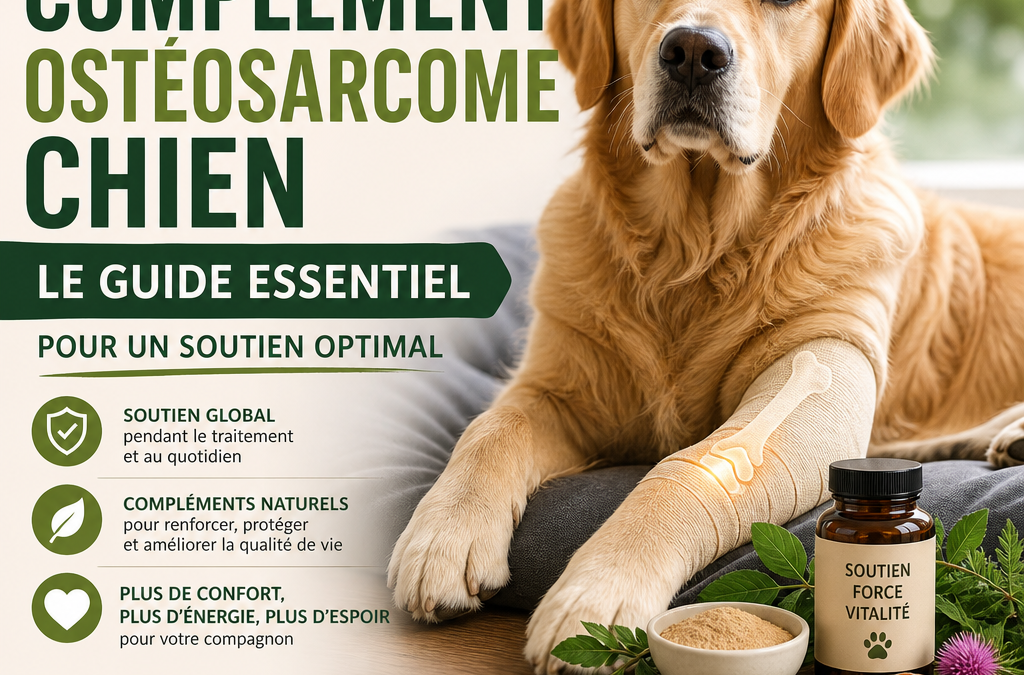
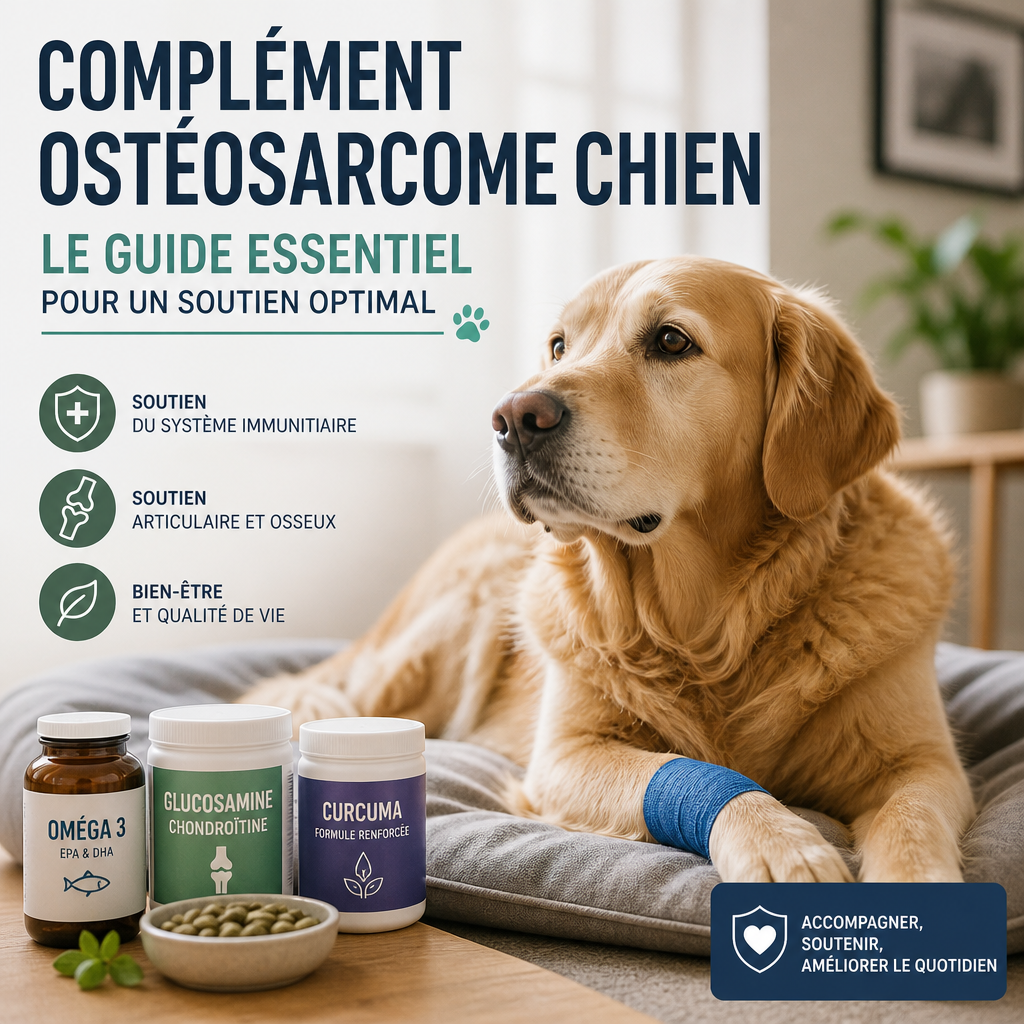
Complément ostéosarcome chien : lorsqu’un chien reçoit ce diagnostic, chaque décision concernant son alimentation, son confort et son accompagnement mérite une attention particulière. Les compléments alimentaires peuvent parfois contribuer au soutien général de l’organisme, mais ils ne remplacent jamais les traitements vétérinaires ni un suivi médical adapté. L’objectif est de mieux comprendre leur rôle, leurs limites et les précautions indispensables avant toute utilisation.
Dans un contexte de cancer osseux, la priorité reste de préserver la qualité de vie du chien, de limiter la douleur et de soutenir l’appétit. Un complément ostéosarcome chien peut alors s’inscrire dans une stratégie globale, toujours validée par le vétérinaire et ajustée selon l’évolution clinique.
L’ostéosarcome est une tumeur osseuse agressive qui touche principalement les chiens de grande taille ou de format géant. Il se développe souvent au niveau des membres, mais peut également concerner d’autres os. Les signes les plus fréquents sont une boiterie persistante, une douleur, un gonflement localisé ou une diminution progressive de l’activité.
La prise en charge dépend de plusieurs facteurs : localisation de la tumeur, état général du chien, éventuelle propagation et projet de vie défini avec le vétérinaire. La chirurgie, la chimiothérapie, les traitements antalgiques et les soins palliatifs peuvent être envisagés selon la situation. Dans tous les cas, un complément alimentaire doit être considéré comme un soutien et non comme un traitement anticancéreux.
Pour mieux comprendre l’évolution possible de la maladie et l’importance d’une surveillance attentive, il peut être utile de consulter une ressource vétérinaire sur la propagation tumorale, comme cet article de référence sur la présentation clinique de l’ostéosarcome chez le chien.
Quel peut être le rôle d’un complément ostéosarcome chien ?
Un complément ostéosarcome chien peut être proposé pour accompagner certains besoins associés à la maladie ou à ses traitements. Selon sa composition, il peut viser le maintien de l’appétit, le soutien nutritionnel, la protection des articulations, la préservation de la masse musculaire ou l’aide au fonctionnement normal du système immunitaire.
Cependant, les bénéfices dépendent fortement de l’état du chien. Un animal qui mange correctement, conserve un poids stable et tolère bien ses traitements n’aura pas forcément les mêmes besoins qu’un chien présentant une perte d’appétit, une fonte musculaire ou des troubles digestifs.
The supplement must therefore meet a specific objective. A formula that is very rich in certain nutrients is not necessarily suitable for all dogs, and the accumulation of several products can lead to imbalances or interactions.
In some cases, the veterinarian may also recommend a diet that is more energy-dense, more palatable, or easier to digest. The idea is to improve overall intake without unnecessarily overloading the body.
Before purchasing any product, it is useful to check whether the main need concerns energy, appetite, mobility, or digestive comfort. This step avoids using a too general osteosarcoma dog supplement when more targeted support would be more relevant.
It should also be noted that an osteosarcoma dog supplement can only complement a coherent medical strategy. When integrated into a structured veterinary follow-up, it can help better navigate certain more difficult periods, especially if the animal eats less or tires quickly.
In practice, the role of the supplement is often to support daily life, not to disrupt the prognosis. This nuance is important, as it allows for maintaining realistic expectations and avoiding disappointments related to overly ambitious promises.
Les nutriments à examiner avec prudence
Certain ingredients are regularly present in supplements intended for weakened dogs. Omega-3 fatty acids, particularly from fish oils, can help maintain a balanced inflammatory response and support overall health. Their use should, however, be validated by the veterinarian, especially in cases of medication treatment or coagulation disorders.
Quality proteins are essential for preserving muscle mass. In the context of a dog bone cancer supplement, it is often more relevant to check the entire ration and energy intake rather than choosing an isolated product. A medicated food or an adapted diet can sometimes be more useful than a powder or tablet supplement.
Antioxidants, vitamins, and minerals should also be used judiciously. Some treatments can be influenced by high doses of particular nutrients. It is therefore not advisable to give large quantities of vitamins or to mix several formulas without professional advice.
Probiotics may sometimes be considered when appetite is fluctuating or digestion is fragile, but they are not suitable for all situations. The most important thing remains to target the real need, rather than piling up solutions.
It is also recommended to check the dog's digestive tolerance before introducing a new product. An osteosarcoma dog supplement may seem interesting on paper but become unnecessary if it causes nausea, loose stools, or food refusal.
Some owners are also interested in the nutrients used to support dogs with distant tumors, as the progression of bone cancer can raise many questions. To delve deeper into this point, a useful article is available on the Metastasis in dogs and understanding tumor spread, which can help better grasp the stakes of a global support.
It is also important to remember that some natural supplements contain complex mixtures. The longer the formula, the greater the risk of interaction or poor tolerance. A simple approach is often preferable, especially when a dog is already undergoing several treatments.
Soutien ostéosarcome chien : les priorités au quotidien
Support for osteosarcoma in dogs does not rely solely on dietary supplements. Comfort and quality of life must remain priorities. Pain management is fundamental: a painful dog may eat less, have difficulty sleeping, lose muscle, and become disinterested in its environment.
Home modifications can also make a big difference. Non-slip rugs, thick bedding, a ramp to avoid stairs, and short outings adapted to its abilities can limit unnecessary efforts. It is important to respect its pace without encouraging activities that would worsen pain or fatigue.
Regular monitoring of weight, appetite, mobility, sleep, and behavior allows for the quick detection of deterioration or, conversely, the evaluation of the effectiveness of the measures implemented.
Good follow-up also helps to know if the chosen dog osteosarcoma supplement is truly useful or if the strategy needs to be readjusted. This point is often more important than the product itself.
In this logic, support must remain concrete: offering easier-to-eat meals, breaking down portions, promoting a calm environment, and maintaining familiar landmarks can provide immediate comfort to the dog. Together, they form a reassuring support, much more effective than an accumulation of products.
When mobility decreases, it may also be useful to reduce unnecessary movements and secure passage areas. A comfortable dog expends less energy, which leaves more room for appetite and rest.
Dog osteosarcoma support also involves regularity. Stable routines, meal times close from one day to the next, and a predictable environment can reduce stress. In some dogs, this calming effect translates into better food intake and a calmer attitude.
It is also useful to monitor small changes: a dog that hesitates to get up, refuses a favorite treat, or changes its posture to lie down may express discomfort even before it becomes obvious. Spotting these signals early allows for quicker adjustments to comfort or treatment.
Comment choisir un complément adapté ?
Before purchasing a supplement, several elements must be checked. The composition must be clearly indicated, with precise quantities of each ingredient. It is preferable to favor products made by a reputable laboratory, benefiting from quality controls and specifically designed for dogs.
The form of the product also matters. A nauseous dog or one having difficulty swallowing may tolerate a palatable powder better than a tablet. It is also important to consider excipients, the possible presence of allergens, and ease of administration.
The veterinarian must be aware of all products used, including natural supplements, plants, and preparations purchased online. Natural does not automatically mean safe. Some plants can alter the metabolism of medications or cause undesirable digestive, hepatic, or renal effects.
When a product is presented as “complete” or “revolutionary,” it is better to remain vigilant. For a dog with bone cancer, caution is generally more useful than overly optimistic promises.
Another important criterion is the ease of acceptance by the dog. Even a good quality product becomes less useful if it is consistently refused. It is therefore better to choose a form suited to the animal's temperament, dietary preferences, and digestive state.
It may also be relevant to ask the veterinarian whether the supplement should be given continuously or in periods. In some cases, a one-time use is sufficient, while other situations require more regular support, always under supervision.
Les erreurs à éviter
The first mistake is to believe that a supplement can slow down or cure osteosarcoma. No nutritional formula should replace a consultation, surgery, or prescribed treatment.
It is also important to avoid sudden dietary changes. A gradual transition limits diarrhea and vomiting, which can be particularly distressing for a sick dog. Giving multiple supplements simultaneously also complicates the identification of any potential adverse reaction.
Finally, one should not rely solely on advertising or testimonials. Promises of healing, guaranteed tumor reduction, or replacement of conventional care should be viewed with caution. The best decision is one that is based on the dog's medical history and regular dialogue with the veterinary team.
For families wishing to compare nutritional support options in a structured way, a complementary resource can help better understand the criteria for choosing a better dog cancer dietary supplement.
Another common mistake is changing too many things at once. If the diet, meal schedule, and supplement change simultaneously, it becomes difficult to know what is actually helping the dog or what is, on the contrary, bothering him.
Il faut aussi éviter de sous-estimer la douleur. Un chien qui mange moins n’a pas toujours un simple “petit creux” : il peut souffrir, être nauséeux ou fatigué. Dans ce cas, un complément ostéosarcome chien n’aura pas l’effet espéré si le problème principal n’est pas pris en charge.
Une approche personnalisée et réaliste
Chaque chien atteint d’ostéosarcome évolue différemment. L’âge, le poids, la localisation de la tumeur, les traitements reçus et les maladies associées influencent directement les besoins nutritionnels et le choix d’un éventuel complément.
Un accompagnement pertinent peut inclure un bilan sanguin, une évaluation nutritionnelle et un suivi de la douleur. Le vétérinaire pourra alors déterminer si une supplémentation est réellement nécessaire, recommander un produit précis et fixer une dose adaptée.
L’essentiel est de conserver une approche réaliste : soutenir l’organisme, préserver l’appétit, limiter l’inconfort et maintenir autant que possible les habitudes appréciées par le chien. Un complément ostéosarcome chien peut avoir sa place dans cette stratégie, à condition d’être intégré à un plan global, personnalisé et médicalement encadré.
Avec des choix prudents et un suivi régulier, il est souvent possible d’améliorer le quotidien sans multiplier les produits. C’est généralement cette approche simple, cohérente et rassurante qui apporte le plus de bénéfices au chien et à sa famille.
In practice, it is essential to remember that a dog osteosarcoma supplement is meant to accompany, not replace. When chosen methodically, it can support nutrition, help with comfort, and fit into a more serene care approach.
The best results almost always come from a combination of measures: tailored nutrition, veterinary monitoring, pain management, a calming environment, and reasoned supplementation. This strategy remains the most reliable for providing the dog with a more stable and comfortable daily life.
During more delicate periods, it may be helpful to revisit short-term goals with the veterinarian: eating better, suffering less, recovering better after a clinical visit, or simply staying comfortable at home. This progressive vision makes the support more concrete and less anxiety-inducing.
Ultimately, a dog osteosarcoma supplement only makes sense if it is part of a personalized, regular, and easy-to-follow decision. It is this coherence that helps the dog the most, day after day.