Curcumine chien cancer : comparer cette option avec un complément multi-ingrédients aide à faire un choix plus cohérent pour accompagner un chien atteint de cancer. La curcumine, principal composé étudié du curcuma, possède des propriétés antioxydantes et anti-inflammatoires intéressantes, mais elle ne constitue pas un traitement anticancéreux à elle seule. Pour avancer sereinement, il faut examiner la forme, la biodisponibilité, la sécurité et l’association éventuelle avec d’autres ingrédients, toujours en coordination avec le vétérinaire.
Le curcuma contient plusieurs curcuminoïdes, dont la curcumine. En laboratoire, ces molécules ont montré des effets sur différentes voies impliquées dans l’inflammation, le stress oxydatif et la multiplication cellulaire. Ces résultats expliquent l’intérêt scientifique porté à la curcumine, mais ils ne permettent pas de conclure qu’un complément guérit le cancer chez le chien.
The situation in animals is more complex. The type of tumor, its stage, its location, the general condition of the dog, and the prescribed treatments strongly influence the prognosis. Veterinary clinical data remain limited compared to experimental studies. Curcumin can therefore be considered as a potential nutritional support, and not as a substitute for surgery, chemotherapy, radiotherapy, or recommended palliative care.
In a comparative approach, it is useful to distinguish products that mainly rely on the reputation of turmeric from those that clearly explain their dosage, manufacturing method, and intended use. A well-thought-out supplement must first be readable. It is this clarity that allows for an assessment of whether the formula truly has a place in the dog's protocol.
To go further on nutritional support options, you can also consult this practical guide on the best dietary supplement for dog cancer, which helps compare quality and tolerance criteria.
Comment comparer les compléments de curcumine ?
A serious comparison should not be limited to the price or the amount of powder indicated on the label. Several criteria are essential.
La biodisponibilité
La curcumine est naturellement mal absorbée par l’organisme. Certains produits utilisent des formulations améliorées, par exemple des extraits associés à des phospholipides, des huiles, des excipients spécifiques ou une technologie de dispersion. Une meilleure absorption peut toutefois modifier l’intensité des effets et les risques d’interactions.
La présence de poivre noir ou de pipérine est parfois mise en avant pour augmenter l’assimilation. Chez le chien, cette association n’est pas automatiquement préférable : elle peut influencer le métabolisme de certains médicaments et irriter le système digestif. La qualité de la formulation doit donc être évaluée avec un professionnel.
Quand on compare la curcumine chien cancer entre plusieurs marques, il faut aussi vérifier si la promesse d’absorption repose sur des données techniques réelles ou sur un simple argument marketing. Une mention claire du type d’extrait, de la concentration en curcuminoïdes et des excipients est souvent plus utile qu’un slogan très vague.
La transparence de la composition
Un complément fiable indique clairement la quantité de curcuminoïdes, et pas uniquement le poids total de curcuma. Il précise également les excipients, les agents de conservation et les éventuels allergènes. Les produits destinés aux chiens doivent éviter les ingrédients dangereux comme le xylitol, certains édulcorants ou des mélanges d’huiles essentielles mal dosés.
Traceability is also important. A serious manufacturer must be able to provide information about the origin of raw materials, microbiological controls, and any potential search for contaminants.
Comparison becomes easier when the label allows you to know exactly what the animal is receiving. The more opaque the composition, the greater the risk of error, especially if the dog is already following a complex medical protocol.
L’adaptation à l’état de santé du chien
A dog with cancer may suffer from nausea, diarrhea, loss of appetite, or liver and kidney fragility. In this context, a poorly tolerated supplement can worsen discomfort or complicate the interpretation of symptoms. Liquid, powder, or capsule forms may not necessarily be suitable for all animals.
A often underestimated point is the consistency with the dog's eating habits. A product that is easily accepted with food is simpler to use on a daily basis, especially if the animal already has an irregular appetite. The ease of administration is as important as the formula itself.
Curcumin for dog cancer must also be evaluated according to the dog's digestive profile. In a sensitive animal, an excess of flavors, added fats, or texture agents may be enough to disrupt the intake of the supplement. The right product is therefore one that the dog tolerates without repeated difficulty.
Le niveau de preuve et la promesse marketing
A serious formula presents itself with caution. Claims that are too ambitious, suggesting a curative effect or a guaranteed result, should raise alarms. It is better to choose a product that clearly explains its supportive role, without confusing dietary supplements and medical treatments.
In the field of supportive care, it is more useful to look for documented ingredients and a readable composition than for a very assertive commercial discourse. This vigilance is particularly important when several supplements are offered at the same time.
When communication highlights spectacular testimonials, it is important to keep in mind that a dog's response mainly depends on its illness, treatment, and personal tolerance. A reassuring message does not replace a cautious and verifiable formulation.
Le dosage réel par portion
Two products may seem similar but contain very different amounts of active curcumin. Comparing the dosage per serving is therefore essential. A concentration that is too low makes the supplement less relevant, while a dose that is too high can increase the risk of digestive effects or interactions.
Curcumin for dog cancer should never be judged solely on the size of the bottle or the number of capsules. The most important factor remains the actual amount provided per day and the possibility of adjusting this amount according to the dog's weight and veterinary advice.
La facilité de suivi dans le temps
A good supplement should allow for easy tracking of changes in state: appetite, digestive comfort, energy, mobility, stools, hydration, and behavior. If the formula is too complex, it becomes difficult to know whether an improvement or intolerance comes from curcumin, another ingredient, or a simultaneous change in diet.
For this reason, the comparison must integrate the product's ability to fit into regular monitoring. A simple, stable, and well-documented formula facilitates adjustments. This is often a major asset in chronic diseases.
Complément chien cancer comparaison : curcumine seule ou formule multi-ingrédients ?
In a comparison between a formula based solely on curcumin and a multi-ingredient supplement, each option has its advantages and limitations.
Curcumin alone
A simple product makes it easier to identify the administered substance and allows for better observation of the animal's tolerance. It can be relevant when a veterinarian wants to gradually test a specific ingredient. On the other hand, curcumin alone does not cover the general nutritional needs of a sick dog, and its bioavailability may be low.
It also requires great caution in the case of medication treatment. Curcumin can theoretically influence coagulation, the hepatic metabolism of certain drugs, and digestive function. These risks are particularly significant in dogs receiving anticoagulants, anti-inflammatories, chemotherapies, or multiple medications simultaneously.
In some cases, the simplicity of a single formula is precisely its main advantage. When a dog reacts poorly, identifying a problem is easier. This is an important point for owners who want to understand precisely their pet's reaction.
Multi-ingredient supplements
Multi-ingredient formulas sometimes combine curcumin, omega-3, antioxidants, medicinal mushrooms, vitamins, minerals, or plant extracts. Their interest lies in providing broader support, particularly for inflammation, appetite, muscle mass, or vitality.
However, the more complex the formula, the more difficult it becomes to assess the effectiveness and tolerance of each component. Some blends contain insufficient doses to be useful, while others have combinations that may interact with a treatment. A «complete» supplement is therefore not necessarily better than a simpler product.
To compare other similar solutions, you can also read this guide on the dog tumor supplement, which presents useful options to examine calmly and methodically.
A multi-ingredient formula can nonetheless be relevant when it meets a clear objective: digestive support, maintaining fitness, providing essential fatty acids, or aiding appetite. The important thing is that each active ingredient has a reason for being and a coherent quantity.
Quand une formule combinée peut être intéressante
A well-constructed combination can make sense if each ingredient is present at a coherent dose and if the dog's profile allows it. For example, some dogs tolerate a formula focused on digestive comfort and general support better than a product centered on a single active ingredient. The key point remains the logic of the composition.
Conversely, stacking ingredients without a specific objective can complicate monitoring. If an adverse effect appears, it will be more difficult to identify the culprit. A gradual approach remains the most cautious in most cases.
La comparaison doit donc se faire entre une promesse et un besoin réel. Si le chien a surtout besoin d’une meilleure tolérance alimentaire, un mélange judicieux peut être utile. Si l’objectif est seulement de tester la curcumine chien cancer, une formule plus sobre peut rester préférable au départ.
Les ingrédients souvent associés à la curcumine
Les oméga-3 issus de l’huile de poisson sont fréquemment étudiés pour leur rôle dans l’inflammation et le maintien de l’état nutritionnel. Ils peuvent être intéressants chez certains chiens, mais leur dosage doit être adapté au poids, à l’alimentation et aux antécédents digestifs.
Les champignons médicinaux, comme le shiitaké ou le reishi, sont parfois intégrés aux formules de soutien immunitaire. Les preuves chez le chien restent toutefois variables, et la qualité des extraits peut différer fortement d’un produit à l’autre.
Les antioxydants, tels que la vitamine E ou certains composés végétaux, doivent également être dosés avec prudence. Une supplémentation excessive n’est pas nécessairement bénéfique et peut déséquilibrer la ration ou interagir avec la prise en charge médicale.
Certains compléments associent aussi des plantes destinées au confort digestif. Là encore, l’objectif n’est pas de multiplier les actifs, mais de soutenir l’animal sans alourdir inutilement sa ration ni augmenter les risques d’intolérance.
When comparing curcumin dog cancer with a multi-active product, the question is not only about which ingredients are present. It is also necessary to ask whether their association has been designed to work together, or if it mainly serves to artificially enrich the list of components.
Les critères pratiques à vérifier avant l’achat
Before choosing a supplement, check for a clear dosage, a readable notice, a customer service capable of answering technical questions, and precise indications on precautions for use. A clear expiration date and packaging suitable for storage are also important.
It is also useful to compare the consistency from one batch to another. A support product intended for a sick dog should remain stable over time. If the formula changes often without explanation, it complicates tracking and comparing results.
Précautions avant toute administration
Before giving turmeric or curcumin to a dog with cancer, it is necessary to seek the advice of the veterinarian who knows their file. This step is essential in the case of planned surgery, coagulation disorders, liver disease, digestive ulcers, gallstones, or anticancer treatment.
After introducing a supplement, monitor for the appearance of vomiting, diarrhea, very dark stools, refusal to eat, unusual fatigue, or bruising. Any concerning signs should be reported promptly. It is also advisable to introduce only one new product at a time to more easily identify any potential reaction.
The veterinarian can also help decide if curcumin for dog cancer is appropriate alongside ongoing treatment, or if another support is more suitable. This decision is particularly important when the dog is already taking multiple medications and the risk of interaction is not negligible.
To understand possible interactions with medications, owners can also consult a recognized scientific source such as the sheet from the National Center for Complementary and Integrative Health on turmeric. Cette ressource aide à replacer la curcumine dans un cadre de prudence et de bon sens.
Les signes qui doivent faire interrompre le produit
If the dog shows a clear worsening of its digestive issues, a marked drop in energy, unusual bleeding, or a lasting refusal to eat, the supplement should be discussed promptly with the veterinarian. The right reflex is to temporarily suspend the recent addition until medical clarification.
The more treatments a dog receives, the more vigilant the monitoring should be. In oncological care, overall tolerance often matters more than an ingredient presented as «natural» or «powerful.».
If the animal seems to improve after stopping the product, this does not automatically prove that curcumin was the cause, but it justifies careful reevaluation. Caution remains the best way to avoid misinterpretation.
How to practically compare several products containing curcumin?
To concretely compare several references, start with the galenic form, then look at the content of curcuminoids, the presence of additives, the mode of administration, and the dosage recommendations. Then, assess whether the formula matches your dog's profile: age, weight, appetite, digestive sensitivity, and ongoing treatments.
A useful comparison also relies on simplicity. A clearer product, easier to dose and easier to stop in case of doubt, is often preferable to a formula that promises much but provides little precise information. Curcumin for dog cancer should remain a thoughtful support, not an additional source of uncertainty.
Finally, do not forget the question of the objective. Are you looking to support appetite, accompany inflammation, maintain overall comfort, or simply try a better-tolerated active ingredient? The answer to this question guides the choice much more effectively than marketing.
To remember for a calmer choice
Curcumin may be of interest as a complementary support in some dogs, but it never replaces veterinary cancer treatment. To compare products, prioritize bioavailability, transparency, actual dosage, ease of use, and compatibility with the animal's health status.
A multi-ingredient formula can be interesting if it meets a specific need and if each component is coherent. A simpler formula can, on the contrary, be safer to start with and better monitor tolerance. In any case, the decision should remain shared with the veterinarian.
In practice, dog cancer curcumin should be considered as a possible support among others, to be integrated methodically into a global strategy. The best choice is the one that respects both the dog's health, the product's readability, and the advice of the follow-up professional.
Queue de dinde chien cancer est une recherche de plus en plus fréquente chez les propriétaires qui souhaitent accompagner leur animal pendant un traitement oncologique. La Queue de dinde, aussi appelée tramète versicolore, est un champignon étudié pour ses polysaccharides, notamment le PSK et le PSP. Cependant, il ne doit pas être considéré comme un remède contre le cancer. Chez le chien, son intérêt dépend du type de tumeur, de l’état général de l’animal et du protocole proposé par le vétérinaire.
Pourquoi ce champignon attire l’attention
La Queue de dinde, ou Tramète versicolore, pousse naturellement sur le bois et présente des zones concentriques qui rappellent une queue de dindon. En médecine complémentaire, il est surtout apprécié pour ses composés bioactifs, dont les bêta-glucanes et certains polysaccharides liés aux protéines.
Ces substances sont étudiées pour leur influence potentielle sur le système immunitaire. Elles pourraient notamment contribuer à la modulation de certaines cellules immunitaires, plutôt qu’à une stimulation générale et incontrôlée des défenses naturelles. Cette distinction est importante : le système immunitaire est complexe et son fonctionnement peut être affecté par le cancer, la chimiothérapie, les corticoïdes ou d’autres médicaments.
Chez le chien, l’intérêt du Turkey Tail dépend aussi du moment où il est introduit. Un animal très fatigué, souffrant de troubles digestifs ou déjà sous plusieurs traitements ne réagira pas comme un chien stable, encore bien alimenté et suivi de près. Turkey Tail chien cancer doit donc toujours être pensé dans un contexte clinique précis, et non comme une simple option universelle.
Some veterinary research has observed a possible interest in Turkey Tail in supporting dogs with certain tumors, particularly within monitored protocols. However, the available results remain limited and do not guarantee the same effectiveness for all animals.
In practice, it is useful to remember that Turkey Tail dog cancer does not refer to a one-size-fits-all solution. The clinical context, age, weight, appetite, and associated treatments completely change the way a supplement can be used. This is precisely why a cautious reading, without excessive promises, remains the best approach.
Champignons vs plantes chien cancer : des mécanismes différents
The comparison of mushrooms vs plants for dog cancer is not about designating a universal winner. Medicinal mushrooms and plants have different families of molecules, with varying potential effects, levels of evidence, and risks.
Mushrooms like Turkey Tail, reishi, or shiitake primarily contain polysaccharides, triterpenes, phenolic compounds, and other molecules that may interact with the immune defenses. Their use is often directed towards general support of the body and immune modulation.
Les plantes, quant à elles, peuvent fournir des flavonoïdes, des terpènes, des alcaloïdes ou des composés anti-inflammatoires. Le curcuma, le gingembre, le chardon-Marie ou l’ortie sont parfois employés en complément, mais chacun présente un profil spécifique. Par exemple, le curcuma peut être recherché pour son potentiel anti-inflammatoire, tandis que le chardon-Marie est davantage associé au soutien hépatique.
Cette différence de composition ne signifie pas que les plantes sont moins efficaces que les champignons, ni l’inverse. Elle souligne surtout la nécessité d’adapter le choix au contexte médical du chien. Dans une complément chien cancer comparaison sérieuse, l’objectif n’est pas de collectionner les produits, mais de choisir celui qui répond le mieux au besoin réel.
Dans une approche globale, Turkey Tail chien cancer doit être vu comme un outil possible parmi d’autres, et non comme une réponse isolée. Cette nuance aide à éviter les attentes irréalistes et à rester centré sur le bien-être du chien.
Ce que l’on sait réellement sur la Queue de dinde
The most interesting data concerns certain standardized extracts, rather than simple mushroom powders whose concentration of active ingredients can be very variable. Quality depends on the species used, the part of the mushroom, the extraction method, and the controls carried out by the manufacturer.
A properly identified product should specify the scientific name of the mushroom, its origin, its extraction process, and, when possible, the content of beta-glucans or polysaccharides. The presence of analyses concerning heavy metals, microbiological contaminants, and pesticides is also a reassuring element.
It is also important to distinguish between studies conducted on laboratory cells, work done on animals, and clinical observations in dogs. A promising result in the laboratory does not prove that a supplement will cure a tumor in an animal. Turkey Tail should therefore be considered as a potential support, never as an alternative to surgery, chemotherapy, radiotherapy, or palliative care.
In situations where multiple support options are compared, it is useful to maintain a simple logic: check the quality of the product, the consistency of dosages, and compatibility with the ongoing protocol. Turkey Tail dog cancer then takes its place as a possible support, not as a standalone solution.
In this context, Turkey Tail dog cancer must remain an expression associated with caution: the data is promising for certain uses, but it never replaces a structured veterinary approach.
Il est donc préférable de considérer Turkey Tail chien cancer comme une aide potentielle à discuter avec un professionnel, plutôt que comme une promesse de résultat. Cette posture évite de confondre espoir et preuve.
Il faut aussi rappeler qu’un complément n’agit pas de la même façon chez tous les chiens. L’âge, la race, le métabolisme, la présence d’autres maladies et l’état nutritionnel peuvent modifier la tolérance et l’intérêt d’un produit. Pour cette raison, Turkey Tail chien cancer ne devrait jamais être évalué en dehors du dossier clinique global.
Complément chien cancer comparaison : les critères essentiels
Pour établir une complément chien cancer comparaison pertinente, plusieurs critères doivent être examinés avant le prix ou les promesses marketing.
Le niveau de preuve
Tous les compléments ne disposent pas du même degré de recherche. Certains ont fait l’objet de publications vétérinaires préliminaires, tandis que d’autres reposent principalement sur des usages traditionnels ou des témoignages. La prudence est particulièrement importante lorsque les affirmations annoncent une guérison, une destruction directe des cellules cancéreuses ou un remplacement des traitements classiques.
Dans cette logique, Turkey Tail chien cancer attire l’attention parce qu’il dispose d’indices d’intérêt plus solides que de nombreux produits grand public. Cela ne veut pas dire qu’il convient à tous les cas, mais cela justifie qu’on l’étudie avec sérieux plutôt qu’avec scepticisme excessif ou enthousiasme naïf.
La composition et la standardisation
Une formule contenant plusieurs plantes et champignons peut sembler plus complète, mais elle est parfois difficile à évaluer. Les dosages de chaque ingrédient doivent être clairement indiqués. Un produit standardisé est généralement plus facile à surveiller qu’un mélange dont les concentrations restent imprécises.
Quand un propriétaire compare les options, il est utile de se demander si le produit vise une action large ou un objectif précis. Certains compléments se veulent généraux, d’autres ciblent l’immunité, le foie, l’appétit ou le confort digestif. Dans le cadre de Turkey Tail chien cancer, la standardisation est particulièrement importante, car elle conditionne la reproductibilité des effets observés.
Les interactions avec les traitements
Certains compléments peuvent modifier l’absorption, le métabolisme ou l’élimination de médicaments. Ils peuvent également influencer la coagulation, la tension artérielle, la glycémie ou l’activité du foie. Cette question concerne notamment les chiens recevant une chimiothérapie, des anti-inflammatoires, des anticoagulants, des corticoïdes ou plusieurs traitements simultanément.
Un point de prudence supplémentaire concerne les chiens déjà fragilisés par des nausées, une baisse d’appétit ou une diarrhée chronique. Dans ces cas, même un produit bien toléré en théorie peut devenir difficile à intégrer. Turkey Tail chien cancer ne doit donc pas être ajouté sans vérifier le contexte thérapeutique et les interactions possibles.
La tolérance digestive
Vomissements, diarrhées, perte d’appétit ou douleurs abdominales peuvent apparaître après l’introduction d’un complément. Chez un chien atteint de cancer, ces signes ne doivent pas être banalisés, car ils peuvent aussi révéler une complication de la maladie ou du traitement.
Il est souvent préférable d’introduire un seul produit à la fois, sur une courte période d’adaptation, afin de distinguer un simple inconfort passager d’une intolérance réelle. Cette méthode permet aussi de mieux juger si Turkey Tail chien cancer apporte un bénéfice concret ou si l’on observe surtout des effets secondaires.
La cohérence avec l’objectif recherché
Un complément orienté vers l’immunité ne sera pas forcément le meilleur choix si l’objectif principal est d’aider le foie, l’appétit ou le confort digestif. C’est pourquoi une complément chien cancer comparaison sérieuse doit toujours partir du besoin réel de l’animal, et non d’un catalogue de promesses.
En pratique, la meilleure stratégie consiste souvent à choisir un seul axe de soutien à la fois, puis à observer les effets avec méthode. Cela permet de mieux savoir si Turkey Tail chien cancer apporte un bénéfice observable ou non.
Quand les priorités sont claires, il devient plus simple de discuter avec le vétérinaire. On peut alors comparer le Turkey Tail à d’autres solutions, en tenant compte du stade de la maladie, du confort du chien et de la faisabilité du protocole. Cette complément chien cancer comparaison devient alors plus utile qu’une recherche abstraite de “meilleur produit”.
Queue de dinde, plantes et alimentation : ne pas confondre les objectifs
A supplement does not replace a complete and suitable diet. Maintaining weight, muscle mass, and hydration is often a priority for the sick dog. Depending on the situation, the veterinarian may recommend a more energetic diet, an appetizing ration, or specific management of nausea and pain.
Turkey Tail or a plant may eventually be integrated into this strategy, but only after a comprehensive evaluation. The objective must be clearly defined: support appetite, preserve comfort, assist immunity, promote recovery, or address an identified deficiency. Using multiple products at once makes it difficult to identify their effect and increases the risk of interactions.
The question is therefore not only whether Turkey Tail dog cancer can be useful, but rather under what circumstances it can be considered and with what clinical priorities.
Most often, a useful reflection starts with basic needs: eating, drinking, moving, sleeping, and tolerating treatment. If these parameters are stable, Turkey Tail dog cancer may sometimes be discussed as additional support, but never as an absolute priority.
Les plantes peuvent aussi avoir leur place, mais elles ne sont pas automatiquement plus douces ou plus sûres. Certaines agissent sur le foie, d’autres sur la digestion, d’autres encore sur l’inflammation. Une formulation végétale n’est donc pas un gage de simplicité. C’est la raison pour laquelle une approche combinée doit toujours rester raisonnée, surtout quand le chien suit déjà un protocole anticancéreux.
Comment utiliser un complément avec prudence
Avant toute administration, il est conseillé de transmettre au vétérinaire la liste complète des produits envisagés, y compris les tisanes, huiles, poudres et compléments achetés en ligne. Le professionnel pourra tenir compte du diagnostic, du stade de la maladie, des analyses sanguines et des traitements en cours.
L’introduction doit généralement être progressive, avec une surveillance de l’appétit, des selles, de l’énergie et de tout symptôme inhabituel. Une période d’observation permet de repérer plus facilement une intolérance. En cas de vomissements répétés, de diarrhée persistante, de saignement, d’abattement marqué ou de refus de s’alimenter, le complément doit être interrompu jusqu’à l’avis du vétérinaire.
Il peut également être utile de noter les changements sur un carnet simple : date de début, dose, heure d’administration, appétit, qualité des selles et comportement général.
Ce suivi facilite les échanges avec le vétérinaire et aide à déterminer si Turkey Tail chien cancer est bien toléré.
Une observation rigoureuse est souvent plus informative qu’un ressenti vague.
En définitive, le Turkey Tail peut représenter une piste intéressante dans l’accompagnement de certains chiens atteints de cancer, mais les preuves restent ciblées et incomplètes.
In a cautious comparison logic, many owners are also looking for broader benchmarks on possible supplements. A well-structured search allows for weighing the benefits, limitations, and safety, which is particularly important when considering Turkey Tail dog cancer in a long-term support framework.
Questions fréquentes sur Queue de dinde chien cancer
Does Turkey Tail replace cancer treatment?
No. It can, in some cases, accompany veterinary care, but it does not replace surgery, chemotherapy, radiotherapy, or comfort care.
Are medicinal mushrooms better than plants?
Not necessarily. It all depends on the desired objective, the quality of the product, and the dog's profile. Mushrooms and plants do not have the same molecules or potential uses.
Can multiple supplements be combined?
Yes, but only with caution. The more products there are, the greater the risk of interactions, and the more difficult it becomes to know what actually works.
When should a veterinary opinion be sought?
As soon as a dog with cancer is already receiving treatment or shows digestive issues, loss of appetite, or marked fatigue. The veterinarian's opinion remains the best basis for deciding whether Turkey Tail dog cancer has a place in the support strategy.
What should be monitored after starting?
Les signes les plus utiles sont l’appétit, l’énergie, les selles, les vomissements, le confort général et tout changement de comportement. Si un doute apparaît, il vaut mieux interrompre temporairement le complément et demander un avis professionnel.
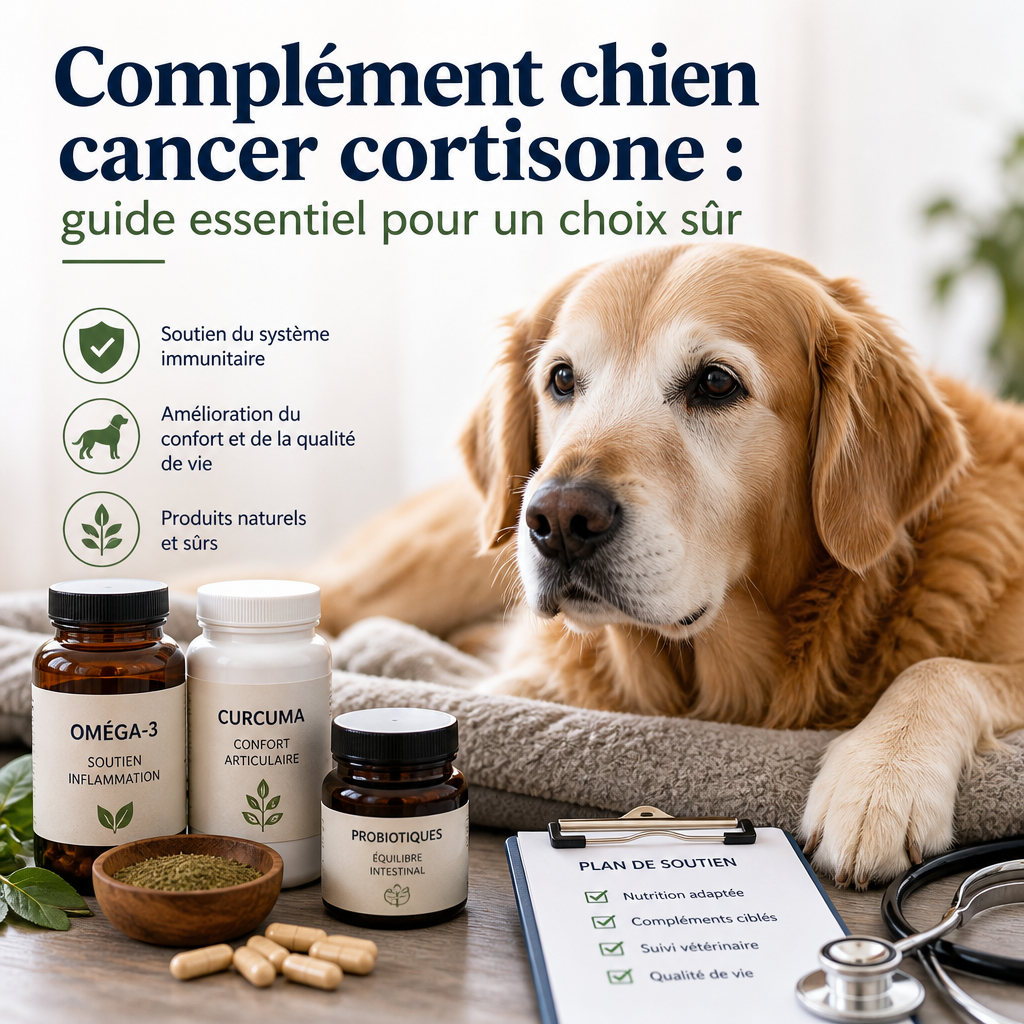
The use of a dog cancer cortisone supplement requires clearly distinguishing between veterinary treatment, dietary supplements, and supportive measures. Cortisone may be prescribed for certain dogs with cancer to reduce inflammation, relieve certain symptoms, or accompany oncological management. However, it should never be replaced, modified, or combined with a supplement without the veterinarian's consent. Each animal, each tumor, and each protocol presents particular constraints.
In practice, the question is not only whether a supplement can help, but which to choose, at what dose, for how long, and with what monitoring. This is precisely what helps avoid adverse effects, drug interactions, and false promises. A dog cancer cortisone supplement well-chosen supplement can sometimes improve comfort, but it must always remain a support, never a substitute for treatment.
La cortisone désigne une famille de médicaments corticostéroïdes, parmi lesquels la prednisone et la prednisolone. Chez le chien, ces molécules peuvent avoir plusieurs effets : anti-inflammatoire, immunomodulateur et parfois antitumoral indirect selon le type de maladie.
Elles peuvent être utilisées pour :
diminuer une inflammation liée à la tumeur ;
réduire un œdème ou une pression autour d’une masse ;
améliorer temporairement l’appétit et le confort ;
limiter certaines réactions immunitaires excessives ;
accompagner le traitement de maladies lymphoprolifératives ;
soulager des symptômes lorsque les objectifs sont principalement palliatifs.
La cortisone ne traite cependant pas tous les cancers de la même manière. Elle peut masquer certains signes cliniques et modifier les résultats d’analyses. Son utilisation doit donc s’inscrire dans un plan établi par un vétérinaire, idéalement avec l’avis d’un spécialiste en oncologie vétérinaire.
Lorsque la maladie évolue, le propriétaire cherche souvent des solutions concrètes pour aider son animal au quotidien. C’est là qu’un dog cancer cortisone supplement peut être envisagé, à condition de garder une vision réaliste : on cherche surtout à soutenir l’organisme, préserver l’appétit, limiter les troubles digestifs et maintenir la qualité de vie.
Prednisone supplement dog cancer: essential precautions
La recherche d’un dog cancer cortisone supplement souvent traduit le souhait d’aider l’organisme pendant le traitement. Il faut toutefois retenir qu’aucun complément alimentaire ne neutralise automatiquement les effets indésirables de la prednisone et qu’aucun produit naturel ne peut être considéré comme anodin.
La prednisone peut provoquer, notamment lors d’un traitement prolongé :
une augmentation de la soif et des urines ;
une faim excessive ;
une prise de poids ;
une fonte musculaire ;
une sensibilité accrue aux infections ;
des troubles digestifs ;
une élévation de la glycémie ;
des modifications des enzymes hépatiques ;
une cicatrisation plus lente.
La dose ne doit jamais être diminuée ou arrêtée brutalement, surtout après une administration prolongée. L’organisme peut avoir réduit sa propre production de cortisol, et un arrêt soudain peut entraîner une situation grave. Le vétérinaire détermine la durée, le rythme de diminution et les contrôles nécessaires.
Avant d’introduire un complément, il est important de communiquer la liste complète des produits utilisés : médicaments, vitamines, plantes, huiles, friandises fonctionnelles et aliments enrichis. Cette démarche permet d’éviter les doublons et les interactions.
Dans un plan de suivi, le terme dog cancer cortisone supplement doit toujours désigner un soutien validé, pas une solution autonome. Un bon choix repose sur le contexte clinique, les analyses et la tolérance digestive du chien.
Il faut aussi considérer la durée du traitement. Un dog cancer cortisone supplement qui semble bien toléré pendant quelques jours peut devenir problématique à plus long terme si la maladie progresse, si le foie s’affaiblit ou si d’autres médicaments sont ajoutés. D’où l’intérêt d’un suivi régulier, même lorsqu’il s’agit d’un produit vendu comme simple soutien.
Mast cell tumor dog corticosteroids supplement: a particular context
The search «mastocytoma dog corticosteroids supplement» concerns a common skin tumor arising from mast cells. These cells contain notably histamine and other inflammatory substances. When they degranulate, they can cause redness, itching, swelling, digestive disorders, or, in severe cases, general complications.
Corticosteroids can then be used to reduce certain inflammatory manifestations and limit the reaction around the tumor. However, they do not replace surgery, histological analysis, or any additional treatments that may be recommended.
In the case of a mastocytoma, the administration of supplements must be particularly cautious. Some products may irritate the stomach, influence coagulation, or alter liver function. A dog receiving corticosteroids may already exhibit increased digestive or immune fragility. The goal is therefore not to multiply products, but to choose only those whose benefit is clearly established and compatible with the protocol.
Un dog cancer cortisone supplement Adapted to mastocytoma must therefore be evaluated on a case-by-case basis, especially when anti-ulcer medications, analgesics, or chemotherapy are also prescribed.
An important point concerns preparation for examinations. In some dogs, corticosteroids may influence the reading of certain blood tests or diminish clinical signs useful for diagnosis. Before choosing a dog cancer cortisone supplement, it is therefore useful to check if a biopsy, surgery, or biological monitoring is planned in the short term.
What supplements can be considered?
Depending on the general condition of the dog and the veterinarian's recommendations, certain nutritional supports may be discussed. They do not cure cancer, but can help preserve body condition or quality of life.
A complete and digestible diet
La première priorité reste une alimentation complète, équilibrée et adaptée aux besoins du chien. En cas de perte d’appétit, le vétérinaire peut proposer une alimentation plus appétente ou plus énergétique. Il est généralement préférable d’éviter les changements brusques, surtout si l’animal souffre déjà de troubles digestifs.
Un dog cancer cortisone supplement peut parfois être inutile si la ration de base est déjà bien ajustée. Dans ce cas, le meilleur soutien reste souvent une alimentation spécifique, fractionnée et bien tolérée.
Si le chien maigrit malgré une prise en charge correcte, il peut être plus pertinent d’augmenter la densité énergétique de la ration que d’ajouter plusieurs compléments différents. Cette approche simple réduit les risques d’intolérance et facilite le suivi.
Omega-3 fatty acids
Les oméga-3, notamment ceux provenant d’huiles marines purifiées, peuvent être envisagés dans certains cas. Leur intérêt potentiel concerne la modulation de l’inflammation et le maintien de la condition corporelle. La qualité, la pureté et la dose sont essentielles. Une quantité excessive peut provoquer des troubles digestifs ou poser problème chez un chien présentant des troubles de la coagulation.
Les oméga-3 sont souvent recherchés parce qu’ils s’intègrent facilement à un plan nutritionnel. Pourtant, même ce type de soutien doit être discuté avec le vétérinaire lorsque le chien reçoit de la cortisone, des antiémétiques, des antalgiques ou une chimiothérapie. Dans une stratégie globale, le bon dog cancer cortisone supplement est celui qui complète le protocole sans alourdir la prise en charge.
Les probiotiques
Les probiotiques peuvent parfois soutenir l’équilibre intestinal, en particulier lors de troubles digestifs ou après certains traitements. Leur efficacité dépend des souches utilisées et de la situation de l’animal. Chez un chien immunodéprimé, leur emploi doit être validé par le vétérinaire.
Ils peuvent être intéressants lorsque la cortisone s’accompagne de selles molles, de ballonnements ou d’une flore intestinale perturbée. Mais là encore, un dog cancer cortisone supplement ne doit pas être choisi au hasard : certaines formules contiennent des édulcorants, des arômes ou des fibres mal tolérées par des chiens fragiles.
Les vitamines et minéraux
Une supplémentation en vitamines ou minéraux n’est utile qu’en cas de besoin identifié. Un excès de vitamine A, de vitamine D, de fer ou de certains minéraux peut être toxique. Une alimentation industrielle complète ne nécessite généralement pas d’ajout systématique.
Le bon réflexe consiste à traiter le dog cancer cortisone supplement comme une option ciblée, et non comme une routine. Ce principe évite les surdosages et limite les interactions inutiles.
Dans certains cas, un vétérinaire peut également recommander des aliments médicalisés ou des poudres de soutien enrichies en énergie. Là encore, l’objectif n’est pas d’empiler les produits, mais d’optimiser l’apport global sans compromettre la tolérance digestive.
Les fibres et le soutien digestif
When cortisone leads to significant hunger but the dog tends to gain weight, adjusting the ration may be more helpful than an isolated supplement. Fiber can help improve satiety and transit, provided it is introduced gradually. This type of support is not suitable for all cancers or all dogs, but it can be part of a dog cancer cortisone supplement broadly speaking, that is to say a comprehensive nutritional support strategy.
Products to avoid without veterinary advice
So-called «anticancer» supplements, herbal blends, and products intended to strongly stimulate immunity should be used with caution. Some plants can alter the hepatic metabolism of medications, increase the risk of bleeding, or disrupt the action of an oncological treatment.
It is also advised against giving anti-inflammatories, aspirin, essential oils, or human products without a prescription. The combination of corticosteroids and certain non-steroidal anti-inflammatory drugs can notably increase the risk of ulcers and digestive bleeding.
A supplement marketed as natural is not necessarily safe. Concentration, traceability, contaminants, and exact composition must be verified. Veterinary quality products are generally preferable to preparations with unclear labeling.
If you are looking for a dog cancer cortisone supplement, assurez-vous toujours que le fabricant fournit une composition claire, des doses précises et des indications compatibles avec la médecine vétérinaire.
It is also important to avoid multiple combinations without a clear strategy. Three «reasonable» products taken together can become excessive if each already provides omega-3s, vitamins, or plant extracts. When in doubt, the safest approach is to keep only one dog cancer cortisone supplement well-documented and reassess its usefulness after a few weeks.
How to choose a supplement safely?
Before any decision, several elements must be evaluated:
The type and stage of cancer.
The medications currently prescribed.
The function of the liver and kidneys.
The dog's digestive state and weight.
The possible presence of diabetes, infection, or ulcer.
The desired objective: appetite, digestion, body condition, or comfort.
The precise composition and dose of the supplement.
The veterinarian may recommend monitoring weight, water intake, urine, appetite, and stools. Blood tests may also be necessary when cortisone is administered over a long period.
In this context, a dog cancer cortisone supplement useful supplement is one that integrates into the follow-up without masking the progression of the disease or complicating biological controls.
To secure the decision, it is helpful to ask a few simple questions: does the product have a specific objective, a clear dose, a testing duration, and an easily understandable reason for being? If the answer is no, the supplement probably does not belong in the protocol. A good dog cancer cortisone supplement supplement should be readable, traceable, and re-evaluable.
The follow-up should also take into account the dog's behavior at home. Improved energy, a more stable appetite, or calmer digestion are favorable signs, but they should not overshadow veterinary control. Monitoring remains essential, even when the dog seems to be doing better.
Signs that require prompt consultation
A dog treated with corticosteroids and diagnosed with cancer must be closely monitored. A quick consultation is necessary in case of repeated vomiting, black or bloody stools, significant diarrhea, marked lethargy, fever, difficulty breathing, sudden swelling, unusual pain, or persistent loss of appetite.
A moderate increase in thirst or hunger may be related to cortisone, but any worsening should be reported. Follow-up allows for treatment adjustments without compromising the animal's safety.
In practice, the best dog cancer cortisone supplement solution is not necessarily an additional product. It may involve an adapted diet, regular monitoring, careful management of symptoms, and a calm environment. The priority remains compatibility with oncological treatment and maintaining quality of life.
Si le chien présente un changement brutal de comportement, une faiblesse marquée ou un malaise, il ne faut pas attendre le prochain rendez-vous. Dans ce contexte, un dog cancer cortisone supplement n’apportera aucune réponse immédiate : la priorité est toujours l’évaluation médicale.
Frequently asked questions about cortisone and supplements
Peut-on donner un complément sans connaître exactement le protocole ?
Non. Même si un produit paraît simple, il peut interagir avec la prednisone, modifier l’estomac, la coagulation ou la glycémie. Avant d’introduire un dog cancer cortisone supplement, il faut connaître le traitement actuel et les antécédents de santé du chien.
Les compléments “naturels” sont-ils forcément plus sûrs ?
Pas forcément. Naturel ne veut pas dire inoffensif. Certaines plantes ont des effets puissants et peuvent perturber un protocole oncologique. Le choix doit se faire sur des critères vétérinaires, pas marketing.
Faut-il arrêter la cortisone si le chien prend mal le traitement ?
Jamais sans avis vétérinaire. L’arrêt brutal peut être dangereux. Si le chien tolère mal son traitement, le vétérinaire peut ajuster la dose, la durée ou la stratégie globale. Le rôle d’un dog cancer cortisone supplement est éventuellement d’accompagner, pas de décider à la place du prescripteur.
Quel est le meilleur complément chien cancer cortisone ?
Il n’existe pas de réponse unique. Le meilleur choix dépend du type de cancer, des médicaments, de la digestion, du poids et des objectifs de soin. Dans bien des cas, le meilleur soutien est une ration adaptée, stable et bien tolérée.
Conclusion
En résumé, tout dog cancer cortisone supplement doit être choisi avec prudence, en fonction du cancer, du traitement et de l’état général du chien. Le plus sûr reste de valider chaque produit avec le vétérinaire avant introduction, puis d’observer attentivement la tolérance sur les jours suivants.
Le bon réflexe consiste à vérifier la composition, la compatibilité avec la prednisone ou les autres corticoïdes, l’état digestif, les risques d’interaction et la qualité de fabrication. Un dog cancer cortisone supplement bien pensé peut soutenir le confort, mais il ne remplace jamais un suivi oncologique rigoureux. Si le moindre doute existe, il vaut mieux demander un avis vétérinaire plutôt que d’ajouter un produit de plus.
Au fond, l’objectif reste simple : aider le chien sans le fragiliser davantage. C’est cette logique de prudence, de cohérence et de suivi qui permet de prendre les meilleures décisions au quotidien.
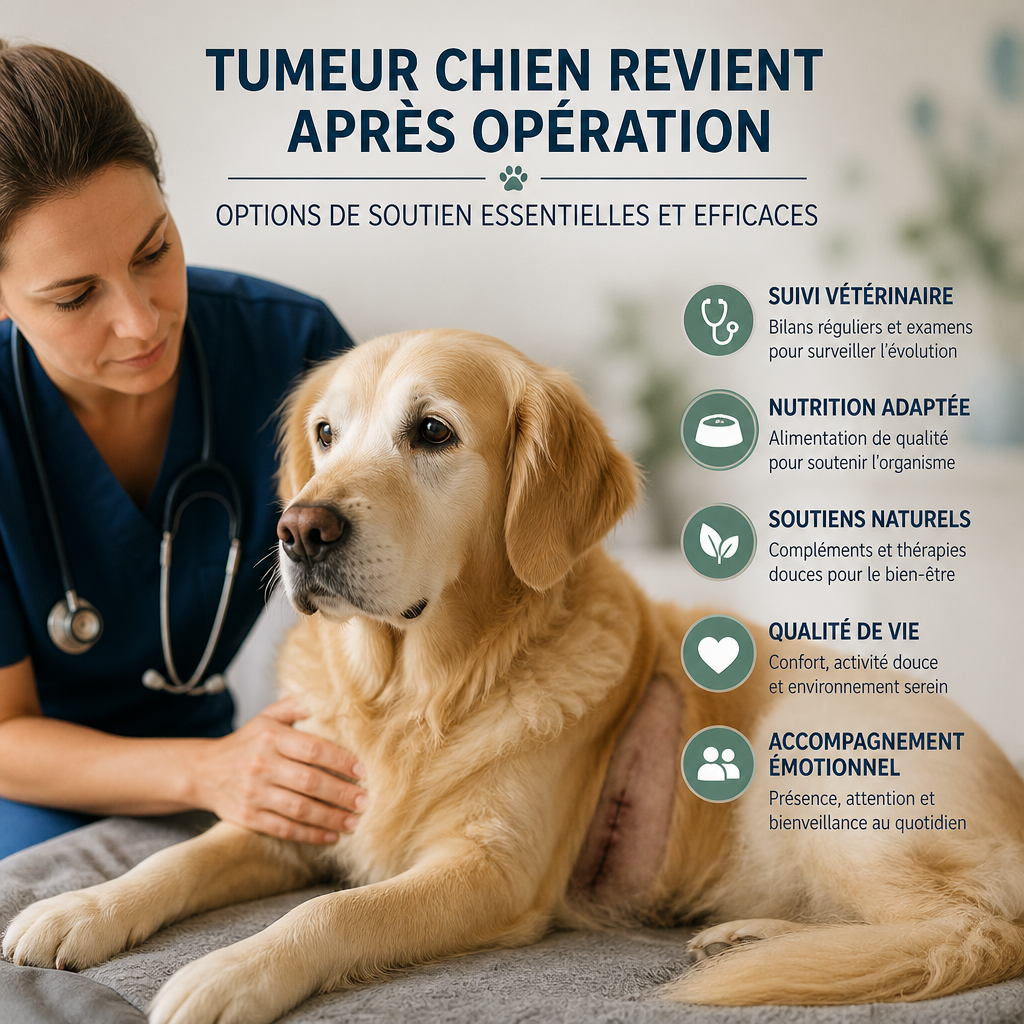
When the dog tumor returns after surgery, the situation is particularly difficult for owners to experience. Even when the surgery went well, a recurrence can appear several weeks, months, or years later. This development does not necessarily mean that all hope is lost, but it requires a precise veterinary evaluation to understand the nature of the mass, its location, and the available solutions.
In this guide, you will find the main signs to watch for, useful examinations, and support options to discuss with your veterinarian. The goal is to help you move forward with clear information and a calmer vision of the next steps, while keeping in mind that the dog tumor returns after surgery can sometimes be managed more comfortably with appropriate care.
A dog tumor recurrence corresponds to the reappearance of a mass after the removal of a first tumor. It can develop in the same place, referred to as a local recurrence, or appear in another region due to tumor cells migrating to other organs. In some cases, it may also be a new tumor, independent of the first.
The risk depends on several factors:
the type of tumor, benign or malignant; ;
its grade and level of aggressiveness; ;
the possible presence of tumor cells on the surgical margins; ;
the location of the mass; ;
the speed of its growth; ;
the general condition and age of the dog; ;
the presence of metastases.
The histological analysis of the tissue removed during the operation is essential. It generally helps identify the nature of the tumor and assess the risk of recurrence. If this analysis has not been performed, it is important to discuss it with the veterinarian.
In the case of a dog tumor returns after surgery, it is useful to ask the practitioner if the removed mass had healthy margins, as this point often influences follow-up decisions. The more precise the initial information, the more tailored the management can be.
It is also important to keep in mind that the rate of progression is not always the same from one dog to another. Some masses reappear slowly and remain localized, while others progress more quickly and require a more active approach. This difference explains why two animals that have undergone comparable surgery may receive very different recommendations.
Dans la pratique, une conversation détaillée avec le vétérinaire aide à replacer chaque résultat dans son contexte. Le diagnostic initial, l’âge, la race, l’état général et les traitements déjà reçus sont autant d’éléments qui influencent l’interprétation de la situation. Quand la dog tumor returns after surgery, il est souvent utile de revoir l’ensemble du dossier médical avant de décider de la suite.
What signs should alert after surgery?
Après une chirurgie, une petite inflammation ou une cicatrice épaissie peut être normale pendant la phase de guérison. Toutefois, certains changements doivent inciter à consulter rapidement :
apparition d’une nouvelle boule près de la cicatrice ;
augmentation rapide du volume de la zone ;
rougeur, chaleur, douleur ou écoulement ;
léchage excessif de la cicatrice ;
perte d’appétit persistante ;
amaigrissement inexpliqué ;
fatigue inhabituelle ;
difficultés respiratoires, digestives ou locomotrices selon la localisation ;
saignements ou plaies qui ne cicatrisent pas.
Une masse qui revient après une opération n’est pas toujours une récidive cancéreuse. Il peut aussi s’agir d’un sérome, d’un abcès, d’une inflammation ou d’une réaction à un fil chirurgical. Seul un examen vétérinaire, parfois accompagné d’une cytologie, d’une biopsie ou d’examens d’imagerie, permet de faire la différence.
Si vous observez un changement rapide, évitez d’attendre plusieurs semaines. Une prise en charge précoce améliore souvent la lecture de la situation et facilite les choix à venir, surtout quand la dog tumor returns after surgery de façon visible ou douloureuse.
A good reflex is to note the date of appearance, the approximate size, and the daily evolution of the mass. This simple information can help the veterinarian determine whether it is a transient inflammatory evolution or a more concerning problem. For a worried family, this monitoring can also make the situation more concrete and less vague.
It is also useful to monitor the dog's general behavior. An animal that hides, refuses walks, or reacts when the operated area is touched may be expressing discomfort. These signals, even if subtle, deserve to be mentioned during the consultation.
The veterinary assessment before any decision
When a tumor reappears, the veterinarian may suggest several tests. A fine needle aspiration often allows for quick collection of cells for analysis. A biopsy may be necessary when the aspiration does not provide enough information.
Depending on the context, chest X-rays, abdominal ultrasound, a CT scan, or an MRI may be recommended. These tests are particularly used to look for disease spread and to determine if new surgery is relevant.
The treatment will depend on the diagnosis.
To better understand the diagnostic and treatment options, you can also consult recognized veterinary resources such as the Manuel vétérinaire Merck, which explains the general principles of veterinary oncology and complementary examinations.
Before making a decision, it is often helpful to ask what the examination actually shows on a local and general level. An isolated mass does not call for the same choices as an already widespread disease. That is why the assessment is not only used to confirm a recurrence: it also guides the level of urgency, the type of treatment, and realistic objectives.
In some cases, the veterinarian may also recommend comparing the images and reports with the documents from the first surgery. This approach helps to determine whether the new lesion is likely related to the previous one or if it is a different condition. When the dog tumor returns after surgery, this comparison can save valuable time.
Discussing support options concretely
Once the diagnosis is better defined, the discussion should remain very practical. It is not just about whether to treat or not, but about determining what supports are useful now, which will be needed later, and how to adapt them to the dog's condition.
Several simple questions can guide the exchange:
Does the dog experience pain on a daily basis?
Is he eating enough?
Is he drinking properly?
Does he move with ease?
Does the mass interfere with an important function?
Can complementary treatment improve comfort?
Answering these questions helps to choose useful measures and avoid overly general solutions. In many situations, the most effective support is the one that targets a specific problem: pain, fatigue, loss of appetite, nausea, or decreased mobility.
Supporting the body during management
General support never replaces oncological treatment, but it can contribute to the comfort and maintenance of the dog's physical condition. The goal is to preserve his weight, muscle mass, hydration, and quality of life.
The diet must be adapted to his condition. A sick dog may have less appetite or experience nausea related to the illness and treatments. Smaller meals, given several times a day, may be better accepted. It is preferable to choose a complete and balanced diet, validated by the veterinarian, rather than radically changing the ration without professional guidance.
Hydration is also important. A decrease in water intake, vomiting, or diarrhea should be reported, as dehydration can worsen fatigue and complicate certain treatments.
Daily comfort also matters a lot. A soft bed, limited movement during recovery, shorter outings, and a calm environment can reduce stress. When the dog tumor returns after surgery, these simple adjustments often contribute to better tolerance of care.
Pain management deserves special attention. A painful dog may become more immobile, sleep more, lose appetite, or growl when touched. Pain relief treatments must always be adapted by the veterinarian, as some medications used in humans are dangerous for dogs.
Sleep and resting habits also play a role. A stable environment, without excessive agitation, promotes a more peaceful recovery. If several animals live in the household, it may be wise to provide a separate space to avoid sudden contacts or unnecessary sources of stress.
Support points to discuss with the veterinarian
pain management; ;
control of nausea; ;
food palatability; ;
prevention of dehydration; ;
maintenance of weight and muscle mass; ;
adaptation of exercise; ;
local care of the scar or mass.
Il peut aussi être utile de demander si certains médicaments doivent être administrés à heure fixe ou avec la nourriture. Cette précision réduit les oublis et améliore l’observance du traitement. En période de stress, une fiche écrite ou un tableau simple à la maison facilite le suivi quotidien.
Choosing a supplement after dog tumor surgery
La recherche d’un complément après chirurgie tumeur chien est fréquente, mais son utilisation doit rester prudente. Certains produits peuvent soutenir l’apport nutritionnel, la récupération musculaire ou la digestion, tandis que d’autres peuvent interagir avec une chimiothérapie, un anti-inflammatoire ou un médicament hépatique.
Avant d’administrer un complément, il convient de vérifier :
sa composition exacte ;
la dose adaptée au poids du chien ;
les éventuelles interactions médicamenteuses ;
la qualité et la traçabilité du produit ;
la compatibilité avec le type de tumeur et le traitement en cours.
Les compléments riches en acides gras oméga-3, certains soutiens digestifs ou des produits destinés à préserver la masse musculaire peuvent parfois être intéressants. Toutefois, les plantes, extraits concentrés, antioxydants à fortes doses et produits présentés comme capables de « détruire » une tumeur nécessitent une vigilance particulière. Naturel ne signifie pas automatiquement sans danger.
Il est recommandé de fournir au vétérinaire la liste complète des produits utilisés, y compris les friandises, huiles, poudres et préparations naturelles.
When the dog tumor returns after surgery, le bon réflexe consiste à valider chaque ajout avec le vétérinaire avant de commencer. Cette précaution limite les interactions et évite les dépenses inutiles pour des produits peu adaptés.
Dans certains foyers, un complément est envisagé surtout parce que le chien mange moins ou récupère difficilement après l’anesthésie. Dans ce cas, l’objectif n’est pas de remplacer un traitement médical, mais de soutenir l’organisme sur des points concrets comme l’énergie, le transit ou l’entretien musculaire. Le choix doit donc rester personnalisé.
Approches complémentaires utiles à évoquer
En plus des traitements médicaux, certains propriétaires souhaitent discuter d’approches complémentaires. Celles-ci ne remplacent pas la prise en charge classique, mais elles peuvent parfois soutenir le confort général si elles sont encadrées par un professionnel.
physiothérapie douce après chirurgie ;
adaptation de l’activité selon l’état du chien ;
massage léger autour de zones non douloureuses, si le vétérinaire l’autorise ;
accompagnement nutritionnel individualisé ;
surveillance du transit et de l’appétit ;
réduction du stress avec une routine stable.
Il est important de ne pas multiplier les produits ou les méthodes en même temps. Une approche simple, cohérente et bien suivie donne souvent de meilleurs résultats qu’une accumulation de solutions mal coordonnées.
A good communication with the veterinary team also avoids duplicates. For example, some owners combine several supplements in the idea of optimizing recovery, while these products are not always compatible with each other. A clear plan is more reassuring and more effective.
When the dog tumor returns after surgery, complementary approaches should be seen as support, not as an alternative to medical evaluation. Their main role is to improve comfort and support validated treatments.
Monitoring quality of life on a daily basis
When the tumor returns, quality of life becomes a central indicator. It can be useful to note daily appetite, mobility, sleep, pain, interactions with family, and enjoyment during usual activities.
A dog that continues to eat, seeks contact, moves comfortably, and enjoys pleasant moments can sometimes benefit from active or palliative care. Conversely, persistent pain, significant weakness, breathing difficulties, or an inability to eat should lead to a rapid reevaluation of treatment.
Les soins palliatifs peuvent inclure des antidouleurs, des médicaments contre les nausées, un soutien nutritionnel, des soins de plaie et des adaptations de l’environnement. Ils ne signifient pas que l’on abandonne les soins : ils visent à réduire la souffrance et à préserver le bien-être.
La discussion avec le vétérinaire doit rester ouverte et régulière, surtout si les symptômes évoluent. Dans certains cas, le meilleur choix est d’alléger les soins agressifs pour se concentrer sur le confort et les moments de qualité avec l’animal.
Il peut être utile de s’aider d’une grille simple pour suivre l’évolution de la situation, par exemple en attribuant une note au repas, à la mobilité et au confort général. Cette méthode ne remplace pas l’avis vétérinaire, mais elle aide à objectiver les changements sur plusieurs jours. Si la dog tumor returns after surgery, ce type de repère facilite souvent la discussion lors des contrôles.
Comment préparer la prochaine consultation ?
Avant de revoir le vétérinaire, rassemblez tous les éléments utiles : compte rendu opératoire, résultat d’histologie, liste des médicaments, compléments administrés, photos de la masse et notes sur les symptômes récents. Plus le dossier est complet, plus la consultation peut être efficace.
Préparer à l’avance quelques questions permet aussi de ne rien oublier. Par exemple :
la masse correspond-elle à une récidive ou à une autre cause ?
faut-il refaire un prélèvement ou une imagerie ?
quels sont les bénéfices et limites d’un nouveau traitement ?
comment surveiller la douleur à la maison ?
quels signes doivent pousser à consulter sans attendre ?
Cette préparation réduit le stress pendant la visite et aide à prendre une décision réfléchie. Elle est particulièrement importante quand plusieurs options sont possibles et que chacune comporte des avantages, des contraintes et des effets indésirables potentiels.
Regular follow-up remains essential
Après une récidive, les contrôles vétérinaires doivent être planifiés selon le type de tumeur et l’évolution observée. Un suivi régulier permet de mesurer la masse, d’anticiper les complications et d’ajuster rapidement les soins.
Le propriétaire peut contribuer efficacement à cette surveillance en palpant délicatement la zone selon les recommandations du vétérinaire, en prenant des photos comparatives et en signalant tout changement. Il ne faut toutefois pas manipuler excessivement une masse douloureuse ou ulcérée.
La récidive d’une tumeur chez le chien est une épreuve éprouvante, mais une prise en charge personnalisée peut offrir des solutions adaptées. Entre examens complémentaires, traitements spécifiques, alimentation équilibrée, compléments soigneusement sélectionnés et soins de confort, chaque décision doit être guidée par le vétérinaire et centrée sur la qualité de vie de l’animal. Quand la dog tumor returns after surgery, l’objectif reste de combiner clarté du diagnostic, soutien pratique et décisions réalistes pour votre compagnon.
If you have any doubts about a lump, a changing scar, or a generally concerning sign, seek veterinary advice promptly. The earlier the assessment, the more calmly options can be discussed and the follow-up can be adapted responsibly.
By maintaining a structured approach, it becomes easier to decide which care to keep, which to adjust, and when to return for consultation. This method does not eliminate worry, but it often helps regain some control during an emotionally difficult time. If the dog tumor returns after surgery, the most important thing is to move forward step by step, with reliable information and regular veterinary follow-up.
The complément mélanome chien peut aider à soutenir l’organisme d’un animal atteint, mais il ne remplace jamais le diagnostic, la chirurgie, l’immunothérapie ou tout autre traitement recommandé par le vétérinaire. Le mélanome est une tumeur formée à partir des mélanocytes, les cellules responsables de la pigmentation. Chez le chien, il peut apparaître dans la bouche, sur la peau, au niveau des doigts ou autour des yeux. Son évolution dépend notamment de sa localisation, de sa taille, de son grade et de la présence éventuelle de métastases. Une approche globale associe donc les soins médicaux à une alimentation adaptée, une surveillance attentive et des mesures visant à préserver la qualité de vie.
Tous les mélanomes canins ne présentent pas le même comportement. Les mélanomes cutanés de petite taille, notamment lorsqu’ils se développent sur des zones peu pigmentées, peuvent parfois être moins agressifs. En revanche, les mélanomes situés dans la cavité buccale ou au niveau des doigts sont souvent plus susceptibles d’évoluer rapidement.
The signs depend on the area concerned. A pigmented mass that changes appearance, persistent bad breath, bleeding in the mouth, difficulty eating, limping, or local swelling should prompt a consultation. The veterinarian may recommend cytology, a biopsy, blood tests, and imaging examinations to accurately assess the situation.
The main treatment may include surgical excision, radiotherapy, immunotherapy, or a combination of several options. Dietary supplements are only involved as support, after validation by the professional caring for the animal. To better understand tumor progression and possible consequences, you can also consult this article on metastasis and the spread of cancers in dogs.
As part of a complément mélanome chien, it is useful to keep a simple vision: the goal is not to promise a miraculous action, but to help the animal better endure the care, to maintain its strength, and to limit certain daily discomforts.
A supplement intended for a dog with melanoma should not be presented as an autonomous anticancer treatment. Its potential interest rather concerns the support of important functions during the disease or treatments: maintenance of general condition, nutritional intake, muscle support, digestive comfort, and assistance in recovery.
The choice must meet a clearly identified need. A dog that is losing weight will not have the same priorities as an animal that is eating normally but shows significant fatigue after a procedure. Similarly, a product suitable for a dog with healthy kidneys may be contraindicated in an animal suffering from kidney failure.
Before any administration, it is essential to check the composition, dosages, and any potential interactions with prescribed medications. Products intended for humans are not always suitable for dogs, as certain substances or concentrations may be toxic.
Un complément mélanome chien Bien choisi doit rester cohérent avec les priorités cliniques du moment. Si l’animal est douloureux, la priorité est d’abord le contrôle de la douleur. Si l’appétit baisse, il faut d’abord sécuriser les apports alimentaires. Si la tumeur provoque des saignements ou une gêne importante, la surveillance vétérinaire devient la base de tout le reste.
It is also important to distinguish between two situations. Some dogs receive a supplement to support recovery after surgery. Others need broader support, for example when the tumor is advanced or accompanied by persistent fatigue. In both cases, the strategy must be individualized.
Soutien nutritionnel et maintien du poids
Loss of appetite and weight loss can weaken a dog with cancer. A complete, palatable, and sufficiently energetic diet is therefore a priority. The veterinarian may recommend a therapeutic diet or a personalized ration based on age, weight, activity, tumor location, and any associated diseases.
Proteins play an important role in maintaining muscle mass, but their quantity must be adapted to the animal's profile. Fats can increase the energy density of meals, while some dogs may not tolerate them well digestively. It is also important to consider nausea, pain, or difficulty chewing when a melanoma affects the mouth.
To stimulate appetite, it can sometimes be helpful to offer small portions several times a day, to slightly warm the food, or to choose a texture that is easier to swallow. Any significant modification should, however, be gradual and monitored. In some cases, the veterinarian may recommend a better dog cancer dietary supplement adapted to the animal's profile to help maintain energy and appetite.
Monitoring weight once a week helps to quickly spot muscle wasting or a decline in overall condition. Even a modest variation can be significant in a sick dog, especially if it is accompanied by a decrease in meals or a change in behavior.
When evaluating a complément mélanome chien, the most useful criterion often remains its ability to support daily life without worsening digestive disorders. A product that is too rich, poorly tolerated, or difficult to administer quickly becomes counterproductive, even if it seems interesting on paper.
For some dogs, nutritional adjustment involves more frequent meals, a softer texture, or better palatability. For others, it is mainly about avoiding sudden changes and maintaining a stable routine. The veterinarian may also suggest monitoring food intake for several days to identify the best options.
If the dog eats less, one should not wait for weight loss to be visible to react. Muscle wasting can begin before apparent weight loss. This is why regular monitoring of weight, body condition, and muscle mass is so important in the follow-up of an animal with cancer.
Oméga-3, vitamines et antioxydants : prudence et mesure
Omega-3s, particularly from fish oil, are often studied in the context of nutritional support for sick dogs. They can contribute to the balance of the diet and the maintenance of skin and coat. However, they must be used at a dose appropriate to the animal's weight and health status. An excessive amount can cause digestive disorders or pose problems in some dogs.
Vitamins and antioxidants also require caution. A complete diet generally covers current needs, and unjustified supplementation can lead to imbalances. Some antioxidants or plant extracts can alter the action of medications or influence coagulation.
In the search for a complément mélanome chien, quality and transparency are more important than the number of ingredients. It is better to choose a clearly labeled formula, designed for dogs and recommended by a veterinarian, rather than a mixture presented as capable of curing the tumor.
The choice of a product must also take into account digestive tolerance. A dog that is already weakened may react to a change in formula, even when the ingredients seem simple. Introducing a new product one at a time makes it easier to identify any intolerance.
Omega-3s can sometimes be considered in a support strategy, but they do not replace clinical evaluation or cancer treatment. A good practice is to ask what exact dose is relevant, for how long, and with what concrete objective. This approach avoids excesses and limits disappointments.
On the vitamin side, the temptation is often to “boost” the animal as much as possible. However, in sick dogs, more is not always better. An excessively high intake of certain vitamins can disrupt the overall balance, especially if the animal is already receiving a complete diet. This is why each complément mélanome chien should be considered as a piece of the puzzle and not as an isolated solution.
Antioxidants deserve the same caution. Their role is sometimes mentioned to support cells against oxidative stress, but their use must remain consistent with the medical protocol. In case of doubt, the veterinarian or veterinary oncologist is best placed to arbitrate between potential benefit and risk of interaction.
Mélanome chien soutien : améliorer le confort au quotidien
The melanoma dog support is not limited to dietary supplements. Daily comfort is a major component of care. Effective pain management can improve appetite, sleep, mobility, and interactions with family. Pain relief medications should be prescribed and adjusted by the veterinarian.
The environment can also be adapted. A comfortable bed, stable temperature, less slippery floors, and easy access to water reduce unnecessary effort. If the dog suffers from a mouth lesion, soft meals can facilitate eating. In case of lameness, it is better to limit intense activities while maintaining short outings suited to its abilities.
Quality of life should be assessed regularly. Appetite, pain, breathing, mobility, hygiene, sleep, and interest in usual activities are useful indicators. Noting these elements over the days allows for quicker detection of deterioration.
Les moments de repos doivent être respectés, mais il ne faut pas non plus laisser l’animal s’isoler complètement. Un chien qui garde des repères familiers et un rythme de vie prévisible récupère souvent mieux au quotidien.
Une routine simple aide beaucoup : repas aux mêmes horaires, sorties régulières, zone de couchage calme et interactions rassurantes. Chez un chien atteint de cancer, ce cadre réduit le stress inutile. Le stress n’explique pas la maladie, mais il peut compliquer l’alimentation, le sommeil et l’acceptation des soins.
Il faut aussi penser à la bouche, souvent trop peu observée. Quand le mélanome touche la cavité buccale, la gêne peut être discrète au début puis s’aggraver rapidement. Une diminution du temps passé à mâcher, un refus de certains aliments, une salivation accrue ou une haleine plus forte doivent alerter. Dans ce contexte, le complément mélanome chien le plus pertinent est souvent celui qui facilite la prise en charge globale sans ajouter de contrainte supplémentaire.
Enfin, le soutien psychologique de la famille compte aussi. Un chien sensible perçoit les changements de rythme et de ton. Lui parler calmement, éviter les manipulations inutiles et rester cohérent dans les soins peuvent améliorer son confort émotionnel et rendre les traitements plus faciles à vivre.
Les plantes et produits naturels : une vigilance indispensable
Natural products are not automatically safe. Turmeric, certain seaweeds, medicinal mushrooms, essential oils, and various plants are sometimes suggested to support dogs with cancer. However, their effectiveness in canine melanoma remains variably documented, and some may interact with chemotherapy, immunotherapy, anti-inflammatory drugs, or anticoagulants.
Essential oils are particularly delicate to use in dogs and should not be administered orally without specialized veterinary supervision. Similarly, a product that seems to improve immunity could theoretically disrupt a treatment aimed precisely at modulating the immune response.
Before introducing a plant or extract, it is essential to communicate to the veterinarian the exact name of the product, its concentration, and the intended dose. This precaution helps avoid risky combinations and maintain consistent care.
Another common mistake is to multiply products in the hope of increasing the chances of success. In practice, this mainly makes it more difficult to identify a side effect or intolerance. If a dog is already taking several medications, it is better to simplify as much as possible what is not essential.
In the case of a complément mélanome chien, the most cautious approach often remains the most reasonable: one addition at a time, close monitoring, and then a reevaluation with the veterinarian. This framework limits risks and allows for a clear view of what truly helps the animal.
Suivi vétérinaire et signes d’alerte
Un complément mélanome chien should never delay a consultation. A rapid increase in mass, bleeding, increasing difficulty eating or breathing, repeated vomiting, marked fatigue, or significant weight loss require prompt professional advice.
Follow-up appointments are used to monitor the tumor, look for possible metastases, monitor side effects, and adjust treatments. Regular tests may be necessary, especially if the dog is receiving multiple medications or suffers from a chronic illness.
The veterinarian can also help prioritize: controlling pain, maintaining hydration, supporting nutrition, and reducing potential side effects. This coordination avoids multiplying unnecessary products and simplifies long-term management.
It is helpful to prepare for appointments with a few simple notes: appetite, weight, meal frequency, energy level, episodes of pain, vomiting, abnormal stools, and visible changes in mass. This information often provides a more accurate picture than the general impression at the moment.
If the dog has an oral tumor, it is also important to monitor the ability to chew, swallow, and open the mouth without pain. If the lesion is on the skin, the appearance of the mass, the presence of ulceration, and any excessive licking should be checked. If it is located on a toe, limping and local swelling are particularly useful signals.
This vigilance is not meant to cause unnecessary worry, but to act quickly when it matters. The earlier changes are detected, the easier it is to adjust treatment and improve the animal's comfort.
In summary, the best complément mélanome chien is the one that meets a real need, integrates into a balanced diet, and remains compatible with the veterinary protocol. The most effective support relies on a combination of care: tumor treatment, appropriate nutrition, pain management, comfortable environment, and attentive observation. This personalized approach helps to preserve the dog's well-being as much as possible throughout its support.
When the goal is to support a sick animal, consistency matters as much as the choice of product. A complément mélanome chien Correctly selected, administered with moderation, and regularly reassessed can contribute to overall comfort, without ever forgetting that veterinary follow-up remains the central pillar of care.