ад ТКМВЕТ | лют 8, 2026 | Рак і пухліны ў сабак
Што азначае “вярчальны клетка” у сабак
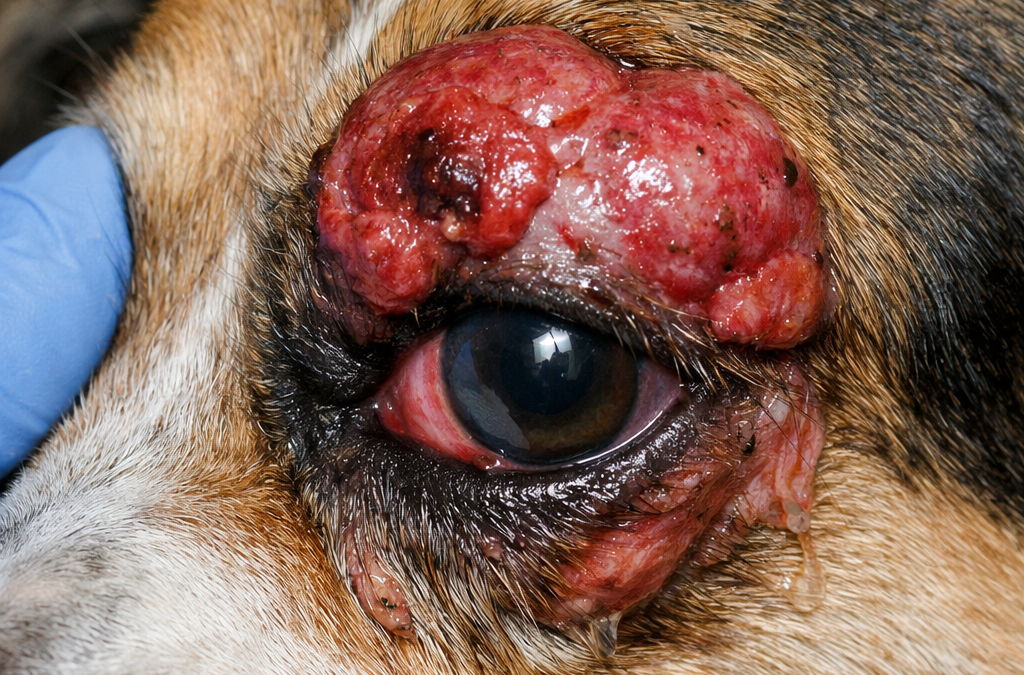
“Вярчальны клетка” звычайна апісвае, як выглядаюць пухлінавыя клеткі пад мікраскопам — доўгія, звужаныя і валакністыя — а не назву аднаго тыпу рака. У сабак гэта апісанне часта перасякаецца з саркомамі мяккіх тканін (STS) і звязанымі пухлінамі тыпу саркомы, якія вядомыя сваёй лакальнай інвазіўнасцю: яны могуць расці мікраскапічна за межамі таго, што вы можаце ўбачыць або адчуць. Гэты шаблон росту з'яўляецца адной з галоўных прычын, чаму лакальнае рецидивирование становіцца ключавой праблемай.
Наколькі рэдкая пухліна вярчальнай клеткі каля вока?
Гэта залежыць ад таго, ці з'яўляецца маса павярхоўным ростам века або больш глыбокай перыякулярнай/арбітальнай пухлінай.
Многія пухліны векаў у сабак з'яўляюцца агульнымі і часта добрачыснымі, што супакойвае ў паўсядзённай практыцы афтальмалогіі. Аднак злаякасная пухліна тыпу вярчальнай клеткі/саркомы, якая хутка расце або глыбока размешчана каля вока, — гэта іншая сітуацыя. Арбітальная і ретробульбарная хвароба (хвароба ў вочнай ямцы або за глазам) менш распаўсюджана, чым простыя выпукласці векаў, і звычайна патрабуе больш складанага планавання.
Сімптомы, якія ўладальнікі звычайна заўважаюць
Пухліна “над вокам” можа выглядаць як цвёрдая шышка або адзінаццаць каля броваў або векаў, але глыбокая хвароба можа праявіцца праз змены функцыі. Сабакі могуць шчуркацца, слёзлівасць, развіваць пастаянны выдзяленне, труці вока або твар, або здавацца асцярожнымі з галавой. Калі арбіта закранута, класічныя прыкметы могуць ўключаць экзофталм (выпуклае вока), выступанне трэцяй павекі і боль вакол вока.
Боль і пакуты: наколькі гэта балюча?
Боль вар'іруецца шырока і залежыць ад таго, што пухліна робіць лакальна.
Масса можа стаць вельмі нязручнай, калі яна дэфармуе становішча века або выклікае хранічнае раздражненне рогавіцы пры блісканні. Кіраўніцтва ветэрынарнай афтальмалогіі адзначае, што масы векаў часта павялічваюцца з цягам часу і могуць раздражняць акулярную паверхню, уплываючы на камфорт і якасць жыцця. Арбітальная хвароба таксама можа быць балючай — асабліва калі прысутнічаюць адзінаццаць, ціск або запаленне — і боль часта згадваецца сярод клінічных прыкмет у арбітальных умовах.
Чаму лячэнне каля вока такое складанае
Для пухлінаў тыпу саркомы мэта звычайна заключаецца ў моцным лакальным кантролі, бо мікраскапічныя “пальцы” пухліны могуць расці за межамі таго, што выглядае ненармальна. На ствале або канечнасцях хірургі часта імкнуцца да шырэйшых межаў, каб выдаліць гэтыя невідимыя працягненні. Каля вока шырокія межы могуць быць цяжка дасягнуць без пашкоджання крытычна важных структур, таму лекары могуць здавацца асцярожнымі ў адносінах да гарантый.
Варыянты лячэння: што звычайна разглядаецца
Большасць планаў лячэння круцяцца вакол лакальнага кантролю і камфорту, часта спалучаючы некалькі падыходаў.
Хірургія звычайна з'яўляецца асновай, калі гэта магчыма, як для выдалення нагрузкі пухліны, так і для атрымання канчатковай паталогіі. Для сабачых сарком мяккіх тканін поўнасць эксцизіі моцна ўплывае на вынікі; агляды падкрэсліваюць, што непоўна эксцизіраваныя пухліны нясуць большы рызыка лакальнага рецидивирования. У некаторых выпадках хірургі могуць рэкамендаваць больш радыкальныя працэдуры для дасягнення кантролю ў складаных месцах (уключаючы хірургію, якая датычыцца арбіты), бо некаторыя саркомы могуць патрабаваць радыкальных падыходаў, калі анатомія абмяжоўвае шырыню межаў.
Радиацыйная тэрапія часта абмяркоўваецца, калі межы блізкія або непоўныя, або калі анатомія робіць шырокае выдаленне немагчымым. Яна выкарыстоўваецца з мэтай кантролю мікраскапічных рэшткавых клетак і зніжэння шанцаў на паўторны рост, хаця вынікі вар'іруюцца ў залежнасці ад паводзін пухліны, планавання дозы і спецыфікі кожнага выпадку.
Рызыка рецидивирования: на што даследаванні паўтараюць
У літаратуры па сабачых STS два фактары зноў і зноў з'яўляюцца: гісталагічны клас і статус межаў.
Агляд непоўна або вузка эксцизіраваных сабачых STS паведамляе аб апублікаваных узроўнях рецидивирования прыкладна ў дыяпазоне 17%–37% па даследаваннях, ілюструючы, чаму “чыстыя межы” так важныя. Іншы шырока цытуемы агляд адзначае, што пры поўнай эксцизіі лакальнае рецидивирование ў сабак можа быць вельмі нізкім, а непоўныя межы значна павышаюць рызыку рецидивирования.
Перспектыва выжывання і “часавая шкала выжывання”: практычны спосаб думаць пра прагноз
Паколькі “павуцінны клеткавы пухліна” можа прадстаўляць некалькі тыпаў пухлінаў, час выжывання нельга надзейна падсумоўваць адным лікам. Больш надзейны спосаб зразумець прагноз - гэта замацаваць чаканні за тым, што найбольш моцна прадказвае паводзіны:
Пухліна ніжэйшага града, якую можна цалкам кантраляваць лакальна, звычайна мае лепшую перспектыву, чым пухліна вышэйшага града або тая, якую нельга цалкам выдаліць з-за размяшчэння. У сабачых СТЗ метастатычны рызыка звычайна апісваецца як залежная ад града, пры гэтым пухліны вышэйшага града маюць значна большы шанец распаўсюджвання на працягу хваробы. У перыякулярных пухлінах канкрэтна “наколькі добра лакальная хвароба можа быць кантралявана” часта становіцца дамінуючым фактарам, які фармуе як якасць жыцця, так і агульны вынік.
Што ўладальнікі могуць зрабіць рана, што часта мае значэнне (не губляючыся ў дэталях)
Найбольш карыснымі пунктамі фокусу на ранніх стадыях з'яўляюцца пацверджанне сапраўднай ступені хваробы і абарона камфорту.
Пашыраная візуалізацыя, такая як КТ або МРТ, часта рэкамендуецца ў арбітальных/перыякулярных выпадках, бо руцінныя агляды не заўсёды могуць паказаць, што адбываецца за вокам, а візуалізацыя дапамагае кіраваць хірургіяй і планаваннем радыяцыі. Камфорт таксама з'яўляецца цэнтральным: перыякулярныя пухліны могуць выклікаць раздражненне і запаленне рогавіцы, а зніжэнне трэння/травмаў і вырашэнне раздражнення паверхні вока могуць істотна паўплываць на паўсядзённае дабрабыт.
ЧАСТА ЗАДАВАНЫЯ ПЫТАННІ: хуткія адказы, якія шукаюць уладальнікі хатніх жывёл
Ці кожная пухліна побач з павекай злая?
Не. Пухліны павек з'яўляюцца распаўсюджанымі ў сабак, і многія з іх паводзяць сябе добразычліва, хаця любая хутка растучая, язвавая, крывацячая або балючая маса патрабуе неадкладнай ацэнкі.
Чаму ветэрынар можа рэкамендаваць выдаленне вока?
Калі пухліна глыбока інвазіўная або мяжы не могуць быць дасягнуты бяспечна, можа быць рэкамендавана больш агрэсіўная лакальная хірургія для паляпшэння лакальнага кантролю ў рэгіёне, дзе прастора абмежаваная.
Чаму хірургія і радыяцыя не могуць гарантаваць, што яна не вернецца?
Пухліны тыпу саркомы могуць мікраскапічна распаўсюджвацца, і вакол вока можа быць цяжка выдаліць дастаткова навакольнай тканіны. Непаўнацэнна выдаленыя СТЗ маюць дакументаваны рызыка рецидиву ў некалькіх даследаваннях.
Што найбольш моцна прадказвае прагноз?
Град паталогіі і тое, ці была пухліна выдалена з чыстымі мяжамі, неаднаразова падкрэсліваюцца як асноўныя фактары рызыкі рецидиву і распаўсюджвання ў сабачых СТЗ.
Як Байтусіао можа дапамагчы як падтрымліваючая дапамога
Перыякулярныя павуцінныя клеткавыя пухліны звычайна кіруюцца спачатку лакальным кантролем - часцей за ўсё хірургіяй, а часам радыяцыяй - бо гэтыя пухліны могуць быць лакальна інвазіўнымі, а рэгіён вока абмяжоўвае шырокія мяжы. У гэтым кантэксце многія ўладальнікі таксама разглядаюць інтэгратыўную падтрымліваючую дапамогу, каб дапамагчы падтрымліваць камфорт, апетыт і агульную якасць жыцця разам з асноўным планам лячэння.
Байтусіао - гэта батанічная формула ТЦВМ, прапанаваная вытворцам для сабак і катоў з “пухлінамі і шышкамі”, і звычайна абмяркоўваецца як дапаможны варыянт, а не як самастойнае рашэнне. Паколькі батанічныя формулы могуць узаемадзейнічаць з медыкаментамі, якія выкарыстоўваюцца падчас хірургіі, кантролю болю, запалення або анкалагічнай дапамогі, іх лепш выкарыстоўваць як частку каардынаванага плана з ветэрынарнай камандай.
ад ТКМВЕТ | студ 14, 2026 | Рак і пухліны ў сабак
Шышкі на хвосце ў сабак могуць быць непрыемнымі для любога гаспадара жывёл, асабліва калі ўзнікаюць трывожныя думкі пра пухліны анальных залоз. Разуменне таго, што гэтыя шышкі могуць азначаць — і як прыняць свядомыя, адказныя меры — можа прынесці супакоенне, падтрымліваючы дабрабыт вашага гадаванца. Гэты комплексны даведнік даследуе патэнцыйныя прычыны шышак на хвосце ў сабак, прыкметы, на якія варта звярнуць увагу, спосабы, якімі ветэрынара ацэньваюць пухліны анальных залоз, парады па штодзённым доглядзе і як заставацца актыўнымі ў забеспячэнні камфорту і якасці жыцця вашага сабакі.
—
Разуменне шышак на хвосце ў сабак
Шышкі на хвосце могуць развівацца па некалькіх прычынах, ад добракласных утварэнняў да больш сур'ёзных праблем. У той час як некаторыя шышкі застаюцца маленькімі і бясшкоднымі, іншыя могуць патрабаваць ветэрынарнай увагі для ацэнкі іх прыроды.
Магчымыя прычыны шышак на хвосце
– Кісты сальных залоз: Маленькія, павольна растучыя сумкі, якія ўтрымліваюць масляністую матэрыю.
– Ліпомы: Тлушчавыя пухліны, якія часта сустракаюцца ў старэйшых сабак, звычайна мяккія і рухомыя.
– Скураныя інфекцыі або абсцэсы: Якія ўзнікаюць з-за траўмаў або заблакаваных фалікул.
– Масі, звязаныя з анальнымі залозамі: Масі, якія паходзяць з залоз каля ануса.
– Іншыя пухліны або вузлы: Могуць развіцца з розных тыпаў тканін.
Не кожная шышка небяспечная, але адсочваць любыя змены з цягам часу, асабліва каля асновы хвоста, вельмі важна.
—
Пухліны анальных залоз: што павінны ведаць уладальнікі жывёл
Пухліны анальных залоз — гэта ўтварэнні, якія паходзяць з анальных залоз, размешчаных па абодва бакі ад ануса. Гэтыя пухліны могуць вар'іравацца ад добракласных да злаякасных, і ранняя ветэрынарная ацэнка вельмі важная для вызначэння іх прыроды і найлепшага курсу дзеянняў.
Чаму важныя анальныя залозы
– Месцазнаходжанне: Размешчаныя пад хвостам, залозы могуць развіваць аномаліі, якія праяўляюцца як шышкі або адзіночныя.
– Функцыя: Яны вызваляюць пах, які выкарыстоўваецца для камунікацыі паміж сабакамі.
– Рызыкі: Запаленне, структурныя змены або пухліны могуць выклікаць дыскамфорт, пах або іншыя ўскладненні.
Агульныя назіранні
– Складанасці з камфортным сядзеннем
– Скакаць або лізаць анальную вобласць
– Адзінаванне або цвёрдасць каля ануса
– Трясці хвостам або нежаданне махаць
Калі з'яўляюцца новыя або пастаянныя сімптомы, заплануйце агляд у ветэрынара. Прафесійная ацэнка прадухіляе няправільнае тлумачэнне сімптомаў і дапамагае вызначыць, ці неабходна далейшае абследаванне.
—
Пухліны хвоста ў сабак: ранняе распазнаванне сімптомаў
Паколькі пухліны хвоста ў сабак могуць з'яўляцца паступова, заставацца ўважлівымі дапамагае рана выявіць праблемы. Старайцеся акуратна аглядаць вобласць хвоста вашага сабакі падчас гігіенічных працэдур, назіраючы за любымі зменамі ў памеры або тэкстуры.
Сімптомы, якія варта адзначыць
– Пастаянны ацёк: Асабліва калі яны цвёрдыя або растуць.
– Змены скуры: Чырвань, страта воўны або шурпатая тэкстура.
– Дыскамфорт: Рэакцыя на дотык у гэтай вобласці.
– Змены ў паводзінах: Зніжэнне энергіі, дрэнны апетыт або незвычайнае хованне.
Гэтыя сімптомы не аўтаматычна ўказваюць на пухліны анальных залоз, але яны патрабуюць візіту да ветэрынара для яснасці і спакою.
—
Як ветэрынара ацэньваюць пухліны хвоста
Ветэрынарныя спецыялісты выкарыстоўваюць розныя тэсты для ацэнкі пухлінаў і вызначэння наступных крокаў. Дакладны падыход залежыць ад узросту вашага сабакі, медыцынскай гісторыі і характарыстык пухліны.
Typical Diagnostic Steps
1. Фізікальны агляд: Праверка памеру, размяшчэння і кансістэнцыі.
2. Тонкаігольная аспірацыя або біяпсія: Збор клетак або тканіны для аналізу.
3. Візуалізацыя: Ультрагук, рэнтген або КТ для ацэнкі ўнутраных структур.
4. Аналіз крыві: Падае інфармацыю аб агульным здароўі.
Абмяркуйце працэс адкрыта з вашым ветэрынарам, пытаючыся зразумелых тлумачэнняў пра тое, што можа выявіць кожны тэст. Уладальнікі хатніх жывёл, якія застаюцца ўцягнутымі і інфармаванымі, часта адчуваюць большую ўпэўненасць у падтрымцы свайго сабакі на працягу ацэнкі.
—
Падтрымка сабак у доглядзе за пухлінамі анальных залоз
Калі ветэрынар выяўляе пухліны анальных залоз, распрацоўваецца ўважлівы план, заснаваны на ўнікальнай сітуацыі сабакі. Паколькі медыцынскія інструкцыі належаць клінічнай абстаноўцы, уладальнікі хатніх жывёл могуць засяродзіцца на стварэнні спакойнай хатняй атмасферы і дакладным выкананні прафесійных рэкамендацый.
Практычныя парады для хатняй падтрымкі
– Вядзіце дзённік: Запісвайце назіранні, уключаючы апетыт, узровень энергіі і якасць фекалій.
– Кантралюйце стан арганізма: Падтрымлівайце здаровую вагу, каб зменшыць дадатковую нагрузку.
– Забяспечце лёгкія фізічныя практыкаванні: Лёгкія прагулкі або разумовыя гульні падтрымліваюць вашага сабаку ў актыўнасці.
– Прапановы камфортных месцаў для адпачынку: Мяккае бялізна дапамагае зняць ціск на адчувальныя зоны.
– Будзьце ў курсе аглядаў: Паўторныя візіты дазваляюць ветэрынарам адсочваць прагрэсу і карэктаваць планы догляду.
Засяродзіўшыся на камфорце, паслядоўнасці і ветэрынарных рэкамендацыях, уладальнікі могуць дапамагчы сабакам адчуваць сябе ў бяспецы падчас іх догляду.
—
Харчаванне і натуральнае здароўе: меркаванні
Хоць ежа і дабаўкі не могуць дыягнаставаць або вылечыць сур'ёзныя захворванні, здаровае харчаванне падтрымлівае агульную жыццяздольнасць. Пытайцеся ў вашага ветэрынара пра збалансаваныя дыеты, прыдатныя для ўзросту, пароды і ўзроўню актыўнасці вашага сабакі.
Агульныя ўяўленні пра харчаванне
– Збалансаваныя бялкі і тлушчы: Падтрымліваюць здароўе мускулаў і энергію.
– Крыніцы валокнаў: Садзейнічаюць страваванню і рэгулярнаму выдаленню.
– Омега тлустыя кіслоты: Могуць дапамагчы падтрымліваць здароўе скуры і бліскучую шэрсць.
– Гідратацыя: Забяспечце пастаянны доступ да свежай вады.
Прыродныя метады дабрабыту — такія як спакойныя асяроддзі, далікатны догляд і актыўнасці для развіцця — таксама могуць спрыяць адчуванню бяспекі. Заўсёды кансультуйцеся з вашым ветэрынарам перад увядзеннем любых новых змен у рацыёне або дабаўках.
—
Практыка прафілактыкі і ранняга выяўлення
Хоць не ўсе пухліны на хвосце можна прадухіліць, рэгулярнае назіранне і прафілактычны ветэрынарны догляд робяць значную розніцу.
Карысныя звычкі
– Рэгулярны грумінг: Дапамагае вам рана заўважаць новыя пухліны.
– Пастаянны графік купання: Трымае скуру чыстай і дазваляе вам правяраць наяўнасць праблем.
– Рэгулярныя ветэрынарныя візіты: Агляд на дабрабыт выяўляе тонкія змены.
– Трэніроўка і абыходжанне: Навучыце вашу сабаку цярпець апрацоўку хвоста і задняй часткі, каб агляды былі прасцейшымі.
Усталяванне гэтых звычак спрыяе супрацоўніцтву з вашым ветэрынарам і падтрымлівае камфорт вашага гадаванца.
—
Пытанні, якія варта задаць свайму ветэрынару
Веданне дае ўладу ўладальнікам сабак пры прыняцці абгрунтаваных рашэнняў. Падумайце пра тое, каб прынесці спіс пытанняў на прыём.
Тэмы для абмеркавання
– Які тып пухліны мае мая сабака, і якія тэсты гэта пацвярджаюць?
– Ці ёсць якія-небудзь змены ў ладзе жыцця, якія могуць зрабіць маю сабаку больш камфортнай?
– Як часта мне трэба назіраць за пухлінай?
– Якія прыкметы паказваюць, што мне трэба запланаваць тэрміновы наступны прыём?
Актыўная камунікацыя забяспечвае разуменне кожнага этапу ў плане догляду за вашай сабакой.
—
Эмацыйная падтрымка ўладальнікаў хатніх жывёл
Знаходжанне пухліны на хвосце вашай сабакі можа быць эмацыйна складаным. Патратьце час на апрацоўку інфармацыі і звяртайцеся за падтрымкай, калі гэта неабходна.
Стратэгіі пераадолення цяжкасцей
– Абапірайцеся на сваю ветэрынарную каманду: Яны могуць растлумачыць вынікі і наступныя крокі.
– Сувязь з падтрымліваючымі супольнасцямі: Анлайн-форумы або мясцовыя групы могуць падзяліцца карысным досведам.
– Практыкуйце клопат пра сябе: Сбалансаваныя стравы, адпачынак і час на свежым паветры ўмацоўваюць устойлівасць.
– Святкуйце штодзённыя моманты: Пяшчотныя прагулкі, час для абдымкаў і гульні ўмацоўваюць вашу сувязь.
Заставацца заземленым і надзеяным дапамагае вам заставацца спакойнай апорай для вашага гадаванца.
—
Заставайцеся ў курсе аб пухлінах анальных залозаў
Надзейная інфармацыя фармуе адказныя рашэнні. Сфакусуйцеся на рэсурсах, заснаваных на доказах, такіх як сертыфікаваныя ветэрынарныя спецыялісты, рэйтынгаваныя артыкулы і аўтарытэтныя арганізацыі па ахове жывёл.
Ацэнка крыніц інфармацыі
– Праверце кваліфікацыю: Шукайце ліцэнзаваных ветэрынарных лекараў або прызнаных устаноў.
– Будзьце ўважлівыя да хуткіх рашэнняў: Ухіляйцеся ад непацверджаных заяў або лячэнняў.
– Спытайцеся ў вашага ветэрынара: Яны могуць рэкамендаваць надзейныя матэрыялы для чытання або спецыялістаў.
Быць выбарчым у адносінах да інфармацыі падтрымлівае дабрабыт вашага сабакі на правільным шляху і пазбягае непаразуменняў.
—
Галістычны падыход да дабрабыту сабак
Галістычная дапамога азначае ўлічваць фізічны камфорт, эмацыйнае дабрабыт і мірнае асяроддзе. Мяккія ложкі, пастаянныя руціны, пяшчотны догляд і спакойныя ўзаемадзеянні ўсе спрыяюць агульнаму адчуванню бяспекі.
Простыя галістычныя практыкі
– Уважлівыя прагулкі: Ціхія прагулкі дазваляюць нюхаць і даследаваць.
– Масаж і пяшчотныя дотыкі: Калі ваш ветэрынар зацвердзіць, лёгкі масаж можа дапамагчы расслабіць мышцы.
– Ігрушкі для ўзбагачэння: Галаваломкі, павольныя гульні з нюхам і мяккія жавальныя ігрушкі падтрымліваюць актыўнасць розуму.
– Музыка і ароматэрапія: Супакойлівыя гукі або пахі, зацверджаныя ветэрынаром, могуць стварыць спакойную атмасферу.
Заўсёды назірайце за рэакцыямі вашай сабакі і спыняйце ўсё, што выклікае дыскамфорт.
—
Заключэнне: Падтрымка натуральнага дабрабыту з клопатам
Кожная сабака заслугоўвае спагаднага ўвагі, асабліва калі новыя ўтварэнні выклікаюць пытанні. Заўважаючы, супрацоўнічаючы з ветэрынарнымі спецыялістамі і ствараючы камфортную хатнюю атмасферу, вы можаце ўпэўнена і з клопатам справіцца з хвоставымі ўтварэннямі. Памятайце, каб падыходзіць да кожнага кроку з цярплівасцю, падтрымліваць адкрытую камунікацыю з камандай па догляду за вашым хатнім гадаванцам і працягваць даследаваць мяккія натуральныя практыкі дабрабыту, якія падтрымліваюць агульнае адчуванне балансу вашай сабакі.
ад ТКМВЕТ | студ 14, 2026 | Рак і пухліны ў сабак
Травы для старэйшых сабак могуць адыграць мяккую, падтрымліваючую ролю ў залатых гадах вашай сабакі, прапануючы натуральны камфорт разам з рэгулярным ветэрынарным доглядам. Калі сабакі старэюць, іх патрэбы змяняюцца — рухомасць запавольваецца, страваванне змяняецца, а агульны дабрабыт патрабуе больш увагі. Многія гаспадары хатніх жывёл звяртаюцца да галістычных варыянтаў, такіх як травы і змены ў ладзе жыцця, як частка збалансаванага плана догляду. Гэты даведнік даследуе, як разумна выкарыстоўваць травы для старэйшых сабак, на што звяртаць увагу і як палепшыць камфорт вашага старэючага спадарожніка праз практычныя стратэгіі і асцярожны догляд.
—
Разуменне старэння ў старэйшых сабак
Сабакі звычайна ўваходзяць у свае старэйшыя гады каля сямі гадоў, хаця гэта вар'іруецца ў залежнасці ад пароды і памеру. Калі метабалізм запавольваецца, а органы развіваюцца, сабакі становяцца больш адчувальнымі да стрэсу, дыеты, узроўню актыўнасці і зменаў у навакольным асяроддзі. Змены, звязаныя з узростам, могуць уключаць:
– Ніжэйшы ўзровень энергіі
– Адчувальнае страваванне або зніжэнне апетыту
– Жорсткасць суставаў або нежаданне рухацца
– Змены паводзін, такія як павышаная вокалізацыя, блытаніна або неспакой
– Павышаная патрэба ў цяпле, руціне і знаёмстве
Разуменне гэтых пераходаў дапамагае вам падтрымліваць вашу сабаку з цярплівасцю і спагаднасцю, супрацоўнічаючы з ветэрынаром і даследуючы мяккія, травяныя стратэгіі камфорту.
—
Што такое травы для старэйшых сабак?
Травы для старэйшых сабак — гэта расліны, якія могуць палегчыць распаўсюджаныя праблемы старэння бяспечным, мераным спосабам. Травы могуць быць сушанымі, свежымі або ў форме формулы (капсулы, парашкі, гарбаты або настойкі). Яны з'явіліся з традыцыйных практык па ўсім свеце — ад аюрведы да заходняй травяной медыцыны — дзе натуральныя расліны выкарыстоўваліся для падтрымкі дабрабыту.
Асноўныя прынцыпы ўключаюць:
– Падтрымка жыццяздольнасці, а не падаўленне сімптомаў
– Дапаўняючы ветэрынарную дапамогу, а не замяняючы яе
– Слухаючы рэакцыі вашай сабакі на травы і карэкціруючы па меры неабходнасці
Травы маюць разнастайныя ўласцівасці, такія як супакаенне, палягчэнне страўніка і агульнае харчаванне, якія могуць быць карыснымі ў старэйшым узросце. Заўсёды кансультуйцеся з ветэрынарам, пажадана з тым, хто мае досвед у траўнічай або інтэгратыўнай дапамозе, перад увядзеннем новых раслін.
—
Травы для старэйшых сабак, якія варта даследаваць для камфорту
Рамонка і яе супакаенне
Далікатны водар рамонкі часта супакойвае трывожных або неспакойных сабак. Яна можа дапамагчы, калі старэйшая сабака адчувае начное блуканне, лёгкі страўнікавы дыскамфорт або агульнае пачуццё нязручнасці. Рамонка звычайна прапануецца ў выглядзе чайнай настойкі, якую можна дадаць у ежу або ваду, або як сушаная трава, змешаная з ежай. Паколькі рамонка мяккая, многія сабакі добра яе пераносяць, але важна сачыць за алергіямі.
Скулап для расслаблення
Скулап - гэта трава, якая шануецца за свае расслабляльныя ўласцівасці без моцнай седацыі. Яна можа быць карыснай для старэйшых сабак, якія выглядаюць напружанымі, рэактыўнымі або адчувальнымі да шуму і зменаў. У спалучэнні з зменамі ў ладзе жыцця (пастаянныя руціны, ціхія прасторы, прадказальныя часы кармлення) скулап можа падтрымліваць эмацыйны баланс.
Часнык для мяккай падтрымкі печані
Печань адыгрывае цэнтральную ролю ў метабалізме і детоксікацыі, і старэйшыя сабакі часта атрымліваюць карысць ад мяккай падтрымкі печані. Часнык, багаты на сілімарын, звычайна выкарыстоўваецца практыкамі за яго антыаксідантныя ўласцівасці і патэнцыйны абарончый эфект. Многія гаспадары хатніх жывёл уключаюць часнык у ротацыю або часовыя курсы, а не спадзяюцца на яго пастаянна. Зноў жа, ветэрынар павінен кіраваць працягласцю і прыдатнасцю, асабліва калі ваша сабака прымае лекі.
Куркума і яе антыаксідантныя ўласцівасці
Куркума ўтрымлівае куркумін, злучэнне з шырока вывучанымі антыаксідантнымі і супакаенчымі ўласцівасцямі. Старэйшыя сабакі могуць ацаніць стравы з куркумай для агульнага камфорту, хаця яе варта спалучаць з тлушчамі, такімі як какосавае масла або рыбавае масла, для паляпшэння ўсмоктвання. Паколькі куркума можа ўзаемадзейнічаць з некаторымі лекі або страўнікавы станамі, праверце з вашым ветэрынарам перад рэгулярным выкарыстаннем.
Боярышнік для падтрымкі сэрца і кровазвароту
Ягады і лісты боярышніка доўгі час выкарыстоўваюцца для падтрымкі кровазваротнага дабрабыту. Некаторыя інтэгратыўныя ветэрынара ўводзяць боярышнік для старэйшых сабак, якія паказваюць прыкметы старэння сардэчна-сасудзістай сістэмы, хаця важна ўважліва сачыць за гэтым. Яна часта ўваходзіць у больш шырокі пратакол, які ўключае дыету, кантраляваныя фізічныя нагрузкі і рэгулярныя агляды.
Спіруліна і люцэрна для павышэння пажыўнасці
Спіруліна і люцэрна - гэта травяныя дабаўкі, багатыя пажыўнымі рэчывамі, якія могуць забяспечыць дадатковую раслінную падтрымку для энергіі і імуннай устойлівасці. Спіруліна багатая хларафілам і амінакіслотамі, у той час як люцэрна ўтрымлівае вітаміны, мінералы і падтрымліваючую валокну. Даданне іх у ўмераных колькасцях у рацыён старэйшай сабакі можа дапамагчы запоўніць пажыўныя прабелы.
—
Ключавыя аспекты пры выбары траў для старэйшых сабак
1. Кансультацыя: Ветэрынар, знаёмы з траўяной медыцынай, можа рэкамендаваць адпаведныя травы, дапамагчы пазбегнуць небяспечных узаемадзеянняў і сачыць за прагрессам.
2. Якасць: Выбірайце травы з надзейных крыніц, якія прапануюць празрыстасць у пастаўках і трэцім бокам тэставанне на забруджвальнікі.
3. Форма: Вызначцеся паміж парашкамі, капсуламі, настойкамі або чаямі. Некаторыя сабакі аддаюць перавагу травам, змешаным з вільготнай ежай; іншыя лепш пераносяць капсулы.
4. Алергія: Уводзьце адну траву за раз у маленькіх колькасцях, назіраючы за прыкметамі непераноснасці, такімі як сверб, ваніты або дыярэя.
5. Кансістэнцыя: Травы звычайна дзейнічаюць паступова. Пастаяннае, меранае выкарыстанне часта працуе лепш, чым спарадычнае дозаванне.
—
Парады па камфорце для старэйшых сабак
Травы лепш за ўсё спалучаюцца з практычнымі, штодзённымі стратэгіямі камфорту. Разгледзьце наступныя спосабы дапамагчы вашай старэйшай сабацы адчуваць сябе ў бяспецы, падтрымліваць і задаволенай:
– Утульнае ложка: Артапедычныя ложкі, паднятыя краі або ацяпленыя падушкі (разлічаныя на хатніх жывёл) могуць супакоіць жорсткія суставы і забяспечыць цяпло.
– Непадслізгальныя паверхні: Кілімкі або бегункі мінімізуюць падслізгванне на драўляных падлогах, зніжаючы стрэс на суставах і павышаючы ўпэўненасць.
– Даступная вада і ежа: Размясціце місцы на непадслізгальных кілімках і разгледзьце крыху паднятыя станцыі для кармлення.
– Звычайны грумінг: Регулярнае расчэсванне і далікатны масаж паляпшаюць кровазабеспячэнне і прапануюць час для ўзаемадзеяння.
– Ціхія ўбежышчы: Выдзеленае месца для адпачынку далей ад хатняга шуму дапамагае сабакам расслабіцца і адчуваць сябе ў бяспецы.
– Мяккае асвятленне ўначы: Памяркоўнае асвятленне або ночныя лямпы накіроўваюць старэйшых сабак, якія маюць зніжаную зрок або трывогу ўначы.
—
Дыета і падтрымка стрававання
Важнасць збалансаванага харчавання
Старэйшыя сабакі часта атрымліваюць карысць ад харчавання, багатага пажыўнымі рэчывамі і лёгка засваімых. Хоць існуюць камерцыйныя формулы для старэйшых, пракансультуйцеся з ветэрынарам або канінавым нутрыцыёністам, каб пераканацца, што ежа вашай сабакі адпавядае індывідуальным патрэбам. Чаргаванне бялкоў, уключэнне мякка прыгатаваных гародніны і ўключэнне здаровых тлушчаў могуць падтрымліваць цікавасць да ежы і спрыяць здаровай вазе.
Травы, якія падтрымліваюць страваванне
– Імбір: Вядомы тым, што супакойвае дыскамфорт у страўніку, імбір можа дапамагчы сабакам, якія адчуваюць часовае нудоту. Выкарыстоўвайце ўмерана і звяртайцеся за ветэрынарнай кансультацыяй для сабак, якія прымаюць прэпараты, якія разрэджваюць кроў.
– Карані дзьмухаўца: Часам выкарыстоўваецца для падтрымкі стрававання і функцыі печані, карэнь дзьмухаўца можна дадаваць у стравы ў маленькіх колькасцях.
– Фенхель: Можа супакоіць лёгкі газ або здутасць. Яго смак, падобны на лакрыцу, звычайна добра пераносіцца сабакамі.
Гідратацыя
Састарэлыя сабакі заўсёды павінны мець доступ да свежай вады. Вы можаце палепшыць гідратацыю, уключыўшы ў рацыён прадукты, багатыя вільгаццю, такія як бульён з костак, пюрэ з гародніны або корм з вадой.
—
Актыўнасць і мабільнасць
Лёгкія фізічныя практыкаванні для састарэлых сабак
Нават старэйшыя сабакі атрымліваюць карысць ад руху, які падтрымлівае мышцы моцнымі, а суставы гнуткімі. Старайцеся рабіць маленькія, частыя прагулкі, а не адну доўгую паходку. Сачыце за тэмпам вашага сабакі і дазваляйце яму нюхаць — разумовая стымуляцыя такая ж важная, як і фізічная.
Травы, накіраваныя на мабільнасць
Некаторыя травы падтрымліваюць камфорт і гнуткасць суставаў:
– Босвелія: Часто выкарыстоўваецца ў традыцыйных планах здароўя для падтрымкі суставаў дзякуючы сваім смолістым злучэнням.
– Капрыз д'ябла: Звычайна рэкамендуецца холістычнымі практыкамі для догляду за суставаў; аднак яго варта пазбягаць у сабак з пэўнымі праблемамі са здароўем.
Абмяркуйце камбінацыі або працяглы ўжытак з вашым ветэрынарам, каб забяспечыць бяспеку.
Дадатковыя метады лячэння
Акупунктура, масаж, гідратэрапія або фізіятэрапеўтычныя практыкаванні могуць зняць напружанне і заахвоціць рух. Гэтыя метады павінны быць пад кіраўніцтвам кваліфікаваных спецыялістаў, якія маюць досвед працы з састарэлымі сабакамі.
—
Эмоцыйнае здароўе і паводзіны
Вызначэнне эмоцыйных змен
Састарэлыя сабакі могуць адчуваць кагнітыўныя змены або трывогу. Сімптомы ўключаюць хаджэнне туды-сюды, бессонніцу, вокалізацыю або павышаную прыхільнасць. Цярплівасць і пастаянная падтрымка вельмі важныя ў гэтых жыццёвых этапах.
Травяная падтрымка спакою
– Корень валерианы: Часто используется для временного снятия стресса. Вводите его постепенно, так как его земляной запах может быть сильным.
– Цветок страсти: Нежное растение, которое может уменьшить беспокойство и поддержать эмоциональный баланс.
Сочетание этих средств с изменениями в образе жизни (мягкая музыка, диффузоры ароматерапии с безопасными для собак ароматами, предсказуемые рутины) может способствовать расслаблению.
—
Создание набора трав для пожилых собак
Рассмотрите возможность организации ваших травяных продуктов и поддерживающих предметов в одном месте:
1. Этикетки на контейнерах с названием травы, предполагаемым назначением и любыми заметками.
2. Отслеживайте использование в журнале, отмечая поведение, аппетит и любые изменения.
3. Запланаваць рэгістрацыю с вашим ветеринаром, чтобы обсудить травяной план и убедиться, что он все еще соответствует профилю здоровья вашей собаки.
4. Чередуйте травы когда это уместно, давая перерывы, чтобы избежать чрезмерной зависимости.
—
Супрацоўніцтва з ветэрынарнымі спецыялістамі
Ветеринары, обученные травяной медицине, интегративной помощи или традиционной китайской ветеринарной медицине (TCVM), могут разработать индивидуальные протоколы. Они оценят:
– Возраст, порода и общее состояние здоровья
– Текущие лекарства или добавки
– Потребление пищи и уровень активности
– Поведенческие показатели
Этот совместный подход гарантирует, что травы являются дополнением к регулярным ветеринарным осмотрам, анализам крови, стоматологическому уходу и любым необходимым диагностическим процедурам.
—
Травы для старых собак і бяспека
Бяспека павінна заставацца галоўным прыярытэтам:
– Ведайце супрацьпаказанні: Некаторыя травы могуць быць непадыходнымі для сабак з праблемамі нырак, печані або сэрца.
– Ухіляйцеся ад ўнутранага ўжывання эфірных алеяў: Многія алеі, нават калі яны атрыманы з траў, не бяспечныя для ўжывання.
– Правільна захоўвайце травы: Трымайце іх далей ад вільгаці, сонечнага святла і цікавых хатніх жывёл.
– Уважліва назірайце за сваёй сабакай: Калі вы заўважыце змены ў какце, апетыт, дыханне або паводзіны, спыніце ўжыванне травы і пракансультуйцеся з ветэрынарам.
—
Павага да руціны і стабільнасці
Старыя сабакі квітнеюць на прадказальнасці. Спалучайце травяную падтрымку з уважлівымі руцінамі:
– Пастаянны час прабуждання, прыёму ежы і прагулкі
– Мінімальныя перашкоды для спальных месцаў
– Павольнае знаёмства, калі наведвальнікі прыходзяць
– Знаёмыя пахі, цацкі і коўдры
Гэтыя крокі зніжаюць стрэс і палягчаюць вашай сабацы адаптацыю да тонкіх змен.
—
Природнае здароўе па-за травамі
Акрамя траў для старых сабак, разгледзьце шырэйшыя стратэгіі натуральнага здароўя:
– Пажыўныя ласункі: Выбірайце мяккія жавальныя цукеркі або лёгка высушаныя ласункі, якія не шкодзяць зубам.
– Уважлівы грумінг: Выкарыстоўвайце цёплыя ручнікі, мяккія шчоткі і супакойлівыя дотыкі.
– Час на свежым паветры: Уплыў сонечнага святла (падчас адпаведнай надвор'я) дапамагае рэгуляваць сон і настрой.
– Псіхічнае ўзбуджэнне: Пазлы для кармлення, гульні з пахамі або кароткія трэніроўкі падтрымліваюць актыўнасць розуму.
Природнае здароўе заключаецца ў клопаце пра цэласнае існаванне вашай сабакі — цела, розум і сэрца.
—
Святкаванне маленькіх момантаў
Кожная старая сабака мае ўнікальныя патрэбы і радасці. Святкуйце маленькія перамогі: камфортны сон, маханне хвастом або спакойны вечар побач з вамі. Травяная падтрымка, у спалучэнні з цярплівасцю, разуменнем і ветэрынарнымі рэкамендацыямі, стварае клопатлівую атмасферу для апошніх гадоў вашай сабакі.
—
Выснова
Травы для старых сабак, калі іх выкарыстоўваць асцярожна, прапануюць мяккі камфорт як частка комплекснага плана здароўя. Супрацоўнічаючы з вашым ветэрынарам, выбіраючы высокакласныя расліны і падтрымліваючы пастаянныя руціны, вы можаце дапамагчы вашай сабаке старэць з годнасцю і лёгкасцю. Працягвайце назіраць за патрэбамі вашага спадарожніка, карэкціруючы практыкі догляду і атрымліваючы асалоду ад часу, які вы праводзіце разам. Природныя падыходы, заснаваныя на спачуванні і ведах, могуць прынесці багацце і гармонію ў жыццё вашай старой сабакі.
ад ТКМВЕТ | студ 14, 2026 | Рак і пухліны ў сабак
Природная падтрымка падчас хіміятэрапіі становіцца важнай тэмай для гаспадароў сабак, калі іх гадаванцы праходзяць хіміятэрапію. Эмоцыі могуць быць высокімі, і гэта натуральна шукаць мяккія спосабы, каб захаваць вашага спадарожніка ў камфорце, застаючыся ў адпаведнасці з ветэрынарнымі рэкамендацыямі. Разуменне таго, што сапраўды азначае “природная падтрымка” — пажыўныя руціны, эмацыйны камфорт і асцярожныя карэкціроўкі ладу жыцця — дапамагае вам прымаць абгрунтаваныя рашэнні, якія паважаюць як навуку, так і ўнікальныя патрэбы вашай сабакі.
Чаму важная падтрымка падчас хіміятэрапіі
Хіміятэрапія можа быць значным выпрабаваннем для любой сабакі, закранаючы ўсё ад узроўню энергіі да апетыту. У той час як ветэрынара кіруюць медыцынскім планам, гаспадары хатніх жывёл адыгрываюць вялікую ролю ў стварэнні спакойнай, пажыўнай атмасферы дома. Падтрымка не заменіць лекі або прафесійныя рэкамендацыі; наадварот, яна паляпшае агульнае дабрабыт вашай сабакі праз пастаянныя руціны, разумовую актыўнасць і асцярожнае назіранне.
Асновы природнай падтрымкі падчас хіміятэрапіі
Стварэнне асновы для природнай падтрымкі падчас хіміятэрапіі азначае засяроджанне на трох слупах: харчаванне, кіраванне стрэсам і штодзённы камфорт. Кожны слуп працуе разам, каб дапамагчы вашай сабаке адчуваць сябе ў бяспецы і клопаце на працягу лячэння. Невялікія змены — напрыклад, забеспячэнне ціхага месца для адпачынку або прапанаванне пазлаў для развіцця — могуць зрабіць прыкметную розніцу.
Улічванне харчавання і гідратацыі
Добра збалансаваная дыета дае вашай сабаке будаўнічыя блокі для сілы. Хоць вы заўсёды павінны прытрымлівацца рэкамендацый вашага ветэрынара, некалькі асноўных ідэй могуць дапамагчы накіраваць ваш выбар:
– Збалансаванае харчаванне: Шукайце прадукты, якія прапануюць нізкакаларыйныя бялкі, складаныя вугляводы і карысныя тлушчы для падтрымання стабільнай энергіі.
– Мяккія інгрэдыенты: Лёгка засваяльныя варыянты — такія як прыгатаваныя гародніна або простыя бялкі — могуць быць карыснымі, калі страва вашай сабакі здаецца адчувальнай.
– Увага да гідратацыі: Змены свежай вады павінны быць частымі. Некаторыя сабакі любяць араматызаваныя кубікі лёду або разбаўленыя бульёны з нізкім утрыманнем натрыю для разнастайнасці.
– Маленькія, частыя порцыі: Падаючы меншыя порцыі часцей, можна заахвоціць да ежы, калі апетыт вар'іруецца.
– Сачыце за рэакцыямі: Вядзіце просты дзённік харчавання, каб адзначыць любыя змены ў стуле, энергіі або цікавасці да пэўных прадуктаў. Падзяліцеся назіраннямі з вашым ветэрынарам.
Эмоцыйны камфорт і пастаянныя руціны
Сабакі часта атрымліваюць бяспеку ад прадказальных раскладаў. Падтрыманне знаёмых рытуалаў — ранішнія прагулкі, вечаровыя абдымкі або далікатныя працэдуры — заспакойвае вашага сябра, што жыццё ўсё яшчэ мае камфорт і стабільнасць.
– Ціхія зоны: Стварыце ўтульную зону адпачынку далей ад хатняга шуму, абсталяваную коўдрамі і любімымі цацкамі.
– Сэнсарнае ўзбагачэнне: Падайце мяккую музыку, прасторы без пахаў або рассеянае натуральнае асвятленне, каб зняць перагрузку.
– Уважлівая ўзаемадзеянне: Звяртайце ўвагу на сігналы вашага сабакі. У некаторыя дні яны могуць жадаць affection; у іншыя дні яны могуць жадаць больш асабістай прасторы.
Падтрымка мяккай актыўнасці і мабільнасці
Лёгкі рух падтрымлівае суставы змазанымі і мышцы актыўнымі. Абмяркуйце адпаведны ўзровень актыўнасці з вашым ветэрынарам, а затым адаптуйце па меры неабходнасці:
– Кароткія прагулкі: Кароткія прагулкі па мяккіх паверхнях могуць быць больш зручнымі для лап і суставаў.
– Галаваломкі-цацкі: Псіхічная нагрузка, такая як цацкі з ласункамі, актыўна задзейнічае розум без неабходнасці фізічных намаганняў.
– Зручная пасцельная бялізна: Артапедычныя ложкі або падтрымліваючыя матрацы дапамагаюць амартызаваць далікатныя зоны і заахвочваюць правільны адпачынак.
Супрацоўніцтва з вашай ветэрынарнай камандай
Адкрытая камунікацыя з вашым ветэрынарным анколагам або агульным практыкам з'яўляецца цэнтральнай для натуральнай падтрымкі хіміятэрапіі. Яны могуць прапанаваць час для праверак, адзначыць папераджальныя знакі і дапамагчы вам інтэрпрэтаваць паводніцкія змены. Разгледзьце магчымасць вядзення запісу:
– Звычкі падчас ежы
– Спажыванне вады
– Перавагі ў гульні або адпачынку
– Рэакцыі на метады супакаення
– Любые новые поведения, которые возникают между приемами
Обмен этими наблюдениями позволяет вашему ветеринару адаптировать рекомендации специально к опыту вашей собаки.
Холистические точки соприкосновения без медицинских заявлений
Некоторые опекуны исследуют мягкие практики оздоровления, такие как ароматерапия с безопасными для животных эфирными маслами (всегда разбавленными и одобренными ветеринаром), медленные массажные техники или контролируемое время на солнце. Эти подходы сосредоточены на расслаблении, а не на лечении. Помните:
– Одобрение ветеринара имеет ключевое значение: Даже натуральные продукты могут взаимодействовать с лекарствами.
– Меньше значит больше: Вводите один новый элемент за раз, чтобы вы могли наблюдать, как ваша собака реагирует.
– Комфорт прежде всего: Если ваша собака проявляет безразличие или дискомфорт, прекратите эту практику и вернитесь к знакомым удобствам.
Практические советы для ежедневной поддержки
Ежедневные рутины могут стать легче для навигации с набором стратегий на случай:
1. Планируйте подготовку еды заранее: Предварительная порционирование пищи может снизить стресс в загруженные дни.
2. Установите напоминания: Используйте будильники на телефоне для времени приема лекарств, проверки свежей воды или коротких упражнений.
3. Чаргаваць узбагачэнне: Храните небольшой выбор игрушек и меняйте их каждую неделю, чтобы поддерживать интерес.
4. Выкарыстоўвайце мяккія інструменты для догляду: Мягкие щетки или перчатки для груминга могут помочь удалить свободную шерсть без раздражения.
5. Следите за энергией в доме: Попросите членов семьи поддерживать низкий уровень шума и избегать резких изменений в распорядке.
Чытанне сігналаў вашай сабакі
Сабачая мова цела раскрывае шмат пра ўзровень камфорту. Паколькі хіміятэрапія можа павялічыць адчувальнасць, звяртайце ўвагу на сігналы:
– Расслабленая пастава: Сведчыць пра задавальненне.
– Паўзанне або лізанне губ: Можа сведчыць пра лёгкі стрэс.
– Хаджэнне або неспакой: Можа азначаць дыскамфорт або патрэбу ў спакойным перапынку.
– Пошук affection: Многія сабакі больш абапіраюцца на сваіх гаспадароў, калі ім патрэбна падтрымка.
Адказвайце, рэгулюючы асяроддзе — змяншайце святло, зніжайце шум або прапануйце лёгкі масаж, калі вашай сабацы падабаецца дотык.
Інтэграцыя перспектыў натуральнага дабрабыту
Натуральны дабрабыт падкрэслівае гармонію паміж фізічнымі патрэбамі і эмацыйным балансам. Для сабак на хіміятэрапіі гэта можа азначаць:
– Перапынкі на свежым паветры: Кароткія перыяды на вуліцы могуць даць новыя пахі і лёгкую стымуляцыю.
– Уважлівае таварыства: Проста сядзець побач з вашай сабакай, чытаючы або мякка размаўляючы, спрыяе сувязі без патрабавання энергіі.
– Чыстыя жылыя памяшканні: Регулярна мыйце бялізну, місцы і цацкі з мяккімі, бяспечнымі для жывёл ачышчальнікамі, каб падтрымліваць гігіену.
– Пазітыўнае падмацаванне: Святкуйце маленькія перамогі — заканчэнне ежы, даследаванне двара або ўзаемадзеянне з цацкай.
Балансаванне аптымізму з рэалістычнымі чаканнямі
Гэта натуральна — спадзявацца на лепшае, але заставацца на зямлі дапамагае вам эфектыўна рэагаваць. Доверьцеся экспертызе вашай ветэрынарнай каманды і будзьце добрыми да сябе на працягу ўсяго працэсу. Некаторыя дні могуць здавацца складанымі; іншыя могуць прынесці душэўныя сюрпрызы. Падтрымлівайцеся на падтрымцы сям'і, сяброў або супольнасцяў па догляду за жывёламі, калі вам патрэбна падтрымка.
Выснова
Падтрымка сабакі падчас хіміятэрапіі патрабуе цярплівасці, назірання і пастаяннай увагі да камфорту. Інтэгруючы натуральныя метады падтрымкі хіміятэрапіі — збалансаваную харчаванне, спакойныя ўмовы, мяккія актыўнасці і блізкую камунікацыю з вашым ветэрынарам — вы ствараеце супакойлівыя руціны, якія паважаюць патрэбы вашай сабакі. Кожны свядомы выбар спрыяе любячаму, грунтаванаму падыходу да натуральнага дабрабыту.
ад ТКМВЕТ | студ 14, 2026 | Рак і пухліны ў сабак
Рызыкі рака ў кавалераў, раннія прыкметы пухліны ў кавалераў, распаўсюджаныя ракі ў гэтай пародзе — гэта тэмы, якія многія любячыя ўладальнікі ў канчатковым выніку шукаюць, калі іх сабакі старэюць. Кавалер Кінг Чарльз Спаніэлі шануюцца за іх мяккую натуру, выразныя вочы і любоў да чалавечай кампаніі — але, як і ўсе пароды, яны сутыкаюцца з пэўнымі праблемамі са здароўем, уключаючы пухліны і рак. Разуменне таго, да чаго ваш кавалер можа быць схільны, як заўважыць раннія папярэджвальныя знакі і як падтрымаць іх у старэйшым узросце, можа істотна паўплываць на якасць жыцця.
—
А. Агляд пароды
Кавалер Кінг Чарльз Спаніэлі — гэта маленькія сабакі-спадарожнікі, звычайна вагаючыя 13–18 фунтаў. Яны ласкавыя, арыентаваныя на людзей і часта апісваюцца як “сабакі-велкро”, бо ім падабаецца быць блізка да сваіх сем'яў. Іх тэмперамент звычайна:
– Мяккі і дружалюбны
– Добры з дзецьмі і іншымі хатнімі жывёламі
– Адаптуецца як да кватэрнага, так і да хатняга жыцця, пры ўмове, што яны атрымліваюць штодзённае ўзаемадзеянне і ўмераныя фізічныя нагрузкі
Іх сярэдняя працягласць жыцця складае каля 10–14 гадоў, хоць гэта можа вар'іравацца ў залежнасці ад генетыкі, асяроддзя і агульнага медыцынскага абслугоўвання.
Кавалеры вядомыя пэўнымі спадчыннымі праблемамі, асабліва:
– Захворванні сэрца (асабліва хвароба мітральнага клапана)
– Невралагічныя праблемы, такія як малфармацыя, падобная на Кіары, і сірынгоміэлія
– Артапедычныя праблемы, такія як люксацыя патэлы
Хоць іх не лічаць універсальна “высокаракавы” пародай, як некаторыя вялікія пароды, многія кавалеры сапраўды сутыкаюцца з пухлінамі і ракам з узростам. Некаторыя тыпы часта сустракаюцца ў маленькіх пародах сабак і таксама часта паведамляюцца ў кавалераў, асабліва пухліны скуры і мяккіх тканін, а таксама пэўныя ракі, звязаныя з крывёй.
—
B. Разуменне рызык рака ў кавалераў, ранніх прыкмет пухліны ў кавалераў, распаўсюджаных ракаў у гэтай пародзе
Не кожны кавалер развівае рак, але веданне шаблонаў, якія назіраюцца ў пародзе, дапамагае вам заставацца актыўнымі. Наступныя тыпы пухлінаў і рака часта паведамляюцца ў кавалераў і падобных маленькіх пародах:
1. Пухліны тучных клетак (ПТК)
Пухліны з масціцельных клетак з'яўляюцца аднымі з самых распаўсюджаных ракаў скуры ў сабак і адносна часта сустракаюцца ў кавалераў. Яны звычайна з'яўляюцца ў выглядзе:
– Пухлінаў або выпукласцяў на скуры, якія могуць расці, сціскацца або раптоўна змяняцца
– Пашкоджанняў, якія могуць быць свербкімі, чырвонымі або запаленымі
У маленькіх пародах гэтыя пухліны могуць спачатку заўважацца як невялікія “укусы на насякомых” — падобныя выпукласці, якія не знікаюць. Паколькі пухліны з масціцельных клетак могуць вар'іравацца ад нізкага класа (медленна растуць) да вельмі агрэсіўных, неадкладная ветэрынарная ацэнка любой новай пухліны з'яўляецца неабходнай.
2. Ліпомы і пухліны мяккіх тканін
Добрая тлушчавая пухліна (ліпома) з'яўляецца распаўсюджанай у сярэдняга ўзросту і старэйшых сабак, уключаючы кавалераў. Яны звычайна адчуваюцца:
– Мяккія, рухомыя і проста пад скурай
– Не болісны пры дотыку
Аднак не кожны “жырны” ўтвор можа быць добракачественным. Некаторыя саркомы мяккіх тканін могуць імітаваць ліпомы па адчуванні і знешняму выгляду. Па гэтай прычыне любы ўтвор павінен быць правераны, а не лічыцца бясшкодным, асабліва ў старэйшага кавалера.
3. Лімфома (лімфасаркома)
Лімфома – гэта рак лімфатычнай сістэмы (лімфавузлы і звязаныя органы). Кавалеры, як і многія пароды, могуць быць закрануты. Уладальнікі могуць спачатку заўважыць:
– Цвёрдыя, павялічаныя лімфатычныя вузлы пад сківіцай, перад плячыма або за каленамі
– Агульнае набуханне, летаргія або страта вагі
Лімфома падлягае лячэнню, і ранняя дыягностыка прапануе больш варыянтаў, што робіць рэгулярныя агляды цела і візіты да ветэрынара важнымі, асабліва пасля сярэдняга ўзросту.
4. Гемангіясаркома (ГСА)
Гемангіясаркома – гэта злаякасны рак клетак крывяносных сасудаў, які часта закранае селязёнку, печань або сэрца. Яна больш вядомая ў вялікіх пародах, але таксама можа ўзнікаць у маленькіх сабак, такіх як кавалеры. Яна часта “ціхая”, пакуль не выкліча ўнутранае крывацёк. Сімптомы могуць ўключаць:
– Раптоўная слабасць або непрытомнасць
– Бледныя дзёсны
– Уздуты жывот
Паколькі сімптомы могуць быць тонкімі да таго часу, пакуль не настане стадыя, рэгулярныя агляды здароўя і аналізы крыві ў старэйшых сабак могуць часам раней выяўляць звязаныя праблемы.
5. Пухліны галаўнога або спіннога мозгу
Кавалеры ўжо маюць схільнасць да неўралагічных праблем, не звязаных з ракам, таму можа быць асабліва складана зразумець, што адбываецца, калі з'яўляюцца новыя неўралагічныя сімптомы. Пухліны ў мозгу або спінным мозгу могуць выклікаць:
– Новыя прыпадкі
– Раптоўныя змены ў паводзінах
– Складанасці з хадой, круціцца або нахіл галавы
Любой новы або пагаршаючыся неўралагічны сімптом у кавалера павінен быць прыняты сур'ёзна і абмеркаваны з ветэрынарам, паколькі могуць быць задзейнічаны некалькі станоў (не толькі рак).
Чаму кавалеры могуць быць у рызыцы
Некалькі фактараў уплываюць на рызыку рака ў гэтай пародзе:
– Памер і даўгавечнасць: Маленькія пароды часта жывуць даўжэй, таму ў іх больш гадоў, у якія можа развіцца рак.
– Генетычныя вузкія месцы: Папулярныя чыстакроўныя пароды, такія як кавалеры, могуць дзяліць генетыку, якая схіляе да пэўных захворванняў.
– Стан цела: Як і ўсе сабакі, кавалеры, якія маюць залішнюю вагу або атлусценне, могуць быць у большай рызыцы для некаторых пухлінаў і маюць больш цяжкасці з пераадоленнем хваробы.
Усведамленне гэтых тэндэнцый дазваляе ўладальнікам быць пільнымі, не панікуючы.
—
C. Раннія папераджальныя знакі, на якія павінны звярнуць увагу ўладальнікі
Ранняе выяўленне пухліны можа даць вашаму сабаку больш варыянтаў і лепшы шанец на камфорт. Сачыце за:
1. Змены скуры і падскурнай тканіны
– Новыя гузы або гузы
– Існуючыя ўшчы, якія растуць, змяняюць колер або становяцца цвёрдымі
– Язвы, якія не гояцца
– Выпадзенне валасоў у лакалізаванай вобласці
Правядзіце мяккі “раз у месяц агляд цела”:
1. Прабярыце рукамі павольна па ўсім целе вашага кавалера, уключаючы падпахі, пах, грудзі, жывот і аснову хвоста.
2. Зафіксуйце любыя новыя ўшчы або змены ў памеры/тэкстуры існуючых.
3. Вядзіце журнал з датамі і прыкладным памерам (напрыклад, “памерам з гарошыну”, “памерам з винограду”).
Звярніцеся па ветэрынарную дапамогу, калі:
– Ушчы новыя і застаюцца больш за 2–4 тыдні.
– Ушчы хутка растуць, становяцца балючымі або язвамі.
– З'яўляюцца некалькі ўшчы за кароткі перыяд.
2. Агульныя змены ў стане здароўя
- Пахуданне без змены дыеты
- Зніжэнне апетыту або пераборлівасць у ежы
- Павышаная колькасць пітва або мачавыпускання
– Млявасць, зніжэнне цікавасці да прагулак або гульняў
Гэтыя сімптомы могуць быць вынікам многіх захворванняў, не толькі рака, але яны заўсёды павінны выклікаць візіт да ветэрынара.
3. Рухомасць, боль і змены ў паводзінах
– Скаванасць, кульгавасць або нежаданне скакаць на мэблю
– Крык, калі паднімаюць або дакранаюцца да пэўных участкаў
– Раптоўнае ўхіленне ад лесвіцы або любімых заняткаў
Паколькі кавалеры стойкія і таксама схільныя да праблем з суставаў і неўралагічнымі праблемамі, любая новая або пагаршаючаяся праблема з мабільнасцю заслугоўвае хуткай ацэнкі.
4. Дыханне, крывацёк і іншыя трывожныя сігналы
– Пастаянны кашаль
– Цяжкасці з дыханнем або пачашчанае дыханне ў стане спакою
– Насавыя крывацёкі або невытлумачальныя сінякі
– Апухлы жывот, асабліва раптоўны
Любая з гэтых сімптомаў павінна разглядацца як тэрміновая, што патрабуе неадкладнай ветэрынарнай дапамогі або экстранай ацэнкі.
—
D. Меркаванні па доглядзе за пажылымі кавалерамі
Калі кавалеры ўваходзяць у свае пажылыя гады (часта каля 8 гадоў і старэй), іх рызыка пухлінаў і іншых захворванняў павялічваецца. Уважлівы догляд за пажылымі можа падтрымліваць агульнае здароўе і дапамагаць раней выяўляць праблемы.
1. Харчаванне і стан цела
Кавалеры любяць ежу і могуць лёгка набіраць вагу, што напружвае іх сэрца і суставы і можа ўскладняць кіраванне ракам.
– Скіруйцеся на бачную талію і лёгка адчувальныя рэбры (без вострай выяўленасці).
– Разгледзьце рацыён, рэкамендаваны ветэрынарам для пажылых або кантролю вагі, які адпавядае здароўю вашага сабакі.
– Маніторце вагу кожныя 1–2 месяцы дома або ў клініцы.
Любыя змены ў рацыёне павінны абмяркоўвацца з вашым ветэрынарам, асабліва калі ў вашага сабакі ёсць захворванне сэрца або іншыя хранічныя захворванні.
2. Карэкціроўка фізічных практыкаванняў і актыўнасці
Старшыя кавалеры ўсё яшчэ атрымліваюць карысць ад штодзённага руху:
– Кароткія, частыя прагулкі часта лепшыя за доўгія, інтэнсіўныя выхадныя.
– Ласкавая гульня і разумовае ўзбагачэнне (гульні з нюханнем, галаваломкі) дапамагаюць падтрымліваць агульнае дабрабыт.
– Ухіляйцеся ад перагрузкі, асабліва ў гарачую пагоду або калі ў вашага сабакі ёсць праблемы з сэрцам або дыханнем.
3. Сыход за суставамі і лячэнне болю
З узростам могуць развіцца артрыт і праблемы з хрыбетнікам:
– Па магчымасці забяспечыце мяккую пасцельную бялізну і неслізкую падлогу.
– Выкарыстоўвайце рампы або прыступкі, каб зменшыць скачкі на і з мэблі.
– Абмяркуйце дабаўкі для падтрымкі суставаў, лекі або іншыя стратэгіі кіравання болем з вашым ветэрынарам — ніколі не пачынайце або не змяняйце лекі ад болю без прафесійнага кіраўніцтва.
4. Ветэрынарныя агляды і скрынінг
Для здаровага дарослага кавалера звычайна рэкамендуюцца штогадовыя агляды. Для пажылых, многія ветэрынары раяць:
– Праверкі здароўя кожныя 6 месяцаў
– Регулярныя аналізы крыві і мачы
– Праверкі крывянага ціску і ацэнкі сэрца (асабліва важна для гэтай пароды)
– Перыядычнае візуалізацыя (напрыклад, рэнтген або УГД), калі гэта паказана на аснове клінічных прыкмет
Гэтыя візіты дазваляюць вашаму ветэрынарам выяўляць тонкія змены на ранніх стадыях, уключаючы патэнцыйнае развіццё пухліны.
—
E. Агульная прафілактыка пухлін і падтрымка здароўя
Ніякая стратэгія не можа цалкам прадухіліць рак, але падтрымка агульнага здароўя вашага кавалера можа зменшыць некаторыя фактары рызыкі і палепшыць устойлівасць.
1. Падтрымлівайце здаровую вагу
– Выкарыстоўвайце мернае харчаванне, а не вольнае кармленне.
– Абмяжуйце высокакалорыйныя ласункі і дзяліцеся маленькімі порцыямі здаровых варыянтаў (як простыя гародніна), калі ваш ветэрынар гэта дазволіць.
– Сумяшчайце кантроль калорый з штодзённымі фізічнымі практыкаваннямі, адаптаванымі да стану вашага сабакі.
2. Збалансаванае харчаванне і ўжыванне гідратацыі
– Карміце поўным, збалансаваным рацыёнам, распрацаваным для стадыі жыцця і медыцынскіх патрэбаў вашага сабакі.
– Забяспечце пастаянны доступ да свежай вады.
– Калі вас цікавіць хатняе прыгатаванне або спецыялізаваныя дыеты, супрацоўнічайце з вашым ветэрынарам або сертыфікаваным ветэрынарным нутрыцыёлагам, каб пазбегнуць недахопаў у харчаванні.
3. Рэгулярная фізічная і разумовая актыўнасць
– Штодзённыя прагулкі, адпаведная гульня і гульні для ўзбагачэння дапамагаюць падтрымліваць мышцы, суставы і імунную сістэму ў лепшай форме.
– Разумовае стымуляванне зніжае стрэс, што можа ўскосна падтрымліваць агульнае здароўе.
4. Мінімізуйце экалагічныя рызыкі, дзе гэта магчыма
– Пазбягайце ўздзеяння тытунёвага дыму.
– Выкарыстоўвайце бяспечныя для жывёл ачышчальныя сродкі і не дазваляйце вашаму сабаку хадзіць па газонах, якія толькі што апрацаваны хімікатамі, пакуль яны не высахнуць і не стануць бяспечнымі ў адпаведнасці з інструкцыямі па прадукце.
– Ахоўвайце свайго кавалера ад празмернага сонца на лёгкіх пігментаваных участках, каб зменшыць рызыку некаторых ракаў скуры.
5. Прадуманае выкарыстанне харчовых дабавак і інтэгратыўная падтрымка
Некаторыя ўладальнікі разглядаюць:
– Омега-3 тлустыя кіслоты для агульнай падтрымкі суставаў і скуры
– Дыеты або харчовыя дабаўкі, багатыя антыаксідантамі
– Травяныя або грыбныя прадукты, рэкламаваныя для “падтрымкі імунітэту”
Доказаў для гэтых прадуктаў вар'іруецца, і яны не з'яўляюцца заменай медыцынскай дапамогі. Заўсёды:
– Перад пачаткам прыёму любых дабавак абмяркуйце іх з ветэрынарам.
– Паведаміце свайму ветэрынарнаму анкологу, калі ваш сабака атрымлівае лячэнне рака, бо некаторыя дабаўкі могуць узаемадзейнічаць з медыкаментамі або тэрапіямі.
—
F. Дадатковы раздзел інтэгратыўнай дапамогі: Дапаможныя падыходы для кавалераў
Інтэгратыўныя або холістычныя падыходы могуць адыграць падтрымліваючую ролю для кавалераў, якія жывуць з пухлінамі або ракам, калі выкарыстоўваюцца разам з стандартнай ветэрынарнай дапамогай.
Некаторыя сем'і даследуюць:
– Іглаўколванне для падтрымкі камфорту і мабільнасці
– Масаж або лёгкая фізіятэрапія для расслаблення і падтрымкі суставаў
– Формуляцыі, натхнёныя ТКМ або травяныя, накіраваныя на падтрымку vitality і ўстойлівасці
Гэтыя метады не з'яўляюцца лекамі і ніколі не павінны замяняць хірургію, хіміятэрапію, радыяцыю або іншыя рэкамендаваныя лячэнні. Калі вас цікавіць гэтыя варыянты:
– Звярніцеся да ветэрынара, навучанага інтэгратыўнай медыцыне.
– Пераканайцеся, што ўсе спецыялісты каардынуюць свае дзеянні з вашым асноўным ветэрынарам або ветэрынарным анколагам.
– Ухіляйцеся ад любых прадуктаў або тэрапій, якія заяўляюць, што “вылячаюць” рак або замяняюць медыцынскае лячэнне.
—
Выснова
Кавалеры сутыкаюцца з многімі тымі ж рызыкамі пухлінаў і рака, што і іншыя сабакі, з пухлінамі скуры і мяккіх тканін, лімфомай і ўнутранымі ракамі сярод больш распаўсюджаных праблем, якія назіраюцца ў гэтай пародзе. Навучыўшыся распазнаваць раннія папярэджальныя знакі і заставацца ўважлівымі да тонкіх зменаў у паводзінах, апетытам або мабільнасці вашага сабакі, вы можаце дасягнуць ранняй дыягностыкі і лепшых варыянтаў. З уважлівым доглядам за старэйшымі, рэгулярнымі ветэрынарнымі аглядамі і проактыўным, свядомым падыходам да здароўя вы можаце дапамагчы свайму кавалеру атрымаць як мага больш камфортных, шчаслівых гадоў з вамі.
ад ТКМВЕТ | студ 14, 2026 | Рак і пухліны ў сабак
Рост опухолей у собак может быть одним из самых тревожных открытий для любого владельца питомца, и это часто вызывает множество вопросов о том, что это означает для долгосрочного благополучия их компаньона. Хотя не каждая шишка опасна, естественно хотеть ясности, полезной информации и надежных рекомендаций о том, как реагировать. Этот длинный гид исследует, что владельцам собак нужно знать о развитии опухолей, факторах, которые потенциально влияют на прогрессирование рака, и практических шагах, которые способствуют поддерживающему уходу на протяжении всего пути к здоровью.
—
Разуменне росту пухліны ў сабак
Признание значимости шишек у собак
Шишки могут варьироваться от доброкачественных жировых образований до более тревожных опухолей. Когда появляется новая шишка, это сигнал обратить внимание — не предполагая худшего. Факторы, такие как текстура, размер, местоположение и скорость роста, помогают ветеринарам сделать более точную оценку.
– Дабраякасныя пухліны могут расти медленно и оставаться локализованными.
– Злаякасныя пухліны могут распространяться на окружающие ткани.
Хотя физический осмотр и диагностические тесты у ветеринара необходимы для подтверждения того, что происходит, регулярный мониторинг тела собаки обеспечивает раннее выявление изменений.
Роль прогрессирования рака
Прогрессирование рака относится к тому, как быстро аномальные клетки размножаются и перемещаются в другие ткани или органы. Поскольку каждая опухоль ведет себя уникально, это прогрессирование может быть медленным у одной собаки и быстрым у другой. Возраст, предрасположенности породы, иммунный статус и общий образ жизни играют свою роль. Хотя владельцы собак не могут контролировать многие биологические переменные, осведомленность и своевременное вмешательство ветеринара помогают сформировать более информированный путь вперед.
—
Почему некоторые собаки развивают опухоли
Генетические и экологические факторы
Определенные породы, такие как золотистые ретриверы и боксеры, имеют более высокую предрасположенность к определенным опухолям. Генетическая предрасположенность не гарантирует рак, но требует внимательного наблюдения и регулярного ветеринарного ухода. Экологические факторы — такие как длительное воздействие солнца или близкий контакт с токсинами — могут влиять на развитие опухолей, поэтому минимизация этих факторов является значительным профилактическим шагом.
Гормональные и иммунные динамики
Гормоны могут влиять на поведение определенных опухолей, особенно тех, которые связаны с репродуктивными органами. Это одна из причин, по которой стерилизация или кастрация могут быть рекомендованы под руководством ветеринара. Иммунная система играет критическую роль в распознавании аномальных клеток. Хотя сильный иммунный ответ не всегда останавливает развитие опухолей, поддержка иммунного здоровья через сбалансированный образ жизни может иметь свои преимущества.
—
Внимание на “рост опухолей у собак” в повседневной жизни
Регулярное наблюдение и ведение записей
Раннее выявление может начинаться дома. Многие владельцы домашних животных слегка проводят руками по телу своей собаки во время груминга, уделяя особое внимание областям, где часто появляются шишки:
– Грудзі і жывот
– Конечности и суставы
– Шея и голова
Запись изменений — таких как внезапное увеличение размера или новые шишки — облегчает предоставление точной информации вашему ветеринару.
Ветэрынарная дыягностыка
Когда обнаруживается шишка, ветеринарные специалисты часто рекомендуют тесты, такие как:
– Тонкоигольные аспираты: клетки удаляются и исследуются под микроскопом.
– Біяпсіі: небольшие образцы тканей анализируются более подробно.
– Візуалізацыя: рентгеновские снимки, ультразвуки или КТ-сканирования показывают степень опухоли.
Эти подходы помогают определить тип роста и направляют принятие решений о следующих шагах, будь то наблюдение, нехирургическое управление или другие вмешательства.
—
Как образ жизни влияет на прогрессирование рака
Холистические факторы
Хотя ни одно изменение образа жизни не останавливает образование опухолей, поддерживающие привычки могут создать более здоровую среду внутри организма:
– Збалансаванае харчаванне: Сосредоточьтесь на высококачественных ингредиентах и убедитесь, что пища соответствует питательным требованиям вашей собаки на каждом этапе жизни.
– Рэгулярныя фізічныя практыкаванні: Поддерживайте соответствующий уровень активности без перенапряжения, поддерживая мышцы в тонусе и контролируя вес.
– Зніжэнне стрэсу: Собаки тоже испытывают стресс. Обеспечьте успокаивающие рутины, стабильное общество и мягкую тренировку, чтобы снизить тревожность.
Кантроль вагі
Поддержание здорового веса имеет решающее значение. Ожирение может влиять на уровень гормонов и метаболические процессы, потенциально влияя на поведение опухоли. Сотрудничайте с вашим ветеринаром, чтобы убедиться, что диета и план упражнений вашей собаки соответствуют ее энергетическим потребностям.
—
Практычныя парады па маніторынгу гузоў у сабак
1. Ведите журнал уплотнений: Запишите дату обнаружения, приблизительный размер и любые изменения со временем.
2. Получите профессиональное руководство: Запланируйте регулярные ветеринарные осмотры и немедленно обсудите любые новые наблюдения.
3. Применяйте бережное обращение: При осмотре чувствительной области поддерживайте спокойный, успокаивающий контакт, чтобы избежать дискомфорта.
4. Следите за вторичными симптомами: Изменения в аппетите, уровне энергии или подвижности могут сигнализировать о необходимости медицинской оценки.
—
Супрацоўніцтва з вашым ветэрынарам
Камунікацыя мае значэнне
Падзяліцеся як мага больш падрабязнасцямі — калі ўпотым з'явілася, ці змянялася яна, ці былі ў вашага сабакі падобныя праблемы раней і любыя іншыя праблемы са здароўем. Поўны агляд дазваляе вашаму ветэрынара наладзіць дыягнастычныя планы.
Разгляд варыянтаў
Ветэрынара могуць прапанаваць розныя падыходы ў залежнасці ад сітуацыі, такія як назіранне за маленькімі добрачыннымі пухлінамі або разгляд хірургічнага выдалення. Ключавое — ацаніць патэнцыйныя перавагі, любыя звязаныя рызыкі і тое, што лепш для камфорту сабакі і якасці яго жыцця.
—
Улічваючы натуральнае здароўе
Supportive Measures
Натуральнае здароўе круціцца вакол клопату аб целе праз мяккія, збалансаваныя звычкі, а не праз пошук хуткіх рашэнняў. Разгледзьце:
– Аптымізацыя харчавання: Супрацоўнічайце з вашай ветэрынарнай камандай, каб выбраць прадукты з падтрымліваючымі інгрэдыентамі.
– Гідратацыя: Дастатковы ўжыванне вады дапамагае падтрымліваць агульнае здароўе.
– Стратэгіі расслаблення: Масаж, ароматэрапія (толькі бяспечныя для сабакі водары) або ціхае час, праведзенае разам, могуць спрыяць спакойнай паводзінам.
Супрацоўніцтва з прафесіяналамі
Калі вы жадаеце разгледзець прадукты натуральнага здароўя, абмяркуйце іх з вашым ветэрынарам, каб забяспечыць сумяшчальнасць з агульным планам догляду за вашым сабакам. Важна праверыць бяспеку любога дабаўкі або галістычнага інструмента перад тым, як дадаць яго ў руцыну вашага сабакі.
—
Эмацыйная падтрымка ўладальнікаў сабак
Пошук супольнасці
Клопат пра сабаку з пухлінай можа адчувацца ізалюючым. Сувязь з мясцовымі або анлайн-групамі падтрымкі для бацькоў хатніх жывёл, якія сутыкаюцца з падобнымі праблемамі. Абмен вопытам і парадамі можа прынесці камфорт і практычныя веды.
Узмацненне сябе ведамі
Падтрымлівайце даверныя крыніцы і ветэрынарныя рэкамендацыі. Будзьце ўважлівыя да добрых, але непацверджаных парад у інтэрнэце. Інфармаваныя рашэнні часта з'яўляюцца найбольш спагадлівымі рашэннямі.
—
Зазіраючы наперад
Спраўляцца з ростам пухліны ў сабак патрабуе назірання, цярплівасці і моцных адносін з ветэрынарнымі спецыялістамі. Назіраючы за зменамі, шукаючы своечасовую медыцынскую ацэнку і прыняўшы лад жыцця, які падтрымлівае агульнае здароўе, уладальнікі хатніх жывёл ствараюць асяроддзе клопату і ўвагі. Нават калі вынікі застаюцца нявызначанымі, стабільны, клопатны падыход можа зрабіць паўсядзённае жыццё больш бяспечным і камфортным для нашых сабачых сяброў.
Памятайце, што падарожжа кожнага сабакі унікальнае, і заставацца ўважлівым да маленькіх змен можа даць значныя веды. Натуральнае здароўе — уключаючы высокую якасць харчавання, спакойную хатнюю атмасферу і рэгулярную фізічную актыўнасць — можа прапанаваць мяккую падтрымку на шляху наперад.
